
AI Visual Search Explained for Online Fashion Shopping
A shopper sees a structured linen blazer in a street-style photograph but has no idea which brand made it. The image shows the silhouette clearly, yet searching for “beige women's blazer” produces hundreds of options that look nothing like the original. The shopper knows what they want visually, but finding the right words to describe it is another matter.
AI visual search offers another way to begin that journey. Instead of relying entirely on a typed description, shoppers can submit a photograph, screenshot, or selected image and look for products with related visual characteristics. For fashion retailers, this creates a connection between visual inspiration and the merchandise available in an online catalog.
The underlying technology is sophisticated, but the shopping experience should feel straightforward. The customer provides an image, the system interprets relevant visual information, and the retailer presents products that may satisfy the search. Whether those results are genuinely useful depends on the quality of the image recognition, the merchandise database, and the relevance of the available inventory.
Quick Answer: What Is AI Visual Search in Fashion?
AI visual search in fashion is an image-based product discovery technology that uses artificial intelligence and computer vision to identify visual characteristics in a photograph and retrieve relevant fashion products from a searchable catalog or product database. Instead of describing a garment through text alone, shoppers can use images to communicate preferences involving silhouette, color, pattern, texture, and overall appearance.
For example, someone interested in a cropped black leather jacket may upload a photograph of a similar jacket. A visual search system can analyze the image and return related outerwear products, depending on the image quality, model capabilities, catalog coverage, and search configuration.
Unlike conventional keyword search, which primarily interprets written queries, visual search uses image information as a starting point. Some systems also combine visual similarity with text, product categories, and structured merchandise attributes.
For fashion businesses, the practical value lies in supporting customers who recognize a product's appearance but cannot easily describe it. Visual search can make relevant inventory easier to explore, although it does not guarantee accurate product identification, better conversion rates, or a perfect match.
What Makes AI Visual Search Different From Traditional Fashion Search?
Traditional ecommerce search usually begins with language. A customer types “women's oversized white shirt,” and the search system retrieves products based on text relevance, product attributes, merchandising rules, or other ranking signals.
AI visual search starts with an image. Rather than requiring the shopper to identify the correct fashion terminology, it attempts to interpret what appears in the photograph and find visually relevant products.
This distinction is especially meaningful in fashion because clothing is not defined by one attribute. Two blouses may share the same category and color while looking substantially different because of their collar construction, sleeve volume, fabric drape, or proportions.
A written description often reduces these details to a handful of keywords. An image contains richer visual information, even though an AI model may not interpret every feature correctly.
Visual Search Is Not the Same as Reverse Image Search
The terms are sometimes used interchangeably, but they describe different retrieval goals.
Traditional reverse image search often focuses on finding identical or related images, including websites where an image appears. AI-powered product visual search instead attempts to retrieve merchandise based on visual or semantic similarity, even when the product photograph is different from the original query image.
A screenshot of a dress might therefore return alternative dresses with comparable silhouettes rather than copies of the uploaded photograph.
These approaches can overlap. Modern image-search platforms may combine exact matching, object recognition, and visually similar results within the same experience.
Visual Search Is Also Different From Product Recommendations
A product recommendation system may use browsing behavior, purchase history, item relationships, or other signals to suggest products. Visual search, by contrast, begins with a user-supplied image or an image selected within the shopping interface.
The distinction is not absolute. Retail systems can combine visual embeddings with recommendation signals, inventory availability, and merchandising rules to improve the relevance of displayed products.
For shoppers, the important difference is intent. Visual search typically responds to something they want to find, while recommendations may introduce products they have not explicitly searched for.

How Does AI Visual Search Work in Online Fashion Retail?
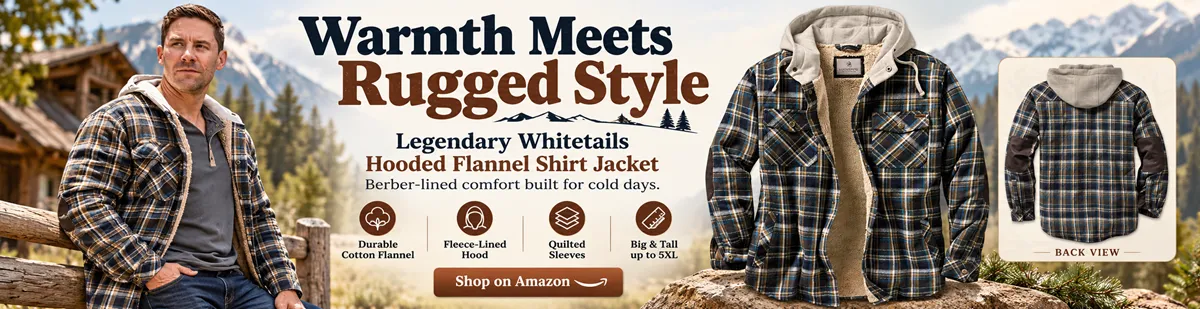
AI visual search generally works by processing an input image, extracting meaningful visual features, comparing those features with a searchable product collection, and ranking items according to relevance. The exact implementation varies by provider, and not every system uses the same model architecture or matching method.
Google Cloud's Vision API Product Search documentation provides one concrete example. It describes how retailers can organize products and reference images into searchable collections, then retrieve ranked results using a customer-provided image. This illustrates a product-catalog search implementation rather than the architecture of every visual search platform.
Image Input and Object Identification
The process begins when a shopper provides an image. This may be a photograph taken with a phone camera, a saved screenshot, or a product photograph selected from an ecommerce interface.
The system needs to determine which part of the image matters. A photograph might show a model wearing a denim jacket, white T-shirt, trousers, sneakers, and a handbag. Searching the entire image without distinguishing those items could produce results that reflect the overall outfit rather than the jacket the customer wants.
Some implementations support object detection, region selection, or image cropping to identify the intended product. Others infer the main object automatically.
Allowing shoppers to indicate the garment they are interested in can reduce ambiguity, particularly when photographs contain several fashion items.
Visual Feature Extraction
After identifying the relevant image content, a machine learning model converts visual information into a representation that can be compared computationally.
Many modern visual retrieval systems use image embeddings: numerical representations that encode learned relationships between images. Visually or semantically related images may be positioned closer together in an embedding space, depending on the model and how it was trained.
The research behind Learning Transferable Visual Models From Natural Language Supervision, published at the 2021 International Conference on Machine Learning, is an established example of learning relationships between images and language. CLIP-style representations illustrate how visual and textual concepts can be connected, although a production ecommerce search system may use different models, additional training, or specialized retrieval methods.
For apparel, useful visual signals may include garment shape, visible color, pattern, neckline, sleeve style, and other distinguishable features. Not all material properties or construction details can be reliably inferred from an ordinary photograph.

Product Retrieval and Ranking
The extracted representation is compared against product images or indexed representations in the retailer's catalog. The system identifies candidates and orders them according to the retrieval and ranking logic.
This stage may use approximate nearest-neighbor search, direct similarity comparisons, category restrictions, or a combination of techniques. The underlying index enables the platform to search many product records without manually comparing every image each time.
A retailer may then apply practical constraints such as available sizes, geographic availability, price range, or inventory status.
These filters serve an important purpose. A visually similar garment is not particularly useful if the requested size is unavailable or the item cannot be shipped to the shopper's location.
Result Presentation
The final stage is the customer-facing shopping interface. The system returns product cards containing images and, when available, information such as price, available colors, sizes, and product links.
The retailer must decide how to communicate similarity. A result might be a close match to the garment shape, a related style with a different material, or an alternative from another product category.
Clear presentation helps customers evaluate those differences themselves. AI can assist with discovery, but purchasing decisions still require accurate product information.
Why Is Visual Search Particularly Relevant to Fashion Shopping?
Fashion is a visually expressive product category. People frequently respond to combinations of color, proportion, silhouette, material appearance, and styling before they know the correct category name or construction terminology.
A shopper might recognize the difference between two handbag shapes immediately but struggle to describe either one. Terms such as hobo bag, saddle bag, and structured shoulder bag are useful for retailers, but they are not necessarily familiar to every customer.
Image-based search offers a way to communicate those preferences without depending exclusively on the customer's vocabulary.
Fashion Inspiration Often Begins Outside a Product Catalog
Customers may encounter outfit inspiration in street photography, social content, fashion editorials, videos, or everyday environments. The garment they notice may not come with a searchable product name or an accessible shopping link.
This is one reason general-purpose visual tools have relevance to fashion commerce. Google's documentation for searching with an image explains how Google Lens supports image-based queries, including searching for similar images and objects appearing within a photograph.
For retailers, this behavior creates an opportunity to make products discoverable through visual characteristics rather than relying entirely on brand names or exact product descriptions.
The important qualification is that visibility in a general image-search environment and visibility within a retailer's own visual search system are different matters. They involve different catalogs, indexing systems, ranking criteria, and platform requirements.
Appearance Can Be Difficult to Express Through Keywords
Consider a midi dress with a square neckline, softly gathered sleeves, fitted waist, and subtle floral print. Searching for “floral midi dress” may retrieve many garments that match the broad category but not the desired silhouette.
An image can convey several visible characteristics simultaneously. Whether the search system gives the correct weight to each feature depends on its training, retrieval architecture, and catalog quality.
This matters when customers care about small design differences. Sleeve construction, collar shape, neckline proportions, and hem design can noticeably change the perceived style of a garment.
Fashion Catalogs Contain Many Visually Related Products
Apparel assortments often include products that share some characteristics but differ in others. A retailer may carry multiple variations of white shirts, tailored trousers, knit tops, denim jackets, or occasion dresses.
Visual search can provide another route through this assortment. Customers can begin with an example and explore nearby styles rather than navigating multiple categories and text filters from the start.
It should still work alongside conventional product organization. The relationship between visual search, category navigation, and fashion assortment planning is particularly relevant when retailers manage a broad range of styles, colors, and size variants.

What Can AI Visual Search Actually Recognize?
Visual search systems can learn relationships between many visible product features, but they do not possess a complete technical understanding of garments.
A photograph may provide strong evidence of a jacket's broad silhouette while revealing little about its fabric composition, seam construction, lining, or durability. The distinction between what an image suggests and what a verified product specification establishes is essential.
|
Fashion characteristic |
What image-based AI may identify |
Important limitation |
|
Color |
Broad colors, shades, and color combinations |
Lighting, filters, and camera settings can alter appearance |
|
Silhouette |
Oversized, fitted, cropped, long, or structured shapes |
Body pose and styling can distort apparent proportions |
|
Pattern |
Stripes, checks, florals, and other visible motifs |
Small or partially obscured patterns may be misinterpreted |
|
Texture |
Visible ribbing, quilting, denim-like surfaces, or knit structures |
Visual texture does not establish exact fiber composition |
|
Garment category |
Dresses, jackets, trousers, skirts, and accessories |
Unusual designs may cross category boundaries |
|
Design details |
Collars, sleeve shapes, necklines, pockets, and visible trims |
Small construction details may be hidden or indistinct |
A useful way to interpret visual search results is to treat them as appearance-based candidates rather than verified product equivalents.
A system might match a wool coat with a visually similar polyester coat. The garments may look comparable in the photograph but differ considerably in handfeel, warmth, care requirements, and price.
Customers need reliable product descriptions and filters to evaluate those characteristics. The visual match is the beginning of product evaluation, not the final assessment.
The more detailed process of matching customer photographs with alternative garments belongs within how image-based search helps customers find similar fashion products.
Where Can Customers Use Visual Search During Online Shopping?
Visual search can appear at several points in a fashion shopping journey. Its placement influences what customers expect and how relevant the results need to be.
An external visual search platform may help someone move from a photograph to potential merchants. An ecommerce site's own search feature may help that same customer find products specifically within one retailer's assortment.
The second scenario is more directly controlled by the retailer, although implementation requires suitable technical infrastructure.
Search Bar Image Upload
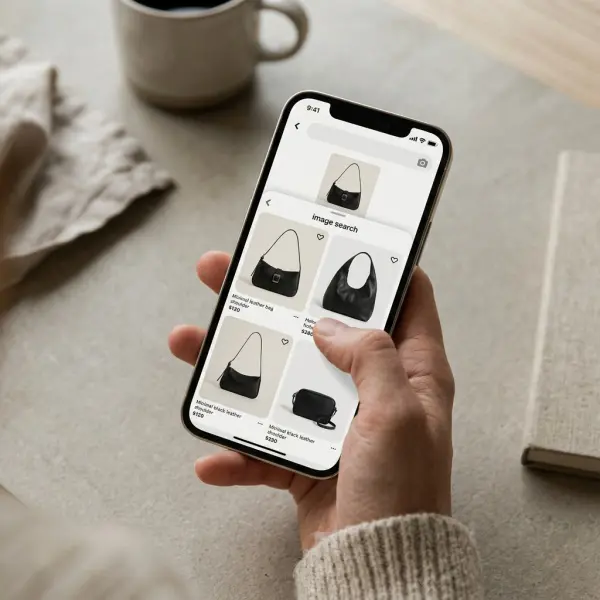
An image-upload option beside the conventional search field provides a direct alternative to typing keywords. Customers can select a saved photograph or use their device camera, depending on the interface.
This entry point is useful when the customer already has a visual reference but does not know the product's name.
The interaction should make it clear which image formats are supported, whether cropping is available, and what happens after upload.
Find Similar Products on a Product Detail Page
A shopper may like the overall style of a jacket but prefer a different silhouette, color, or price range. A product detail page can offer a related visual discovery option using the current product image as the reference.
This type of feature does not necessarily require the customer to upload anything. The retailer can start the search from an existing catalog item.
The distinction between a visual similarity search and a conventional recommendation carousel should remain clear in the interface, even when the underlying systems share components.
Mobile Fashion Discovery
Mobile devices provide a convenient environment for image-based interactions because cameras, screenshots, saved images, and shopping applications are available on the same device.
A customer can capture a reference image and use it to search without first writing a detailed description.
The experience still depends on permissions, interface design, upload performance, network conditions, and search response time. An inconvenient upload process can undermine the simplicity that visual search is meant to provide.
What Does a Fashion Retailer Need to Support AI Visual Search?
A visual search interface may look like a small feature, but dependable results require coordination between merchandising, catalog operations, frontend development, and search infrastructure.
For most retailers, the first challenge is not choosing the most advanced AI model. It is making sure the searchable product collection accurately represents the merchandise customers can actually buy.
Consistent, High-Quality Product Photography
Image-based retrieval depends heavily on the photographs available for indexing and comparison. If a retailer has only one heavily styled image per product, the system may struggle to distinguish merchandise details or match alternative viewpoints.
Clear packshots, relevant angles, and product-focused images can improve the information available to a visual model. Google Cloud's reference image guidance for product search emphasizes clear product imagery and explains how multiple useful views can support retrieval.
A fashion retailer may benefit from combining front views, back views, detail photographs, and selected lifestyle images. The appropriate combination depends on the search provider and the garment categories being indexed.
This also connects visual search with digital asset management for fashion brands, where product imagery must remain organized, accessible, correctly labeled, and associated with the right merchandise records.
Accurate Product Attributes and Variant Mapping
Visual similarity alone is insufficient for a functioning ecommerce experience. The platform needs dependable information about product categories, sizes, colors, prices, stock availability, and product URLs.
Consider a search result that visually matches a red dress. If the associated product record points to a blue variant, the customer may see an unexpected product after opening the listing.
The same problem occurs when a search index contains discontinued products or outdated images.
Retailers should establish reliable connections between product images, stock keeping units (SKUs), parent products, and individual variants. Search indexing must also reflect catalog updates through an appropriate synchronization process.
Search Technology and Catalog Infrastructure
A production system needs an image-processing service, a searchable product collection, a retrieval mechanism, and an interface that displays relevant results.
Possible implementation approaches include third-party visual search services, existing ecommerce search platforms with image-search capabilities, or a custom solution using computer vision models and vector search infrastructure.
The right architecture depends on catalog size, technical resources, integration requirements, query volume, and the level of control the retailer needs.
A smaller fashion business may find that a managed provider is operationally more practical than maintaining its own model pipelines and retrieval infrastructure. However, integration and ongoing costs should be evaluated against actual customer usage rather than assumed demand.
A Usable Customer Experience
Even technically accurate search results can be difficult to use when the interface creates unnecessary friction.
Customers need a recognizable upload action, clear feedback when an image is being processed, and an understandable result page. When the image contains multiple garments, an optional selection or cropping control may help identify the intended item.
A well-designed implementation should also provide alternatives when visual matching is unsuccessful. Conventional search, category navigation, and filters remain valuable fallback options.

What Are the Business Benefits of AI Visual Search?
For fashion retailers, the potential value of visual search comes from improving the connection between customer intent and available merchandise.
That benefit should be treated as an operational hypothesis to test, not an automatic financial outcome.
An Additional Entry Point Into the Product Catalog
Text search works well when a shopper knows what to ask for. Visual search provides another option when the desired appearance is easier to communicate than the relevant keywords.
For example, a customer searching for a jacket with an unusual collar shape might find a visually relevant product that would otherwise be difficult to locate through broad search terms.
The commercial implication is additional catalog accessibility. Whether this produces more product engagement or purchases depends on the relevance of the matches and the quality of the subsequent shopping experience.
More Context for Product Exploration
Visual results can help customers compare related styles within a retailer's assortment.
A shopper looking at wide-leg trousers might discover alternatives with different waist constructions, lengths, or fabric appearances. This may support deeper product exploration when those alternatives reflect the shopper's original visual preferences.
Poorly ranked results can have the opposite effect. Returning items with only superficial similarities may create frustration rather than useful discovery.
Better Understanding of Visual Shopping Intent
With appropriate privacy safeguards and data governance, aggregated visual search behavior can provide retailers with another source of merchandising insight.
Retailers might examine which product categories attract image searches, how frequently searches return no useful results, or which categories shoppers select after viewing matches.
These observations can help identify weaknesses in catalog coverage, product imagery, or search ranking.
They should not automatically be interpreted as evidence of unmet demand or a reason to manufacture more inventory. Search behavior provides one signal that needs to be considered alongside purchases, returns, inventory, margins, and qualitative customer feedback.
A more detailed discussion of commercial discovery outcomes belongs in why visual search can improve product discovery in fashion ecommerce.
How Should Fashion Businesses Measure Visual Search Performance?
A visual search feature should be evaluated through product relevance, customer behavior, and commercial outcomes rather than through image-recognition accuracy alone.
An algorithm can identify garment characteristics correctly while still returning unsuitable products. For example, matching a designer dress to several visually similar but unavailable items does little to help a shopper complete a purchase.
Retailers can establish a measurement framework covering the search experience from image submission to product engagement.
|
Measurement area |
Useful metric |
What it helps evaluate |
|
Adoption |
Visual search usage rate |
Whether customers choose the feature |
|
Search coverage |
Percentage of queries with eligible results |
Whether the catalog supports common image queries |
|
Result relevance |
Human-judged relevance at top results |
Whether returned products match shopper intent |
|
Engagement |
Product click-through rate from visual results |
Whether shoppers find results worth exploring |
|
Commercial behavior |
Add-to-cart and conversion rates for visual-search sessions |
Whether discovery leads to meaningful shopping actions |
|
Operational quality |
Search latency, failed uploads, and indexing freshness |
Whether the system performs reliably |
These metrics require appropriate interpretation. Customers who choose visual search may behave differently from customers who use ordinary text search, making simple comparisons potentially misleading.
A controlled experiment can help evaluate incremental impact. Retailers should define the comparison group, primary success metric, and relevant guardrails before testing.
Search-result relevance should also be reviewed manually using a representative set of garments, image types, product categories, and difficult queries. A model that performs well for clear footwear packshots may behave differently when asked to identify a patterned blouse in a crowded street photograph.
Common Misconceptions and Mistakes With Fashion Visual Search
Mistake 1: Assuming Similar Appearance Means the Same Product
A visual search result is not necessarily an exact product identification. Two garments may share recognizable design features while coming from different brands, using different materials, or having different construction quality.
This misunderstanding becomes problematic when retailers describe approximate matches as identical products. It can create unrealistic expectations about what customers will receive.
A more accurate interface distinguishes identified products, visually similar alternatives, and other related suggestions whenever the system can support those distinctions.
Mistake 2: Expecting AI to Compensate for Poor Product Data
Retailers sometimes focus attention on model selection while overlooking missing product images, inconsistent attributes, or outdated inventory records.
Even a capable retrieval model cannot reliably recommend merchandise that is absent from its searchable catalog. Incorrect variant mapping can also direct shoppers to the wrong color or unavailable size.
The better approach is to establish catalog completeness and data consistency before expanding the feature across the entire assortment.
Mistake 3: Treating a Visual Match as Proof of Product Quality
AI can compare visible features, but a photograph does not reliably establish fiber composition, durability, fit accuracy, care performance, or manufacturing standards.
A garment resembling silk may use polyester satin. A jacket that looks substantial may have lightweight construction.
Retailers should keep technical specifications, size guidance, material descriptions, and care information accessible after visual discovery. Image-based matching should not replace product verification.
Mistake 4: Launching Without Testing Real Customer Images
Internal tests often use clean catalog photographs that already resemble the reference images used for indexing. Actual shoppers may upload screenshots with overlays, dim photographs, partially obscured garments, or images containing several products.
A model that performs well with controlled product photography may produce weaker results under these conditions.
Testing should include realistic customer-image scenarios, multiple categories, different device types, and cases where the desired item does not exist in the catalog.
Mistake 5: Treating Visual Search as a Complete Replacement for Text Search
Image-based search is helpful when appearance is the primary starting point. It is less suitable for queries involving specific technical requirements that are difficult to observe visually.
A customer looking for machine-washable trousers with a particular inseam and fabric composition still needs reliable written attributes and filtering tools.
The most practical retail search experience often combines visual discovery with text queries, product metadata, and ordinary navigation rather than forcing every customer into one method.
Important Technical and Privacy Limitations
AI visual search should be presented as an assistive discovery system, not a method capable of understanding every characteristic of a fashion product.
Recognition and retrieval quality can vary with lighting, image resolution, camera angle, garment layering, body position, background complexity, and the distribution of products represented in the model's training and reference data.
Ranking introduces another limitation. A model may prioritize color over silhouette, match a visually dominant accessory instead of the intended garment, or retrieve a related category when the exact style is unavailable. The system's underlying similarity score is not necessarily a reliable statement of customer satisfaction.
Privacy also requires attention because uploaded images can contain identifiable individuals, personal environments, or other information unrelated to the requested garment.
For businesses subject to the European Union's General Data Protection Regulation, the European Commission's guidance on personal data processing principles explains requirements involving transparency, data minimization, purpose limitation, and storage limitation.
Fashion retailers should therefore assess which image data must be processed, how long uploads are retained, which service providers receive them, and how customers are informed. The applicable legal obligations depend on the retailer's operations, jurisdictions, and data-processing arrangements.
Product and operational safeguards should include reasonable controls over image uploads, access permissions, third-party processing, deletion, and the reuse of customer images for purposes beyond the original search request.
How Can Fashion Retailers Introduce Visual Search Practically?
A staged implementation is usually more informative than deploying visual search across an entire assortment without first understanding its performance.
A retailer selling dresses, outerwear, footwear, and accessories may find that each category presents different visual matching challenges. A structured bag is generally easier to isolate in a clear photograph than a loosely layered garment within a complete outfit.
A practical pilot can follow six steps:
- Select a limited product category. Choose merchandise with sufficient catalog coverage, consistent imagery, and clear commercial relevance.
- Audit the product catalog. Check image completeness, product identifiers, variants, availability, descriptions, and links between catalog records.
- Choose a search implementation. Evaluate managed solutions or custom architectures according to integration effort, relevance, data requirements, privacy, and total operating cost.
- Build a representative query set. Include clear product photographs, real-world images, screenshots, multiple-item scenes, and difficult examples.
- Evaluate search quality before launch. Review whether the top results are useful, whether irrelevant categories appear, and whether unavailable products are handled appropriately.
- Run a limited customer test. Measure feature adoption, relevance, engagement, technical reliability, and commercial outcomes before broadening coverage.
The objective is not to demonstrate that AI can recognize fashion imagery in isolation. It is to determine whether image-based retrieval helps actual customers find appropriate products within a retailer's operational and commercial constraints.
For smaller fashion businesses, a tightly scoped feature built on dependable product images may provide a more useful learning opportunity than a technically ambitious deployment with poor catalog maintenance.

Frequently Asked Questions About AI Visual Search in Fashion
Can AI Visual Search Find the Exact Clothing Item in a Photograph?
AI visual search may identify an exact product when the system has suitable reference data and the photograph contains enough recognizable information. However, exact identification is not guaranteed. A retailer's internal search tool may only search its own catalog, which means the original garment could be outside the searchable collection.
Even broader visual search platforms cannot consistently determine the manufacturer of every garment. Products with generic silhouettes, similar patterns, or limited distinguishing features are particularly difficult to identify precisely. Shoppers should verify brand details, product descriptions, and retailer information before assuming that a visually matching result is the original item.
Does AI Visual Search Work Better Than Keyword Search for Fashion?
Neither approach is universally better. Visual search can be more convenient when customers have an image reference but cannot describe the garment effectively. Keyword search is often more useful when the requirement is specific and readily expressed through text, such as a particular size, material, brand, or care characteristic.
The two methods can complement each other. A shopper might upload an image to find a suitable silhouette, then apply filters for color, price, and size. For retailers, the strongest approach is to evaluate how each search method performs for different customer tasks rather than replacing one with the other based on assumptions.
Can Visual Search Identify Fabric Types and Clothing Materials?
Visual search may recognize some visible material characteristics, but it generally cannot verify exact fabric composition from an ordinary photograph alone. A model might distinguish a denim-like texture, prominent ribbing, a quilted surface, or a shiny satin-like finish. These observations are not equivalent to fiber identification.
Materials with similar appearances can have very different compositions and performance properties. Cotton blends, synthetic fabrics, and regenerated fibers may be difficult to distinguish visually. Retailers should therefore use verified product specifications for material information and avoid presenting model-generated material guesses as established facts.
Do Small Fashion Stores Need AI Visual Search?
Small fashion stores do not automatically need visual search. Its value depends on product assortment, customer behavior, available technical resources, and whether image-based discovery solves a meaningful shopping problem.
A boutique selling a limited collection with highly specific product names may benefit more initially from better product photography, clear categories, strong filtering, and accurate inventory information. Visual search becomes more relevant when customers frequently rely on inspiration photographs or have difficulty navigating visually similar products. A small-scale trial can help establish whether the additional development and operating costs are justified.
Does AI Visual Search Require a Large Product Catalog?
There is no universal minimum catalog size required for image-based product retrieval. A system can search a relatively small collection, provided the technology supports that implementation and the catalog contains appropriate reference images.
The more important issue is whether the available merchandise can satisfy the kinds of images customers submit. A small, specialized catalog may return useful matches for a narrow product category, while a much larger but poorly organized catalog may produce irrelevant results. Retailers should evaluate coverage, catalog image quality, indexing requirements, and the practical availability of appropriate alternatives rather than treating SKU count as the only criterion.
Can AI Visual Search Recognize Multiple Garments in One Image?
Some visual search systems can detect or localize multiple objects, enabling shoppers to focus on a particular garment or accessory. The capability varies by provider and implementation, and the system may still require a user-selected region to avoid ambiguity.
A photograph of a complete outfit illustrates the challenge. The customer might want the jacket, while an automated search identifies the handbag as the most prominent product. Allowing the shopper to select the intended item can make the interaction clearer. Retailers should specifically test multi-item photographs because performance on isolated product images does not necessarily represent performance on full outfits.
What Should Fashion Retailers Ask Before Choosing a Visual Search Provider?
Retailers should first determine which product categories the system handles reliably, how it indexes merchandise, and whether results can be restricted to available products and appropriate variants. They should also examine search latency, model evaluation methods, catalog synchronization, and whether the platform supports region or object selection.
Commercial and governance questions deserve equal attention. Businesses need to understand pricing, infrastructure requirements, integration support, data retention, customer-image handling, vendor dependencies, and service reliability. A provider demonstration using carefully selected photographs is useful for initial evaluation, but decisions should rely on a pilot using the retailer's actual catalog and realistic customer queries.
Conclusion: Visual Search Connects Fashion Inspiration With Searchable Merchandise
AI visual search adds a different form of communication between online fashion shoppers and retail catalogs. It allows customers to begin with an image rather than relying entirely on written descriptions, making it particularly relevant when the desired garment is easier to recognize than to name.
The technology combines computer vision, learned visual representations, image retrieval, and ecommerce catalog information. Yet the quality of the shopping experience depends on more than the sophistication of the underlying model. Product photography, catalog accuracy, variant mapping, search relevance, and interface design all influence whether the returned merchandise is genuinely useful.
For fashion retailers, the sensible starting point is to understand where customers struggle with conventional product discovery and whether an image-based alternative can address that specific difficulty. Visual search should be assessed through real shopping behavior and operational performance, with its limitations communicated clearly.
Its longer-term relevance lies in expanding the ways customers can express product intent. Text, images, product attributes, and human judgment each contribute information that the others may miss. Retailers that combine these methods thoughtfully are better positioned to make their assortments understandable and accessible without treating AI as a substitute for sound merchandising.





Comments 0
Leave a CommentSend Comment
Anda harus Login terlebih dahulu untuk dapat memberikan komentar.