
Fashion Assortment Planning Explained for Retail and Online Stores
Fashion retailers rarely struggle because they have too few product ideas. The harder question is deciding which products deserve a place in the collection, how much variety customers actually need, and whether the business can support that variety financially. A store may offer attractive garments yet still lose sales because popular sizes disappear too quickly, too many similar styles compete for attention, or seasonal inventory arrives after demand has peaked.
Fashion assortment planning is the process of selecting and organizing the clothing, accessories, styles, colors, sizes, and inventory quantities that a retailer will offer to a defined customer market during a particular selling period. It connects merchandising strategy with customer demand, purchasing budgets, inventory availability, and commercial performance.
For physical fashion stores, assortment decisions influence how merchandise fits within limited selling space and how customers navigate product categories. For online stores, the same decisions affect product discovery, inventory investment, fulfillment complexity, and the relevance of the shopping experience.
An effective assortment does not necessarily offer the most products. It offers a commercially appropriate selection that customers can understand, purchase, and return to as their needs change.
Quick Answer: What Is Fashion Assortment Planning?
Fashion assortment planning determines which apparel products a retailer should sell, how different product categories relate to one another, and how the available inventory should support expected customer demand. It considers the breadth of the product range, the depth of individual styles, seasonal relevance, pricing structure, and differences between sales channels.
The objective is to create a balanced merchandise selection that supports customer choice without committing excessive resources to products that may not sell.
For example, a casualwear brand may decide to offer everyday T-shirts, relaxed trousers, lightweight jackets, and selected accessories. The planning process establishes the role of each category, the proportion of the collection allocated to established products versus new designs, and the level of inventory needed to support the selling period.
Successful assortment planning also requires coordination across merchandising, product development, sourcing, purchasing, and inventory management. A commercially appealing product range can still perform poorly if production lead times, minimum order quantities, or replenishment capabilities do not match the retailer's expectations.
The central principle is straightforward: the assortment should reflect customer demand, brand positioning, and operational capacity rather than product variety for its own sake.
Why Assortment Planning Matters in Fashion Retail
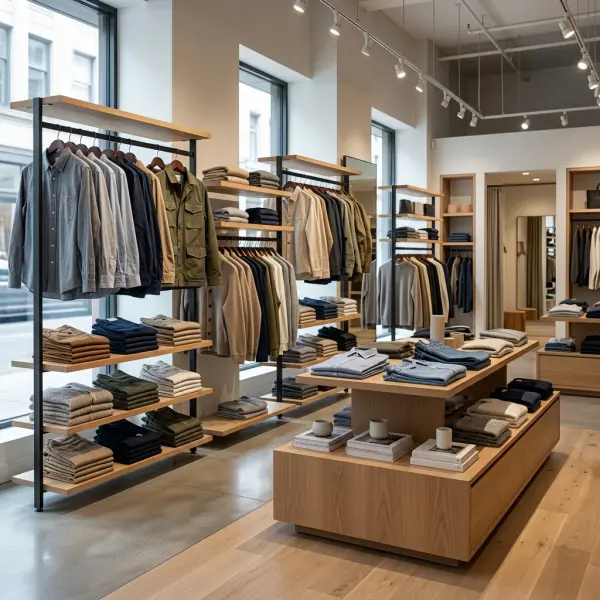
Fashion assortment planning influences both the customer experience and the financial structure of a retail business. Every additional garment style requires decisions about product development, supplier commitments, inventory allocation, presentation, and eventual clearance. These commitments become particularly significant when demand is uncertain or merchandise has a limited selling season.
A retailer with a poorly balanced assortment may have substantial inventory while customers still struggle to find suitable products. A store could carry numerous statement dresses but lack dependable everyday styles, or offer attractive designs without sufficient availability in frequently requested sizes.
Connecting Product Availability With Customer Expectations
Customers usually approach fashion retailers with a combination of functional and emotional expectations. They may be shopping for workwear, comfortable everyday clothing, occasion outfits, or products that express a particular personal style.
An assortment should provide enough choice to satisfy these shopping missions while maintaining a recognizable retail identity. A minimalist clothing brand, for instance, may benefit more from a tightly coordinated selection of versatile garments than from introducing unrelated fashion categories.
For online shoppers, relevant assortment planning also supports navigation. When product categories are clearly differentiated, customers can compare suitable options without sorting through excessive near-duplicates. However, too little variety can make the store appear incomplete, particularly where customers expect multiple fits, lengths, or styling options.
Managing Inventory Investment and Commercial Risk
Apparel inventory represents committed capital. Goods purchased or manufactured in advance must eventually generate sufficient sales to support the business, including the costs associated with storage, handling, fulfillment, and potential markdowns.
Assortment planning helps retailers prioritize their purchasing budgets. Products with predictable demand may justify deeper inventory, while unfamiliar silhouettes or experimental designs may require more conservative initial commitments.
This does not eliminate forecasting errors. Fashion demand remains influenced by weather, promotions, competitor activity, economic conditions, and changing customer preferences. Planning establishes a disciplined basis for decisions rather than guaranteeing that every product will sell.
Creating a More Consistent Brand Identity
A collection communicates what a fashion retailer stands for. Product categories, silhouettes, materials, color palettes, price points, and styling combinations collectively shape how customers perceive the brand.
A retailer positioned around functional outdoor apparel would create confusion by introducing large quantities of unrelated occasionwear without a convincing customer rationale. Similarly, an affordable basics brand may weaken its positioning if expensive statement pieces begin dominating its merchandise presentation.
An intentional assortment makes the brand easier to recognize. It also gives product development and marketing teams a clearer framework for future collections.
The Core Elements of a Fashion Assortment
An apparel assortment is not simply a collection of individual garments. It is a structured merchandise portfolio containing several related planning dimensions.
Understanding these dimensions helps retail teams evaluate whether the product range is sufficiently broad, commercially focused, and appropriate for its customers.
Product Breadth: How Many Categories Does the Store Offer?
Assortment breadth refers to the range of different product categories or product lines carried by a retailer.
A fashion store offering dresses, denim, shirts, knitwear, outerwear, footwear, and handbags has broader category coverage than a specialist retailer selling only denim products.
Broad assortments can serve multiple shopping needs and create cross-selling opportunities. A customer buying a dress may also purchase a matching jacket or accessory when complementary products are available.
However, breadth increases organizational demands. Additional categories may involve different suppliers, fit standards, product photography requirements, handling procedures, and replenishment cycles.
A broad assortment therefore makes commercial sense only when the retailer has sufficient customer demand and operational resources to support it.
Product Depth: How Much Choice Exists Within a Category?
Assortment depth describes the variety available within a product category or product line, including differences in style, color, size, fit, or other relevant attributes. The precise measurement depends on how the retailer defines its product hierarchy.
A denim specialist may carry a narrow assortment of categories but provide considerable depth through straight-leg, wide-leg, slim-fit, and relaxed-fit jeans. Each fit might be offered in several washes and sizes.
Depth can help retailers serve customers whose needs are not met by a single product option. Yet additional variations increase the number of stock keeping units (SKUs) that must be forecast, purchased, monitored, and replenished.
For a closer look at these decisions, see How Brands Decide Product Mix, Color Options, and Size Depth.

Product Roles: Core, Seasonal, and Fashion-Led Merchandise
Not every fashion product serves the same commercial purpose.
Core products generally support recurring customer needs and may remain available across multiple selling periods. Seasonal merchandise responds to climate, occasions, or predictable calendar-based demand. Fashion-led products introduce novelty, directional silhouettes, or shorter-lived aesthetic themes.
A casualwear brand might maintain basic cotton T-shirts as part of its core range, introduce linen garments for warmer selling periods, and test a limited selection of trend-oriented statement tops.
These categories are not completely fixed. A once-experimental silhouette can become part of the permanent range if repeat demand proves sufficiently consistent. Conversely, an established product may lose relevance as preferences change.
The role assigned to each product should influence purchasing commitments, replenishment expectations, pricing strategy, and performance evaluation.

How Fashion Assortment Planning Works
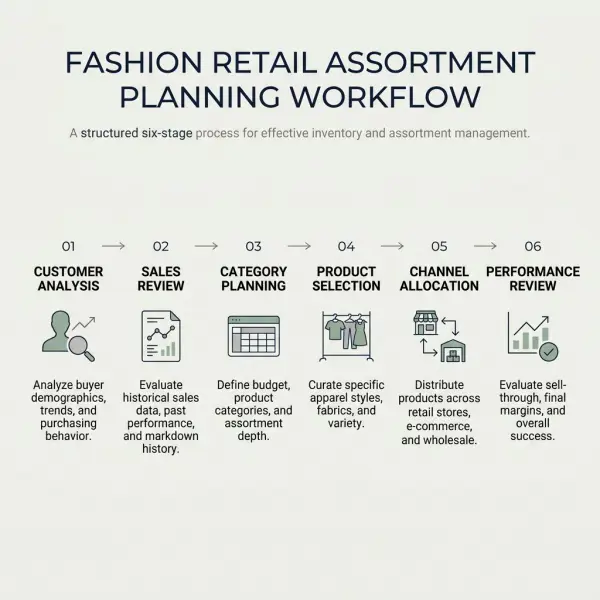
The assortment planning process translates a retailer's commercial objectives into a specific merchandise offering. Although the sequence varies by business size and operating model, most retailers need to connect customer information, category performance, buying budgets, product selection, and inventory execution.
The process begins before purchase orders are issued and continues after the products reach customers.
Step 1: Define the Customer and Selling Context
An assortment should begin with a clear understanding of whom the retailer serves and why those customers purchase its products.
Demographic information can help establish an initial customer profile, but shopping behavior is often more useful for actual merchandise decisions. A retailer needs to understand whether customers prioritize fashion novelty, garment durability, price accessibility, professional dressing, size availability, or convenient outfit coordination.
Selling context matters equally. A store serving a warm-climate market may need a different balance of lightweight garments and outerwear than a retailer operating in a colder region. A marketplace seller may also experience different customer expectations from a brand selling through its own website.
Planning becomes more reliable when these differences are reflected in category decisions rather than treated as minor adjustments after purchasing.
Step 2: Review Historical Merchandise Performance
Previous sales provide an important starting point for identifying customer preferences and potential assortment gaps.
Retail teams commonly examine sales units, net sales revenue, gross margin, sell-through, markdown activity, returns, and inventory availability. These measures reveal different aspects of product performance and should not be interpreted interchangeably.
For example, a shirt generating strong sales revenue may still perform poorly financially if its gross margin is low or it requires substantial promotional discounts. Similarly, a style with low recorded sales may have experienced repeated stockouts, meaning sales history alone could understate customer demand.
Historical analysis should also distinguish between products that sold slowly because customers rejected them and products that performed poorly because of weak merchandising, limited visibility, or unsuitable inventory distribution.
Step 3: Establish Category and Financial Priorities
Once customer demand and past performance have been reviewed, the retailer can define the intended structure of the assortment.
This involves setting category priorities and determining how the planned offering supports revenue, profitability, and inventory objectives. A retailer may allocate greater attention to categories that attract repeat purchases, complement existing merchandise, or reinforce its core market positioning.
Merchandise financial planning and assortment planning are closely connected but not identical. Financial planning establishes budgets, sales expectations, margin objectives, and inventory constraints. Assortment planning turns those parameters into decisions about actual categories, styles, and product variants.
For a smaller fashion business, this may be managed through a structured spreadsheet. Larger retailers may integrate assortment plans with merchandise planning, inventory systems, and supplier workflows.
Step 4: Translate the Plan Into Merchandise Decisions
At this stage, the assortment begins to take recognizable commercial form. Merchandising and buying teams determine which existing products to continue, which categories require development, and where new styles might expand customer choice.
The decisions must remain compatible with product development schedules, supplier lead times, minimum order quantities, and available purchasing capacity. A design team might propose several new knitwear styles, but the buying team could approve fewer products if the expected demand does not justify the inventory commitment.
This is where coordination with fashion vendor management and supplier evaluationbecomes important. A product that fits the assortment strategically may still be commercially unsuitable when its sourcing requirements cannot be met reliably.
Step 5: Allocate Merchandise Across Channels
A single fashion brand may sell through flagship stores, smaller regional locations, its own ecommerce website, marketplaces, and wholesale partners.
Each channel has different assortment requirements.
Physical stores face limitations involving floor space, display fixtures, stockroom capacity, and local customer demand. Online channels can present a larger digital catalog, but the inventory must still be owned, sourced, reserved, or otherwise available through a dependable fulfillment arrangement.
Consequently, an online store can offer greater visible variety without necessarily holding all merchandise in a single warehouse. The commercial feasibility depends on how inventory is managed and how accurately product availability is communicated.
Step 6: Monitor Performance and Adjust the Assortment
Assortment planning does not end when products launch. Retail teams need to evaluate sales performance during the selling period and determine whether the original assumptions remain valid.
A rapidly selling product may require replenishment, provided supplier capacity and expected remaining demand justify another order. A slow-moving style may need improved presentation, pricing review, repositioning, or controlled markdowns.
The purpose of monitoring is not to react impulsively to every sales fluctuation. It is to identify meaningful differences between planned and actual demand early enough to make commercially useful adjustments.
Fashion Assortment Planning for Physical Stores and Ecommerce
Physical retail and ecommerce share the same fundamental assortment objective: connecting relevant products with customer demand. The differences become more pronounced when retailers consider merchandise presentation, inventory accessibility, and the purchasing journey.
For physical locations, customers experience the assortment through racks, shelves, fixtures, displays, and direct interaction with garments. The retailer must decide not only which products to stock but also which products deserve valuable selling space.
Online shoppers encounter merchandise through category navigation, product listings, recommendations, search filters, and individual product pages. The number of products displayed can be much greater, but relevance and availability become essential to preventing a confusing shopping experience.
|
Planning dimension |
Physical fashion stores |
Online fashion stores |
|
Product visibility |
Influenced by floor space and visual merchandising |
Influenced by navigation, search, filters, and product ranking |
|
Assortment capacity |
Constrained by selling space and storage |
Constrained by inventory, supply, fulfillment, and catalog management |
|
Local adaptation |
Often reflects store location and customer catchment |
Can reflect delivery region, audience segment, and purchasing behavior |
|
Product evaluation |
Customers can inspect garments and try them on |
Customers rely on images, measurements, descriptions, and reviews |
|
Inventory availability |
Depends on store-level stock and replenishment |
Depends on available-to-sell inventory and fulfillment arrangements |
|
Operational challenge |
Balancing product variety with space productivity |
Balancing catalog relevance with inventory and data complexity |
An omnichannel retailer must also avoid assuming that online demand and store demand are identical. Customers may research products digitally before purchasing in person, or discover products in a physical store before ordering online.
These interactions can make simple channel-level sales figures incomplete. Where reliable customer and inventory data are available, coordinated assortment planning can help retailers distinguish differences in product demand from differences in where transactions happen.
Localized Assortments and Store Clustering
Retailers operating multiple physical stores may group locations according to similar commercial characteristics. This practice is commonly called store clustering or location clustering.
Stores may be classified according to sales patterns, customer profiles, available space, geographic conditions, or other relevant attributes. The purpose is to develop merchandise selections that are suitable for comparable locations without creating an entirely separate buying plan for every store.
For example, a retailer could offer a larger occasionwear selection in locations with demonstrated demand for formal clothing while maintaining stronger casualwear coverage elsewhere.
Oracle's retail location clustering documentation describes how retailers can group locations using performance, space, and related attributes.
Clustering improves planning efficiency only when the groupings are commercially meaningful. Excessive segmentation can create additional planning work, fragmented purchasing requirements, and more complicated inventory distribution.

Balancing Assortment Variety With Inventory Productivity
A larger assortment can appear commercially attractive because it offers customers more alternatives. Yet product variety carries costs that may not be immediately visible in a merchandising presentation.
Each new style or variant requires product information, purchasing decisions, inventory tracking, and potentially separate photography, packaging, quality control, and returns handling. When products share similar customer demand, expanding variety may divide sales among alternatives instead of increasing total category demand.
This creates a practical trade-off between assortment coverage and inventory productivity.
A specialist retailer may benefit from offering substantial variety within a narrowly defined customer need. A small multibrand boutique, by contrast, may obtain better results by concentrating its purchasing budget on a limited number of clearly differentiated categories.
Neither approach is inherently superior. The appropriate balance depends on customer expectations, product economics, operational capacity, and the retailer's competitive positioning.
Understanding Assortment Productivity Metrics
Assortment performance should be evaluated using several complementary measures rather than a single headline sales figure.
|
Metric |
What it measures |
Assortment planning relevance |
|
Sell-through rate |
Share of available units sold during a defined period |
Helps evaluate demand relative to merchandise availability |
|
Gross margin |
Net sales revenue minus cost of goods sold |
Shows the merchandise contribution before other operating costs |
|
Inventory turnover |
How frequently average inventory is sold during a period |
Helps assess inventory productivity |
|
Stockout rate |
Frequency or extent of product unavailability |
Helps identify potentially unmet demand |
|
Markdown rate |
Extent of price reductions |
Indicates pricing pressure and possible demand mismatch |
|
Return rate |
Share of purchased products returned |
Provides context for product suitability and retained sales |
A high sell-through rate may indicate strong demand, but it can also reflect a very small initial purchase. Low inventory turnover may result from excessive assortment commitments, although it can also be influenced by long seasonal cycles or deliberate inventory stocking.
Metrics therefore need to be interpreted together.
For example, a product with strong initial sell-through and frequent stockouts may deserve further investigation before the retailer reduces its assortment. Meanwhile, a product selling only after repeated markdowns may be generating revenue without meeting the intended margin objective.
A Practical Assortment Planning Example for a Small Fashion Brand
Consider a fictional direct-to-consumer apparel brand specializing in contemporary casualwear. The brand operates one small showroom and an ecommerce website, with a limited budget for its next selling period.
Its merchandising team wants to introduce a balanced range that includes dependable everyday products and a small number of new fashion concepts.
The following simplified plan illustrates how category structure and purchasing priorities might be organized. The figures are hypothetical planning assumptions, not recommended industry benchmarks.
|
Product category |
Planned styles |
Commercial role |
Initial inventory approach |
|
Basic T-shirts |
4 |
Core repeat-purchase products |
Relatively deeper commitment |
|
Casual shirts |
3 |
Everyday wardrobe variety |
Moderate commitment |
|
Relaxed trousers |
3 |
Core outfit-building category |
Moderate commitment |
|
Lightweight outerwear |
2 |
Seasonal layering |
Controlled commitment |
|
Statement tops |
2 |
Fashion-led experimentation |
Smaller test commitment |
|
Total |
14 |
Balanced category portfolio |
Demand-based allocation |
The brand is not attempting to offer every possible casualwear product. Instead, it is concentrating on categories that align with its customer profile and merchandising identity.
Basic T-shirts may receive larger initial quantities because the retailer has evidence of recurring demand. Statement tops may be purchased more cautiously because their sales potential is less certain. The final quantities would still depend on style-level forecasts, sizes, supplier terms, and available capital.
What This Example Reveals About Assortment Decisions
The plan distinguishes between the number of styles and the quantity purchased for each style. A category can contain several designs without requiring large inventory commitments to every variant.
It also demonstrates that assortment planning is not simply about maximizing product count. The brand needs enough variety to present a compelling offer, but every product should have a recognizable commercial or customer-facing purpose.
The next level of planning would determine individual colors, size curves, SKU quantities, and replenishment possibilities. Those decisions require more detailed demand analysis than this category-level example provides.

What Makes an Assortment Commercially Sustainable?
A commercially sustainable assortment, in the business sense, is one that the retailer can finance, source, manage, and sell without repeatedly creating disproportionate inventory risk. Environmental sustainability is a separate question that requires evidence about materials, production, transport, product longevity, and end-of-life outcomes.
Merchandise assortment decisions can influence resource use because they determine which garments enter production and how much stock may remain unsold. However, reducing product variety does not automatically reduce environmental impact, particularly if the remaining products have high-impact manufacturing processes or short useful lives.
From a commercial perspective, several constraints deserve attention.
Supplier Minimum Orders and Lead Times
Suppliers may require minimum quantities for individual styles, colors, materials, or production orders. A fashion retailer planning numerous variations can therefore encounter significantly larger purchase commitments than expected.
Lead times introduce another limitation. Products requiring lengthy manufacturing or international shipping arrangements may need to be ordered before reliable demand signals become available.
The appropriate response is not necessarily to avoid suppliers with minimum order quantities. Retailers should evaluate whether those requirements align with their expected demand, financial capacity, and ability to replenish or redirect inventory.
Replenishment Flexibility
Products that can be replenished efficiently give buyers more opportunities to respond to actual customer demand. This may reduce the need for large initial commitments, although smaller repeated orders can increase unit costs or transportation expenses.
Fashion-led products with brief selling windows may not offer the same flexibility. If production takes longer than the remaining selling period, replenishing a successful style could still result in late-arriving inventory.
Product Consistency and Customer Trust
Repeating successful garments can help customers purchase with greater confidence, particularly when fit, fabric, and quality remain consistent.
A customer who previously purchased a well-fitting pair of trousers may return expecting similar measurements and construction. If the new production run uses different fabric behavior or altered grading without clear communication, the product may no longer satisfy the same need.
Assortment planning therefore depends partly on reliable product development, specifications, quality control, and supplier communication—not only purchasing calculations.
Common Assortment Planning Mistakes to Recognize
Some assortment problems become visible only after a selling period begins. Others originate much earlier, when retail teams approve product ranges without sufficiently testing their commercial assumptions.
Expanding Categories Without a Clear Customer Need
Adding unrelated merchandise can make a collection appear larger without making it more relevant. Retailers sometimes expand because competing brands offer a particular category or because a supplier presents attractive products. Unless there is a clear relationship with the existing customer base, the additional inventory may create complexity without generating enough incremental demand.
A better approach is to assess whether the category fills a genuine customer need and supports the retailer's positioning.
Confusing Product Popularity With Financial Performance
A frequently purchased garment is not necessarily a financially productive product. High sales volume may be accompanied by heavy discounts, expensive returns, or unfavorable sourcing costs. Buying decisions should therefore consider margin performance and operating implications alongside demand.
The objective is to understand which products contribute to the business rather than simply identifying which products sell the most units.
Treating Every Sales Channel as Identical
Using the same assortment in every physical store and online channel may simplify purchasing, but it can overlook meaningful differences in demand. A style performing well through digital marketing may not attract equivalent interest in a small regional boutique.
Retailers should test whether observed channel differences are consistent and commercially significant before introducing separate assortments.
Planning More Variations Than the Business Can Support
Product teams may approve numerous similar colors, prints, or silhouettes because each looks attractive individually. Combined, these choices can fragment the purchasing budget across too many SKUs.
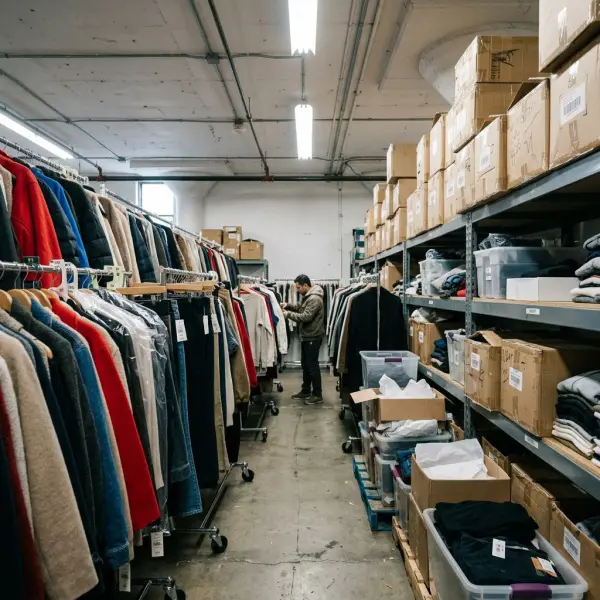
Smaller initial selections with clear differentiation may be easier to evaluate and replenish. The underlying mechanics of common assortment planning mistakes that create dead stock deserve particular attention when excess inventory becomes a recurring problem.
How Small and Growing Fashion Businesses Can Apply Assortment Planning
A sophisticated planning platform is not a prerequisite for developing a useful assortment strategy. Small apparel businesses can begin with a well-maintained product catalog, transaction records, and a clearly documented merchandising plan.
The most important requirement is consistency. Product categories, styles, variants, costs, sales quantities, and inventory balances need to be recorded in ways that support meaningful comparisons over time.
An effective introductory process can include:
- Establishing a consistent category and SKU structure so merchandise performance can be analyzed accurately.
- Reviewing historical sales alongside returns, markdowns, and stockout periods.
- Assigning a clear commercial role to each proposed product.
- Preparing an assortment plan that fits available purchasing budgets and supplier commitments.
- Evaluating performance at agreed intervals and documenting the reasoning behind assortment changes.
The resulting information can form the foundation for more advanced merchandising practices as the business grows.
For an emerging brand, the greatest immediate improvement may come from avoiding scattered purchasing decisions. For a larger retailer, the priority may shift toward coordinating several locations, seasonal buying cycles, and inventory allocation rules.
Businesses that manufacture their own collections should also connect assortment decisions with fashion unit economics and product profitability. A style may appear attractive at its intended retail price but become financially problematic when development costs, manufacturing commitments, and expected discounts are considered.
When Should a Brand Use Assortment Planning Software?
Dedicated assortment planning software becomes more useful as product counts, store networks, selling channels, and planning dependencies increase.
Such systems may support product hierarchy management, financial reconciliation, store clustering, size profiles, inventory visibility, and performance analysis. Oracle's Retail Assortment Planning documentation describes the relationship between assortment breadth, depth, selling periods, and points of commerce.
Software is not a substitute for accurate product information or sound commercial judgment. A retailer with inconsistent SKU definitions and unreliable inventory records may struggle to obtain dependable recommendations regardless of platform sophistication.
Before investing in advanced tools, the business should establish which decisions are currently difficult to make, what information is missing, and whether the expected operational improvements justify implementation costs.
What Brands Should Verify Before Finalizing an Assortment
Assortment plans are based on assumptions about future customer demand. Even an analytically sound plan can become unsuitable when those assumptions change.
Before confirming substantial purchase commitments, retail teams should verify that the proposed product range fits the available budget, supplier capabilities, selling calendar, and customer expectations. Historical performance should also be reviewed for distortions caused by unusually aggressive promotions, temporary stockouts, or major changes in product quality.
Special care is needed when interpreting data from newly launched brands or categories. Limited sales history may not provide a reliable basis for forecasting. In these situations, smaller trials, customer research, comparable products, and controlled purchasing commitments can provide additional evidence.
Retailers should also consider how returned merchandise and unsold stock will be managed. Inventory availability is not equivalent to customer demand, and a large collection is not automatically a strong collection.
The goal is not perfect forecasting. It is making purchasing decisions with clearly understood assumptions, measurable objectives, and manageable financial exposure.
Frequently Asked Questions About Fashion Assortment Planning
What is the difference between assortment planning and merchandise planning?
Assortment planning focuses on the specific product mix that a retailer will offer, including categories, styles, variants, and their availability across channels or locations. Merchandise planning is a broader discipline involving sales objectives, inventory investment, margin targets, purchasing budgets, and financial performance.
The two activities are closely connected. Merchandise financial plans establish commercial boundaries, while assortment plans translate those boundaries into product decisions. A retailer may have sufficient budget for a category but still choose an unsuitable range of garments. Conversely, a desirable collection may be financially unrealistic if its purchasing requirements exceed the approved investment.
How often should fashion retailers review their assortment plans?
Fashion retailers should review assortments according to their selling cycles, product characteristics, and ability to respond to changing demand. A brand launching collections several times a year may conduct formal assortment reviews before each buying cycle while monitoring sales and stock availability more frequently.
Core replenishment products may require regular in-season analysis, whereas limited seasonal designs might be evaluated against shorter selling windows. The review schedule should allow enough time for useful purchasing or merchandising decisions. Monitoring performance after suppliers can no longer deliver additional stock may provide valuable learning, but it offers fewer opportunities to improve the current season.
Can small online clothing businesses benefit from assortment planning?
Yes. Small online clothing businesses can use assortment planning to control product complexity, prioritize inventory investment, and maintain a consistent brand identity. The approach does not require a large product catalog or expensive software.
An emerging ecommerce brand can begin by grouping products into categories, recording the sales and margin performance of individual styles, and identifying which products generate repeat demand. It can then use that information to guide future launches. Businesses with limited sales history should avoid treating early results as definitive forecasts and may benefit from carefully structured product tests before making larger commitments.
What is the difference between a wide assortment and a deep assortment?
A wide assortment offers products across many categories, while a deep assortment provides extensive choice within fewer categories or product lines. A department store might offer dresses, shoes, bags, denim, and outerwear, whereas a denim specialist could offer numerous fits, washes, and sizes within a narrower range.
Both strategies can serve customers effectively. Wide assortments may support multiple shopping occasions, while deep assortments may better satisfy specialized product needs. The right choice depends on customer demand, competitive positioning, purchasing capacity, and product economics. Retailers should also remember that depth can refer to variety, while inventory depth describes the quantity available within particular products or SKUs.
How does assortment planning help reduce unsold fashion inventory?
Assortment planning can reduce unnecessary inventory exposure by linking purchasing decisions to customer demand, category priorities, and realistic sales expectations. Retailers can avoid spreading limited budgets across too many unproven products and instead allocate resources according to the commercial role of each item.
However, assortment planning cannot eliminate unsold stock. Unexpected weather, changing preferences, pricing decisions, supplier delays, and inaccurate forecasts can still create surplus inventory. The most useful approach combines initial assortment discipline with ongoing sales monitoring, supplier coordination, and timely inventory decisions. Success should be measured through multiple performance indicators rather than assuming fewer products automatically produce less dead stock.
Is a larger product assortment better for ecommerce conversion?
Not necessarily. A larger ecommerce assortment may improve conversion when it introduces genuinely relevant choices, such as additional garment fits or product categories that customers need. But excessive similarity between products can also make navigation and comparison more difficult.
Conversion depends on many factors beyond assortment size, including product presentation, pricing, trust, available sizes, delivery terms, and website usability. Retailers should therefore investigate whether adding products improves shopping relevance and commercial performance rather than treating catalog expansion as an automatic growth strategy. A smaller, clearly organized product range may perform better for a focused brand than a much larger but poorly differentiated collection.
What information does a fashion brand need before developing its first assortment plan?
A fashion brand should begin with a defined customer profile, intended product categories, price positioning, purchasing budget, estimated sales volumes, supplier capabilities, and selling calendar. Existing businesses can strengthen these assumptions with transaction data, product returns, and inventory performance.
New brands may lack reliable sales history, so their initial plans often require more customer research and cautious purchasing. A basic assortment worksheet should identify planned styles, product roles, estimated costs, retail prices, quantities, and important delivery dates. The objective is to document why each product belongs in the range and whether the business can support it commercially.
Conclusion: Building a Product Range With Commercial Purpose
Fashion assortment planning is fundamentally about making deliberate choices. Retailers must decide which products represent the brand, which customer needs deserve priority, and how much inventory investment is reasonable for the expected demand.
The discipline connects creative product development with the commercial realities of retail. A compelling fashion collection still needs appropriate pricing, dependable suppliers, relevant product availability, and a purchasing strategy that recognizes the costs of unsold merchandise.
For physical stores, planning helps translate customer expectations into an effective use of selling space. For online retailers, it supports a product catalog that remains navigable, relevant, and operationally manageable. Businesses operating across multiple channels must coordinate both perspectives.
The strongest assortment is not necessarily the broadest, deepest, or most fashionable. It is the selection that gives customers meaningful choices while allowing the business to manage risk, protect margins, and learn from actual selling performance.
As customer preferences and business conditions evolve, assortment planning should remain a repeatable decision process rather than a fixed collection template.




Comments 0
Leave a CommentSend Comment
Anda harus Login terlebih dahulu untuk dapat memberikan komentar.