

Cultural Heritage Fashion Explained for Modern Apparel Design
Fashion has always borrowed ideas from the past, but cultural heritage offers something more substantial than a collection of familiar patterns or traditional garments. It connects clothing to craftsmanship, community identity, social history, and ways of making that have developed across generations.
For contemporary fashion designers, that connection can become a starting point for new silhouettes, textile combinations, and product concepts. A traditional weaving technique might influence the surface of a minimalist jacket. A historic garment structure could inspire a contemporary outerwear collection. The visual rhythm of regional textiles may guide color placement, fabric panels, or decorative details without requiring a literal reproduction.
Yet heritage-inspired design is rarely as simple as transferring a motif onto a modern garment. Cultural references carry different meanings depending on where they originate, who produces them, and how they are used. A commercially attractive pattern may also be associated with a particular ceremony, community, or inherited craft practice.
The challenge for fashion businesses is therefore both creative and operational: understanding which elements can inspire contemporary design, how those elements translate into wearable products, and what responsibilities come with using cultural references.
Quick Answer: What Is Cultural Heritage Fashion?
Cultural heritage fashion is an approach to clothing and accessory design that draws inspiration from traditional garments, textile techniques, craftsmanship, visual symbols, and dress practices associated with particular communities or cultural histories. It uses those references to inform contemporary products while recognizing their original context and significance.
Heritage inspiration may appear through woven fabrics, embroidery, dyeing techniques, garment construction, ornamentation, or styling. Some designers work directly with traditional artisans, while others reinterpret historical proportions, textile structures, or design principles in new materials and silhouettes.
The distinction lies in how the reference is used. A fashion collection can acknowledge a heritage tradition without reproducing traditional dress exactly. Equally, using a recognizable cultural pattern does not automatically make a product an authentic example of that tradition.
For apparel businesses, heritage-based design can support product differentiation, craftsmanship-focused storytelling, and specialized collections. Its commercial value depends on execution, sourcing capability, customer relevance, and the credibility of the cultural connection.
What Does Cultural Heritage Mean in Fashion Design?
Cultural heritage in fashion refers to the clothing practices, textile knowledge, craft traditions, and visual expressions that communities associate with their history and identity. It includes physical products such as garments and fabrics, but also the skills, meanings, and social practices behind them.
According to UNESCO's explanation of intangible cultural heritage, living heritage includes knowledge and skills used in traditional craftsmanship, as well as social practices and other expressions passed between generations. This distinction matters because preserving a craft involves more than keeping examples of its finished products.
A piece of handwoven cloth might be appreciated for its texture and color, but its cultural significance may also come from how it is made, who traditionally wears it, and the occasions associated with its use. Those layers of meaning are not always visible to someone encountering the textile for the first time.
In fashion design, cultural heritage can function as a creative reference, a material resource, a production tradition, or a source of brand identity. The most suitable approach depends on the intended product and the relationship between the fashion business and the people who maintain the tradition.
Heritage Is Not the Same as Historical Costume
Traditional dress and historical costume can influence contemporary fashion, but they are not interchangeable with heritage-inspired apparel.
Traditional clothing may remain part of everyday life, community events, ceremonies, or formal occasions. Historical costume usually refers to dress associated with a particular period or context, including garments reconstructed for museums, performances, or historical interpretation.
Heritage-inspired fashion takes selected elements of these traditions and adapts them to a contemporary design purpose. A brand might reinterpret the proportions of a traditional coat into modern outerwear or use a regional handwoven textile as an accent rather than reproducing a complete ceremonial outfit.
The resulting garment needs to work on its own terms. Fit, functionality, material performance, and intended customer use still determine whether the design succeeds as a commercially viable product.
Cultural Traditions Continue to Evolve
Heritage should not be understood as a fixed visual style belonging exclusively to the past. Communities continually develop their clothing practices, introducing new materials, modifying techniques, and adapting traditional designs to current needs.
A textile tradition may retain recognizable production methods while incorporating different yarn compositions, color preferences, or product categories. Likewise, contemporary designers working within their own cultural traditions may experiment with silhouettes and styling that differ considerably from older examples.
This flexibility is important for modern fashion. It allows innovation to remain connected to cultural knowledge rather than treating historical garments as designs that cannot change.

The Elements of Cultural Heritage That Influence Fashion
Heritage inspiration can enter the design process at several levels. Some references are immediately recognizable, such as decorative patterns or traditional garment shapes. Others are less visible, including fabric construction, hand-finishing practices, or the relationship between a garment and its intended occasion.
Understanding these differences helps design teams move beyond superficial visual borrowing and identify what genuinely makes a heritage reference relevant to their collection.
Traditional Textiles and Fabric-Making Techniques
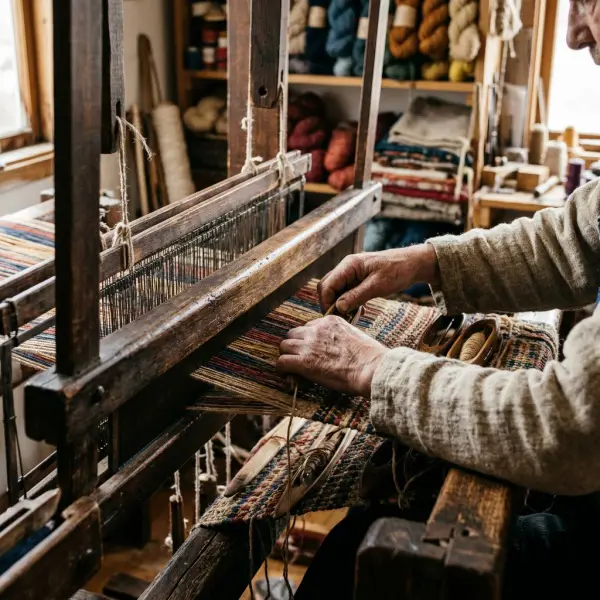
Textiles are among the most direct connections between cultural heritage and modern fashion. Weaving, knitting, embroidery, resist dyeing, and other established techniques can create recognizable surfaces with particular textures, structures, and decorative characteristics.
For a designer, the technical process may be just as interesting as the finished pattern. Handwoven cloth can produce a different visual rhythm from printed fabric, while hand embroidery introduces relief and variation that may be difficult to reproduce convincingly with flat surface printing.
These characteristics also influence production decisions. Fabric width, weight, drape, texture, finishing, and supply consistency determine whether a traditional textile is suitable for dresses, jackets, accessories, or structured garments.
A sourcing team cannot assume that a visually attractive heritage fabric will behave like a conventional mass-produced textile. It may require different marker layouts, reinforcement, cutting allowances, or handling procedures.
Garment Silhouettes and Construction Details
Traditional dress can inspire garment proportions without requiring designers to reproduce a complete historical outfit.
Design references might include wrapped closures, overlapping front panels, rectangular cutting principles, pleating, layering, sleeve proportions, or distinctive collar constructions. Some of these features appear across multiple cultures and historical periods, so their origin and significance should be researched rather than assumed.
When translated into contemporary apparel, construction ideas must be reassessed for fit and movement. A silhouette developed for traditional wrapping or layering may perform differently when converted into a fitted garment with standardized sizing.
This creates a practical design exercise: preserve the intended visual or structural character while adjusting the pattern to support everyday wear, comfort, and manufacturability.

Motifs, Colors, and Decorative Language
Cultural patterns are frequently used as fashion references because they provide a recognizable visual identity. Geometric repeats, floral arrangements, borders, symbolic figures, and established color combinations can influence prints, embroidery, appliqué, or fabric placement.
Their meaning, however, varies significantly. Some motifs are primarily decorative, while others can communicate identity, status, belief, or ceremonial associations. Designers should not assume that a particular color or shape has the same significance across cultures or even across communities within one region.
For commercial collections, understanding the distinction between decorative influence and culturally specific symbolism is essential. A subtle reference to textile composition may be suitable where copying a ceremonial symbol would be inappropriate.
Craftsmanship and Handmade Finishing
Heritage can also be expressed through how a garment is made rather than through its appearance alone.
Hand stitching, specialized weaving, traditional embellishment, and labor-intensive finishing methods may become part of a collection's material identity. These processes can create meaningful distinctions between products, particularly where visible craftsmanship is central to the brand's positioning.
There is an operational trade-off. Manual techniques may introduce variation in production time, surface appearance, and finished dimensions. Brands need quality specifications that distinguish desirable craft variation from defects affecting durability, safety, or garment performance.
A heritage product is not necessarily better because it is handmade. Its value comes from the relevance, execution, and integrity of the chosen technique.
Examples of Cultural Heritage in Contemporary Fashion
Different textile traditions demonstrate how cultural heritage can influence modern clothing without following a single design formula. Some traditions are defined by their dyeing methods, others by weaving structures, symbolic patterns, or relationships with particular communities.
Three examples help illustrate why understanding the original textile matters before translating it into a contemporary product.
Indonesian Batik: Cultural Expression Through Resist Dyeing
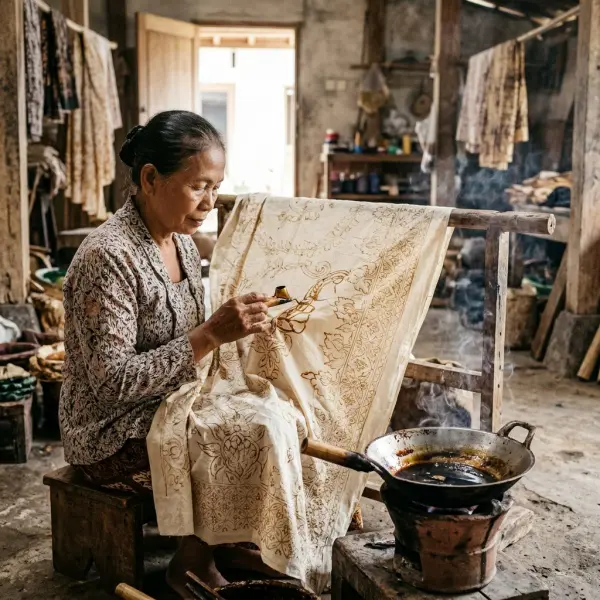
Indonesian batik demonstrates how fabric decoration can carry both technical knowledge and cultural meaning. Traditional batik production uses wax-resist dyeing, in which wax is applied to selected areas of fabric to control where dyes penetrate.
UNESCO recognized Indonesian Batik on its Representative List of the Intangible Cultural Heritage of Humanity in 2009. Its description of Indonesian Batik emphasizes the connection between techniques, symbolism, family traditions, and cultural identity.
In contemporary apparel, batik may appear in dresses, shirts, tailored separates, and accessories. Designers can experiment with garment proportions, print placement, and combinations with plain fabrics while maintaining the integrity of the textile.
A relevant distinction concerns production methods. A digitally printed fabric featuring batik-inspired motifs is not technically equivalent to a textile made using traditional wax-resist batik techniques. The difference should be reflected in product descriptions and marketing claims.
Ghanaian Kente: Identity Expressed Through Woven Cloth
Kente provides another example of heritage expressed through textile structure and symbolic design. In Ghana, traditional Kente is produced by weaving narrow strips of cloth that can be assembled into larger textiles.
According to UNESCO's documentation of traditional Kente craftsmanship, Kente can be made using silk, cotton, or rayon yarns. Its colors, designs, and named patterns can communicate social histories, proverbs, and aspects of identity. The craftsmanship was inscribed on UNESCO's Representative List in 2024.
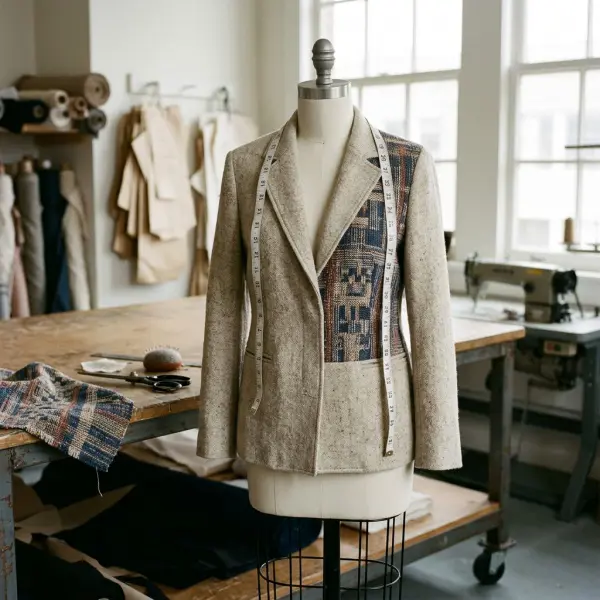
For contemporary fashion, Kente offers references in color arrangement, geometric composition, woven texture, and fabric placement. A brand might incorporate authentic woven panels into contemporary jackets or accessories through an agreed collaboration with textile producers.
Alternatively, designers could investigate broader principles of rhythmic color blocking without claiming that a new generic geometric print represents traditional Kente craftsmanship.
The commercial and cultural distinctions are significant. Authentic handwoven Kente, Kente-inspired visual design, and industrially printed Kente-style patterns are different products, even when they share some visual characteristics.
Bangladeshi Jamdani: Pattern Created During Weaving
Jamdani illustrates how a textile's distinctive appearance can arise directly from its construction process.
Traditionally associated with weaving communities around Dhaka, Jamdani is a lightweight patterned textile in which decorative motifs are formed during weaving using discontinuous supplementary weft techniques. This requires skilled manual work and careful coordination between the base fabric and ornamental designs.
UNESCO inscribed the traditional art of Jamdani weaving in 2013, recognizing its significance to cultural identity and the transmission of weaving skills.
A contemporary designer might explore Jamdani textiles for elegant shirts, dresses, overlays, or selected garment panels. Material properties such as transparency, fabric weight, and motif placement would influence the final silhouette and construction choices.
Using genuine handwoven Jamdani also requires attention to production capacity and fabric handling. The techniques involved cannot simply be assumed to deliver the same lead times or cost structures as industrial weaving.
These examples show that heritage inspiration is not a standardized aesthetic category. Each textile tradition combines material characteristics, production knowledge, and cultural relationships that influence how it can be used in modern apparel.
Why Does Cultural Heritage Matter to Modern Fashion Design?
Cultural heritage can help fashion designers develop products with recognizable material and visual identities. It also encourages attention to techniques and construction ideas that may receive less emphasis in conventional trend-led product development.
Its business relevance comes from the relationship between creative identity, product execution, and customer understanding—not from cultural references alone.
Creating a Distinctive Design Language
Fashion brands often need a consistent design language that customers can recognize across collections. Heritage references can contribute to this through recurring textile structures, proportions, decorative methods, or material combinations.
For example, a contemporary label might develop a series of relaxed jackets that incorporate carefully sourced regional woven textiles. Rather than changing its identity with every seasonal trend, the brand could build recognizable product characteristics around those materials and a consistent tailoring approach.
The strongest differentiation may come from thoughtful design decisions rather than highly visible decorative elements. Fabric placement, garment balance, craftsmanship, and proportion can express a connection to tradition without turning every product into an obvious heritage statement.
Connecting Product Design With a Credible Story
Heritage-inspired clothing can provide useful information for customers who want to understand where a product comes from and how it was developed.
However, a compelling story requires more than romantic descriptions of craftsmanship. Fashion businesses should be able to identify the textile source, relevant production techniques, the people or organizations involved, and the extent of any genuine collaboration.
A brand working directly with traditional textile producers may be able to communicate the craft process, production location, and makers' contributions. A brand using a commercially printed interpretation should describe its design inspiration accurately without implying an artisanal production history that does not exist.
This distinction affects brand credibility. Customers may not know every technical detail of a textile, but misleading provenance or exaggerated craftsmanship claims can undermine the product narrative.
Bringing Traditional Skills Into New Product Categories
Contemporary product development can create additional applications for established craft techniques.
A textile historically associated with traditional dress might also suit contemporary accessories, decorative garment panels, or limited-edition apparel. Such adaptations can expand the range of products available to producers when developed with appropriate community participation and technical planning.
The practical challenge is translating the textile into an item that fits contemporary requirements. A material intended for draping may not perform well in a tightly structured jacket. Heavy ornamentation may introduce additional manufacturing complexity, while delicate surfaces may require specialized care instructions.
Heritage inspiration becomes commercially useful when cultural relevance and garment functionality are considered together.
How Cultural Inspiration Becomes Contemporary Apparel
The relationship between a traditional reference and a modern garment can take several forms. Not every brand needs to reproduce an entire heritage textile or traditional outfit to create a meaningful design direction.
The following comparison explains common approaches and their practical implications.
|
Design approach |
Contemporary application |
What fashion businesses should consider |
|
Traditional textile integration |
Authentic woven or dyed cloth used in modern clothing |
Supplier provenance, availability, fabric performance, cultural permissions where relevant |
|
Silhouette reinterpretation |
Contemporary garments influenced by traditional proportions |
Pattern adaptation, fit, wearability, cultural context |
|
Craft technique adaptation |
Traditional embroidery, weaving, or finishing used in new products |
Artisan expertise, production capacity, quality consistency |
|
Motif-inspired design |
New print or embroidery compositions informed by cultural references |
Symbolic meaning, originality, authorization where applicable |
|
Contemporary cultural collaboration |
Collection co-developed with heritage practitioners |
Creative roles, agreements, compensation, attribution, shared decision-making |
These approaches can overlap. A designer may develop an entirely new silhouette while using authentic handwoven fabric, or work with a craftsperson to create a new textile specifically for contemporary apparel.
The level of cultural specificity also matters. Borrowing general ideas such as layering or geometric balance differs from reproducing a particular community's recognizable symbols or ceremonial designs. The latter may require a much more direct relationship with cultural custodians.
For a closer examination of how fabric structures, textile motifs, and material traditions influence collection development, see how traditional textiles inspire contemporary fashion collections.
The Practical Role of Heritage Inspiration in Fashion Businesses
Heritage-inspired apparel creates decisions across the full product development process. A collection can appear convincing during concept development but become difficult to produce if the materials, techniques, and intended price points have not been assessed early.
The most useful approach is to treat cultural inspiration as part of product strategy rather than as decoration added at the end of design development.
Product Development: Turning Research Into Wearable Design
The first step is to establish what the collection is trying to communicate and how heritage supports that objective.
A designer developing everyday womenswear might be interested in the texture of traditional woven cloth rather than ceremonial garment shapes. A contemporary accessories brand may focus on localized embroidery or decorative stitching techniques. These starting points lead to different material requirements, product specifications, and manufacturing partners.
Before sampling, the design team should document the original reference, the intended adaptation, and any technical or cultural restrictions identified during research. A useful design brief distinguishes the features that define the product from those that may change during prototyping.
For instance, if a handwoven fabric is central to the concept, its texture and provenance may need to remain unchanged. The garment silhouette, lining, closures, or panel construction can then be adjusted to improve comfort and durability.
Sourcing: Understanding the Material Behind the Reference
When a collection includes traditional textiles, sourcing teams need to evaluate both provenance and material performance.
The supplier's production method affects achievable quality, quantity, and repeatability. Handmade fabrics may be available in limited widths, exhibit differences between batches, or require longer procurement periods than standard industrial textiles.
A sourcing assessment should therefore consider:
- Textile provenance: Whether the material is genuinely produced using the stated method and where it originates.
- Supplier capability: Available production capacity, lead time, minimum order quantity, and consistency.
- Material characteristics: Fiber content, width, weight, shrinkage, dimensional stability, and colorfastness.
- Cultural requirements: Whether the specific design, pattern, or method is associated with permissions or restrictions.
- Commercial feasibility: Fabric cost, transportation, inspection, potential wastage, and replacement availability.
These questions do not diminish the creative value of traditional textiles. They make it possible to use them responsibly within a repeatable apparel operation.
Digital material records can also help teams document provenance, technical specifications, and approved variations. Related guidance is available in digital fabric libraries for fashion design teams.
Manufacturing: Balancing Craftsmanship With Production Requirements
Heritage-based garments may require manufacturing methods that differ from conventional apparel production.
If a garment uses a narrow handwoven textile, pattern pieces may need to be adjusted to the available width. A prominent woven border might require precise placement during cutting, increasing fabric consumption. Embroidered surfaces may require different pressing, stitching, or reinforcement methods.
These issues should be identified during sampling rather than after bulk material commitments.
Factories and artisan workshops may also have different production systems. A conventional factory is often organized around standardized operations and predictable throughput, while some craft-based workflows depend on skilled manual processes with more variable production times.
Combining the two successfully requires clear specifications, realistic delivery schedules, and quality criteria that protect both design intent and garment performance.
Retail and Branding: Making the Cultural Connection Understandable
Retail presentation can help customers appreciate a heritage-inspired garment without relying on exaggerated cultural claims.
A product page might explain the textile technique, material composition, location of production, relevant collaborators, and recommended garment care. For products involving traditional craft communities, accurate maker attribution and permission-based storytelling are more useful than vague descriptions such as "ancient tribal design."
Visual merchandising should also reflect the product's intended use. Contemporary apparel made with heritage textiles can be styled for everyday life, workwear, formal occasions, or special collections according to its actual design.
Customer education is particularly relevant where a technique affects pricing or care requirements. If a fabric is handwoven and produced in small batches, explaining its construction and handling characteristics can help customers understand differences from a mass-produced printed alternative.
Scalability: Knowing Which Parts of the Collection Can Grow
One of the more difficult decisions is determining whether a heritage-inspired concept should remain a limited collection or become a repeatable commercial product line.
Limited-edition products may accommodate variable supply, unusual textile dimensions, or intensive manual finishing. Large-volume collections generally require stronger forecasting, dependable supplier capacity, and standardized material specifications.
Brands can manage this through differentiated product architecture. A small collection might use authentic artisan-made textiles, while an adjacent contemporary line could explore broader design principles without reproducing protected or culturally restricted patterns.
However, increasing volume should not become an excuse to misrepresent materials or replace agreed craft production without transparency. The commercial model must remain consistent with the product claims and commitments made to partners.
Common Mistakes in Heritage-Inspired Fashion Design
Many heritage-inspired products encounter problems not because the original design idea is weak, but because research, material selection, or product positioning has been incomplete.
The following mistakes illustrate where creative decisions can become operational or reputational risks.
Treating Traditional Patterns as Generic Decoration
A pattern found in a museum archive, online image, or historical reference book may appear to be freely available inspiration. However, its cultural significance and applicable rights cannot be determined simply from its visibility.
Designers who reproduce recognizable community-specific motifs without checking their context may create products that conflict with cultural expectations or relevant protections. The problem becomes more serious when branding implies authenticity or endorsement that does not exist.
A stronger approach is to research the reference before production and distinguish broad visual influence from the direct use of a specific cultural expression.
Confusing Heritage Appearance With Authentic Craftsmanship
A garment can resemble a traditional textile without being produced using the associated technique.
For example, a digitally printed pattern may imitate the visual appearance of handwoven fabric, but it does not reproduce the textile structure or labor involved in weaving. Similarly, printed batik-inspired fabric should not be presented as hand-drawn wax-resist batik if that process was not used.
Inaccurate descriptions can create customer misunderstanding and weaken the brand's credibility. Clear terminology helps businesses communicate what is authentic, what is adapted, and what is simply inspired by an existing visual tradition.
Choosing Visual Impact Without Considering Garment Function
A traditional textile may look striking on a mood board but prove unsuitable for the intended garment.
Heavy decorative fabric can distort a lightweight silhouette. A loosely constructed textile may need stabilization near seams. A border motif may be damaged or visually interrupted when placed across darts, shaped panels, or curved garment sections.
The solution is not to eliminate traditional materials but to test their interaction with garment construction. Fabric inspection, fit sampling, wash testing, and appropriate quality criteria should take place before finalizing production specifications.
Using Cultural Storytelling Without Meaningful Evidence
Heritage-related marketing can become problematic when brands make claims about artisan livelihoods, cultural preservation, or community benefits that they cannot substantiate.
Purchasing a printed fabric with a traditional-looking design does not necessarily support the community associated with that tradition. Likewise, producing a single heritage-themed capsule collection does not establish that a brand has contributed to preserving craft knowledge.
Claims should be proportional to the actual activity. If a business commissions products from a specific artisan cooperative, it can accurately explain that relationship. Broader claims about community impact require appropriate evidence and should not be inferred from aesthetic association alone.
What Should Brands Verify Before Using Cultural Heritage References?
Fashion businesses should verify the origin, meaning, production method, and appropriate use of heritage references before incorporating them into commercial products. This is particularly relevant when designs involve identifiable traditional cultural expressions.
The World Intellectual Property Organization's guidance on traditional cultural expressions and fashion highlights the importance of understanding cultural context and engaging appropriately with Indigenous Peoples and communities when their expressions are used.
A practical review can be organized around five questions:
- Origin: Which community, region, or tradition is associated with the design reference, and how reliable is that identification?
- Meaning: Does the reference have ceremonial, spiritual, social, or other culturally specific significance?
- Authority: Are permissions, consultation, or agreements needed, and who is authorized to participate in those decisions?
- Accuracy: Can the brand substantiate its claims about the material, technique, origin, and collaborating makers?
- Commercial use: Are the intended production, distribution, attribution, and compensation arrangements appropriate for the specific project?
These checks should happen before a design is approved for commercial sampling. The legal position can vary by jurisdiction, and the absence of an obvious intellectual property restriction does not necessarily resolve cultural or ethical concerns.
For a more detailed discussion of cultural appreciation, appropriation, consent, and design responsibility, see why heritage-inspired style needs respectful and thoughtful design.
How Can Brands Build a Heritage-Inspired Collection Strategically?
A heritage-inspired collection needs a clear creative direction supported by workable product development and sourcing decisions.
Consider a hypothetical mid-market apparel label planning a small collection featuring traditional handwoven fabric as an accent. Its initial idea is to combine simple contemporary silhouettes with selected woven panels. The collection is intended for customers who value distinctive materials but still expect practical garments.
The design concept may be straightforward, but several decisions will shape its success.
First, the team needs to identify an appropriate textile tradition and establish a legitimate sourcing relationship. It should discuss suitable designs, production capacity, and intended applications with relevant producers and cultural representatives where necessary.
Next comes the garment architecture. Rather than designing every piece around large quantities of expensive fabric, the label might concentrate textile details on jacket fronts, pockets, collars, or removable accessories. This approach can help manage material requirements while allowing the distinctive textile to remain visible.
The team then needs to assess sample performance, fabric yield, costing, and customer-facing descriptions. A design that works in a single prototype may still need adjustments before repeat production.
Choosing the Right Product Strategy
The same heritage reference can support different commercial approaches depending on a brand's capabilities.
|
Business context |
Potential heritage-inspired strategy |
Main operational consideration |
|
Independent designer label |
Limited collection with traditional craft partners |
Lead times, artisan capacity, collaborative development |
|
Contemporary ready-to-wear brand |
Modern silhouettes featuring selected heritage textile details |
Consistent construction and fabric supply |
|
Premium apparel brand |
Craftsmanship-led pieces with documented provenance |
Quality control, skilled production, credible storytelling |
|
Accessories business |
Small products integrating traditional textiles or craft techniques |
Material utilization, durability, finishing |
|
Established fashion retailer |
Curated collaboration or dedicated heritage-inspired assortment |
Supplier verification, customer communication, inventory risk |
No single strategy is universally superior. A limited run may be suitable for a labor-intensive technique, while a scalable collection may need a broader design interpretation supported by conventional manufacturing.
The decision should reflect what the brand can consistently deliver, not simply what looks attractive in a campaign.

Frequently Asked Questions About Cultural Heritage Fashion
What is the main difference between cultural heritage fashion and traditional clothing?
Traditional clothing refers to garments associated with established dress practices in particular communities, cultural groups, or historical contexts. Cultural heritage fashion is a broader design approach that may use selected elements of those traditions in contemporary apparel.
For example, a traditional garment might maintain a recognized form and function for ceremonies or community occasions, while a modern designer could use certain construction principles to create an everyday jacket.
The distinction is not always absolute because traditional clothing itself continues to evolve. Designers should avoid assuming that traditional dress is necessarily old-fashioned or that modern adaptations are automatically more innovative.
Can contemporary fashion use heritage inspiration without copying traditional designs?
Yes. Designers can draw inspiration from textile structure, garment proportions, construction principles, material combinations, and craft processes without directly reproducing culturally specific motifs or garments.
A designer might study the balance of geometric compositions in a weaving tradition and develop a new abstract arrangement. Another might explore a historical wrapping principle to create an original contemporary silhouette.
Nevertheless, changing the appearance of a recognizable cultural expression does not automatically resolve every issue concerning permission or cultural meaning. The degree of originality, applicable intellectual property rules, and expectations of the associated community may still need examination.
Does heritage-inspired fashion have to use handmade materials?
No. Heritage inspiration can inform a garment's silhouette, styling, colors, construction, or decorative language without requiring handmade fabric. Contemporary manufacturing methods can be used to produce original designs influenced by cultural research.
However, the production method must be described accurately. A digitally printed interpretation of a textile pattern should not be marketed as handwoven merely because it resembles traditional cloth.
When craftsmanship is central to the brand's promise, using authentic techniques and engaging legitimate practitioners may be more appropriate. Material selection should reflect the intended product positioning, customer expectations, and the specific cultural context.
Can heritage-inspired fashion work for everyday clothing?
Yes. Cultural references can be incorporated into everyday apparel through proportion, fabric texture, construction details, or carefully chosen decorative accents. Heritage inspiration does not require a garment to resemble ceremonial dress.
A contemporary shirt might include a traditionally woven fabric panel, while a simple outerwear piece could explore a historical layering concept. The final product still needs to meet practical expectations concerning fit, comfort, care, durability, and styling flexibility.
Brands should develop prototypes for the intended use rather than assuming that a traditional textile will perform well in every garment category. A visually effective textile may require lining, reinforcement, or modified construction.
Is cultural heritage fashion automatically sustainable?
No. Cultural heritage fashion is not automatically environmentally sustainable because it uses traditional materials, handmade techniques, or cultural references.
Environmental performance depends on the specific fiber, production processes, chemicals, energy use, waste, transportation, garment durability, and other lifecycle factors. A hand-produced textile may have particular advantages or disadvantages depending on the methods used and the available evidence.
Cultural continuity and fair collaboration are also different considerations from environmental performance. Supporting traditional skills does not, by itself, demonstrate reduced environmental impact.
Brands making sustainability claims should rely on relevant product or process evidence rather than treating heritage as a substitute for environmental assessment.
What makes a heritage-inspired collection commercially successful?
Commercial success depends on the relationship between product desirability, execution, pricing, distribution, and customer demand. Cultural inspiration can contribute to differentiation, but it does not replace the fundamentals of apparel business management.
A collection needs to offer products customers want to wear at prices they are prepared to pay. Material availability, fit consistency, manufacturing quality, lead time, and effective merchandising remain important.
Heritage-related storytelling may strengthen the product proposition when it is specific and credible. However, brands should validate demand through appropriate sampling, pricing analysis, and customer feedback rather than assuming that cultural significance guarantees market appeal.
How can small fashion brands start exploring cultural heritage design?
Small brands can begin by researching a well-defined textile or garment tradition and identifying one practical product application. A narrow concept is generally easier to evaluate than a collection drawing loosely from several unrelated cultures.
The business should establish reliable reference information, examine cultural considerations, identify possible suppliers or collaborators, and create initial samples. Early cost and material assessments are particularly useful when the concept involves hand-produced textiles or specialized techniques.
A limited collection can provide an opportunity to test customer response and operational feasibility. The priority should be a credible, well-executed product rather than an extensive range built around unverified cultural claims.
Conclusion: Cultural Heritage as a Living Source of Fashion Design
Cultural heritage offers contemporary fashion designers a rich field of creative references, from textile construction and decorative techniques to garment proportions and established craft traditions. Its significance extends beyond familiar visual patterns because those design elements often emerge from community knowledge, historical practices, and generations of skilled work.
For fashion businesses, the opportunity lies in translating relevant aspects of that heritage into products that meet contemporary expectations. Effective design requires an understanding of material behavior, sourcing capability, manufacturing requirements, and commercial positioning.
The cultural dimension deserves equal attention. A heritage reference should not become an unsupported claim of authenticity, craftsmanship, or community benefit. Research, accurate communication, and appropriate collaboration help establish a stronger foundation for both product development and brand credibility.
Fashion will continue to reinterpret established clothing traditions because dress is an evolving expression of identity and creativity. The most meaningful contemporary interpretations are those that understand their sources, make considered design choices, and create products whose cultural and practical value can be explained with confidence.




Comments 0
Leave a CommentSend Comment
Anda harus Login terlebih dahulu untuk dapat memberikan komentar.