

Maternity Fashion Explained for Modern Everyday Dressing
Maternity fashion has moved well beyond the idea of oversized clothing worn temporarily during pregnancy. A thoughtfully designed maternity wardrobe can accommodate a changing body while preserving the personal style, practicality, and versatility that people expect from everyday clothing.
For fashion brands and apparel manufacturers, maternity wear presents a distinctive product development challenge. Garments must respond to changing body proportions without relying entirely on larger sizes, while maintaining attractive silhouettes, comfortable materials, and construction quality. For consumers, the priority is often simpler: finding clothing that feels comfortable, looks appropriate for daily activities, and remains useful as their body changes.
Understanding maternity fashion therefore requires looking at both sides of the garment: how it fits into a person's everyday life and how designers translate those needs into wearable products.
Quick Answer: What Is Maternity Fashion?
Maternity fashion is a category of apparel designed to accommodate the physical changes associated with pregnancy while supporting comfort, movement, and personal style. It includes everyday garments such as maternity dresses, tops, trousers, jeans, leggings, skirts, and outerwear, many of which incorporate additional abdominal space, flexible waist construction, or adaptable silhouettes.
Modern maternity dressing does not necessarily require an entirely separate wardrobe. Some regular garments, particularly loose-fitting dresses, open-front layers, and flexible knitwear, may continue to work throughout parts of pregnancy. Purpose-designed maternity clothing becomes useful when conventional garments no longer provide the required fit or comfort.
The defining feature of maternity fashion is not simply a larger garment measurement. It is the relationship between body accommodation, garment construction, fabric behavior, and everyday usability.
For fashion businesses, this distinction influences pattern development, fabric sourcing, size grading, product assortment, and merchandising. Successful maternity products need to feel relevant to customers' existing lifestyles rather than looking like a disconnected category of temporary clothing.
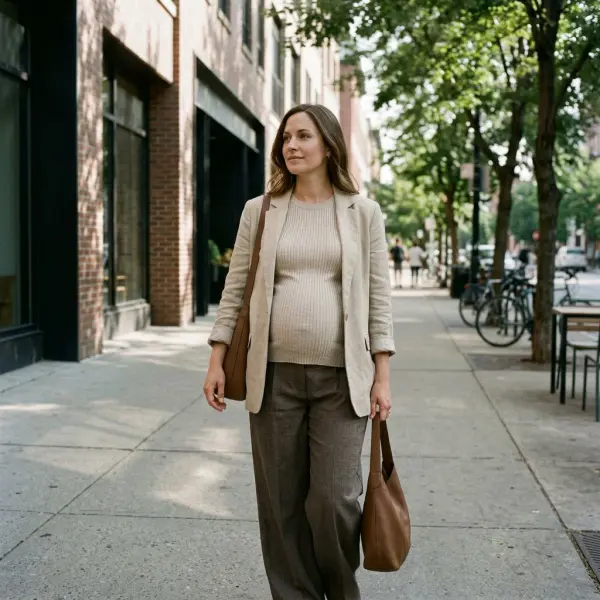
What Makes Maternity Fashion Different From Regular Clothing?
Maternity clothing differs from conventional apparel primarily through its intended fit and adaptability. A standard garment is generally developed around a defined set of body measurements, with an allowance for movement and ease. Maternity garments must also consider how abdominal volume, bust dimensions, and other body proportions may change during pregnancy.
These changes are not identical for every individual. Some people notice changes in their bust or waist relatively early, while others continue wearing familiar clothing for longer. The Australian Government-supported Pregnancy, Birth and Baby maternity clothing guidance explains that existing wardrobe pieces can remain useful and that purchasing an entirely new wardrobe is not essential.
From a design perspective, this means maternity fashion should be understood as a specialized approach to fit rather than simply an enlarged version of mainstream women's clothing.
Accommodation Without Excessive Oversizing
A conventional shirt purchased several sizes larger may provide additional abdominal room, but it can also create unnecessary volume at the shoulders, neckline, and sleeves. Similarly, larger standard trousers may remain restrictive around the abdomen while becoming loose at the hips or legs.
Purpose-designed maternity garments can distribute this additional space more selectively. A top may retain relatively familiar shoulder dimensions while introducing additional front-body volume. Trousers may preserve the intended leg silhouette while using a more accommodating waistband or abdominal panel.
This separation is valuable for brands developing maternity extensions of existing product lines. It allows a label to maintain recognizable design proportions while modifying the areas that need greater flexibility.
Adapting to Change Rather Than a Fixed Body Shape
A maternity garment is often expected to work across more than one point in pregnancy. However, the amount of adjustment it can provide depends on its pattern, fabric, and construction. A highly structured woven dress with limited ease will behave differently from a soft jersey dress with gathering or elasticized sections.
Manufacturers therefore need to distinguish between garments that offer substantial adjustability and garments that fit a narrower range of body changes. The two approaches can both be valid, but they should not be marketed as interchangeable.
The technical design choices behind this adaptability are explored further in how adjustable clothing designs support comfort during pregnancy.
Keeping Style Consistent With the Wearer's Existing Wardrobe
Pregnancy does not automatically change a person's preferences for color, cut, formality, or personal expression. Someone accustomed to tailored workwear may still prefer trousers and structured layering, while another customer may favor relaxed dresses, oversized shirts, or minimalist basics.
This is why modern maternity assortments can benefit from styles that resemble familiar ready-to-wear categories. The adjustment is primarily in how the garment accommodates the body, not necessarily in how it communicates fashion identity.
A contemporary maternity collection might include wide-leg trousers, shirt dresses, simple jersey separates, and coordinated knitwear without relying on obvious maternity-specific decorative features.
How Pregnancy Influences Everyday Clothing Needs
Pregnancy can affect the way clothing fits, feels, and functions during ordinary activities. Expanding abdominal measurements are the most recognizable consideration, but they are not the only ones that influence garment selection.
The American College of Obstetricians and Gynecologists' overview of changes during pregnancy describes physical changes that can include abdominal expansion, breast changes, and swelling in the feet and ankles. These developments help explain why garment fit preferences may change over time, although the experience varies between individuals.
For apparel designers, the practical challenge is translating changing wearer needs into ordinary clothing decisions. Where a waistband sits, how a fabric behaves during movement, and whether a garment is easy to put on can become more meaningful than decorative styling details.
Comfort During Sitting, Walking, and Daily Movement
Comfort is influenced by more than whether a garment feels loose when standing still. A pair of maternity trousers may appear appropriately fitted during a fitting session but create uncomfortable pressure when the wearer sits for an extended period.
Daily movement tests can reveal problems that static measurements overlook. Designers should evaluate how waistbands behave when seated, whether fabric stretches comfortably across the abdomen, and whether seams create noticeable friction during walking.
These observations are particularly relevant for office clothing, travel outfits, and garments intended for extended wear.
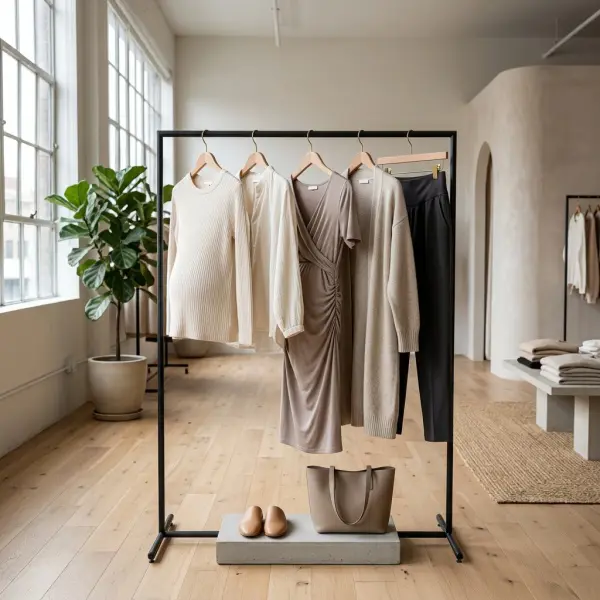
Clothing Needs Change With Weather and Lifestyle
Maternity dressing in a warm, humid climate may emphasize lightweight fabrics, breathable constructions, and easy layering. In colder regions, maternity clothing may need to work beneath coats, knitwear, and other protective layers.
Lifestyle also affects garment priorities. A customer working in a formal office may require maternity trousers and polished tops, while someone working from home may prefer jersey dresses or relaxed separates. People who travel frequently may place greater emphasis on garment recovery, wrinkle resistance, and ease of movement.
For global fashion brands, these differences suggest that maternity collections should be developed around genuine wearing occasions rather than assuming a universal maternity wardrobe.

Essential Maternity Clothing for Everyday Wardrobes
A practical maternity wardrobe does not need to contain dozens of specialized garments. Its effectiveness depends on how well individual pieces work together and how comfortably they accommodate the wearer's changing proportions.
From a commercial perspective, this makes maternity fashion particularly suitable for coordinated assortments. Retailers can organize products around versatile wardrobe foundations rather than encouraging customers to purchase completely separate outfits for every occasion.
Maternity Tops and Everyday Knitwear
Maternity tops are among the most accessible entry points into pregnancy-specific clothing. They may look similar to conventional T-shirts, blouses, and knitwear, but their construction can provide additional abdominal space through longer front panels, gathering, stretch fabrics, or modified side seams.
Length is particularly important. A conventional top may become shorter at the front as it stretches over the abdomen, leaving an uneven hemline or exposing areas the wearer would prefer to cover. A maternity-specific top can address this through additional front length and controlled shaping.
For designers, the objective should be to preserve a flattering relationship between the shoulder, bust, waist, and hemline rather than adding excess fabric indiscriminately.
Maternity Trousers, Jeans, and Leggings
Bottoms often require more specialized construction because the waistband sits close to an area experiencing substantial dimensional change.
Maternity trousers may use stretch waist panels, adjustable waist treatments, or a lower-positioned front waistband. The exact construction depends on the intended garment, fabric, and fit preference.
For maternity jeans, designers must balance the relatively structured properties of denim with the need for abdominal accommodation. A stretch knit panel can be combined with denim legs, allowing familiar denim styling without expecting the woven fabric alone to accommodate changing body proportions.
Leggings present different considerations. Stretch and recovery are essential, but the waistband must also remain comfortable during prolonged wear. Excessive compression, poor seam placement, or inadequate fabric recovery may affect comfort and appearance.
Maternity Dresses and Flexible Silhouettes
Dresses can be particularly versatile because their silhouettes may accommodate dimensional changes without relying on a conventional waistband.
Common maternity-friendly constructions include empire-line dresses, wrap-style dresses, relaxed shirt dresses, A-line silhouettes, and softly gathered jersey designs. These styles can provide flexibility, although their suitability depends on pattern dimensions, fabric selection, and the amount of adjustment incorporated.
A loose dress is not automatically a maternity dress. A garment with sufficient body volume but inadequate front length or bust accommodation may still fit poorly as pregnancy progresses.
Layers, Outerwear, and Supporting Pieces
Outerwear introduces an additional consideration: the garment must fit over clothing already providing abdominal accommodation.
An open-front cardigan or relaxed blazer may continue working without significant modification, while a fitted coat may require an adjustable front panel or greater body ease. Brands should consider whether a maternity-specific outerwear product provides enough additional value to justify its development and price.
Supporting pieces such as appropriately fitted bras, underwear, and comfortable footwear also influence everyday dressing. These products deserve attention within the assortment, even when the brand's main focus is fashion apparel.
The following comparison summarizes useful category-level priorities.
|
Clothing category |
Key design consideration |
Everyday application |
|
Maternity tops |
Additional front length and abdominal ease |
Casual wear, layering, work |
|
Maternity trousers |
Adaptable waistband and comfortable rise |
Office, commuting, daily activity |
|
Maternity jeans |
Flexible abdominal panel with a denim silhouette |
Casual outfits |
|
Maternity leggings |
Stretch, recovery, waistband comfort |
Relaxed and active daily wear |
|
Maternity dresses |
Flexible shaping and sufficient front length |
Everyday wear, work, occasions |
|
Outerwear |
Layering room and suitable closures |
Seasonal dressing and travel |
These categories represent different fit problems rather than simply different fashion styles. A brand may use similar colors and design details throughout the collection while developing separate construction solutions for each product type.
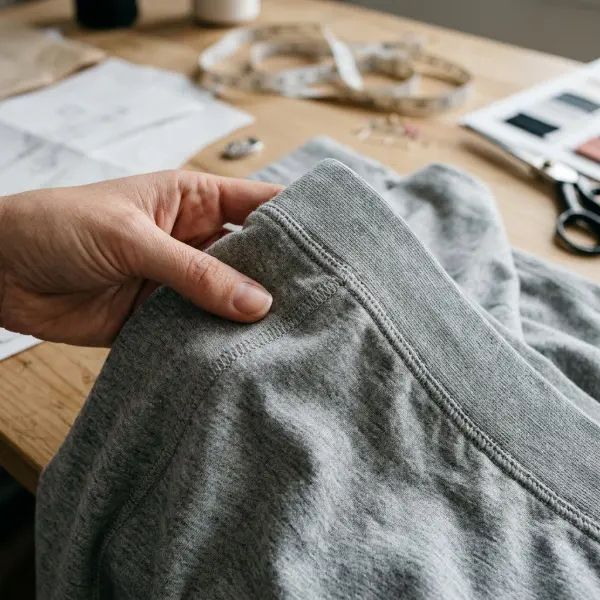
How Fabric Selection Affects Maternity Fashion
Fabric selection can determine whether a maternity garment feels adaptable or restrictive. The fiber composition matters, but it should never be evaluated independently of fabric structure, weight, finishing, stretch characteristics, and pattern construction.
Cotton jersey, for example, can provide a familiar casual handfeel with moderate flexibility depending on how it is knitted. Fabrics incorporating elastane may provide additional stretch and recovery, although their behavior depends on fiber percentages, yarn construction, finishing, and garment design.
Woven fabrics such as cotton poplin, linen blends, and lightweight twills can also be suitable for maternity clothing. They generally require more deliberate pattern shaping or additional ease when they offer limited mechanical stretch.
Stretch Is Useful, but Recovery Matters Too
A fabric that stretches easily does not necessarily return to its original dimensions after repeated use. Poor recovery can cause localized bagging, particularly around the abdomen, knees, or waistband.
For fitted maternity garments, designers need to consider both extension and recovery. A fabric must accommodate movement without developing unacceptable permanent deformation during ordinary wear.
The ASTM D2594/D2594M test method for knitted fabric stretch properties addresses fabric stretch and growth for certain low-power knitted fabrics. It offers a relevant technical reference, although manufacturers must select test methods appropriate to the material and product rather than assuming one method is suitable for every garment.
A practical sourcing assessment should therefore consider how the material behaves after repeated stretching, laundering, and extended periods of wear, not simply how stretchy a sample feels when pulled by hand.
Breathability and Thermal Comfort
Pregnancy can influence temperature perception and perspiration, making thermal comfort an important consideration for some wearers. Clothing intended for hot climates may benefit from appropriate air permeability, moisture handling, fabric weight, and ventilation.
Natural fibers such as cotton and linen may be appropriate choices, but fiber identity alone does not guarantee comfort. A dense, heavy cotton construction can feel warmer than a lightweight synthetic fabric engineered for airflow or moisture transport.
For maternity product development, fabric comfort should be evaluated as a combination of material properties, garment fit, climate, and expected activity. Broad claims that one fiber category is always more breathable or comfortable than another should be avoided.
Surface Texture and Skin Contact
Maternity clothing is frequently worn close to the body, particularly tops, dresses, underwear, and leggings. Internal seams, fabric texture, elastics, and trims therefore deserve attention during development.
A technically flexible fabric may still feel uncomfortable if it has a rough surface, rigid seams, or poorly positioned elastic. Similarly, decorative trims that look attractive on a hanger may become irritating during prolonged wear.
Brands can reduce these risks by evaluating completed garments for surface comfort, seam placement, and movement. Fabric handfeel at the sourcing stage is useful, but it does not replace fit testing of the assembled product.
Building a Modern Maternity Capsule Wardrobe
A maternity capsule wardrobe is a coordinated selection of clothing designed to cover common daily activities with relatively few garments. Its objective is not necessarily to minimize purchasing at all costs, but to improve the usefulness and versatility of each item.
The most practical approach begins with the customer's existing wardrobe. Some regular garments may remain suitable during pregnancy, particularly cardigans, loose dresses, relaxed shirts, and outer layers. Maternity-specific purchases can then address the areas where regular garments become restrictive or inconvenient.
A capsule wardrobe approach may include:
- Comfortable foundation pieces: Maternity trousers or leggings that coordinate with several tops.
- Versatile everyday tops: Neutral knitwear and relaxed blouses suitable for casual or professional settings.
- Flexible dresses: Simple silhouettes that can be styled for multiple occasions.
- Reusable layers: Cardigans, jackets, and open-front garments that work with existing clothing.
- Occasion-specific items: Products selected for genuine lifestyle needs rather than speculative future use.
This creates an opportunity for fashion retailers to communicate coordinated outfit solutions rather than presenting each maternity product as an isolated purchase.
Designing Around Real Wearing Occasions
A practical maternity wardrobe should reflect how the wearer spends time. Different activities create different requirements for appearance, mobility, care, and comfort.
Consider three common dressing situations.
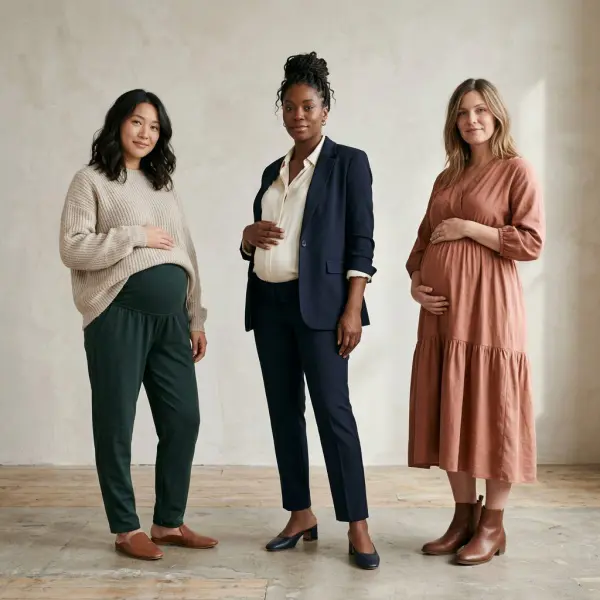
Casual everyday dressing: A soft maternity T-shirt, flexible straight-leg trousers, and an open cardigan can create a comfortable outfit suitable for shopping, appointments, or spending time with friends. The emphasis is on uncomplicated styling and garment mobility.
Professional dressing: Maternity-tailored trousers, a relaxed blouse, and a structured blazer may provide a more polished silhouette. The critical consideration is making sure the trousers remain comfortable when seated and that the blouse retains sufficient front length.
Social occasions: A softly draped dress can provide a more refined appearance while allowing abdominal space. Fabric weight, opacity, and movement become especially important when the garment is intended for longer events.
Considering Post-Pregnancy Wearability
Some maternity garments can remain useful after pregnancy, especially those with flexible silhouettes and adjustable fit features. However, continued wearability should be assessed by individual product design rather than treated as an automatic benefit of maternity clothing.
A relaxed dress may transition naturally into an everyday wardrobe. A pair of trousers with a substantial abdominal panel might be less desirable once the wearer's fit preferences change.
Brands considering broader product longevity should determine whether they are developing flexible maternity garments or intentionally integrating postpartum and nursing-related functionality. The latter involves additional design decisions, discussed in the functional differences between maternity wear and nursing wear.
Why Maternity Fashion Matters for Apparel Brands
For apparel businesses, maternity fashion represents a specialized customer need rather than merely an additional style category. The commercial opportunity comes from addressing fit and wardrobe challenges that ordinary ready-to-wear garments may not fully solve.
However, the category also introduces operational complexity. Customers may require garments with greater fit adaptability, while brands must balance development costs, inventory investment, size availability, and assortment relevance.
A maternity collection that looks attractive in campaign photography but performs poorly during everyday movement can create customer dissatisfaction. Conversely, a technically effective garment may struggle commercially if its styling feels disconnected from the brand's identity.
Product Development Should Start With Fit Problems
Brands considering maternity wear should identify which existing products can reasonably be adapted and which require dedicated pattern development.
A relaxed jersey dress may need only targeted changes to front length, gathering, or ease. A tailored trouser, by contrast, may require a substantially revised waist and abdominal construction.
The distinction affects development time, sampling expense, and production consistency. Simply increasing measurements in an existing pattern is unlikely to solve every maternity-specific fit issue.
Size Guidance Becomes a Customer Experience Issue
Maternity sizing can be confusing because different brands use different grading assumptions and fit systems. A customer who normally purchases one size may not know whether that size remains appropriate in a maternity collection.
Retailers can improve the experience by explaining the intended fit, identifying the areas designed for expansion, and publishing clear garment measurements.
Useful product information may include whether the silhouette is fitted or relaxed, how the waistband is constructed, whether the fabric stretches, and whether the product is designed to accommodate changing dimensions.
This information is often more actionable than a generic statement that a garment fits throughout pregnancy.
Inventory Planning Requires Assortment Discipline
Maternity collections can expand inventory complexity through additional silhouettes, sizes, colors, and specialized components.
For smaller brands, a focused collection built around proven wardrobe categories may be more manageable than launching a broad assortment immediately. Trousers, leggings, tops, and dresses can serve as an initial range for evaluating customer demand and fit feedback.
Fabric and trim standardization may simplify sourcing and production, provided it does not compromise product performance. For example, using one suitable jersey across several tops and dresses may help consolidate material orders.
The appropriate strategy depends on production minimums, customer demand, available capital, and the brand's existing distribution channels.
How Fashion Businesses Can Develop Better Maternity Products
Developing a commercially viable maternity line requires translating consumer needs into repeatable product specifications and quality processes.
Brands should approach the category through the same disciplined development framework used for other apparel, while accounting for changing body measurements and specialized construction requirements.
Define the Customer and Intended Wearing Period
Before developing patterns, establish who the garments are intended to serve.
A collection focused on office workers may prioritize professional silhouettes and coordinated separates. A casual lifestyle range may emphasize flexible knitwear, relaxed dresses, and uncomplicated care.
Brands should also define the intended adaptability of each garment. Not every style needs to accommodate the same range of body changes, but the specification and customer messaging should make that distinction clear.
Develop Appropriate Fit and Sampling Protocols
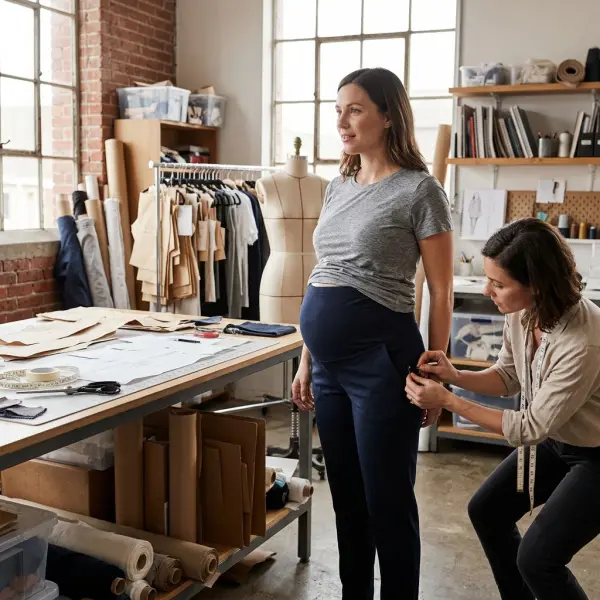
Maternity fit testing should not rely on a single fitting session or assume that one body shape represents all customers.
A practical development program can incorporate fit models or participants representing different body proportions and relevant stages of pregnancy, with informed participation and appropriate safeguards.
Designers should observe both appearance and function: sitting, walking, bending, reaching, and getting dressed can reveal issues that static fitting may overlook.
Pattern adjustments should then be documented clearly in specification sheets, including relevant garment measurements, tolerances, construction details, and fit expectations.
Validate Material and Construction Performance
Fabric sourcing decisions should reflect the garment's actual use.
A maternity legging fabric may require greater attention to opacity, stretch recovery, and dimensional stability. A woven maternity blouse may prioritize drape, appropriate opacity, ease of care, and seam comfort.
Manufacturers should establish product-specific quality requirements and use appropriate material and garment tests. These may include laundering performance, seam integrity, colorfastness, dimensional stability, and stretch behavior where relevant.
The objective is not to test every possible characteristic, but to identify the performance failures most likely to affect the product's intended use.
Communicate Product Features Without Exaggeration
Retail communication should translate technical garment features into practical benefits.
Instead of describing a garment only as "comfortable maternity trousers," a product page can explain its waistband construction, available size range, fabric composition, and intended fit.
Photographs showing front, side, and back views can help customers understand silhouette and coverage. Images of garments in realistic seated and standing positions may also communicate fit more effectively than highly stylized poses alone.
For brands selling online, descriptive product information should support customers' purchasing decisions without promising an identical fit experience for every pregnancy.
Common Maternity Fashion Mistakes Brands Should Avoid
Even an attractive maternity collection can underperform if it overlooks the functional differences between pregnancy-specific clothing and ordinary apparel.
Several mistakes are especially relevant during product development, sourcing, and merchandising.
Treating Larger Sizes as Maternity Fit
Increasing the measurements of a conventional garment may provide additional space, but it does not necessarily account for how body proportions change. The result can be excess material in some areas and insufficient room in others.
This approach is particularly problematic in structured garments such as trousers, shirts, and tailored dresses. Brands should develop targeted pattern adjustments and validate them through actual wear testing rather than assuming conventional grading will produce maternity-specific fit.
Choosing Stretch Fabric Without Evaluating Recovery
A fabric that stretches substantially during an initial fitting may appear ideal for maternity clothing. Yet poor recovery can lead to bagging, uneven fit, or loss of shape after repeated wear.
The better approach is to consider stretch, recovery, fabric growth, and laundering performance together. Material selection should follow the garment's intended use and required silhouette rather than a single stretch measurement.
Designing Only for a Standing Silhouette
Fashion samples are often evaluated while the wearer stands in front of a mirror. For maternity apparel, this can conceal important comfort issues.
A waistband that looks acceptable while standing may feel restrictive while seated. A dress that appears balanced in a static fitting may change length or drape during movement.
Brands should include realistic wearing positions and daily activities in the fit approval process.
Overpromising Universal Fit and Longevity
Claims such as "fits every pregnancy stage" or "wearable before, during, and after pregnancy" can create unrealistic expectations when they are not supported by the garment's design.
Body changes vary, and the same product may perform differently across customers. Brands should communicate intended fit flexibility precisely and avoid presenting adaptable sizing as a guarantee.
Ignoring Everyday Care Requirements
Maternity garments intended for frequent wear need practical care characteristics. A basic top requiring inconvenient maintenance may be less useful to customers than its appearance suggests.
Care expectations must also be supported by testing and accurate labeling. In the United States, the Federal Trade Commission's apparel labeling guidance outlines requirements covering fiber content, origin identification, and garment care information for relevant products. Requirements differ by market, so international brands must assess the rules applicable to their destinations.
Federal Trade Commission
What Brands Should Verify Before Entering the Maternity Market
Maternity fashion development should be based on demonstrated customer needs rather than assumptions about pregnancy or consumer preferences.
A product may be marketed as highly adaptable, exceptionally breathable, or suitable across multiple stages of pregnancy, but these claims require appropriate product evidence. Visual appearance alone cannot establish fit performance, material behavior, or long-term usability.
Before committing to an assortment, brands should verify four areas:
- Fit validity: Whether the pattern accommodates the intended body proportions and movement requirements.
- Material performance: Whether fabric stretch, recovery, durability, and care behavior meet product expectations.
- Commercial feasibility: Whether production minimums, target prices, and projected demand support a viable assortment.
- Customer communication: Whether sizing instructions, product claims, and garment descriptions accurately reflect the product.
These considerations are especially relevant for businesses entering maternity wear from a conventional ready-to-wear category. Existing expertise in styling and production is useful, but it does not eliminate the need for specialized fitting and customer research.
Sustainability and Garment Longevity Need Careful Interpretation
Maternity clothing is sometimes promoted as more sustainable when it can be worn for longer periods or reused after pregnancy. Extended usability may offer practical value, but it does not automatically establish a lower environmental impact.
The environmental implications depend on factors such as material production, manufacturing processes, transport, garment care, use frequency, and what happens to the clothing after use.
A garment designed for multiple wearing stages may be a sensible product concept, but brands should avoid presenting it as environmentally superior without appropriate evidence.
Borrowing, resale, clothing exchanges, and carefully planned purchases can also offer alternatives to purchasing an entirely new wardrobe. These options may be relevant to retailers considering rental, resale, or other services, although their commercial viability depends on logistics, garment condition, cleaning, and customer demand.
Frequently Asked Questions About Maternity Fashion
1. When should someone start wearing maternity clothes?
There is no universal pregnancy week when maternity clothing becomes necessary. The decision depends on how an individual's body changes, the fit of existing clothing, and personal comfort preferences. Some people continue wearing relaxed conventional garments for a considerable period, while others benefit from maternity-specific trousers or bras earlier.
The most useful indicator is whether existing clothing still provides comfortable movement and appropriate fit. For retailers, this means avoiding rigid marketing claims about when every customer should purchase maternity clothing. Instead, product descriptions should explain which fit problems a garment addresses and how its construction provides additional accommodation.
2. Can regular clothes be worn during pregnancy?
Yes. Many regular garments can remain useful during pregnancy, particularly those with relaxed silhouettes, flexible fabrics, and sufficient room for changing proportions. Open-front cardigans, loose dresses, longer tops, and some stretch garments may continue to work without modification.
However, suitability depends on the garment and individual wearer. A loose top may provide abdominal room but become too short at the front, while conventional trousers may create pressure around the waist. For fashion businesses, this distinction highlights the importance of offering maternity-specific products where functional improvements are genuinely needed rather than simply relabeling oversized clothing.
3. What fabrics are commonly suitable for maternity clothing?
Maternity clothing can be made from a variety of knitted and woven fabrics, including cotton jersey, cotton-elastane blends, viscose or lyocell blends, and lightweight woven materials. No single fiber or fabric construction is universally appropriate for every garment.
The selection should reflect the intended silhouette, climate, movement requirements, and care expectations. A fitted maternity top may benefit from a fabric with suitable stretch and recovery, whereas a relaxed woven dress may depend more on pattern ease and drape. Manufacturers should verify the finished material's performance through relevant testing instead of assuming that softness or stretch alone guarantees comfort.
4. Are maternity clothes suitable after pregnancy?
Some maternity clothes remain practical after pregnancy, particularly garments with relaxed shapes, adjustable details, or silhouettes that do not depend on a pronounced abdominal fit. Dresses, knitwear, and some trousers may continue to be useful depending on how the wearer's body and preferences change.
However, post-pregnancy suitability is not guaranteed. A garment with a large abdominal panel or specialized shaping may fit differently afterward. Nursing functionality is also separate from general post-pregnancy wearability. For brands, the safest approach is to describe precisely how a garment can adapt and avoid making broad longevity promises that have not been evaluated.
5. How do maternity clothing sizes work?
Maternity sizing systems vary between brands. Some maternity collections use customers' usual pre-pregnancy size as a starting reference, while others provide dedicated measurements or different sizing guidance.
Because sizing conventions are not universal, shoppers should consult the specific brand's chart and product measurements. Garment silhouette, fabric stretch, and waistband construction also affect fit. For ecommerce businesses, a useful product page should identify relevant body and garment measurements, explain the intended fit, and clarify which areas accommodate additional volume. This reduces ambiguity and supports more informed purchasing, although it cannot guarantee fit for every individual.
6. Does maternity fashion need to follow current fashion trends?
No. Maternity clothing does not need to follow seasonal trends to be commercially relevant. Many consumers may prefer familiar wardrobe styles adapted for pregnancy, especially when purchasing garments intended for frequent use.
Trends can still influence colors, silhouettes, textile finishes, and styling direction. A maternity collection may incorporate contemporary wide-leg trousers, minimalist knit sets, or relaxed tailoring while maintaining appropriate construction and fit. For brands, the priority should be aligning fashion direction with customer needs and product usability. Trend relevance is valuable when it enhances the collection rather than compromising comfort or creating unnecessary inventory risk.
7. What should a fashion brand consider before launching a maternity collection?
A brand should first evaluate whether its existing customers have a clearly defined need for maternity-specific garments. Customer interviews, purchase behavior, product reviews, and carefully scoped market research can help identify relevant product categories and fit challenges.
The next step is assessing technical capability. Maternity apparel may require specialized patterns, dedicated fit sessions, flexible materials, and construction details that differ from existing collections. Manufacturers must also consider minimum order quantities, quality requirements, and production costs. A limited pilot assortment can provide useful commercial feedback before expansion, particularly when the brand has little previous experience with maternity fit and sizing.
Conclusion: Maternity Fashion as Practical, Considered Design
Modern maternity fashion works best when it respects the relationship between clothing, changing body proportions, and everyday life. Its purpose is not simply to conceal or emphasize pregnancy, but to offer garments that accommodate the wearer while preserving personal style and practical functionality.
For fashion businesses, the strongest foundation is an understanding of fit. Fabric flexibility, attractive silhouettes, and versatile styling all contribute to product appeal, but they must be supported by appropriate pattern construction, sampling, quality control, and accurate customer communication.
A well-developed maternity collection does not have to be extensive. A carefully selected range of trousers, tops, dresses, and layering pieces can provide meaningful wardrobe solutions when each garment addresses a recognizable wearing need.
The broader lesson for apparel development is that good maternity fashion combines thoughtful design with realistic adaptability. Brands that understand this balance are better positioned to create clothing that feels useful, familiar, and relevant throughout pregnancy without sacrificing technical quality or commercial discipline.




Comments 0
Leave a CommentSend Comment
Anda harus Login terlebih dahulu untuk dapat memberikan komentar.