
Satin Fabric Explained: Weave, Finish, Properties, and Fashion Uses
Quick Answer
Satin is a fabric construction characterized by long yarn floats across its surface, creating a smooth face that reflects light with relatively little visual interruption. It is primarily identified by its weave structure—not by one specific fiber—and can be made from silk, polyester, nylon, acetate, viscose, cotton, or fiber blends.
The final fabric depends on three separate decisions: the satin weave, the yarn or fiber used, and the finishing process. A silk satin and a polyester satin may share a glossy surface but behave differently in drape, breathability, care, cost, sewing, and long-term appearance.
Satin is commonly used for dresses, blouses, skirts, lingerie, sleepwear, linings, accessories, and occasion garments. Its fluid appearance and light-responsive surface make it visually distinctive, but the long floats that create its sheen can also increase susceptibility to snagging, picking, seam slippage, and surface marking.
For fashion businesses, “satin” is therefore not a complete fabric specification. Buyers should confirm fiber content, weight, construction, stretch, finish, color performance, care requirements, and garment-level test results before approving bulk production.
What Is Satin Fabric?
Satin fabric is a woven textile that uses a satin weave to create a predominantly smooth, float-covered surface for visual sheen and fluidity, although its exact appearance and performance depend on the fiber, yarn, density, weight, and finishing method.
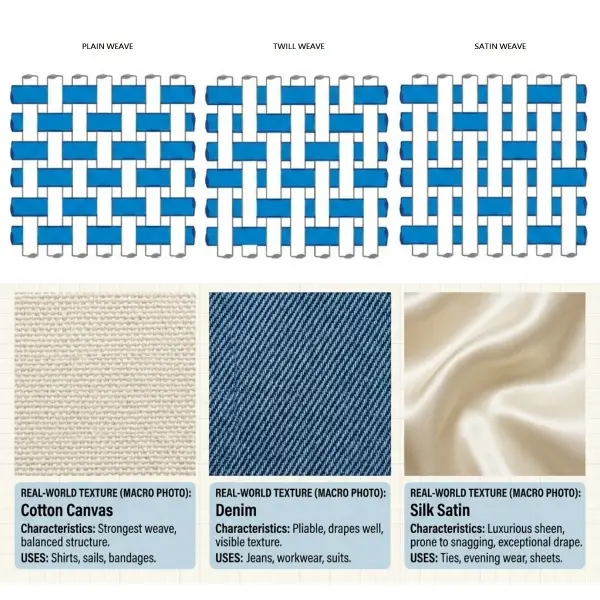
Satin is regarded as one of the basic woven structures alongside plain weave and twill. In a plain weave, warp and weft yarns interlace frequently. Satin reduces the number of visible interlacings by allowing selected yarns to pass—or “float”—over several yarns before being bound into the structure again. Cotton Incorporated’s technical learning resource describes satin as one of the three basic woven designs and attributes its smooth, lustrous surface to these long floats.
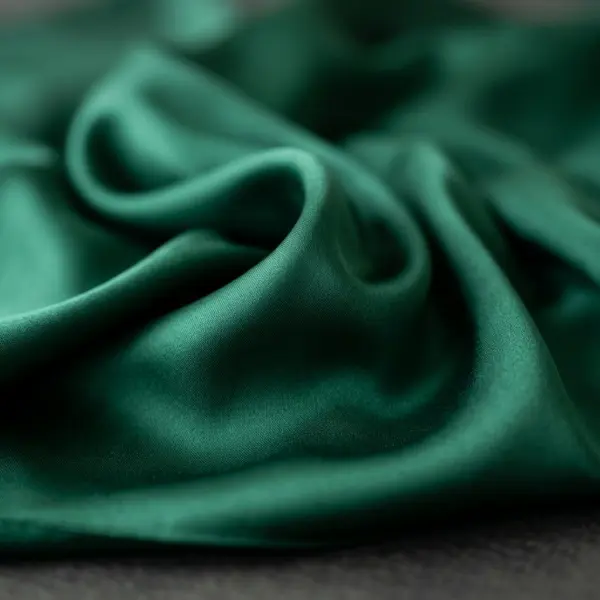
The exposed floats create broad, relatively uninterrupted areas from which light can reflect. This produces the shifting highlights and shadows associated with satin, particularly when the fabric moves or drapes around the body.
That does not mean every satin is highly reflective. A lightweight filament satin may have a liquid-looking sheen, while a heavier or softly finished version may appear more subdued. Yarn twist, filament shape, fabric density, color, surface treatment, and even viewing angle can noticeably change the result.
How Does Satin Weave Create Its Characteristic Surface?
Satin weave creates its surface by spacing the yarn interlacing points so that long floats dominate one side of the fabric. The reduced frequency of visible crossovers makes the face appear smoother than a comparable plain-weave fabric.
Warp yarns run along the length of woven fabric, while weft yarns run across its width. A satin construction can be warp-faced, meaning warp floats dominate the face, or weft-faced, meaning weft floats dominate it. The exact repeat may vary, but the binding points are distributed to avoid the obvious diagonal line seen in a conventional twill.
The George Washington University Museum and The Textile Museum explains that satin weave is characterized by long warp floats that help accentuate the natural shine of fibers such as silk. The same structural principle can also enhance the smooth appearance of manufactured filament yarns.
A simplified comparison shows why structure matters:
|
Construction |
Surface structure |
Typical visual effect |
Practical implication |
|
Plain weave |
Frequent over-one, under-one interlacing |
Even, comparatively restrained surface |
Often stable and straightforward to handle |
|
Twill weave |
Interlacings progress diagonally |
Visible diagonal ribs or lines |
Often combines flexibility with structural cohesion |
|
Satin weave |
Widely distributed binding points with longer floats |
Smooth, lustrous, light-responsive face |
May drape well but requires attention to snagging and seam performance |
These are structural tendencies, not universal performance rankings. Fiber type, yarn size, density, and finishing can make one satin substantially firmer than another or a particular plain weave softer than expected.
Why the Face and Back Often Look Different
Many satin fabrics have a glossy face and a comparatively dull reverse because the float system is concentrated on one side. This contrast is especially visible in warp-faced constructions, where the face is largely covered by warp floats while more binding points remain visible on the reverse.
The two sides may also behave differently during cutting, pressing, bonding, or printing. Product developers should mark the approved face clearly on swatches and pattern instructions. Accidentally reversing one garment panel can create an apparent shade difference even when every piece came from the same dye lot.
Why Long Floats Are Both an Advantage and a Risk
Long floats give satin its visual continuity and smooth handfeel. They also leave sections of yarn more exposed than in a tightly interlaced plain weave.
The potential consequences include:
- Snagging when the surface catches jewelry, rough fingernails, hook-and-loop fasteners, or machinery.
- Picking, where individual filaments or yarn segments are pulled from the surface.
- Yarn movement near stressed seams.
- Skew or distortion in fabrics with insufficient structural stability.
- Localized glazing, abrasion, or pressure marks during production and wear.
These risks vary significantly. A dense heavyweight satin intended for structured dresses may behave very differently from a lightweight charmeuse used for a bias-cut slip. The correct response is not to reject satin as fragile, but to test the actual fabric against the garment’s end use.

Satin Is a Structure, Fiber, and Finish Decision
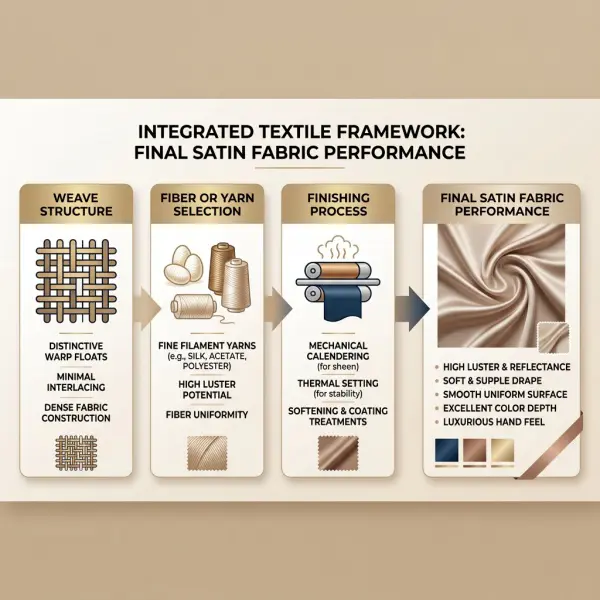
A useful way to specify satin is to separate three layers: construction, fiber composition, and finishing. Treating these as interchangeable is one of the main causes of sourcing errors.
Structure Determines the Basic Surface Architecture
The weave determines how warp and weft yarns interlace. In satin, this creates the float-dominant face responsible for much of the characteristic smoothness and sheen.
Construction also includes factors such as yarn density, yarn size, fabric weight, width, and whether elastomeric yarn has been incorporated. Two suppliers can therefore offer fabrics labeled “polyester satin” that differ noticeably in opacity, body, stretch, snag resistance, and sewing behavior.
Fiber Influences How the Satin Performs
Satin can be woven from several fiber families. Fiber selection affects moisture behavior, heat response, strength, elasticity, dyeing options, care, price, and perceived value.
Common commercial possibilities include:
|
Fiber or yarn family |
Possible satin character |
Points to verify |
|
Silk filament |
Fluid, naturally lustrous, often positioned as premium |
Silk grade, weight, dye fastness, surface sensitivity, care, provenance, and price |
|
Polyester filament |
Can produce consistent shine, color, and scalable commercial supply |
Static, heat response, snagging, breathability expectations, finish durability, and recycled-content substantiation if claimed |
|
Nylon filament |
Smooth, lightweight, and potentially resilient depending on construction |
Heat sensitivity, yellowing risk, stretch behavior, abrasion, and intended care |
|
Acetate or triacetate |
Often selected for sheen and elegant drape |
Heat response, solvent compatibility, dimensional stability, and care instructions |
|
Viscose or other regenerated cellulosic fiber |
Can create fluid drape and a softer, less synthetic handfeel |
Wet performance, shrinkage, surface abrasion, dye fastness, and supplier-specific care |
|
Cotton spun yarn |
Usually sold as sateen and tends to have a softer, less liquid-looking luster |
Shrinkage, pilling, crease behavior, colorfastness, and finish durability |
|
Blends with elastane |
Adds stretch for close-fitting garments |
Stretch recovery, spirality, heat setting, seam type, and elastane damage during processing |
These descriptions indicate common possibilities rather than guaranteed properties. A fiber name alone cannot predict the performance of a completed fabric.
This distinction is explored more deeply in Satin vs Silk: Why Fabric Structure and Fiber Are Not the Same. For sourcing teams, the immediate lesson is simple: never use “satin” as a substitute for a legally accurate fiber description.
Finish Modifies the Surface but Does Not Define Satin by Itself
Finishing can enhance smoothness, luster, softness, body, dimensional stability, antistatic behavior, or other properties. It can also reduce unwanted shine or create a washed, matte, sanded, or crepe-like effect.
Calendering, for example, passes fabric between rollers under pressure and sometimes heat. Cotton Incorporated describes calendering as a mechanical finishing process that can create greater smoothness, luster, or embossed effects.
Finishing and weave should not be confused. A fabric can receive a glossy finish without using a true satin weave, while a satin weave can be deliberately finished to look relatively matte. The term “satin finish” is also used outside textile construction to describe a level of sheen on products such as metal, paint, cosmetics, or packaging. That usage does not identify a fabric structure.
What Does Satin Fabric Feel and Look Like?
Satin is generally recognized by its smooth face, directional luster, and ability to reflect highlights across folds. Beyond that, there is no single universal satin handfeel.
A lightweight satin may feel fluid and cool on first contact, particularly when made with smooth filament yarns. A heavier version may feel firm, dense, and sculptural. Stretch satin can sit close to the body, while crepe-back satin offers two contrasting surfaces that designers may use selectively.
The most commercially relevant characteristics are interconnected:
- Luster: Created by the float-dominant surface, yarn properties, and finishing. It may range from subtle to mirror-like.
- Drape: Often fluid, but strongly affected by weight, density, yarn twist, and any applied finish.
- Surface smoothness: Useful for linings and garments designed to glide over the body, although smoothness does not guarantee breathability.
- Directional appearance: Panels cut in opposing directions may reflect light differently.
- Opacity: Highly variable. Some lightweight satins require lining, while dense versions may be sufficiently opaque for the intended design.
- Fray behavior: Many lightweight filament satins can fray at raw edges, but the amount depends on construction and finishing.
- Care sensitivity: Heat, moisture, pressure, solvents, and washing can affect different fiber-based satins in different ways.
A buyer evaluating only color and shine may miss the properties that determine whether the fabric succeeds in production. Drape, recovery, seam stability, pressing response, and appearance after care are often more consequential than the first visual impression.
Common Types of Satin Used in Fashion
Commercial names help buyers describe broad fabric aesthetics, but they are not always standardized across mills and regions. The same label may cover different weights, fibers, or constructions, so physical samples and technical specifications remain necessary.
Charmeuse
Charmeuse is commonly a lightweight satin with a glossy face, dull reverse, and fluid drape. It is frequently used for bias-cut dresses, camisoles, blouses, lingerie, and sleepwear.
Its fluidity can create elegant movement, but lightweight versions may reveal seam puckering, needle damage, or garment construction beneath the surface. Sampling should therefore include the intended stitch, seam, hem, lining, and pressing method.
Duchess Satin
Duchess satin is generally heavier, firmer, and more structured than charmeuse. It is often selected for bridalwear, formal dresses, corseted silhouettes, bows, and garments that need smooth volume rather than liquid drape.
The commercial label alone does not guarantee a particular fiber or weight. Buyers should specify measurable requirements instead of assuming all duchess satin will behave like a previously approved quality.
Crepe-Back Satin
Crepe-back satin combines a lustrous satin face with a more textured reverse created through yarn and construction choices. Designers may use the satin side outward, reverse the fabric for contrast, or combine both sides within one garment.
Before adopting a reversible design, teams should confirm whether the reverse has acceptable color, abrasion, and appearance for external use. A technically usable reverse is not automatically finished to the same cosmetic standard as the approved face.
Stretch Satin
Stretch satin incorporates elastomeric yarn or uses a construction that provides measurable stretch. It can suit fitted dresses, occasion separates, lingerie, dancewear, or other garments requiring greater mobility.
Stretch percentage is only part of the decision. Recovery—the fabric’s ability to return toward its original dimensions—matters just as much. Poor recovery can produce bagging around seats, elbows, waists, or other high-movement areas.
Satin-Faced Organza and Other Hybrid Constructions
Some fabrics combine satin areas with organza, jacquard, crepe, or other structures. These materials can provide localized shine, pattern, transparency, or surface contrast without behaving like a uniform satin.
For designers comparing fluid satin with transparent structured fabrics, the guide to chiffon fabric characteristics, uses, and care provides useful context on how sheer materials require different construction decisions.
Where Is Satin Used in Fashion?
Satin is used where designers want a smooth surface, controlled sheen, fluid movement, or polished contrast. Its suitability depends more on the specific quality and garment construction than on the category name alone.
Dresses and Evening Separates
Satin can support bias-cut slips, draped gowns, structured cocktail dresses, skirts, corseted bodices, or formal tailoring details. Lightweight qualities tend to reveal the body and underlying construction, while heavier versions can hold cleaner sculptural forms.
The wider commercial and styling reasons behind these categories are examined in why satin remains popular in eveningwear, lingerie, and occasion pieces. From a product-development perspective, the key question is whether a specific satin produces the intended silhouette without unacceptable transparency, seam distortion, or surface damage.
Blouses, Shirts, and Skirts
Satin can add visual depth to relatively simple garments because light changes across the surface as the wearer moves. This makes clean cutting and sewing particularly important: a twisted placket, rippled hem, or uneven seam allowance may be more visible on a reflective fabric.
For daywear, teams may choose a lower-luster finish, washed surface, muted color, or heavier weight to reduce the overtly formal effect.
Lingerie, Sleepwear, and Loungewear
Smooth satins are commonly used for slips, camisoles, robes, shorts, pajamas, and lingerie panels. Comfort, however, cannot be inferred from smoothness alone. Fiber moisture behavior, climate, fit, seam placement, elastic tension, trims, and care all affect the wearer’s experience.
Products sold as children’s sleepwear or regulated nightwear may also face market-specific flammability and labeling requirements. Brands should verify the laws and test protocols applicable to the destination market rather than applying one global assumption.
Linings
Satin or satin-like lining fabrics can help garments slide over other clothing and reduce friction when putting them on. Linings may be used in jackets, coats, skirts, dresses, trousers, bags, or accessories.
A lining must still be evaluated for tear strength, seam durability, static, dye transfer, opacity, and compatibility with the outer fabric’s cleaning method. A low-cost lining that fails early can shorten the perceived life of an otherwise well-made garment.
Accessories and Decorative Details
Satin appears in scarves, hair accessories, shoes, bags, belts, neckties, bows, fabric-covered buttons, trims, and bridal accessories. In these products, abrasion and contact with hardware can be more severe than expected.
A satin suitable for a softly draped blouse may not withstand repeated rubbing against a bag clasp or shoe edge. End-use testing should reflect where and how the material will be touched.

How Should Fashion Businesses Source Satin?
Satin sourcing should begin with the intended garment and performance requirements, not with sheen alone. A supplier request that says only “good-quality satin” leaves too much room for interpretation.
A useful fabric specification should cover:
- Fiber composition and percentage.
- Warp-faced or weft-faced construction where relevant.
- Fabric weight and usable width.
- Yarn type and density information available from the mill.
- Stretch and recovery requirements.
- Face and reverse appearance.
- Color standard and acceptable shade variation.
- Required finish and its expected durability.
- Dimensional change after the intended care process.
- Colorfastness to washing, dry cleaning, perspiration, rubbing, or light as applicable.
- Snagging, abrasion, seam slippage, and tear performance appropriate to the product.
- Care instructions and target-market compliance.
- Lot quantity, minimum order, lead time, continuity, and shade-banding procedure.
The specification should be tied to an approved physical standard. Digital images are not reliable enough to evaluate luster, drape, opacity, or handfeel, and display settings can distort both color and shine.
Evaluate the Fabric in Motion
A flat swatch may look convincing while producing an entirely different effect once cut on the bias, gathered, pleated, stretched, or layered. Teams should examine the fabric vertically, over a body form, under more than one lighting condition, and alongside the intended lining or interfacing.
Dark satin can reveal pressure marks and surface scratches under strong directional light. Pale satin may expose seam allowances, pocket bags, facings, or undergarments. These issues should be discovered during sampling, not after bulk garments reach studio photography.
Test the Garment, Not Only the Fabric
Laboratory fabric results are valuable, but garment construction creates additional risks. Seam type, stitch density, needle selection, thread, seam allowance, grain direction, lining, closure, and fit can change the outcome.
Seam slippage deserves particular attention because yarns can move apart near a stressed seam even when the sewing thread remains intact. The ISO 13936-1 test method is specifically intended to determine the resistance of woven-fabric yarn systems to slippage at a sewn seam. Brands should select test methods and acceptance criteria with their laboratory, buyer manual, end use, and market requirements in mind.
Manufacturing Implications: Cutting, Sewing, and Pressing Satin
Satin can be produced successfully at scale, but it often exposes weak handling and sewing practices. Its smooth surface can shift during spreading, while its sheen makes puckering, needle marks, and inconsistent pressing more visible.
Cutting Requires Directional Control
Because satin reflects light directionally, all visible garment panels should normally follow the approved directional layout unless the design intentionally uses contrast. Rotating pieces to improve marker efficiency can make panels appear to be different shades.
The cutting team should also control layer movement. Depending on the fabric, practical measures may include lower lay heights, stable underlays, sharp cutting equipment, reduced handling, and additional checkpoints for grain and panel direction.
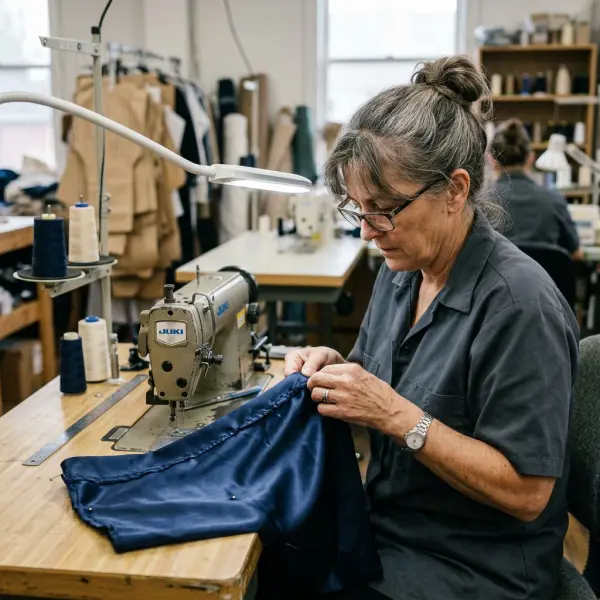
Sewing Must Be Approved on the Actual Fabric
There is no universal needle, thread, stitch, or tension setting for every satin. Lightweight filament satin generally needs a clean, sharp penetration and carefully balanced tension, but the appropriate setup depends on fiber, density, weight, stretch, seam type, and machinery.
A production trial should check for:
- Seam puckering before and after pressing.
- Needle damage or pulled filaments.
- Yarn separation at load-bearing seams.
- Feed marks and differential layer movement.
- Fraying at seam allowances.
- Impressions from overlocking, pressing, or internal construction.
- Hem distortion and visible stitch irregularity.
The approved trial should become part of the production reference. Relying on settings used for a previous “satin” is risky because a visually similar fabric may respond differently.
Pressing Can Improve or Permanently Mark the Surface
Heat, pressure, steam, and moisture should be tested on a cutting from the actual bulk fabric. Excessive heat can affect thermoplastic fibers, while excessive pressure may flatten seams, produce glazing, or leave imprints from allowances and garment components.
Press cloths, padded surfaces, controlled pressure, and pressing from the reverse may help, depending on the fabric. Operators should not assume that a care-label ironing temperature automatically defines the best manufacturing press conditions.
Common Mistakes When Working With Satin
Treating Satin as a Fiber Name
This mistake often begins in merchandising language and then enters supplier communication. A product may be promoted as “satin” without clearly stating whether it is silk, polyester, acetate, viscose, or a blend.
The result can be inaccurate customer expectations, inconsistent sourcing, and potentially noncompliant labeling. In the United States, for example, Federal Trade Commission guidance explains the required disclosure of fiber content and other textile label information. Other markets have their own requirements, so brands should verify destination-specific rules.
A better product description separates appearance from composition: for example, “satin-weave fabric made from 100% polyester,” subject to the verified supplier documentation and local labeling format.
Approving Fabric Based Only on Shine and Handfeel
A beautiful sample can still fail when sewn, worn, cleaned, or photographed. Surface approval should be accompanied by measurable requirements and a garment prototype.
This is particularly important for fitted silhouettes. Seam stress that is invisible on a hanger may cause yarn separation once the garment is worn.
Assuming Expensive Satin Is Automatically More Suitable
Price can reflect fiber, mill capability, finishing, order volume, provenance, or market positioning. It does not prove suitability for a particular pattern or care route.
A premium silk satin may be wrong for a washable uniform-style blouse, while a well-developed synthetic satin may be operationally appropriate. Conversely, choosing the cheapest satin for an occasion dress may create unacceptable shine, static, snagging, or seam instability. Suitability is an end-use decision.
Ignoring Directional Sheen in Marker Planning
Rotating pattern pieces may save fabric on paper but create visible tonal differences in the completed garment. Any efficiency calculation should account for a one-way marker when required.
If the direction is not communicated across design, pattern, marker making, cutting, and quality control, the defect may not be identified until final inspection.
Making Sustainability Claims From Fiber Labels Alone
Neither “silk satin,” “recycled polyester satin,” nor “plant-based satin” provides a complete sustainability assessment. Relevant factors can include raw-material sourcing, processing chemistry, energy, durability, microfiber release, labor conditions, transport, care, and end-of-life infrastructure.
A recycled-content claim should be supported by appropriate documentation and traceability. A natural-fiber claim should not automatically be translated into “eco-friendly.” Satin weave itself is not a sustainability certification.
What Should Brands Verify Before Acting?
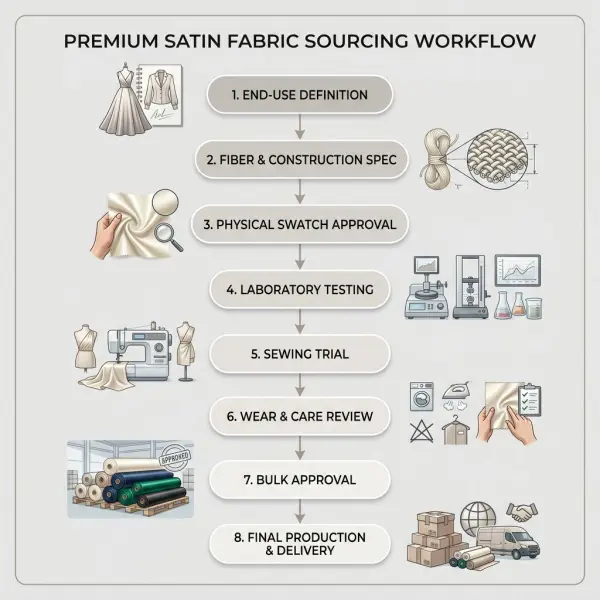
Before committing a satin to bulk production, verify what the product must do and whether the specific fabric can do it consistently.
The most important checks are:
- Confirm the identity. Obtain documented fiber composition, construction details, finish, weight, and usable width.
- Approve a physical standard. Retain a signed and dated swatch or header for color, surface, handfeel, and reverse-side appearance.
- Test the end use. Match test methods and performance criteria to the actual garment, target market, and care route.
- Run a sewing trial. Approve seams, needle, thread, stitch, hem, pressing, lining, and reinforcement on the nominated fabric.
- Review visual consistency. Check directional sheen, shade bands, side-to-side variation, bow, skew, and surface defects.
- Conduct wear and care trials. Include realistic movement, friction, cleaning, drying, and pressing where appropriate.
- Validate claims and labels. Separate weave terminology from fiber content and substantiate composition, origin, recycled content, and care claims.
- Control bulk production. Define inspection points, tolerances, lot separation, defect handling, and approval authority.
The central principle is that a satin name describes only part of the material. Commercial reliability comes from connecting the fabric specification to the garment design, production method, customer promise, and applicable regulation.
Frequently Asked Questions About Satin Fabric
Is satin a fabric or a weave?
Satin is most accurately understood as a weave structure, although the trade also uses the word for fabrics produced with that structure and characteristic surface. It is not a single fiber.
A satin fabric may be made from silk, polyester, nylon, acetate, viscose, or blends. Cotton versions with a similar float-faced construction are commonly called sateen. Because commercial terminology varies, a sourcing description should include both construction and verified fiber composition. “Polyester satin,” for example, communicates more than “satin,” but weight, finish, stretch, density, and performance requirements are still needed for production.
Is all shiny fabric satin?
No. Shine can result from smooth filament yarns, metallic elements, coatings, calendaring, glazing, or other finishes and constructions. A glossy fabric therefore does not automatically have a satin weave.
The reverse is also true: a satin-weave fabric may have restrained luster because of its yarn, color, texture, or finish. When identification matters, inspect the interlacing structure and supplier specification instead of relying only on surface appearance. For commercial orders, the mill’s construction data and an approved physical reference are more dependable than a product photograph or descriptive trade name.
What is the difference between satin and sateen?
Both terms refer to float-faced woven structures, but common industry usage distinguishes them by yarn character and fiber. Satin is frequently associated with smooth filament yarns, while sateen is commonly associated with spun yarns, especially cotton.
This convention is useful but not perfectly consistent across all suppliers, countries, and historical references. A buyer should not infer fiber content from the word alone. Confirm whether the offered quality is warp-faced or weft-faced, which fiber and yarn system it uses, its weight and finish, and how the supplier defines the trade name.
Is polyester satin lower quality than silk satin?
Not inherently. Polyester satin and silk satin serve different price points, care expectations, performance requirements, and brand positions. Either can be unsuitable if its construction or finish does not match the garment.
Silk may provide a distinctive natural luster and premium material story, while polyester can offer scalable availability and different care or cost possibilities. Those tendencies do not replace testing. Quality should be evaluated through yarn and fabric consistency, dyeing, drape, surface appearance, seam performance, snag resistance, care results, and suitability for the intended product—not through fiber prestige alone.
Why does satin sometimes pucker at the seams?
Satin may pucker because of fabric instability, sewing-thread tension, stitch density, needle interaction, differential feeding, yarn displacement, pressing, or shrinkage differences between components. Lightweight and smooth filament constructions can make even minor distortion visually obvious.
The solution should be established through controlled sewing trials. Simply pressing the seam more aggressively may hide the problem temporarily or create glazing and impressions. Production teams should test needle and thread selection, machine tension, feed, seam type, stitch density, handling, and pressing on the actual bulk fabric before setting the production standard.
Does satin always need to be dry-cleaned?
No. Care depends primarily on fiber composition, dyeing, finish, interlinings, trims, garment construction, and the results of care testing. Some polyester satins may be washable, while certain silk, acetate, embellished, structured, or specially finished garments may require professional cleaning.
Brands should not copy care instructions from another satin garment. The complete product should be tested using the intended care route because a fabric that survives washing may still develop seam distortion, shrinkage, color change, water marking, delamination, or trim damage once made into a garment.
How can customers tell whether satin is silk or synthetic?
Appearance and touch alone are not reliable. High-quality manufactured filament satin can resemble silk, while finishing can change the handfeel and shine of either material.
Customers should check the legally required fiber-content label and supporting product information. Brands should provide accurate composition rather than using “silky,” “silk-like,” and “silk satin” interchangeably. Informal burn tests are unsuitable for finished garments and introduce safety risks; they may also be difficult to interpret in blends. When composition is uncertain in a business transaction, rely on supplier documentation and appropriate laboratory identification.
Conclusion
Satin’s identity begins with structure. Its long, carefully distributed floats create the smooth, light-responsive face that designers use for fluid dresses, polished separates, lingerie, linings, and structured occasion garments. Yet the weave alone does not determine how the fabric will feel, sew, wear, or perform after care.
Fiber supplies another layer of behavior. Yarn selection, weight, density, stretch, dyeing, and finishing further shape the result. That is why two fabrics sold under the same satin label can occupy entirely different positions in a collection.
For fashion businesses, the strongest approach is to replace broad assumptions with an end-use specification. Confirm the composition, approve a physical standard, examine the material in motion, test seams and care, control directional sheen, and validate every customer-facing claim.
Satin can deliver a distinctive visual result, but its success is decided before launch—in the detail of sourcing, sampling, testing, cutting, sewing, and quality control.





Comments 0
Leave a CommentSend Comment
Anda harus Login terlebih dahulu untuk dapat memberikan komentar.