

Mood Dressing Explained: How Emotions Influence Clothing Choices
Quick Answer
Mood dressing is the practice of choosing clothing according to a person's current emotional state, desired feelings, or psychological needs. Rather than selecting an outfit solely for appearance, functionality, or social expectations, individuals may use clothing to express emotions, seek comfort, reinforce confidence, or prepare themselves mentally for particular situations.
Within fashion psychology, mood dressing reflects a potentially two-way relationship between clothing and emotions. A person's mood can influence what they choose to wear, while the physical experience and symbolic meaning of clothing may influence how they subsequently feel. This relationship varies according to personality, cultural background, personal experiences, lifestyle, and social circumstances.
For fashion businesses, understanding mood dressing can support more relevant product development, collection planning, styling services, and customer communication. It encourages brands to consider not only how garments look, but also how customers want to experience wearing them.
However, mood dressing should not be interpreted as a universal psychological formula. No particular color, garment, or fashion style guarantees a specific emotional response. Its commercial value lies in understanding individual preferences and emotional motivations rather than making unsupported promises about psychological outcomes.

What Is Mood Dressing in Fashion?
Mood dressing describes a clothing selection behavior in which emotional considerations influence what people wear. These considerations may involve expressing an existing feeling, seeking a different emotional experience, or choosing clothing that provides a sense of familiarity and psychological comfort.
A person preparing for an important presentation might select a structured blazer because it helps them feel prepared. On a quiet weekend, the same person may prefer relaxed trousers and familiar knitwear, even when more fashionable alternatives are available. Neither decision necessarily reflects a change in personal style; both may represent an adjustment to different emotional and situational needs.
Research examining the relationship between perceived mood, self-consciousness, and clothing selection dates back several decades. A 1991 study published in the Clothing and Textiles Research Journal, titled The Influence of the Perception of Mood and Self-Consciousness on the Selection of Clothing, identified relationships between perceived emotional states, self-consciousness, and clothing choices among its student participants. Its findings provide evidence that emotional considerations can influence dressing behavior, although the characteristics of the study population limit broader generalization.
Mood dressing is therefore better understood as a behavioral concept than as a clearly defined fashion aesthetic. It does not prescribe particular garments, colors, silhouettes, or styling combinations.
Mood Dressing Is Not a Single Fashion Trend
Unlike minimalist fashion, streetwear, or quiet luxury, mood dressing does not have a consistent visual identity. It describes why someone chooses an outfit rather than what that outfit necessarily looks like.
Someone may express happiness through colorful clothing, while another person may associate happiness with an understated outfit that feels comfortable and authentic. A dark monochromatic outfit could represent emotional withdrawal for one wearer and confidence or sophistication for another.
This distinction matters commercially. A fashion label cannot assume that launching a brightly colored collection automatically addresses emotional dressing. The emotional relevance of a collection depends on the relationship between the products, the intended audience, and the circumstances in which customers wear them.
The Psychology Behind Mood Dressing
Fashion psychology explores relationships between clothing, human behavior, identity, perception, and emotional experience. Mood dressing occupies one part of this broader field, particularly where clothing becomes involved in self-expression, emotional regulation, and the presentation of identity.
An academic review published in Fashion and Textiles, Dress, Body and Self: Research in the Social Psychology of Dress, examines how dress relates to people's perceptions of themselves and their interactions with others. This research provides useful context for understanding why clothing decisions cannot always be explained through aesthetics or practical requirements alone.
Several psychological concepts help explain how mood dressing works.
Emotional Expression
Clothing provides a visible medium through which individuals may communicate aspects of their emotional experience. A person feeling playful might experiment with unusual styling combinations, while someone seeking privacy may prefer clothing that attracts less attention.
Emotional expression through fashion does not necessarily involve communicating a message to other people. Sometimes an outfit simply feels consistent with the wearer's internal state, regardless of whether anyone else recognizes its emotional significance.
For fashion designers, this creates opportunities to develop garments with different expressive qualities without assigning rigid emotional meanings to them.
Emotional Regulation
Emotional regulation refers to the processes through which people influence their emotional experiences and responses. Clothing can become one of several everyday tools that individuals use in an attempt to manage how they feel.
Someone experiencing a demanding week might choose garments associated with comfort and familiarity. Another person may dress more formally before a challenging meeting because the process helps establish a sense of readiness.
These behaviors do not demonstrate that clothing can reliably eliminate negative emotions. Rather, they illustrate how dressing routines may become part of a person's broader approach to managing everyday experiences.
A study published in the International Journal of Fashion Design, Technology and Education, Clothing Functions and Use of Clothing to Alter Mood, examined factors associated with using clothing to influence mood, including clothing-related self-perception and psychological characteristics. Its findings support the relevance of individual differences rather than a universal mood-changing effect.
Self-Perception and Personal Identity
People may use clothing to reinforce how they see themselves or how they wish to behave in particular situations. An entrepreneur attending a networking event might wear a well-fitted suit because it aligns with their professional identity, while their off-duty wardrobe reflects a different aspect of their personality.
These decisions need not be inconsistent. Individuals can express multiple aspects of their identity through different clothing choices without abandoning their established personal style.
For fashion businesses, this suggests that customer preferences should not be reduced to a single aesthetic profile. A customer who regularly purchases tailored workwear may also have a strong preference for relaxed, understated clothing outside professional environments.
Enclothed Cognition
Enclothed cognition is a psychological concept that examines how wearing clothing may influence a person's thoughts, feelings, or behavior through the experience of wearing it and the meanings associated with it.
The concept is frequently referenced in fashion psychology, but its scientific interpretation requires care. A meta-analysis titled Evaluating the Evidence for Enclothed Cognition: Z-Curve and Meta-Analyses, first published online in 2023, examined 105 effects from 40 studies involving 3,789 participants. The researchers raised concerns about the replicability of earlier studies while finding stronger evidential support for effects reported after 2015.
The findings make enclothed cognition a relevant concept for fashion research, but they do not justify claims that specific garments automatically improve intelligence, confidence, productivity, or happiness.
For apparel brands, the more defensible application is to investigate how particular products are experienced and interpreted by their own customers.

How Emotions Influence Everyday Clothing Choices
Emotions may influence clothing decisions by changing what individuals prioritize when getting dressed. Depending on the situation, emotional comfort, self-expression, familiarity, social confidence, or a desire for novelty may become more important than other purchasing and styling considerations.
These priorities are not fixed. The same emotional state can produce different clothing choices among different people, and an individual's preferences may change according to circumstances.
Dressing to Reflect an Existing Mood
Some people choose clothing that feels consistent with their current emotional state. When feeling energetic, they might experiment with expressive styling. During quieter periods, they may prefer familiar combinations that require less decision-making.
The key consideration is emotional alignment rather than a particular visual outcome. A person does not necessarily choose colorful clothing when happy or dark clothing when unhappy. Personal associations can be more influential than conventional interpretations of fashion aesthetics.
Dressing to Influence a Desired Mood
Mood dressing can also involve selecting clothing according to how a person wants to feel rather than how they currently feel.
Someone who feels uncertain before a social event might select a familiar outfit that previously made them feel comfortable. A customer seeking a more organized start to the working day may establish a dressing routine built around simple, coordinated garments.
In these situations, clothing becomes part of a preparation process. The desired effect is subjective and may depend as much on previous experiences, fit satisfaction, and the surrounding environment as on the garment itself.
Dressing for Emotional Comfort
Emotional comfort is distinct from physical comfort, although the two can overlap. A garment may feel emotionally reassuring because it is familiar, associated with positive experiences, or consistent with the wearer's sense of identity.
Consider a customer who repeatedly chooses the same cardigan despite owning several newer alternatives. Its popularity within that person's wardrobe may reflect a combination of comfortable construction, predictable fit, familiarity, and personal attachment.
For brands developing everyday essentials, providing this kind of consistency can be a meaningful product development objective. The challenge is understanding which garment characteristics customers actually value rather than assuming that emotional comfort can be engineered through marketing alone.
Dressing for Social and Situational Confidence
Emotional clothing decisions frequently take place within a social context. Workplaces, celebrations, religious environments, family gatherings, and public events all introduce expectations that may influence how comfortable a person feels in particular clothing.
A garment that feels empowering in one environment may feel inappropriate or uncomfortable in another. For this reason, emotional dressing cannot be separated entirely from dress codes, cultural expectations, climate, and practical requirements.
Fashion brands serving international audiences should be especially cautious about interpreting a particular outfit as universally associated with independence, confidence, or freedom.
Common Emotional Motivations Behind Clothing Selection
Mood dressing becomes easier to understand when clothing choices are examined according to their intended function rather than visual stereotypes.
The following examples illustrate possible motivations and corresponding apparel choices. They are not scientifically established mappings between emotions and garments.
|
Emotional motivation |
Possible clothing preference |
Intended experience |
Important consideration |
|
Comfort |
Relaxed trousers, familiar knitwear |
Reassurance and ease |
Comfort preferences differ individually |
|
Confidence |
Well-fitted tailoring, familiar statement pieces |
Preparedness and self-assurance |
Confidence is not guaranteed by formal clothing |
|
Playfulness |
Experimental styling, unconventional combinations |
Creative expression |
Depends on personality and context |
|
Privacy |
Understated garments, familiar silhouettes |
Reduced perceived exposure |
Modesty or simplicity does not indicate distress |
|
Calmness |
Simple coordinated outfits, comfortable layers |
Reduced dressing complexity |
Color alone does not determine calmness |
|
Celebration |
Occasionwear, expressive accessories |
Recognition of a meaningful event |
Cultural expectations influence appropriateness |
|
Familiarity |
Favorite garments, established wardrobe combinations |
Continuity and predictability |
Personal associations matter more than novelty |
|
Adaptability |
Versatile separates and adjustable layers |
Readiness for changing activities |
Garments must remain functionally suitable |
An important implication of this framework is that a single garment category can address several emotional motivations. A relaxed blazer, for example, might provide confidence through its professional appearance while offering comfort through flexible construction.
This overlap creates opportunities for fashion businesses to develop versatile products without treating emotional preferences as separate, narrowly defined consumer categories.
Mood Dressing vs Dopamine Dressing vs Personal Style
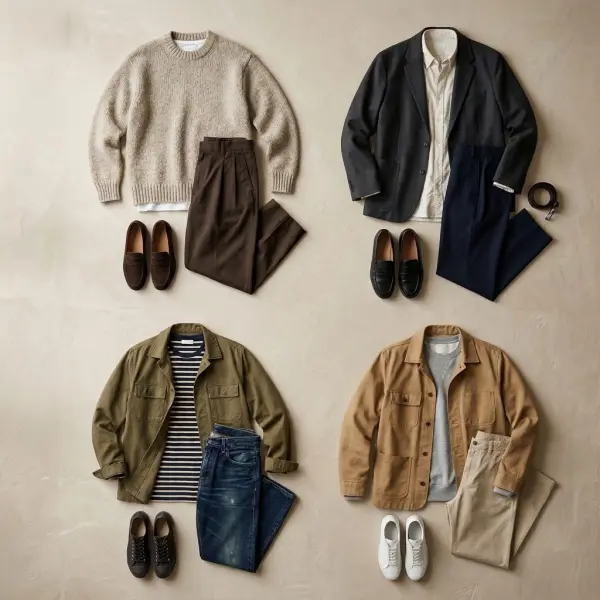
Mood dressing is sometimes confused with dopamine dressing, personal style, and occasion-based dressing. These concepts can overlap, but they describe different aspects of clothing selection.
Dopamine dressing is a popular fashion expression generally associated with choosing clothing intended to generate enjoyment or improve one's mood. It is frequently represented through bright colors, playful patterns, and expressive styling. Despite its name, the term should not be interpreted as evidence that particular garments reliably increase dopamine levels in the brain.
Mood dressing has a broader scope. It accommodates emotional expression, comfort-seeking, familiarity, confidence, and the desire to change or maintain an emotional state. It does not require colorful clothing or an exclusively positive emotional experience.
Personal style, meanwhile, refers to the relatively consistent aesthetic preferences through which individuals express their identity. Mood dressing may influence how those preferences are applied on a particular day without fundamentally changing them.
|
Aspect |
Mood dressing |
Dopamine dressing |
Personal style |
Occasion-based dressing |
|
Primary motivation |
Emotional state or desired feeling |
Enjoyment or intended mood improvement |
Individual aesthetic identity |
Suitability for an activity or event |
|
Visual characteristics |
Highly variable |
Often colorful or expressive |
Depends on individual preferences |
Depends on occasion requirements |
|
Time orientation |
May change throughout the day |
Often situational |
Relatively consistent over time |
Event-specific |
|
Emotional scope |
Positive, negative, or neutral |
Generally positive |
Variable |
Secondary to contextual suitability |
|
Commercial application |
Emotion-oriented styling and product versatility |
Playful collections and expressive campaigns |
Brand positioning and aesthetic consistency |
Occasionwear and functional merchandising |
|
Main limitation |
Emotional preferences are subjective |
Neurological claims are often unsupported |
Preferences can evolve |
Dress codes may restrict individuality |
These distinctions help retailers understand why customers who share similar aesthetic preferences may still make different purchasing decisions. Two customers who identify with minimalist fashion, for instance, may prioritize different garments depending on whether they seek comfort, professional confidence, or creative experimentation.
Why Mood Dressing Matters in the Fashion Industry
Mood dressing matters to fashion businesses because it offers an additional perspective on consumer behavior. Product selection is not always driven exclusively by price, functional requirements, aesthetic preferences, or fashion trends. Customers may also evaluate clothing according to how they expect to experience wearing it.
Understanding these expectations can help businesses move beyond purely demographic descriptions of their audiences. Age, income, occupation, and location remain useful segmentation variables, but they do not necessarily explain why individuals with similar profiles select different outfits for similar situations.
Understanding the Emotional Context of Consumer Demand
Traditional apparel merchandising frequently organizes products around garment categories, seasons, occasions, and price points. These remain necessary for inventory management and customer navigation, but they may not capture the complete motivation behind a purchase.
A customer searching for a work shirt might not simply need another shirt. They may be looking for something that helps them feel appropriately dressed during important meetings without sacrificing comfort throughout a long working day.
Another customer shopping for weekend clothing may prioritize garments that make transitioning out of a demanding work routine feel easier. Although both purchasing decisions involve practical requirements, their emotional objectives differ.
Understanding these motivations can help product teams formulate more specific design briefs and help retail teams provide more relevant styling assistance.
Connecting Functional Performance with Emotional Expectations
Emotional positioning becomes commercially credible when the garment's physical performance supports the intended experience.
A brand may describe a collection as offering effortless everyday dressing. That positioning becomes difficult to sustain if the garments require complicated styling, restrictive movement, frequent ironing, or inconsistent size selection.
Similarly, apparel designed around professional confidence should address practical considerations such as fit reliability, mobility, fabric opacity, construction quality, and compatibility with existing wardrobe pieces. Emotional communication cannot compensate indefinitely for weak product execution.
This is where mood dressing intersects with product development. The emotional proposition should be supported by observable garment characteristics rather than depending entirely on campaign imagery.
Creating More Relevant Styling Experiences
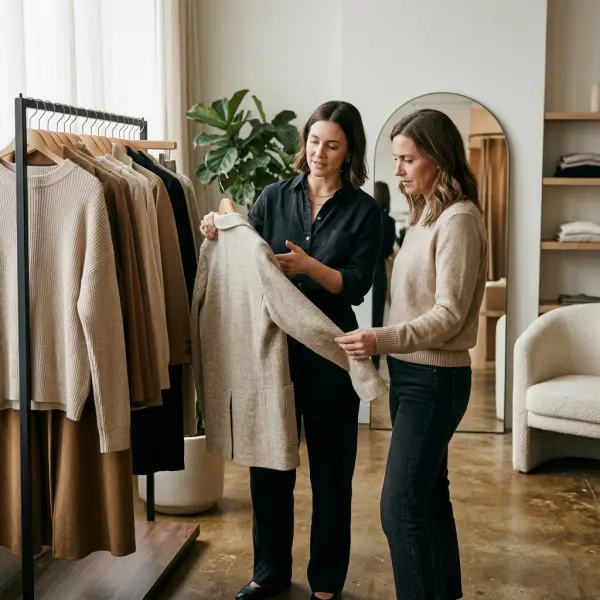
Mood-oriented styling can help customers navigate product assortments according to the experience they seek. Instead of asking only whether a shopper needs casual clothing or formalwear, a stylist might explore whether the customer wants to feel comfortable, more polished, understated, or expressive.
These questions can reveal preferences that conventional garment categories overlook. They also create opportunities to recommend existing inventory in more relevant combinations without necessarily expanding the product range.
The approach is particularly suitable for businesses offering personal shopping, digital styling services, capsule wardrobe consultations, and curated fashion ecommerce experiences.
How Garment Design Supports Mood-Oriented Dressing
Garment design can support mood-oriented dressing by providing different experiences of comfort, movement, visual expression, familiarity, and personal control. Designers can influence these experiences through material selection, pattern development, construction, fit, and styling versatility.
The objective is not to manufacture a predetermined emotional response. It is to create garments that allow customers to interpret and use clothing according to their own preferences.
Sensory Experience and Wearability
The physical experience of wearing a garment can influence whether it feels appropriate for a particular emotional or situational need. Fabric handfeel, seam placement, garment weight, stretch recovery, and pressure against the body are relevant considerations.
For example, a soft-looking garment may still feel uncomfortable if its internal seams irritate the skin or if the neckline restricts movement. Customers experience the complete garment, not merely the textile characteristics presented in a material specification.
For apparel manufacturers, translating a comfort-oriented concept into a reliable product therefore requires attention to construction quality, fitting, and wear testing.
Visual Expression and Styling Flexibility
Color, pattern, proportion, surface texture, and silhouette provide visual resources through which individuals can interpret and communicate their preferences.
Their significance is highly contextual. A structured silhouette may feel reassuring to one customer because it creates a familiar sense of formality, while another customer may find it restrictive. Expressive styling may provide enjoyment for some wearers but create unwanted attention for others.
The relationship between these visual elements and individual style expression is examined in more detail in How Clothing Colors, Textures, and Silhouettes Shape Style Expression.
Predictability and Individual Control
A practical design consideration that deserves attention is predictability. Garments with reliable sizing, familiar closures, adjustable features, and consistently maintained fit blocks can help customers make clothing decisions with fewer uncertainties.
Consider a fashion brand that retains a successful trouser fit across multiple seasonal collections while introducing carefully selected fabric and color variations. Customers who already understand the fit may be more comfortable experimenting with new versions of the garment.
This approach provides room for emotional and aesthetic exploration while preserving a dependable foundation. For businesses, it may also reduce unnecessary pattern redevelopment, although different fabric behavior still requires appropriate fitting and technical validation.

How Fashion Businesses Can Apply Mood Dressing Strategically
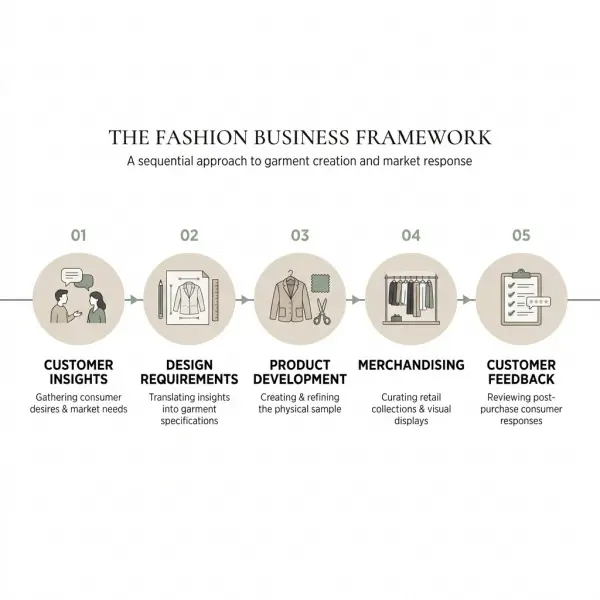
Fashion businesses can apply mood dressing by identifying customers' emotional motivations and translating them into product, merchandising, and communication decisions that remain commercially and operationally realistic.
For most brands, this does not require developing an entirely new product category. Existing garments, customer insights, fit blocks, and styling resources can provide a starting point for evaluating whether mood-oriented positioning offers meaningful customer value.
1. Investigate Customer Motivations Beyond Demographics
Brands should begin by examining why customers select, reject, repeat, or recommend particular garments. Customer interviews, open-ended survey responses, product reviews, fitting feedback, and voluntary wardrobe studies can provide useful information about emotional and practical motivations.
Rather than asking customers whether clothing makes them happy, research questions should encourage specific observations about actual wearing experiences.
Useful questions include:
- Which garments do customers repeatedly choose when preparing for a demanding day?
- What makes an outfit feel comfortable, familiar, or appropriately polished?
- Which clothing characteristics cause customers to avoid garments they otherwise find attractive?
- What situations encourage customers to experiment with their personal style?
- Which products do customers rely on when they want predictable fit and performance?
- What aspects of the dressing experience do customers find frustrating?
The resulting insights should be treated as evidence about the participating customers, not universal psychological rules. Combining qualitative responses with product performance data can help brands identify opportunities worth investigating further.
2. Translate Emotional Objectives into Product Briefs
Emotional positioning becomes useful to designers and manufacturers when it is translated into specific product development requirements.
For example, a collection intended to support comfortable professional dressing might combine the appearance of tailoring with sufficient mobility, breathable materials where appropriate, reliable sizing, and uncomplicated garment care. These requirements can be communicated through technical specifications, material standards, measurement charts, and fitting protocols.
|
Intended customer experience |
Product development consideration |
Validation method |
|
Comfortable dressing |
Handfeel, seam comfort, movement allowance |
Wear trials and fitting feedback |
|
Professional readiness |
Fit balance, construction quality, appropriate coverage |
Sample evaluation and contextual wear testing |
|
Effortless coordination |
Compatibility across colors and garment categories |
Outfit development and styling assessment |
|
Familiarity |
Consistent fit blocks and construction details |
Measurement audits and repeat-customer feedback |
|
Creative expression |
Versatile combinations and distinctive design details |
Concept testing and styling trials |
|
Adaptability |
Adjustable features and layering compatibility |
Functional testing across intended use cases |
The table illustrates how subjective customer objectives can be connected to observable product characteristics. Physical requirements can be verified through technical evaluation, while emotional experiences should be investigated through customer research rather than assumed from design specifications.
3. Introduce Mood-Based Merchandising Without Replacing Product Categories
Retailers can experiment with mood-oriented merchandising through curated collections, editorial content, outfit recommendations, and campaign landing pages.
A fashion ecommerce business might introduce collections positioned around relaxed weekends, polished everyday dressing, creative experimentation, or familiar wardrobe essentials. Customers can explore these collections according to their preferences while retaining access to conventional filters such as size, price, color, material, and garment category.
Maintaining the underlying product taxonomy is important. Emotion-based collection names may support discovery, but they should not make basic product navigation more difficult or obscure information customers need to evaluate fit and suitability.
4. Preserve Manufacturing Efficiency
One commercial risk of mood-based collection planning is unnecessary assortment expansion. If every emotional motivation becomes a separate collection, the business may accumulate additional stock-keeping units (SKUs), sourcing requirements, sampling costs, and inventory exposure.
A more manageable approach is to identify existing product platforms that support multiple styling experiences. A well-developed jacket block, for example, may be suitable for several design variations, while a coordinated range of separates can serve different dressing preferences through styling rather than fundamentally different construction.
This allows fashion businesses to explore emotional positioning without automatically increasing manufacturing complexity. Material compatibility, fit consistency, minimum order quantities, and inventory economics should still determine whether new variants are justified.
5. Communicate Emotional Benefits Responsibly
Marketing language should describe the intended wearing experience without promising a psychological outcome that the business cannot substantiate.
There is a meaningful difference between describing a collection as designed for comfortable, expressive everyday dressing and claiming that the collection reduces anxiety, increases happiness, or improves mental health. The former communicates design intent; the latter introduces health-related or psychological performance claims that require substantially stronger evidence.
Brands can communicate emotional relevance through authentic styling scenarios, customer experiences, detailed product descriptions, and inclusive visual storytelling. The role of emotional attachment in longer-term purchasing and wardrobe decisions is explored further in Why Emotional Connection Matters in Everyday Fashion Decisions.
6. Evaluate Commercial Performance Before Scaling
Mood-oriented merchandising should be evaluated using measurable business indicators alongside qualitative customer feedback. Relevant measures may include collection-page engagement, product conversion rates, return reasons, repeat purchases, styling recommendation acceptance, and customer-reported satisfaction.
These indicators should be interpreted carefully. Higher conversion on an emotion-oriented landing page may also reflect differences in product selection, pricing, photography, seasonal demand, or advertising traffic.
Where possible, retailers should compare equivalent product assortments under different merchandising approaches. Controlled testing can help determine whether emotional positioning contributes additional customer value rather than simply accompanying other commercial improvements.
Common Mistakes When Interpreting Mood Dressing
Mood dressing can provide valuable consumer insights, but its application becomes problematic when businesses confuse subjective preferences with predictable psychological outcomes. Several mistakes are particularly relevant to fashion designers, retailers, and marketing teams.
Assuming Particular Colors Always Produce Particular Emotions
Fashion brands sometimes associate bright colors with happiness, neutral colors with calmness, and dark colors with sadness or withdrawal. Although these associations may appear in specific cultural settings or individual experiences, they cannot reliably describe every wearer.
Rigid emotional color classifications can produce misleading collection concepts and exclude customers whose preferences differ from conventional interpretations. Businesses should investigate the associations meaningful to their intended audience and present color as an expressive option rather than a psychological prescription.
Confusing Personal Style with Emotional State
A person who consistently wears black clothing may simply prefer a monochromatic aesthetic. Interpreting that preference as evidence of a negative emotional state confuses established style identity with temporary feelings.
This mistake can distort consumer segmentation and lead to inappropriate product recommendations. Retailers and styling services should allow customers to describe their own preferences instead of inferring emotional conditions from visual appearance.
Prioritizing Emotional Storytelling Over Product Quality
A collection promoted around comfort or confidence may attract initial customer interest, but the garment still needs to perform according to ordinary apparel quality expectations.
Poor fit, unstable seams, inconsistent sizing, or uncomfortable materials can undermine the intended experience. Brands should establish measurable product standards before relying heavily on emotion-oriented communication, particularly when positioning garments as dependable everyday essentials.
Treating Mood Dressing as a Reason to Overproduce
Developing separate collections for every perceived emotional category can create unnecessary product proliferation. Smaller brands are particularly vulnerable because additional styles may introduce higher sampling expenditure, fragmented purchasing quantities, and more complicated inventory management.
A more disciplined strategy is to identify versatile garment platforms and combine them through varied styling and merchandising. New products should address demonstrated customer needs rather than simply broaden the number of emotional themes represented in a collection.
Making Unsupported Psychological or Neurological Claims
Claims that particular clothing increases dopamine, eliminates stress, restores emotional balance, or improves mental health require evidence that ordinary fashion marketing generally cannot provide.
Even when psychological research identifies relationships between clothing and emotional experience, those findings cannot automatically be transferred to a specific commercial garment. Brands should distinguish between intended design experiences, subjective customer testimonials, and scientifically validated outcomes.
Ignoring Cultural and Situational Differences
Clothing associated with celebration, professionalism, modesty, creativity, or independence can carry different meanings across communities.
A merchandising concept developed for one market may therefore perform differently in another, even when the underlying garments remain unchanged. International fashion businesses should validate styling recommendations, campaign language, and occasion-based assumptions with relevant local audiences rather than treating emotional fashion preferences as culturally universal.
Important Scientific Caveats: What Mood Dressing Does and Does Not Mean
Research into clothing and psychology provides a legitimate foundation for examining emotional dressing behavior. Nevertheless, the evidence does not support the idea that emotions can be reliably identified, predicted, or controlled through clothing alone.
Many studies in this field investigate specific participant groups, experimental conditions, garment types, or self-reported experiences. These methodological differences matter when interpreting findings for broader consumer markets.
Fashion businesses should maintain the following distinctions:
|
Interpretation |
Appropriate scientific perspective |
|
Emotions can influence clothing choices |
Supported by research in particular populations and contexts |
|
Clothing experiences may influence feelings or self-perception |
Supported in some contexts, but effects are variable |
|
Everyone responds emotionally to garments in the same way |
Not supported |
|
Wearing specific colors guarantees happiness |
Not established |
|
Dopamine dressing reliably increases brain dopamine |
Cannot be confirmed from the evidence discussed |
|
Clothing preferences reveal a person's mental health condition |
Not a reliable diagnostic method |
|
Mood-based merchandising guarantees higher sales |
Requires business-specific testing |
|
Fashion can replace professional mental health support |
Not supported |
A qualitative study titled Understanding the Links Between Positive Psychology and Fashion: A Grounded Theory Analysis explored how participants used clothing in relation to identity, body perception, mood, and everyday well-being. Such research is useful for understanding lived experiences, but qualitative findings should not be interpreted as proof that identical outcomes will occur across all populations.
The most responsible commercial interpretation is that fashion products can provide opportunities for emotional expression and personally meaningful wearing experiences. The resulting psychological experience remains individual and context-dependent.
The Future of Mood-Oriented Fashion Experiences
Mood dressing presents potential opportunities for fashion businesses interested in developing more personalized customer experiences. Rather than relying exclusively on conventional occasion categories, retailers could allow customers to explore clothing according to desired experiences while maintaining control over practical preferences.
Digital styling platforms, for example, could incorporate voluntary inputs such as preferred comfort level, desired formality, styling confidence, or willingness to experiment. These inputs could complement conventional recommendation variables, including size, climate, budget, product availability, and wardrobe compatibility.
The distinction between customer-selected preferences and automated emotional inference will be particularly important. Asking shoppers how they want to dress is fundamentally different from attempting to identify their psychological state through photographs, facial expressions, or purchasing history.
Fashion businesses exploring personalization should prioritize transparent recommendation processes, customer autonomy, and appropriate data protection. Emotional preferences can be useful when customers voluntarily communicate them, but speculative psychological profiling introduces unnecessary ethical and commercial risks.
For apparel manufacturers, the more immediate opportunity may be less technologically complex. Developing garments with dependable fit, thoughtful construction, and flexible styling applications can provide a foundation for supporting diverse dressing motivations without requiring sophisticated personalization systems.
Frequently Asked Questions About Mood Dressing
1. Is mood dressing the same as dressing according to how you feel?
Mood dressing includes dressing according to how you currently feel, but it also encompasses selecting clothing according to how you want to feel. A person may choose an outfit that reflects an existing emotional state or select garments that help establish a desired sense of readiness, familiarity, or comfort.
For example, someone feeling uncertain before a professional event may intentionally choose a familiar outfit rather than one that reflects their uncertainty. Th




Comments 0
Leave a CommentSend Comment
Anda harus Login terlebih dahulu untuk dapat memberikan komentar.