

Common Hem Problems That Affect Garment Quality and Appearance
A garment can have accurate measurements, carefully selected fabric, and well-constructed seams yet still appear poorly finished because of problems along its hemline. Uneven stitching, puckered edges, excessive bulk, or a hem that twists after washing can disrupt the intended silhouette and make the entire product look less refined.
Hemming defects are particularly noticeable because hems define the visible boundaries of many garments. They determine how trousers meet the shoes, how skirts fall around the body, and how sleeves maintain their shape during movement. Even small irregularities can become obvious when clothing is displayed, worn, or compared with another garment from the same production batch.
For apparel manufacturers, hem problems are not always the result of careless sewing. They can originate from incorrect pattern allowances, unsuitable construction methods, unstable fabric, poorly adjusted machinery, inconsistent feeding, or finishing processes that change the material after stitching. A technically correct sewing operation may still produce an unsatisfactory result if the construction does not match the fabric.
Understanding these defects requires looking beyond their visible symptoms. The more useful approach is to identify why a hem behaves incorrectly, determine whether the problem is caused by the material or manufacturing process, and apply corrective measures that can be repeated consistently.
For fashion businesses, this distinction matters. Effective hem quality control can reduce unnecessary rework, support product consistency, and help ensure that the finished garment meets its intended appearance and performance requirements.
Quick Answer: What Are the Most Common Garment Hem Problems?
Common garment hem problems include uneven hemlines, seam puckering, wavy or stretched edges, twisting, tunneling, skipped stitches, broken threads, excessive bulk, and visible or unstable hem attachments. These defects can affect garment appearance, fit, drape, durability, and the consistency of production quality.
The underlying causes vary. Puckering may result from excessive thread tension, fabric displacement, or unequal feeding. Wavy hems often occur when stretch fabrics are extended during sewing and fail to recover fully afterward. Uneven hemlines can originate from inaccurate cutting, inconsistent folding, or dimensional changes in bias-cut sections.
Other defects are related to machine setup or construction design. Tunneling can appear when parallel stitch rows pull lightweight or stretchy fabric upward between them, while skipped stitches may indicate problems with needle selection, fabric control, or stitch formation.
Not every irregular hem is automatically defective. Some visible topstitching, edge curling, and textured finishes are intentional design elements.
For garment manufacturers, the practical solution is to identify the symptom, investigate the root cause, test an appropriate correction, and verify the result against an approved sample and measurable quality specification.
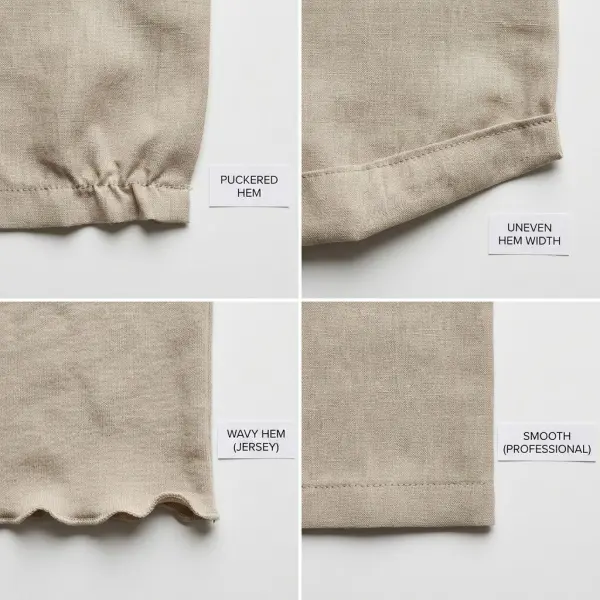
Why Hem Defects Matter in Garment Manufacturing
Hem defects can affect more than the appearance of a garment. Depending on their severity, they may interfere with fit, movement, laundering performance, and the customer's perception of construction quality.
A visibly uneven hemline can make a skirt appear asymmetrical even when the original pattern was intended to be balanced. A stiff or distorted hem may interfere with fabric drape, while weak stitching can allow part of the folded edge to detach during wear.
From a manufacturing perspective, these problems create additional handling and inspection requirements. Operators may need to remove stitches, reposition folded allowances, replace damaged components, or repeat pressing operations. Some defects can be corrected relatively easily, but others require extensive rework or may be impossible to repair without affecting garment dimensions.
The commercial impact depends on the product category and the severity of the issue. A minor stitch irregularity on a textured casual garment may be less noticeable than the same defect on smooth, lightweight suiting. Conversely, a broken hem attachment can represent a functional failure regardless of whether the stitching is visually prominent.
Appearance and Perceived Quality
Hemlines often form continuous visual boundaries around a garment. Irregularities along these edges can be particularly noticeable because the eye naturally follows the garment outline.
For example, a smooth midi skirt may appear unbalanced when one section of its hem sits lower than the surrounding fabric. Similarly, puckering along the lower edge of a minimalist blouse can interrupt an otherwise clean surface.
A high-quality finish does not necessarily mean invisible stitching. Denim, casualwear, and certain decorative garments may intentionally feature prominent topstitching. The quality requirement is that the stitching and edge construction match the intended design consistently.
Functional Performance and Durability
Some hem defects are primarily cosmetic, while others can affect garment performance. Broken threads, poorly secured folds, and stitches with insufficient extensibility may cause the hem to open or deteriorate during use.
The problem becomes particularly relevant in stretch garments. A stitched edge that cannot extend with the fabric may experience thread failure when the wearer pulls the garment over the body or moves through its normal range of motion.
Repeated washing can also reveal weaknesses that are not obvious immediately after sewing. Differences in fabric and thread dimensional behavior may lead to distortion, while insecure stitching can deteriorate further under mechanical handling.
Production Consistency and Cost Control
In manufacturing, a defect that appears repeatedly across a batch often indicates a process issue rather than an isolated mistake. Changing thread tension or pressing individual garments may temporarily improve the appearance without addressing the underlying cause.
A systematic quality response examines the pattern, fabric, sewing equipment, operator handling, and finishing sequence. Correcting the source of the defect is usually more useful than repeatedly repairing finished garments.
For fashion brands working with external suppliers, clear defect definitions and approved samples also reduce disagreements about acceptable workmanship. Quality standards should reflect the garment design and actual manufacturing requirements rather than relying only on descriptions such as "neat" or "professional."
Uneven Hemlines: When the Garment Length Is Inconsistent
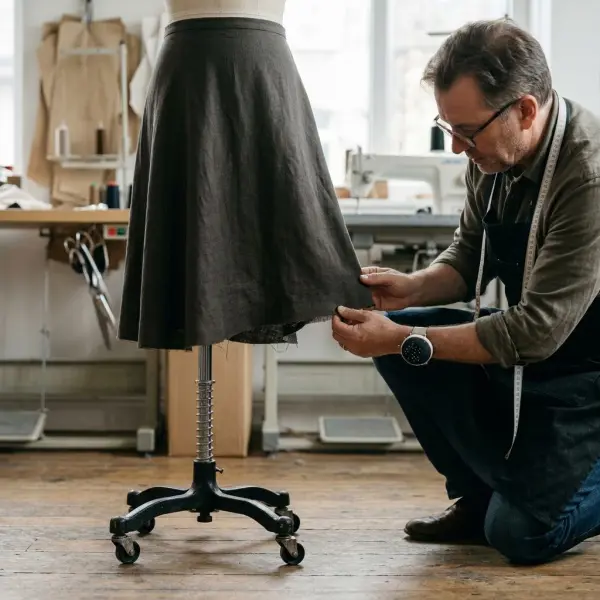
An uneven hemline occurs when the finished lower edge does not follow the intended shape or measurement. It may appear as one side of a garment hanging lower than the other, irregular fluctuations around a skirt, or inconsistent sleeve lengths.
The problem is especially visible on garments designed with a continuous horizontal hem. However, unevenness should be distinguished from intentional asymmetric or handkerchief hems, where different lengths are part of the pattern design.
Common Causes of Uneven Hemlines
Uneven hemlines can begin during pattern development when corresponding garment pieces do not align correctly. Inaccurate cutting, inconsistent hem allowances, or fabric distortion during assembly can introduce further variation.
Bias-cut garments present a particular challenge. Fabric cut on the bias can extend differently under gravity because the woven structure changes shape under load. As a result, the garment may develop an irregular lower edge after hanging, even when the original pattern pieces were cut accurately.
The Threads guidance on allowing bias-cut garments to hang before hemming explains how gravity can alter the hemline of bias-oriented garments and why leveling should take place after the fabric has settled sufficiently.
Uneven hems can also occur when operators vary the fold depth along the garment. A correctly cut skirt may become visibly irregular if the allowance is turned by different amounts during sewing.

How to Correct an Uneven Hem
The appropriate correction depends on whether the problem originates in the garment shape or the sewing operation.
If the garment has distorted before hemming, the hemline may need to be re-established while the garment hangs in a representative position. If the fabric was folded inconsistently, removing the affected stitching and forming an accurate fold may be sufficient.
Before making corrections, manufacturers should check that the garment has not been unintentionally stretched during handling. Repeated adjustments without identifying the source of variation can gradually reduce the intended garment length.
For production control, the pattern allowance, hem measurement reference, and handling sequence should be documented clearly.
Hem Puckering: Small Wrinkles Along the Stitching Line
Hem puckering appears as unwanted wrinkles, gathers, or ripples along or near the stitching line. It can affect woven and knitted fabrics, although the underlying mechanisms and appropriate corrections may differ.
Puckering is not a single defect with one universal solution. Several sewing and material factors can produce similar visual symptoms.
The Coats technical guidance on eliminating seam puckering identifies thread tension, structural jamming, fabric and thread dimensional instability, and unequal feeding as distinct causes. These mechanisms can also affect garment hems.
Excessive Sewing Thread Tension
When thread tension is excessive, thread may be stretched during stitch formation and subsequently contract or relax. The resulting forces can gather the fabric along the stitching line and create visible puckering.
The problem may become apparent immediately or develop after the garment has rested or undergone finishing. Fine, lightweight materials can be especially sensitive because relatively small changes in thread behavior may distort the surrounding fabric.
Corrective action involves establishing balanced stitching with appropriate thread tension rather than simply loosening every tension setting. Thread selection, lubrication, machine threading, and stitch formation should also be evaluated.
Structural Displacement in Dense Fabrics
Puckering can also occur when the needle and sewing thread displace fabric yarns within a tightly constructed material. If the fabric cannot accommodate the thread without distortion, stresses develop around the stitch line.
This type of structural interference may be more noticeable in certain tightly woven fabrics and fine synthetic materials. Increasing stitch density or using unnecessarily large needles can aggravate the problem.
A suitable correction may involve using finer thread and needles, reducing excessive stitch density, or selecting a compatible stitch formation. Any change must still maintain the required seam strength and appearance.
Unequal Fabric Feeding
Puckering may develop when the folded hem allowance and outer garment layer do not advance evenly through the sewing machine. One layer can become stretched or compressed relative to the other, and the stitching then locks that difference into the finished edge.
Excessive presser-foot pressure, unsuitable feed mechanisms, or inconsistent operator handling can contribute to this condition. Pulling the fabric to keep the edge aligned may make the problem worse.
Before changing sewing settings, operators should confirm that both layers are feeding consistently. Machine setup, presser-foot pressure, fabric guides, and handling technique may all require review.
Dimensional Changes After Washing
A hem that appears smooth after sewing may pucker following laundering or wet finishing. This can happen when the fabric, thread, lining, or reinforcement changes dimensions at different rates.
The appropriate preventive action is to test the garment under relevant care conditions and select compatible sewing components. Pressing may temporarily improve the appearance, but it does not necessarily eliminate the dimensional incompatibility.
For manufacturers, distinguishing pre-wash puckering from post-wash puckering helps narrow the investigation and prevents unnecessary adjustments to sewing equipment.
Wavy Hems on Knitted and Stretch Garments
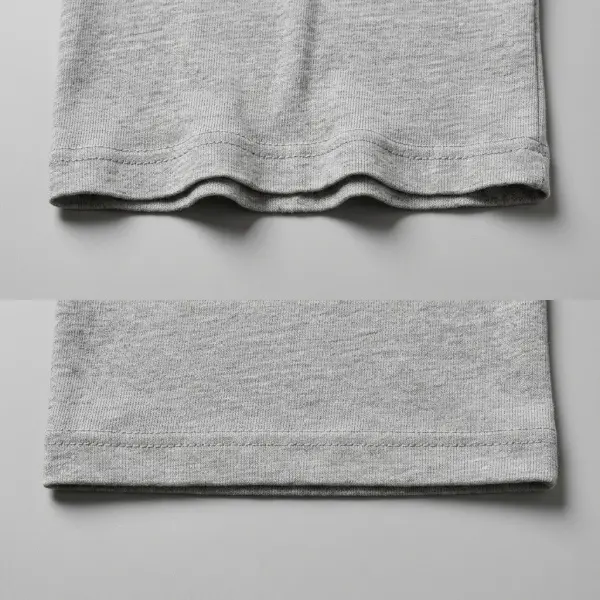
A wavy hem develops when the finished edge forms repeated undulations rather than lying smoothly. This is a familiar challenge in T-shirts, knit dresses, activewear, and other garments made from elastic or easily distorted materials.
The defect is often associated with fabric extension during sewing. When the edge is stretched while passing through the machine, stitching may preserve some of the increased length or restrict the fabric's return to its original shape.
Why Stretch Fabric Becomes Wavy During Sewing
Knitted fabrics can extend under relatively modest mechanical forces. Presser-foot friction, incorrect feeding, or operator pulling may cause the material to stretch before the stitches are formed.
The effect depends on fabric structure and recovery. Some materials return toward their original dimensions after handling, while others retain more visible distortion.
The problem may also be influenced by stitch tension or an unsuitable hem construction. Simply changing to a stretch-compatible stitch does not guarantee a flat finish if the material is still being stretched excessively.
Differential Feed and Fabric Control
Differential feed is a mechanism available on many overlock and coverstitch machines that controls the relative movement of fabric through separate feed sections. It can be used to reduce unwanted stretching or gathering, depending on the fabric and machine settings.
For example, the JUKI MF-7900 series industrial coverstitch documentation describes differential-feed adjustment and fabric-control mechanisms intended to improve sewing performance on knitted garments.
However, there is no universal differential-feed setting suitable for all stretch fabrics. Machine design, fabric thickness, elasticity, stitch length, and operator technique determine the appropriate adjustment.
A production trial should establish settings that produce a flat, stable hem without unintentionally gathering or stretching the material.
When Stabilization May Help
Some lightweight or highly elastic fabrics benefit from temporary or permanent stabilization during hemming. Depending on the garment, suitable interfacing, stabilizing tape, or removable support material can reduce uncontrolled distortion.
The choice requires care. Excessive reinforcement may change fabric drape, reduce stretch, or create a visible band along the lower edge.
Stabilization should therefore be tested on the intended fabric, including after any relevant removal, pressing, or laundering process.
Twisted and Distorted Hems
A twisted hem occurs when the finished edge rotates, pulls out of alignment, or no longer follows the garment's intended construction. The distortion may appear immediately after sewing or become visible after washing and wearing.
Twisting can involve the folded allowance, the stitching line, or the garment fabric itself. Correct diagnosis requires identifying which component is moving out of position.
Fabric Grain and Pattern Alignment
Fabric grain describes the orientation of yarns or knitted courses and wales relative to the garment pattern. Inaccurate grain placement or unstable fabric structure can contribute to twisting and distortion after assembly or laundering.
This is particularly relevant to some knitted garments, where fabric skew or spirality can influence the position of seams and lower edges. The distortion may not originate in the hemming operation itself.
For manufacturers, inspecting the fabric and the garment's alignment before sewing is essential. Rehemming a garment whose body is already twisted may improve the local edge appearance without correcting the underlying structural problem.
Unequal Feeding and Folding Tension
A hem may twist when the allowance is fed through the machine at a different rate from the garment body. Uneven tension can also develop when operators pull a folded edge into position around curves or thick seam intersections.
When the garment is released from the machine, the stitched layers may attempt to return to different relaxed lengths. This can produce an edge that rolls or twists instead of remaining flat.
The solution may involve improving folding accuracy, adjusting fabric guidance, and reducing unintended stretching. Persistent twisting should prompt a review of the pattern and material rather than repeated local pressing.
Hem Tunneling: Raised Fabric Between Parallel Stitch Rows
Tunneling is a defect in which the fabric forms a raised ridge between parallel rows of stitching. It is particularly associated with twin-needle and certain coverstitch applications on lightweight or stretchy materials.
The ridge becomes visible because the fabric between the stitch lines is drawn upward or fails to remain flat. The effect can make a hem look rounded or corded even when the individual stitch rows are straight.
What Causes Tunneling?
Excessive or unbalanced thread tension may contribute to tunneling by pulling the stitched fabric into an elevated shape. Fabric instability, needle spacing, unsuitable stitch formation, and insufficient support can also influence the result.
The degree of tunneling often depends on the interaction between the sewing machine and the particular fabric. A configuration that creates an acceptable hem on a firm interlock knit may produce a more noticeable ridge on thin single jersey.
Manufacturers should evaluate the complete stitch formation rather than assuming that the visible ridge is caused by one thread setting.
Practical Ways to Reduce Tunneling
The corrective approach may involve adjusting thread balance, changing the needle spacing or stitch configuration where possible, improving fabric support, and reviewing the feeding mechanism.
Temporary stabilization can sometimes help thin fabric remain flat during stitching, but it may not be appropriate for every garment. Any support material should be evaluated for its effect on stretch, appearance, and care performance.
A useful production test compares several compatible settings on the same fabric while keeping other variables controlled. This makes it easier to determine which adjustment actually reduces the defect.
Skipped Stitches and Broken Hem Threads
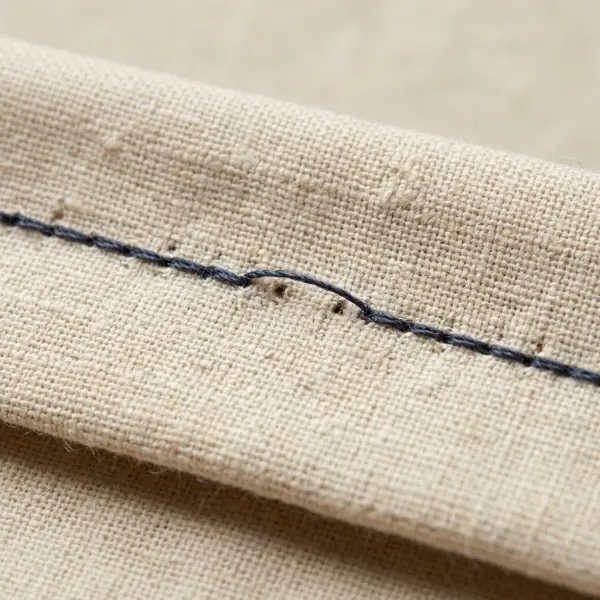
Skipped stitches occur when the sewing machine fails to form an intended stitch, leaving a gap in the stitching sequence. Broken hem threads involve failure of the sewing thread itself and may cause part of the hem to become unsecured.
These defects may appear together, but they have different immediate causes. Both require attention because they can compromise the stability of a finished hem.
Incorrect Needle Selection
Needle size, point shape, and geometry must be suitable for the fabric and sewing thread. An inappropriate needle can interfere with the formation of the thread loop required for a complete stitch.
Stretch and knitted fabrics may require needle designs that reduce fabric damage and improve stitch formation. The SCHMETZ guide to stretch and jersey needles explains how differences in needle-eye and scarf geometry can help reduce skipped stitches on elastic materials.
Needle selection should also match the sewing machine's required needle system. A suitable needle point does not compensate for using an incompatible needle system or incorrect installation.
Machine Timing and Thread Formation
Skipped stitches may result from incorrect hook or looper timing, insufficient thread-loop formation, needle deflection, or inadequate fabric control.
The Coats guide to solving common sewing problems identifies these mechanical and thread-related factors among the causes of skipped stitches.
If skipped stitches continue after confirming the needle, threading, and material setup, machine timing and component condition should be inspected by qualified personnel.
Repeated sewing over the defective area without correcting the problem may conceal the symptom temporarily while leaving the underlying cause unresolved.
Inadequate Stitch Extensibility
A hem can contain perfectly formed stitches and still fail during use if the stitch arrangement cannot extend sufficiently with the fabric.
For example, a rigid stitch line on a stretchy T-shirt may break when the garment is pulled over the body. The problem is not necessarily poor thread quality; it may be a mismatch between the stitch formation and required garment extension.
Manufacturers should test hem performance under representative stretching conditions. Suitable coverstitch or other extensible constructions can be evaluated according to the fabric, machine capability, and product requirements.
Weak Stitch Security at Hem Endings
Certain stitch formations can unravel if their ends are not secured appropriately. This is especially relevant to some chainstitch and coverstitch constructions.
A finished hem should therefore be inspected at its start and end points, particularly where the seam crosses an existing garment seam or where thread tails are concealed.
Thread security methods vary by stitch type and machinery. Manufacturers should follow the approved construction procedure rather than assuming that all stitches can be secured in the same way.
Excessive Hem Bulk and Visible Fold Impressions
Hem bulk develops when the finishing construction creates more thickness than the garment can accommodate comfortably or visually. It is common around folded seam intersections, but can also affect lightweight garments where additional layers interfere with drape.
A bulky hem may be structurally secure while still appearing unattractive. The effect is particularly noticeable when the fabric stands away from the garment body or creates a rigid lower edge.
Too Many Fabric Layers
Double fold hems, wide turn-ups, and overlapping seams can create areas containing several layers of fabric. On medium- to heavyweight materials, this may cause uneven feeding, irregular stitching, or a visibly thick edge.
The issue becomes more pronounced where the hem crosses side seams. The machine must move from relatively thin material into a thicker intersection, sometimes producing changes in stitch length or fabric alignment.
Depending on the construction, localized bulk reduction or an alternative hem finish may help. However, trimming seam allowances should be performed according to an approved method to avoid weakening the garment.
Pressing Marks and Fabric Impressions
Pressing can flatten folded fabric layers, but excessive heat or pressure may produce visible impressions on the garment's exterior.
On certain fabrics, the internal hem allowance can leave a noticeable ridge or outline. Other materials may develop unwanted shine, flattened texture, or permanent surface changes.
These defects are not necessarily corrected by applying more heat. Pressing conditions, protective materials, and the suitability of the hem construction should be reviewed together.
Visible Blind Hem Stitches and Loose Hem Attachments
Blind hemming is intended to produce a relatively discreet attachment. When the stitches become too visible, the garment may lose the smooth exterior appearance that justified the construction.
A different problem occurs when the stitches catch too little fabric or are not adequately secured. The hem may look clean initially but detach under handling or wear.
Excessive Needle Penetration
Visible blind-hem stitching can occur when the needle catches too much of the outer garment fabric. Larger stitch bites may produce a series of noticeable points or small surface distortions.
Thread color and fabric texture also influence how visible the stitch catches become. A fine thread that blends into a textured wool fabric may be less apparent than a contrasting thread on smooth, tightly woven material.
The appropriate correction involves balancing secure attachment with minimal visible penetration. The objective is not to eliminate every trace of stitching at the expense of hem security.
Insufficient Fabric Engagement
If a blind-hem stitch does not catch enough of the garment body, the hem allowance may remain inadequately secured. Some sections can detach while others remain attached.
This can occur because of incorrect stitch settings, inconsistent folding, or poor fabric guidance. The defect may not become obvious until the garment is handled or worn.
Inspection should evaluate both the exterior appearance and the strength of the attachment. A visually discreet blind hem is acceptable only when it performs its intended function.
Hem Defect Diagnosis: A Practical Troubleshooting Table
Similar-looking defects can have different underlying causes. A wavy edge, for example, may result from fabric stretching during sewing, while fine puckering along a stitch line may involve thread tension or structural interference.
A practical diagnostic approach begins with the visible symptom and then examines the process most likely to have produced it.
|
Visible hem problem |
Possible underlying cause |
First area to investigate |
|
Uneven garment hemline |
Pattern error, inaccurate folding, bias relaxation |
Pattern measurements and garment hanging |
|
Fine puckering along stitches |
Thread tension or fabric structural interference |
Stitch balance, needle and thread compatibility |
|
Wavy knit hem |
Fabric stretching during feeding |
Differential feed and operator handling |
|
Twisted or spiraling edge |
Fabric skew, grain misalignment, unequal feeding |
Fabric stability and construction alignment |
|
Raised ridge between stitch rows |
Tunneling caused by fabric and stitch interaction |
Thread balance, needle spacing, fabric support |
|
Skipped stitches |
Needle mismatch, fabric flagging, machine timing |
Needle system, stitch formation, machine condition |
|
Broken hem stitching |
Insufficient stitch extensibility or thread failure |
Stitch type, thread, and extension testing |
|
Bulky hem intersections |
Excess fabric layers |
Fold arrangement and seam allowance management |
|
Visible blind-hem stitch points |
Excessive needle penetration |
Blindstitch bite and folding setup |
|
Detached hem sections |
Insufficient stitch engagement or insecure ends |
Stitch security and hem attachment |
|
Puckering after washing |
Differential dimensional change |
Fabric, thread, and finishing compatibility |
This table is intended for preliminary diagnosis, not as a substitute for direct technical inspection. Several causes may contribute to the same defect, and changes should be tested systematically rather than applied simultaneously without evaluation.
How Fabric Properties Influence Hem Defects
Material behavior can determine whether a hemming construction is straightforward or difficult to control. A method that produces a clean finish on one fabric may introduce distortion when applied to another with different thickness, elasticity, stability, or surface characteristics.
This is why garment manufacturers should evaluate defects in the context of the actual production fabric rather than relying only on standard machine settings.
Lightweight Woven Fabrics
Lightweight chiffon, georgette, and certain fine crepes are sensitive to handling and can shift during sewing. Their low weight may make puckering, uneven folding, and stitch marks particularly noticeable.
Narrow finishing methods can reduce unnecessary bulk, but they also demand careful fabric guidance. A narrow rolled hem may become irregular if the fabric slips out of the folding attachment.
For delicate materials, needle size, stitch density, presser-foot pressure, and thread selection should be assessed together. Excessive pressing can introduce additional distortion after sewing.
Stable Cotton and Medium-Weight Wovens
Cotton poplin, lightweight twill, and many shirting fabrics can support conventional folded hems, but their stability does not eliminate finishing risks.
Tightly woven poplin may show puckering when the thread and needle displace fabric yarns. Medium-weight twill may develop bulk at seam intersections when folded allowances accumulate.
A manufacturer should therefore distinguish between issues caused by the stitch line and those caused by fabric thickness or folding geometry.
For an overview of hem construction options across different materials, see Hemming Techniques Explained for Clean Garment Finishing.
Knitted and Stretch Fabrics
Knitted fabrics are more likely to exhibit stretching-related defects when their edges are not controlled during sewing. Waviness, tunneling, and broken stitches can occur when the construction does not accommodate the material's elastic behavior.
Fabric recovery is particularly important. Two jerseys with similar initial stretch may return to their original dimensions differently after handling.
Coverstitch machines and differential-feed systems can help manage these materials, but their settings must be validated for the specific fabric and garment.
Heavyweight Fabrics and Denim
Heavy fabrics often create problems associated with thickness, penetration resistance, and overlapping seam allowances. Multiple folded layers can make it difficult to maintain consistent feeding and stitching.
In denim production, some roping or twisting effects at the hem may be intentionally desirable, depending on garment design and washing treatment. The same visual effect may be considered a defect on a product requiring a smooth, uniform edge.
Quality evaluation must therefore distinguish deliberate finishing characteristics from uncontrolled workmanship variation.
A Quality Control Process for Preventing Hem Problems
Hem quality control should begin before the final garment reaches inspection. Many defects become more expensive to correct once the garment has been assembled, pressed, and packed.
A practical system examines the hem during product development, sewing preparation, manufacturing, and final evaluation. The level of documentation can vary according to factory scale, but the underlying principle remains the same: defects should be detected as early as reasonably possible.
Approve a Representative Hem Sample
Before bulk production, the garment team should approve a hem sample using the intended fabric, thread, and construction method.
The sample should demonstrate the required hem width, stitch appearance, flexibility, and performance. On garments with curved or bias-cut edges, the sample should also show the finished silhouette after the material has been allowed to settle appropriately.
Where relevant, washing or finishing trials can identify changes that do not appear immediately after sewing.
Establish Measurable Acceptance Criteria
A quality specification should describe the intended result clearly enough for inspectors and production operators to evaluate it consistently.
A practical hem inspection checklist may include:
- Hemline accuracy: Confirm the finished length and intended garment shape against the approved specification.
- Hem width consistency: Check that folded allowances remain within the specified tolerance.
- Surface appearance: Identify unintended puckering, waviness, twisting, tunneling, or visible fold impressions.
- Stitch formation: Look for skipped stitches, broken threads, irregular stitch density, and loose ends.
- Attachment security: Confirm that the hem remains adequately secured along its full length.
- Material integrity: Check for needle damage, fraying, unwanted stretching, and pressing marks.
- Performance after finishing: Review changes following applicable washing, pressing, or garment-treatment processes.
Acceptance criteria should be tailored to the design and material. A decorative rolled edge, for example, should not be rejected simply because it differs from the smooth appearance expected of a tailored trouser hem.
Monitor Production Settings and Operator Handling
Once the sample is approved, the manufacturer should maintain the machine settings and handling procedures needed to reproduce the finish.
This may include documenting needle specifications, stitch length, thread type, tension settings, differential-feed adjustments, folders, and pressing conditions.
Operators should understand which adjustments are permitted and when a persistent defect requires technical assistance. Unauthorized changes made to compensate for one fabric variation can create new problems elsewhere in production.
Inspect Across Sizes and Production Batches
A hem that performs correctly on one garment size may behave differently on another when circumference, curvature, or seam intersections change.
Inspection should therefore include representative sizes and relevant production variations. For example, a strongly flared skirt in a larger size may present different folding challenges from a smaller version of the same style.
Fabric-lot changes may also affect sewing behavior. Manufacturers should review whether the approved settings remain suitable when material properties vary within the allowable sourcing specification.
Track Repeated Defects by Root Cause
Recording defect counts alone may not identify why problems recur. A more useful quality system connects the defect to the relevant style, fabric, operation, machine, and corrective action.
If several operators experience the same puckering problem on one fabric, the investigation should consider shared material or process factors. If the defect appears only at one machine, equipment setup may deserve closer attention.
Documented corrective actions help prevent recurring adjustments based only on individual operator experience.
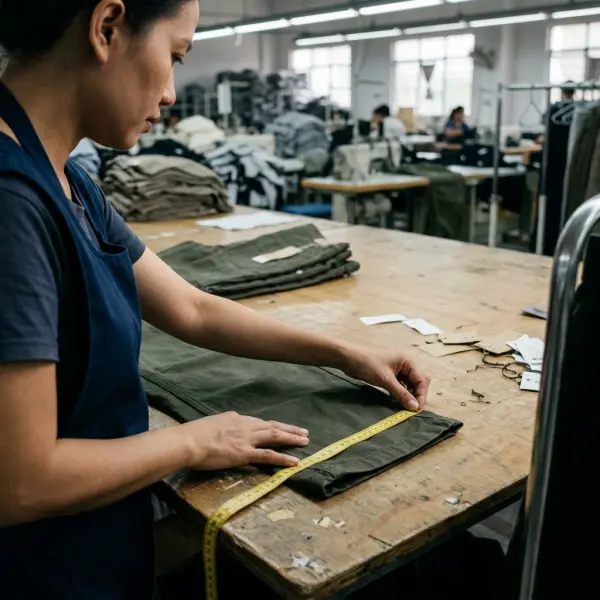
Practical Strategies for Fashion Brands and Garment Manufacturers
Improving hem quality requires coordination between product development and manufacturing. The process should not depend entirely on the skill of the operator performing the final sewing operation.
For fashion brands, one of the most effective starting points is to communicate construction requirements clearly. For manufacturers, the priority is to translate those requirements into stable procedures that can be repeated across operators and production batches.
Include Hem Details in Technical Specifications
A garment tech pack should identify the intended hem construction, finished width, relevant stitch type, and appearance requirements.
Where necessary, the specification should include a construction diagram or close-up photograph showing the approved finish. This is particularly useful when the garment requires a blind hem, specialized coverstitch, or unusual folded arrangement.
Descriptions such as "clean finish" are helpful as general expectations but insufficient when different constructions could produce noticeably different results.
Match Construction Methods to Actual Fabric Behavior
When material changes occur, garment teams should revisit the hemming specification instead of assuming that the existing construction will remain suitable.
A technique approved for stable cotton may need adjustment when the style is produced in lightweight crepe. Similarly, a hem developed for a firm interlock knit may behave differently on soft single jersey.
For businesses selecting among construction options, Blind Hem, Rolled Hem, and Double Fold Hem: When to Use Each provides a more detailed comparison of material compatibility and finishing requirements.
Evaluate Rework Costs Alongside Sewing Efficiency
A faster hemming operation does not necessarily produce a lower total manufacturing cost. If the method generates repeated defects, any reduction in sewing time may be offset by inspection, repair, pressing, or rejected garments.
A practical process review should therefore consider both production speed and first-pass quality. This is particularly relevant when introducing specialized attachments or increasing machine operating speed.
The most efficient method is the one that consistently meets the required standard under realistic production conditions, not simply the method with the shortest individual sewing cycle.
Use Defect Feedback to Improve Future Product Development
Hem problems can reveal weaknesses in pattern construction, fabric selection, or technical specifications. These findings should inform later product development rather than remaining isolated factory corrections.
For example, recurring bulk at side-seam intersections may indicate that the selected folding arrangement is unsuitable for a particular fabric. Repeated waviness on a knit style may suggest the need for a different stitch configuration or more controlled feeding.
Using these observations in future sampling can reduce avoidable revisions and improve consistency across related styles.
Important Technical Caveats: What Hem Defects Do Not Always Mean
A visible irregularity does not automatically identify its cause. Puckering may involve thread tension, feeding, fabric structure, or dimensional changes. Twisting may originate in fabric skew rather than the sewing operation. A wavy knit edge may result from handling, but it can also reflect the material's inherent recovery characteristics.
Likewise, a finish that appears unusual is not necessarily defective. Decorative lettuce edges, intentionally textured hems, denim roping, and asymmetrical garment shapes may be deliberate design choices.
Manufacturers should avoid applying generic corrective actions without checking the approved construction and material behavior. Increasing pressing pressure, tightening stitching, or adding reinforcement can sometimes create additional problems.
There is also no single universal tolerance for hem width, stitch visibility, or allowable waviness across all garment categories. These requirements should be established according to the product specification, customer expectations, and relevant quality agreements.
Where the defect's cause remains uncertain, testing should be performed on representative fabric samples before making changes to an active production process.
Frequently Asked Questions About Common Hem Problems
Why does a garment hem become uneven after washing?
A garment hem may become uneven after washing because different fabric sections shrink, relax, or change shape at different rates. Bias-oriented areas and unstable knitted fabrics can be especially sensitive to dimensional changes, although the outcome depends on the material and garment construction.
An uneven hem may also reflect problems that existed before washing but were temporarily concealed by pressing. Manufacturers should compare pre-wash and post-wash measurements to identify when the variation occurs. If the change originates in fabric behavior, correcting the sewing fold alone may not prevent recurrence. Material testing, pattern adjustments, or changes to garment-finishing procedures may be necessary.
What causes puckering along a garment hem?
Puckering can result from excessive thread tension, displacement of fabric yarns, unequal feeding between fabric layers, or differences in dimensional behavior during finishing. The same visible wrinkle pattern may therefore have several possible causes.
Diagnosis should begin by examining when the puckering appears and whether it is concentrated along the stitch line or distributed across the folded allowance. The sewing team can then review thread balance, needle and thread compatibility, presser-foot pressure, and fabric handling. Replacing the thread or loosening tension without identifying the actual mechanism may produce an incomplete correction. A controlled sample test provides a more reliable basis for adjustment.





Comments 0
Leave a CommentSend Comment
Anda harus Login terlebih dahulu untuk dapat memberikan komentar.