

How Digital Material Swatches Support Faster Collection Development
Developing a fashion collection involves hundreds of small decisions, many of which depend on the materials available to the design team. A designer may have a clear silhouette in mind but still need to explore fabric textures, compare color options, review print scales, and confirm whether the preferred material can be sourced within the collection's commercial requirements.
Traditionally, these decisions have relied heavily on physical swatch books, supplier sample deliveries, and repeated exchanges between design and sourcing departments. Physical materials remain essential, but the process becomes less efficient when every early design alternative requires another physical sample or when team members must search through disconnected fabric references.
Digital material swatches offer a different way to manage the exploration stage. By making fabric appearances and relevant material information accessible in digital form, they allow designers to investigate more options, compare alternatives, and communicate material directions before requesting every physical sample.
The benefit is not that digital swatches eliminate the physical development process. Their practical value lies in helping fashion teams make better-informed preliminary decisions, so that sampling, sourcing, and technical evaluation can focus on the options most likely to move forward.
Quick Answer: How Do Digital Material Swatches Speed Up Collection Development?
Digital material swatches can support faster fashion collection development by allowing designers to search, compare, visualize, and share fabric options without physically handling every material during the initial selection process. They make it easier to explore different colors, textures, prints, and material combinations while keeping design references accessible to the people involved in product development.
When connected to a digital fabric library or compatible 3D design software, these swatches can support garment visualization, material comparison, and collaborative reviews. Designers may evaluate several possible fabric directions before requesting physical samples, while sourcing teams can use linked supplier information to identify feasible options.
This approach can reduce repetitive searches, unnecessary sample requests, and communication delays, particularly when teams already have reliable digital material assets and established approval procedures.
However, faster digital exploration does not guarantee a shorter overall development timeline. The results depend on material-data quality, supplier responsiveness, software compatibility, decision-making practices, and the extent to which physical testing remains necessary.
Digital swatches work best as an early-stage decision tool that complements rather than replaces physical material evaluation.
Why Fabric Selection Can Slow Down Collection Development
Material selection is rarely a single decision made at the beginning of a collection. Fabric choices often evolve as designers refine silhouettes, merchandising teams review product positioning, and sourcing specialists evaluate availability, cost, and production feasibility.
Consider a fashion brand developing a seasonal assortment of dresses, shirts, trousers, and lightweight outerwear. The initial concept might include several fabric directions for each category, such as structured cotton, fluid viscose, textured blends, and lightweight technical materials. The design team needs to understand how these choices affect the collection's visual consistency before deciding which ones justify further development.
When fabric information is distributed across physical swatches, supplier presentations, image folders, and individual spreadsheets, even a simple comparison may require considerable coordination. Designers may ask sourcing teams to locate a previous material, request additional photographs, or contact a supplier for a reference that another department already possesses.
These activities are not inherently unnecessary. The problem occurs when information must be rediscovered or redistributed because the team lacks a practical way to access it.
The Hidden Work Behind Material Exploration
Collection development often involves more material exploration than the final assortment suggests. A finished collection may use relatively few core fabrics, but reaching those choices can require consideration of many alternatives.
For a relaxed shirt, a designer might compare cotton poplin, cotton-linen blends, viscose twill, and lightweight polyester fabrics. Each material offers a different combination of surface appearance, structure, drape, care characteristics, and commercial implications.
If each preliminary comparison depends on obtaining and circulating physical samples, the team may face delays that are unrelated to the actual quality of the design concept. Digital references can make the first screening stage more accessible, leaving physical swatches for evaluations where their properties genuinely matter.
Repeated Material Changes Affect Other Decisions
Changing a fabric can also influence decisions beyond appearance. A heavier material may alter the intended silhouette, a different print scale may require layout adjustments, and a change in fiber composition or construction may affect the garment's handling and production requirements.
These relationships mean that material decisions should not be separated entirely from garment design. When designers can explore material variations earlier, they may identify visual conflicts or unsuitable combinations before making further commitments to sampling.
Nevertheless, digital evaluation is only as useful as the information behind it. A visually convincing fabric image cannot establish how a material will perform during sewing, wearing, laundering, or bulk production.

How Digital Material Swatches Change the Design Exploration Process
A digital material swatch is a visual representation of a textile that can be used for material browsing, comparison, and, when supported by the appropriate data and software, garment visualization. It may consist of a photograph, scanned fabric texture, or a more developed material asset containing additional surface information.
Unlike a physical swatch, a digital reference can be accessed repeatedly by different team members without moving the original textile between locations. A single material can also be associated with several approved colorways or print variants, making it easier to understand the range of available design options.
The broader system used to organize these assets is explained in Digital Fabric Libraries Explained for Fashion Design Teams. During collection development, however, the main concern is how digital swatches influence the sequence of design decisions.
Comparing More Options During Initial Selection
Digital swatches allow designers to review multiple materials within a common visual environment. A team exploring fabrics for a blouse collection can arrange possible options by color, texture, print, or material category instead of examining each supplier swatch book separately.
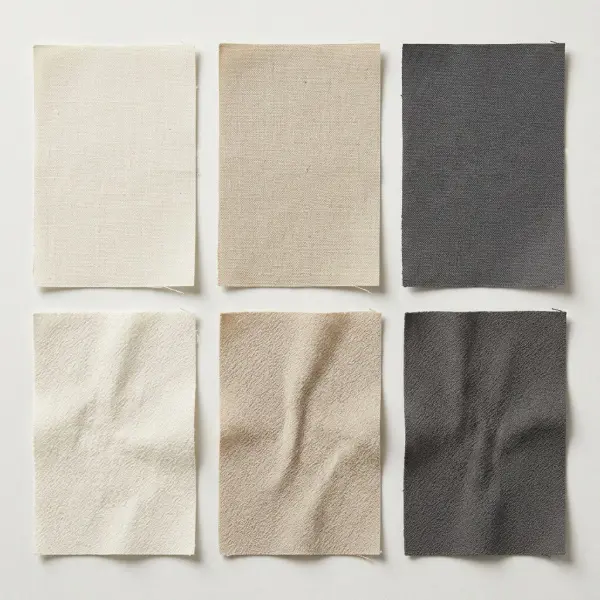
This can be particularly useful when the collection has a defined palette or material direction. For instance, a brand working with muted neutrals may want to compare several beige, ivory, and stone-colored fabrics before deciding which combinations produce the most coherent assortment.
A digital comparison may help identify options worth investigating, but it should not be treated as definitive color approval. Differences in lighting, photography, screen calibration, and fabric reflectance can influence the colors displayed on a monitor.
The practical gain comes from narrowing the selection. Designers can eliminate obviously unsuitable visual options and focus physical evaluation on a smaller, more relevant group of fabrics.

Exploring Colorways Without Recreating Every Presentation
Colorway development is another area where digital materials can improve workflow flexibility. Once an appropriate fabric asset exists, designers may be able to apply or preview different colors using compatible design tools without preparing a new physical presentation for every exploratory variation.
For example, a team considering a pleated skirt in five seasonal colors can create preliminary visual comparisons using a consistent garment representation. Merchandising colleagues may then review which options fit the proposed assortment before the team commits to requesting or developing physical color samples.
The swatchbook mix visualization platform provides an industry example of applying digital materials and material collections to three-dimensional product assets for design exploration.
These previews support creative decisions rather than establishing that every displayed color is available from the supplier. A digitally recolored fabric should not be confused with a confirmed supplier colorway, particularly when dyeing, finishing, minimum order requirements, or production constraints may limit what can be manufactured.
Testing Material Combinations Across a Collection
Collection development involves more than selecting fabrics for individual garments. Designers also need to consider how materials relate to one another across the assortment.
A collection might combine crisp shirting fabrics with softer dress materials, textured casualwear, and structured tailoring. Even when each textile is individually appropriate, the overall combination may appear inconsistent if its colors, surface finishes, or visual weights do not complement the intended concept.
Digital swatches allow teams to create coordinated material boards and compare fabrics across multiple styles. This is particularly useful when several designers contribute to the same collection and need a shared understanding of the approved creative direction.
The process can also reveal opportunities to reuse materials across product categories. When a suitable fabric can serve several styles without compromising performance or design requirements, the team may gain sourcing and assortment-planning advantages. Those benefits still depend on actual order volumes, supplier terms, and production needs.
From Digital Swatches to Virtual Garment Visualization
Digital swatches become more useful when they can be applied to garment concepts rather than viewed only as isolated fabric samples. In a compatible three-dimensional apparel design environment, designers can examine how a selected material affects the appearance of a virtual garment.
This allows the team to evaluate material directions within the context of a silhouette. A print that looks balanced as a square swatch may feel too large across a shirt front, while a particular color combination may look less convincing when applied to an entire coordinated outfit.
Virtual visualization makes these relationships easier to discuss before creating physical samples for every exploratory option.
Applying Different Materials to the Same Garment Design
Suppose a fashion team is developing a relaxed summer dress. The silhouette is established, but the team is considering cotton poplin, viscose crepe, and a lightweight linen blend.
With suitable digital material assets, the same garment design can be reviewed using different fabric appearances. Designers can compare how surface texture, color, print, and simulated fabric behavior contribute to the overall design.
Material changes may also influence the virtual silhouette when the software uses appropriate physical-property inputs. A fabric represented with greater bending resistance may produce a different simulated shape from a softer material, although the quality of this comparison depends on the simulation data.
CLO's fabric material documentation describes controls for material appearance, including color, texture maps, opacity, and reflection. These capabilities support visual exploration but should not be mistaken for independent verification of a fabric's physical behavior.
The main objective at this stage is to evaluate promising directions. The team still needs to establish whether the selected textile can deliver the required results in a physical garment.
Evaluating Prints and Surface Patterns at Garment Scale
Print selection creates challenges that are difficult to resolve from small swatches alone. A floral pattern may look delicate on a fabric tile but appear visually dominant when repeated across a long dress. Stripes may create unwanted relationships with seam placement, while large checks can affect the intended balance of garment panels.
Digital garment visualization allows designers to review these effects across the full product representation. Adjusting pattern scale or placement in the digital environment can help identify a preferred design before preparing further print layouts or physical strike-offs.
However, a digitally adjusted pattern does not automatically become a production-ready textile design. Repeat dimensions, color separations, printing methods, fabric width, and registration requirements still need to be addressed through the appropriate textile development process.
Recognizing What Virtual Visualization Cannot Confirm
Not all digital swatches contain the information needed for realistic fabric simulation. An image-only asset may produce an attractive visual result while relying on generic or estimated mechanical properties.
Consequently, two virtual garments can look convincing without reliably representing the behavior of their physical fabrics. Material-specific decisions involving drape, stretch, recovery, weight, and fit require suitable measurement and validation.
Browzwear's guidance on creating a fabric library describes combining physical-property data and repeating textures to create materials for its garment design applications.
Digital visualization can make exploration more efficient, but confidence in the simulated result must reflect the quality of the underlying material data.

How Digital Swatches Support Faster Team Decisions
Material exploration becomes part of a larger approval process once design concepts are reviewed by merchandising, sourcing, product development, and management teams. These participants do not necessarily evaluate fabrics using the same criteria.
Designers may focus on aesthetics and silhouette. Merchandising teams may consider assortment balance and price positioning. Sourcing specialists need supplier feasibility, while technical developers assess whether a material is suitable for the garment's construction and performance requirements.
Digital swatches can provide a common reference for these discussions, helping teams avoid ambiguity over which fabric, color, or material variation is being evaluated.
Making Collection Reviews More Consistent
A shared digital material board can connect fabric references to sketches, product categories, and collection color palettes. Instead of reviewing separate photographs from different sources, decision-makers can see how the proposed materials work together.
For brands operating across locations, this also makes preliminary review less dependent on having all physical swatches in the same meeting room. Team members can discuss identified material options through shared presentations or product development systems, provided they have access to the same current assets.
Digital collaboration does not automatically produce agreement. Reviews still require clear decisions, responsible approvers, and documented outcomes. The advantage is that participants can refer to consistent material identities rather than relying on ambiguous descriptions.
Connecting Material Choices With Supplier Feasibility
Creative exploration and sourcing feasibility should inform one another. A fabric may be visually suitable but unavailable in the required quantity, color, or delivery window.
When digital swatches are linked to supplier references, sourcing teams can begin evaluating availability and commercial constraints while designers refine the collection. This makes it easier to distinguish attractive concepts from options that are realistic for the intended production plan.
Platforms such as swatchbook's material marketplace illustrate how digital material exploration can be combined with supplier information and sample-request workflows.
For fashion businesses, these connections matter because material selection is not finished when a fabric looks appropriate. It must eventually meet sourcing, cost, quality, and manufacturing requirements.
Reducing Miscommunication During Design Handoffs
One recurring problem in apparel development is the loss of context when a project moves from design exploration to technical development or sourcing. A designer may approve a fabric visually, but the associated supplier code or exact construction may not be communicated clearly.
Linking the swatch to a material identifier helps preserve that connection. Teams can refer to the selected option consistently in review notes, sample requests, and product documentation.
The broader principles of managing these relationships are also relevant to fashion vendor management, particularly when multiple suppliers offer similar materials.
Where Digital Swatches Can Save Time—and Where They Cannot
Digital swatches primarily improve activities involving visual exploration, information access, comparison, and communication. They have more limited value when decisions depend on physical performance, manufacturing processes, or conditions that cannot be represented reliably through the available digital assets.
The distinction becomes clearer when mapped against different stages of collection development.
|
Development activity |
How digital swatches can help |
What may still be required |
|
Early material exploration |
Search and compare many fabric appearances |
Physical review of shortlisted fabrics |
|
Seasonal palette development |
Preview coordinated color and texture combinations |
Color standards and supplier color confirmation |
|
Print and pattern exploration |
Examine scale and placement on garment visuals |
Repeat verification, print development, strike-offs |
|
Preliminary silhouette review |
Compare materials using compatible 3D assets |
Physical drape and fit validation where necessary |
|
Internal collection review |
Share common material references and alternatives |
Documented approvals and resolution of outstanding questions |
|
Supplier selection |
Connect design choices with supplier references |
Availability, price, lead time, and specification confirmation |
|
Final material approval |
Maintain records of selected materials |
Required physical tests, samples, and formal approval procedures |
The table highlights an important operational principle: digital swatches can help teams make preliminary decisions sooner, but they do not make every subsequent activity unnecessary.
The most useful approach is to place digital evaluation before physical sampling where practical. That allows teams to concentrate material handling, testing, and approval resources on options that have already passed an initial design review.
A Practical Collection Development Scenario
Consider a hypothetical apparel brand developing a twelve-style casualwear collection. The assortment includes shirts, trousers, dresses, and coordinated separates, with several possible materials under consideration for each product category.
In a predominantly physical workflow, the design team might gather swatches from different suppliers, organize material boards, photograph alternatives for management reviews, and request additional references whenever the design direction changes. These activities can be manageable within a small team, but they become more difficult when collaborators work remotely or material options are frequently revised.
With a well-organized digital swatch collection, the team can begin by reviewing existing fabric references alongside new supplier options. Designers can create preliminary color and texture combinations, then attach shortlisted materials to specific garments or product categories.
The sourcing team can investigate availability and commercial suitability while designers prepare a more focused review. Where compatible digital assets are available, selected garments may also be visualized with alternative fabrics to examine the overall collection direction.
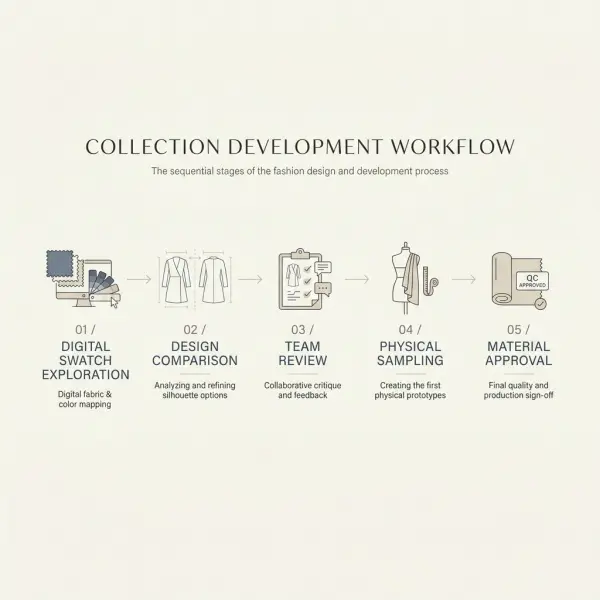
The workflow might follow this sequence:
- Material exploration: Review existing digital swatches and identify fabrics aligned with the collection concept.
- Design comparison: Create preliminary combinations of materials, colors, and garment silhouettes.
- Cross-functional review: Discuss the shortlisted options with merchandising, sourcing, and technical development.
- Supplier verification: Confirm whether preferred fabrics are commercially and technically feasible.
- Targeted physical sampling: Request or evaluate physical materials needed to validate the remaining choices.
- Material approval: Record the selected fabrics, supporting evidence, and relevant approval decisions.
This example does not establish a numerical time saving, because the outcome would depend on the team's original workflow, available assets, supplier response times, and approval requirements. It does demonstrate where digital swatches can change the sequence of work: broader preliminary exploration occurs before the team commits substantial resources to physical material evaluation.
How Fashion Brands Can Introduce Digital Swatches Into Collection Development
A successful implementation does not require every material to be digitized at once. Fashion brands can begin by identifying the development activities where access to digital swatches would remove repetitive work or improve coordination.
The first objective should be a reliable workflow, not a visually impressive asset collection.
Begin With a Defined Product Category
A small pilot is easier to evaluate when it focuses on a specific product category or collection. A shirting brand, for example, might start with its regular cotton poplins, oxfords, and lightweight blends rather than attempting to digitize every historical fabric reference.
This allows the design and sourcing teams to test whether the digital swatches contain enough information to support real decisions. It also reveals practical problems with naming, image quality, classification, and supplier identification before the system becomes more complicated.
The pilot should include materials that are genuinely relevant to upcoming development. Otherwise, the team may spend considerable effort creating assets that are rarely used.
Prepare Consistent Visual and Material References
Fabric images should be captured and displayed in a reasonably consistent manner. Differences in lighting, framing, and scale can make comparisons misleading, especially when designers are evaluating closely related textures or colors.
The digital reference should also remain connected to the actual supplier fabric. A material code, composition record, and current sourcing reference can help distinguish verified options from inspirational images.
If a team plans to use swatches in 3D design software, it should establish whether the available files are suitable for that environment. Simple photographs can be useful for appearance exploration, but additional texture preparation or mechanical data may be required for meaningful virtual garment simulation.
Define Which Decisions Can Be Made Digitally
Teams should agree in advance on which decisions digital material reviews can support. Otherwise, the introduction of digital swatches may create confusion about whether a material has been visually shortlisted or technically approved.
For example, an initial color and texture direction may be selected using digital references, while final color confirmation, physical performance assessment, and production approval remain separate activities.
This distinction helps prevent unnecessary risk while still allowing the team to benefit from faster preliminary exploration.
Use a Common Reference Across Departments
Digital swatches are less useful when every department downloads independent copies and assigns its own filenames. A shared material identifier allows teams to preserve the connection between design options, supplier specifications, and approved materials.
Brands should also establish who can update the material record and how superseded versions are handled. An outdated digital image or a discontinued supplier reference can undermine the efficiency that the system was intended to provide.
Clear ownership is especially important when suppliers contribute new digital assets or when several departments work on the same collection simultaneously.
Evaluate the Workflow Before Expanding It
After completing a pilot collection, the team should review whether the digital workflow improved meaningful activities. Useful observations include how easily designers found fabrics, whether preliminary reviews required fewer repeated searches, and whether supplier references were communicated more clearly.
The business should also examine where additional preparation work was introduced. Digital assets require maintenance, and sophisticated material visualization can demand specialist skills or software costs that may not be justified by every product category.
Expansion should follow demonstrated operational usefulness rather than an assumption that every collection needs the same level of digitization.
Measuring Whether Digital Swatches Actually Improve Efficiency
Faster collection development is an operational outcome, not simply a feature provided by a software platform. To assess whether digital swatches contribute to shorter development cycles, brands need to observe specific changes in how their teams work.
The most useful indicators focus on activities directly affected by digital material exploration. Overall collection lead time can also be monitored, but it is influenced by many factors beyond fabric selection, including product complexity, design changes, supplier capacity, approval schedules, and manufacturing conditions.
A practical evaluation framework might include the following measures:
- Initial material shortlist time: The time between receiving a design brief and identifying material candidates for review.
- Repeated material requests: How often teams must request information or samples already available elsewhere within the business.
- Physical samples requested per approved option: Whether early digital screening changes the amount of physical sampling required, adjusted for product complexity.
- Material-related review cycles: The number of review rounds needed to settle preliminary fabric directions.
- Material identification errors: Instances where teams use an incorrect supplier code, fabric version, or material reference.
- Digital asset preparation effort: The time and resources required to create, maintain, and update usable swatches.
These measures should be evaluated against a relevant baseline. A collection with complicated textiles or many newly developed materials should not be compared directly with a repeat collection using familiar fabrics without considering those differences.
Brands should also avoid treating fewer physical samples as an automatic indicator of better performance. Some products legitimately require substantial physical evaluation, and reducing necessary sampling could create quality problems later.
A useful assessment asks whether digital swatches help the team reach sufficiently informed decisions with less unnecessary work, without weakening material validation.
Common Mistakes That Reduce the Benefits of Digital Swatches
Digital material workflows can become slower rather than faster when brands introduce new tools without addressing the information and decision-making practices around them.
Digitizing Too Many Materials Before Establishing a Workflow
An extensive material catalog may look impressive, but collecting thousands of digital images does not necessarily help designers select fabrics. If records are poorly named, missing supplier references, or difficult to search, the team may spend as much time browsing digital files as it previously spent searching through physical samples.
A more effective starting point is to digitize materials tied to active development needs. Once the team knows which information and search functions are genuinely useful, the library can expand without accumulating large amounts of disorganized content.
Treating Digitally Recolored Fabrics as Available Supplier Options
Digital tools can make color experimentation easy, but a previewed color is not automatically a commercially available fabric. The supplier may have limitations involving dyeing methods, minimum quantities, shade consistency, or development schedules.
If the design team assumes that every digital colorway can be produced, it may commit to an assortment that later requires significant revision. Exploratory colorways should therefore be distinguished from supplier-confirmed options, with availability checked before final material decisions.
Using Low-Quality Swatches for Detailed Design Decisions
Inconsistent fabric photographs, distorted texture scales, and poorly prepared digital material files can produce misleading comparisons. A print may appear smaller than its actual repeat, while differences in lighting can exaggerate or conceal color variation.
These problems become more consequential when digital materials are applied to garment visuals. The team may approve an appearance that does not correspond closely to the physical textile. Consistent capture procedures, appropriate scale references, and clear validation status help reduce this risk.
Creating More Options Without Improving Decision-Making
Digital tools can make it easier to generate numerous color combinations and fabric variations. Without a clear decision framework, this flexibility may increase the number of alternatives under discussion and create longer approval meetings.
The objective should not be to maximize the number of digital variations produced. Designers need appropriate criteria for narrowing options based on collection direction, material suitability, sourcing feasibility, and commercial requirements.
Clear review milestones can help prevent endless digital experimentation from delaying the physical development process.
Assuming Digital Reviews Replace Material Expertise
Experienced designers and technical developers often recognize important textile characteristics through touch, handling, and familiarity with garment construction. Digital swatches do not eliminate the need for this expertise.
A fabric may appear fluid in a visual presentation but have unexpected opacity, recovery, seam behavior, or finishing characteristics in physical use. The better approach is to use digital references to support expert judgment while retaining appropriate physical checks for decisions that depend on real material behavior.
Important Limitations: Faster Exploration Is Not the Same as Faster Production
Digital swatches primarily influence activities that occur before or during material selection. Their contribution to the complete collection development timeline depends on whether improvements at this stage remove a genuine bottleneck.
If a brand already selects fabrics quickly but frequently experiences delays in supplier confirmation, pattern development, fit approval, or manufacturing preparation, digitizing swatches may have limited influence on overall delivery dates. The technology could still improve design communication, but the business should not expect it to resolve unrelated operational constraints.
Similarly, digital assets do not eliminate material lead times. A fabric still needs to be produced, supplied, tested, or approved according to the requirements of the business. Virtual previews cannot guarantee that a material will be available at the desired price or within the intended production schedule.
There are also technical limits to the types of fabrics that can be represented reliably. Materials with complex embellishments, irregular surface structures, multilayer construction, or unusual mechanical behavior may require specialized digitization approaches. CLO's documentation on fabrics with digitization limitations identifies examples for which particular measurement or scanning procedures may not be suitable.
These concerns explain why material data quality should be addressed before digital previews become the basis for significant technical decisions. The deeper relationship between digital representation, measured fabric properties, and trustworthy garment simulation is explored in Why Accurate Fabric Data Matters in Digital Fashion Workflows.
The most realistic benefit of digital material swatches is therefore improved efficiency in the decisions they can genuinely support. Their success depends on a workflow that recognizes both the strengths of digital exploration and the continuing need for physical verification.
Frequently Asked Questions About Digital Material Swatches
Do Digital Material Swatches Really Make Fashion Collection Development Faster?
They can make specific development activities faster, particularly material discovery, early visual comparison, colorway exploration, and communication between teams. The benefit is strongest when accurate digital assets already exist and the team has clear procedures for using them.
However, digital swatches do not guarantee shorter collection development schedules. A brand may still experience delays related to supplier availability, physical sample approval, garment fit, or production planning. Creating digital assets can also introduce preparation and maintenance work.
Businesses should evaluate improvements in identifiable activities rather than assuming that adopting digital swatches automatically reduces the entire product development timeline.
What Is the Difference Between a Digital Material Swatch and a Digital Fabric Library?
A digital material swatch is an individual digital representation of a fabric, while a digital fabric library is the system used to organize, identify, retrieve, and manage multiple material records and assets.
A swatch might contain a fabric photograph, scanned texture, or specialized material information. The library connects these assets with useful metadata, supplier references, classifications, and sometimes approval information.
For collection development, the distinction is practical. Individual digital swatches support material comparisons and design visualization, while the library helps team members find the correct assets and maintain consistency across projects. A collection of unrelated image files may be useful for inspiration but does not provide the same management capabilities as a structured library.
Can Fashion Designers Explore Different Fabrics Without Making Physical Samples?
Yes, designers can explore preliminary fabric directions through digital images, material boards, and virtual garment visualization. This allows them to compare appearance, color combinations, print scale, and some simulated garment characteristics before requesting physical samples.
The process is particularly useful during early concept development, when many options may be considered but only a few will progress to technical evaluation.
Physical samples remain necessary when decisions depend on actual handfeel, color confirmation, construction behavior, performance, or required testing. Digital exploration should help teams decide which materials deserve further evaluation rather than serve as universal proof of their suitability.
Are Digital Swatches Useful for Brands That Do Not Use 3D Fashion Software?
Yes. Digital material swatches can improve basic collection planning even when a fashion business does not use virtual garment simulation. Designers can organize material photographs, create digital color palettes, compare textures, and share supplier references using ordinary design or documentation tools.
A small apparel brand might use a shared material catalog to prepare its seasonal assortment and coordinate preliminary selections with suppliers. The value comes from accessible information and consistent material identification rather than sophisticated rendering capabilities.
More advanced 3D tools become relevant when the team needs garment-level visualization and has the skills and material assets to use those functions effectively.
How Can Digital Swatches Reduce Unnecessary Physical Sampling?
Digital swatches can help designers screen out unsuitable options before requesting physical materials. When several fabrics are available for consideration, an initial digital comparison may reveal that some have the wrong visual texture, print scale, or color direction for the intended collection.
The team can then prioritize physical evaluation of the remaining options. This approach may reduce requests for materials that would have been rejected during a simple preliminary review.
However, the reduction should not come at the expense of appropriate testing or approval. Where physical properties, color accuracy, or garment performance are important, the relevant samples remain necessary regardless of how convincing the digital references appear.
What Makes a Digital Fabric Swatch Suitable for Collection Development?
A useful digital swatch should have a recognizable material identity, an appropriate visual representation, and enough supporting information for the decision being made. For basic material exploration, consistent images, realistic texture scale, and correct supplier references are particularly valuable.
When the swatch is intended for 3D garment visualization, additional technical information may be necessary. The software may require compatible material files and suitable physical-property parameters to represent fabric behavior meaningfully.
Brands should also consider whether the asset is current and whether its colors or material variations have been confirmed by the supplier. A visually attractive swatch is less useful when the team cannot connect it reliably to an actual material.
Should Suppliers Provide Digital Swatches Before Sending Physical Samples?
Supplier-provided digital swatches can make initial material discovery and communication more efficient, especially when suppliers maintain reliable images and specifications. They allow brands to review options before deciding which physical samples are worth requesting.
However, not every supplier has the resources to produce specialized digital fabrics, and requirements should reflect the complexity of the material and the intended application. Standard photographs and structured specifications may be adequate for early browsing, while 3D garment development may demand more advanced assets.
Brands should agree on image quality, material identification, metadata, and file compatibility where relevant. Supplier-provided assets also need appropriate verification before they become part of an approved material record.
Conclusion: Use Digital Swatches to Make Material Decisions More Focused
Digital material swatches can improve fashion collection development by changing how teams explore, compare, and communicate fabric options before moving into physical sampling and technical approval.
Their contribution is most visible in the early stages of development, when designers need to evaluate multiple materials, create colorway alternatives, test visual combinations, and communicate choices across departments. When these activities are supported by accessible and dependable digital references, the team may spend less time rediscovering information or circulating samples that are unlikely to progress.
The benefits are not automatic. Poor material images, outdated supplier information, unclear approval procedures, and unnecessary digital experimentation can introduce new inefficiencies. Fashion businesses therefore need to treat digital swatches as part of a disciplined product development process rather than as a substitute for material expertise.
The most effective approach combines the flexibility of digital exploration with the evidence provided by physical fabrics. Designers can investigate possibilities more broadly, sourcing specialists can contribute commercial constraints earlier, and technical teams can concentrate validation efforts on materials that have a clear development purpose.
For fashion brands, this is the more meaningful objective: not simply creating more digital material options, but making the progression from creative exploration to approved collection materials clearer and more efficient.





Comments 0
Leave a CommentSend Comment
Anda harus Login terlebih dahulu untuk dapat memberikan komentar.