

Seersucker Fabric Explained: Structure, Texture, and Fashion Uses
Quick Answer: What Is Seersucker Fabric?
Seersucker is a textured fabric characterized by alternating smooth and puckered areas, traditionally produced through a weaving technique that creates uneven tension between groups of warp yarns. Commonly made from cotton, seersucker is associated with lightweight shirts, dresses, summer suits, and casual clothing designed for warm-weather use.
Its defining characteristic is the raised, crinkled surface. Unlike ordinary wrinkles that develop during wearing or laundering, traditional woven seersucker has a deliberately engineered texture that is part of the fabric's construction. These raised sections create small spaces between the textile and the skin, which may reduce direct fabric contact and support wearer comfort.
However, seersucker is not automatically cooler or more breathable than every smooth fabric. Fiber composition, fabric density, weight, finishing, and garment fit all influence its performance.
For fashion designers, apparel manufacturers, and sourcing teams, seersucker offers a combination of recognizable visual texture, relaxed styling, and potentially lower ironing requirements. Its commercial value lies in selecting the right construction for the intended product rather than assuming that every puckered fabric performs the same way.
Understanding Seersucker Fabric and Its Distinctive Surface
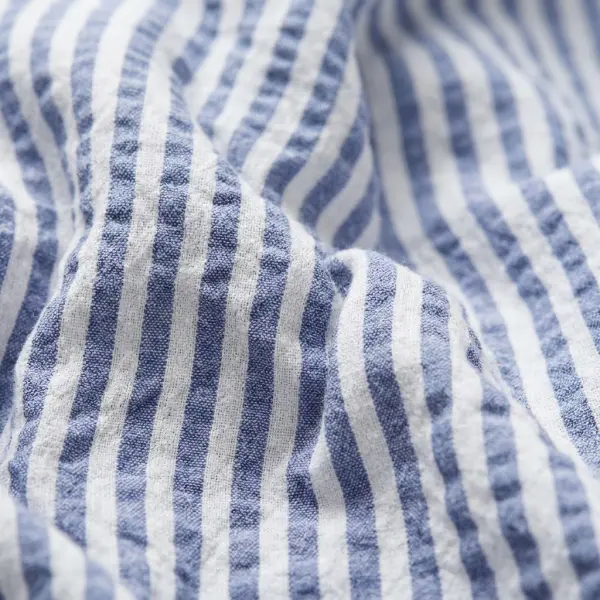
Seersucker belongs to a category of fabrics whose appearance is influenced by intentional three-dimensional surface structure. Instead of forming a consistently flat plane, the material contains sections that rise and contract into small ridges or ripples. The result is a recognizable texture that can be felt as well as seen.
Traditional seersucker is commonly constructed as a woven fabric with alternating flat and puckered stripes. These stripes usually extend along the length of the fabric, following the warp direction. The surface may feature classic contrasting colors, subtle tonal variations, or a solid color that allows the texture itself to become the primary design element.
The distinction between color and structure matters. A striped cotton fabric is not necessarily seersucker, and seersucker does not need contrasting stripes to qualify. The puckered effect is the essential characteristic.
Why Seersucker Looks Wrinkled Even When It Is New
The irregular surface of seersucker is intentional rather than a sign of poor pressing or careless storage. In traditional woven constructions, the fabric's raised sections develop because certain yarn groups follow a different path and contract differently from the flatter sections.
This gives the material its relaxed appearance immediately after manufacturing. A garment made from seersucker can therefore look naturally textured without being treated as improperly finished.
The texture also helps distinguish seersucker from many ordinary cotton fabrics. A conventional smooth woven shirt may show random creases after movement, while seersucker maintains an organized surface pattern that was established during production.
Is Seersucker a Fabric Type or a Fiber?
Seersucker describes a fabric structure or surface effect, not a specific fiber. Cotton is its most familiar material, but seersucker fabrics can also incorporate other fibers and blends, including polyester, rayon, or linen, depending on the construction method and intended application.
This distinction is particularly relevant when sourcing materials. A supplier describing a fabric as "seersucker" has communicated something about its texture but has not necessarily established its fiber composition, durability, laundering behavior, or comfort properties.
A useful fabric specification should therefore identify both the material and its construction. "100% cotton woven seersucker," for example, is more informative than simply listing "seersucker" in a product description.
How Is Seersucker Fabric Made?
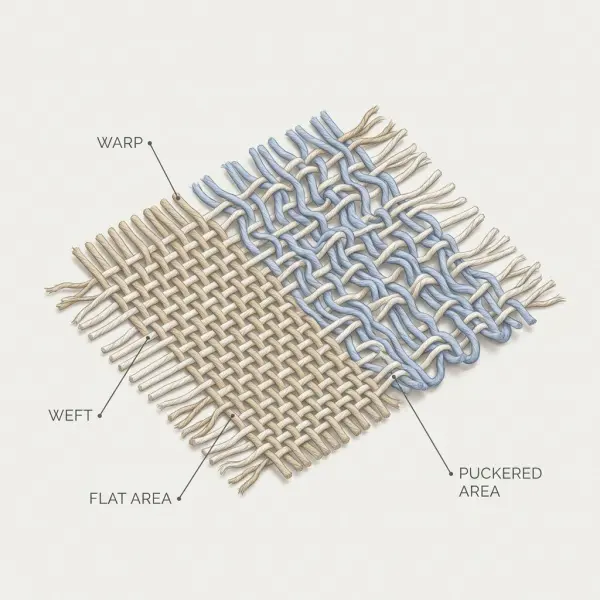
Traditional woven seersucker is manufactured by controlling groups of warp yarns differently during weaving, allowing some areas to remain comparatively flat while others develop a puckered surface. This technique is commonly called slack-tension weaving.
In woven textile manufacturing, warp yarns run lengthwise through the loom, while weft yarns are inserted across them. Seersucker construction manipulates this arrangement so that selected yarn groups produce extra length or contraction relative to the surrounding fabric.
The result is an intentionally uneven fabric surface.
Differential Warp Tension Creates the Puckered Effect
A conventional method uses two warp systems, often supplied from separate warp beams. One group of yarns is maintained under relatively high tension to form the flatter ground sections, while another group operates under lower tension to create the seersucker sections.
As the yarns interlace with the weft and the fabric relaxes, the additional yarn length in the slack sections contributes to the characteristic rippled surface.
The principle sounds straightforward, but consistent production depends on accurate control of several variables. Warp tension, yarn counts, yarn density, weave arrangement, and the rate at which yarn is released from the beam all affect the final structure.
Cotton Incorporated's technical bulletin on processing woven cotton seersucker fabrics describes the importance of differential warp control, fabric construction, and low-tension finishing in maintaining the intended puckered appearance.
The Role of Yarn Density and Weave Construction
Differential tension is central to traditional seersucker, but tension alone does not determine the final appearance. The weaving pattern and relationship between yarn groups also influence how effectively the fabric retains its puckers.
For example, a densely constructed puckered stripe may behave differently from a lighter, more open construction. The number of weft insertions per unit length, known as pick density, helps stabilize the interlacing structure. Yarn thickness and the arrangement of warp ends can further influence the depth and regularity of the raised sections.
Manufacturers must balance visual texture with fabric handfeel, weight, and flexibility. A strongly puckered fabric may deliver greater surface definition, but it can also become too bulky or stiff for a lightweight blouse.
The goal is not simply to create the deepest possible ridges. It is to produce a stable texture that complements the intended garment.
Can Seersucker Texture Be Created Without Traditional Weaving?
Yes. Some fabrics described commercially as seersucker achieve their puckered effect through alternative manufacturing techniques, including differential shrinkage, thermal processes, or specialized finishing treatments.
These methods can create similar visual results without relying on the classic two-warp-beam weaving arrangement. They may also allow different fiber compositions or surface patterns.
A study published in the journal Materials, Assessment of Surface Geometry of Puckered Area of SeerSucker Woven Fabrics, discusses weaving, thermal, and finishing approaches and explains how manufacturing method affects surface geometry and fabric properties.
For sourcing teams, this creates an important verification point. Two fabrics with similar puckered appearances may behave differently after washing, stretching, pressing, or repeated wear. Brands should confirm how the texture is formed instead of relying entirely on product photographs.

Key Characteristics of Seersucker Fabric
Seersucker is usually selected for the relationship between its appearance and physical behavior. Its texture creates a distinct surface, while its suitability for particular clothing categories depends on factors such as fiber content, weight, yarn structure, and finishing.
The most useful way to evaluate the material is to separate its defining construction from properties that vary between individual fabric qualities.
|
Fabric characteristic |
What it means in practice |
|
Puckered surface |
Creates recognizable raised and flat areas |
|
Traditionally woven construction |
Can provide a stable texture integrated into the fabric |
|
Often lightweight |
Suitable for shirts, dresses, and selected warm-weather garments |
|
Reduced continuous skin contact |
Raised sections can create small spaces between fabric and skin |
|
Naturally textured appearance |
May reduce the need for completely smooth pressing |
|
Variable drape |
Depends on yarns, weight, pucker intensity, and finishing |
|
Variable dimensional stability |
Requires evaluation after washing and drying |
|
Wide design flexibility |
Supports stripes, checks, tonal effects, and solid colors |
These characteristics explain why seersucker is commercially versatile. The same general surface concept can support a relaxed cotton shirt, a structured summer jacket, or a softer dress fabric, provided the underlying construction is adapted to the product.
Texture and Handfeel
The handfeel of seersucker is influenced by the contrast between its raised and flat sections. A soft cotton seersucker may feel relatively gentle and flexible, while a densely woven version with prominent ridges can have a firmer, more structured handle.
This is particularly relevant for garments that contact sensitive areas of the body, such as collars, necklines, cuffs, and underarms. A fabric that looks attractive on a swatch may feel noticeably different when stitched into a garment and worn for several hours.
Design teams should evaluate the texture against the skin, not only from the decorative side of the material.
Fabric Weight and Draping Behavior
Although seersucker is strongly associated with lightweight clothing, the material is not restricted to one weight category. Light qualities can support loose-fitting blouses and casual shirts, while heavier constructions may provide enough body for summer tailoring or structured separates.
Puckering can influence the way the fabric falls because the surface is not uniformly flat. Pronounced texture may make the fabric appear fuller and affect the flow of gathered or curved sections.
For apparel development, drape testing is particularly useful before approving styles with substantial volume, such as tiered dresses or relaxed wide-leg trousers.
Breathability and Thermal Comfort
Seersucker is associated with warm-weather comfort partly because its raised sections can reduce continuous fabric contact with the skin. The resulting air spaces may support comfort in some wearing conditions, particularly when the material is lightweight and the garment has sufficient ease.
However, surface texture is not the same as air permeability. A fabric can have prominent puckers while still being tightly constructed enough to restrict airflow through the textile itself.
Research published in the International Journal of Clothing Science and Technology, Comfort-related properties of seersucker fabrics in dry and wet state, found that changes in yarn selection and fabric structure influenced properties including air permeability and thermal behavior.
This distinction prevents a common commercial oversimplification: seersucker can be a useful warm-weather material, but its performance must be assessed at the fabric and garment level.
What Types of Clothing Are Made From Seersucker?
Seersucker is used across casualwear, resort collections, contemporary womenswear, childrenswear, and selected tailoring categories. Its texture can add visual interest without requiring heavy embellishment, making it useful for clothing that combines straightforward silhouettes with recognizable surface detail.
Successful applications depend on matching fabric weight and pucker intensity to garment construction.
Casual Shirts and Relaxed Tops
Shirts are among the most familiar applications of seersucker. Cotton seersucker can support short-sleeved shirts, resort shirts, button-down styles, and relaxed everyday tops.
The material works particularly well when the silhouette allows the fabric to retain its natural surface rather than forcing it into a rigid, highly compressed shape. Simple collars, open necklines, and uncomplicated panel construction can complement its texture.
For a fashion brand developing casual summer shirts, seersucker offers a way to distinguish a basic silhouette through fabric selection. The garment may require relatively few decorative details because the textile already contributes visual character.
Details such as a shirt placket and its construction still need careful planning. Button placement, interfacing, and seam alignment should not distort the puckered surface.

Dresses, Blouses, and Feminine Separates
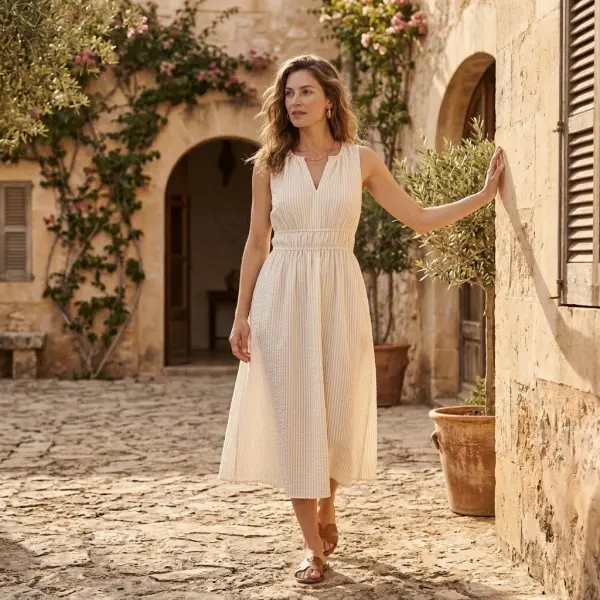
Seersucker is also suitable for dresses, blouses, skirts, and coordinated sets. Lightweight constructions can create an informal, airy appearance that works with loose silhouettes, elasticated details, and uncomplicated layering.
A solid-color seersucker dress can provide noticeable texture without relying on printed motifs. This is commercially useful for collections that prioritize fabric surfaces and subtle color variation rather than large graphic patterns.
However, puckering affects how folds, seams, and gathers behave. When a garment contains complex shaping, the designer must consider whether the texture will enhance the silhouette or create unwanted bulk.
Summer Suits and Lightweight Tailoring
Seersucker has an established place in warm-weather tailoring, particularly in jackets, trousers, and coordinated suits. Its textured surface creates a more relaxed visual character than many smooth conventional suiting fabrics.
A well-developed seersucker jacket may use an intentionally lightweight construction, but fabric choice alone does not make the finished garment lightweight. Linings, canvas, shoulder construction, interfacing, and pattern design can substantially affect both comfort and appearance.
For tailored products, the challenge is maintaining enough structure for a clean silhouette without suppressing the material's natural puckering.
Brands should assess the compatibility of interfacing and pressing methods during sampling. Excessive flattening can interfere with the intended appearance, particularly around lapels, facings, and hems.
Childrenswear and Coordinated Summer Collections
Seersucker can also support children's shirts, dresses, shorts, and coordinated family collections. Its visual texture makes relatively simple garments look distinctive, while appropriate cotton qualities can provide comfortable everyday wear.
Commercial suitability still depends on the specific textile and garment. Children's clothing requires attention to fiber composition, colorfastness, dimensional stability, trims, and applicable product safety requirements.
For a seasonal brand collection, seersucker may work as a recurring material across several product categories. A coordinated range of shirts, dresses, and shorts can create visual consistency while using different garment shapes.
Seersucker Fabric in Fashion Product Development
For fashion businesses, the decision to use seersucker should begin with product intent. Its appearance may suit a concept immediately, but commercial success depends on whether the selected quality can be reproduced consistently and manufactured within the intended cost and delivery requirements.
A design team developing a small resortwear collection, for example, might choose a lightweight cotton seersucker for shirts and dresses. Before approving bulk production, the team needs to establish whether the fabric's texture, shrinkage, drape, and color remain acceptable through standard garment manufacturing and care.
This process connects creative selection with operational performance.
Choosing the Right Fiber Composition
Cotton is a familiar starting point because it offers established processing methods and a recognizable natural handfeel. However, cotton content does not automatically guarantee specific comfort, shrinkage, or easy-care performance.
Blended fabrics can modify characteristics such as drying behavior, handfeel, crease recovery, and dimensional stability. The result depends on the actual blend and construction rather than the presence of a particular fiber alone.
For a collection positioned around natural materials, brands may prioritize cotton or other cellulosic fibers. A uniform or commercial apparel program might place greater emphasis on dimensional consistency and repeated laundering.
Neither approach is universally superior. The decision should follow the intended product requirements.
Matching Texture Intensity to Garment Design
The depth and regularity of puckering affect how finished clothing looks. Fine, shallow ripples may produce a restrained surface suitable for minimal designs, while stronger ridges can become the primary visual feature.
Garment patterns should be tested with the actual fabric rather than substituted with a flat textile of similar nominal weight. Different textures can influence seam behavior, garment measurements, and the perception of volume.
For example, a structured cropped jacket may benefit from a relatively stable seersucker, whereas a flowing blouse may require a softer construction with less pronounced stiffness.
Evaluating Fabric Cost and Production Complexity
Traditional woven seersucker can require more specialized weaving control than a conventional flat fabric. Differences in warp feeding, yarn consumption, and the management of raised sections may influence manufacturing efficiency.
Research on woven seersucker construction also identifies challenges involving loom efficiency and the repeatability of the puckered effect. These technical requirements can affect material planning, especially when production volumes increase.
That does not mean seersucker is always more expensive than ordinary woven fabrics. The final price depends on fiber type, fabric width, construction, finishing, supplier capacity, order quantity, and quality requirements.
Buyers should compare quotations based on equivalent specifications rather than assuming that similar-looking fabrics will have similar costs.
Manufacturing and Quality Control Considerations
Seersucker introduces quality-control requirements that differ from those of completely flat woven fabrics. Since surface irregularity is intentional, production teams must distinguish acceptable puckering from unwanted distortion.
This distinction is especially important when inspecting fabrics or finished garments for consistency. The objective is to preserve the designed texture while identifying defects that compromise fit, appearance, or durability.
Fabric Inspection and Pucker Consistency
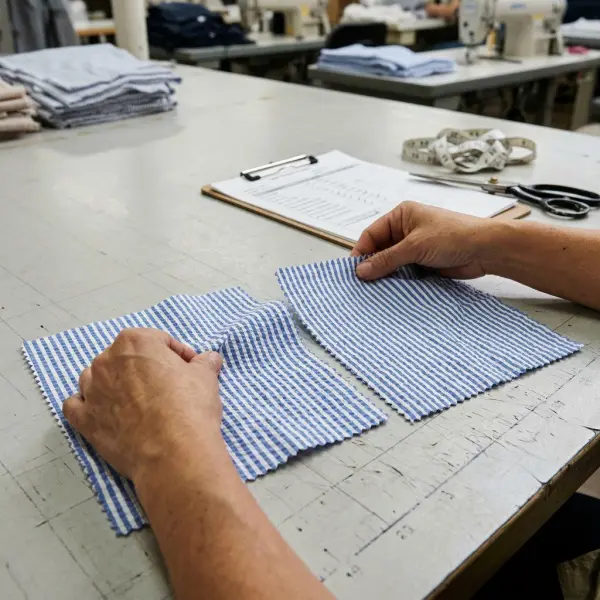
Inspection should assess both the overall textile quality and the consistency of the raised areas. Differences in pucker height, stripe spacing, or surface regularity may be more noticeable when fabric panels are placed next to each other.
A garment assembled from multiple panels can expose variation that was not obvious in an isolated swatch. This is particularly relevant when two fronts, sleeves, or trouser legs need a balanced appearance.
For patterned seersucker, color stripes and structural puckers should also be evaluated separately. A visual stripe may appear correctly positioned while the underlying texture differs across panels.
Cutting, Sewing, and Seam Alignment
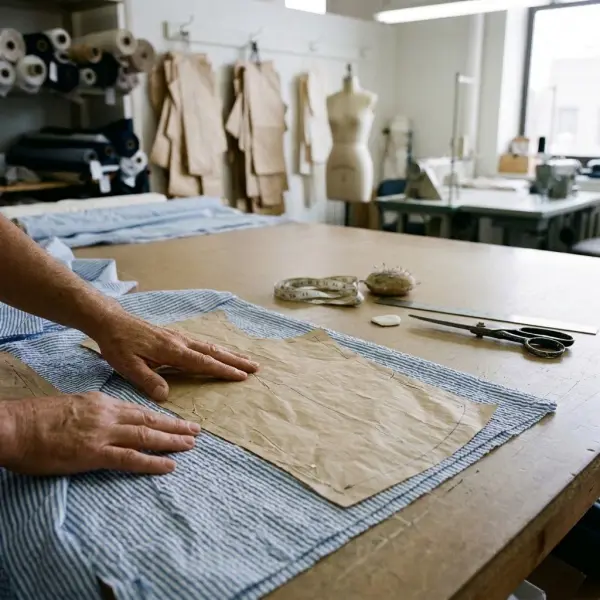
Puckered fabric does not always lie completely flat during spreading and cutting. Production operators should avoid excessive stretching or flattening, particularly when handling fabrics with pronounced surface relief.
Accurate grain alignment remains important. Pattern pieces should be positioned consistently, and matching requirements should be defined where stripes or checks meet at visible seams.
During sewing, unsuitable thread tension or feed settings may introduce additional unintended puckering. This can make it difficult to distinguish the fabric's intended texture from sewing defects.
A successful sample should demonstrate that seams remain secure and visually controlled without forcing the material into an unnaturally flat condition.
Pressing and Finishing
Pressing requires particular care because the raised surface is part of the desired appearance. Heavy pressure can temporarily reduce the visibility of the puckers, while unsuitable heat or processing may affect particular fiber blends or finishes.
The appropriate approach depends on the fabric's construction and the manufacturer's instructions. Steam, heat, pressure, and mechanical tension should be evaluated during sample development.
Cotton Incorporated's seersucker processing guidance specifically emphasizes controlling fabric tension during finishing to protect the puckered effect. This reinforces the need for fabric-specific procedures rather than automatically applying conventional flat-woven finishing settings.
A Practical Quality-Control Checklist
Before approving production, sourcing and manufacturing teams can use a focused inspection process covering the fabric's most important characteristics:
- Fiber and construction: Confirm actual fiber composition, weave or texture-forming method, and supplier specifications.
- Pucker consistency: Compare the height, spacing, and regularity of raised sections against an approved reference.
- Dimensional stability: Test fabric and finished-garment measurements after the intended care process.
- Color and appearance: Evaluate colorfastness, shade variation, and visible stripe alignment where relevant.
- Sewing performance: Check seam appearance, feed distortion, slippage where relevant, and garment measurements.
- Finishing response: Assess whether steaming, pressing, and laundering preserve an acceptable surface texture.
These checks are more useful when supported by an approved physical standard and agreed acceptance criteria. Without a common reference, one inspector may accept a degree of texture variation that another considers a defect.
Common Mistakes When Working With Seersucker
Seersucker's visual appeal can encourage designers and buyers to treat it as a straightforward substitute for any lightweight woven fabric. That assumption creates problems when its surface structure is overlooked during sampling, manufacturing, or product communication.
Mistake 1: Assuming Every Seersucker Fabric Has the Same Properties
Two fabrics sold under the same name may differ substantially in fiber composition, pucker formation, weight, and finishing. Selecting one based entirely on appearance can lead to unexpected changes in drape, shrinkage, or skin contact.
For example, replacing a soft cotton seersucker with a stiffer synthetic version may alter how a dress falls and how its gathers behave. The alternative might still look suitable in a flat photograph but perform differently in the finished garment.
Brands should confirm essential specifications and test substitutions before accepting them for bulk production.
Mistake 2: Treating the Puckered Surface as an Ordinary Wrinkle
Some production teams may instinctively press fabric until it appears smooth. With seersucker, that approach can interfere with the intended design character.
Excessive flattening may also create inconsistencies between pressed and unpressed sections, particularly around seams and shaped components. The resulting garment can look uneven rather than professionally finished.
Technical packs and sample approvals should identify the desired texture and clarify suitable pressing methods.
Mistake 3: Ignoring Shrinkage Before Pattern Approval
Cotton seersucker can change dimensions during laundering, and surface relaxation can affect the way measurements are taken. Assuming that the fabric is dimensionally stable without testing may lead to incorrect finished-garment sizing.
The operational consequences can include fit complaints, inconsistent product measurements, or additional sampling cycles. For small brands, these problems are particularly disruptive when production runs provide limited room for replacement inventory.
Testing should reflect the intended consumer care instructions, with tolerances established before bulk fabric is cut.
Mistake 4: Prioritizing Texture Over Wearability
A highly textured fabric can look appealing on a design board, but strong puckering does not automatically produce a comfortable garment. Fabric stiffness, thickness, seam placement, and garment fit all influence wearer experience.
A tightly fitted top made from a relatively rigid seersucker may feel less comfortable than a relaxed design using the same textile. Likewise, a heavily lined garment may not deliver the light wearing experience implied by the outer fabric.
Fit sessions should therefore evaluate movement, skin contact, garment weight, and the behavior of the material during ordinary use.
What Fashion Brands Should Verify Before Sourcing Seersucker
For buyers, the most useful sourcing decision is not simply finding a supplier that offers seersucker. It is identifying a reproducible fabric quality that satisfies the product's technical, commercial, and aesthetic requirements.
A reliable sourcing brief should communicate the required fiber composition, preferred fabric weight, effective width, texture appearance, color specification, end use, and expected care conditions. Where relevant, it should also include dimensional stability, colorfastness, and other performance requirements.
From Fabric Swatch to Approved Bulk Standard
A swatch can establish initial visual suitability, but it is not sufficient evidence that a fabric will perform correctly in manufacturing. Larger sample lengths are useful for evaluating stripe repeat, fabric handling, seam behavior, and finished-garment appearance.
The development process should move from material screening to sample construction and then to a documented approval standard. Once the material is approved, production teams can use that reference when comparing subsequent fabric deliveries.
This reduces the risk of approving visually similar but structurally different fabric lots.
Deciding Whether Seersucker Fits the Brand Positioning
Seersucker can support different commercial directions. Traditional stripes may reinforce classic warm-weather styling, while monochromatic textures can produce a cleaner contemporary appearance.
Brands can also use the fabric as a recognizable element across seasonal collections. Repeating related textures across shirts, dresses, and coordinating separates may strengthen visual consistency without making every garment identical.
The positioning should remain credible. A claim such as "lightweight textured cotton for relaxed summer dressing" communicates the product more accurately than an unsupported promise that the garment will keep every wearer cool.
Important Technical Caveats About Seersucker
Several distinctions are worth preserving when evaluating seersucker for fashion products.
First, the name describes a recognizable texture or construction rather than a guaranteed performance specification. Not every seersucker fabric contains the same fibers, and not every commercially labeled example uses traditional slack-tension weaving.
Second, the raised structure changes fabric contact and thermal behavior, but it does not guarantee maximum airflow or the lowest possible heat retention. Research on seersucker textiles has documented increased thermal resistance in some constructions, which means claims about cooling should account for material thickness, porosity, fit, and environmental conditions.
Third, an intentionally puckered surface does not eliminate all maintenance requirements. Fabric shrinkage, colorfastness, seam appearance, and care compatibility still matter.
Finally, seersucker is not inherently sustainable simply because it is commonly made from cotton or because it may require less pressing. Environmental assessment requires information about fiber production, chemical treatments, water and energy consumption, durability, and the product's actual care and use.
These qualifications do not diminish seersucker's value. They provide a more accurate basis for product selection and customer communication.
Frequently Asked Questions About Seersucker Fabric
Is seersucker fabric always made from cotton?
No. Seersucker is traditionally associated with cotton, but its defining characteristic is the puckered surface rather than a single fiber composition. Depending on manufacturing methods, fabrics described as seersucker may contain cotton, synthetic fibers, regenerated cellulosic fibers, or blends.
Fiber selection changes properties such as moisture handling, handfeel, dimensional behavior, and care requirements. For sourcing teams, the composition should be confirmed through supplier documentation and appropriate testing when necessary. The term "cotton seersucker" is more specific than "seersucker," but buyers should still verify whether the fabric is entirely cotton or contains additional fibers.
Why does seersucker fabric have a wrinkled appearance?
Seersucker looks wrinkled because its surface contains deliberately formed raised and flat sections. In traditional woven construction, differential warp tension creates variations in yarn length and contraction, producing a puckered effect.
This appearance is different from the random creases that develop in conventional fabrics after wearing or washing. The texture is intended to remain visible as part of the textile's design. However, the stability of the effect depends on how it was produced and finished. When evaluating supplier samples, buyers should examine whether the puckering remains acceptable after realistic laundering and pressing conditions.
Is seersucker fabric good for hot weather?
Seersucker can be suitable for hot-weather clothing, particularly when the fabric is lightweight, allows sufficient air movement, and is used in a comfortable garment silhouette. Its puckered structure can create small spaces between the material and the skin, reducing continuous surface contact.
However, the texture alone does not establish how cool the garment will feel. A dense seersucker may have lower air permeability than a lighter, smoother textile, and some puckered constructions can increase thermal resistance. Apparel brands should consider fabric density, fiber composition, moisture behavior, lining, and garment fit before making specific comfort claims.
Does seersucker fabric need ironing?
Seersucker often requires less ironing to achieve its intended appearance because its puckered surface is deliberately textured. Consumers generally do not need to remove the fabric's characteristic ridges to make the garment look presentable.
That does not mean ironing is never appropriate. Collars, seams, facings, or other garment details may need controlled pressing, and different fiber compositions require different care conditions. Excessive pressure may flatten the texture, at least temporarily. Retail care instructions should therefore be based on the specific finished product rather than a universal assumption about all seersucker fabrics.
Can seersucker fabric shrink after washing?
Yes. Seersucker can shrink after washing, especially when it contains cotton and has not been sufficiently stabilized during manufacturing. The amount of dimensional change depends on the fiber composition, yarn and fabric construction, finishing process, and laundering conditions.
For manufacturers, shrinkage should be evaluated in both the length and width directions using the intended care procedure. Garment development teams should also inspect whether the puckered effect changes after laundering. Consumer-facing brands should avoid promising that a seersucker garment will retain its original measurements unless that performance has been verified for the actual product.
Is seersucker suitable for formal clothing?
Seersucker can be used for tailored clothing, including jackets and suits, but its naturally puckered surface generally creates a more relaxed visual effect than smooth traditional suiting materials.
Its suitability depends on the occasion, local dress expectations, garment design, and quality of construction. A carefully tailored seersucker suit may be appropriate for certain warm-weather business or social settings, while it may not suit situations requiring very formal dress. For designers, the priority is balancing the material's textured appearance with appropriate shaping, lining, interfacing, and finishing. Fabric selection should follow the garment's intended positioning rather than the assumption that all suiting fabrics are interchangeable.
How should a fashion brand evaluate seersucker before bulk production?
A fashion brand should evaluate seersucker through material verification, garment sampling, and performance testing before bulk production. The first step is confirming fiber composition, texture-forming method, fabric weight, usable width, and supplier consistency.
Next, the development team should assess sewing behavior, stripe alignment where relevant, drape, comfort, and appearance after finishing. Dimensional stability and colorfastness testing should match the product's intended care conditions and target market requirements. Finally, the approved fabric and garment samples should become production references. This process helps distinguish normal texture variation from quality defects and reduces the likelihood of unexpected manufacturing or customer-service problems.
Conclusion: Seersucker as a Functional and Visual Design Choice
Seersucker demonstrates how textile structure can influence both the appearance and practical behavior of clothing. Its alternating flat and puckered sections create a recognizable surface that works across casual shirts, dresses, resortwear, childrenswear, and lightweight tailoring.
For fashion businesses, however, the material should be understood beyond its traditional summer associations. The actual performance of seersucker depends on how the fabric is engineered, which fibers are used, and how the garment is designed, manufactured, finished, and cared for.
The most effective commercial approach is to treat seersucker as a material specification rather than simply a decorative texture. Careful sourcing, realistic performance expectations, and controlled production can help brands use its distinctive appearance without compromising product consistency.
Its broader relevance also extends to the relationship between textile surface design and garment function. Readers exploring this relationship can continue with seersucker versus poplin and the influence of fabric surface structure or examine why puckered fabrics are used in lightweight summer apparel.
Understanding these distinctions helps designers and manufacturers select fabrics according to their actual construction, not merely their surface appearance.





Comments 0
Leave a CommentSend Comment
Anda harus Login terlebih dahulu untuk dapat memberikan komentar.