
Why Quilted Textures Remain Popular in Jackets, Bags, and Outerwear
Quilted textures have an unusual place in fashion. They are familiar enough to feel classic, yet adaptable enough to appear in contemporary streetwear, minimalist outerwear, luxury handbags, and practical everyday accessories.
The appeal comes from more than the recognizable stitched surface. Quilting gives otherwise flat materials a sense of depth, softness, and structure. It can make a simple jacket visually distinctive without an elaborate print, while adding a tactile dimension to a handbag that might otherwise rely on color, hardware, or silhouette for its identity.
There is also a practical reason quilted textiles continue to appear in fashion collections. Depending on the materials and construction, quilting can secure insulating layers, support garment shape, and provide a controlled surface texture.
That combination of aesthetic and functional possibilities makes quilting useful across different price points and product categories.
For fashion businesses, the more interesting question is not simply why quilted jackets and bags remain recognizable. It is how designers continue to reinterpret an established textile technique—and how brands can use it without producing collections that feel repetitive or overly dependent on familiar styling.
Quick Answer: Why Are Quilted Textures Still Popular in Fashion?
Quilted textures remain popular in jackets, bags, and outerwear because they combine recognizable surface design with practical construction possibilities, including insulation, cushioning, shape, and material stability. Their stitched patterns create visual depth while allowing designers to reinterpret familiar products through different fabrics, proportions, colors, and finishes.
In jackets and outerwear, quilting is associated with lightweight insulation, layering, and casual utility. In handbags, it often serves a different purpose: creating softness, a distinctive tactile surface, and recognizable design character.
The style also benefits from established fashion references. Heritage outerwear, traditional quilted clothing, and iconic luxury accessories have all helped make stitched, padded surfaces familiar across generations.
Contemporary fashion continues to revisit these forms. Editorial coverage in 2025 and 2026 has featured quilted jackets, padded handbags, and revised archival designs, although this does not establish that every quilted product category is experiencing sustained sales growth.
For brands, quilting remains useful because it can be adapted to different aesthetics—from restrained everyday clothing to expressive accessories—without requiring the underlying construction to serve the same function in every product.
The Enduring Appeal of Quilted Textures
Fashion trends frequently change through adjustments in proportion, color, material, and styling. Quilting is particularly adaptable to these changes because its visual identity comes from a construction technique rather than a single garment silhouette.
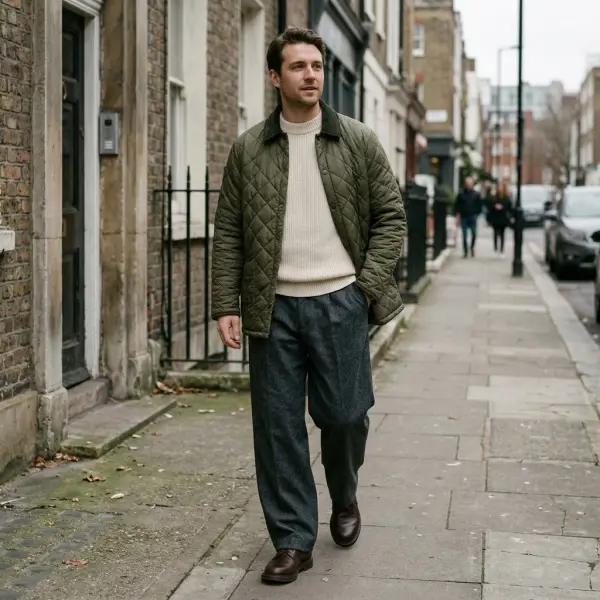
A diamond-quilted jacket can look traditional when made from matte fabric with a corduroy collar. Change the proportions, remove the collar, and use a softer shell, and the same basic surface treatment can appear noticeably more contemporary.
The texture stays recognizable even as the product changes.
This ability to move between familiar and new interpretations helps explain why quilting continues to appear in different fashion contexts.
A Recognizable Texture Without a Printed Pattern
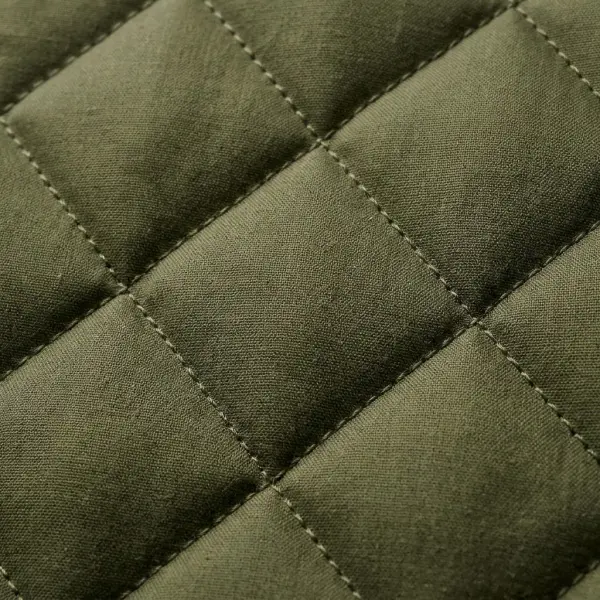
Many textiles depend on prints, woven motifs, or color combinations to create visual interest. Quilting achieves a similar effect through changes in surface height and stitching direction.
Raised sections catch light differently from compressed stitch lines. This creates subtle shadows and visual rhythm, especially on plain-colored materials.
The effect can be particularly useful in monochromatic clothing. A black quilted jacket may have greater surface definition than an otherwise similar unquilted shell, even though both use the same color.
For brands developing relatively restrained collections, this provides a way to introduce variation without relying on bold graphics or complicated decorative components.
The design outcome depends on the material. Matte cotton-blend quilting produces a different visual impression from glossy synthetic quilting or soft padded leather.
A Connection Between Utility and Style
Quilting has long appeared in clothing designed for practical purposes, including garments that provide insulation or additional cushioning.
Its historical applications extend beyond contemporary outdoor jackets.
The Victoria and Albert Museum's introduction to quilting and patchwork documents examples of quilted clothing from different periods and cultures, including medieval padded garments and an Indian hunting coat dating to the seventeenth century.
The Metropolitan Museum of Art also preserves historical quilted coats associated with Syria, demonstrating that the technique has appeared in luxurious clothing as well as functional textile applications.
These examples should not be reduced to a single fashion origin story. Quilting developed through different textile traditions, materials, and cultural contexts.
What connects many of these applications is the use of stitched textile structures to influence both material behavior and visual appearance.
That combination remains relevant to modern fashion design.
Familiarity Makes Reinterpretation Easier
A recognizable surface treatment gives designers a reference point that customers can identify without needing an entirely unfamiliar product concept.
Quilted jackets have established associations with countryside clothing, casual layering, and insulated outerwear. Quilted handbags can suggest softness, structured elegance, or decorative craftsmanship, depending on the design.
These associations are not universal across consumers or markets. Their relevance depends on styling, brand positioning, and cultural context.
Still, the existing visual vocabulary allows brands to experiment with new proportions while retaining a recognizable starting point.
This is particularly useful for collections that balance commercial familiarity with modest seasonal changes.
Why Quilted Jackets Remain a Fashion Staple
Quilted jackets occupy a flexible position between practical outerwear and everyday casual clothing.
They can be designed as lightweight layers, insulated garments, or visually textured fashion pieces. The same category therefore accommodates different climates, styling preferences, and product price points.
The result is a garment type that does not depend on one specific silhouette.
In January 2026, Vogue's editorial selection of quilted jackets included heritage-inspired designs, oversized shapes, lightweight liner jackets, and designer interpretations. The range illustrates quilting's versatility, although an editorial selection should not be confused with comprehensive market demand data.
Lightweight Layering for Everyday Wear
One reason quilted jackets work across multiple wardrobe styles is their suitability for layering when constructed with an appropriate weight and fit.
A lightweight version can be worn over a T-shirt, sweater, or shirt, depending on the weather. In colder conditions, some designs can function as intermediate layers beneath larger coats.
This makes the silhouette relatively adaptable.
However, not every quilted jacket is lightweight or suitable for layering. Thick insulation, dense fabrics, and bulky seams can make a garment less flexible than its appearance suggests.
For apparel brands, the relevant product question is whether the jacket has been designed as a standalone outer layer, an insulating midlayer, or a decorative fashion piece.
That distinction should influence its pattern, fabric weight, and product description.
Heritage Styling With Contemporary Proportions
Diamond-quilted jackets are strongly associated with certain heritage outerwear styles.
One documented example is the Barbour Liddesdale jacket, introduced in 1994 and originally designed for equestrian use. According to Barbour's history of the Liddesdale, its design combines diamond quilting with practical details such as accessible pockets, room for layering, and rear vents intended to support movement.
The jacket demonstrates how a functional garment can develop a recognizable visual identity.
Contemporary designers can reinterpret comparable styling elements through cropped lengths, wider sleeves, relaxed shoulders, different collars, or cleaner closures.
These changes can shift the garment away from its traditional associations without removing the quilted texture that makes it familiar.
A Useful Alternative to Heavier-Looking Outerwear
Some quilted jackets provide a different visual balance from thick puffer jackets or substantial wool coats.
A relatively flat quilted design can offer a more restrained silhouette while still incorporating a modest insulating layer.
This may appeal to customers who want textured outerwear without pronounced volume.
Yet the comparison is primarily about construction and appearance, not guaranteed warmth. A quilted jacket with limited filling may provide less insulation than a properly engineered puffer.
Brands should avoid presenting a slimmer silhouette as evidence of equivalent thermal performance.
The more useful positioning is to explain the jacket's intended climate, layering role, weight, and styling versatility.
Why Quilted Bags Continue to Appeal to Fashion Consumers
In handbags, quilting often serves a different purpose from its role in outerwear.
A jacket may use stitching to help manage insulation. A handbag may use similar techniques primarily to create surface character, softness, and a distinctive design identity.
The tactile quality of quilted leather or padded textile material can change how a bag looks even when its basic shape remains familiar.
This creates opportunities for designers to reinterpret established silhouettes through material manipulation rather than through additional hardware or decoration.
Quilting as a Recognizable Luxury Design Language
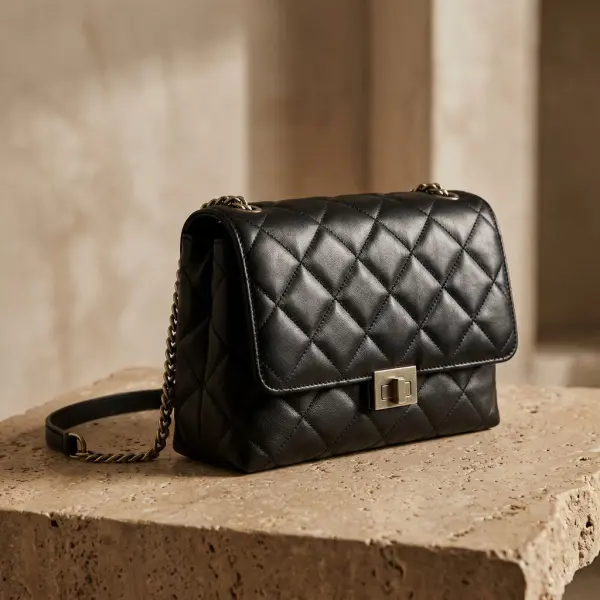
One of the clearest examples of quilting's long-term presence in fashion accessories is the Chanel 2.55 handbag.
According to Chanel's official historical account, Gabrielle Chanel created the quilted 2.55 handbag in 1955. Its combination of quilted material and chain strap became part of the house's recognizable design vocabulary.
This is a documented example of how a surface treatment can contribute to product identity over time.
However, quilting is not exclusive to one luxury brand, nor does using a diamond pattern automatically create luxury positioning.
A bag's perceived quality depends on many other factors, including materials, construction, hardware, finishing, proportions, and the credibility of its brand.
For fashion businesses, the important lesson is that consistent material details can become recognizable design codes when supported by a coherent product identity.
Softness and Visual Volume
Quilted handbags can introduce a softer appearance than some conventional flat-panel leather or textile designs.
Raised panels create shadows and rounded surfaces that can make the bag look cushioned or more voluminous.
The effect varies significantly with construction.
A lightly quilted leather shoulder bag may retain relatively sharp edges, while a heavily padded nylon tote can have a softer, more relaxed shape.
These are different design expressions rather than variations in quality.
The intended silhouette determines how much padding is appropriate and whether the material needs reinforcement elsewhere in the bag.
From Classic Flap Bags to Padded Everyday Totes
Quilted texture is not restricted to traditional structured handbags.
Fashion collections have applied padded and stitched surfaces to soft shoulder bags, crossbody designs, crescent-shaped bags, and practical totes.
For example, Marie Claire's coverage of Fall 2025 handbag trends identified puffed and padded bags among the season's featured directions, referencing collections from several designers.
More recently, British Vogue's Spring/Summer 2026 handbag analysis highlighted reinterpretations of archival handbags, including updated quilting on Chanel's familiar 2.55 design.
These examples show how the texture appears in both established and contemporary design conversations.
They do not demonstrate that every quilted bag format has equal commercial potential.
A small brand deciding between a padded tote and a structured flap bag should still consider its own audience, price positioning, and actual sales evidence.
How Quilted Textures Influence Outerwear Design
Quilted outerwear can serve several visual and practical purposes depending on the garment category.
Long coats, padded overshirts, liner jackets, reversible outer layers, and performance-oriented insulated garments may all use quilting, but they do not share identical construction requirements.
Designers therefore need to consider how the quilted surface interacts with garment length, fit, weight, and movement.
A texture that works well on a short boxy jacket may create unwanted bulk when extended across a full-length coat.
Creating Volume Without Complex Pattern Details
Quilting gives designers another method of developing volume and surface definition.
Instead of relying exclusively on darts, pleats, panels, or decorative seams, a garment can acquire dimensional character through its quilted assembly.
For a relatively simple coat pattern, this can provide visual interest while preserving a clean overall design.
The effect is especially noticeable in garments with broad uninterrupted panels.
However, quilting also changes how fabric bends and drapes. A large padded panel may resist folding differently from an equivalent unquilted textile.
Designers must therefore assess the texture on a completed garment rather than judging it only from a flat material sample.
Quilted Coats for Transitional and Cold-Weather Collections
A quilted coat can be positioned as a lightweight transitional layer or as a more insulated outerwear product.
In milder conditions, a relatively light construction may be appropriate for customers who want coverage without heavy padding.
For colder climates, the design must address thermal insulation, wind exposure, closures, and the distribution of filling.
The garment's intended use should determine its construction—not the other way around.
In January 2026, British Vogue's winter jacket overview included quilted puffers and padded outerwear among its selected cold-weather styles, demonstrating how these constructions continue to appear within seasonal fashion coverage.
However, no single quilted silhouette is suitable for all temperatures or markets.
Reversible and Liner-Inspired Designs
Quilted liners have also provided inspiration for more visible fashion pieces.
A garment originally designed as an internal insulating layer can influence a lightweight standalone jacket, particularly through its reduced bulk, simple closures, and utilitarian appearance.
Reversible designs introduce further possibilities, such as using different shell colors or surface finishes on opposite sides.
These concepts can be commercially attractive when they provide a meaningful additional styling option.
They also require careful construction.
Both visible sides must meet acceptable finishing standards, while pockets, fasteners, labels, and seam treatments need to work with the intended reversible design.
A reversible quilted jacket is not automatically more versatile in practice unless both configurations are comfortable, functional, and visually coherent.
Why Quilted Textures Work Across Different Fashion Aesthetics
The same quilting technique can support very different design identities.
A heritage-inspired collection may emphasize familiar diamond patterns, earthy colors, and practical details. A minimalist collection may use subtle stitching, neutral tones, and simplified silhouettes. A more expressive design direction may favor oversized padded shapes, glossy materials, or unconventional quilting patterns.
This range is valuable because quilting does not dictate one fixed styling language.
Its final character emerges through the interaction of fabric, pattern scale, silhouette, color, and finishing.
Heritage and Countryside-Inspired Styling
Heritage-inspired quilted garments commonly use recognizable design elements such as diamond stitching, traditional collars, patch or angled pockets, and subdued colors.
These details can suggest continuity with established outdoor and leisurewear traditions.
For brands, such styling may provide an accessible product reference, particularly when the target customer already understands the look.
The risk is producing an overly derivative design.
A distinctive garment needs more than familiar quilting. Proportion, pocket design, color, fit, and overall product identity should contribute to the final result.
Minimalist and Contemporary Styling
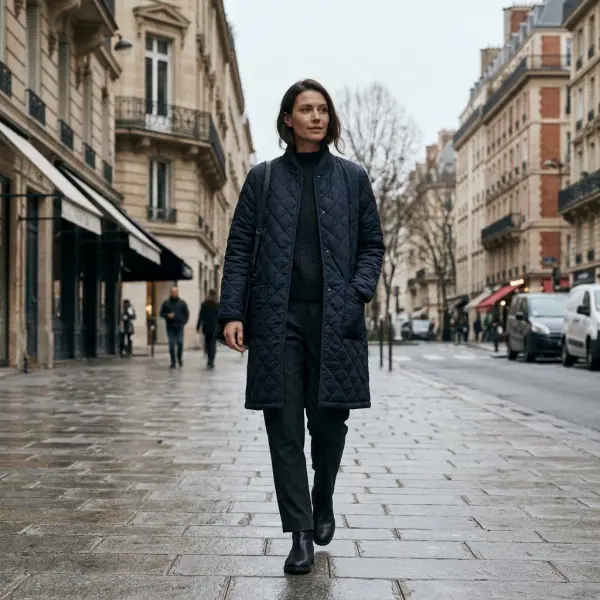
In minimalist fashion, quilting can provide texture without visual clutter.
Fine stitching on a matte fabric may create enough surface interest to distinguish a coat or jacket from a plain alternative.
Neutral colors such as black, charcoal, beige, olive, and navy allow the pattern to appear through subtle changes in light and shadow.
A cleaner silhouette can also make the quilted surface more prominent by reducing competing details.
This approach may suit brands whose product identity emphasizes material quality, restrained styling, and wearable proportions.
Still, minimalism does not automatically simplify production. A clean-looking quilted garment may require particularly careful alignment and finishing because irregularities are more visible when there are fewer decorative distractions.
Streetwear and Expressive Volume
Quilting can also support deliberately oversized or exaggerated silhouettes.
Broad padded panels, enlarged stitch patterns, glossy finishes, and unconventional garment proportions create a different visual message from traditional heritage outerwear.
A cropped padded jacket with wide sleeves may feel contemporary even when it uses a familiar geometric quilting technique.
The challenge is balancing expressive shape with mobility and comfort.
If the material is too stiff or bulky for the pattern, the garment may appear awkward during movement.
For fashion brands, the most successful visual experiment is one that maintains the intended silhouette under realistic wearing conditions.
How Quilting Patterns Change Product Identity
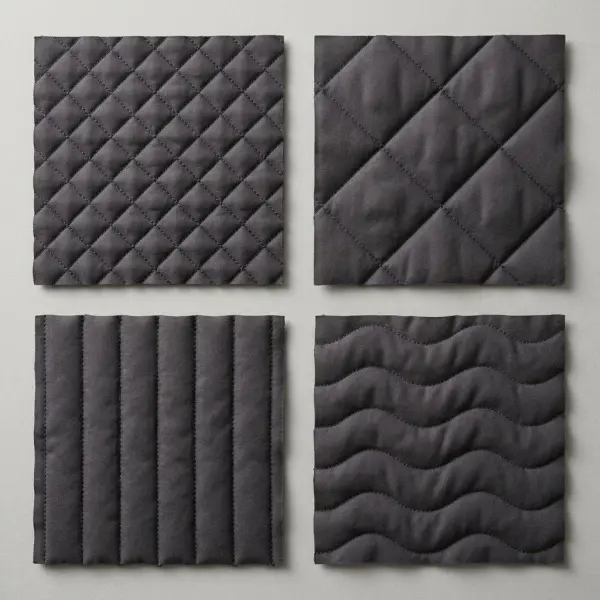
Quilting patterns influence the visual scale and perceived character of a product.
Small repeated shapes tend to create a finer surface rhythm, while broad channels or oversized geometric motifs produce stronger changes in volume and shadow.
The pattern also interacts with the product's dimensions.
A stitch layout that looks proportionate on a large coat panel may appear crowded on a small handbag.
Designers should therefore evaluate quilting scale in relation to the entire product rather than treating it as an isolated textile decoration.
|
Quilting approach |
Visual effect |
Potential applications |
Design consideration |
|
Small diamond quilting |
Fine, regular surface texture |
Classic jackets, compact bags, garment linings |
Requires consistent alignment and stitch definition |
|
Large diamond quilting |
More pronounced geometric texture |
Relaxed jackets, coats, larger accessories |
Pattern scale can dominate smaller products |
|
Horizontal channel quilting |
Directional padded volume |
Insulated jackets, contemporary outerwear |
Channel size affects appearance and filling control |
|
Vertical quilting |
Elongated surface rhythm |
Coats, bags, decorative garment panels |
Direction must work with shape and movement |
|
Curved or wave quilting |
Softer, more expressive texture |
Casual jackets, lifestyle accessories |
Complex patterns may increase sampling and production requirements |
|
Irregular decorative quilting |
Distinctive surface character |
Design-focused outerwear and accessories |
Repeatability and consistency need careful control |
The table describes potential visual and design effects, not guaranteed consumer preferences.
A pattern should be selected because it supports the product concept and material behavior.
For example, large quilting channels may look attractive in a sketch but produce excessive volume in a small crossbody bag. A smaller pattern could offer better scale, although it may require different stitching and production considerations.
Commercial Advantages of Quilted Textures for Fashion Brands
The commercial appeal of quilting is not limited to its fashion associations.
It can also provide useful design flexibility within a collection, allowing brands to develop related products through variations in material, silhouette, and stitch pattern.
A brand might use one recognizable quilting language across lightweight jackets, vests, and accessories while adapting the construction for each product.
This can create visual coherence across categories.
However, coherence does not guarantee consumer demand, higher margins, or repeat purchases. Those outcomes depend on product-market fit, cost control, merchandising, and execution.
Building a Recognizable Collection Identity
A consistent textile texture can act as a unifying visual element.
For example, a lifestyle brand could develop a small collection using a particular geometric quilting pattern across an overshirt, lightweight vest, and tote bag.
The products would remain different in function but share a recognizable surface treatment.
This approach may strengthen collection presentation, especially in lookbooks, product photography, and visual merchandising.
The risk is repetition.
If every item uses the same pattern, material finish, and proportions, the collection may become visually monotonous.
Effective assortment development requires variation as well as consistency.
Creating Visual Interest in E-Commerce Photography
Online shoppers cannot physically handle textile products before purchasing, making accurate visual presentation important.
Quilted fabrics offer visible depth that can be communicated through close-up photography, angled lighting, and detail images.
A product page showing only a full-length photograph may fail to communicate the scale of the stitching or the softness of the surface.
Brands can improve material presentation by including detail photographs, side views, and images showing the garment or accessory in use.
The objective should be clarity rather than exaggeration.
Lighting that creates unrealistic surface volume or heavy image editing may lead customers to expect a different texture from the product they receive.
Supporting Product Differentiation Without Excessive Decoration
A well-chosen quilted texture may help differentiate an otherwise simple product.
A plain tote can acquire a different character when made from padded textile panels. A basic jacket can develop more visual interest through a restrained stitched surface.
This may reduce the need for additional decorative elements, but it does not automatically lower production costs.
Quilting requires materials, processing, and quality control.
The commercial benefit depends on whether the added design value justifies those costs in the target market.
For smaller apparel brands, this is often more relevant than attempting to imitate expensive luxury constructions.
Extending Design Concepts Across Product Categories
Quilted textures can link products in an assortment, but category expansion should follow customer needs.
A successful quilted jacket does not necessarily mean the same audience wants a matching quilted handbag.
The accessory may serve a different purpose, face different competitors, and require a different price proposition.
Brands should evaluate proposed extensions using actual sales patterns, customer feedback, and product testing.
The shared texture can support visual consistency, but it should not replace the commercial assessment of each product.
For a broader discussion of coordinating product categories and options, see fashion assortment planning for retail and online stores.
What Fashion Brands Should Consider Before Adding Quilted Products
Quilted textures may appear straightforward, but the final design depends on interactions between materials, stitching, proportions, and manufacturing methods.
The most common difficulty is approving a visually attractive fabric without checking how it behaves in the actual product.
A padded textile that looks refined in a supplier swatch may become too stiff in a fitted jacket. A quilted leather panel that works on a compact handbag may need different reinforcement when used on a larger tote.
Product development should therefore begin with the intended use and finished silhouette.
Match the Texture to the Product Function
Brands should first identify whether quilting is intended mainly for appearance, warmth, cushioning, or structural support.
These objectives overlap, but they lead to different material decisions.
An insulated jacket needs appropriate thermal materials and a construction that controls filling distribution. A decorative handbag may prioritize surface softness, edge finishing, and shape stability.
A lightly padded overshirt may require flexible materials that allow comfortable movement.
Understanding the difference between these applications helps prevent one construction from being reused indiscriminately across unrelated products.
The technical distinctions are explained in padding, wadding, and quilting in apparel construction.
Evaluate the Material Beyond Its Appearance
The face fabric, filling, backing, and stitching should be considered as one complete assembly.
For jackets, the resulting weight, flexibility, insulation, and cleaning behavior are important. For bags, durability, dimensional stability, and resistance to abrasion may receive greater emphasis.
A soft-looking padded bag may still require firm reinforcement to maintain its shape.
Similarly, a quilted coat may need particular attention around seams and openings where excessive bulk can affect fit.
The relationship between the layered structure and garment performance is discussed in quilted fabric structure, warmth, and fashion uses.
Understand Production and Cost Trade-Offs
Quilted products may involve additional processing compared with otherwise similar unquilted items.
Depending on the production method, costs can include batting, backing, quilting labor, specialized machinery, additional cutting allowances, and more detailed quality inspection.
Pre-quilted fabric can simplify certain manufacturing stages, while custom quilting offers greater control over pattern placement.
Neither approach is always more economical.
A brand producing a small collection may find that commercially available quilted fabric reduces development complexity. A larger order with a distinctive quilting pattern may justify more specialized production.
The decision should be evaluated through the complete finished-product cost rather than material price alone.
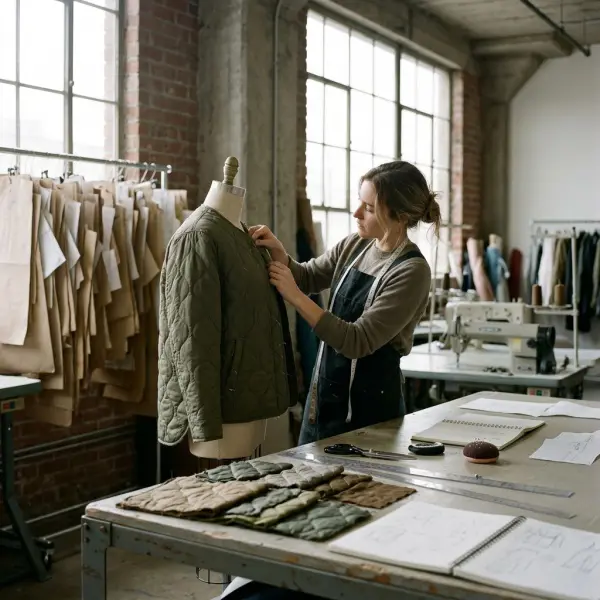
Test Realistic Wearing and Handling Conditions
A quilted sample should be evaluated under conditions that reflect how the product will actually be used.
For jackets and coats, this may involve wearing trials, arm movement, layering, and appropriate cleaning assessments.
For bags, testing may focus on strap attachments, seam strength, abrasion, repeated handling, and the stability of the padded surface.
The quality review should also include the interaction between stitching and fabric dimensions.
Surface puckering, shifting filling, and distorted stitch patterns can reduce the perceived quality of an otherwise attractive product.
Common Mistakes When Using Quilted Textures in Fashion Collections
Treating Quilting as a Guaranteed Fashion Trend
A brand may see quilted products featured in an editorial selection and assume that all quilted categories will sell well. Fashion coverage provides evidence of design visibility, but it does not establish market size, conversion rates, or regional demand. Overcommitting to a quilted assortment without customer validation can create inventory risk. The better approach is to use editorial direction as one input, then evaluate actual audience interest, sales history, pricing, and competitor positioning.
Copying Familiar Designs Without Creating a Distinct Product Identity
Heritage outerwear and luxury quilted handbags provide recognizable references, which can make imitation tempting. However, closely reproducing another brand's distinctive silhouette, hardware, or identifiable product details may create commercial and intellectual-property risks. Even when a generic quilting technique is available for use, the finished design should have its own character. Brands can develop originality through proportion, material selection, construction details, and coherent styling rather than relying on another company's established identity.
Selecting the Quilting Pattern Before the Garment Silhouette
A striking quilt pattern may look effective in a textile photograph but behave poorly when applied to a curved or fitted garment panel. Large raised sections can create unwanted stiffness, while tight stitching may alter the fabric's flexibility and appearance. These problems often become visible only after the first complete sample is assembled. Designers should evaluate quilting scale and direction alongside garment pattern development rather than approving the surface treatment independently.
Confusing Softness With Durability or Protection
Padded handbags and accessories can look soft, comfortable, and substantial, but those characteristics do not establish abrasion resistance or impact protection. A decorative quilted tote may require additional reinforcement around handles and high-stress seams. Likewise, a lightly padded sleeve should not be promoted as protective equipment without suitable evidence. Brands should separate aesthetic language from functional claims and verify the characteristics that matter for the product's intended use.
Ignoring the Climate and Customer Lifestyle
A quilted jacket developed for cool transitional weather may be unsuitable for prolonged wear in a hot, humid climate. Conversely, a lightly padded fashion jacket may not provide enough insulation for customers expecting cold-weather performance. Misalignment between appearance and intended use can create dissatisfaction even when the product is well manufactured. Brands should define wearing conditions and communicate the product's actual role, whether as a decorative layer, lightweight jacket, or insulated outerwear piece.
Overusing Quilting Across the Entire Assortment
Texture consistency can strengthen collection identity, but excessive repetition can reduce product differentiation. If jackets, bags, vests, and accessories all use the same color, pattern scale, and padded finish, the collection may lack visual hierarchy. The problem becomes more significant when different product categories require different material properties. A better assortment uses quilting selectively and varies construction, silhouette, and surface treatment according to each product's purpose.
Important Caveats: Popularity Does Not Guarantee Performance or Sustainability
Quilting is a versatile construction and design approach, but some commonly associated benefits require qualification.
First, the presence of quilting does not automatically mean a garment is warm. Thermal performance depends on the insulating materials, the complete fabric assembly, and the finished garment design. A decorative quilted jacket may provide limited insulation.
Second, quilting does not make a garment waterproof. Stitching through a textile can create needle penetrations, and the performance of the finished product depends on appropriate material selection, finishing, seam construction, and testing.
Third, padded accessories are not inherently protective. Cushioning performance depends on the type, thickness, resilience, and placement of the padding, together with the construction of the complete product.
Environmental claims also need to be considered carefully. A quilted garment may incorporate recycled fibers, natural materials, or durable components, but none of these characteristics independently proves that the product has a lower overall environmental impact.
Multilayer construction can also create challenges for material separation and recycling, depending on the fibers, coatings, bonding methods, and available processing systems.
Finally, claims about popularity should distinguish between long-established design relevance and measurable market growth.
The presence of quilted jackets in a 2026 fashion editorial or padded bags on a runway demonstrates contemporary design visibility. It does not establish category-wide sales growth, customer preference across every region, or reliable future demand.
Fashion businesses should combine credible trend observation with their own market and product-performance evidence.
Frequently Asked Questions About Quilted Fashion
Frequently Asked Questions About Quilted Fashion
Why Are Quilted Jackets Considered Timeless?
Quilted jackets are often described as timeless because recognizable versions have remained part of outerwear collections across different fashion periods. Their appeal is supported by a combination of practical construction, familiar stitching patterns, and the ability to adapt to changing proportions and styling preferences. Heritage-inspired models and more contemporary silhouettes can share the same underlying visual technique. However, timelessness does not mean every quilted jacket remains fashionable indefinitely. Particular colors, cuts, and finishes may become less relevant over time. Brands seeking longer product relevance should focus on balanced proportions, appropriate materials, credible performance, and designs that can be styled in more than one context.
Why Do Luxury Handbags Often Use Quilted Leather?
Quilted leather adds visual depth, texture, and a recognizable surface character to a handbag. In some established luxury designs, it also forms part of a long-standing brand identity. Chanel's quilted 2.55 handbag, introduced in 1955, is a documented example of this relationship between material treatment and product recognition. However, quilting itself does not make a handbag luxurious or guarantee superior quality. The finished product's construction, leather properties, stitching accuracy, hardware, finishing, and overall design remain important. For emerging brands, quilted leather can be a useful design option, but it should support an original product concept rather than imitate distinctive elements associated with established luxury houses.
Are Quilted Jackets Suitable for Both Casual and Formal Styling?
Some quilted jackets can work across casual and more polished outfits, depending on the silhouette, fabric, color, and construction details. A lightweight matte jacket with restrained stitching may complement tailored trousers or understated knitwear, while a heavily padded glossy jacket may have a sportier appearance. Styling versatility is therefore a product-specific characteristic rather than a universal feature of quilting. For brands developing multi-purpose outerwear, details such as collar shape, jacket length, bulk, closure type, and fabric finish can influence how easily customers integrate the garment into different wardrobes. Wearing trials and realistic styling photography can help communicate its intended uses.
What Is the Difference Between Quilted Jackets and Puffer Jackets?
Quilted jackets are defined by stitched textile layers, while puffer jackets are generally characterized by their visibly insulated, voluminous construction. The categories overlap because many puffer jackets use quilting or stitched chambers to manage insulation. However, some quilted garments are relatively flat and lightly padded, while some heavily insulated garments use alternative baffling or attachment methods. The terms therefore describe related but different characteristics: quilting identifies a construction technique, whereas puffer typically describes the garment's padded appearance and category. Brands should use descriptions that accurately reflect both the construction and intended thermal function of the product.
Are Quilted Bags More Durable Than Regular Bags?
Quilted bags are not automatically more durable than unquilted bags. Durability depends on the face material, thread, reinforcement, seams, hardware, and the way the product is used. Additional stitching may help secure layered materials, but it also creates stitch lines that must withstand handling and abrasion. A padded textile bag with weak handles may perform worse than a well-constructed unquilted alternative. Brands should assess the complete bag, especially high-stress areas such as strap attachments, corners, and closures. Material abrasion resistance, seam performance, and realistic handling tests provide more useful evidence than the presence of quilting alone.





Comments 0
Leave a CommentSend Comment
Anda harus Login terlebih dahulu untuk dapat memberikan komentar.