
Why Footwear Shapes Personal Style More Than Many People Realize
Quick Answer
Footwear shapes personal style because it changes how an outfit is read, not merely how it is finished. The shape, scale, material, color, condition, and practical purpose of a shoe can make the same clothes appear formal, relaxed, utilitarian, nostalgic, sporty, polished, or deliberately unconventional. Shoes also affect the visual line of the body and, depending on their construction, how a person stands and moves.
Their influence is especially strong because footwear sits where appearance meets real life. A jacket may express taste, but shoes reveal what the wearer expects to do: walk across a city, attend a formal event, work on a shop floor, travel, exercise, or move between several settings in one day. That does not mean a shoe reliably reveals someone’s personality, income, or values. Social interpretations are shaped by culture, context, branding, and observer bias. Still, footwear provides a dense cluster of visual and functional cues. For fashion businesses, understanding those cues helps improve product design, assortment planning, styling content, and cross-category merchandising.

What Does Footwear Mean in Personal Style?
In personal style, footwear is the part of a dressed appearance that connects visual identity with movement, occasion, and physical use. It contributes to the silhouette of an outfit while also indicating how the wearer intends to navigate a particular environment.
That dual role distinguishes shoes from many other accessories. A necklace can redirect attention toward the face, and a bag can add color or status cues, but neither normally determines how a person meets the ground. Footwear must reconcile appearance with fit, balance, protection, climate, surface conditions, and expected activity. Even a highly decorative shoe remains a functional object.
This is why footwear can become a personal signature. Someone may repeatedly choose low-profile leather shoes, brightly colored trainers, square-toe flats, weathered boots, or minimal sandals. The pattern matters more than any single purchase. Over time, repeated choices create a recognizable style vocabulary built around proportion, comfort tolerance, maintenance habits, cultural reference, and daily routine.
The Museum at the Fashion Institute of Technology has framed footwear through the connected themes of anatomy and identity, noting that people stand and move differently in sneakers and stilettos and that shoe categories are commonly associated with particular social identities. Its exhibition on shoes, anatomy, and identity is useful precisely because it treats footwear as both a physical object and a cultural signal.
Why Can Shoes Change the Meaning of an Entire Outfit?
Shoes alter an outfit through several visual mechanisms at once: they change its weight, extend or interrupt its lines, introduce a material contrast, and establish a level of formality. Because these mechanisms operate together, replacing only the footwear can shift the overall impression without changing the garments.
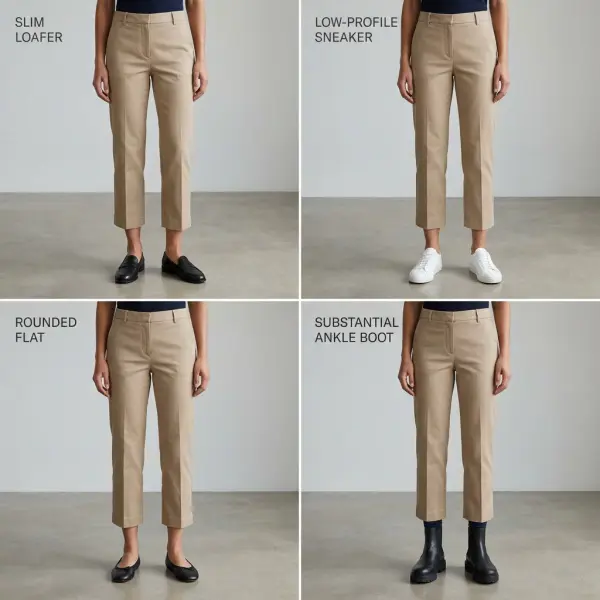
Consider a straight trouser worn with a plain knit top. A slim loafer can make the combination feel composed and office-ready. A running-inspired sneaker adds bulk and an athletic reference. A delicate flat brings the eye closer to the foot and may soften the line. A heavy boot gives the lower half more visual mass and can turn an otherwise quiet outfit into something tougher or more utilitarian.
None of those readings is universal. A loafer may be a school uniform reference in one market, a corporate staple in another, and a fashion-forward unisex choice in a third. The important point is not that each shoe has one fixed meaning. It is that footwear activates a set of associations that changes with styling and context.
Footwear Controls Visual Weight
Visual weight is the perceived heaviness or lightness of an item. Thick soles, wide lasts, dark colors, dense materials, and prominent hardware usually make shoes look heavier. Low-cut uppers, slim soles, open constructions, pale colors, and fine straps can make them appear lighter. These qualities influence balance across the entire look.
An oversized coat paired with a very delicate shoe may create intentional contrast, but it can also make the outfit feel visually top-heavy. A substantial sneaker or boot can anchor the same coat. Conversely, a voluminous dress with a fine flat may feel airy, while a lug-soled shoe adds tension and makes the styling less conventionally romantic.
The Toe, Sole, and Vamp Alter the Line
Footwear geometry changes the transition from garment to ground. A pointed toe can visually continue a long trouser line. A rounded toe may make the ending feel softer. A high vamp covers more of the upper foot and can give an outfit a more contained appearance, while a low-cut shoe exposes more of the foot and creates a different sense of proportion.
Hem length matters here. A shoe that works under a full-length trouser may look unbalanced with a cropped version because the ankle, vamp, and sole become more visible. For designers and merchandisers, this is a practical reason to style footwear with the actual garment lengths customers will receive rather than relying on isolated product shots.
Material and Surface Affect the Mood
Polished leather, brushed suede, knitted uppers, rubber, satin, canvas, and molded synthetics reflect light differently and carry different use associations. A glossy surface can add sharpness to matte tailoring. Canvas can reduce the formality of a dress. Suede may introduce softness but also communicates different care requirements from a wipe-clean synthetic upper.
Wear and maintenance add another layer. Creasing, fading, patina, spotless white surfaces, repaired soles, and carefully polished leather may all become part of the look. These details should not be used to make simplistic judgments about the wearer. They do, however, affect whether an outfit appears pristine, lived-in, rugged, precious, or relaxed.
Do Shoes Really Influence First Impressions?
Shoes can influence first impressions because observers use visible details to form rapid assumptions. Those assumptions may concern age, occupation, lifestyle, status, taste, or personality. They should be treated as interpretations, not reliable diagnoses of who a person is.
A 2012 study published in the Journal of Research in Personality asked participants to judge owners from photographs of the shoes they wore most often. The observers showed some accuracy for selected demographic characteristics, but many perceived personality traits reflected stereotypes rather than accurate knowledge of the owner. The research on shoes as a source of first impressions supports a careful conclusion: shoes provide cues people use, but the conclusions drawn from those cues are only partly dependable.
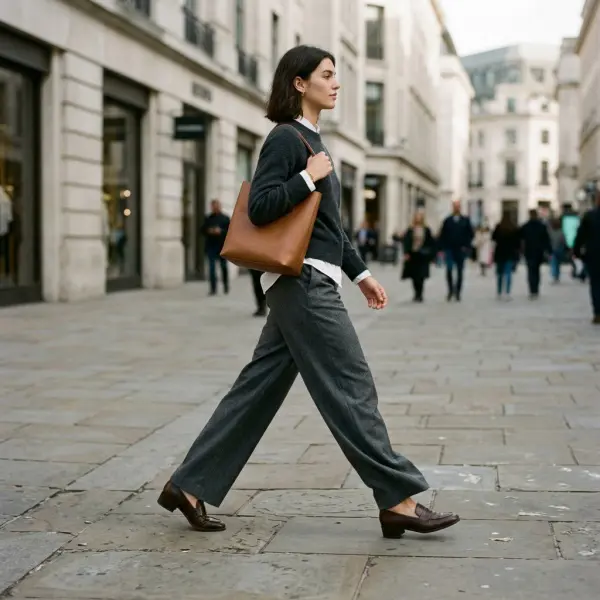
For a fashion business, the commercial lesson is not to turn footwear into a personality test. It is to recognize that customers and observers read products through accumulated cultural associations. A minimalist white sneaker may be styled as a creative-workplace basic, a travel shoe, or a symbol of clean restraint. A penny loafer may be presented as traditional, youthful, academic, or subcultural. Product meaning emerges from the shoe, the rest of the look, the wearer, and the setting together.
Style Signals Are Contextual, Not Universal
Footwear codes can change across regions, generations, professional environments, and communities. The same pair may be conventional in one place and attention-seeking in another. Gender associations also change over time. High heels, platform shoes, work boots, and sneakers have all carried different meanings across historical periods and social groups.
The Victoria and Albert Museum’s footwear collection spans roughly 3,000 years and multiple cultures, a reminder that shoe meaning is neither recent nor fixed. The museum’s overview of its shoe collection provides a useful historical frame for interpreting footwear as a changing cultural object rather than a universal codebook.
Brands therefore need local listening. Creative direction developed for a global campaign may still require regional styling, casting, copy, and occasion cues. Otherwise, a visual intended to suggest confident informality may be read as underdressed, impractical, or socially out of place.
How Does Footwear Affect Silhouette and Movement?
Footwear affects silhouette by changing the apparent length, volume, and balance of the lower body. It can also alter movement because heel height, sole stiffness, weight, cushioning, fit, and traction influence how the foot interacts with the ground. The effect varies by shoe, wearer, activity, and duration of use.
This physical dimension is easy to overlook in image-led fashion. A shoe may look proportionally correct in a standing photograph but feel wrong once the model walks. A stiff upper can change stride. A loose heel can introduce visible instability. A heavy sole may create a deliberate grounded movement, yet become tiring for some customers over extended use. These are not minor details when a campaign promises an active, all-day lifestyle.
Footwear comfort itself is not one simple engineering measure. A systematic review of footwear comfort research found that comfort research includes subjective assessment as well as design, physiological, and psychological factors, while the available evidence remains fragmented. That makes wearer testing essential: a construction described as comfortable for one foot shape, use case, or market cannot automatically be generalized to everyone.
In practice, movement contributes to style through several observable qualities:
- Heel height and pitch can change stance and the way garments fall.
- Sole thickness and flexibility can affect the rhythm and apparent weight of a step.
- Fit and fastening influence whether movement looks secure or hesitant.
- Traction and surface compatibility determine whether a shoe is credible in the setting shown.
- Shoe weight can support a deliberately grounded look but may conflict with an all-day comfort claim.
These points connect aesthetics to product truth. If an image sells ease, agility, or long-wear versatility, the sample should demonstrate those qualities in motion rather than merely suggesting them through copy.
The Same Clothes Can Support Several Style Identities
Personal style is often discussed as if it requires a completely different wardrobe for every identity. Footwear shows why that is not necessarily true. A relatively stable group of garments can produce varied results when the lower silhouette, materials, and use cues change.
|
Footwear choice |
How it may redirect a neutral outfit |
Practical condition to verify |
|
Low-profile sneaker |
Casual, mobile, sporty, or minimalist |
Cushioning, fit, sole grip, and actual walking comfort |
|
Leather loafer |
Polished, academic, traditional, or subcultural |
Vamp fit, heel slip, break-in, and formality in the target market |
|
Ballet or other flat shoe |
Delicate, understated, nostalgic, or streamlined |
Toe shape, foot coverage, support, and walking distance |
|
Ankle boot |
Structured, utilitarian, rugged, or directional |
Shaft-to-hem proportion, weight, climate, and traction |
|
Heeled shoe |
Formal, elongated, dramatic, or conventionally dressy |
Stability, pitch, fit, surface, duration, and wearer preference |
The table describes possible readings, not fixed definitions. Styling can overturn them: a loafer with sportswear, a technical sneaker with tailoring, or a flat shoe with workwear creates contrast rather than simply repeating the expected code. Readers looking specifically at current category directions can continue to sneaker, loafer, and flat shoe trends in everyday fashion.
Why Footwear Often Carries More Lifestyle Information Than Clothing
Clothing can be selected primarily for appearance, but footwear is repeatedly tested against distance, weather, terrain, transport, workplace rules, and bodily tolerance. That makes it unusually revealing of lifestyle requirements—even when it does not reveal personality.
A commuter who walks and changes trains needs a different performance balance from someone who travels door to door by car. A hospitality worker, warehouse visitor, teacher, creative director, and wedding guest may all prefer the same broad aesthetic yet require different fastening, traction, durability, and standing comfort. Climate also changes the equation: ventilation, water resistance, drying time, and sole grip may matter more than a globally consistent seasonal story.
This is where aspiration meets routine. Consumers sometimes buy for an imagined version of life and later discover that the shoe does not suit their actual day. The resulting mismatch can contribute to low wear frequency, dissatisfaction, or returns, although the outcome also depends on fit accuracy, product information, quality, and return policy.
For brands, occasion labels such as “work,” “weekend,” or “travel” are not enough. Product pages and merchandising should show what those scenarios involve: standing duration, walking conditions, likely garments, climate, and care. The more specific the use case, the more credible the style proposition becomes.

What Footwear Means for Fashion Businesses
For fashion companies, footwear is not only an accessory category. It can act as a bridge between apparel, occasion, price perception, product performance, and customer identity. Even an apparel-only brand needs to understand this influence because every styled image includes—or deliberately excludes—a footwear decision.
Product Development: Design for a Real Wardrobe
A footwear range should begin with the role each product will play in the customer’s wardrobe. Is the item intended to disappear into many outfits, anchor a silhouette, introduce novelty, or solve a recurring use problem? Without a defined role, teams can overinvest in visual novelty while leaving fit, repeat wear, and outfit compatibility underdeveloped.
Design reviews should consider toe shape, last, sole volume, opening, fastening, material behavior, weight, and care together. A visually slim shoe with a rigid opening may fail the easy-wear proposition. A bold outsole may photograph well but overpower the apparel assortment it is supposed to support. The design is successful only when the intended style message survives actual use.
Merchandising: Show the Relationship, Not Just the Product
Isolated packshots are necessary for detail, but they do not explain scale or outfit effect. Customers benefit from full-length imagery, side views, seated views, close-ups of the vamp and sole, and motion where relevant. Cross-merchandising can then connect footwear to trouser openings, skirt lengths, socks, outerwear, and bags.
Retail teams can also merchandise by lifestyle problem rather than only by silhouette. “Polished shoes for walking commutes” is more useful than a broad “workwear” label if the product can support that claim. The proposition must be evidenced by construction and testing, not inferred from appearance alone.
Brand Positioning: Repetition Builds Recognition
A recognizable footwear point of view may come from repeated proportions, materials, colors, or styling tensions. It does not require every collection to feature one identical shoe. Consistency might mean pairing feminine clothing with grounded soles, using restrained leather footwear across seasons, or treating sneakers as part of tailoring rather than gymwear.
That repeated logic helps customers understand the world around the product. A deeper discussion of how companies turn these cues into campaign narratives belongs in how fashion brands build lifestyle stories around footwear. At this foundational stage, the priority is simpler: ensure the claimed lifestyle matches the product’s design, imagery, and real use.
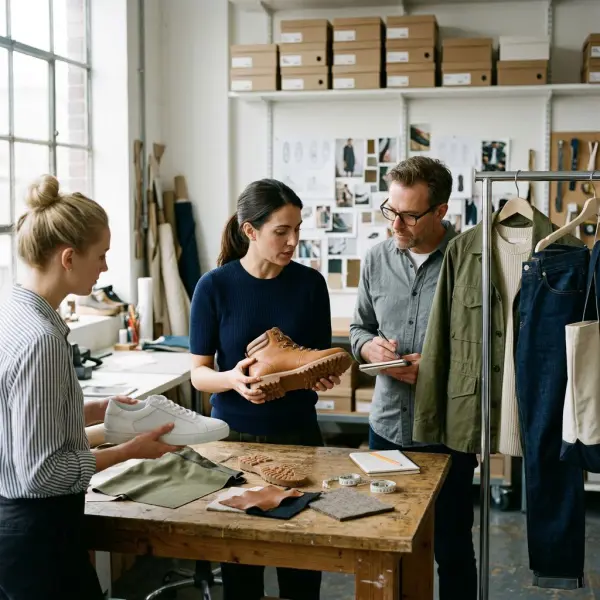
How Can Brands Apply Footwear Insights in Practice?
The most useful approach is to treat footwear as part of a connected styling and use system. Design, buying, content, retail, and customer-service teams should work from the same intended occasion and product truth.
A practical sequence is:
- Define the wearer and real use case. Specify environment, typical walking or standing demands, climate, dress expectations, and the garments likely to be worn with the shoe.
- Choose the intended visual role. Decide whether the shoe should blend, balance volume, create contrast, lengthen a line, or become the focal point.
- Test the complete silhouette. Review samples with relevant hem lengths and proportions, on more than one suitable wearer where feasible, both standing and moving.
- Validate fit and performance claims. Record internal fit notes, weight, fastening behavior, surface grip, care needs, and any break-in expectations. Testing should match the product’s intended use.
- Build honest styling content. Show full-body scale, useful angles, motion, and believable occasions. Avoid implying technical performance that has not been verified.
- Connect merchandising across categories. Recommend garments based on proportion and use, not simply matching color.
- Learn from post-purchase evidence. Review returns, fit feedback, wear complaints, customer-service questions, and repeat purchases by style and size.
This workflow is scalable because it does not require an advanced technology stack. A small label can begin with consistent fit-test forms, structured reasons for returns, and a repeatable photography checklist. Larger businesses can connect those same inputs to product information management, assortment analytics, and regional merchandising.
Common Mistakes That Weaken a Footwear-Led Style Strategy
Treating Shoes as a Last-Minute Styling Prop
When footwear is selected after apparel development and campaign planning are complete, the proportions may conflict with garment hems, volume, or occasion. This often happens because the shoe is considered replaceable. The better approach is to test key looks with footwear early enough to adjust styling or product choices.
Confusing Cultural Association with Consumer Truth
Calling every loafer “preppy” or every sneaker “streetwear” reduces complex categories to clichés. It can also miss regional and generational differences. Brands should use customer research, retail feedback, and local styling knowledge instead of assuming one global interpretation.
Selling an Image the Construction Cannot Support
A campaign may portray a shoe as an all-day city companion even when the fit, sole, or material has only been evaluated for brief studio wear. The operational consequence can include complaints, avoidable returns, and reduced trust. Usage language should follow testing evidence.
Ignoring the View From Ground Level
Product teams may approve looks from waist-up crops or front-facing stills. Yet the side profile, toe spring, sole thickness, heel shape, and trouser break can change the result. Full-body and movement review should be a standard checkpoint, not an optional creative extra.
Using One Idealized Foot to Represent Everyone
Foot shape, volume, width, and fit preference vary. A style that looks neat on the sample wearer may gap, compress, slip, or visually distort on others. Brands do not need to promise universal fit, but they should define the fit profile clearly and test against the customer base they intend to serve.
What Should Brands Verify Before Acting?
Footwear can carry substantial style meaning, but three cautions should stay close to any strategic decision.
First, visual interpretation is not objective. Research on first impressions does not justify profiling customers or assigning fixed personality traits to shoe choices. Use associations to develop creative hypotheses, then test them with the intended audience.
Second, aesthetic similarity does not mean functional equivalence. Two shoes with comparable uppers may differ in last shape, lining, flex, grip, weight, heel stability, and durability. Product descriptions should reflect the tested construction, not the category stereotype.
Third, personal style is not created by shoes alone. Garment silhouette, grooming, accessories, body language, setting, and cultural context all affect the reading. Footwear has unusual leverage because it combines these visual and functional signals, but its meaning remains relational.
Frequently Asked Questions
Why do shoes have such a strong effect on an outfit?
Shoes affect the endpoint of the silhouette, the visual weight of the lower body, and the outfit’s perceived formality and use. A change in toe shape, sole volume, color, or material can redirect the same garments toward sporty, refined, delicate, rugged, or experimental territory. The effect is strong because viewers read the shoe together with the hem, exposed ankle, stance, and setting. No category has one permanent meaning, so the most accurate interpretation considers the complete look and local context.
Can footwear reveal someone’s personality?
Not reliably. Observers form impressions from shoes, and research has found some accuracy for selected characteristics, but many personality judgments reflect stereotypes or limited cues. A worn boot could indicate a preference for rugged styling, frequent outdoor use, budget priorities, or simply an old favorite. Brands can use customer associations as creative research inputs, but they should not treat footwear as a diagnostic tool or build targeting decisions around unsupported personality assumptions. Direct customer research is a firmer basis for segmentation and campaign decisions.
Which matters more for personal style: shoes or clothing?
Neither is universally more important. Clothing establishes most of the visible surface, while footwear can decisively redirect proportion, formality, and occasion. Its influence is often greatest when the garments are relatively simple or when the shoe creates strong contrast. For wardrobe planning, it is more useful to ask whether the footwear supports the intended silhouette and real activity. A distinctive shoe cannot rescue an outfit that is physically unsuitable, and a strong garment does not eliminate the need for credible footwear.
How many shoe styles are needed for a coherent wardrobe?
There is no universal number. The useful range depends on climate, work rules, mobility, social occasions, care capacity, and preferred silhouettes. A compact wardrobe might cover daily walking, polished settings, weather protection, and special events with a few versatile pairs. Someone with technical, uniform, or formal requirements may need more. Coherence comes from each pair having a clear role and working with actual garment proportions—not from reaching a prescribed quantity. Wear frequency and maintenance capacity are better guides than a generic wardrobe formula.
Should apparel brands plan campaign footwear before the clothing collection is finished?
They should establish the footwear direction early enough to test key silhouettes, even if final campaign pairs are selected later. Sole volume, heel height, toe shape, and vamp exposure can affect hem length, garment balance, casting, and location choice. Early testing reduces last-minute compromises and helps the final imagery represent how the clothing is intended to be worn. This is particularly relevant for wide trousers, cropped hems, long skirts, and oversized outerwear. It also gives merchandising teams time to source credible alternatives for regional campaigns.
How can an online store communicate footwear style more clearly?
Combine isolated product images with full-length styling, side profiles, close-ups, and motion where useful. State the fit profile, materials, fastening, heel or sole dimensions, care needs, and intended use without promising untested comfort or performance. Merchandising links should explain why a garment works with the shoe—for example, compatible trouser opening or skirt length—rather than relying only on color matching. Clear returns data and customer questions can then reveal which information remains missing. Consistent photography also makes proportion easier to compare across products.
Conclusion
Footwear has disproportionate influence because it resolves several questions at once: how an outfit meets the ground, how the wearer may move, what setting the look appears prepared for, and which cultural references the styling activates. A shoe can sharpen, soften, ground, disrupt, or redirect clothing that otherwise remains unchanged.
Its meaning should not be romanticized into certainty. Shoes do not provide a reliable reading of personality, and the same category can carry different associations across markets and communities. Nor should appearance be separated from construction. If fit, movement, care, and surface conditions contradict the promise, the style story loses credibility.
For fashion businesses, the strongest opportunity lies in treating footwear as a system rather than a finishing touch. Define its role early, test it with complete silhouettes, communicate real use honestly, and learn from how customers wear it. That approach produces better product decisions and a more coherent expression of personal style—without assuming that one shoe can mean the same thing to everyone.





Comments 0
Leave a CommentSend Comment
Anda harus Login terlebih dahulu untuk dapat memberikan komentar.