

How Fashion Brands Build Lifestyle Stories Around Footwear
Quick Answer
Fashion brands build lifestyle stories around footwear by connecting a product’s real design and performance characteristics to a recognizable wearer, setting, routine, tension, and set of values. The shoe should have a believable role in the story: helping someone move through a city, dress for work without feeling conventional, participate in a sport or music community, travel lightly, express craft appreciation, or wear an object that improves with age.
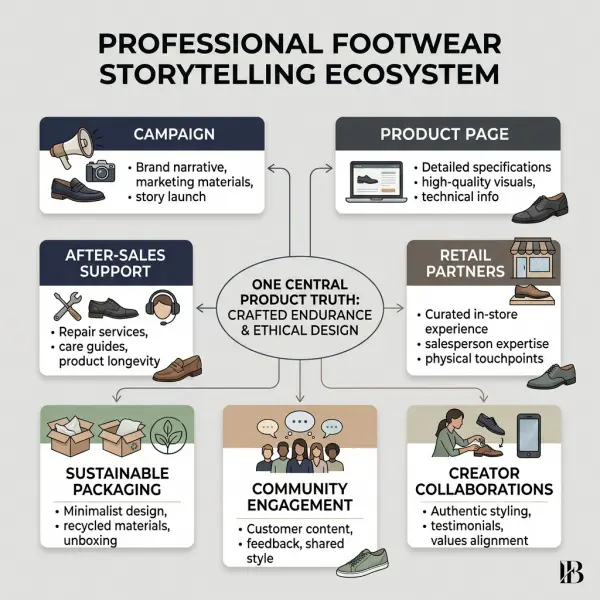
A credible footwear story begins with product truth, not campaign language. The construction, fit, materials, styling, price, and intended use must support what the brand depicts. That central idea is then expressed consistently across product pages, campaign imagery, retail, creators, community programs, packaging, care guidance, and after-sales service. Consistency does not require repeating the same advertisement everywhere; each touchpoint should contribute a different part of the same narrative. Brands should also distinguish cultural participation from cultural borrowing, disclose commercial relationships, substantiate environmental and performance claims, and measure whether the story improves recognition, consideration, product understanding, and customer behavior.
What Is a Footwear Lifestyle Story?
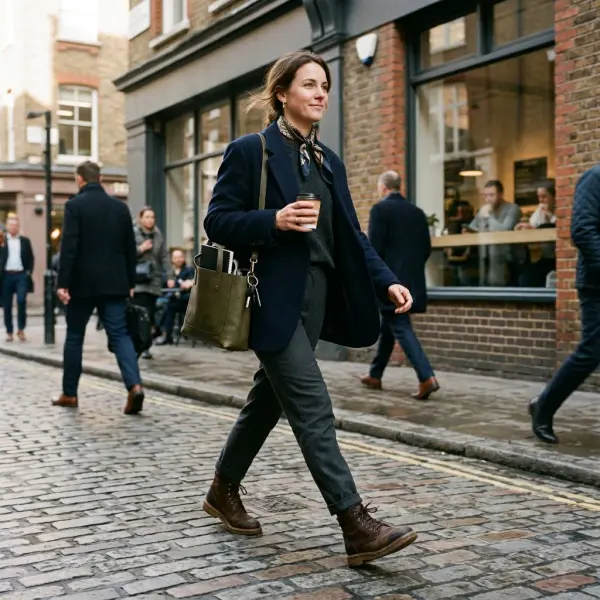
A footwear lifestyle story is a coherent brand narrative that explains who a shoe is for, where it belongs, what human need or aspiration it supports, and why its design is credible in that context. It gives the product meaning beyond its category without inventing qualities the shoe does not possess.
The story might center on city movement, athletic practice, relaxed professional dressing, craft, music, outdoor exploration, or daily rituals. No territory is automatically proprietary. Recognition comes from combining product design, specific human context, visual codes, language, community relationship, and repeated delivery.
Footwear is especially suited to this form of storytelling because it is both visible and used. Shoes collect evidence of the wearer’s routine: creasing, dirt, polishing, repair, lace choices, and changes in the sole. They also affect how a person stands, moves, and completes an outfit. The Museum at the Fashion Institute of Technology has explored shoes through anatomy and identity, noting that people associate different styles and brands with different types of wearers. Its exhibition on footwear, identity, and anatomy offers a useful cultural basis for understanding why a shoe can carry narrative weight.
That does not mean a brand controls every interpretation. Customers bring their own culture, memories, work, body, and styling to the product. Strong lifestyle storytelling creates a clear invitation while leaving room for legitimate personal meaning.
Brand Story, Campaign Concept, and Visual Aesthetic Are Not the Same
These terms are often used interchangeably, which makes execution inconsistent. A brand story is the durable meaning that connects products and behavior over time. A campaign concept is a seasonal expression of that meaning. A visual aesthetic is the set of sensory choices—color, casting, location, lighting, typography, composition, sound, and styling—used to make the expression recognizable.
|
Element |
Main question |
Useful lifespan |
Example |
|
Brand story |
What role does this brand play in people’s lives? |
Multi-season or long term |
Footwear for independent movement through changing city routines |
|
Campaign concept |
What chapter are we telling now? |
Launch or season |
One pair worn from the first train to a late-night gathering |
|
Visual aesthetic |
How should this chapter look and feel? |
Adaptable by channel |
Early light, worn surfaces, close movement, restrained color |
|
Product proof |
Why should the audience believe it? |
Style-specific |
Verified grip, weight, fit notes, material, construction, care |
Aesthetic consistency without product meaning creates attractive but interchangeable content. Story language without proof can promise a life the shoe cannot support. Both consume attention without building a durable association.
Why Does Product Truth Have to Come First?
Product truth is the verified set of facts about what the shoe is, how it is made, how it fits, what it is designed to do, and what limitations it has. It is the safest foundation for a lifestyle story because every customer eventually encounters the physical product.
Suppose a brand wants to tell a story about all-day urban movement. The team should confirm intended walking conditions, fit security, weight, flex, traction, material behavior, and wearer feedback. If testing covers only brief indoor use, the narrative must be narrower. Imagery cannot compensate for a product that performs poorly in the depicted context.
Product truth includes more than technical performance. It can also come from:
- A distinctive last, toe shape, sole profile, or construction method.
- A material with a specific handfeel, origin, finish, or care pattern.
- A genuine archive, founder decision, manufacturing relationship, or user adoption.
- A recognizable fit profile or approach to size accessibility.
- A repair, resole, take-back, customization, or care service that actually operates.
- A clear price-value logic supported by construction and service.
These facts do not automatically become a compelling story. They provide credible material from which one can be built. The first article in this cluster explains why footwear shapes personal style; for brand teams, the corresponding task is to identify which real product cues deserve consistent meaning.

How Is a Footwear Lifestyle Story Structured?
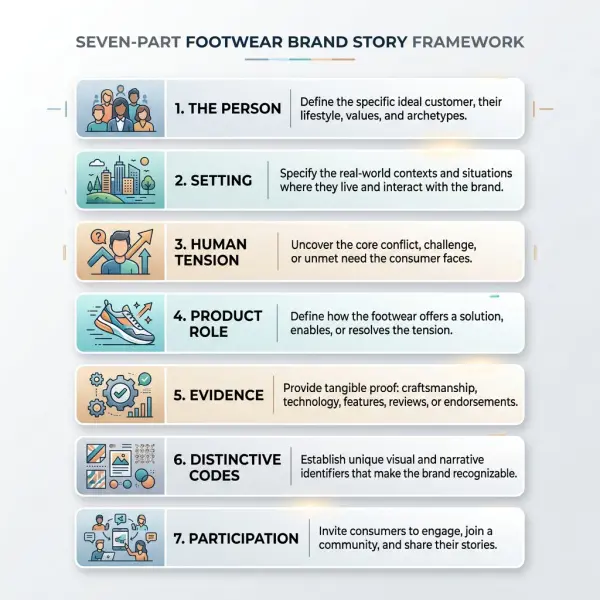
A useful lifestyle story has seven connected parts: a defined person, a lived setting, a meaningful tension, a product role, supporting evidence, distinctive brand codes, and a way for people to participate. Removing any one part can make the story vague or difficult to sustain.
1. The Person
The protagonist should be more specific than “fashion-conscious consumers.” Define the relevant routine, priorities, compromises, and relationship with footwear. A junior architect who moves between a studio, construction visits, and evening events has different needs from a hospitality worker, weekend runner, touring musician, or parent managing school travel.
Specificity does not require turning the person into a narrow demographic stereotype. Behavior, context, and need are often more useful than age alone. The brand should know which part of the person’s life the product can credibly serve.
2. The Setting
The setting establishes the surfaces, weather, social codes, pace, and garments surrounding the shoe. “The city” is too broad. A rainy commute, gallery opening, neighborhood café shift, late train, creative office, or weekend market each produces different product and styling requirements.
Settings should also be regionally believable. A global campaign can retain one narrative idea while changing architecture, transit, climate, casting, and dress conventions. Localization is not merely translating copy.
3. The Human Tension
Stories need a tension, but footwear campaigns do not require manufactured drama. Useful tensions are often ordinary: polish versus ease, heritage versus self-expression, performance versus everyday wear, protection versus lightness, individuality versus uniform, or novelty versus repeat use.
The tension helps the brand make a choice. A story about “comfortable, stylish, versatile shoes for everyone” makes almost no choice at all. It is hard to own, difficult to visualize, and likely to produce unsupported claims.
4. The Product’s Role
The shoe should enable, signal, protect, adapt, or accompany; it should not become a magical solution. A loafer may help a wearer look composed without adopting formal business dress. A trail-derived sneaker may provide a robust visual and functional option for mixed urban surfaces, if its construction supports that use. A soft flat may pack easily for travel but still require a realistic description of walking duration and weather limitations.
5. The Evidence
Evidence turns atmosphere into credibility. Depending on the story, this can include materials, weight, construction, testing, fit information, user experience, repair access, product history, maker knowledge, or a transparent limitation. Evidence should sit close to the relevant claim rather than being buried on a separate corporate page.
6. Distinctive Codes
Distinctive codes help people recognize the brand before reading its name. In footwear they may include sole shape, stitching, hardware, color placement, lace treatment, toe geometry, packaging, photography angle, casting, sound, or a repeated phrase. The codes should arise from the brand and product rather than being added as superficial decoration.
7. Participation
A lifestyle becomes more believable when people can do something within it: style the shoe, customize it, attend an event, join a run, share a repair, learn care, contribute a local story, or wear the product in an existing community. Participation should create value beyond unpaid content production. It may offer knowledge, connection, service, access, or recognition.
Which Story Territories Work Well for Footwear Brands?
The best territory is one the brand can repeatedly prove and refresh. A useful territory should generate product decisions, content, retail behavior, and customer participation—not just a campaign tagline.
Movement and Performance
Movement stories may center on running, walking, dance, court sport, training, or the physical rhythm of daily life. They are credible when the product’s intended activity, testing, athlete or practitioner input, and limitations are clear. A fashion sole with technical styling should not inherit performance claims from its appearance.
Jordan Brand illustrates how a footwear story can extend from product performance into cultural and retail experience. Nike’s brand-owned account of its World of Flight store in Philadelphia describes a concept centered on basketball culture, local history, product, styling, storytelling, and in-store experiences. The World of Flight announcement should be read as the company’s own framing, not independent evidence of effectiveness, but it demonstrates how a product world can be expressed beyond advertising.
Workwear, Heritage, and Subculture
Heritage stories can be powerful when history is documented and the brand acknowledges how wearers changed the product’s meaning. The story should distinguish origin from later adoption. A work shoe may become part of music or youth culture through community use rather than a planned marketing strategy.
Dr. Martens’ official history of the brand traces its footwear from functional working use into music and subcultural adoption. As a brand-authored source, it requires the same caution as any corporate history. Still, it highlights a useful storytelling principle: brands often inherit meaning from wearers. The respectful role is to document, credit, support, and continue the relationship rather than rewrite a community as a campaign asset.
Craft, Material, and Care
This territory focuses on how a shoe is designed, made, aged, maintained, or repaired. It suits brands with meaningful construction, material expertise, maker relationships, or after-sales capability. Close-up content, workshop education, care demonstrations, and repair stories can make the narrative tangible.
Craft should not be reduced to slow-motion hands and vague words such as “artisanal.” Teams need accurate information about the stage shown, who performs it, where it occurs, and whether the method applies to the product being sold. If only one premium line is hand-finished, the claim should not be extended across the range.
Everyday Ease and Modern Uniform
An ease story is built around repeat wear, outfit compatibility, uncomplicated dressing, and movement between ordinary settings. It can work across the sneaker, loafer, and flat shoe trends shaping everyday fashion, especially when photography shows realistic wardrobes rather than isolated aspirational scenes.
The risk is generic language. “Made for every moment” means little unless the brand defines the moments and the compromises the design resolves. A more useful story might focus on a polished slip-on for people who walk part of their commute, or a low-profile sneaker designed to work under wide trousers without dominating the silhouette.
Outdoor, Travel, and Place
Place can give footwear storytelling texture: terrain, climate, architecture, pace, and local routines. It also creates factual obligations. Water resistance, grip, packability, temperature, and durability claims must match tested product characteristics. Location content should not imply suitability for conditions the shoe cannot handle.
Travel stories should consider who can realistically participate. Constant flights, remote landscapes, or luxury destinations may create aspiration but narrow relevance. Local exploration, familiar routes, and regional creators can produce richer and more accessible narratives when they fit the brand.
How Should the Story Change Across Touchpoints?
The central narrative should stay stable, but each channel has a different job. Repeating the same campaign image and sentence everywhere wastes the strengths of the touchpoint.
|
Touchpoint |
Primary storytelling job |
Useful content |
Common failure |
|
Campaign |
Create attention and emotional frame |
Protagonist, setting, tension, memorable codes |
Beautiful mood with no clear product role |
|
Product page |
Convert meaning into evidence |
Fit, material, construction, use, care, motion, limitations |
Lifestyle copy without decision information |
|
Retail store |
Let customers experience the world |
Merchandising, try-on, staff knowledge, events, service |
Theme disconnected from stock and staff behavior |
|
Creator content |
Show a credible personal interpretation |
Real styling, routine, testing, disclosed relationship |
Scripted praise or hidden commercial connection |
|
Community program |
Build reciprocal participation |
Practice, education, access, local partnership |
Extracting stories without lasting value |
|
Packaging and delivery |
Reinforce first physical contact |
Care, origin, product logic, useful service |
Decorative copy and unnecessary material |
|
After-sales |
Prove the relationship continues |
Care, repair, parts, returns, feedback |
Brand story ends immediately after purchase |
The product page deserves particular attention. Campaign imagery may create desire, but customers still need to decide whether the shoe fits their foot, wardrobe, routine, and climate. Fit notes, full-body scale, side views, motion, care, and intended use should translate the story into a responsible purchase decision.
How Can Creators and Communities Strengthen the Story?
Creators strengthen a footwear narrative when their real wardrobe, activity, audience, and point of view fit the product. Audience size alone is a weak selection criterion. A dance teacher may give a movement-led flat more credibility than a general lifestyle celebrity; a cobbler may add depth to a repair story; a hospitality worker may reveal fit and standing needs that a studio campaign misses.
Brands need to protect the creator’s voice while setting factual boundaries. The brief should distinguish personal opinion from claims requiring evidence. Creators should not be encouraged to promise injury prevention, universal comfort, waterproofing, superior sustainability, or exceptional durability unless the brand has appropriate substantiation.
Commercial relationships also require clear disclosure under applicable rules. The U.S. Federal Trade Commission’s guidance on endorsements, influencers, and reviews explains responsibilities around material connections and endorsements. Other jurisdictions have their own requirements, so global programs need market-specific legal review rather than one universal disclosure template.
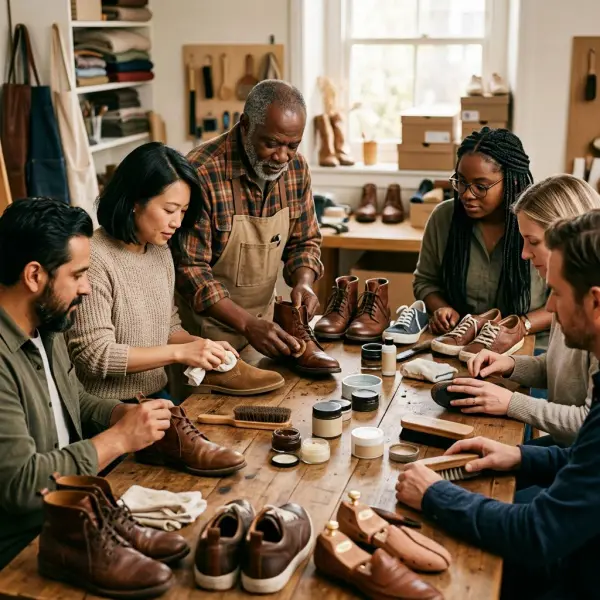
Community participation requires a different discipline. A brand should understand who created the style codes, language, event, or cultural meaning it wants to use. Compensation, consent, credit, access, safeguarding, and long-term benefit may matter. The objective is not to make every customer a brand ambassador. It is to create a relationship in which participation feels valuable and truthful on both sides.
How Can a Global Brand Keep the Story Locally Relevant?
Global consistency should protect the core meaning and distinctive codes, not force identical execution. The brand may keep one product role—such as confident movement through everyday life—while local teams adapt people, places, weather, language, styling, media, and community partners.
A workable model separates three layers:
- Non-negotiable core: product truth, brand purpose, key codes, factual claims, and ethical boundaries.
- Adaptable expression: casting, location, garments, cultural references, creators, events, and copy tone.
- Local evidence: climate suitability, regional sizing, channel behavior, customer feedback, and relevant use cases.
This structure prevents two common extremes. Central teams avoid producing a generic global campaign that feels socially empty, while local teams avoid changing the narrative so far that the brand becomes unrecognizable. Local review should include people with cultural and commercial knowledge, not only translation vendors.
How Should Brands Measure Lifestyle Storytelling?
Lifestyle storytelling should be measured as a chain of effects, not credited automatically for every sale. A campaign can improve recognition or product understanding without producing immediate conversion, while sales can rise because of distribution, discounting, seasonality, or stock availability rather than story quality.
Useful measurement layers include:
- Recognition: recall of the brand, product silhouette, message, or distinctive code.
- Engagement quality: saves, useful comments, completion, product-page visits, event participation, and creator-content response.
- Understanding: whether customers can identify intended use, fit, material, care, or product difference.
- Commercial response: full-price conversion, attachment to apparel, sell-through, repeat purchase, and channel mix.
- Post-purchase reality: returns, review themes, wear complaints, care questions, repair uptake, and customer-service contacts.
- Community health: repeat participation, partner retention, participant feedback, and evidence of reciprocal value.
Teams should define expected movement before launch. If the story is meant to clarify a hybrid shoe category, improvement in product understanding and fewer “not as expected” returns may matter more than raw reach. If it introduces a new lifestyle territory, recognition and association may be the first indicators. Controlled tests, comparable markets, holdouts where practical, and qualitative research can help separate narrative effect from other variables.
A Practical Workflow for Building the Story
The process should connect product, brand, creative, retail, legal, and customer evidence early. A concise working sequence is:
- Audit the product truth. Document construction, fit, material, testing, intended use, limitations, care, price logic, and available services.
- Study the wearer’s real context. Use interviews, retail observation, search behavior, returns, reviews, and customer-service questions.
- Choose one human tension. Select a conflict the product can credibly help resolve.
- Define the product role. State what the shoe enables or expresses without exaggeration.
- Select evidence. Match every performance, history, craft, community, or environmental claim to a source and owner.
- Build distinctive codes. Establish repeatable visual, verbal, and product cues.
- Map the narrative by touchpoint. Give campaign, commerce, retail, creators, community, and after-sales different jobs.
- Review culture, claims, and disclosure. Include local experts and relevant legal or compliance review.
- Pilot and measure. Test the story with a product, market, or channel before expanding.
- Continue, adjust, or stop. Use evidence to distinguish a weak execution from a weak strategic territory.
This workflow does not require a large campaign budget. A small brand can build a credible story through a well-defined product page, consistent photography, a knowledgeable local creator, useful care content, and responsive customer service. Scale increases reach; it does not create coherence.
Common Mistakes That Make Footwear Stories Feel Artificial
Starting With a Moodboard Instead of the Shoe
Teams sometimes choose a cinematic world before reviewing construction and fit. The result may look strong while placing the product in implausible weather, terrain, or activity. Begin with product truth and customer context, then select the visual world.
Using Generic Lifestyle Language
Phrases such as “for every journey,” “made to move,” or “designed for modern life” are difficult to distinguish and easy to overextend. A better story identifies a particular movement, wearer, setting, and product decision. Specificity makes both creative work and product copy stronger.
Borrowing a Community’s Meaning Without Reciprocity
A brand may use music, sport, workwear, street culture, or regional identity as visual shorthand without involving the people who developed that meaning. This can produce shallow representation and reputational risk. Research origin, collaborate appropriately, credit contributions, and create value beyond campaign exposure.
Letting the Story Exceed the Evidence
Performance, comfort, durability, heritage, origin, and environmental language can all become exaggerated in pursuit of emotion. The consequence is not only compliance risk; customers may receive a product that contradicts the narrative. Maintain a claim register with evidence, approved wording, market, owner, and review date.
Ending the Story at Checkout
If a brand celebrates longevity but offers no care information, parts, repair pathway, or responsive support, the story becomes less credible after purchase. After-sales design should be considered part of brand storytelling because it reveals what the company actually values when the campaign is over.
What Must Brands Verify Before Publishing?
Every story needs a final evidence and context review. Teams should confirm that product shown, product sold, claim made, and market served all match.
Environmental language deserves special care. The U.S. Federal Trade Commission directs clothing and textile businesses making such claims to its summary of the Green Guides. In the European Union, rules introduced through Directive (EU) 2024/825 are scheduled to apply from 27 September 2026, including restrictions relevant to generic environmental claims and sustainability labels. The European Commission’s official Q&A on the new consumer rules provides current detail. Requirements vary by jurisdiction, and brands should obtain appropriate legal guidance for their markets.
Beyond compliance, verify the following:
- Historical sources distinguish documented facts from brand mythology.
- Community references have context, permission where needed, credit, and reciprocal value.
- Performance and comfort language reflects appropriate testing and intended use.
- Creators can express honest experience and disclose material connections clearly.
- Images do not imply unverified terrain, weather, safety, or technical capability.
- Product pages explain fit, material, care, limitations, and relevant service.
- Local teams have reviewed cultural meaning, language, casting, and practical use.
A disciplined review does not remove emotion. It prevents the emotion from depending on something untrue.
Frequently Asked Questions
What makes a footwear lifestyle story believable?
A believable story aligns product truth, wearer context, visual setting, and customer experience. The shoe shown should genuinely suit the activity, weather, styling, and duration implied. Product pages must then provide evidence through fit, materials, construction, care, and limitations. Believability also grows through continuity: retail staff, creators, events, packaging, and after-sales service should behave consistently with the narrative. A campaign can be imaginative, but it should not require customers to ignore what the physical product actually does in daily use.
Does a small footwear brand need a major campaign to build a lifestyle?
No. A small brand can establish a clear lifestyle through disciplined choices: one well-defined wearer, credible settings, consistent styling, useful product information, a distinctive visual code, and a few relevant community or creator relationships. Product pages, email, retail conversations, care guides, and customer service can carry the narrative before paid media scales it. A large campaign amplifies what already exists. If the product role and brand behavior are unclear, additional reach usually spreads the inconsistency further rather than solving it.
Should a brand use its founder as the main character?
Only when the founder’s experience is genuinely relevant, documented, and useful to customers. A founder can provide origin, conviction, and continuity, but the story becomes restrictive if every product meaning depends on one personality. Brands should decide whether the founder is the protagonist, the guide, or simply the source of an initial insight. Over time, customers, makers, athletes, staff, or communities may need more space. The key is to avoid inventing hardship, expertise, or cultural authority that cannot be substantiated.
How often should a footwear brand change its lifestyle story?
The core story should usually remain stable long enough to build recognition, while campaigns provide new chapters. Change is justified when the product strategy, customer, market, or brand behavior has materially shifted—not because a creative team is bored with the current aesthetic. Measurement can reveal whether the problem is the territory or its execution. A durable narrative can support different seasons, creators, locations, and product categories as long as the underlying role and supporting evidence remain coherent across multiple seasons.
How can brands avoid cultural appropriation in footwear campaigns?
Begin by researching where the style, symbol, language, music, or community practice originated and how it has been represented. Involve knowledgeable people early, not only after the campaign is complete. Consider permission, compensation, authorship, credit, casting, distribution of benefit, and whether the brand has a genuine relationship with the community. There is no universal checklist that resolves every context. Local expertise and honest dialogue matter greatly, especially when a commercial brand benefits from identities that have experienced exclusion or exploitation.
Which metrics show whether a footwear story is working?
Use a combination of recognition, understanding, commercial, and post-purchase measures. Relevant indicators may include brand or silhouette recall, message association, qualified product-page visits, full-price conversion, apparel attachment, sell-through, return reasons, review themes, care questions, repair participation, and repeat purchase. Select metrics that match the story’s intended job. Raw impressions or likes show exposure, not necessarily understanding or trust. Where possible, compare markets, audiences, or periods and account carefully for price, stock, promotion, distribution, seasonality, inventory availability, and regional channel changes.
Conclusion
Footwear lifestyle storytelling works when a shoe occupies a believable place in human life. The product may support movement, polish, creativity, work, sport, craft appreciation, cultural participation, or daily ease—but the role must be specific enough to visualize and true enough to survive use.
The strongest stories are not assembled from mood alone. They connect verified construction and fit to a person, setting, tension, and community, then express that logic differently across campaign, commerce, retail, creators, and after-sales service. They also acknowledge that brands do not manufacture all meaning themselves. Wearers often reinterpret products, and those relationships deserve accuracy, credit, and reciprocity.
For fashion businesses, this creates a practical standard: build from evidence, make a clear choice, repeat distinctive codes, and measure whether customers understand the promise after purchase as well as before it. A lifestyle story becomes a brand asset only when product and behavior continue to make it true.





Comments 0
Leave a CommentSend Comment
Anda harus Login terlebih dahulu untuk dapat memberikan komentar.