
Why Functional Accessories Are Becoming Part of Lifestyle Dressing
A pair of sunglasses, a well-designed crossbody bag, or a simple belt can do more than complete an outfit. These accessories may help people manage daily belongings, adjust clothing proportions, respond to changing weather, or move more comfortably between activities. Their appeal comes from the way practical usefulness and personal style can work together.
Consider someone leaving home for a day that includes commuting, working, shopping, and meeting friends. The clothing may remain largely unchanged, but accessories help make it suitable for different situations. A secure bag carries essentials, sunglasses provide protection from sunlight when appropriately designed, and a scarf adds warmth or changes the visual character of a simple outfit. Each item performs a recognizable function while contributing to the overall appearance.
Fashion designers have long explored this relationship, but functional accessories are receiving renewed attention within contemporary lifestyle dressing. Utility-inspired details, adjustable carrying systems, multipurpose scarves, practical bags, and protective eyewear are being interpreted through both everyday fashion and designer collections.
For fashion brands and retailers, the opportunity is not simply to add more features to accessories. It is to understand how people actually live, identify which functions are meaningful, and develop products that feel relevant beyond a single styling occasion.
Quick Answer: Why Are Functional Accessories Becoming Part of Lifestyle Dressing?
Functional accessories are fashion items that perform practical tasks while contributing to personal style. They include bags designed for convenient carrying, belts that adjust clothing fit, sunglasses that provide appropriate solar protection, scarves that offer warmth or coverage, and other accessories that support recognizable daily activities.
Their relevance to lifestyle dressing comes from the need to balance appearance with usability. People may want accessories that complement different outfits while accommodating commuting, work, travel, outdoor activities, or social routines. A product that performs a useful function and looks appropriate across several situations can offer a compelling reason for repeated use.
Recent fashion coverage reflects this relationship. Spring and autumn 2026 collections have featured oversized practical bags, utility-inspired pockets, versatile scarves, statement belts, and sporty eyewear alongside more decorative accessories. These developments indicate visible design directions, although they do not establish uniform consumer demand across all markets.
For fashion businesses, the commercial opportunity lies in identifying specific lifestyle needs and translating them into well-designed accessories. Material performance, comfort, construction quality, styling versatility, and accurate product communication are all important. Adding functionality creates value only when the feature works as intended and serves a genuine customer requirement.
What Is Lifestyle Dressing, and Where Do Functional Accessories Fit?
Lifestyle dressing is an approach to clothing and styling that considers a person's recurring activities, environment, preferences, and practical requirements alongside aesthetic choices. Rather than organizing every outfit around a single formal occasion or fashion trend, it emphasizes how clothing and accessories function within everyday routines.
The term is descriptive rather than a standardized fashion-industry classification. It may refer to casual wardrobes, work-to-weekend styling, travel-oriented clothing, active-inspired fashion, or other combinations of garments selected around the wearer's lifestyle.
Functional accessories fit into this approach because they can extend the usefulness of an outfit without requiring an entirely different clothing selection.
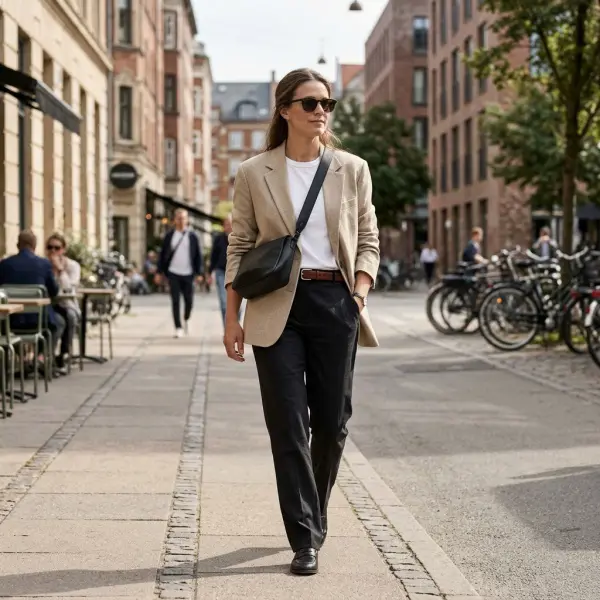
A neutral shirt and trousers, for instance, can accommodate several accessory combinations. A structured bag and leather belt may create a more polished appearance, while a lightweight crossbody and casual cap can support a more relaxed outing. The garments remain similar, but the functional and visual character changes.
This flexibility is particularly relevant for brands developing coordinated wardrobes rather than isolated products. Accessories can connect garments to activities, helping customers understand how a collection might be worn beyond campaign photography.
Functional Does Not Mean Purely Utilitarian
An accessory can perform a practical function and still communicate creativity, elegance, or individuality.
A belt can secure a waistband while introducing a distinctive buckle. A scarf can provide warmth and become an expressive color accent. A compact bag can organize personal belongings while adding texture or structure to an outfit.
The distinction matters because some utility-inspired details are primarily decorative. Cargo-style pockets, oversized buckles, and technical-looking straps may create a functional appearance without delivering substantial practical benefits.
Fashion businesses should distinguish between accessories that perform verified tasks and those that reference utility as an aesthetic. Both can be commercially legitimate, provided product descriptions do not misrepresent their capabilities.
Why Function and Fashion Are Converging in Contemporary Accessories
The growing visibility of functional design does not mean consumers have abandoned decorative accessories. Instead, contemporary fashion presents multiple ways for practicality and expression to coexist.
The Vogue Spring 2026 Accessory Trend Report described a mix of highly practical accessories and more unconventional designs. Oversized bags capable of accommodating numerous belongings appeared alongside playful silhouettes and styling experiments.
This combination is significant. It suggests that utility and visual individuality need not be competing design priorities.
Daily Activities Often Overlap
A person's day may involve several environments with different practical demands. Commuting, office work, shopping, outdoor movement, and social activities can all influence which accessories are convenient.
A customer traveling by public transport might prioritize a secure closure and comfortable carrying position. Someone moving between indoor and outdoor settings may appreciate an easily stored scarf or lightweight headwear. Another customer may need a bag that accommodates work essentials while coordinating with less formal clothing.
These situations do not prove that one accessory should serve every activity. They illustrate why designers benefit from studying daily routines rather than developing products exclusively around broad demographic categories.
For brands, use-case research can reveal details that are easy to overlook in conventional trend forecasting. Carrying duration, access to belongings, local climate, clothing preferences, and maintenance requirements can all influence whether an accessory is useful.
Customers May Evaluate Purchases Through Both Value and Identity
The relationship between function and personal expression is also commercially relevant.
In its February 2026 discussion of major themes shaping the global fashion industry, McKinsey highlighted consumer attention to value and quality while also describing individuality as an important reason some younger customers choose distinctive fashion products.
This does not demonstrate that functional accessories are universally preferred over decorative ones. It does suggest a useful product-development challenge: customers may evaluate what an accessory does, how it is made, and what it communicates about their personal taste.
A practical bag with recognizable design details might appeal for different reasons than an inexpensive basic bag or a highly decorative occasion accessory. The appropriate proposition depends on customer expectations, price positioning, and competitive alternatives.
Utility Has Become a Recognizable Fashion Language
Workwear, outdoor clothing, sportswear, and travel equipment have provided design references for contemporary fashion over many years. Pockets, webbing straps, buckles, adjustable closures, and reinforced construction can become visual features even when adapted for ordinary urban use.
British Vogue's April 2026 analysis of multi-pocket bags illustrates this intersection. Utility-inspired bags were presented as fashionable accessories, with storage features contributing to their overall aesthetic.
For accessory designers, such references offer creative possibilities. Yet adapting a technical detail into fashion requires careful judgment. A decorative webbing strap does not necessarily offer the strength or adjustability of specialized equipment, while an exterior pocket is only practically useful if it is appropriately sized, accessible, and secure.

The Functional Accessories That Connect Fashion With Everyday Life
Functional accessories cover a broader range of products than handbags alone. Their purposes include carrying belongings, adjusting fit, providing coverage, organizing small objects, and supporting different activities.
The important distinction is not whether an accessory looks technical. It is whether its design meaningfully supports its intended use.
Bags and Carrying Accessories: Convenience With Visual Identity
Handbags, belt bags, phone pouches, and small organizers are among the clearest examples of accessories that combine function with fashion.
Their practical value comes from carrying belongings in a way that suits the wearer's activities. Their fashion value comes from shape, material, color, proportion, and how they sit against clothing.
A small crossbody bag may work well for light daily essentials, while a spacious tote can accommodate larger belongings. A phone pouch may provide convenient access to a device, although its utility depends on device dimensions, closure design, and carrying position.
The differences between these formats are explored in how tote bags, crossbody bags, and mini bags shape daily fashion. For this broader discussion, the important point is that carrying accessories can support lifestyle needs while becoming recognizable parts of a personal wardrobe.
Belts: Fit Adjustment and Silhouette Control
Belts can perform a mechanical function by helping secure garments at the waist, but they also affect how clothing is visually structured.
A narrow leather belt can define a tailored outfit without becoming the main focus. A wider belt may alter the apparent proportions of a loose dress or coat. Decorative buckles and textured materials can introduce contrast to simple garments.
Contemporary collections have also explored belts as styling features independent of conventional waistband support. Vogue's September 2026 accessory coverage identified Western-inspired belts among visible autumn trends.
The design challenge is ensuring that function and appearance remain appropriate to the product. Belt hole spacing, strap flexibility, buckle construction, and edge finishing affect usability. A decorative belt may be suitable for light styling adjustments without necessarily being designed to support a heavily loaded tool pouch or another substantial weight.
Scarves: Coverage, Layering, and Styling Flexibility
Scarves are particularly versatile because their function changes with material, dimensions, and wearing method.
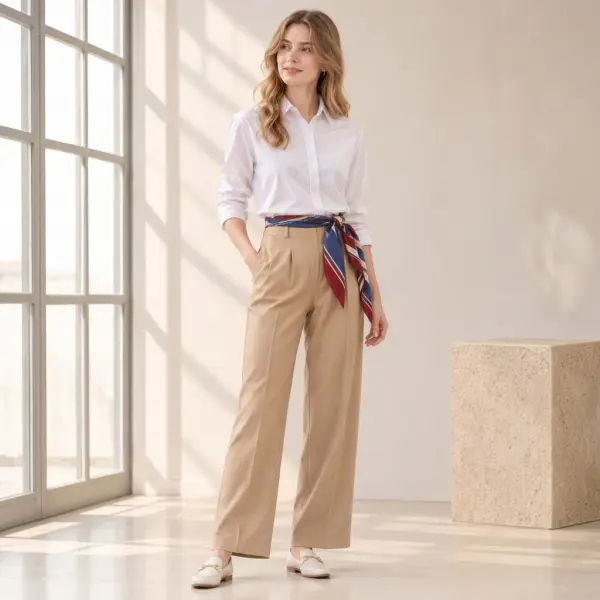
A lightweight scarf can offer modest coverage or become a color accent, while a thicker wool or knit scarf may provide warmth in cooler conditions. Scarves can also be worn around the neck, tied at the waist, used as hair accessories, or incorporated into layered outfits.
In its July 2026 scarf styling coverage, Vogue documented numerous runway interpretations of scarves, including their use as outfit focal points rather than only finishing details.
This flexibility creates opportunities for fashion brands to develop accessories that coordinate with existing clothing collections. However, the relevant performance depends on fabric properties. A delicate silk scarf should not be described as equivalent to a technical cold-weather neck covering, and a decorative lightweight scarf may provide limited protection against harsh conditions.
Sunglasses: Aesthetic Expression and Solar Protection
Sunglasses illustrate a particularly important distinction between visual styling and verified product function.
Frame shape, lens color, scale, and material can significantly influence an outfit. Angular frames may strengthen geometric styling, while softer profiles can complement relaxed clothing. Sport-inspired wraparound designs have also appeared in contemporary fashion collections.
However, the primary protective function of appropriate sunglasses is to reduce exposure to solar radiation. This performance should not be assumed from dark lenses, luxury branding, or fashionable appearance.
The international standard ISO 12312-1:2022 for sunglasses for general use, which has a published 2026 amendment, addresses requirements for relevant eyewear intended for protection against solar radiation. Specialized sports, occupational, or other protective applications may require different standards.
Brands sourcing or selling sunglasses must verify applicable product testing, labeling, and market requirements. Functional credibility matters especially when an accessory's purpose includes safety or protection.
Hats and Headwear: Coverage With Distinctive Styling
Caps, bucket hats, wide-brimmed hats, and other headwear can provide shade or warmth while shaping an outfit's character.
Their practical performance depends on details such as brim coverage, fabric structure, fit, ventilation, and the intended environment. A wide-brimmed hat may provide more coverage to certain areas than a narrow-brimmed style, but actual sun protection also depends on fabric properties, angles of exposure, and surrounding conditions.
Fashion brands often develop headwear through familiar design language: matching fabrics, coordinated colors, embroidered details, or distinctive shapes. These features help integrate hats into apparel collections rather than presenting them solely as independent accessories.
Design teams should nonetheless avoid suggesting that all hats provide equivalent protection from sunlight or weather. When performance claims are made, they should be appropriate to the actual product and supported by relevant testing.
Small Organizers and Wearable Pouches
Cardholders, key organizers, compact wallets, and wearable pouches address a narrower but recognizable lifestyle need: keeping frequently used objects organized and accessible.
Their commercial value depends on the intended items and the manner of access. A cardholder designed for quick transactions has different requirements from a pouch intended to protect delicate electronics.
Because these accessories are relatively small, construction details become particularly important. Edges, fasteners, seams, and attachment points experience frequent handling, while poor internal dimensions can make the product inconvenient.
A compact accessory should therefore be assessed as a working object, not simply a miniature fashion item.
Functionality and Styling: Understanding the Difference
An accessory can be functional, decorative, or a combination of both. Problems arise when brands confuse a utilitarian appearance with demonstrated practical performance.
The table below illustrates how functional requirements and styling opportunities interact across several accessory categories.
|
Accessory |
Primary practical role |
Fashion contribution |
Important limitation |
|
Crossbody bag |
Carries essentials while supporting hands-free movement |
Adds shape and a diagonal styling line |
Comfort depends on weight and strap configuration |
|
Belt |
Adjusts or supports garment fit |
Defines proportions and introduces texture |
Decorative belts may not support significant loads |
|
Scarf |
Offers coverage or warmth, depending on material |
Adds color, layering, and movement |
Performance varies considerably by fabric |
|
Sunglasses |
Provides solar protection when correctly specified |
Defines facial styling and outfit character |
Appearance does not establish UV performance |
|
Hat |
Provides shade, coverage, or warmth |
Changes outfit silhouette and visual identity |
Protection depends on design and material |
|
Phone pouch |
Keeps a device accessible |
Adds a compact wearable accent |
Compatibility depends on device size and opening |
|
Small organizer |
Separates frequently used belongings |
Coordinates with bags and accessories |
Excessive compartments may reduce usable space |
The comparison shows why functional product development involves more than adding pockets, straps, or closures. Each feature should be connected to a specific task and evaluated under realistic conditions.
For brands, the most effective products often make their purpose easy to understand without sacrificing the design identity that distinguishes them in the market.
How Functional Accessories Change the Way People Build Outfits
An accessory can help a familiar garment combination work in another situation. This does not mean it replaces all specialized clothing, but it can extend the range of styling possibilities available within a wardrobe.
The relationship is especially visible in three areas: transitions between activities, personal expression, and repeated use of existing garments.
Making an Outfit Adaptable Across Activities
A simple combination of trousers, a knit top, and a lightweight jacket can be styled differently depending on the day's requirements.
For commuting, a secure carrying accessory may be the priority. During an outdoor break, sunglasses or suitable headwear might become relevant. For a casual meeting, a scarf or belt can introduce a more considered visual finish.
The clothing itself need not change completely for every activity. Accessories allow selected aspects of utility or appearance to be adjusted.
However, there are practical limits. A fashion scarf cannot replace weather-specific protective equipment when the conditions require it, and a small handbag cannot substitute for suitable luggage when transporting substantial belongings.
Allowing Personal Expression Without Changing the Entire Wardrobe
Functional accessories can introduce individuality through relatively small design choices.
A customer may prefer a brightly colored utility bag, patterned scarf, distinctive belt buckle, or unusual eyewear shape. These accessories can become recognizable elements of personal style while serving familiar purposes.
Vogue's Fall 2026 accessory trend analysis highlighted scarves, belts, hats, sunglasses, and decorative details as ways of expressing individuality through styling.
The practical implication for retailers is that accessories can offer different aesthetic interpretations of similar functions. A customer seeking a hands-free bag may still have strong preferences about texture, color, silhouette, and branding.
Supporting Repeat-Wear Styling
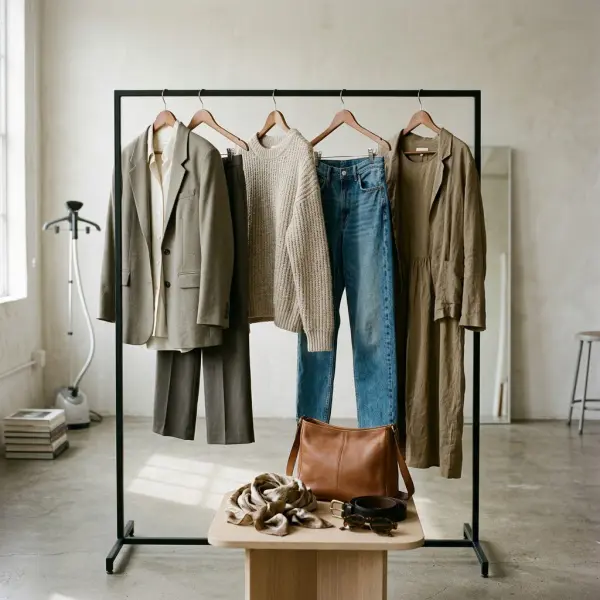
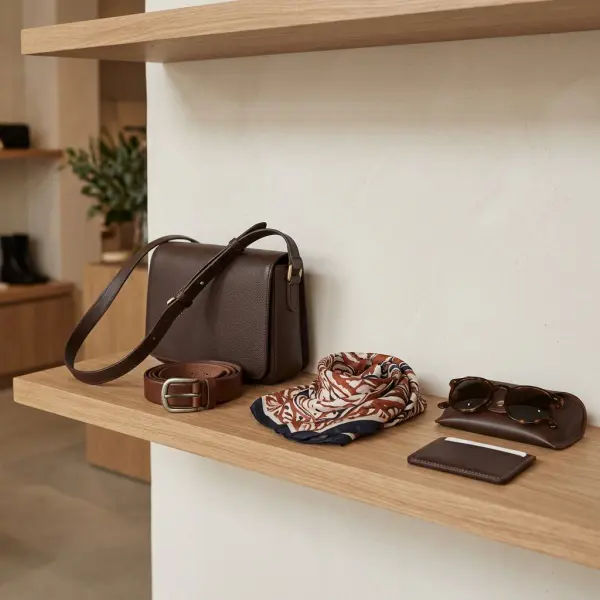
An accessory that coordinates with several outfits may provide opportunities for repeated use. A well-selected scarf, belt, or bag can change the visual impression of familiar clothing without requiring an entirely new outfit.
This does not guarantee that customers will purchase fewer garments or use accessories more frequently. Those outcomes depend on personal behavior, wardrobe composition, and product longevity.
For fashion brands, however, repeat-wear potential can form a credible product proposition when supported by practical styling examples. Showing one accessory with several realistic outfits helps customers understand its versatility more clearly than describing it as suitable for every occasion.
Lifestyle Segmentation: Why Different Customers Need Different Functions
An accessory's usefulness depends heavily on the circumstances in which it is worn. Customers of similar ages or income levels may have very different needs because their routines, environments, and personal preferences differ.
For product development, lifestyle segmentation can therefore be more informative than relying solely on broad demographic categories.
Urban Commuters
An urban commuter may value convenient access to small belongings, comfortable carrying, and appropriate closure systems. Depending on transport conditions, the customer might also prioritize low weight or the ability to carry an accessory close to the body.
A refined crossbody bag or compact organizer could address some of these requirements. The final product still needs to accommodate actual contents, clothing layers, and typical carrying duration.
Security-related claims deserve particular caution. Secure closures and close-body carrying may be useful design characteristics, but they cannot guarantee protection against theft.
Professionals With Mixed Daily Schedules
Customers moving between work and social activities may value accessories that coordinate with professional clothing without looking overly formal in casual settings.
A structured bag, understated belt, or versatile scarf can support this kind of wardrobe. The appropriate choice depends on workplace expectations and the objects the customer needs to carry.
For brands targeting this segment, styling versatility should not come at the expense of functional requirements. A bag promoted for professional use needs to be evaluated against its intended contents and expected carrying conditions.
Travelers and Leisure-Oriented Customers
Travel and leisure activities may create different priorities, including lightweight construction, compact storage, convenient access, and materials suited to the anticipated environment.
A foldable accessory can offer packing convenience, while a crossbody bag may help organize small personal belongings during sightseeing. Hats and sunglasses can also be relevant when outdoor exposure is expected.
Yet travel accessories should not automatically be marketed as protective or theft-resistant. Products developed for specialized situations may require performance standards beyond those of ordinary fashion accessories.
Customers Seeking Flexible Wardrobe Options
Some customers prefer a smaller wardrobe containing products that coordinate across multiple outfits. Others enjoy varied accessories for expressive styling.
Both groups may value functional design, but their purchasing motivations can differ. One customer might select a neutral bag for repeated use, while another chooses a colorful version that acts as a signature accessory.
The product-development opportunity is to identify these differences rather than assuming that all customers interpret versatility, value, or functionality in the same way.
What This Means for Accessory Design and Manufacturing
Functional accessories create specific development requirements because their features must work under repeated use. Visual design remains essential, but technical decisions influence whether the promised function is delivered.
A manufacturer producing decorative scarves faces different quality priorities from one producing sunglasses intended for solar protection. Likewise, a belt designed only for styling has different requirements from a load-bearing carrying system.
Product Specifications Must Reflect the Intended Function
The starting point is a clear product brief describing what the accessory should do, how it will be used, and which performance characteristics matter most.
For a carrying accessory, the brief may define expected contents, dimensions, strap configuration, closure type, and intended load. For a scarf, it may prioritize fabric composition, drape, handfeel, colorfastness, and relevant care requirements. For eyewear, the specification must address applicable optical, protective, and regulatory requirements.
These details should be translated into technical specifications that suppliers can evaluate rather than left as subjective descriptions such as "durable," "premium," or "high performance."
Hardware and Attachment Points Require Special Attention
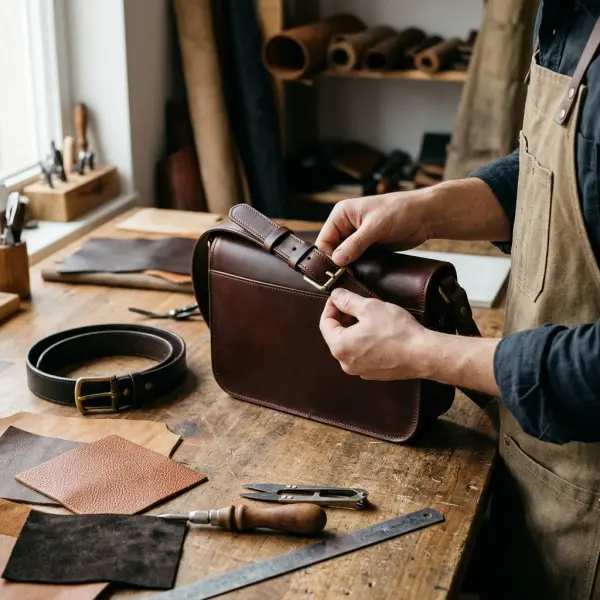
Functional accessories often include components exposed to repeated manipulation or stress. Buckles, hooks, rings, snap fasteners, zippers, and adjustable straps are central to product usability.
Poorly positioned hardware can make an accessory uncomfortable or difficult to operate. Weak attachment points can undermine the entire product, even when the main material is visually attractive.
Sampling and quality control should therefore consider both components and their interaction with the finished product. Suitable testing depends on the intended use, material configuration, and relevant market requirements.
Material Selection Involves Multiple Trade-Offs
Leather, cotton, nylon, polyester, wool, silk, coated textiles, and other materials provide different aesthetic and functional characteristics.
A soft fabric may offer attractive drape but limited structural support. A coated material may offer certain moisture-resistant properties while requiring specific care. A lightweight woven strap may improve flexibility but still need appropriate strength and abrasion performance.
No material automatically delivers the best combination of comfort, cost, durability, appearance, and environmental performance. Brands should evaluate realistic alternatives using appropriate supplier documentation and product testing.
Functional Claims Need Evidence
Accessory performance claims can influence purchase decisions, especially when products are described as water-resistant, UV-protective, theft-resistant, or suitable for specific loads.
Businesses should distinguish between the presence of a feature and its tested performance. A zipper may help contain belongings, but it does not make a bag theft-proof. A coated fabric may resist some moisture without making an assembled product waterproof.
The same principle applies to protective eyewear and other regulated product categories. Relevant claims should be supported by appropriate evidence and checked against the standards and legal requirements of the intended selling market.
How Fashion Businesses Can Apply Functional Accessory Insights
The commercial value of functional accessories depends on the ability to connect customer needs with products that can be produced, priced, and sold effectively.
A useful business strategy begins with a specific lifestyle problem rather than a broad instruction to develop more functional accessories.
Identify a Customer Activity Worth Serving
Brands can investigate how their target customers commute, travel, work, socialize, or spend time outdoors. Interviews, customer service records, product reviews, and sales information may reveal repeated practical problems.
For example, customers may complain about bags that are difficult to access, scarves that require complicated care, or belts that do not adjust comfortably. Each issue can inform a clearer development brief.
The objective is to identify a meaningful need, not simply to add another feature to an existing product.
Connect Each Function to a Design Decision
Once the customer requirement is clear, the design team can determine which product characteristics are necessary.
A compact organizer might require a secure fastening and appropriate interior dimensions. A versatile scarf might need a particular size and material handfeel. A fashion-oriented carrying accessory may require a balance between low weight, durability, and visual structure.
Each specification should have a reason for existing. Features that do not improve the intended use or design identity may increase complexity without creating proportionate value.
Build Product Families Around Lifestyle Use Cases
A brand can organize accessory collections around practical activities rather than only material or seasonal color.
For example, a collection intended for urban movement might include a compact bag, cardholder, and suitable headwear. A work-oriented range might combine a structured carrying accessory, understated belt, and coordinated scarf.
This approach can support coherent merchandising, but related products do not need to be purchased together. Each accessory should offer standalone value.
The principles of fashion assortment planning for retail and online stores remain relevant. Product breadth should reflect customer demand, inventory capacity, and meaningful differentiation.
Explain Function Through Realistic Product Content
Product pages should demonstrate what an accessory can do rather than simply claiming it is versatile.
For a bag, useful information includes interior dimensions, carrying positions, and closure details. For belts, measurements and adjustment ranges are important. For scarves, material composition, dimensions, and care guidance help customers judge suitability.
Photographs showing products in realistic situations can make these specifications easier to understand.
A customer should be able to determine whether an accessory meets their needs before relying on promotional language.
Evaluate Performance After Launch
Initial sales may indicate design appeal, but they do not establish long-term product satisfaction.
Customer complaints, return reasons, reviews, warranty requests, and repeat purchase behavior can reveal whether the intended function works as expected. These signals also help distinguish problems with construction from problems with product information.
The following framework connects common accessory strategies with commercial decisions.
|
Strategic objective |
Product or retail action |
What to verify |
|
Improve everyday usability |
Define a specific activity and matching features |
Customer requirements and usability testing |
|
Strengthen styling versatility |
Show realistic combinations across different outfits |
Customer relevance and product suitability |
|
Support product quality |
Specify materials, components, and acceptance criteria |
Supplier capabilities and test results |
|
Reduce purchasing uncertainty |
Provide accurate dimensions and functional demonstrations |
Product information accuracy and return feedback |
|
Maintain assortment discipline |
Prioritize differentiated accessories |
Sales performance, inventory exposure, and margins |
|
Support longer product use |
Consider durability, care, and repair feasibility |
Actual product performance and service economics |
No single framework guarantees commercial success. Its value lies in connecting design intentions with verifiable decisions.
Common Mistakes When Developing Functional Fashion Accessories
Treating Decorative Utility Details as Verified Performance
A product may include cargo-inspired pockets, technical-looking straps, or oversized hardware without offering the capabilities associated with specialized equipment. This often happens when designers borrow visual references without defining the practical purpose of each component. The result can be misleading marketing or disappointing usability. Brands should describe aesthetic details accurately and make performance claims only when supported by appropriate specifications and testing.
Adding Functions That Customers Do Not Need
Multiple pockets, detachable components, convertible configurations, and complex fasteners can make an accessory appear more advanced. However, these features may increase production costs, maintenance requirements, weight, and potential failure points. If customers rarely use them, their commercial value may be limited. Product teams should validate the need for additional features through research and sample testing before incorporating them into a final design.
Assuming Versatility Means Universal Suitability
An accessory can coordinate with several outfits without being appropriate for every activity or environment. A lightweight fashion bag may suit casual daily use but not heavy equipment, while a decorative scarf may not provide sufficient warmth in severe weather. Overly broad positioning can create unrealistic expectations. Brands should define the realistic range of activities their products support and communicate important limitations alongside benefits.
Overlooking Maintenance and Repair Requirements
An accessory intended for frequent use will encounter repeated handling, friction, and occasional exposure to environmental conditions. Materials and components that are difficult to clean or repair may limit long-term satisfaction, even when their initial appearance is attractive. Designers should consider care instructions, component replacement, and supplier support during development. Repairability should be evaluated realistically rather than promised without an available service or technically feasible construction.
Following Utility Trends Without a Clear Customer Segment
A fashion label may adopt sporty eyewear, multi-pocket bags, or workwear hardware because these details appear in seasonal collections. Without a defined customer use case, the resulting assortment may lack coherence or compete with products that already serve the same need. Trend references should inform creative development, but commercial decisions need customer evidence, cost analysis, and alignment with the brand's identity.
What Current Trend Evidence Does—and Does Not—Prove
Contemporary fashion reporting confirms that utility-inspired accessories and adaptable styling have received attention in recent collections. This is different from proving that most consumers are systematically replacing decorative products with functional alternatives.
Runway reporting identifies design directions. Editorial shopping features describe selected products and styling ideas. Forecasting organizations interpret signals that may influence future demand. These sources do not necessarily measure the same markets or consumer behaviors.
For example, trend forecaster WGSN has identified guardian design as a 2026 fashion direction, involving protective or security-oriented features integrated into clothing and accessories.
That is a documented forecast, not proof that such features prevent theft or that they will become standard across the fashion industry.
Likewise, visibility for multifunctional scarves or utility bags does not establish their market share, sales growth, or long-term adoption. I cannot confirm a reliable global percentage of fashion consumers who now prioritize functional accessories over decorative accessories.
For retailers and product developers, the sensible approach is to use trend intelligence as a source of hypotheses. Those hypotheses should then be tested against local customer needs, commercial performance, and real product usability.
Sustainability and Product Longevity: Why Function Alone Is Not Enough
A practical accessory may be used frequently, but functionality does not automatically make it sustainable.
A product's environmental impact depends on factors such as material sourcing, manufacturing, durability, maintenance, transportation, usage, and end-of-life treatment. Adding a useful pocket or designing a versatile silhouette does not establish a favorable environmental outcome.
The Ellen MacArthur Foundation's guidance on designing products to be used more and for longer distinguishes physical durability from emotional durability.
Physical durability concerns how effectively a product resists damage and wear. Emotional durability concerns whether the owner continues to find the product desirable and relevant. Both can influence long-term use.
This distinction is particularly relevant to accessories. A mechanically durable bag may still be abandoned if it no longer suits the owner's lifestyle, while a fashionable accessory may have limited longevity if its hardware fails quickly.
Brands can improve the prospects for continued use through appropriate materials, reliable construction, clear care guidance, and repairable components where feasible. However, claims about environmental superiority should be supported by evidence appropriate to the comparison being made.
The US Federal Trade Commission's Green Guides summary cautions against broad, unqualified environmental marketing claims. Businesses should communicate specific substantiated benefits rather than equating functional design with eco-friendly production.
The Future Role of Functional Accessories in Fashion
Functional accessories are likely to remain relevant because the activities they support are not limited to one fashion season. People will continue carrying belongings, adjusting clothing, managing exposure to weather, and selecting accessories that express their preferences.
This does not mean every utility-inspired trend will endure. Oversized pockets, particular hardware finishes, sporty eyewear silhouettes, and other stylistic details may rise or decline in popularity.
The more durable design opportunity lies in understanding practical requirements that persist beneath seasonal appearances.
Fashion brands can respond by developing recognizable products with useful features, testing those features appropriately, and refreshing aesthetics without compromising established performance. Accessories that support several relevant activities may also offer opportunities for coherent product families and repeated wardrobe use.
For businesses, the central challenge is maintaining a clear distinction between genuine functionality and functional styling. Both can have creative value, but they require different product promises.
The wider context of carrying accessories and their place in contemporary wardrobes is examined in everyday bag trends for practical modern style. Functional accessories extend this relationship beyond bags into a broader approach to clothing, convenience, and personal expression.




Comments 0
Leave a CommentSend Comment
Anda harus Login terlebih dahulu untuk dapat memberikan komentar.