

Everyday Bag Trends Explained for Practical Modern Style
An everyday bag is often the most frequently used accessory in a wardrobe. It accompanies commutes, shopping trips, casual meetings, travel days, and ordinary errands, sometimes moving between several of these activities without being changed. That constant use makes bags an interesting fashion category: their appeal depends not only on how they look, but also on how comfortably and reliably they fit into daily routines.
Recent handbag collections reflect this balance between appearance and practicality. Roomy shoulder bags, relaxed carryalls, understated totes, and utility-inspired designs have appeared alongside more decorative and compact silhouettes. The common thread is not one particular shape. It is the opportunity to make a useful object feel intentional within a contemporary outfit.
For fashion brands and retailers, understanding everyday bag trends means looking beyond seasonal colors and runway visibility. The commercially relevant question is whether a bag solves a recognizable carrying need while offering enough design appeal, comfort, and quality to justify its place in a customer's regular rotation.
Quick Answer: What Are Everyday Bag Trends?
Everyday bag trends are evolving preferences in bag silhouettes, materials, sizes, carrying methods, and practical features that influence how people choose accessories for routine activities. They reflect the relationship between personal style and functional needs such as carrying capacity, comfort, accessibility, security, and versatility.
In 2026, notable fashion-editorial directions include spacious shoulder bags, soft and slouchy shapes, elongated east-west silhouettes, practical multi-pocket designs, and carryalls that can move between casual and more polished settings. These are visible directions within contemporary fashion, rather than evidence that every consumer or regional market prefers the same bags.
A successful everyday bag combines three qualities: it accommodates the owner's actual belongings, works comfortably during regular use, and complements the clothing they wear most often. A visually attractive bag may still disappoint if its straps are uncomfortable, its opening is difficult to access, or its interior cannot organize essential items.
For fashion businesses, the opportunity lies in translating lifestyle needs into products with appropriate proportions, materials, construction, pricing, and clear retail communication. Understanding how a bag will be used is often more valuable than reproducing a fashionable silhouette without considering its practical limitations.
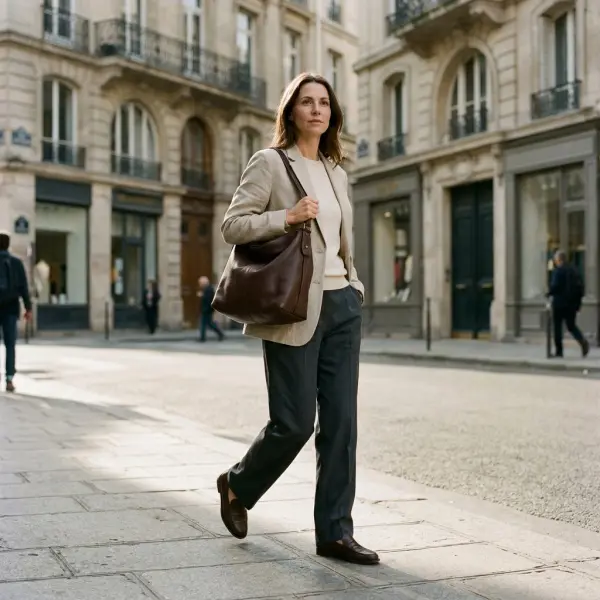
What Makes an Everyday Bag Different From a Statement Bag?
An everyday bag is designed or selected for repeated use across ordinary activities, while a statement bag places greater emphasis on distinctive visual expression. These categories can overlap. A brightly colored shoulder bag might be someone's daily essential, just as a neutral designer bag might be reserved for special occasions. The difference lies primarily in how the owner uses the accessory, not its price or appearance.
Repeated use introduces practical demands that are less noticeable during occasional wear. A bag carried for several hours needs straps that remain comfortable, an opening that is convenient to access, and materials capable of handling expected friction, handling, and weather exposure. Its size should be appropriate for the user's routine rather than merely impressive in product photography.
Consider two customers choosing an accessory. One travels to an office carrying a laptop, charger, phone, wallet, and personal items. Another usually carries a phone, keys, transit card, and sunglasses while walking around a city. Both need an everyday bag, but their ideal products may differ significantly in size, weight, compartment layout, and carrying method.
This is why everyday bag design is best understood as a relationship between the product and its intended activity. A bag does not become functional simply because it is large, minimalist, or described as versatile.
The Everyday Bag Directions Defining Contemporary Style
Fashion trend reporting in 2026 shows several overlapping approaches to practical handbags. British Vogue's autumn/winter 2026 bag trend analysis, published in October 2026, identifies enlarged shoulder bags, relaxed shapes, versatile top-handle styles, east-west proportions, and crescent silhouettes among prominent runway directions.
These observations describe fashion collections and editorial attention, not a universal sales ranking. Their value for fashion businesses is in identifying design ideas that may be adapted to different customer segments.
Roomy Silhouettes With a More Polished Appearance
Large bags are not a new invention, but their contemporary styling has become more varied. Rather than presenting capacity only through traditional rectangular work totes, designers have explored generous shoulder bags and soft carryalls that accommodate everyday possessions without necessarily looking like business luggage.
The proportions are important. A wide, loosely structured bag can appear relaxed when paired with denim or knitwear, while a more controlled silhouette may work better with tailored clothing. Both can support practical use, provided the opening, base, handles, and overall weight are suitable.
For a fashion label, this creates an opportunity to develop carryalls that connect workwear with casual wardrobes. The challenge is ensuring the bag remains manageable when filled. Excessive dimensions can make a product cumbersome, and a visually spacious design may offer less usable capacity than expected if its opening is narrow or its base collapses.
Soft, Slouchy Bags and Relaxed Construction
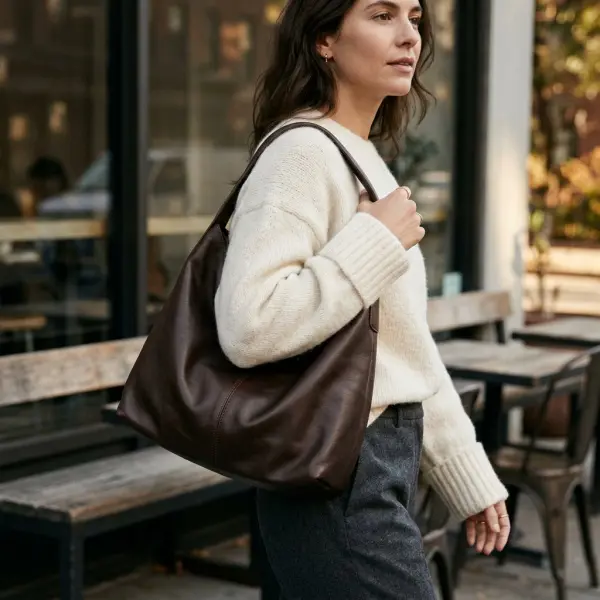
Soft shoulder bags, hobo-inspired silhouettes, and crescent shapes offer a different visual language from rigid handbags. Their curved outlines and flexible bodies can soften structured outfits while complementing casual clothing.
Material behavior has a direct influence on the result. Supple leather, flexible woven textiles, and suitable coated materials can create a relaxed appearance, but each responds differently to weight and repeated handling. A bag that looks attractive when empty may distort when loaded, while an overly stiff reinforcement can prevent the intended drape.
For manufacturers, successful slouchy construction requires control rather than the absence of structure. Designers may need a reinforced base, stable strap attachment points, or selective internal support even when the exterior is meant to look effortless.
Utility Details That Serve a Real Purpose
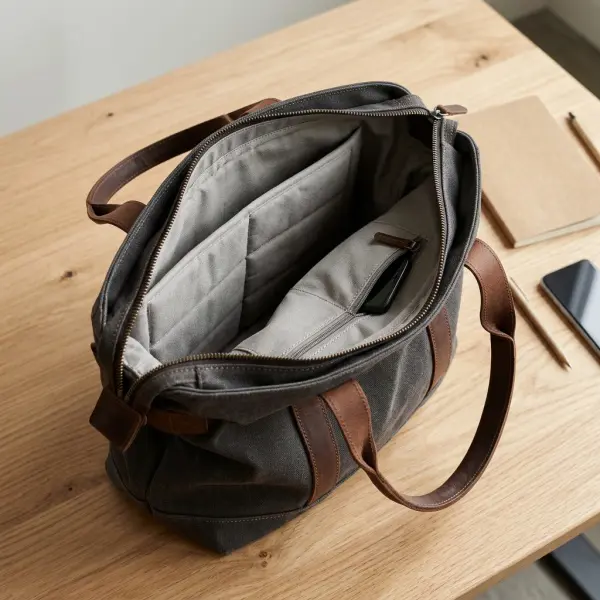
Utility-inspired bags introduce visible pockets, adjustable straps, zippers, and compartments as design elements. Some borrow their appearance from travel gear, outdoor equipment, or workwear, while others incorporate these details into more refined fashion silhouettes.
British Vogue highlighted the practical multi-pocket bag trend in April 2026, illustrating how utility detailing has entered contemporary handbag styling.
The useful distinction is between functional design and functional decoration. An exterior pocket should fit an intended object and remain secure during movement. An adjustable strap should accommodate different carrying positions. A zipper should be accessible without making the user struggle with the bag's shape.
Additional pockets can improve organization, but unnecessary compartments may increase manufacturing complexity, weight, and cost. A simpler interior with one secure pocket and a well-positioned main opening can sometimes offer a better user experience than numerous poorly sized compartments.
Familiar Shapes With Updated Proportions
Another recognizable direction involves adapting familiar handbag profiles rather than inventing entirely new forms. A classic shoulder bag may become wider, a tote may gain a softer body, or a top-handle bag may use an elongated horizontal silhouette.
The east-west silhouette illustrates this approach. Its width is more prominent than its height, creating a horizontal visual profile. Depending on dimensions and opening construction, it can provide convenient access to small personal items, although slim versions may not suit laptops, large documents, or bulky belongings.
These updates offer a commercially useful middle ground. A brand can retain recognizable product architecture while refreshing proportion, surface texture, hardware, or carrying options. However, copying a popular shape without differentiation can lead to an assortment that looks interchangeable with competing products.
Understated Design Alongside Expressive Details
Contemporary everyday bags do not follow a single aesthetic. Neutral colors, subtle hardware, and restrained branding coexist with textured surfaces, distinctive handles, unusual proportions, and visible decorative details.
This is reflected in the Lyst Index for Q3 2026, which included the COS Trullo Flap Bag and Balenciaga Rodeo Bag among its ten hottest products. The ranking illustrates attention toward recognizable handbag designs at different market positions. It does not establish that these styles dominate total handbag sales or that understated designs outperform expressive alternatives.
The business implication is that visual identity still matters. Function may help explain why customers use a bag repeatedly, but design language helps distinguish one brand's interpretation from another.
Why Practicality Influences Modern Bag Preferences
Fashion accessories are judged differently from many garments because they interact continuously with the owner's belongings and movements. A bag is opened, carried, placed on surfaces, moved through crowded spaces, and sometimes exposed to rain or daily commuting conditions.
The most useful way to understand practicality is therefore to examine the situations in which a customer carries the product.
Daily Routines Create Different Carrying Needs
A customer traveling primarily by car may be comfortable with a large handheld tote. Someone using crowded public transport may prefer a secure closure and a bag that stays close to the body. A parent managing children's belongings might value easy-clean surfaces and accessible storage, while a student may prioritize capacity, weight distribution, and price.
These are examples of use cases rather than fixed demographic rules. Not every office worker carries a laptop, and not every urban commuter wants a compact crossbody bag.
Brands that segment customers only by age or gender can overlook these behavioral differences. Product development becomes more precise when based on activities, possessions, carrying duration, and environmental conditions.
Comfort Is Part of the Design Experience
Carrying comfort depends on more than the weight of an empty bag. Strap width, strap length, surface finish, product shape, and load distribution influence how a bag feels during use.
A narrow strap may be visually elegant but uncomfortable with a heavy load. A generously sized bag may encourage overpacking, while a poorly positioned shoulder strap can make a product repeatedly slide out of place. For larger everyday bags, designers should evaluate how the product behaves when filled with realistic belongings, not only when modeled empty.
Adjustable straps and multiple carrying options may improve versatility, but they introduce additional hardware and connection points requiring reliable construction.
Security and Accessibility Need to Work Together
A completely open bag can be convenient for accessing belongings, but it may be less suitable for crowded environments or situations where contents could fall out. Conversely, multiple closures can make an otherwise practical bag frustrating to use.
The appropriate solution depends on the intended activity. A magnetic closure may be convenient for light daily use, while a secure zipper can provide greater containment. However, neither closure type alone guarantees protection against theft, water ingress, or accidental loss.
Good design balances access with the level of security the customer realistically needs.
How Everyday Bags Balance Fashion, Function, and Versatility
A bag's usefulness cannot be measured by a single feature. Capacity, comfort, styling, and protection interact, sometimes creating trade-offs that are difficult to eliminate entirely.
The table below illustrates common design decisions in everyday bag development.
|
Design priority |
Practical value |
Potential trade-off |
|
Larger capacity |
Carries work items, purchases, or extra clothing |
Greater bulk and potential carrying discomfort |
|
Compact proportions |
Convenient for essentials and lighter routines |
Limited space for larger belongings |
|
Soft construction |
Relaxed styling and flexible silhouette |
May offer less shape retention or internal support |
|
Structured construction |
Defined appearance and organizational stability |
Can increase rigidity and product weight |
|
Multiple compartments |
Separates frequently used belongings |
May increase complexity and reduce flexible storage |
|
Adjustable carrying system |
Supports different carrying positions |
Adds hardware, manufacturing steps, and possible failure points |
|
Minimal exterior detailing |
Coordinates easily with different outfits |
May offer fewer immediate visual distinctions |
These trade-offs show why successful bag development depends on prioritization. A product intended for commuting does not need every feature associated with travel luggage, and a lightweight city bag does not necessarily benefit from being enlarged to laptop dimensions.
The broader relationship between tote, crossbody, and mini-bag formats is explored in how tote bags, crossbody bags, and mini bags shape daily fashion. Each category offers different advantages, but its usefulness depends on construction and the needs of the person carrying it.
Materials and Construction: Where Practical Style Becomes Product Quality
One of the most important commercial decisions in bag development is selecting materials that support both the design concept and the intended conditions of use.
Materials communicate style immediately. Construction quality becomes apparent over time.
Choosing Materials for the Intended Lifestyle
Leather, canvas, synthetic woven fabrics, coated textiles, and other bag materials can all support everyday use when specified appropriately. None is universally superior across appearance, maintenance, weather resistance, cost, and environmental impact.
Leather can provide a distinctive surface and develop visible wear characteristics, but its maintenance requirements depend on leather type and finishing. Cotton canvas may offer a casual appearance and useful flexibility, although performance varies with fabric weight, weave, treatments, and construction. Synthetic fabrics and coated materials can offer different levels of abrasion or moisture resistance, but performance must be established for the actual material specification.
For buyers and sourcing teams, broad material descriptions are insufficient. The finished product should be evaluated against its expected use, including cleaning, surface wear, color transfer, and repeated loading.
The Small Construction Details That Affect Daily Use
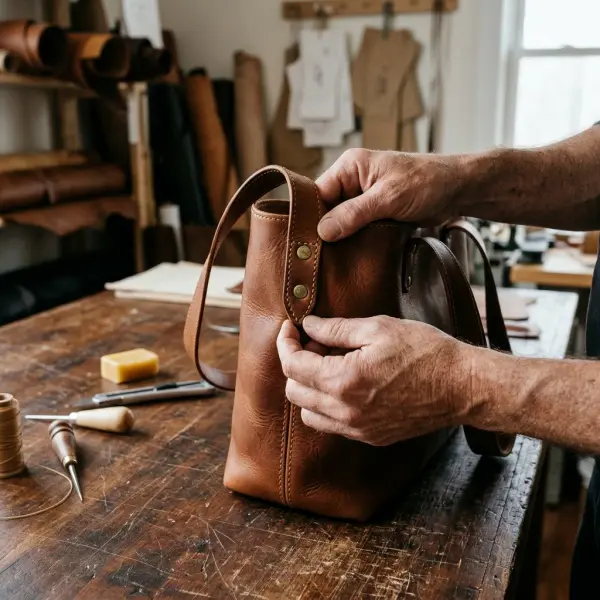
A bag may appear well made in a photograph while containing weak points that become apparent only after repeated use. Strap attachments, seams, zipper ends, edge finishing, lining connections, and handle reinforcement deserve particular attention.
In practical product development, teams should examine:
- Strap attachment strength: Can the handles and connections withstand the intended carrying load?
- Seam integrity: Are seam construction and reinforcement appropriate for the materials and stress points?
- Closure performance: Does the zipper, magnetic closure, or fastening system operate reliably?
- Lining durability: Can the lining tolerate repeated contact with keys, chargers, and other personal objects?
- Surface performance: How do materials respond to friction, moisture, staining, and expected cleaning procedures?
- Shape retention: Does the loaded bag maintain an acceptable appearance and remain comfortable to carry?
These checks should be supported by appropriate supplier specifications and repeatable tests where justified. A visually premium material does not compensate for weak construction.
Everyday Bags as Part of Personal Style
A practical bag can influence the overall impression of an outfit without requiring dramatic decoration. Shape, size, finish, and color affect how the accessory relates to the clothing around it.
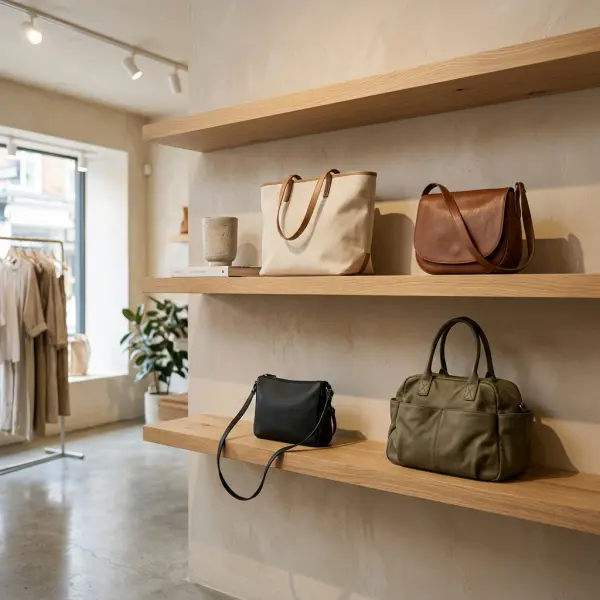
A soft oversized bag may introduce a casual quality to tailored separates. A clean structured bag can make simple denim and knitwear appear more polished. A textured canvas bag may feel appropriate with relaxed summer clothing, while a smooth dark leather shoulder bag can fit a restrained work wardrobe.
These examples illustrate styling possibilities rather than universal rules. Cultural expectations, climate, personal taste, workplace conventions, and local fashion preferences all influence whether a particular combination feels appropriate.
Versatility Does Not Require One Bag for Every Occasion
A versatile bag is one that works effectively across several relevant situations. That does not mean it must replace every other accessory in a wardrobe.
For some customers, versatility means moving comfortably from an office to dinner. For others, it means carrying the same bag while shopping, traveling locally, and meeting friends. A bag designed to cover too many unrelated activities may become overly complicated or compromise its strongest purpose.
Fashion businesses should therefore define versatility around a coherent set of scenarios. A commuting-to-weekend proposition, for example, is easier to translate into product requirements than a vague promise that a bag is suitable for everything.
Color and Texture Shape Repeat-Wear Potential
Neutral bags can coordinate with many wardrobes, but neutral does not automatically mean more useful or commercially successful. A customer who wears predominantly monochrome clothing may regularly use a bright accessory as a signature piece.
Texture is equally significant. Suede-like surfaces, pebbled leather, woven panels, smooth coatings, and textile combinations can change a bag's perceived formality without changing its basic silhouette.
This gives brands options for refreshing existing designs. A proven bag construction can sometimes be updated through considered material and color variations, provided the changes do not unintentionally alter durability, drape, weight, or manufacturing cost.
What Everyday Bag Trends Mean for Fashion Brands and Retailers
For fashion businesses, a trend becomes commercially useful when it can inform product decisions without replacing evidence about the brand's own customers.
Editorial visibility can identify emerging styling directions, but assortment planning needs additional information: what customers carry, how much they are willing to spend, where they shop, and which product features influence purchase decisions.
Product Development Should Begin With Use Cases
A useful starting point is to define the situations the proposed bag must support. The design team can then translate those situations into specifications rather than selecting features because they appear fashionable.
For example, a brand developing a compact daily commuter bag might prioritize a secure main opening, accessible phone storage, comfortable strap adjustment, and low empty weight. A work-oriented carryall may require a stable base, appropriate laptop dimensions, reinforced handles, and durable lining.
Both products could share an aesthetic identity, but the construction brief would be different.
Assortment Planning Needs More Than Trend Replication
A retailer carrying several visually similar bags can create internal competition without offering meaningful customer choice. The same problem occurs when a brand launches too many seasonal variations before understanding demand for its core designs.
A more disciplined assortment could include a small number of distinct carrying propositions, with carefully selected sizes, materials, and colors. This is where fashion assortment planning for retail and online stores becomes relevant: product variety should reflect customer demand, inventory capacity, and clear differentiation.
New silhouettes may deserve testing, but reorder decisions should be supported by sales performance, returns, customer feedback, and contribution margin rather than editorial attention alone.
Product Pages Should Demonstrate Real Usability
A bag listing that only shows front and side studio photographs leaves important purchasing questions unanswered. Customers may not understand its actual dimensions, how the opening works, whether a laptop fits, or how long the strap is.
A practical product presentation can show the bag being worn, the interior arrangement, the closure, and a realistic set of belongings. Accurate measurements and material information are more useful than unsupported labels such as "perfect work bag" or "all-weather."
Retail communication should help customers judge suitability before purchasing. This can also support more informed expectations, although any claim that it reduces returns should be validated using the retailer's own data.
A Practical Framework for Developing an Everyday Bag Collection
Fashion brands do not need an extensive collection to respond to everyday bag trends. They need a development process that connects consumer needs with a clearly defined product proposition.
Step 1: Identify a Specific Customer Routine
Start with an activity rather than a trend name. Observe what customers carry during a typical workday, local commute, or weekend outing. Where possible, use interviews, customer feedback, search behavior, and sales history to distinguish actual requirements from assumptions.
The objective is to understand carrying conditions. A customer might want easy access to a phone, a secure place for a wallet, and enough space for a small umbrella. Those details are more actionable than a broad instruction to design a fashionable everyday bag.
Step 2: Establish Product Priorities
Translate the use case into a concise design brief that defines the intended dimensions, target empty weight, carrying method, material direction, closure, interior organization, cost target, and expected quality level.
Prioritize the requirements rather than treating every feature as essential. If lightness is a central selling point, additional hardware or heavy reinforcement should be evaluated carefully. If the bag is intended for electronics, protection, dimensions, and internal support may deserve greater emphasis.
Step 3: Prototype Under Realistic Conditions
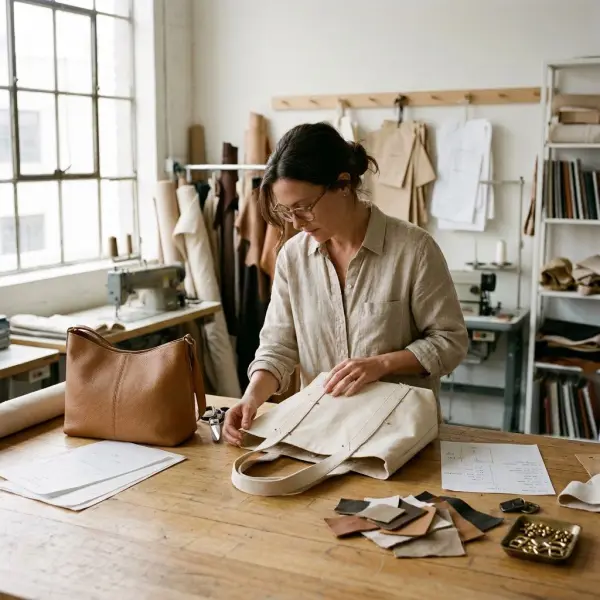
Sampling should include both visual review and functional use. A bag may look correct on a display form but sit awkwardly on the shoulder or become difficult to close when filled.
A practical sample evaluation can involve loading the bag with the intended belongings, checking access while standing, reviewing strap comfort, observing shape changes, and testing seams and closures under relevant conditions. Suppliers should agree on the test methods and acceptance criteria appropriate to the product.
Step 4: Build a Focused Launch Assortment
Introduce a manageable set of products that express distinct customer needs. One well-developed silhouette in several relevant colors may be more operationally manageable than a broad range of untested designs.
Inventory decisions should consider supplier minimum order quantities, lead times, seasonal exposure, working capital, and the likelihood that the product will remain useful beyond a brief fashion cycle. A product's apparent versatility does not automatically guarantee stable demand.
Step 5: Measure Performance Beyond Initial Sell-Through
Early sales indicate market response, but additional evidence is valuable. Returns, complaints, reviews, warranty requests, repeated purchases, and feedback about carrying comfort can reveal whether the original product concept is working.
A useful evaluation framework is:
|
Business question |
Evidence to review |
Possible action |
|
Does the silhouette attract customers? |
Product views, conversion, sell-through |
Refine presentation or assortment |
|
Does the size match expectations? |
Returns, size-related reviews |
Improve dimensions and capacity communication |
|
Is the construction suitable? |
Defect reports, sample testing, warranty issues |
Adjust materials or reinforcement |
|
Is the product commercially viable? |
Landed cost, gross margin, markdown exposure |
Review pricing or sourcing |
|
Does the design deserve continuation? |
Reorders, repeat demand, customer feedback |
Retain, modify, or discontinue |
No single metric gives a complete answer. For example, high initial sales followed by frequent quality complaints may indicate strong visual appeal but inadequate product execution.
Common Mistakes When Following Everyday Bag Trends
Copying Trend Silhouettes Without Understanding Capacity
A narrow or highly sculptural bag can look compelling in a campaign but disappoint customers if its interior does not match the advertised use. This problem often arises when designers work from exterior references before defining the objects the bag should hold. Brands should verify usable internal dimensions, opening width, and realistic contents during sampling, then communicate any capacity limitations clearly.
Adding Too Many Features in the Name of Functionality
Extra compartments, detachable straps, decorative buckles, and multiple closure systems may appear to increase value, but they can also add weight and assembly complexity. Every additional component introduces cost and potentially another point of failure. A more disciplined approach is to evaluate each feature against a specific customer need, retaining only those that improve the intended experience.
Prioritizing Exterior Material Over Construction Quality
A premium-looking surface can attract attention, but customers interact repeatedly with handles, zippers, seams, and linings. Weak strap attachments or poorly finished interior components can undermine an otherwise appealing design. Product teams should establish quality requirements for the complete bag rather than relying on the perceived prestige of its main material.
Treating Global Trends as Universal Consumer Preferences
A silhouette appearing prominently in luxury fashion coverage may not suit the pricing, lifestyle, or cultural context of every retail market. Climate, commuting patterns, purchasing power, and local clothing conventions can influence customer choices. Brands should use international trend reporting as a source of ideas, then validate relevance through their own market research and commercial performance.
Using Sustainability Language Without Product Evidence
Terms such as "sustainable," "eco-friendly," and "responsibly made" can be misleading when they are based only on a material name or an isolated product feature. A recycled-content lining, for example, does not establish the environmental performance of the entire bag. Businesses should support environmental claims with relevant, verifiable evidence and communicate precisely what has been assessed.
What Trend Data Can—and Cannot—Tell Fashion Businesses
Fashion trend reports and retail demand data answer different questions. Runway reporting helps identify aesthetic directions being presented by designers, while platforms such as Lyst capture particular forms of online interest and shopping activity.
The Q3 2026 Lyst Index, for example, combines signals including searches, page views, interactions, social mentions, and sales on Lyst, with adjustments related to product availability. This makes it useful for understanding attention within that ecosystem, but it should not be interpreted as a complete measurement of global handbag market share.
Likewise, editorial interest in oversized shoulder bags does not prove that these products will sell better than compact bags in every store. A small retailer serving customers who travel lightly may perform better with medium-size styles, even while larger silhouettes receive greater fashion coverage.
The distinction matters because trends operate at several levels. A runway silhouette may influence creative direction, a widely photographed bag may attract social attention, and a practical product may generate steady sales without becoming a prominent fashion headline. Sound commercial decisions consider these signals separately.
Sustainability and Longevity: What Brands Should Verify
Everyday bags are suitable candidates for long-term use because their purpose can remain relevant across many seasons. However, repeat use is not guaranteed by a neutral color, premium price, or durable-looking material.
The Ellen MacArthur Foundation's guidance on designing fashion products for longer use distinguishes physical durability from emotional durability and emphasizes the importance of repairability and continued desirability. Although this guidance addresses fashion products broadly, the principles are useful when considering bag design.
For bag manufacturers, durability considerations include reinforced stress points, repairable or replaceable components where feasible, and materials suited to intended handling and cleaning. Emotional longevity depends partly on whether customers continue finding the bag useful and visually desirable.
Environmental assessment requires a wider perspective. Leather, synthetic materials, coated textiles, and plant-derived alternatives have different production processes, chemical considerations, performance characteristics, and end-of-life limitations. No material should be declared inherently sustainable without an appropriate basis for comparison.
The European Commission's guidance and policy information on green claims reinforces the importance of substantiating environmental marketing statements. Brands selling across markets should also verify the applicable rules in each jurisdiction rather than assuming one global standard covers all claims.
The strongest practical approach is to improve measurable product performance, provide accurate care information, consider repair options where commercially feasible, and avoid unsupported environmental promises.
What Comes Next for Everyday Bag Design?
The most plausible opportunity for everyday bags is continued experimentation within familiar functional requirements. Designers can alter proportions, materials, textures, and carrying systems while preserving the features that make a bag useful.
This does not imply that all future bags will become larger, more technical, or more minimalist. Seasonal fashion collections already show considerable variation between structured, relaxed, compact, and expressive designs. Consumer demand is likely to remain segmented by lifestyle, budget, and aesthetic preference, although the relative popularity of individual styles cannot be predicted reliably without stronger evidence.
For established accessory brands, a sensible strategy is to maintain well-performing core designs while testing selective updates. New materials and construction ideas should be evaluated for cost, durability, supplier capability, and actual customer benefit.
For emerging businesses, differentiation may come from solving a narrow carrying problem particularly well. A thoughtfully designed commuter bag or comfortable compact daily bag can offer a clearer customer proposition than a broad collection that attempts to follow every visible trend.
The wider role of accessories within clothing choices is explored in why functional accessories are becoming part of lifestyle dressing, where the emphasis shifts from individual bag trends to the integration of practical accessories into everyday wardrobes.
Frequently Asked Questions About Everyday Bag Trends
What type of bag is most practical for everyday use?
The most practical everyday bag is one that fits the owner's routine, belongings, and preferred carrying method. A medium-sized shoulder bag may suit someone who wants convenient access to personal essentials, while a larger tote may be appropriate for work materials and additional belongings. A compact crossbody can be useful when carrying fewer items and keeping both hands available.
Practicality also depends on strap comfort, empty weight, closure security, and internal organization. A large bag is not automatically more practical, particularly if it becomes uncomfortable when loaded. Consumers and product developers should evaluate the bag in realistic use rather than relying exclusively on its external dimensions or style category.
Are oversized bags still fashionable in 2026?
Yes. Oversized and generously proportioned shoulder bags appear prominently in 2026 fashion-editorial coverage, including autumn/winter handbag trend reporting. However, runway prominence does not mean oversized bags are the preferred choice for every consumer or that they lead total market sales.
Large bags are particularly relevant when customers need additional carrying capacity or prefer relaxed silhouettes. Their practicality depends on manageable weight, comfortable handles, suitable closures, and usable internal space. Retailers should distinguish between visually oversized statement designs and genuinely functional large-capacity products. For commercial assortments, customer feedback and actual sales data are more reliable than trend visibility alone.
Can one everyday bag work for both professional and casual outfits?
Yes, a single bag can work across professional and casual settings when its appearance, size, and carrying characteristics suit both situations. Medium-size shoulder bags, restrained totes, and simple structured carryalls may offer this flexibility, although workplace conventions and personal preferences vary.
Brands can support versatility through balanced proportions, suitable materials, practical closures, and colors that coordinate with the intended customer wardrobe. Product photography showing the same bag in different realistic settings can help customers evaluate this proposition. However, a product should not be advertised as universally appropriate for all workplaces or occasions without considering differences in dress expectations and carrying needs.
How important is bag weight when choosing an everyday accessory?
Bag weight matters because everyday accessories may be carried repeatedly and for extended periods. The empty weight affects the total load once personal belongings are added, while strap design and weight distribution influence comfort.
A lightweight bag is not necessarily more comfortable if its strap is narrow, its proportions are awkward, or its contents shift during movement. Equally, a somewhat heavier bag may provide useful structure or protection for specific items. Manufacturers should evaluate the complete carrying experience using realistic loads, appropriate test procedures, and different carrying positions. Retailers can help customers by providing accurate product weights and clear dimensional information.
Are leather bags more durable than canvas or synthetic bags?
Leather bags are not automatically more durable than canvas or synthetic alternatives. Durability depends on the exact material specification, thickness, finishing, construction, hardware, maintenance, and conditions of use.
Some leathers can perform well under repeated handling, but certain finishes may be sensitive to moisture, scratching, or staining. Canvas performance depends on factors such as weave, fabric weight, and treatment, while synthetic materials vary considerably in abrasion resistance, coating stability, and aging characteristics. Brands should compare products using relevant performance requirements rather than broad material categories. Construction and component quality can be as important as the main exterior material.
How can a small fashion brand respond to everyday bag trends without producing too many designs?
A small brand can start with one or two clearly defined customer use cases and develop a focused assortment around them. This reduces the risk of creating multiple products that look different but serve nearly identical purposes.
The brand should use customer interviews, competitor analysis, and available sales information to establish initial priorities. Sampling can then verify capacity, comfort, quality, and manufacturing cost before larger inventory commitments. A limited selection of relevant colors and carefully differentiated sizes may be easier to manage than frequent silhouette launches. Once sales and customer feedback become available, the brand can expand the strongest products rather than relying on assumptions about popularity.
Does a practical bag need to have many compartments?
No. A practical bag needs an organization system appropriate to its intended use, not necessarily a large number of compartments. For some customers, a spacious main compartment with one secure pocket provides enough flexibility. Others may benefit from separate spaces for electronics, documents, or frequently accessed items.
Additional compartments can increase component costs, assembly time, and product weight. Poorly positioned pockets may also reduce the usefulness of the remaining space. Designers should identify the objects customers actually carry and prototype arrangements around those needs. The most effective layout is usually the one that improves access and security without making the bag unnecessarily complicated.
Conclusion: Practical Style Begins With Understanding Everyday Use
Everyday bag trends demonstrate how accessory design can respond to both personal expression and the practical demands of regular use. Contemporary fashion offers many interpretations, from oversized shoulder bags and relaxed carryalls to more compact, structured, and utility-inspired silhouettes.
The important insight for fashion businesses is not that one bag shape will dominate indefinitely. It is that customers evaluate daily accessories through a combination of appearance, comfort, capacity, quality, and relevance to their routines.
For designers and manufacturers, this means developing products around clearly defined use cases, testing them under realistic conditions, and treating construction quality as part of the design itself. For retailers, it means explaining product suitability accurately and building assortments around differentiated customer needs rather than copying every seasonal direction.
A successful everyday bag earns its place through repeated usefulness. Fashion gives it character; thoughtful product development makes that character practical to live with.




Comments 0
Leave a CommentSend Comment
Anda harus Login terlebih dahulu untuk dapat memberikan komentar.