
Sneaker, Loafer, and Flat Shoe Trends in Modern Everyday Fashion
Quick Answer
Sneaker, loafer, and flat shoe trends in modern everyday fashion are moving toward slimmer proportions, softer construction, hybrid details, and styling that can cross casual and polished settings. Low-profile retro sneakers, refined leather trainers, minimalist loafers, backless loafers, ballet flats, Mary Janes, and dance-inspired lace-up shoes all reflect this direction. At the same time, substantial performance-led sneakers remain commercially relevant, especially where customers prioritize sport, walking, or active use.
The key shift is not simply from heels to flats or from chunky shoes to narrow ones. It is a widening of what everyday footwear can look like. Athletic shoes are borrowing from dress shoes and ballet flats; loafers are becoming softer, slimmer, or open-backed; and flats are adopting straps, technical soles, mesh, satin, and high-vamp constructions. Fashion businesses should treat these as design signals rather than universal demand forecasts. Runway visibility, editorial coverage, retail sell-through, search behavior, returns, climate, and local dress habits can point in different directions. A commercially sound assortment combines recognizable core styles with carefully tested trend options.

What Counts as an Everyday Footwear Trend?
An everyday footwear trend is a noticeable direction in silhouette, construction, material, color, styling, or consumer use that appears across multiple products and market signals. It may begin in runway collections, street style, sport, subculture, archives, or a specific brand, but it becomes commercially meaningful only when it connects with how people actually dress and move.
That distinction matters. A shoe can be highly visible in fashion media without reaching broad adoption. Conversely, a practical style may sell consistently while attracting little editorial attention. Trend analysis should therefore separate three layers:
- Directional signals show new ideas in designer collections, creative styling, and early adopters.
- Commercial trends appear across several price levels, retailers, and product drops.
- Core demand reflects repeatable customer needs such as work, commuting, walking, travel, school, or climate protection.
The layers can overlap, but they are not interchangeable. For brand teams, the useful question is not “Which shoe is trending?” but “Which signal fits our customer, product capability, price architecture, and selling season?”
Current fashion coverage points clearly toward slimmer and more shoe-like trainers. British Vogue’s overview of 2026 trainer directions identifies slimline retro styles, all-leather trainers, performance-to-lifestyle models, and sneaker-ballet hybrids as distinct parts of the market. That breadth is important: refinement and technical volume are developing side by side.
Sneaker, Loafer, and Flat Shoe: What Is the Difference?
Sneakers, loafers, and flats overlap in retail language, but they are not identical categories. A sneaker is generally derived from athletic or casual footwear and typically uses a flexible rubber-based sole, although fashion versions may not be designed for sport. A loafer is a low slip-on shoe without laces, commonly associated with moccasin, penny, tassel, driver, or slipper constructions. A flat shoe is a broad category for footwear with little or no elevation at the heel; it can include ballet flats, Mary Janes, loafers, and some lace-up shoes.
The practical distinctions are becoming less rigid because hybrid products combine category cues.
|
Category |
Typical identifying features |
Current crossover |
What customers still need to verify |
|
Sneaker |
Athletic-derived upper, rubber-based outsole, lace or slip-on construction |
Ballet shape, dress-shoe leather, monk-strap or Mary Jane details |
Whether it is for lifestyle use, walking, or actual sport |
|
Loafer |
Laceless low shoe, closed or backless upper, defined vamp |
Soft glove construction, mule back, sneaker-like sole |
Heel hold, vamp fit, flex, weight, and formality |
|
Flat shoe |
Low heel elevation; broad retail category |
Straps, mesh, satin, lace-up dance forms, technical footbeds |
Toe space, coverage, support, sole protection, and intended duration |
The category name alone cannot establish comfort or performance. A fashion sneaker may resemble a running shoe without being designed for running. A soft flat may still lack fit security for a long commute, while a substantial loafer still requires evaluation of flex, lining, sole, and heel fit.
Why Are These Categories Central to Modern Everyday Dressing?
Sneakers, loafers, and flats sit between wardrobe familiarity and styling flexibility. They can work with denim, tailoring, dresses, skirts, uniforms, and casual separates without automatically turning the outfit into eveningwear or occasionwear. This makes them useful within wardrobes that move between work, travel, social activity, and informal settings.
This relevance does not mean consumers are abandoning heels, boots, or sandals. Climate, profession, transport, and local dress conventions still shape demand. The stronger observation is that low shoes now support wider visual identities: technical or slipper-like sneakers, formal or relaxed loafers, and delicate, utilitarian, or androgynous flats.
The role footwear plays in changing proportion and identity is discussed more fully inwhy footwear shapes personal style. Here, the key commercial implication is range architecture: these categories are broad enough to carry core products, seasonal updates, and experimental capsules without forcing a brand into one occasion.
Which Sneaker Trends Are Shaping Everyday Fashion?
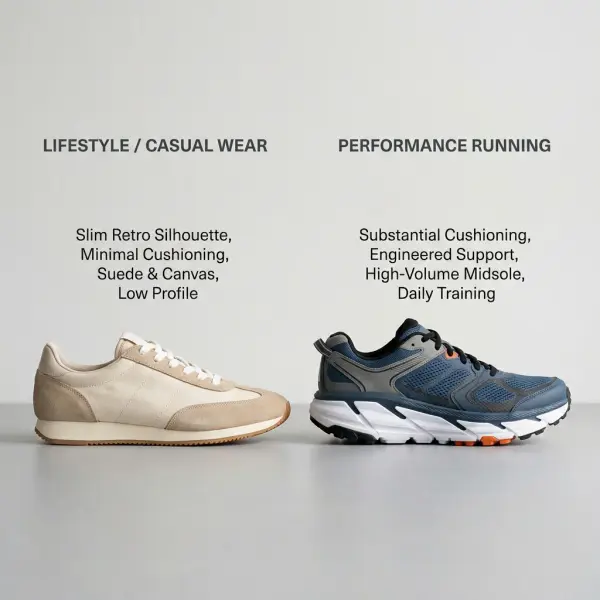
The current sneaker market is not moving in one direction. Slim retro profiles and fashion hybrids are receiving strong editorial attention, while performance footwear continues to serve substantial everyday and activity-based demand. Brands should resist treating one as the replacement for the other.
Slim, Low-Profile Sneakers
Slim sneakers reduce sole volume and sit closer to the foot than the thick lifestyle trainers that dominated many earlier assortments. Current versions often reference indoor football shoes, racing shoes, martial-arts footwear, vintage court styles, or archival runners. Their narrow appearance works particularly well with wide-leg trousers, relaxed tailoring, long skirts, and other garments where a bulky outsole might add more weight than the styling requires.
Vogue’s Spring 2026 shoe trend report highlights low-top sneaker-ballet hybrids as a refined variation of the slim sneaker direction. The editorial signal is clear, but commercial teams should still test width, toe shape, sole thickness, and regional size requirements. A visually narrow last can limit fit accessibility if the design is not adapted carefully.
Slim does not have to mean plain. Color blocking, suede overlays, contrast piping, metallic finishes, and pattern can create novelty without increasing sole volume. Such updates may be easier than developing a new outsole mold, although material minimums still affect cost.
Sneakers That Look More Like Shoes
Leather and suede trainers are increasingly styled with details associated with loafers, brogues, Mary Janes, or monk-strap shoes. The upper may use a restrained color palette, fine stitching, a slim tongue, or a less obviously athletic panel structure. This can make the product credible with tailoring while retaining the casual cue of a rubber sole.
Classification becomes an operational challenge because retail navigation, dress codes, and customers may not agree on whether a hybrid is a sneaker or a shoe. Clear photography and construction details are more helpful than a clever category name. Explain fastening, flexibility, sole purpose, and any break-in expectation.
The Sneakerina and Other Ballet Hybrids
The sneakerina combines a ballet-inspired silhouette with recognizable sneaker features such as laces, rubber soles, technical panels, or sport-derived construction. Some versions are close to a flat with a sneaker outsole; others are low-profile trainers with satin, delicate straps, or an open instep.
This trend demonstrates how category boundaries are becoming design material in their own right. It can appeal to customers who like the visual lightness of a ballet flat but want a more casual or sport-referenced product. Yet the hybrid should not automatically be marketed as more supportive or comfortable. Its actual fit and performance depend on the last, upper, footbed, sole, fastening, and use case.
Performance-Led Sneakers Remain Relevant
Slim silhouettes do not eliminate demand for cushioned, technical-looking, or sport-specific footwear. In the United States, Circana reported that performance footwear dollar sales grew 6% in the first half of 2026, while running footwear grew 13% in both dollars and units. The Circana H1 2026 footwear report is market-specific and should not be treated as a global forecast, but it provides a useful counterweight to claims that refined fashion shoes have displaced athletic footwear.
Some performance-led sneakers are bought for activity; others for everyday styling. Brands must distinguish the two. Technical appearance alone does not justify claims about stability, running suitability, injury prevention, or all-day comfort.
How Are Loafers Changing?
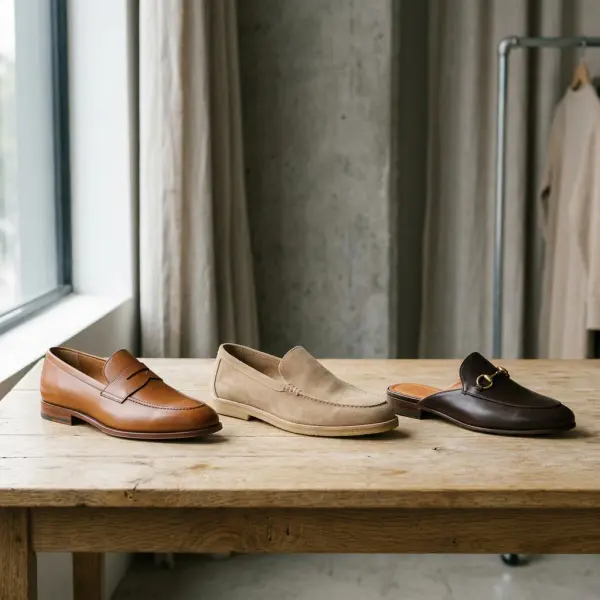
Modern loafers are moving beyond one rigid preppy formula. Current directions include elongated minimalist shapes, soft glove-like uppers, lower-profile soles, backless constructions, refined square toes, and surface interest through suede, color, hardware, or animal pattern. Chunky lug-soled loafers remain useful for customers who prefer stronger visual weight, but they no longer define the entire category.
The Minimalist Loafer
The minimalist loafer reduces obvious decoration and relies on proportion, material, and line. Compared with a classic penny loafer, it may have a longer toe, lower heel, cleaner vamp, softer upper, or less visible apron stitching. Vogue’s coverage of minimalist loafers for Spring 2026 identifies sleek, elongated, understated forms across designer and contemporary labels.
This direction works with soft tailoring, dresses, denim, and varied trouser shapes. Simplicity raises the importance of execution: without ornament, inconsistencies in topline, stitching, lasting, edge finishing, and leather quality become more visible.
Soft and Collapsible Construction
Some current loafers sit closer to slippers or drivers than structured dress shoes. Lightly lined uppers and supple materials create a relaxed shape, but may reduce shape retention or protection and make creasing more visible.
Brands should communicate softness carefully. “Soft” describes handfeel or structure; it does not guarantee fit, cushioning, support, or durability. Material stretch can also change how the shoe fits after wear. Sampling should therefore include repeated flexing and realistic wear, not only a first fitting.
Backless Loafers
Backless loafers combine a recognizable loafer vamp with the easy entry of a mule. British Vogue’s Spring 2026 flat-shoe overview highlighted backless loafers shown by several runway brands, placing them within a broader flat-footwear direction.
The design offers visual polish with a more relaxed attitude, but it changes the use case. Without a closed back, heel retention, stair movement, fast walking, cold weather, and workplace safety can become concerns. A product page should not present a backless loafer as functionally interchangeable with a secure closed shoe simply because the front looks similar.
Material and Detail as Seasonal Updates
Because the loafer shape is familiar, suede, patent finishes, contrast soles, two-tone combinations, hardware, fringe, tassels, or animal patterns can update its mood without losing category recognition.
For retailers, this creates a practical good-better-best structure: a stable core in black or brown, a seasonal material or color, and a smaller directional option. The exact ratio should follow historical sales, climate, channel, and price point—not an editorial trend list.
Which Flat Shoe Trends Matter Most?
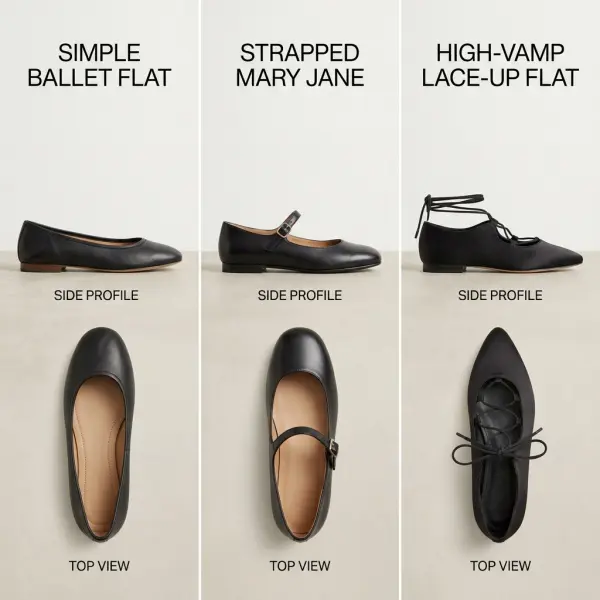
The flat category is expanding through variation rather than one dominant shape. Ballet flats remain visible, but Mary Janes, high-vamp flats, soft glove shoes, mesh constructions, and dance-inspired lace-ups offer different levels of coverage, security, and visual character.
Ballet Flats Become a Platform for Variation
The basic ballet flat has a low-cut upper, thin-looking sole, and rounded, almond, or square toe. Current updates include straps, elastic, drawcords, studs, crystals, satin, mesh, metallic finishes, animal pattern, and more substantial footbeds. The result can range from barely visible to deliberately decorative.
These variations help the category move beyond a single nostalgic reference. A mesh flat can feel light and contemporary; a satin version can introduce occasion material into daywear; an animal-pattern pair can function as the main visual accent in a simple outfit. None of these materials is universally practical. Abrasion, transparency, water sensitivity, cleaning, seam placement, and toe visibility require careful testing and communication.
Mary Janes Add Fit Security and Styling Structure
A Mary Jane is typically defined by one or more straps across the instep. The strap can improve retention compared with a very open flat, although comfort still depends on placement, adjustment range, edge finishing, and foot shape. Visually, it breaks the expanse of the upper foot and can add school, vintage, dance, or subcultural associations depending on the rest of the design.
Current versions range from delicate single-strap flats to multi-strap constructions with square toes, hardware, or thicker soles. For brands, the fastening is not merely decoration. Buckle quality, hole spacing, elastic allowance, and strap durability directly affect usability.
High-Vamp, Glove, and Dance-Inspired Flats
High-vamp flats cover more of the upper foot and can resemble slippers, loafers, jazz shoes, or soft lace-ups. Their appeal lies partly in the way they blur familiar categories while remaining visually close to the ground. Lace-up dance-inspired shoes can introduce adjustability and a more androgynous line, while glove shoes rely on a close, soft fit.
These shapes deserve conservative volume planning until a brand understands customer response. They may require education in product naming and styling, and the close-fitting upper can expose differences in foot volume. A visually compelling sample is not enough; grading and try-on feedback across sizes are critical.
How Do the Three Categories Compare for Everyday Use?
No category is automatically the best everyday choice. Suitability depends on construction and routine. The comparison below describes common tendencies, not guaranteed performance.
|
Decision factor |
Sneaker |
Loafer |
Other flat shoe |
|
Typical style range |
Athletic to refined casual |
Polished to relaxed |
Delicate, minimal, retro, decorative, or directional |
|
Common advantage |
Familiar casual styling and potential for cushioned construction |
Easy polish without laces |
Low visual weight and wide design variety |
|
Common limitation |
Fashion versions may be mistaken for performance shoes |
Heel slip, vamp pressure, or break-in can occur |
Thin-looking constructions may lack protection or fit security |
|
Strong wardrobe pairing |
Denim, tailoring, knitwear, skirts, casual dresses |
Trousers, tailoring, denim, dresses, uniforms |
Skirts, dresses, cropped trousers, denim, soft tailoring |
|
Key product test |
Intended activity, flex, grip, cushioning, and weight |
Heel hold, vamp fit, flex, lining, and sole |
Toe room, strap position, edge comfort, sole, and ground protection |
The categories should complement rather than imitate one another. If a slim leather sneaker, soft loafer, and high-vamp flat share the same proportions and use case, they may compete for one need. Differentiate by climate, occasion, material, fit, price, or styling role.
How Should These Shoes Be Styled in Modern Wardrobes?
Style from proportion and contrast rather than category rules. Slim shoes can continue a long trouser line, substantial sneakers can anchor oversized outerwear, minimalist loafers can sharpen denim, and delicate flats can soften workwear.
Several current combinations are commercially adaptable:
- Slim sneakers with wide trousers, soft tailoring, column skirts, or simple dresses.
- Leather trainers with denim, knit polos, relaxed suits, or utility separates.
- Minimal loafers with tapered trousers, long coats, poplin dresses, or straight denim.
- Backless loafers with cropped trousers and relaxed warm-weather tailoring.
- Mary Janes with socks, midi skirts, denim, or structured shorts.
- High-vamp flats with full-length trousers, flared denim, or minimal dresses.
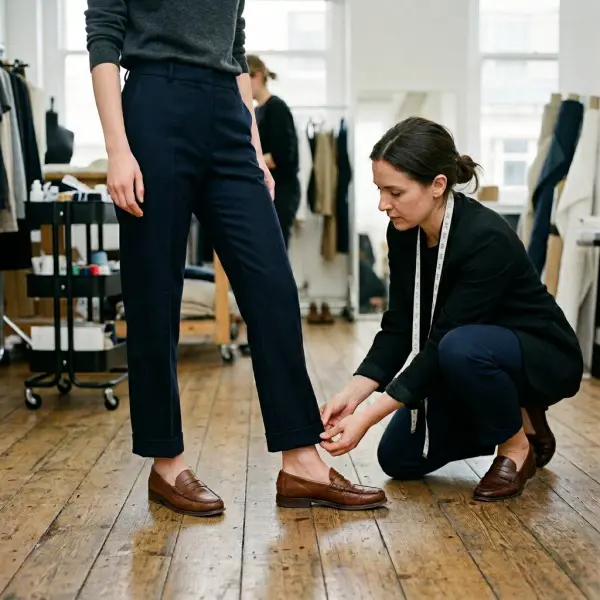
The garment hem should be reviewed with the exact sample shoe. A low-profile product can disappear under a long trouser, while a thick sole may change the intended break. Styling content also needs climate credibility: a backless loafer shown for wet commuting or a satin flat used as an all-weather staple may undermine trust.
How Can Fashion Brands Apply These Trends Strategically?
Fashion brands should translate footwear trends into an assortment structure rather than copying every visible silhouette. The goal is to decide which products will provide volume, which will refresh the brand, and which are controlled experiments.
Build a Core, Seasonal, and Directional Mix
A core style should solve a repeatable need and be supported by reliable fit and replenishment. Seasonal versions can change material, color, or detail while reusing proven construction. Directional products may introduce a new toe, hybrid category, or unfamiliar upper, but should usually begin with tighter depth until demand is clearer.
For example, a retailer could retain a proven everyday sneaker, add a slim suede version for seasonal relevance, and test a small sneakerina capsule. A loafer range might keep a structured black core, offer a soft brown variation, and trial a backless style in warm-weather channels.
Source to the Product Promise
Slim soles, unlined uppers, mesh, satin, and backless constructions present different production risks. Teams should confirm outsole availability, minimums, material consistency, bonding, abrasion, relevant colorfastness, reinforcement, lining, and packing. Minimal construction can expose defects.
Sustainability claims also require discipline. A shoe should not be called sustainable because it uses one recycled component, one bio-based material, or less material by weight. Brands need product-specific evidence and should consider durability, repair, production, packaging, transport, and end-of-life limitations before making broader claims.
Make Fit Information Category-Specific
Sneakers, loafers, and flats fail differently. A sneaker may be too narrow in the forefoot; a loafer may slip at the heel or press across the vamp; a flat may gap, rub at the topline, or lack toe room. Fit notes should describe these patterns clearly and consistently.
Where possible, brands should record last measurements, wearer feedback, material stretch, sock assumptions, and size conversions. Customer-service and return-reason data can then be linked to specific construction features rather than summarized only as “too small” or “uncomfortable.”
Merchandise the Lifestyle Without Overpromising
The strongest product stories show why a shoe fits a routine: a slim sneaker under tailoring, a loafer for polished daily dressing, or a Mary Jane that stays visually light while offering an adjustable strap. These narratives become more effective when the use case is specific and believable.
The next article in this cluster explores how fashion brands build lifestyle stories around footwear in greater depth. At the product level, the immediate rule is straightforward: performance language, comfort claims, and occasion imagery must be supported by the construction customers receive.
Common Trend-Planning Mistakes
Declaring One Silhouette “Over” Too Early
Editorial fashion often moves faster than mainstream replacement cycles. A slim sneaker may receive greater coverage while chunky performance shoes continue to sell. Removing proven styles solely because a new silhouette appears more current can create a gap in the assortment. The better response is to compare sell-through, margin, search, returns, and customer feedback before reducing depth.
Treating All Flat Shoes as Comfortable
Low heel height does not guarantee comfort. Toe shape, footbed, upper pressure, sole flexibility, fit security, weight, and duration all matter. Marketing every flat as an all-day walking shoe can create a gap between imagery and product experience. Comfort wording should follow wearer testing under the intended conditions.
Copying Surface Details Without Understanding Construction
A soft loafer, mesh flat, or ultra-slim sneaker may appear simple, yet require precise materials and workmanship. Weak reinforcement, visible adhesive, unstable toplines, poor sole bonding, or inconsistent lasting become more obvious in minimal designs. Suppliers need technical specifications and approval standards, not only reference images.
Buying Too Many Similar Hybrids
Hybrid shoes can create excitement, but several near-identical versions may compete for a small experimental customer segment. Teams should map each style by use, fit, material, price, and visual role before committing depth. If two products answer the same need, one may be enough.
Applying a Global Trend Without Regional Evidence
A backless loafer, satin flat, or narrow sneaker may perform differently across climates, transport patterns, workplace rules, and fit expectations. Global campaign visibility should be treated as a hypothesis. Regional teams need room to adjust color, material, size curve, imagery, and inventory.
What the Trend Evidence Does and Does Not Show
Current runway and fashion-editorial coverage supports the observation that slim sneakers, soft or backless loafers, ballet-derived hybrids, and varied flat shoes are visible directions in 2026. It does not prove that each category is growing in every market, price tier, gender segment, or channel.
Likewise, U.S. performance-footwear growth shows that active product remains commercially important in that market. It does not establish global demand or guarantee success for a fashion brand entering technical footwear. Performance products require capability, credibility, and testing that a lifestyle label may not possess.
Before acting, teams should verify:
- Their own sell-through, margin, markdown, return, and repeat-purchase data.
- Search and site-navigation behavior by market and device.
- Size-curve performance and fit complaints by construction.
- Competitor depth, pricing, replenishment, and time on site.
- Climate, calendar, dress code, and transport realities.
- Supplier capability, minimums, lead time, testing, and quality consistency.
Trend awareness becomes commercially useful only when it is combined with evidence from the business itself. Editorial signals can help a team ask better questions; they should not replace demand planning.
Frequently Asked Questions
Are slim sneakers replacing chunky sneakers?
No, not across the entire market. Slim, retro-inspired sneakers are a strong current fashion direction because they work with lighter proportions and bridge casual and polished dressing. Chunky and technical sneakers still serve customers seeking cushioning, sport credibility, outdoor references, or stronger visual weight. A retailer should evaluate both by customer segment, intended use, and relevant sales channels today. The practical decision is usually about adjusting the assortment balance, not deleting one silhouette because another is receiving more editorial attention.
Are loafers considered flat shoes?
Many loafers are technically flat or low-heeled shoes, so the categories can overlap. Retailers often separate “loafers” from “flats” because customers recognize different visual and use conventions: loafers usually have a defined vamp and slip-on dress-shoe heritage, while the flat category commonly includes ballet flats, Mary Janes, glove shoes, and other low constructions. Navigation should reflect how customers search, but filters can allow overlap. A low-heel measurement, fastening type, toe shape, and construction description provide more precision than category labels alone.
What is a sneakerina?
A sneakerina is a hybrid shoe combining ballet-flat cues with sneaker construction or details. It may use a low-cut or delicate silhouette alongside laces, straps, technical panels, or a rubber outsole. Some versions look like slim sneakers; others resemble ballet flats placed on sport-derived soles. The name describes an aesthetic category, not a performance standard. Customers should still verify fit, flexibility, traction, cushioning, and intended activity. Brands should avoid suggesting that every sneakerina offers the support of an athletic shoe.
Which everyday footwear trend is safest for a small brand to test?
The lowest-risk option is usually a controlled update to a construction the brand already understands. That might be a slimmer colorway of a proven sneaker, a softer material on an established loafer, or a strap update to an existing flat. Reusing a validated last or outsole can reduce development uncertainty, although the new material or upper still requires testing. A completely new hybrid category may generate attention but brings greater fit, sourcing, classification, and demand risk. Start with limited depth and define success before launch.
How should brands forecast demand for a footwear trend?
Use multiple signals rather than a single runway, influencer, or search spike. Combine historical category sales, full-price sell-through, margin, return reasons, waitlists, site search, customer-service questions, competitor assortment, regional seasonality, and supplier lead times. Separate color or material novelty from genuinely new construction because the inventory risk differs. Forecast at style-color-size level where data allows, and create a test-and-repeat plan if suppliers can support it. Trend visibility indicates interest; it does not automatically indicate purchasable demand at the brand’s price.
Can flat shoes be marketed as better for foot health?
Not as a broad category claim. A low heel does not automatically make a shoe healthier, more supportive, or suitable for every wearer. Fit, toe space, cushioning, sole stiffness, stability, activity, existing conditions, and duration all affect the experience. Health or therapeutic claims may also require appropriate evidence and regulatory review depending on the market. Fashion brands should describe measurable construction features and tested use honestly. Customers with pain or medical concerns should seek advice from a qualified health professional rather than relying on trend-based marketing.
Conclusion
The current interest in slim sneakers, refined trainers, soft loafers, backless constructions, ballet flats, Mary Janes, and dance-inspired shoes reflects a broader expansion of everyday footwear. Familiar categories are becoming lighter, more flexible in styling, and less rigidly separated from one another.
That does not produce a single winning silhouette. Performance footwear remains important, classic loafers still have a role, and the practical limitations of delicate flats have not disappeared. What has changed is the range of credible choices between athletic, casual, and polished dressing.
For fashion businesses, the strongest response is disciplined rather than reactive. Preserve proven core products, introduce seasonal relevance through controlled updates, and test directional hybrids at a scale appropriate to the evidence. Fit, construction, climate, regional behavior, and product truth should determine whether an attractive trend becomes a durable commercial opportunity.





Comments 0
Leave a CommentSend Comment
Anda harus Login terlebih dahulu untuk dapat memberikan komentar.