
Why Breathable and Quick-Dry Fabrics Matter in Modern Sportswear
Quick Answer
Breathable and quick-dry fabrics matter in modern sportswear because they help garments manage heat, sweat, and comfort during movement. For football apparel, training tops, athleisure products, and World Cup-season fanwear, these fabric properties can influence how comfortable a garment feels in crowded stadiums, outdoor viewing events, humid weather, gym sessions, and everyday active use.
Breathability generally refers to how well a fabric allows air or moisture vapor to move through it. Quick-dry performance refers to how efficiently a fabric releases moisture after it becomes wet. Neither quality depends on fiber alone. Polyester, nylon, cotton blends, mesh, and engineered knits can all behave differently depending on yarn type, knit structure, weight, finishing, garment construction, and testing method.
For fashion businesses, breathable and quick-dry fabrics are not just technical details. They affect product positioning, customer satisfaction, return risk, performance claims, pricing, sourcing decisions, and brand credibility. The smartest approach is to match the fabric performance to the product promise, then verify claims before using terms such as “breathable,” “moisture-wicking,” or “quick-dry” in marketing.

Why This Topic Matters During World Cup Season
The FIFA World Cup 2026 runs from 11 June to 19 July, according to the official FIFA World Cup 2026 match schedule. That timing places much of the tournament in summer conditions across North America, where heat, humidity, travel, crowds, and outdoor fan activity can shape what people expect from football-inspired apparel.
This does not mean every fan shirt needs to perform like a professional match jersey. But it does mean comfort becomes more visible. A supporter top worn during a viewing party, a stadium queue, a street celebration, or a weekend football game may be judged not only by its graphic design but also by whether it feels hot, sticky, heavy, or slow to dry.
Current reporting around the 2026 tournament has highlighted heat concerns for players and fans, including the use of hydration breaks in matches and warnings around high heat conditions in several host locations Reuters reporting on World Cup heat and hydration concerns. For apparel businesses, this context gives breathable and quick-dry materials a timely commercial relevance.
The opportunity is wider than official football merchandise. Fashion brands can create match-day capsules, gym-to-street sportswear, fanwear tops, lightweight jackets, active polos, training-inspired shirts, and football-influenced athleisure. The difference between a product that sells once and a product that customers continue wearing often comes down to comfort after the first hour of use.
What Are Breathable and Quick-Dry Fabrics?
Breathable and quick-dry fabrics are textile materials designed or selected to help manage air movement, moisture vapor, liquid sweat, and drying behavior in order to keep garments more comfortable during active or warm conditions. The exact performance depends on fiber, yarn, fabric structure, finishing, garment design, and the wearer’s environment.
Breathability is often misunderstood. It does not simply mean that a fabric is thin. A very thin fabric can still feel clammy if it traps moisture against the skin or has poor vapor movement. A slightly more structured fabric may feel more comfortable if it allows air circulation, spreads moisture across the surface, and dries efficiently.
Quick-dry performance is also more complex than a label suggests. A quick-dry fabric usually absorbs less water than cotton or spreads moisture across a wider surface area so evaporation can happen more efficiently. Polyester and nylon are often used for this reason, but not every polyester or nylon fabric dries at the same rate. A dense construction, heavy finishing, brushed surface, coating, or thick print can slow drying.
For sportswear brands, the main point is simple: “breathable” and “quick-dry” are performance claims, not decoration. They should be supported by material choice, product testing, and honest communication.
Breathability vs Quick-Dry: What Is the Difference?
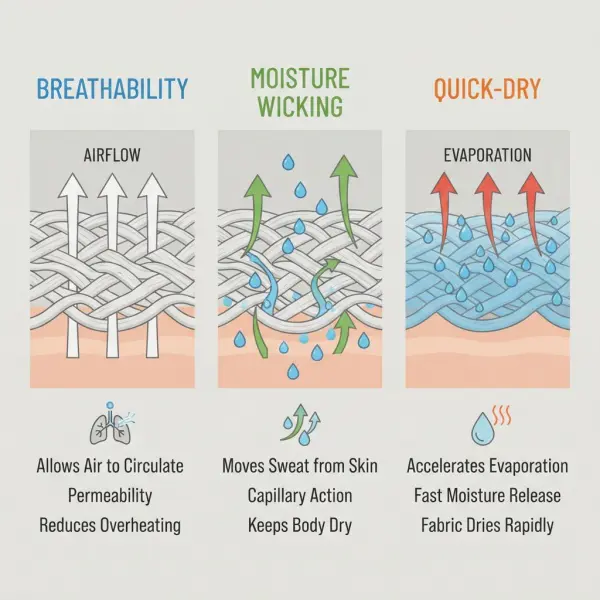
Breathability and quick-dry performance are related, but they are not the same. Breathability is about how well heat, air, or moisture vapor can move through or away from the fabric. Quick-dry performance is about how quickly the fabric releases liquid moisture after it becomes wet.
A garment can be breathable but not especially quick-drying. For example, an open cotton knit may allow air movement but still absorb moisture and take longer to dry. A garment can also dry quickly but feel less breathable if the construction is too dense or the fit traps heat.
For football apparel, both qualities matter because wearers may experience heat and sweat at the same time. A fan in a crowded outdoor screening may not be sprinting, but the shirt can still become damp. A training top needs to manage sweat during movement. A warm-up jacket needs ventilation so the wearer does not overheat before or after activity.
|
Fabric Property |
What It Means |
Why It Matters in Sportswear |
What Brands Should Verify |
|
Breathability |
Air or moisture vapor can move through or away from the fabric |
Helps reduce heat buildup and clammy sensation |
Fabric structure, ventilation zones, fit, lining, coating |
|
Moisture wicking |
Liquid moisture moves away from the skin-facing side |
Helps reduce wet cling during activity |
Wicking finish, yarn structure, inner and outer fabric behavior |
|
Quick-dry performance |
Fabric releases moisture efficiently after becoming wet |
Helps garment feel lighter and recover faster after sweat or washing |
Drying rate test, fabric weight, fiber content, finishing |
|
Ventilation |
Garment design allows airflow through openings or mesh zones |
Supports comfort in heat and movement |
Mesh placement, seam design, layering, opacity |
|
Moisture absorption |
Fiber or fabric takes in liquid moisture |
Can improve soft comfort but may slow drying |
Fiber type, fabric weight, intended use |
This distinction matters commercially. A brand should not describe a product as quick-dry simply because it has mesh panels. Mesh may improve airflow, but drying behavior depends on the whole fabric system.
Why Breathable Fabrics Matter in Modern Sportswear
Breathable fabrics matter because sportswear is worn in situations where the body produces heat and moisture. When heat and moisture cannot escape, even a visually attractive garment can feel uncomfortable after a short period of use.
In football apparel, breathability is especially important because garments are often worn in layered or crowded environments. A fan may wear a jersey over an undershirt. A player may wear a training top under a bib or jacket. A casual customer may wear a football-inspired shirt during travel, commuting, or weekend activity. These are not identical use cases, but they all create a comfort challenge.
From a business perspective, breathability affects repeat wear. A customer may buy a football-themed top because of color, team identity, or World Cup excitement. But they will keep wearing it if it feels good beyond the event. That is where fabric structure, garment fit, and ventilation details create value.
Breathability can be improved through several design and material choices:
- Using lighter knit structures where appropriate.
- Adding mesh or micro-mesh panels in high-heat zones.
- Avoiding overly dense prints across large sweat areas.
- Choosing fabric weights that match the climate and activity level.
- Designing a fit that allows movement and air circulation.
- Avoiding linings, coatings, or trims that trap heat unnecessarily.
The best breathable sportswear does not rely on one feature alone. It usually combines fabric selection, panel placement, fit, and finishing into one coherent product.
Why Quick-Dry Fabrics Matter in Modern Sportswear
Quick-dry fabrics matter because sweat, rain, washing, and repeated wear can change how a garment feels. A fabric that holds moisture for too long can become heavy, clingy, cold after activity, or uncomfortable in humid conditions.
For modern sportswear customers, quick-dry performance is often expected even when the garment is not used for intense sport. Gym users, football fans, travelers, commuters, and athleisure customers all value clothing that feels fresh and recovers quickly after moisture exposure. This is one reason polyester and nylon remain common in activewear.
In football-related apparel, quick-dry behavior is useful for three product groups. First, training tops and jerseys need to manage sweat during activity. Second, fanwear worn in warm climates benefits from fabrics that do not stay damp for too long. Third, travel-friendly sportswear becomes more practical when customers can wash and rewear items quickly.
But brands should be careful. Quick-dry does not automatically mean premium. Some quick-dry fabrics can feel plasticky, noisy, too thin, or overly synthetic. Product teams must balance drying behavior with handfeel, drape, opacity, print quality, and price.
A fabric that dries quickly but feels unpleasant will not create loyalty.
The Role of Moisture Wicking
Moisture wicking refers to the movement of liquid moisture away from the skin-facing side of the fabric. In sportswear, this is usually intended to reduce wet cling and spread moisture across a larger surface area so it can evaporate more efficiently.
Wicking can come from fiber behavior, yarn structure, fabric construction, or chemical finishing. Some polyester fabrics are finished to improve moisture transport. Some engineered knits use different inner and outer surfaces to move moisture directionally. The quality of this effect varies widely, which is why testing matters.
A common mistake is to treat “moisture-wicking” as the same as “breathable.” A fabric can wick moisture but still feel warm if the garment has poor ventilation. Another mistake is assuming that all synthetic fabrics wick well. Some synthetics repel water so strongly that moisture stays as droplets rather than spreading effectively unless the fabric is engineered or finished correctly.
For brands, the safest wording is precise. Instead of vague claims, product descriptions can explain the intended benefit: “lightweight knit designed to help move moisture away from the skin” or “mesh-backed paneling for improved airflow during warm conditions.” That language is clearer and less likely to overpromise.
How Fabric Structure Changes Performance
Fiber content is only the starting point. Fabric structure often determines whether a sportswear material feels breathable, clingy, cool, heavy, soft, or technical.
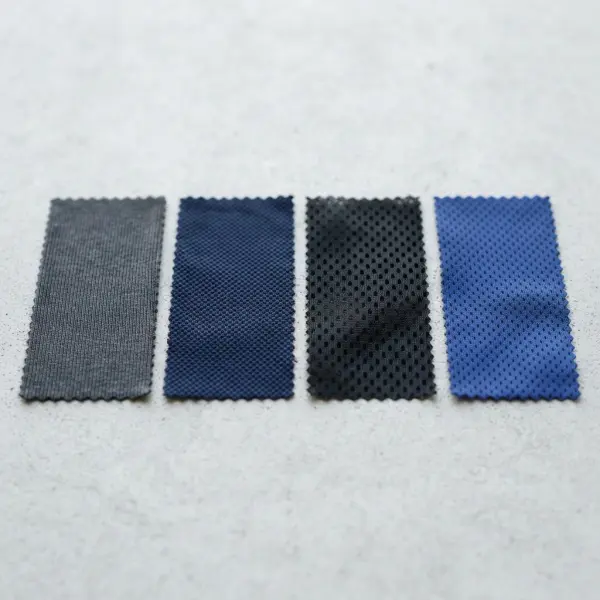
A polyester interlock may provide a smooth surface and strong print clarity, but it may feel warmer than a more open bird-eye mesh of similar weight. A pique knit can add texture and air pockets, making it useful for active polos and football-inspired casual tops. A micro-mesh can create ventilation without looking too transparent. A double-knit fabric can offer structure and durability, but may not be ideal for high-heat conditions if too dense.
This is why sourcing teams should compare fabric samples physically, not only by composition. A specification sheet that says “100% polyester, 150 gsm” does not fully explain breathability, drying rate, or comfort. Two fabrics with the same fiber and weight can perform differently because of yarn, knitting, finishing, and surface texture.
For football apparel, several fabric structures are worth understanding:
- Interlock knit for smooth jersey-style tops and sublimation-friendly surfaces.
- Bird-eye knit for subtle ventilation and sporty texture.
- Pique knit for football polos and lifestyle sportswear.
- Mesh for ventilation panels or highly sporty fanwear.
- Jacquard knit for texture, identity, and premium detailing.
- Double knit for structured tracksuits, jackets, and heavier sportswear pieces.
The product purpose should guide the structure. A stadium-ready lifestyle polo does not need the same fabric as a high-sweat training top. A premium retro football shirt may intentionally use more structure, while a summer fan jersey may need lightness and airflow.
How Testing Supports Breathable and Quick-Dry Claims
Testing matters because comfort claims can easily become vague. If a product is marketed as quick-dry, moisture-wicking, breathable, or performance-ready, the brand should have a reasonable basis for that claim.
AATCC TM195 is a recognized test method for measuring, evaluating, and classifying liquid moisture management properties of textile fabrics AATCC TM195 liquid moisture management test method. AATCC TM201 is used to determine the drying rate of fabrics with a heated plate method AATCC TM201 drying rate of fabrics. These standards show that moisture behavior and drying rate are measurable textile properties, not merely marketing language.
Not every small fashion brand will run every lab test for every capsule collection. That is realistic. But brands can still develop a practical validation process. Supplier test reports, internal wear trials, wash testing, drying comparisons, and print durability checks can reduce risk. For larger sportswear programs, lab testing becomes more important because claims are more visible and buyer expectations are higher.
A practical validation workflow may look like this:
- Request supplier data for fabric composition, weight, shrinkage, colorfastness, and moisture-related performance.
- Compare fabric samples after washing, sweating, and drying.
- Test decoration methods, especially prints, numbers, and heat transfers.
- Wear-test the garment in warm conditions and during movement.
- Confirm whether performance claims are supported before publishing product descriptions.
- Keep documentation for recycled content, branded fibers, or technical finishes.
This type of discipline helps protect both customer trust and brand reputation. It also helps sales teams communicate product value without relying on exaggerated wording.
What Breathable and Quick-Dry Fabrics Mean for Football Apparel
Football apparel sits at the intersection of performance, identity, and emotion. A football shirt is not only a top. It can represent a team, a country, a player, a memory, a match-day ritual, or a shared community moment.
That emotional layer does not remove the need for comfort. If anything, it increases it. People wear football apparel for long periods: before the match, during the match, after the match, and often again the next day. During World Cup season, the same shirt might be worn to a cafe, gym, airport, stadium, office event, or family gathering.
Breathable and quick-dry properties help football apparel remain wearable across those settings. A training jersey may need performance. A fanwear top may need everyday comfort. A limited-edition capsule may need both visual impact and material credibility.
This is where article one in the cluster, best sportswear fabrics for football apparel during World Cup season, provides the broader material foundation. The current article goes deeper into why moisture and airflow behavior matter once those materials are put into real wearing conditions.

Business Implications for Fashion Brands
Breathable and quick-dry fabrics affect more than product comfort. They influence sourcing, price architecture, merchandising, customer education, and after-sales satisfaction.
For brands, one of the biggest advantages is clearer product segmentation. Not every item in a football-inspired collection needs the same performance level. A brand can create a tiered range: basic fanwear, upgraded breathable jersey, premium recycled polyester capsule, and technical training top. Each tier can use a different fabric and a different message.
This helps avoid two common problems. The first is overengineering, where a brand uses expensive technical fabric for a product that customers wanted mainly as affordable fanwear. The second is underdelivering, where a product is marketed as performance apparel but uses fabric that feels uncomfortable in heat or movement.
A stronger approach is to align claim, fabric, and price:
|
Product Type |
Fabric Direction |
Main Customer Expectation |
Best Marketing Focus |
|
Casual fan tee |
Cotton-polyester or soft polyester jersey |
Easy daily wear |
Comfort, color, match-day styling |
|
Jersey-inspired top |
Lightweight polyester knit or pique |
Sporty look with comfort |
Breathability, print clarity, easy care |
|
Training top |
Moisture-wicking polyester or mesh-panel knit |
Movement and sweat management |
Quick-dry, airflow, active use |
|
Premium capsule |
Recycled polyester, jacquard, engineered knit |
Better handfeel and story |
Material detail, design, limited edition |
|
Stadium layer |
Nylon or polyester woven with ventilation |
Lightweight outerwear |
Packability, layering, weather readiness |
This segmentation is especially useful for small and mid-sized brands. Instead of competing directly with global sportswear giants, they can offer thoughtful football-inspired products that fit their audience, climate, and price point.
Sourcing Considerations for Breathable and Quick-Dry Sportswear
Sourcing breathable and quick-dry fabrics requires more than asking suppliers for “dry-fit” material. In many markets, terms like “dry fit” or “cool fabric” are used loosely. Product teams should translate those labels into measurable or observable specifications.
A sourcing team should ask for fabric weight, composition, construction, finishing, test results, shrinkage, colorfastness, pilling resistance, and print compatibility. For stretch fabrics, recovery and heat sensitivity also matter. For mesh, opacity and snagging risk should be checked carefully. For recycled polyester, documentation and certification scope should be verified.
Small differences can have large production consequences. A fabric that dries well may still fail if it pills quickly. A breathable mesh may look too transparent after stretching. A moisture-wicking finish may degrade after repeated washing. A large chest print may block airflow exactly where the garment needs ventilation.
Before approving bulk production, brands should test fabric and garment together. Fabric performance can change once the material is cut, sewn, printed, lined, or layered.
Common Mistakes Brands Make
Brands often make mistakes with breathable and quick-dry fabrics because the terminology sounds simple. In reality, these are technical comfort attributes that depend on multiple variables.
Mistake 1: Using Technical Claims Without Proof
Many brands write “quick-dry,” “breathable,” or “moisture-wicking” because those words sound attractive. The risk is that customers may judge the claim during actual wear. If the shirt feels hot or stays damp, trust declines.
The better approach is to verify the claim through supplier data, testing, or structured wear trials. Marketing should follow evidence, not the other way around.
Mistake 2: Assuming Thin Fabric Is Always Better
Thin fabric can feel light, but it may also become transparent, clingy, unstable, or less durable. In some cases, a slightly more structured fabric with better moisture spreading and airflow can feel more comfortable.
Brands should evaluate opacity, recovery, seam stability, print performance, and handfeel—not only weight.
Mistake 3: Ignoring the Impact of Printing
Football apparel often uses large graphics, numbers, badges, stripes, or sponsor-style layouts. These decoration methods can change fabric performance. A heavy print layer may reduce breathability or make a lightweight fabric feel stiff.
Designers and production teams should test prints on the actual fabric, not only on a sample base. This is especially important for heat transfer numbers and sublimated graphics.
Mistake 4: Choosing Performance Fabric for the Wrong Market
A high-performance quick-dry fabric may not be the right choice for every customer. Some fanwear buyers prefer softness, modesty, thicker fabric, or a more casual handfeel. A very technical fabric may feel too sporty for lifestyle retail.
The right question is not “Which fabric is most advanced?” The better question is “Which fabric matches how this customer will actually wear the garment?”
Mistake 5: Forgetting Wash Durability
A fabric may perform well at first but lose moisture-wicking behavior, softness, color, or shape after repeated washing. Since sportswear is washed frequently, durability matters.
Brands should test samples after multiple wash cycles before committing to claims. A product that performs only once is not a strong sportswear product.

What Brands Should Verify Before Using Performance Claims
Performance language should be specific, defensible, and matched to the garment. A product description can still be appealing without exaggerating. In fact, more precise language often feels more credible.
Before using breathable or quick-dry claims, brands should verify:
- Whether the fabric has supplier-backed or lab-backed test data.
- Whether the garment still performs after printing or decoration.
- Whether the fabric remains comfortable after several wash cycles.
- Whether breathability is affected by lining, coating, or layering.
- Whether the claim applies to the whole garment or only certain panels.
- Whether the garment is meant for active sport, casual fanwear, or lifestyle use.
- Whether customers in the target climate will experience the benefit.
This last point is important. A quick-dry jersey may be valuable in humid climates, gym environments, or summer viewing events. In a colder market, customers may care more about layering, handfeel, or warmth. The same fabric benefit has different commercial value depending on region and use case.
Practical Application: Building a Better Sportswear Fabric Strategy
Fashion businesses can apply breathable and quick-dry fabric insights by building a material decision framework before design finalization. This prevents the common problem of choosing fabrics after the silhouette and artwork have already been approved.
A practical framework begins with use case. Is the garment for training, fanwear, travel, retail lifestyle, school sports, community clubs, or premium capsule collections? Each use case needs a different balance of airflow, drying, softness, opacity, stretch, durability, and cost.
For a World Cup-inspired collection, the framework may look like this:
- Training-inspired jersey: lightweight polyester knit, moisture-wicking finish, mesh zones, tested print durability.
- Casual supporter shirt: soft polyester jersey or cotton-poly blend, good colorfastness, comfortable handfeel.
- Premium fanwear top: textured knit, recycled polyester option, refined trims, controlled graphic placement.
- Warm-weather viewing apparel: breathable mesh or bird-eye fabric, looser fit, minimal heavy print coverage.
- Travel-friendly sportswear: quick-dry polyester or nylon blends, easy-care construction, wrinkle resistance.
This framework helps teams make design decisions with fewer conflicts. The designer understands the visual direction. The sourcing team understands performance needs. The manufacturer understands construction risks. The marketing team understands which claims are safe to communicate.
It also reduces waste. Fewer unsuitable samples, fewer failed decoration tests, fewer last-minute fabric substitutions.
How This Topic Connects to Jersey Materials and Style
Breathability and quick-dry performance are only part of the football jersey equation. A jersey also depends on fit, panel shape, collar construction, sleeve design, seam placement, trims, graphics, and brand identity.
That is why the next article in this cluster, how football jersey materials influence comfort, performance, and style, should focus more directly on jersey construction and the relationship between material and final garment experience. A fabric may be breathable in swatch form, but the finished jersey may feel different after cut-and-sew decisions are made.
The commercial lesson is clear: material performance and garment design must work together. A quick-dry fabric cannot compensate for a poor fit. A breathable mesh panel cannot fix an uncomfortable seam. A premium recycled polyester story will not help if the shirt feels stiff or poorly finished.
Modern sportswear succeeds when technical performance, comfort, style, and product honesty meet in the same garment.
FAQ
What does breathable fabric mean in sportswear?
Breathable fabric in sportswear refers to material that allows air or moisture vapor to move through or away from the garment, helping reduce heat buildup and clammy discomfort. Breathability depends on fabric construction, fiber type, finishing, garment fit, and ventilation design. A thin fabric is not automatically breathable, and a synthetic fabric is not automatically uncomfortable. For fashion brands, the safest approach is to test the fabric in realistic wear conditions before claiming breathability.
What does quick-dry fabric mean?
Quick-dry fabric refers to material that releases moisture faster after becoming wet from sweat, washing, rain, or humidity. It often works by absorbing less water, spreading moisture across the surface, or using fiber and fabric structures that support evaporation. Polyester and nylon are commonly used in quick-dry sportswear, but drying speed varies by fabric weight, knit structure, finishing, and garment design. Brands should verify quick-dry claims through supplier data, lab testing, or practical drying comparisons.
Is moisture-wicking the same as quick-dry?
Moisture-wicking and quick-dry are related but not identical. Moisture-wicking refers to moving liquid moisture away from the skin-facing side of the fabric. Quick-dry refers to how fast the fabric releases moisture after it becomes wet. A fabric may wick moisture well but dry at a moderate rate, or dry quickly without feeling especially breathable. In sportswear, the best comfort often comes from combining moisture transport, drying behavior, airflow, and suitable garment fit.
Are breathable fabrics always better for football apparel?
Breathable fabrics are usually valuable for football apparel, but they are not automatically better in every product. A high-airflow mesh may be ideal for training tops but too transparent or too casual for premium fanwear. A structured pique may feel better for a lifestyle football polo. A heavier retro jersey may intentionally prioritize style and durability over maximum airflow. Brands should match breathability to the garment’s purpose, customer expectation, and climate.
Why do many sportswear brands use polyester for quick-dry clothing?
Many sportswear brands use polyester because it absorbs relatively little moisture compared with cotton, can be knitted into lightweight structures, supports vivid color and sublimation printing, and can be finished for moisture management. It is also commercially scalable. However, not all polyester fabrics perform equally. A dense or poorly finished polyester may feel hot, while a well-developed polyester knit can feel light and comfortable. The fabric construction and finishing matter as much as fiber content.
Can cotton be breathable?
Cotton can be breathable in the sense that many cotton fabrics allow air movement and feel comfortable in casual wear. However, cotton also absorbs moisture, which can make it feel heavier and slower to dry when wet. This is why cotton may work well for casual supporter tees but is usually less suitable for high-sweat training jerseys. Cotton-polyester blends can offer a middle ground for lifestyle sportswear, depending on fabric weight and construction.
How should brands test breathable and quick-dry fabrics?
Brands should combine supplier documentation, lab testing when possible, and practical wear testing. They can review fabric specifications, test drying behavior after controlled wetting, wash samples repeatedly, check print impact, and wear-test garments in warm or active conditions. Larger sportswear programs may use recognized textile test methods for moisture management and drying rate. Smaller brands can still reduce risk by comparing samples carefully before bulk production.
Do quick-dry fabrics prevent odor?
Quick-dry fabrics do not automatically prevent odor. Odor is influenced by sweat, bacteria, fiber type, fabric construction, washing behavior, and antimicrobial finishes if used. Some synthetic fabrics can retain odor if not engineered or cared for properly. Quick drying may help reduce the time a garment stays damp, but brands should not claim odor control unless the fabric or finish is designed and tested for that purpose. Care instructions also matter.
Conclusion
Breathable and quick-dry fabrics matter because modern sportswear is expected to work in real life, not only in product photos. Customers wear football apparel in heat, crowds, travel, training, casual outings, and repeated wash cycles. Comfort becomes part of the product value.
For brands, the lesson is not to use technical language as decoration. Breathability, moisture wicking, and quick-dry performance should be connected to fabric structure, garment design, supplier data, testing, and honest product positioning. A fanwear shirt does not need to behave like an elite match jersey, but it should still match the comfort promise made to customers.
World Cup season makes this especially relevant. Football-inspired apparel can capture attention quickly, but the products that stay in rotation after the tournament are usually the ones that feel good, wash well, and communicate their material benefits clearly.
The best sportswear fabric strategy is practical: define the use case, choose the right material, test the finished garment, and make claims that the product can genuinely support.




Comments 0
Leave a CommentSend Comment
Anda harus Login terlebih dahulu untuk dapat memberikan komentar.