
Jewelry Market Outlook 2026: Trends, Growth Drivers, Risks, and Strategy for Fashion Brands
Introduction
The jewelry market in 2026 is becoming one of the most strategically important categories in fashion. While apparel brands continue to face pricing pressure, inventory risk, and slower discretionary spending, jewelry is gaining attention because it combines emotional value, long-term perceived worth, personal expression, and gifting behavior.
McKinsey’s State of Fashion 2026 highlights jewelry as a standout fashion category, noting that its unit sales growth is outpacing other fashion segments and that demand is being supported by investment-minded consumers, self-gifting, and personal expression. At the same time, Bain expects the broader luxury market to return to growth in 2026, with jewelry outperforming partly because price increases have been more justifiable than in many leather goods or apparel categories.
For fashion brands, this matters because jewelry is no longer only an accessory add-on. It is becoming a margin strategy, a customer-retention tool, a brand-positioning asset, and a way to enter gifting, occasionwear, resale, personalization, and premium lifestyle categories.
Quick Answer
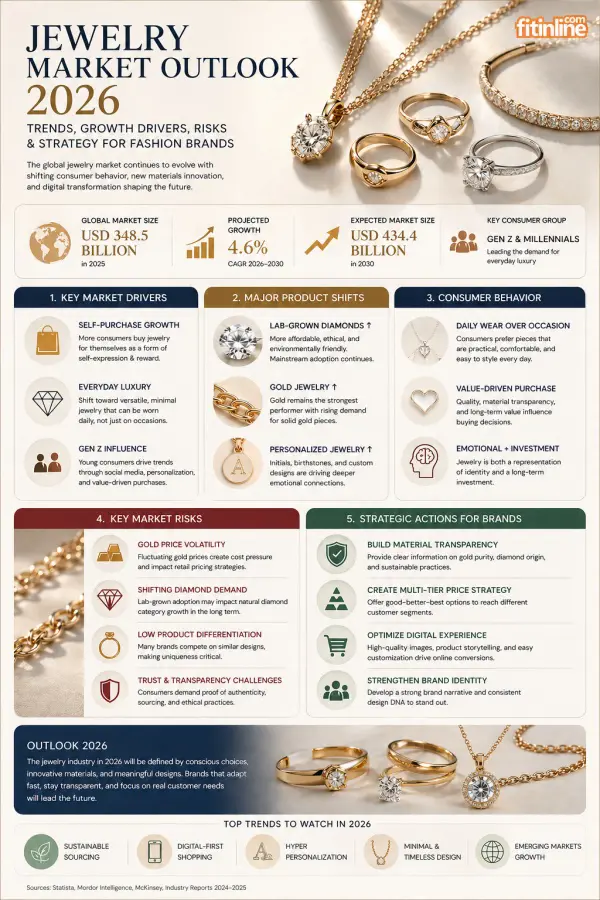
The jewelry market outlook for 2026 is positive but more complex than simple growth. Jewelry is expected to outperform many fashion categories because consumers increasingly see it as a long-lasting purchase, a self-expression product, and a more rational luxury item compared with fast-changing apparel or expensive handbags. Growth will be driven by self-purchase, Gen Z and millennial demand, accessible luxury, lab-grown diamonds, personalized pieces, gold jewelry, omnichannel retail, and stronger digital product storytelling.
However, brands must manage several risks: volatile gold prices, weakening natural diamond demand in some markets, rising competition from lab-grown diamonds, consumer skepticism around sustainability claims, and the need for better product transparency. The best opportunities in 2026 will belong to brands that offer clear value, credible materials, strong design identity, flexible price architecture, and trustworthy online shopping experiences.
Jewelry Is Moving From Accessory Category to Strategic Fashion Asset
Jewelry in 2026 should not be treated as a decorative afterthought. It is increasingly functioning as a strategic product category inside the wider fashion business. Unlike seasonal apparel, jewelry can carry stronger emotional meaning, longer product life, and higher perceived value. A ring, necklace, bracelet, or earring can represent identity, memory, status, relationship, heritage, or self-reward.
This shift matters because fashion consumers are becoming more selective. They are not only asking, “Is this product beautiful?” They are asking whether the purchase feels meaningful, durable, wearable, and worth the price. Jewelry answers many of these needs better than trend-led garments because it can be worn repeatedly across seasons.
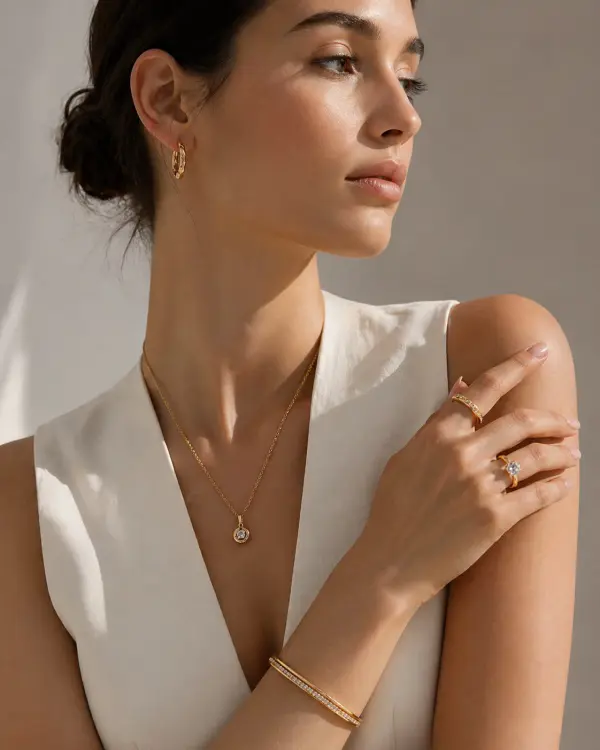
For fashion brands, jewelry offers several business advantages. It can increase average order value, complete a styling story, create gifting occasions, and help brands move into lifestyle positioning. A womenswear label, for example, can build a small jewelry capsule around its core aesthetic: minimalist gold hoops for quiet luxury, sculptural silver pieces for contemporary tailoring, or beaded handmade jewelry for resortwear.
The operational implication is clear: jewelry must be designed as part of the brand system, not added randomly. Materials, plating quality, packaging, care instructions, photography, warranty, and product naming all influence customer trust.
Takeaway: In 2026, jewelry works best when it strengthens brand identity, not when it is treated as generic accessory merchandise.
Self-Purchase and Everyday Luxury Will Drive Demand
One of the strongest jewelry market trends for 2026 is the rise of self-purchase. Jewelry is no longer dominated only by weddings, anniversaries, and formal gifting. More consumers, especially women, Gen Z, and millennials, are buying jewelry for themselves as daily wear, career milestones, identity expression, and personal celebration.
India is a useful signal of this structural change. According to the 2025 De Beers India Diamond Acquisition Study cited by The Economic Times, India has become the second-largest diamond jewelry market with 12% of global demand, behind the United States at 53%. The same report notes that 52% of acquired diamonds in India are now worn daily, while special-occasion-only wear has dropped sharply.
This matters globally because it shows how jewelry is moving from “locker luxury” to “wearable luxury.” Consumers want pieces that feel valuable but still practical enough for daily styling. This supports demand for stackable rings, tennis bracelets, pendant necklaces, small diamond jewelry, gold chains, charm jewelry, and versatile earrings.
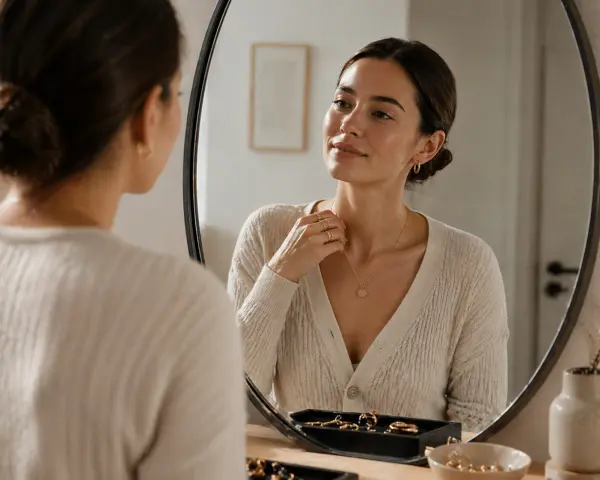
For fashion brands, the opportunity is to build jewelry around everyday use cases. Instead of only selling “statement pieces,” brands can offer “workday jewelry,” “travel jewelry,” “layering essentials,” or “occasion-to-everyday” collections. This helps customers understand when and how to wear the product.
Takeaway: Brands should design jewelry collections around real usage moments, not only around aesthetics.
Lab-Grown Diamonds Are Reshaping Price, Positioning, and Consumer Choice
Lab-grown diamonds will remain one of the most disruptive forces in the 2026 jewelry market. They offer consumers a lower-cost alternative to natural diamonds while still delivering visual appeal, technical precision, and modern sustainability narratives. For younger buyers, the appeal is often practical: larger stones, lower prices, and clearer ethical positioning.
However, the rise of lab-grown diamonds also creates positioning challenges. Natural diamonds rely on rarity, geological origin, heritage, and emotional symbolism. Lab-grown diamonds rely on accessibility, technology, traceability, and value. A brand cannot communicate both in the same way without confusing the customer.
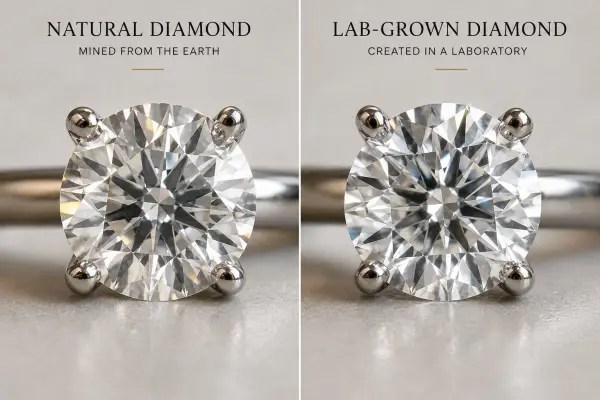
The pressure on natural diamonds is already visible. Reuters reported that lab-grown diamonds have captured 20% of the global diamond market by value and up to 50% by volume in the U.S. engagement ring segment, while natural diamond demand faces pressure from synthetic diamonds, weak Chinese demand, tariffs, and shifting consumer preferences toward gold jewelry.
For fashion brands, the decision is not simply whether to use natural or lab-grown stones. The better question is: what does the brand want the product to represent? A bridal or heirloom-focused brand may prioritize natural diamonds. A DTC brand targeting younger self-purchasers may use lab-grown diamonds to offer stronger price accessibility.
Takeaway: Lab-grown diamonds should be positioned with clarity: affordability, design freedom, and modern transparency—not vague luxury imitation.
Gold, Silver, and Material Trust Will Become More Important
Material trust will be a decisive factor in the jewelry market outlook for 2026. Consumers are more aware of plating quality, tarnishing, hypoallergenic claims, recycled metals, vermeil, sterling silver, stainless steel, and solid gold differences. Poor material communication can quickly damage customer trust, especially in online retail.
Gold jewelry remains attractive because it carries cultural, emotional, and perceived investment value. But gold price volatility creates pressure for brands. When raw material costs rise, brands must decide whether to increase prices, reduce weight, shift to hollow construction, use gold vermeil, or introduce lower-priced metal alternatives. Each choice affects perception.
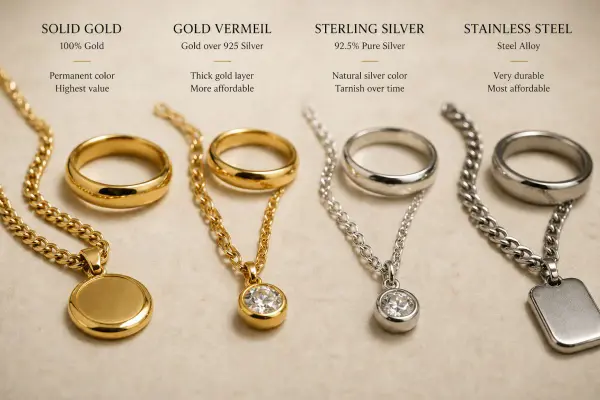
Silver and stainless steel also have opportunities. Sterling silver works well for accessible premium brands, especially when design is strong. Stainless steel is popular for waterproof, tarnish-resistant, everyday jewelry, but it must be positioned honestly. It should not be disguised as fine jewelry.
A practical example: a fashion startup may offer three tiers—stainless steel for entry price, gold vermeil for accessible premium, and solid gold for heirloom positioning. This creates price architecture without forcing all customers into one material category.
Takeaway: In 2026, jewelry brands must explain materials clearly because material transparency directly affects conversion, returns, and repeat purchase.
Digital Commerce, AI Search, and Product Data Will Shape Discovery
Jewelry is highly visual, but in 2026 it is also highly data-dependent. Consumers shopping online need confidence in dimensions, weight, closure type, stone size, metal composition, plating thickness, certification, care instructions, return policies, and styling context. Weak product pages create hesitation.
McKinsey notes that AI is disrupting fashion discovery and that brands will need semantically rich data and API-accessible content to remain visible to AI shopping agents and digital commerce systems. This is especially important for jewelry because consumers often search with detailed intent: “best everyday gold hoop earrings,” “lab-grown diamond pendant under $500,” or “hypoallergenic earrings for sensitive ears.”
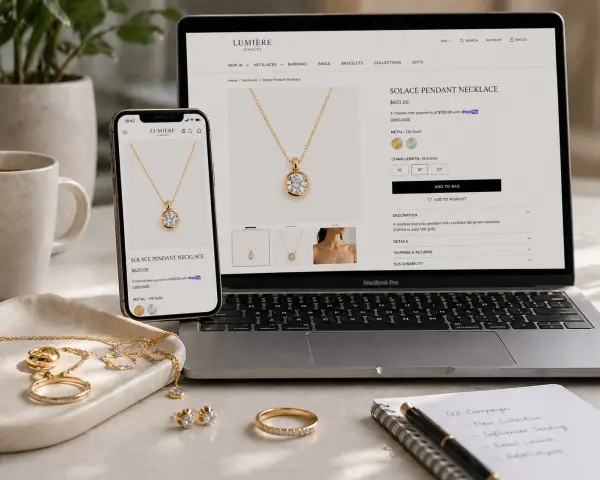
For brands, SEO and GEO are now commercial infrastructure. Product pages should include structured product descriptions, material specifications, FAQs, comparison guides, care content, and use-case language. A necklace page should not only say “elegant gold necklace.” It should specify chain length, clasp type, metal, finish, styling occasion, skin sensitivity considerations, and gift suitability.
Visual content also matters. Jewelry needs macro photography, scale shots on the body, packaging images, video try-ons, and comparison visuals. The more uncertainty a brand removes, the stronger the conversion potential.
Takeaway: Jewelry brands that combine strong visuals with structured product data will be more discoverable in both Google and AI-powered search.
Jewelry Market 2026 Decision Framework
|
Strategic Area |
2026 Opportunity |
Business Risk |
Best Action for Brands |
|
Everyday jewelry |
Higher repeat use and broader customer base |
Products may feel generic |
Build signature shapes, collections, and styling stories |
|
Lab-grown diamonds |
Accessible price and younger consumer appeal |
Confusion with natural diamond positioning |
Communicate value, origin, and use case clearly |
|
Gold jewelry |
Strong emotional and perceived investment value |
Gold price volatility |
Create tiered material options and transparent pricing |
|
Digital commerce |
Higher global reach and DTC scalability |
Low trust without product detail |
Add specs, videos, care guides, FAQs, and scale images |
|
Personalization |
Strong gifting and emotional value |
Operational complexity |
Start with initials, charms, birthstones, or engraving |
|
Sustainability |
Strong brand trust potential |
Greenwashing risk |
Use verified sourcing, recycled metal claims, and clear documentation |
Practical Application for Fashion Brands
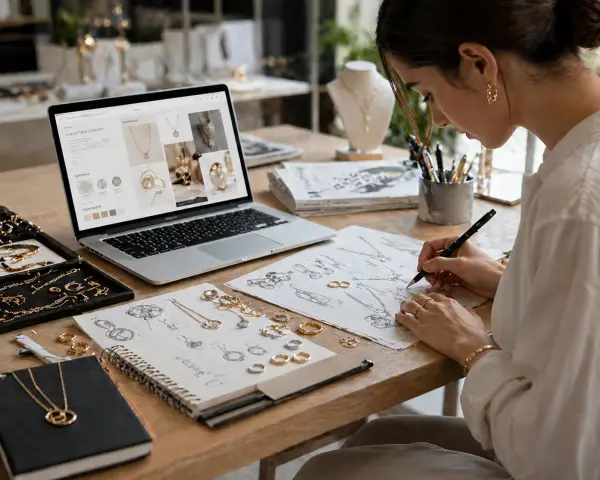
Fashion brands can apply the 2026 jewelry outlook by building jewelry as a connected business category. Start with the existing customer base: what do they wear, what price points do they accept, and what occasions do they buy for? A modest fashion brand may develop elegant brooches, scarf rings, and minimal gold-tone pieces. A resortwear brand may focus on shell-inspired necklaces, anklets, and handcrafted beaded jewelry. A tailoring brand may offer sculptural silver cuffs and refined earrings.
Next, define material tiers. Entry products can support volume, while premium pieces build brand elevation. Brands should also develop strong packaging because jewelry is often gifted. Even affordable jewelry feels more valuable when packaging, care cards, pouches, and product storytelling are well executed.
Operationally, brands should test small capsules before scaling. A 10-piece jewelry capsule can reveal demand by style, material, price, and channel. Track add-to-cart rate, return reasons, repeat purchase, gifting seasonality, and attachment rate with apparel orders.
Common Mistakes to Avoid
The first mistake is selling generic jewelry without a clear design identity. If the product looks like every marketplace item, the brand will compete only on price.
The second mistake is unclear material labeling. Customers need to know whether a piece is solid gold, gold plated, gold vermeil, sterling silver, brass, stainless steel, or alloy.
The third mistake is ignoring scale. Jewelry often looks different in close-up photography than it does on the body. Always include model shots or measurement references.
The fourth mistake is overclaiming sustainability. Recycled metal, ethical stones, and responsible sourcing claims must be specific and verifiable.
The fifth mistake is launching too many SKUs too quickly. Jewelry has size, plating, stone, supplier, and quality-control complexity. Start focused, test demand, then expand.
FAQ
1. What is the jewelry market outlook for 2026?
The jewelry market outlook for 2026 is generally positive, especially compared with many apparel categories. Jewelry is benefiting from self-purchase, gifting, long-term value perception, accessible luxury, lab-grown diamonds, and everyday wear trends. Consumers are looking for products that feel personal, durable, and emotionally meaningful. However, growth will not be automatic. Brands must manage material costs, product transparency, pricing, digital trust, and clearer differentiation between natural diamonds, lab-grown diamonds, gold, silver, and fashion jewelry.
2. Why is jewelry growing while some fashion categories are slowing?
Jewelry is growing because it offers emotional value and longer product life. Apparel can feel seasonal, trend-sensitive, and replaceable, while jewelry often feels more permanent and personal. Consumers may justify jewelry purchases as gifts, milestones, self-rewards, or investment-like items. Jewelry also works well across channels because it is small, giftable, collectible, and easier to ship than many apparel products. This makes it attractive for DTC brands, luxury houses, and fashion startups.
3. Are lab-grown diamonds a good opportunity for fashion brands?
Lab-grown diamonds can be a strong opportunity if the brand’s positioning fits accessibility, modernity, and value. They allow brands to offer visually impressive diamond jewelry at lower prices than many natural diamond pieces. However, brands must avoid vague communication. Customers should understand that lab-grown diamonds are created through technological processes, not mined. The best strategy is to position them around design, affordability, transparency, and everyday luxury rather than pretending they carry the same rarity narrative as natural diamonds.
4. What jewelry products should fashion brands consider in 2026?
Fashion brands should consider everyday, versatile, and easy-to-style products first. Strong options include hoop earrings, pendant necklaces, stackable rings, chain bracelets, charm jewelry, brooches, scarf accessories, tennis bracelets, and personalized pieces. The right choice depends on brand identity. Minimalist brands may focus on clean gold or silver essentials. Resortwear brands may use natural textures and artisanal details. Premium brands may explore fine jewelry capsules, lab-grown diamonds, or solid gold pieces.
5. What are the biggest risks in the jewelry market in 2026?
The biggest risks include volatile precious metal prices, weak product differentiation, unclear material claims, quality-control issues, and consumer distrust. Jewelry customers are sensitive to tarnishing, allergic reactions, broken clasps, stone loss, and misleading product descriptions. Another risk is poor online presentation. If customers cannot understand size, weight, material, and care requirements, they may hesitate to buy or return the product. Brands need strong specifications, reliable suppliers, and honest communication.
6. How can jewelry brands improve online conversion?
Jewelry brands can improve online conversion by reducing uncertainty. Product pages should include material details, dimensions, weight, clasp type, plating information, stone details, care instructions, model images, scale references, video try-ons, and customer FAQs. Brands should also add gift guidance, styling suggestions, and comparison content. For AI and search visibility, use structured descriptions with clear keywords such as “gold vermeil necklace,” “hypoallergenic earrings,” or “lab-grown diamond ring.” Trust is the foundation of jewelry e-commerce.
Conclusion
The jewelry market in 2026 is not simply growing because consumers want more accessories. It is growing because jewelry fits the emotional and economic mood of the moment. Consumers want products that feel meaningful, wearable, giftable, and worth keeping.
For fashion brands, the opportunity is significant but disciplined execution matters. The winners will not be brands that add random jewelry SKUs to chase a trend. The winners will be brands that understand material strategy, customer psychology, price architecture, digital trust, and product storytelling.
Jewelry in 2026 is a strategic category for brands that can combine beauty with credibility.




Comments 0
Leave a CommentSend Comment
Anda harus Login terlebih dahulu untuk dapat memberikan komentar.