

How Football Jersey Materials Influence Comfort, Performance, and Style
Quick Answer
Football jersey materials influence comfort, performance, and style because the fabric affects how the garment feels, moves, breathes, dries, prints, fits, and holds its shape after repeated wear. A jersey is not only a graphic surface for team colors. It is a wearable product shaped by fiber choice, knit construction, fabric weight, ventilation panels, stretch, seam placement, collar structure, trims, and decoration method.
Most modern football jerseys use polyester-based fabrics because polyester can support lightweight construction, vivid color, sublimation printing, moisture management, and durability when properly engineered. Mesh panels, jacquard textures, recycled polyester, and elastane blends may be added depending on whether the jersey is designed for professional-style performance, training, fanwear, lifestyle retail, or premium fashion.
For fashion businesses, the main challenge is matching material to product promise. A match-inspired jersey should feel breathable and mobile. A retro football shirt may prioritize texture, structure, and styling. A fanwear jersey should be comfortable, washable, and visually strong. The best jersey material is not the most technical option. It is the one that fits the wearer, climate, price point, production method, and brand positioning.
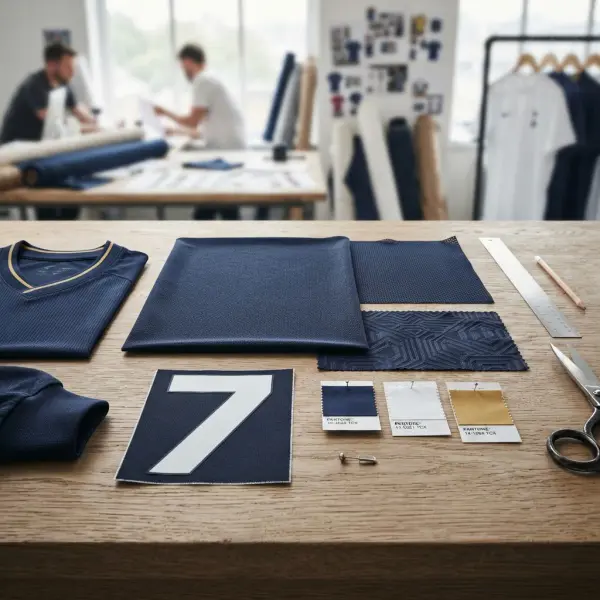
Why Jersey Materials Matter During World Cup Season
The FIFA World Cup 2026 takes place from 11 June to 19 July, according to the official FIFA World Cup 2026 schedule. During a global football moment like this, football jerseys become more than sportswear. They become symbols of national identity, fan culture, streetwear styling, and event-driven retail demand.
That wider use changes the way brands should think about materials. A jersey may be worn by a player, a casual fan, a gym user, a traveler, or someone attending a viewing party in hot weather. The same visual category—“football jersey”—can serve very different use cases. A garment that works for an athlete may feel too technical for lifestyle retail. A retro-inspired jersey may look stylish but feel too warm if the fabric is poorly chosen.
For apparel businesses, jersey material selection affects four commercial outcomes: customer comfort, perceived quality, production reliability, and brand credibility. If the fabric feels cheap, traps heat, pills quickly, or distorts after printing, the jersey may fail even if the design looks strong online.
A World Cup-themed jersey has a short selling window, but customers may continue wearing it long after the tournament. Good material decisions help extend the product’s relevance beyond the final match.
What Is a Football Jersey Material?
A football jersey material is a textile selected or engineered for football-related tops, usually designed to balance movement, sweat management, durability, visual identity, and garment comfort. It may be used for professional match jerseys, training jerseys, supporter jerseys, retro shirts, lifestyle fanwear, or fashion capsules inspired by football culture.
In most current sportswear contexts, football jersey materials are polyester-based knits. But the phrase “polyester jersey” is too broad to be useful on its own. The final garment may use interlock knit, bird-eye knit, micro-mesh, pique, jacquard, engineered knit, double knit, or a polyester-spandex blend. Each construction changes the way the jersey feels and performs.
A good jersey material must answer several practical questions at once. Does it feel comfortable against the skin? Does it allow movement? Does it manage heat and moisture? Does it print cleanly? Does it hold color? Does it survive repeated washing? Does it match the price point and the brand story?
That is why football jersey development is a textile, design, and business decision at the same time.
How Material Influences Comfort
Comfort is the first test of a jersey after the visual appeal fades. A customer may buy a shirt because of color, team reference, or World Cup excitement. But they keep wearing it if the fabric feels right.
Comfort depends on more than softness. A jersey can feel soft in the hand but uncomfortable during wear if it traps heat, clings when damp, irritates the skin, or restricts movement. The most important comfort factors are fabric weight, surface texture, airflow, moisture behavior, stretch, seam interaction, and fit.
Fabric Weight and Handfeel
Fabric weight affects how a jersey sits on the body. Lightweight fabrics can feel cooler and more athletic, but they may become transparent, clingy, or less durable if the construction is too thin. Mid-weight fabrics often give better opacity and structure, which can be useful for fanwear and retro-inspired styles.
For football jerseys, fabric weight should match the product purpose. A training jersey may use a lighter knit because movement and sweat management matter most. A lifestyle jersey may benefit from slightly more body so it feels less like promotional merchandise. A premium capsule may justify more texture and structure if the climate and design allow it.
The mistake is assuming lighter is always better. In real retail use, customers also care about coverage, drape, confidence, and durability.
Surface Texture Against the Skin
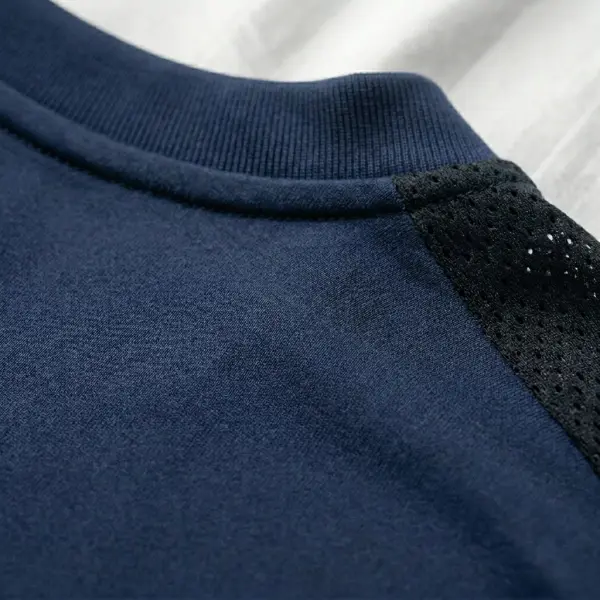
The inside surface of the jersey matters as much as the outside. Some mesh or textured polyester fabrics look technical but feel rough if worn directly against the skin. Other fabrics have a smoother inner face and a textured outer face, which can help balance comfort and visual interest.
For brands, this is especially important in warm-weather football apparel. A rough inner surface may become more noticeable when the wearer sweats. Seam allowances, labels, printed neck tape, and collar construction can also affect comfort. A well-chosen fabric can still feel uncomfortable if the finishing details are careless.
Breathability and Moisture Feel
Breathability and moisture management shape how the jersey feels during movement, heat, and long wear. A breathable jersey helps reduce heat buildup. A moisture-managing fabric can help move sweat away from the skin and support faster drying, depending on the fabric construction and finishing.
This topic is explored more deeply in why breathable and quick-dry fabrics matter in modern sportswear. For jersey development, the key point is that comfort should be tested on the finished garment, not only on a fabric swatch. A large print, heavy badge, tight fit, or poor panel placement can reduce the comfort benefit of a good fabric.
How Material Influences Performance
Performance in a football jersey does not only mean professional-level athletic performance. It can also mean how well the garment supports movement, sweat, washing, printing, and repeated use. For a fashion brand, performance is the difference between a product that looks sporty and one that actually behaves like sportswear.
The most relevant performance factors are moisture movement, drying rate, stretch recovery, abrasion resistance, colorfastness, and dimensional stability. AATCC TM195 is used to measure liquid moisture management properties of textile fabrics, while AATCC TM201 evaluates drying rate using a heated plate method AATCC TM195 liquid moisture management AATCC TM201 drying rate of fabrics. These test methods show that performance claims can be measured rather than treated as vague product language.
Movement and Stretch Recovery
A football jersey must allow arm movement, torso rotation, bending, sprinting, and casual movement without pulling awkwardly. Stretch can come from knit structure alone or from added elastane. Polyester knits naturally offer some mechanical stretch, while polyester-spandex blends add more elasticity and recovery.
Elastane can improve fit and mobility, especially in fitted jerseys and training tops. But it also creates trade-offs. Stretch fabrics may require more careful cutting, sewing, heat handling, and wash testing. They can also complicate recycling when blended with polyester. For relaxed fanwear jerseys, elastane may not be necessary. For slim athletic silhouettes, it may be valuable.
The decision should follow pattern design. A loose jersey can rely on shape and fabric structure. A close-fit jersey needs more recovery.
Moisture Management and Drying Behavior
A performance jersey should not stay heavy and damp for too long. Moisture management depends on fiber, yarn, knit structure, finishing, and garment design. Polyester is common because it absorbs relatively little moisture and can be engineered to spread or move sweat more effectively, but polyester alone is not a guarantee of comfort.
The jersey’s print and decoration also matter. A large heat-transfer graphic across the chest may reduce airflow and change the handfeel. Thick badges or layered appliques may create hot spots. A sublimated print may preserve fabric flexibility better than some heavy surface prints, but sublimation usually works best on polyester-rich fabrics and has its own color and base-fabric limitations.
Brands should evaluate the decorated jersey, not only the blank fabric.
Durability and Wash Performance
Football jerseys are often washed frequently, especially during tournament season. A customer may wear the same jersey repeatedly across matches, fan events, and casual outings. This makes durability more important than many event-driven brands realize.
Durability includes pilling resistance, snag resistance, colorfastness, seam strength, print adhesion, collar recovery, and dimensional stability. Mesh fabrics may snag more easily. Lightweight fabrics may twist if poorly stabilized. Heat transfers may crack or peel if application settings are wrong. Rib collars may lose shape if material quality is weak.
For production teams, wash testing should happen before bulk approval. A jersey that looks excellent in the first sample can still fail after five washes.
How Material Influences Style
Football jersey style is built through color, proportion, texture, graphic placement, trims, and silhouette. Material is the foundation that allows those style choices to work.
A shiny polyester fabric creates a different visual language from a matte recycled polyester. A mesh body feels more athletic than a smooth interlock knit. A jacquard pattern can make a jersey look premium without adding large graphics. A structured pique can support retro football styling. A very lightweight knit may look modern and fast, but it may not carry a heritage-inspired collar well.
Texture Creates Visual Identity
Texture is one of the most underused tools in football-inspired fashion. Many brands rely too heavily on color blocking and printed graphics. Texture can make a jersey feel more designed.
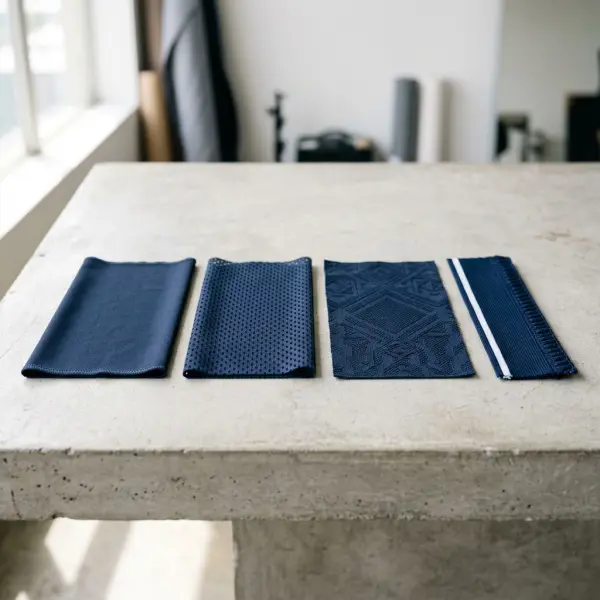
A subtle jacquard pattern can reference movement, local motifs, team identity, or stadium geometry without looking like costume merchandise. Bird-eye knit can create a sporty surface with better visual depth than plain jersey. Pique can make a football polo feel classic and structured. Mesh panels can signal performance, but they should be placed with intention.
The risk is overdesign. Too much texture, contrast paneling, and graphic decoration can make a jersey look busy. Strong football design often comes from restraint: one clear fabric story, one strong color direction, and details that support the silhouette.
Matte vs Shiny Fabric Changes Perceived Quality
Shine can make a jersey feel energetic, but excessive shine may make it look inexpensive or overly promotional. Matte polyester often feels more contemporary and fashion-oriented. For premium retail, matte or softly textured surfaces usually read better than very glossy fabrics.
This is not a universal rule. Some retro or performance-inspired jerseys intentionally use sheen. The point is alignment. A high-shine fabric may work for a bold fanwear drop. A muted matte surface may work better for a premium capsule intended to be worn with denim, tailored trousers, or casual outerwear.
Style is not only about the artwork. It is about how the fabric catches light.
Collar, Rib, and Trim Compatibility
A jersey’s collar can shift the whole product category. A crew neck feels casual and athletic. A V-neck feels traditional and sporty. A polo collar suggests retro football or lifestyle styling. A ribbed collar can feel premium if it has good recovery and clean sewing, but cheap rib can stretch out quickly.
Fabric choice must support trim choice. A very light body fabric may not pair well with a heavy collar. A stretchy body fabric may distort if the rib has poor recovery. A premium jacquard jersey may need higher-quality tape, labels, and stitching to match the material story.
A jersey becomes believable when the body fabric and finishing details feel like they belong together.
Common Football Jersey Materials and Their Roles
Different jersey materials serve different product strategies. The following comparison is useful for brands deciding whether a jersey should feel technical, casual, premium, retro, or fan-focused.
|
Material / Construction |
Best Use |
Comfort Impact |
Performance Impact |
Style Impact |
|
Polyester interlock |
Modern jerseys, sublimated fanwear, training tops |
Smooth and stable |
Good for print clarity and repeated washing when quality is strong |
Clean, modern, versatile |
|
Polyester bird-eye knit |
Fan jerseys, breathable sportswear tops |
Adds texture and airflow |
Can improve ventilation feel |
Sporty but not too technical |
|
Polyester mesh |
Side panels, training jerseys, athletic fanwear |
Supports airflow but may feel rough if too open |
Useful for ventilation zones |
Strong technical sportswear signal |
|
Polyester pique |
Retro shirts, football polos, lifestyle fanwear |
More structured and familiar |
Moderate performance depending on construction |
Classic, textured, retail-friendly |
|
Polyester-spandex blend |
Fitted jerseys, training tops, athleisure |
Improves stretch and recovery |
Supports movement but needs careful testing |
Sleeker and more body-conscious |
|
Jacquard knit |
Premium capsules, special editions |
Depends on weight and inner face |
Can integrate texture or ventilation |
Elevated, distinctive, design-led |
|
Recycled polyester knit |
Jerseys with responsible material positioning |
Similar to polyester if quality is comparable |
Depends on yarn and construction |
Supports material transparency story |
The table should not be read as a ranking. It is a product-development map. A premium lifestyle jersey may not need the same fabric as a training shirt. A supporter jersey may need stronger wash durability than a one-time event tee. A fashion capsule may need texture more than maximum moisture performance.
Jersey Material and Printing Compatibility
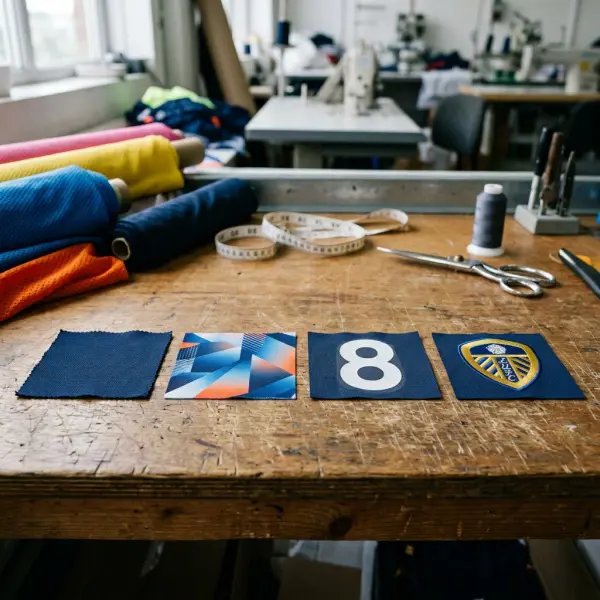
Football jerseys are highly graphic garments. Names, numbers, stripes, badges, crests, sponsor-style layouts, national colors, and pattern effects all interact with the fabric. Material and print method must be developed together.
Sublimation printing is commonly used for polyester-rich fabrics because it can produce durable, integrated graphics without adding a heavy surface layer. It works especially well for all-over prints, gradients, patterns, and lightweight jersey designs. The limitation is that sublimation is most effective on polyester and usually performs best on white or light-colored base fabrics.
Screen printing, digital printing, heat transfer, embroidery, woven badges, and appliques can all be used in football apparel, but each changes the garment differently. A heavy print may reduce softness and airflow. Embroidery can feel premium but may irritate the skin if placed poorly. Heat transfers are useful for names and numbers, but they need correct temperature, pressure, adhesive quality, and wash testing.
A practical development rule is simple: approve the decorated jersey, not just the fabric and artwork separately.
Recycled Polyester and Responsible Material Positioning
Recycled polyester can be used in football jerseys when the material meets the required standards for comfort, color, durability, and production performance. It can help reduce reliance on virgin polyester, but it should not be described with broad sustainability claims unless the brand can support the statement with documentation.
Textile Exchange explains that the Recycled Claim Standard and Global Recycled Standard set criteria for third-party certification of recycled materials and chain of custody Textile Exchange recycled standards. For brands using recycled polyester jerseys, this kind of verification matters because customers, retailers, and partners may ask what the recycled claim actually means.
The strongest communication is specific. Instead of saying “eco-friendly football jersey,” a brand can say “made with certified recycled polyester” when documentation supports it. It can also explain care instructions, durability goals, and why the fabric was selected.
Responsible material positioning works best when it is part of product quality, not a substitute for it. A recycled polyester jersey still needs to feel good, wash well, print cleanly, and fit the customer.
Comfort, Performance, and Style: The Strategic Trade-Offs
A football jersey is always a set of trade-offs. More airflow can mean more transparency. More stretch can mean more complex sewing. More structure can mean more warmth. More print coverage can mean less breathability. More premium texture can mean higher cost and longer lead time.
For fashion businesses, the job is not to eliminate trade-offs. It is to choose the right ones.
A professional-style performance jersey may prioritize lightness, moisture movement, and stretch. A supporter jersey may prioritize comfort, durability, color, and price. A retro football shirt may prioritize collar shape, fabric texture, and nostalgic proportion. A premium capsule may prioritize subtle material detail and elevated styling.
This is where brands should define the jersey’s role before sourcing fabric:
- Performance jersey: prioritize lightness, moisture management, ventilation, and movement.
- Training jersey: prioritize durability, stretch recovery, wash performance, and sweat handling.
- Fanwear jersey: prioritize comfort, color, print quality, and easy care.
- Retro jersey: prioritize structure, collar compatibility, texture, and styling.
- Premium jersey: prioritize handfeel, matte surface, refined trims, and material story.
A jersey that tries to be everything often becomes unfocused. Clear positioning makes material decisions easier.
What Brands Should Verify Before Production
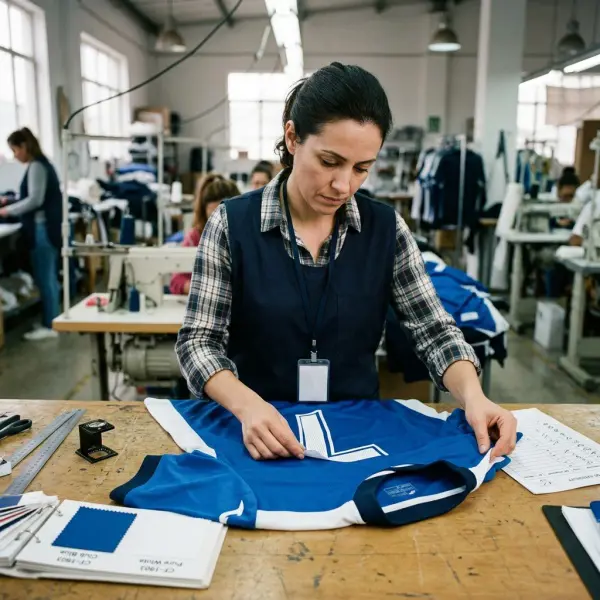
Football jersey development should not move from sample approval to bulk production without technical checks. Tournament-linked products often run on tight timelines, but skipping verification can create quality problems exactly when demand is highest.
Brands should verify the following before production:
- Fiber composition and fabric construction.
- Fabric weight, width, shrinkage, and colorfastness.
- Moisture management or drying claims, if used in marketing.
- Stretch and recovery, especially for fitted jerseys.
- Pilling and snagging resistance.
- Print compatibility with the selected decoration method.
- Wash performance of numbers, badges, transfers, and seams.
- Collar and rib recovery after washing.
- Opacity in light colors and stretched areas.
- Supplier documentation for recycled or branded fibers.
- Reorder availability if the product sells quickly.
This verification protects margin and reputation. A popular jersey that cannot be reordered, or one that generates complaints after washing, can quickly turn a strong launch into a costly operational problem.
Common Mistakes in Football Jersey Material Selection
Material mistakes often happen because brands treat jerseys as graphic products first and garments second. A football jersey needs strong visual identity, but it also needs to behave well on the body.
Mistake 1: Choosing the Fabric After the Artwork
If the artwork is completed before fabric selection, the brand may discover too late that the print method does not suit the material. Sublimation needs polyester-rich fabric. Heat transfers behave differently on stretch fabrics. Embroidery can distort lightweight jerseys.
A better workflow is to develop fabric, artwork, and decoration method together. This reduces sampling delays and prevents design compromises near production deadlines.
Mistake 2: Copying Professional Jerseys Without Matching Capability
Professional jerseys often use advanced materials, engineered panels, body-mapped ventilation, and extensive testing. Small brands may try to imitate the look without the same development process.
That can work visually, but only if expectations are realistic. A fashion jersey does not need to duplicate elite sportswear technology. It needs to deliver the comfort and quality promised to its market.
Mistake 3: Ignoring Lifestyle Wearability
Many football-inspired products are worn casually, not during sport. If the fabric feels too technical, too shiny, or too transparent, lifestyle customers may not wear it often.
For fanwear and fashion capsules, the material should work with jeans, shorts, skirts, trousers, jackets, and sneakers. A jersey that only looks good in a stadium may have limited post-tournament value.
Mistake 4: Overloading the Jersey With Heavy Details
Badges, patches, heat transfers, thick prints, sleeve details, and contrast panels can make a jersey feel visually rich. Too many of them can also make it heavy, stiff, hot, or difficult to wash.
A cleaner approach often works better: choose a strong base material, one or two meaningful details, and decoration methods that do not fight the fabric.
Mistake 5: Making Recycled Claims Without Proof
Recycled polyester can be a strong material story, but unsupported claims create risk. Brands should verify certification scope, transaction documents where relevant, supplier details, and composition before publishing claims.
Customers may not ask for paperwork every time, but retailers and partners often will.
Practical Application for Fashion Businesses
Fashion brands can build better football jerseys by treating material selection as part of product strategy, not only sourcing. Before choosing fabric, define the jersey’s primary role in the collection.
A practical material strategy might look like this:
- Use polyester interlock for clean sublimated jerseys and sharp graphics.
- Use bird-eye or micro-mesh panels for warm-weather comfort.
- Use pique or textured polyester for retro-inspired fanwear.
- Use polyester-spandex only where fit and movement require stretch.
- Use jacquard knit for premium or limited-edition drops.
- Use certified recycled polyester when documentation supports the claim.
- Use lighter print coverage in high-sweat areas when comfort matters.
This framework helps the team align design, production, retail, and marketing. Designers know what kind of surface they can work with. Sourcing teams know what to request from suppliers. Manufacturers know what construction risks to test. Marketing teams know which claims are safe to communicate.
For a smaller brand, the best strategy may be to create one strong jersey material platform and vary color, trim, and artwork. For a larger brand, a tiered material system can work better: performance jersey, fanwear jersey, retro jersey, and premium capsule.
The point is not complexity. The point is clarity.
How This Article Completes the Cluster
This article focuses on the finished football jersey and how material choices affect comfort, performance, and style. It builds on best sportswear fabrics for football apparel during World Cup season, which covers broader material categories for football apparel. It also connects to why breathable and quick-dry fabrics matter in modern sportswear, which explains moisture behavior and airflow in more detail.
Together, the cluster gives fashion businesses a practical foundation: which fabrics to consider, why breathable and quick-dry properties matter, and how those material choices shape the actual football jersey experience.
That last step matters because customers do not wear fabric swatches. They wear garments. The jersey must work as a complete product.
FAQ
What material is usually used for football jerseys?
Most modern football jerseys use polyester-based knit fabrics because polyester can support lightweight construction, color vibrancy, sublimation printing, moisture management, and repeated washing when properly engineered. Common constructions include interlock, mesh, bird-eye knit, pique, and jacquard. Some jerseys may also include elastane for stretch or recycled polyester for material transparency. The final comfort and performance depend on the knit structure, fabric weight, finishing, print method, and garment construction—not fiber content alone.
Why do football jerseys feel different from regular T-shirts?
Football jerseys often feel different from regular T-shirts because they are usually made from synthetic sportswear knits rather than cotton jersey. They may be lighter, smoother, more textured, more breathable, or quicker to dry depending on the fabric. They also often use different collars, seams, mesh panels, and graphic applications. A regular cotton T-shirt may feel softer in casual wear, but a football jersey is designed to support movement, color identity, and sport-inspired styling.
Is polyester good for football jerseys?
Polyester is good for many football jerseys when the fabric is well constructed and matched to the product use. It can be lightweight, durable, color-friendly, and compatible with sublimation printing. It can also support moisture management when engineered or finished properly. However, not all polyester is equal. A low-quality polyester may feel hot, shiny, or rough. Brands should compare fabric structure, handfeel, weight, wash performance, and decoration compatibility before approving production.
Are mesh football jerseys better?
Mesh football jerseys can be better for airflow and a technical sportswear look, but they are not always better for every product. Open mesh may be too transparent, too casual, or more prone to snagging. Fine mesh or bird-eye structures often work better for mainstream fanwear because they provide texture and ventilation without feeling too exposed. For performance garments, mesh placement should be strategic, especially in high-heat areas such as side panels or back panels.
What makes a football jersey comfortable?
A comfortable football jersey usually has suitable fabric weight, smooth inner texture, good airflow, appropriate moisture behavior, clean seam construction, and a fit that allows movement. Comfort also depends on trims, collar shape, print placement, and how the garment feels after washing. A jersey can look good but feel uncomfortable if the fabric is too stiff, too hot, too clingy, or poorly finished. Brands should test the finished garment, not only the fabric sample.
Can football jerseys be made from recycled polyester?
Football jerseys can be made from recycled polyester if the material meets the required quality, performance, color, and durability standards. Recycled polyester can support responsible material positioning, but brands should verify certification and supplier documentation before making claims. A recycled jersey should still be judged by comfort, fit, wash performance, and print quality. Sustainability messaging should be specific and evidence-based rather than broad or exaggerated.
What is the best fabric for fanwear jerseys?
The best fabric for fanwear jerseys depends on the target customer and price point. Polyester interlock or bird-eye knit works well for modern jersey-inspired fanwear. Polyester pique can support retro and lifestyle looks. Cotton-polyester blends may be suitable for casual supporter shirts, although they are less performance-oriented. Premium fanwear may use jacquard or recycled polyester. Fanwear should prioritize comfort, durability, color, easy care, and styling beyond match day.
How does printing affect jersey comfort?
Printing affects jersey comfort because decoration can change the fabric’s flexibility, breathability, surface feel, and weight. Sublimation usually keeps the fabric surface lighter because the color becomes part of the polyester fabric, while thick screen prints or heat transfers may feel heavier or reduce airflow. Embroidery and badges can feel premium but may irritate the skin if poorly placed. Brands should test printed and decorated samples before approving production.
Conclusion
Football jersey materials shape the garment long before the customer sees the final design. They influence how the jersey feels in heat, how it moves with the body, how it handles sweat, how it prints, how it washes, and how premium it appears in retail.
For brands, the right material decision starts with product intent. A performance jersey needs lightness, airflow, and movement. A fanwear jersey needs comfort, color, durability, and easy care. A retro jersey needs structure, texture, and collar compatibility. A premium jersey needs refined handfeel, better trims, and a credible material story.
World Cup season creates a strong reason to launch football-inspired apparel, but timing alone is not enough. The jersey must still work as a garment. Customers may buy the first piece because of football emotion, but they wear it again because the material feels right.
The strongest football jerseys are not simply decorated shirts. They are products where comfort, performance, and style are built into the fabric from the beginning.




Comments 0
Leave a CommentSend Comment
Anda harus Login terlebih dahulu untuk dapat memberikan komentar.