
Transitional Dressing Explained for Changing Weather and Daily Life
Quick Answer
Transitional dressing is an approach to building outfits that can adapt when weather, temperature, or activity changes during the day. Instead of relying on one garment suited to a narrow condition, it combines pieces with adjustable coverage, manageable weight, and enough compatibility to be added, removed, or restyled without rebuilding the entire outfit.
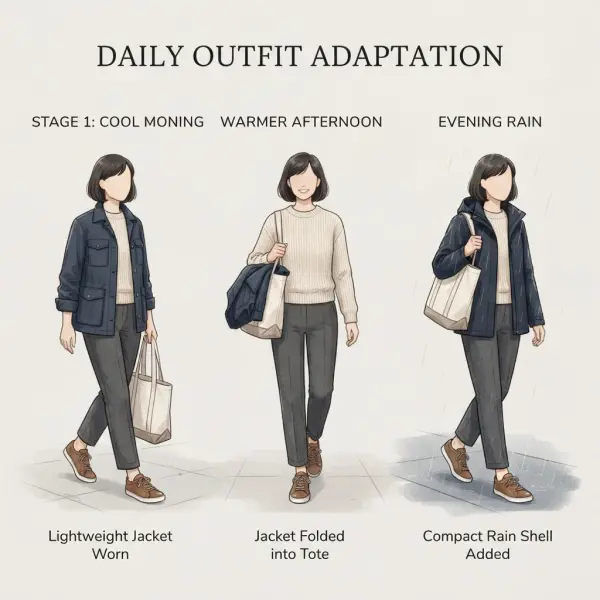
The idea is often associated with the shift from winter to spring or summer to autumn, but its practical use is much broader. A commuter may move from a cool morning to a warm train, an air-conditioned office, a rainy walk, and an evening event. In tropical markets, the relevant transition may be between humid outdoor heat, sudden rain, and heavily cooled indoor spaces rather than between four distinct seasons.
Good transitional dressing therefore depends on context. Breathability, warmth, water resistance, portability, footwear, and dress-code flexibility all matter, but no single garment delivers every benefit equally well. The goal is not to wear more clothes. It is to make the outfit easier to adjust while keeping it comfortable, coherent, and appropriate for the day.

What Is Transitional Dressing?
Transitional dressing is a wardrobe-planning and styling approach that uses adaptable garments to maintain comfort, function, and visual consistency across changing weather or daily environments. The important word is adaptable. A transitional outfit should respond to a foreseeable change—such as rising temperature, wind, rain, or stronger indoor cooling—without requiring an entirely separate look.
That makes the concept more practical than seasonal labels sometimes suggest. Fashion retail often treats “transitional” as a selling period between major seasonal deliveries. For the wearer, however, the problem is immediate: what will still work after the morning chill disappears, the office becomes cold, or rain begins on the journey home?
A useful transitional piece generally earns its place by doing at least two jobs. A shirt jacket can function as a light outer layer outdoors and as part of the outfit indoors. A fine-gauge cardigan can add warmth without the storage burden of a bulky coat. A water-resistant shell can protect against showers while fitting over workwear, although its comfort will still depend on breathability, ventilation, and the conditions in which it is worn.
Transitional does not describe one fixed aesthetic. Minimal tailoring, workwear, sportswear, modest fashion, and occasion dressing can all use the same principle. The execution changes with climate, mobility, personal comfort, and dress code.
Why Changing Weather Creates a Wardrobe Problem
Weather rarely changes in neat alignment with the fashion calendar. Even where spring, summer, autumn, and winter are distinct, conditions can vary sharply within a week or a single day. Elsewhere, the decisive shifts may involve rainfall, wind, humidity, altitude, or the contrast between indoor and outdoor temperatures.
Daily life adds another layer of complexity. Clothing is worn through movement and changing settings, not in a static product photograph. A person may walk, cycle, drive, use public transport, sit under air conditioning, carry a laptop, attend a meeting, and meet friends after work. An outfit that feels appropriate at departure can become uncomfortable or impractical several hours later.
This is why transitional dressing is best understood as a response system rather than a seasonal look. Its job is to manage several variables:
- Temperature range: how much warmer or cooler the day may become.
- Exposure: whether the wearer will encounter wind, rain, direct sun, or long periods outdoors.
- Activity level: whether the day involves mostly sitting, sustained walking, commuting, or physical work.
- Indoor conditions: whether heating or air conditioning creates a strong temperature contrast.
- Storage: whether removed pieces can be folded, carried, or packed without becoming a burden.
- Dress code: whether the outfit must remain credible across work, travel, and social settings.
These factors matter more than a generic instruction to “dress for autumn” or “add a jacket.” Two people in the same city may require different solutions because their commutes, buildings, activity levels, and tolerance of heat or cold differ.
The Core Principles of a Transitional Outfit
Start with the day, not the season
The most reliable starting point is the actual schedule. Forecast temperature matters, but so do departure time, transport, time outdoors, and destination. A mild forecast may still call for protection if the wearer leaves before sunrise, waits on an exposed platform, or returns after dark. Conversely, a substantial coat can become an inconvenience when most of the day is spent inside.
For consumers, this means checking the whole day rather than dressing for the first hour. For brands, it means presenting garments through real use cases. “For the office” is too vague if the styling does not show how the piece performs during the commute or after the indoor temperature changes.

Build around an adaptable anchor piece
A transitional outfit usually works better when one garment carries most of the adaptive function. Depending on climate and occasion, that anchor might be an unlined blazer, overshirt, cardigan, lightweight trench, packable shell, sleeveless knit, or scarf. The anchor should coordinate with the base outfit both when worn and when removed.
This point is easy to overlook. If the outer piece is the only element making the outfit feel complete, removing it can leave the wearer with an underdeveloped or dress-code-inappropriate base. A successful transitional outfit remains intentional in both states.
Use fabric weight and structure deliberately
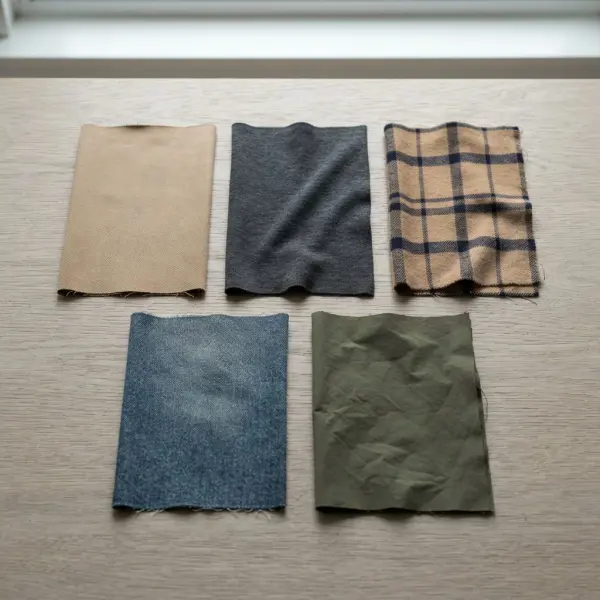
Fiber content alone does not predict how a garment will behave. Fabric weight, yarn and fabric construction, density, finishing, lining, garment shape, and fit all influence warmth, airflow, drying, and packability. A loosely constructed wool blend may feel and perform differently from a dense wool coating; two polyester jackets may differ greatly in breathability, handfeel, and resistance to wind.
In moderate conditions, midweight fabrics often provide useful range because they are neither as exposed as very light summer cloth nor as difficult to remove and carry as heavy winter construction. That does not make midweight universally better. Humid climates may favor lighter, more breathable options, while strong wind or persistent rain may require a protective outer layer.
Preserve movement and comfort
Adaptability fails when combined garments restrict the wearer. Armholes, sleeve width, shoulder shape, closures, and garment length determine whether pieces sit comfortably together. A tailored jacket that looks spacious on its own may pull across the back when worn over a knit. A wide-sleeved shirt can bunch inside a narrow coat. A long outer layer may also interact poorly with a short jacket underneath.
Official cold-weather advice commonly recommends multiple loose layers because trapped air can aid insulation and individual layers can be removed when the wearer becomes too warm. The U.S. Centers for Disease Control and Prevention guidance on dressing in layers distinguishes between an inner layer, an insulating layer, and an outer layer that helps protect against wind and precipitation. That guidance concerns cold-weather safety rather than everyday fashion styling, but the underlying lesson is useful: each component needs a clear function, and excess bulk or moisture can undermine comfort.
This article focuses on the overall dressing strategy. A more detailed explanation of garment combinations belongs in how layering makes outfits more flexible and practical.
Plan what happens to a removed garment
An item is not truly adaptable if it becomes a nuisance as soon as it is removed. Weight, crease recovery, foldability, bag capacity, and the likelihood of losing a detachable component all affect real-world use. This is especially relevant to commuters, travelers, caregivers, and anyone moving through public spaces.
A packable shell solves a different problem from a structured blazer. The shell may store easily but feel too technical for some offices; the blazer may suit the setting but be awkward to carry. Transitional dressing works by choosing the compromise that matches the day, not by pretending the compromise does not exist.
Transitional Dressing Is Not Limited to Spring and Autumn
The familiar fashion image of transitional dressing—a trench coat, knit, and ankle boots—reflects temperate-market merchandising. It is not a universal formula. In tropical and subtropical locations, seasonal adaptation may center on monsoon rain, humidity, sun exposure, and cold indoor air. In high-altitude regions, temperature can change quickly between morning and midday. Coastal wind, desert temperature swings, and travel between climate zones create still other needs.
The principle remains consistent, but the product mix changes. A humid-weather wardrobe might use a breathable base, a compact rain layer, and a light overshirt for air-conditioned interiors. A dry climate with a large day–night range may call for a warmer removable knit. In a wet, cool city, water resistance and quick recovery after exposure may matter more than compactness alone.
This broader view matters commercially. Global brands cannot assume that one “transitional collection” has the same meaning in every market. Local climate, transport patterns, indoor environments, cultural dress practices, and retail timing should shape both assortment and communication.
Transitional Dressing, Layering, and Seasonless Wardrobes: What Is the Difference?
The three ideas overlap, but they answer different questions. Transitional dressing addresses changing conditions. Layering is one technique for adjusting coverage or insulation. A seasonless wardrobe is a broader approach to owning and using garments across more of the year, where climate and lifestyle allow.
|
Concept |
Main purpose |
Typical time frame |
What it may involve |
Important limitation |
|
Transitional dressing |
Keep an outfit workable as conditions or settings change |
A day, trip, or period between weather patterns |
Removable outerwear, adaptable footwear, adjustable coverage, portable accessories |
Not every climate shift can be managed by one outfit |
|
Layering |
Combine garments so coverage, warmth, or styling can be adjusted |
Immediate and situational |
Base, mid, and outer pieces with compatible fit |
More layers can create bulk, overheating, or restricted movement |
|
Seasonless wardrobe |
Extend the useful wearing period of a wardrobe |
Across multiple months or seasons |
Versatile colors, adaptable silhouettes, repeatable core pieces |
Climate extremes and specialized occasions still require specific products |
A person can use layering without building a seasonless wardrobe, and a seasonless wardrobe can include garments that are usually worn alone. Likewise, transitional dressing may involve changing shoes, using adjustable closures, or carrying rain protection rather than adding several apparel layers.
Readers interested in the longer ownership and assortment question can explore why seasonless wardrobes appeal to modern consumers.
What Transitional Dressing Means for Fashion Businesses
[H3] Product development should begin with a use scenario
Calling a product “transitional” does not make it adaptable. Development teams need to identify the conditions it is intended to bridge. Is the garment designed for cool mornings and warm afternoons, rain and dry intervals, or outdoor heat and indoor air conditioning? The answer affects material selection, construction, fit, features, and testing.
Useful design decisions may include two-way or adjustable closures, rollable sleeves, vents, detachable components, functional pockets, a hood that does not overwhelm the neckline, or an unlined construction that reduces weight. Each feature adds cost or complexity, however. Detachable parts require secure attachment and clear care instructions; water-resistant performance may decline with wear or laundering; unlined garments expose internal construction and therefore demand cleaner finishing.
The best feature set is usually the one the customer will actually use. A technically elaborate jacket can be less commercially successful than a simpler overshirt if the added components increase price, confuse styling, or create quality-control problems.
Sourcing teams need performance detail, not seasonal adjectives
Supplier briefs should translate the intended use into measurable or observable requirements. “Lightweight transitional fabric” is open to interpretation. A better brief identifies target weight range, handfeel, opacity, drape, stretch, dimensional stability, expected water repellency if relevant, colorfastness, care method, and compatibility with the garment construction.
Sampling should test the complete garment rather than the fabric in isolation. Zippers, snaps, drawcords, linings, seam construction, and pocket bags can materially change weight and comfort. Fit trials should also include the garments expected to be worn underneath.
Merchandising should solve an outfit problem
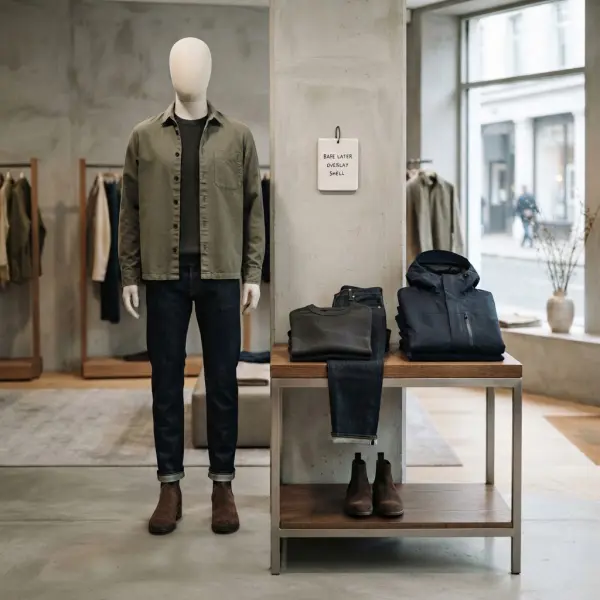
Transitional product stories are strongest when retailers show how pieces respond to a real day. A product page might present the base look, the look with an added outer piece, and how the removed item can be carried. Store displays can place compatible weights and proportions together rather than mixing products solely because they share a color story.
This creates natural cross-selling opportunities, but restraint matters. The customer should be able to see the logic of the combination. Recommending a base, mid-layer, outerwear piece, scarf, bag, and two pairs of shoes for every look can turn practical advice into an obvious attempt to increase basket size.
Marketing should describe conditions honestly
Terms such as “all-weather,” “weatherproof,” and “seasonless” can overstate what a garment can do. If a jacket is water-resistant rather than waterproof, the distinction matters. If a knit is useful across several months only in mild climates, marketing should not imply universal year-round suitability.
Specific language is more credible: “light enough to carry after the morning commute,” “designed for cool indoor spaces,” or “provides light shower protection when properly cared for.” Claims still need to match testing, construction, care, and actual product performance.
Assortment planning can use transitions as demand bridges
Transitional products can help retailers connect major seasonal deliveries, but they are not a guaranteed solution to unpredictable weather or inventory risk. Demand depends on local conditions, delivery timing, customer lifestyle, price, and how easily the product coordinates with existing wardrobes.
Retail teams can reduce guesswork by reviewing historical sales against local weather periods, return reasons, size availability, and channel behavior. The objective is not to predict every temperature swing. It is to identify which adaptable categories—light outerwear, midweight shirts, fine knits, practical footwear, or compact weather accessories—consistently serve the customer during less stable periods.
A Practical Framework for Building or Selling a Transitional Outfit
Whether the decision is being made by a consumer, stylist, buyer, or product team, the same five-step framework helps keep the reasoning grounded.
- Map the day or use case. Identify expected temperature, exposure, activity, indoor conditions, and dress code.
- Choose the base outfit. It should remain comfortable and presentable if outer pieces are removed.
- Add one primary adaptive element. Select the garment or accessory that addresses the most likely change.
- Check compatibility. Confirm movement, proportion, closures, hem relationships, footwear, and carrying needs.
- Plan for the less likely disruption. A compact umbrella, rain shell, scarf, or alternate route may be more sensible than making the entire outfit heavier.
For a fashion business, this framework can become a product-page storyboard, styling guide, sales-associate script, or collection-planning tool. It also reveals gaps. If the base outfit fails without the jacket, or the jacket cannot accommodate the intended knit, the styling concept may look persuasive in photography but disappoint in use.

Common Transitional Dressing Mistakes
Treating a heavy outer layer as the whole solution
This often happens because a coat creates an immediate seasonal look. The operational consequence appears later: the wearer overheats indoors and has to carry a bulky garment. A better approach is to match outerwear weight to exposure time and make sure the outfit still works after removal.
Ignoring fit between garments
Individually well-fitting pieces do not automatically fit together. Tight shoulders, narrow sleeves, competing collars, and bunching hems can reduce movement and distort the intended silhouette. Brands should conduct layered fit trials; consumers can test the full combination rather than judging each item separately.
Choosing appearance without considering moisture or wind
A fine knit may add warmth but offer limited protection in wind. A coated shell may resist a brief shower but feel uncomfortable in high humidity. The better decision is to identify the primary exposure and choose a garment designed for that function, with claims that match actual performance.
Overloading the outfit with “just in case” pieces
Adaptability can become over-preparation. Too many layers add weight, bulk, and styling complexity, while increasing the chance that pieces are left behind. Prioritize the most probable change and use compact backup items for lower-probability conditions.
Assuming transitional means neutral or basic
Neutral colors can simplify coordination, but adaptability is not restricted to beige outerwear and plain knits. Print, color, texture, and stronger silhouettes can work when the pieces remain compatible and the outfit is coherent in its adjusted states. Treating one commercial aesthetic as the definition of the concept unnecessarily narrows the audience.
What Brands Should Verify Before Using “Transitional” as a Product Claim
“Transitional” is largely a contextual merchandising term, not a single technical performance standard. Before using it, a brand should verify what the product can realistically do and whether the customer will understand the intended use.
Key checks include:
- the temperature and activity context used during wear trials;
- fit over the intended base or mid-layer garments;
- finished garment weight, bulk, and portability;
- breathability, wind resistance, or water resistance where claimed;
- closure, pocket, and detachable-component durability;
- care requirements and whether performance changes after laundering;
- clarity of size, fit, and styling guidance;
- relevance to the climate and lifestyle of the target market.
These checks do not require every transitional garment to become technical outerwear. They simply prevent a broad lifestyle label from replacing product evidence. A cotton overshirt can be a useful transitional piece without being presented as rain protection; a shell can offer weather protection without being suitable for every office or occasion.
Frequently Asked Questions
What clothes are best for transitional weather?
The best choices are garments that match the expected temperature range and can be adjusted or carried easily. Common options include overshirts, unlined jackets, fine-gauge cardigans, lightweight trenches, midweight trousers, closed shoes, scarves, and compact rain shells. Suitability depends on climate, activity, and dress code. A breathable overshirt may work well between outdoor heat and indoor air conditioning, while a water-resistant jacket may be more useful in a cool, wet climate. Focus on the function needed that day rather than buying items simply because retailers label them “transitional.”
Is transitional dressing the same as layering?
No. Layering is one method used within transitional dressing, but the broader strategy can also involve adjustable sleeves, removable accessories, adaptable footwear, vents, or carrying a compact weather layer. Layering focuses on how garments are combined; transitional dressing focuses on keeping the total outfit workable as conditions change. The distinction matters because adding more garments is not always the best response. In hot, humid conditions, for example, a breathable base and a single portable rain or air-conditioning layer may be more practical than a conventional three-layer system.
Can transitional dressing work in tropical climates?
Yes, if it is designed around tropical realities rather than copied from temperate-season styling. The relevant transitions may include humid outdoor heat, strong indoor air conditioning, sudden rain, and sun exposure. Lightweight breathable garments, compact rain protection, quick-drying considerations, and non-bulky coverage may therefore matter more than insulating knits or heavy coats. Local commute patterns and cultural dress needs also influence the solution. “Transitional” in Jakarta, Singapore, or Manila should not automatically resemble an autumn assortment developed for London or New York.
Do transitional garments need to be water-resistant?
Not necessarily. Water resistance is useful when intermittent rain is part of the intended use case, but many transitional garments are designed primarily for temperature or setting changes. An overshirt used between a warm street and a cool office does not need to perform like rainwear. If a brand does claim water resistance, it should specify what the claim means, how the performance was assessed, and how care may affect it. Consumers should distinguish protection from a light shower from protection intended for prolonged or heavy rain.
How should retailers merchandise transitional clothing?
Retailers should organize the story around use cases and compatible outfits rather than a vague period between seasons. Show a base look that works alone, the adaptive piece added, and what happens when that piece is removed or carried. Product recommendations should reflect compatible sleeve widths, garment lengths, weights, and dress codes. Online, alternate styling images and concise condition-based copy can do much of this work. In stores, grouping complementary pieces by function can be more helpful than presenting a large undifferentiated “new season” rail.
Does transitional dressing reduce the need to buy seasonal clothing?
It can extend the useful wearing window of some garments, but it does not eliminate the need for climate-specific products. Extreme cold, sustained heavy rain, high heat, protective work, or formal occasions may require specialized clothing. The commercial value lies in improving versatility within realistic limits, not promising one wardrobe for every condition. Consumers should assess how often an item fits their actual schedule and climate. Brands should avoid turning versatility into an unsupported sustainability claim, because environmental impact also depends on production, use frequency, care, durability, and end-of-life pathways.
What is the most important feature of a transitional garment?
There is no universal feature, but compatibility is often the most overlooked. The garment needs to work with the clothes worn underneath, remain comfortable during movement, and still make sense when the outfit changes. A technically capable jacket has limited everyday value if its sleeves are too narrow for the intended knit or if it is too bulky to carry. Start with the main use case, then prioritize the feature that addresses its largest problem—whether that is warmth, ventilation, rain protection, portability, or dress-code flexibility.
Conclusion
Transitional dressing is less about a specific season than about managing change with fewer disruptions. A strong outfit anticipates the conditions and settings the wearer is likely to encounter, uses a presentable base, and adds a purposeful adaptive element without creating unnecessary bulk or complexity.
For fashion businesses, the concept becomes valuable when it moves beyond seasonal language. Product teams can define a clear use case, sourcing teams can translate that case into material and construction requirements, and retailers can demonstrate how the garment works through a real day. The trade-offs—between protection and breathability, structure and packability, versatility and specialization—should remain visible rather than being disguised by broad claims.
That is the durable commercial lesson. Customers do not need every item to work in every climate. They need clothing that performs credibly in the conditions it was designed to bridge.





Comments 0
Leave a CommentSend Comment
Anda harus Login terlebih dahulu untuk dapat memberikan komentar.