

Tariff War 2026: How Fashion Brands Are Adapting Their Supply Chain
What Is the Tariff War 2026 and Why It Matters for Fashion Brands
The global fashion industry in 2026 is facing one of its most complex operational challenges in recent history: escalating tariff wars. As geopolitical tensions intensify between major economies—including the United States, China, and parts of the European Union—fashion brands are being forced to rethink how they design, source, produce, and distribute their products.
Unlike previous disruptions such as the COVID-19 pandemic or logistics bottlenecks, tariff wars directly impact cost structures at a fundamental level. Import duties, export restrictions, and shifting trade agreements are no longer temporary obstacles—they are becoming long-term strategic variables.
For fashion brand owners and startups, this shift is critical. Margins are tighter, consumer expectations are higher, and competition is global. Those who adapt their supply chains intelligently will survive—and potentially thrive. Those who do not risk becoming uncompetitive almost overnight.
To understand the foundation of this shift, it is important to first understand fashion supply chain strategy and how it connects sourcing, production, and distribution into one system.
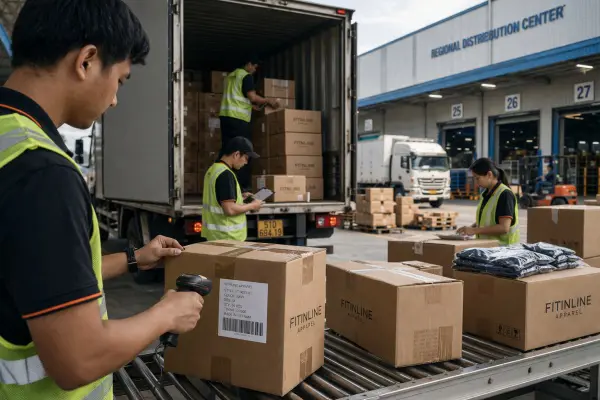
Quick Answer: How Do Tariffs Affect Fashion Brands?
Tariffs increase the cost of importing garments and materials, forcing fashion brands to either raise prices, reduce margins, or restructure their supply chains. Many brands respond by diversifying manufacturing locations, nearshoring production, and optimizing product design to reduce duties.
Global Tariff Changes in 2026: Impact on the Fashion Industry
Tariffs in 2026 are not just about protecting domestic industries—they are tools of economic strategy. Governments are imposing higher duties on textiles, garments, and raw materials to encourage local production and reduce dependency on foreign manufacturing hubs.
Key developments shaping the landscape include:
- Increased tariffs on Asian textile exports to Western markets
- Regional trade blocs tightening import regulations
- New compliance rules tied to sustainability and ethical sourcing
- Ongoing volatility in trade agreements
For example, a fashion brand importing garments from Asia to the U.S. may now face tariff increases of 10–25%, depending on product category. For startups operating on thin margins, this can significantly erode profitability.
The result is a fragmented global trade environment where sourcing decisions must be continuously evaluated—not just optimized once.
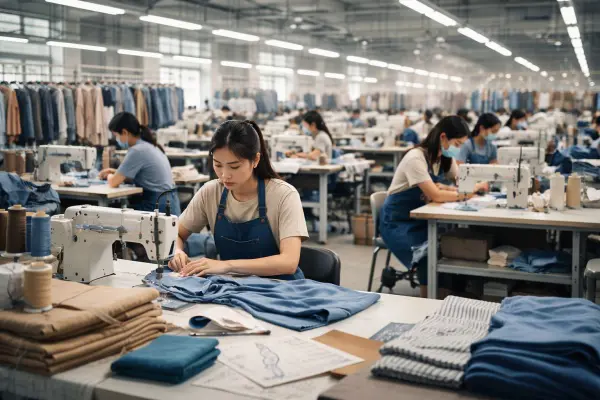
How Tariffs Affect Fashion Supply Chains and Production Costs
The most direct impact of tariff wars is cost escalation. However, the ripple effects extend far beyond pricing.
a. Rising Cost of Goods Sold (COGS)
Higher import duties directly increase production costs, especially for brands relying on international manufacturing.
b. Pricing Pressure and Consumer Sensitivity
Consumers are more price-aware than ever. Even small price increases can impact demand.
c. Inventory and Lead Time Disruptions
Tariff changes can delay shipments or force rerouting, increasing uncertainty in planning.
d. Supplier Instability
Factories in heavily taxed regions may lose competitiveness, forcing brands to switch partners quickly.
Understanding the garment manufacturing process and cost structure becomes essential to managing these risks effectively.


Strategy #1: Diversifying Manufacturing to Reduce Tariff Risk
One of the most common responses is geographical diversification. Brands are no longer relying on a single country for production.
Key Shifts in Manufacturing Hubs
- China → Vietnam, Indonesia, Bangladesh
- Single-country sourcing → Multi-country sourcing
- Expansion into emerging manufacturing regions
Why Diversification Works
- Reduces dependency on one tariff region
- Improves supply chain resilience
- Allows flexibility in sourcing decisions
However, diversification requires onboarding new suppliers and ensuring quality consistency.
Many brands evaluate OEM and ODM fashion production models when expanding into new manufacturing regions.
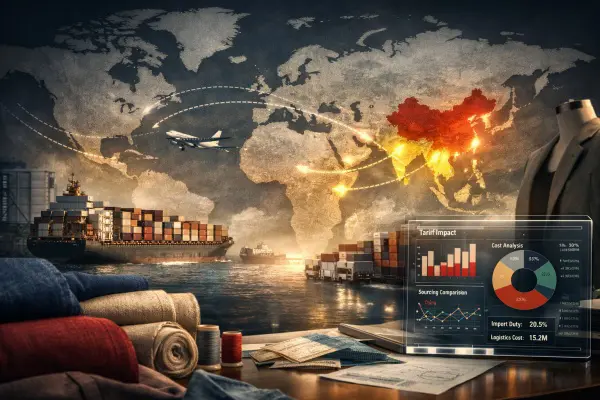
Strategy #2: Nearshoring vs Offshoring in Fashion Supply Chains
Nearshoring is becoming a key strategy, where production is moved closer to the main market.
Benefits of Nearshoring
- Faster delivery times
- Lower logistics costs
- Reduced exposure to tariffs
- Better operational control
Examples:
- U.S. brands → Mexico, Central America
- European brands → Turkey, Eastern Europe
Trade-Offs
- Higher labor costs
- Limited production scale in some regions
Despite this, nearshoring provides stability in an unpredictable global trade environment.
Strategy #3: Product Design Optimization to Lower Import Duties
Tariffs are often influenced by product classification and material composition.
Optimization Strategies
- Switching to alternative fabrics
- Adjusting fiber composition
- Redesigning products to fit lower tariff categories
This is where fabric selection in garment production plays a critical role—not just for aesthetics, but for cost efficiency.
Small design changes can lead to significant savings at scale.
Strategy #4: Building Resilient Supplier Relationships
Strong supplier relationships are becoming a competitive advantage.
What Brands Are Doing
- Negotiating flexible agreements
- Sharing risks with suppliers
- Increasing transparency in pricing
Why It Matters
Reliable suppliers can:
- Offer better cost control
- Prioritize production
- Adapt faster to market changes
For startups, choosing reliable partners is more important than choosing the cheapest option.
Strategy #5: Using Technology for Supply Chain Optimization
Technology is essential for navigating complex supply chains.
Key Tools
- Supply chain analytics platforms
- AI-driven demand forecasting
- ERP systems for real-time tracking
Benefits
- Scenario simulation for tariff impact
- Faster sourcing decisions
- Improved inventory management
Even simple tools can significantly improve decision-making for startups.
Strategy #6: Pricing Strategy Adjustments in a Tariff Economy
Tariff wars are forcing brands to rethink pricing and business models.
Common Approaches
- Tiered pricing strategies
- Limited product drops
- Direct-to-consumer (DTC) focus
- Premium positioning
Understanding clothing production cost calculation is critical to setting sustainable pricing strategies.
Why DTC Matters
- Higher margins
- Better control over pricing
- Direct customer relationships
For startups, DTC is often the most effective strategy to maintain profitability.
How Sustainability Policies Influence Tariffs in Fashion
Sustainability is now directly linked to trade policies.
New Requirements
- Carbon footprint transparency
- Ethical labor compliance
- Supply chain traceability
Implications
- Non-compliance may lead to higher tariffs
- Sustainable brands may gain advantages
This creates an opportunity for brands to align sustainability with cost efficiency.

How Fashion Startups Can Survive Tariff Wars
For startups, tariff wars are both a challenge and an opportunity.
Key Principles
- Stay agile and adaptable
- Build flexible supply chains early
- Avoid dependency on a single supplier
Practical Steps
1. Use multi-country sourcing
2. Work with transparent suppliers
3. Leverage data tools
4. Focus on DTC channels
5. Integrate cost strategy into design
For new founders, understanding the fundamentals of starting a fashion brand is crucial before scaling operations.
Conclusion: From Risk to Competitive Advantage
The tariff war of 2026 is reshaping the global fashion industry. While it introduces complexity and uncertainty, it also forces brands to become more strategic, resilient, and innovative.
Supply chains are no longer just operational functions—they are competitive advantages.
Brands that diversify intelligently, leverage technology, and stay agile will not only survive but emerge stronger. For fashion startups and brand owners, this is a defining moment: adapt now, or risk falling behind in an increasingly dynamic global market.
Frequently Asked Questions (FAQ)
1. How do tariffs affect the fashion industry?
Tariffs increase the cost of importing garments and raw materials, impacting production costs and pricing strategies.
2. What is the best sourcing strategy for fashion brands in 2026?
Multi-country sourcing combined with nearshoring offers the best balance of flexibility and risk reduction.
3. Which countries are alternatives to China for garment manufacturing?
Vietnam, Bangladesh, Indonesia, India, and Turkey are key alternatives.
4. How can fashion startups reduce tariff impact?
By optimizing sourcing, design, and pricing strategies while using flexible supply chains.
5. What is nearshoring in fashion?
Nearshoring means moving production closer to the main market to reduce logistics cost and tariff exposure.





Comments 0
Leave a CommentSend Comment
Anda harus Login terlebih dahulu untuk dapat memberikan komentar.