
Can AI Replace Fashion Designers?
Introduction: The Rise of AI in Fashion
Artificial Intelligence (AI) is no longer a futuristic concept in the fashion industry—it is already transforming how brands design, produce, and sell clothing. From automated trend forecasting to AI-generated garment designs, technology is increasingly embedded in every stage of the fashion value chain.
For fashion brand owners and startups, this raises a critical question: Can AI actually replace fashion designers? Or is it simply a tool that enhances creativity and efficiency?
The short answer is: AI can transform design workflows—but it cannot fully replace human designers. The long answer, however, is far more nuanced and strategically important, especially for brands looking to stay competitive in a fast-evolving market.
In this article, we will explore the role of AI in fashion design, its capabilities and limitations, and what it truly means for the future of designers and fashion businesses.
1. What AI Can Already Do in Fashion Design
AI has rapidly evolved from basic automation into a sophisticated creative assistant. Today, it can support multiple aspects of fashion design with remarkable efficiency.
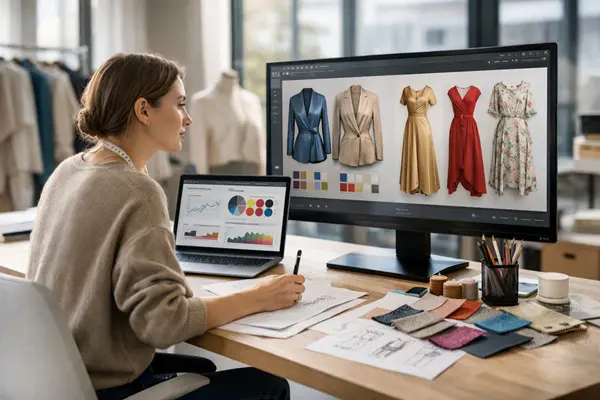
First, AI excels at trend forecasting. By analyzing vast datasets from social media, runway shows, and e-commerce platforms, AI can identify emerging trends faster than traditional methods. Tools powered by machine learning can detect patterns in colors, silhouettes, and consumer behavior, helping brands make data-driven design decisions.

Second, AI can generate design concepts. Generative AI models can produce sketches, patterns, and even full outfit concepts based on prompts or historical data. This allows designers to explore hundreds of variations in minutes, significantly accelerating the ideation process.
Third, AI enhances material and production optimization. It can recommend fabric choices based on performance, sustainability, and cost efficiency. Additionally, AI-driven systems can simulate garment behavior, reducing the need for physical samples and minimizing waste.
Finally, AI supports personalization at scale. Brands can use AI to create customized designs tailored to individual customer preferences, something that was previously difficult to achieve in mass production.
In essence, AI is already acting as a powerful co-creator in fashion design.
2. Where AI Falls Short: The Limits of Machine Creativity
Despite its impressive capabilities, AI still has fundamental limitations—especially when it comes to true creativity.
Fashion design is not just about patterns and data; it is deeply rooted in human emotion, culture, and storytelling. Designers draw inspiration from personal experiences, social movements, and artistic expression—elements that AI cannot genuinely understand or replicate.
AI operates based on existing data. This means it tends to recombine past ideas rather than create truly original concepts. While it can generate visually appealing designs, these outputs often lack deeper meaning or narrative.
Another limitation is contextual sensitivity. Fashion is highly influenced by cultural nuances and shifting societal values. Human designers can interpret these subtleties and translate them into meaningful designs, while AI may struggle to grasp context beyond its training data.
Moreover, AI lacks intuition and taste. Great designers often rely on instinct—knowing when something “feels right” even if it defies data-driven logic. This intuitive decision-making remains uniquely human.
Therefore, while AI can assist in design, it cannot replace the core creative essence that defines fashion.
3. AI as a Creative Partner, Not a Replacement
Rather than replacing designers, AI is best understood as a creative partner that enhances human capabilities.
For fashion startups and brand owners, this partnership offers significant advantages. AI can handle repetitive and data-intensive tasks, allowing designers to focus on higher-level creative thinking. This leads to faster workflows, reduced costs, and improved productivity.
For example, a designer can use AI to generate multiple design variations, then refine and curate the best options. This hybrid approach combines the speed of AI with the creativity of human insight.
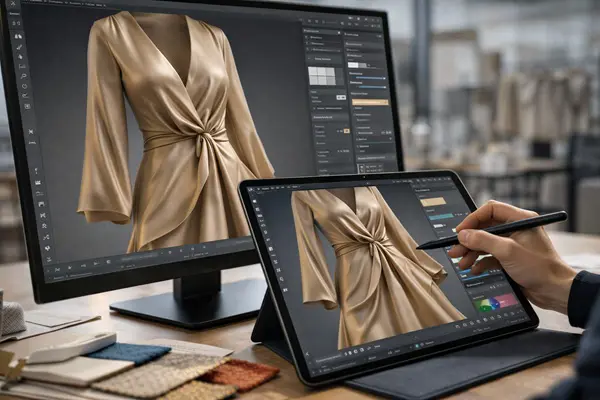
AI also enables rapid prototyping. Designers can visualize concepts in 3D, test different materials, and make adjustments in real time. This not only accelerates development but also reduces the risk of costly production errors.
Importantly, AI democratizes design. Small brands and startups can now access tools that were previously only available to large fashion houses. This levels the playing field and encourages innovation across the industry.
In this context, AI is not a threat—it is a strategic asset.
4. Strategic Implications for Fashion Brands and Startups
For fashion entrepreneurs, the integration of AI is no longer optional—it is becoming a competitive necessity.
One key implication is speed to market. Brands that leverage AI can move from concept to production much faster than traditional workflows. In an industry driven by trends, this speed can be a decisive advantage.
Another implication is cost efficiency. AI reduces the need for physical sampling, minimizes material waste, and optimizes production processes. This is particularly valuable for startups with limited budgets.
AI also enhances customer engagement. By analyzing consumer data, brands can create more relevant and personalized products, improving customer satisfaction and loyalty.
However, adopting AI requires a strategic approach. Brands must invest in the right tools, train their teams, and integrate AI into their existing workflows. It is not just about technology—it is about redefining how design and business processes operate.
Ultimately, the brands that succeed will be those that combine technology with strong creative direction.
5. The Future of Fashion Designers in an AI-Driven Industry
As AI continues to evolve, the role of fashion designers will inevitably change—but it will not disappear.
Designers will shift from being solely creators to becoming creative directors and strategists. They will oversee AI-generated outputs, curate ideas, and ensure that designs align with brand identity and vision.
Skills such as creative thinking, storytelling, and brand building will become even more important. At the same time, designers will need to develop a basic understanding of AI tools and workflows.
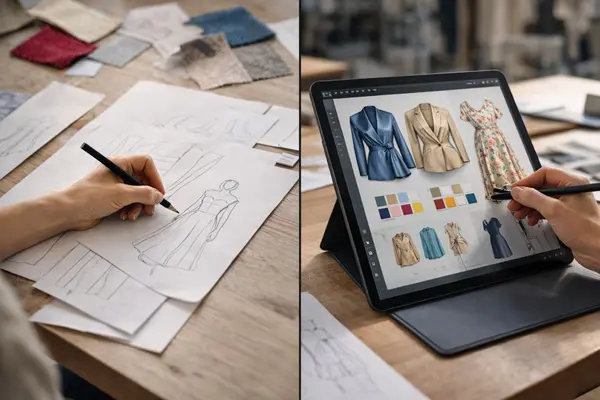
Collaboration between humans and machines will define the future of fashion. Designers who embrace AI will be able to push creative boundaries and explore new possibilities.
In contrast, those who resist technological change may struggle to remain relevant.
The future is not about replacing designers—it is about evolving the role of design itself.
Conclusion: Replacement or Reinvention?
So, can AI replace fashion designers?
The answer is clear: No—but it can redefine how they work.
AI is transforming the fashion industry by enhancing efficiency, enabling innovation, and unlocking new opportunities. However, it cannot replicate the human creativity, emotion, and cultural understanding that lie at the heart of fashion design.
For fashion brand owners and startups, the real opportunity lies in leveraging AI as a tool for growth and differentiation. By combining technology with human creativity, brands can create products that are not only efficient but also meaningful and unique.
In the end, the future of fashion is not AI versus designers—it is AI with designers.
Frequently Asked Questions
1. Will AI eliminate fashion design jobs?
No. AI will change the nature of design jobs, but it will not eliminate them. Designers will focus more on strategy, creativity, and curation.
2. Can AI create original fashion designs?
AI can generate new combinations based on existing data, but it lacks true originality and emotional depth.
3. Is AI useful for small fashion brands?
Yes. AI tools can help startups reduce costs, speed up production, and compete with larger brands.
4. What skills do designers need in the AI era?
Designers need creativity, storytelling, brand understanding, and basic knowledge of AI tools.
5. Should fashion brands invest in AI now?
Yes. Early adoption of AI can provide a competitive advantage in efficiency, innovation, and customer engagement.




Comments 0
Leave a CommentSend Comment
Anda harus Login terlebih dahulu untuk dapat memberikan komentar.