

Button Placket, Sleeve Placket, and Hidden Placket: Key Differences
A classic button-down shirt, a tailored blouse, and a minimalist shirt dress may share a familiar construction detail: the placket. Yet the way that opening is designed can change the garment's appearance, functionality, and manufacturing requirements.
On a conventional shirt, visible buttons establish a recognizable line down the front. At the wrist, a sleeve placket allows the cuff to open without compromising the shape of the sleeve. In a more understated design, a hidden placket conceals the buttons beneath an additional fabric layer, creating a cleaner surface.
These variations are often discussed as though they were competing construction methods. In practice, they describe different aspects of garment design. A button placket identifies a fastening arrangement, a sleeve placket refers to an opening location, and a hidden placket describes how the fastening system is visually concealed.
For fashion designers and apparel manufacturers, recognizing these differences is essential when translating a garment concept into accurate patterns, sewing specifications, and production samples.
Quick Answer: What Is the Difference Between Button, Sleeve, and Hidden Plackets?
A button placket is a finished garment opening designed to accommodate a button-and-buttonhole closure. A sleeve placket is a finished opening near the lower sleeve that provides access through a fitted cuff. A hidden placket uses an additional fabric fold or covering layer to conceal buttons or other fasteners from the outside.
The main distinction lies in their purpose and placement.
Button plackets commonly appear along the center front of shirts, dresses, and blouses. Sleeve plackets are positioned near the wrist and may use a pointed tower construction or a simpler continuous binding. Hidden plackets are generally selected when the designer wants the closure to remain functional without making the fasteners a visible feature.
These categories are not mutually exclusive. A shirt can have a hidden button placket at the front and conventional sleeve plackets at both cuffs.
For manufacturers, each arrangement creates different requirements for pattern development, fabric folding, reinforcement, stitching accuracy, and quality inspection. The appropriate choice depends on garment design, material properties, functional access, production capability, and the intended finished appearance.
Understanding the Three Placket Types
A placket is a finished opening that provides access through a garment while controlling the fabric edges and, where required, supporting a fastening system.
The broader principles of placket construction for shirts, dresses, and tops apply to all three variations. What changes is the relationship between the opening's location, its construction method, and its visual treatment.
A useful distinction is that placket terminology can describe different technical characteristics. "Sleeve placket" identifies where the opening is located. "Hidden placket" identifies how the closure is covered. "Button placket" identifies the fastening arrangement, although in everyday apparel terminology it often refers specifically to a visible button-front opening.
This distinction matters because different descriptions can apply to different parts of the same garment.
Button Placket: A Visible Fastening Structure
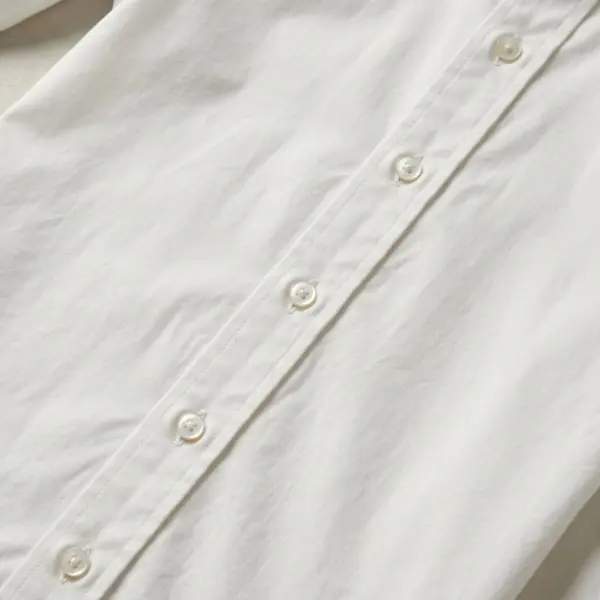
A button placket is a reinforced or finished opening that accommodates buttons and buttonholes. It commonly appears along the front of woven shirts, blouses, and button-front dresses.
In a conventional visible button-front design, one side of the opening overlaps the other when fastened. The buttons and buttonholes are positioned so that the two garment fronts align according to the intended pattern.
The placket may be formed from folded extensions of the main fabric or from separately applied bands. Its finished appearance can include visible topstitching, a clean folded edge, or another specified finish.
Unlike an unreinforced fabric edge, the completed placket helps support repeated fastening and opening. Its performance still depends on proper button placement, appropriate reinforcement, and garment fit.
Sleeve Placket: A Functional Opening Near the Cuff
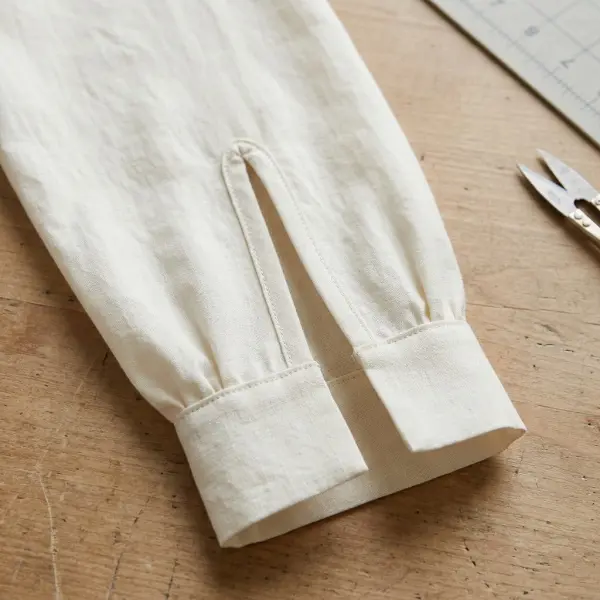
A sleeve placket is a finished opening near the lower end of a sleeve, usually positioned above a fitted cuff.
Its primary purpose is to provide enough access for the hand to pass through the cuff opening when the garment is put on or removed. Once the cuff is fastened, the sleeve returns to its intended wrist circumference.
Sleeve plackets may be constructed using a pointed tower, a continuous bound opening, or another appropriate method. The tower style creates a recognizable pointed extension, while continuous binding produces a generally simpler, narrower finish.
Sleeve plackets can also include a small button and buttonhole, but the presence of a button is not what defines their location or purpose.
Hidden Placket: A Concealed Fastening Arrangement
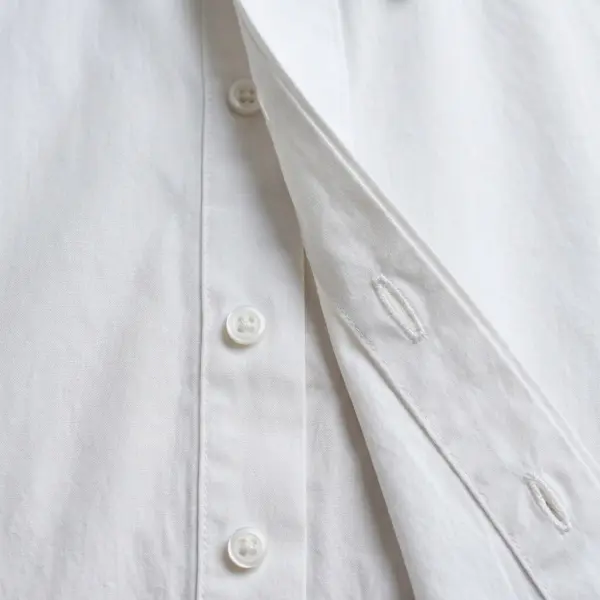
A hidden placket is a garment opening constructed so that the fasteners are covered by an outer fabric layer when the garment is closed.
A concealed button-front shirt may appear to have an uninterrupted vertical fabric panel, even though conventional buttons and buttonholes remain underneath.
This arrangement is achieved through carefully planned folds, facings, or separately constructed covering sections. The exact pattern extension and stitching sequence depend on the selected design.
Hidden plackets are commonly associated with understated shirts, refined blouses, shirt dresses, and other garments where visible buttons would interrupt the intended surface.
Their visual simplicity can require more construction planning than their finished appearance suggests.
Button vs Sleeve vs Hidden Placket: A Practical Comparison
The differences become easier to understand when location, function, appearance, and construction requirements are considered separately.
|
Comparison Factor |
Button Placket |
Sleeve Placket |
Hidden Placket |
|
Primary purpose |
Supports a button-and-buttonhole opening |
Provides access through the lower sleeve and cuff |
Conceals the garment's fastening system |
|
Typical location |
Front of shirts, blouses, and dresses |
Lower sleeve, above the cuff |
Commonly the garment front |
|
Visual appearance |
Buttons may remain visible |
Finished slit, often with a pointed or bound edge |
Buttons covered by fabric when closed |
|
Common construction |
Folded extension or applied band |
Tower construction or continuous binding |
Additional folds, covering extension, or separate panel |
|
Fastening system |
Buttons and buttonholes |
Optional placket button; usually paired with a cuff closure |
Often buttons and buttonholes, concealed beneath an outer layer |
|
Main technical concern |
Closure alignment and button placement |
Opening reinforcement and cuff access |
Fold accuracy, layer bulk, and concealed closure function |
|
Typical application |
Casual and formal button-front garments |
Long-sleeved woven shirts and blouses |
Minimalist shirts, blouses, and shirt dresses |
The comparison shows why choosing between these plackets is not always a direct either-or decision.
A designer may select a hidden front closure while retaining traditional pointed sleeve plackets. Similarly, a conventional shirt can combine a visible front button placket with continuous bound sleeve openings.
The practical design question is therefore not simply which placket looks better. It is which construction arrangement is appropriate for each opening on the garment.

Button Plackets: Why Visible Closures Remain Useful
Visible button plackets are strongly associated with conventional shirtmaking because they provide a clear fastening system and can contribute to the garment's visual structure.
Their familiar appearance should not obscure their technical requirements. A long front closure introduces multiple alignment points, particularly where the garment includes a collar, fitted chest, waist shaping, or curved hem.
Construction Methods for Front Button Plackets
A front button placket is commonly developed using one of two broad construction approaches.
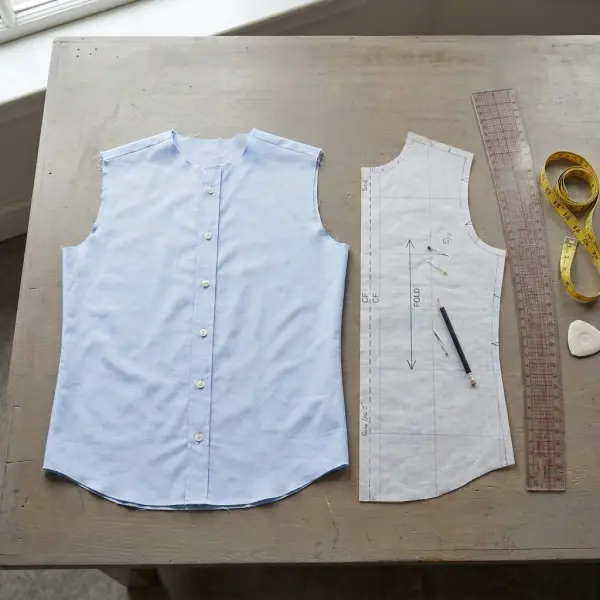
In a cut-on construction, the garment front pattern includes the fabric extension required to form the finished placket. The extension is folded, pressed, and secured according to the selected technique.
In an applied construction, a separate strip or band is attached to the garment front. This may be selected to achieve a particular appearance, accommodate contrasting materials, or suit the desired assembly sequence.
Both approaches can produce a functional front button closure. Their suitability depends on fabric thickness, pattern design, desired stitching, and factory capabilities rather than a universal quality ranking.
The pattern must distinguish the center-front reference from the finished placket width and folding allowances. Confusing these measurements can shift the button line away from its intended position.
How Visible Buttons Influence Garment Design
Buttons can become part of the garment's design language.
A workwear-inspired shirt may feature prominent buttons, substantial fabric, and clearly visible stitching. A lightweight blouse may use small, color-matched buttons to preserve a more delicate appearance.
Button size, spacing, material, and color influence the overall result. However, fastening choices must still accommodate the fabric layers and functional demands of the garment.
For example, a larger decorative button may require a different buttonhole size and more consideration of the placket's width. Likewise, heavy buttons attached to very lightweight fabric may need suitable stabilization to prevent distortion.
The visible placket also establishes a vertical design element. On striped fabrics, inaccurate cutting or folding can cause the stripe alignment to appear irregular along the garment opening.
When Visible Button Plackets Make Sense
Visible plackets are suitable when the closure is intended to remain a recognizable part of the garment.
This applies to many casual shirts, uniform shirts, classic woven blouses, shirt dresses, and structured tops.
They can also be useful where straightforward access to buttons is desirable. Because the fasteners are exposed, the wearer does not need to lift a covering panel to operate the closure.
That convenience should not be interpreted as proof that visible plackets are always easier or less costly to manufacture. An intricately topstitched applied placket may still require substantial precision and labor.
Sleeve Plackets: The Difference Between Tower and Continuous Constructions
The sleeve placket is especially important in long-sleeved woven garments with fitted cuffs.
Without a suitable opening, a cuff designed to sit close to the wrist may be too narrow for the hand to pass through comfortably. The placket allows the cuff area to open when dressing while preserving the intended finished shape.
Two well-established constructions are the tower placket and the continuous bound placket.
Tower Placket: Structured and Defined
A tower placket, also called a pointed shirt sleeve placket, features a visible extension that commonly ends in a pointed shape above the cuff.
This construction is frequently associated with classic tailored shirts. Its defined appearance complements structured cuffs, button-front closures, and traditional shirtmaking details.
The tower may be made using one prepared pattern piece or multiple components. These methods can produce a similar finished appearance while requiring different cutting and sewing operations.
The technical challenge is maintaining the intended shape while finishing the sleeve slit securely. Accurate marking, controlled cutting, proper folding, and reinforcement near the top of the opening are all important.
The BurdaStyle guide to classic tower plackets illustrates how a pointed sleeve placket is assembled and why right and left sleeves must be constructed as mirrored counterparts.
An attractive tower point is only one measure of quality. The opening also needs to lie flat, overlap correctly, and coordinate with the cuff attachment.

Continuous Bound Placket: A Simpler Opening Finish
A continuous bound placket finishes a sleeve slit using a fabric strip that encloses the raw edges of the opening.
Unlike the pointed tower construction, the continuous method generally produces a narrower, less prominent finish. It is commonly found on blouses and shirts where a relatively understated sleeve opening is appropriate.
The binding must follow the shape of the slit without forming unwanted folds at the upper opening point. Its construction requires particular care because the available seam allowance narrows near the endpoint.
A Threads magazine tutorial on continuous sleeve plackets explains how binding preparation, sleeve marking, and controlled stitching contribute to a clean finish.
Although the continuous construction can appear simpler than a tower placket, it is not free from technical challenges. Lightweight fabrics may shift during handling, while heavier fabrics can create excess thickness where the binding folds around the opening.
Choosing Between Tower and Continuous Sleeve Plackets
The decision depends primarily on the intended finished appearance, fabric handling requirements, and garment construction style.
A structured woven shirt may benefit from a tower placket that visually coordinates with its collar and cuffs. A soft blouse may use a continuous bound placket because its narrower finish better matches the garment's proportions.
However, neither method is restricted to one gender or product category. Tower plackets can be used on women's shirts, while continuous plackets can be used on men's garments when the design calls for them.
Manufacturers should evaluate the finished sample rather than assume that one method is inherently more durable or more premium.
Hidden Plackets: How Concealed Closures Change a Garment's Appearance
A hidden placket is designed to reduce the visual interruption created by exposed fasteners.
The closure still performs its normal function, but a carefully constructed fabric layer covers the buttons or other fastening components when the garment is closed.
This creates a different visual impression from a conventional button-front garment.
A minimalist shirt with concealed buttons may emphasize its fabric surface, collar, and silhouette rather than its individual fastening details. In a printed garment, the uninterrupted front may also help maintain the intended pattern presentation, provided the cutting and alignment are carefully planned.
How a Hidden Button Placket Is Constructed
Hidden button plackets generally require an additional covering arrangement beyond the conventional button-and-buttonhole structure.
Depending on the pattern, the outer cover can be created from multiple folded extensions of the garment front or from separately attached fabric components.
One established method uses an accordion-like folding arrangement to create a concealed buttonhole section underneath the visible front layer.
The construction requires coordinated placement of fold lines, buttonholes, and securing stitches. Errors in these relationships can cause the covering panel to pull away, distort the front opening, or interfere with button operation.
Susan Khalje's hidden button placket tutorial published by Threads demonstrates a folded construction method in which buttons remain covered by the outer front layer.
This is one possible technique rather than a universal pattern formula. Different hidden-placket constructions can use different numbers of folds, pattern extensions, and fastening arrangements.
Why Hidden Plackets Require Careful Fabric Selection
Concealing buttons introduces additional fabric layers.
A lightweight material may produce a relatively flat covering panel, provided the folds are stable and properly controlled. Heavier fabrics can create noticeable bulk along the center front.
The designer may need to adjust the fold arrangement, interfacing, seam allowance treatment, or fastener selection to maintain the intended appearance.
The buttons themselves also matter. Large or highly raised buttons may become visible through the outer covering layer or interfere with its flatness.
For this reason, concealed closures often benefit from low-profile fasteners compatible with the fabric and placket thickness.
A hidden placket should look clean when fastened, but it must also remain accessible and comfortable to operate.
Where Hidden Plackets Work Best
Hidden plackets are particularly suitable for garments where the designer wants a restrained front appearance.
Examples include minimalist woven shirts, contemporary shirt dresses, refined blouses, formal-inspired tops, and selected uniform designs.
A concealed closure may also support a brand's desired product aesthetic by reducing visible hardware. However, concealment is not automatically synonymous with better quality or more formal styling.
A well-executed visible placket can be appropriate for a premium garment, just as a poorly constructed hidden placket can appear bulky or uneven.
As a practical contemporary example, Seamwork's Grove shirt design includes a hidden-button variation that changes the visual character of a conventional button-up while retaining its other classic shirtmaking details.
How Fabric Properties Influence the Best Placket Choice
A placket should be selected in relation to the fabric's weight, thickness, drape, stability, and response to pressing.
The same construction can perform differently when transferred from a crisp woven cotton to a soft rayon or viscose fabric.
This is particularly relevant when fashion brands develop multiple colorways or material variations from one base garment design.
Stable Woven Fabrics
Cotton poplin, oxford shirting, and similar stable woven materials can support clearly defined folds and precise stitching.
This makes them suitable candidates for many visible front plackets, pointed sleeve plackets, and appropriately designed hidden closures.
A relatively crisp fabric can help maintain the geometry of the finished fold. It does not eliminate the need for accurate cutting, pressing, or reinforcement.
The final behavior will still depend on fabric construction, finishing, and the selected interfacing.
Lightweight and Fluid Fabrics
Fluid materials can produce elegant placket finishes, but they may require additional stabilization during handling and sewing.
A lightweight blouse with a continuous sleeve placket can look delicate and clean when its binding follows the opening smoothly.
On a hidden placket, however, too many folded layers may create an unexpectedly stiff front section. The problem becomes especially noticeable when the garment is intended to drape softly.
Sample development should therefore assess both the open and closed positions, as well as the interaction between the placket and surrounding fabric.
Thicker Fabrics and Knit Materials
Thicker fabrics increase the importance of bulk management.
A heavy woven overshirt may accommodate a visible front placket with relatively substantial layers, but a multi-fold concealed construction could require modifications to prevent excessive thickness.
Knit fabrics introduce another set of considerations. A polo-style knit shirt may use a buttoned front opening, but its construction often requires stabilization and techniques suited to the fabric's stretch and recovery.
Placket designs developed for stable woven fabrics should not be transferred directly to knits without testing. The opening must remain stable while the surrounding garment retains the movement characteristics expected from the material.
What Do These Placket Types Mean for Apparel Manufacturing?
From a manufacturing perspective, the differences among plackets influence pattern development, component preparation, sewing operations, and inspection requirements.
A design that appears simple on the finished garment may involve more complex handling behind the scenes.
Pattern Development and Cutting Requirements
Visible button plackets require accurate center-front references, overlap dimensions, and fastening positions.
Tower sleeve plackets require correctly oriented opening marks and precise placement of the pointed extension. Depending on the construction, the manufacturer may prepare one-piece or multiple-piece placket components.
Hidden plackets often need additional fabric extensions or covering pieces. Their folding requirements must be considered before the garment front is cut.
When evaluating fabric consumption, pattern makers should examine the complete cutting layout rather than assume that one placket type always consumes more fabric.
A small increase in a front extension may not materially affect consumption on one marker layout but could change material utilization on another.
Sewing Operations and Production Handling
Different constructions require different operation sequences.
A conventional folded front placket may involve interfacing, folding, pressing, and topstitching before buttonhole production.
A tower sleeve placket introduces opening preparation, component attachment, turning, edge stitching, and reinforcement at the top of the vent.
A hidden placket can require multiple coordinated folds, concealed buttonholes, securing stitches, and careful pressing to maintain a flat outer surface.
These differences can influence standard minute values, line balancing, operator assignments, and production planning.
However, it is not technically sound to declare that one construction is always faster or less expensive. The result depends on the chosen pattern, equipment, operator skill, fabric handling, and required quality standard.
Quality Control Priorities
Each type has distinctive inspection concerns.
|
Placket Type |
Main Inspection Priorities |
Potential Consequence of Poor Execution |
|
Visible button placket |
Width consistency, front alignment, button spacing, buttonhole quality |
Uneven closure, visible distortion, fastening difficulty |
|
Tower sleeve placket |
Point shape, reinforcement, correct overlap, mirrored orientation |
Bulky or twisted sleeve opening, weak vent endpoint |
|
Continuous sleeve placket |
Binding coverage, smooth opening point, secure stitching |
Fabric tucks, exposed edges, strain near the slit |
|
Hidden button placket |
Outer cover alignment, fold accuracy, concealed fastener access |
Visible buttons, bulky front, difficult fastening |
Quality standards should be tied to an approved construction sample. A hidden placket should not be judged by the same visible topstitching requirements as a traditional exposed placket.
Likewise, a continuous sleeve placket should not be rejected simply because it lacks the pointed extension that defines a tower construction.
Choosing the Right Placket for a Fashion Collection
Choosing a placket requires more than selecting a preferred visual reference. The construction should support the garment's function, material, styling, and commercial positioning.
For a fashion brand developing a coordinated collection, it is useful to consider plackets as part of a consistent product construction strategy.
Start With the Desired Visual Identity
A visible button placket may suit a casual collection built around classic shirting, workwear details, or decorative hardware.
A hidden button placket may be more appropriate when the brand wants a restrained, uninterrupted front surface.
A pointed tower sleeve placket can reinforce the familiar tailored-shirt aesthetic, while a continuous bound sleeve opening can create a quieter finish on a lightweight blouse.
The selection should be intentional rather than driven only by what a supplier normally produces.
Evaluate Function Before Styling
A garment opening must provide the access required for dressing and movement.
For a shirt, the front closure should allow comfortable fastening without excessive pulling. For fitted cuffs, the sleeve placket must open sufficiently for the hand.
For concealed closures, the covering layer should not make buttons unnecessarily difficult to reach.
A visually successful sample can still fail functionally if the opening, fastening arrangement, or garment fit is poorly coordinated.
The sample should therefore be evaluated while worn, not only when laid flat.
Consider Product Positioning and Target Cost
A construction choice can affect commercial feasibility through fabric usage, sewing operations, component requirements, and finishing complexity.
A startup developing an accessible everyday shirt may prefer a reliable visible placket that its supplier can produce consistently.
A more design-led collection may allocate additional development and production resources to a concealed opening if that detail contributes meaningfully to the product concept.
Neither approach guarantees better sales or customer satisfaction. The commercial value depends on whether the construction supports a product attribute that customers recognize and whether the brand can deliver it consistently.
Build a Repeatable Construction Library
Brands producing several garment styles can benefit from maintaining a library of approved placket constructions.
Rather than redesigning every detail from the beginning, the development team can reuse suitable construction references while adjusting dimensions and reinforcement for different fabrics and patterns.
Such a library might include an approved folded front placket, an applied button band, a pointed sleeve tower, a continuous bound sleeve opening, and a concealed front closure.
Each reference should identify its construction components, technical measurements, material assumptions, and inspection requirements.
This approach supports consistency without forcing every garment into the same construction.
Common Mistakes When Comparing or Selecting Plackets
Placket selection errors often result from misunderstanding the relationship between appearance, functionality, and sewing methods.
These problems can be avoided more effectively during product development than after production has begun.
Treating All Placket Types as Interchangeable
A button placket, sleeve placket, and hidden placket do not describe three equivalent alternatives.
A sleeve placket is defined primarily by its location and purpose. A hidden placket describes how the closure is covered, while a button placket identifies a fastening arrangement.
Confusing these classifications can produce unclear technical instructions and incorrect supplier interpretations.
A specification such as "hidden front button placket with pointed tower sleeve plackets" communicates much more information than simply requesting a "special placket."
Selecting a Hidden Placket Without Checking Thickness
A concealed closure can look attractive in a design illustration but become bulky in an unsuitable fabric.
This often happens when a multi-fold construction is transferred from a relatively lightweight sample to a heavier material without adjusting the pattern.
The covering panel may project outward or fail to lie smoothly over the buttons.
The better approach is to test the complete layered construction in the approved fabric before confirming the final method.
Choosing a Sleeve Placket Solely for Appearance
A pointed sleeve tower may complement a structured shirt, while a continuous binding may suit a softer blouse. Yet either option must still function correctly with the cuff and sleeve pattern.
A sleeve opening that is too short can restrict dressing regardless of how neatly its point or binding is finished.
The opening length, cuff circumference, overlap, and fastener arrangement need to be assessed together.
For a deeper explanation of these technical defects, see common placket sewing problems and how to prevent them.
Assuming Hidden Construction Automatically Means Higher Quality
Concealing a closure may produce a more understated appearance, but construction quality depends on execution.
A poorly aligned hidden placket can create a more obvious defect than a conventional visible button placket.
Likewise, a cleanly sewn traditional shirt front can meet demanding product standards without any concealed features.
Brands should assess material suitability, stitch quality, fit, and fastening performance rather than equate complexity with quality.
What Should Brands Specify Before Bulk Production?
Placket specifications should be clear enough for pattern makers, sample rooms, production operators, and quality-control teams to interpret consistently.
Terms such as "classic button placket" or "premium hidden placket" are insufficient without measurable construction details.
The approved tech pack should define the relevant opening and construction information.
|
Technical Specification |
Information to Confirm |
|
Placket position |
Front, lower sleeve, or another garment location |
|
Placket arrangement |
Visible buttoned, hidden buttoned, tower sleeve, continuous bound, or defined alternative |
|
Construction method |
Cut-on, applied, faced, bound, or selected variation |
|
Dimensions |
Finished width, opening length, overlap, and relevant tolerances |
|
Pattern orientation |
Center-front placement and mirrored sleeve construction |
|
Material components |
Main fabric, binding, facing, placket band, and interfacing |
|
Fastening arrangement |
Button or snap size, quantity, position, and orientation |
|
Sewing details |
Stitch type, visible topstitching, reinforcement, and finishing sequence |
|
Quality criteria |
Approved appearance, fastening performance, dimensional accuracy, and care-test expectations |
The manufacturer should also confirm whether the specified technique is compatible with available equipment and established production processes.
For hidden closures, sample approval should include inspection of the placket both opened and fastened. For sleeve plackets, the opening should be evaluated with the attached cuff.
The final approved sample should remain the reference for judging the construction during production.
Important Technical Caveats
Placket terminology is not perfectly standardized across every sewing pattern, brand, or manufacturing environment.
A garment's "button band" may be described as part of its front placket, while a concealed button opening may be identified as a hidden placket, concealed placket, or covered closure. Manufacturers may also use different construction sequences to produce visually similar tower plackets.
The technical drawing and sewing specification should therefore take priority over a general descriptive term.
Several other distinctions are worth preserving.
A hidden placket does not mean that the garment has no buttons. A sleeve placket does not necessarily include its own button. A visible button placket does not have to be constructed from an applied band. And a tower placket is not universally more durable than a continuous bound construction without considering the materials, reinforcement, and sewing quality.
No universal production-time advantage, fabric-consumption figure, or durability ranking should be assigned to these constructions without comparable manufacturing data.
For apparel businesses, the most reliable comparison is based on an approved garment design, the intended material, and actual production conditions.
Frequently Asked Questions About Button, Sleeve, and Hidden Plackets
What Is the Difference Between a Button Placket and a Hidden Placket?
A button placket is a finished opening designed to accommodate buttons and buttonholes, while a hidden placket is constructed so that the fastening components are concealed beneath an outer fabric layer.
In a conventional visible button-front shirt, the buttons remain part of the garment's appearance. In a hidden-button shirt, the buttons can still be fully functional but are covered when the front is closed.
The difference is therefore largely about closure presentation and construction arrangement rather than whether buttons are present.
Hidden designs often require additional pattern folds or covering components. The appropriate choice depends on fabric thickness, desired appearance, ease of use, and manufacturing requirements.
Why Do Long-Sleeved Shirts Need Sleeve Plackets?
Long-sleeved woven shirts with fitted cuffs generally need sleeve plackets so the cuff area can open wide enough for the hand to pass through during dressing.
The sleeve placket creates a controlled slit above the cuff while finishing and reinforcing its fabric edges.
Without an adequate opening, a narrow cuff may prevent the garment from being put on comfortably, even when the cuff is unbuttoned.
Not every long sleeve requires this construction. Loose sleeves, elastic cuffs, knit cuffs, and other opening arrangements may provide sufficient access without a conventional placket.
The need depends on cuff circumference, material stretch, sleeve design, and the intended dressing method.
Is a Tower Placket Better Than a Continuous Sleeve Placket?
Neither construction is universally better. A tower placket provides a more defined, pointed appearance commonly associated with tailored shirts, while a continuous bound placket produces a narrower finish that can suit softer blouse and shirt designs.
The tower construction requires accurate formation of its outer extension and reinforcement at the slit endpoint. A continuous placket requires careful binding application and smooth handling of the opening point.
Both can perform effectively when the pattern, fabric, sewing method, and cuff are compatible.
Brands should choose based on product appearance, functional requirements, material suitability, and supplier capability. Durability and cost comparisons require testing or production data for the actual constructions being considered.
Are Hidden Button Plackets More Expensive to Manufacture?
Hidden button plackets may require additional fabric extensions, folding operations, pressing, or construction steps compared with a particular conventional visible placket.
However, the cost difference cannot be determined from appearance alone. Some hidden-placket techniques are relatively straightforward, while certain decorative or separately applied visible plackets also require demanding sewing operations.
Manufacturing cost depends on the complete construction sequence, fabric handling, material consumption, equipment, labor efficiency, and inspection requirements.
For sourcing teams, the most useful method is to compare supplier quotations using the same fabric and approved garment specifications.
A construction should justify its additional cost through the intended design, functionality, or product positioning rather than through an assumed quality advantage.
Can a Shirt Have Both a Hidden Placket and a Sleeve Placket?
Yes. A shirt can combine a hidden front button placket with sleeve plackets at its cuffs because these features serve different functions and occupy different garment locations.
The hidden front placket conceals the central fastening system, while the sleeve plackets allow the cuffs to open for dressing and movement.
The sleeve openings may use pointed tower constructions, continuous bindings, or another appropriate design.
This combination can be useful in shirts that aim for an understated front appearance while retaining conventional long-sleeve functionality.
For manufacturers, both details should be documented separately. The front closure and sleeve openings involve different pattern pieces, dimensions, sewing operations, and quality-control requirements.





Comments 0
Leave a CommentSend Comment
Anda harus Login terlebih dahulu untuk dapat memberikan komentar.