
How Private Label Brands Build Product Identity Without Owning Factories
A fashion brand does not need to own a factory to create products that customers recognize as distinctly its own. Through private label manufacturing, retailers and entrepreneurs can shape garment design, fit, fabric selection, colors, construction details, branding, and product presentation while relying on external manufacturers to handle physical production.
The challenge is making those decisions feel connected. A logo sewn into a generic T-shirt may establish the name under which the product is sold, but it does not necessarily create a recognizable product identity. Customers are more likely to distinguish a brand when its garments consistently express particular choices about silhouette, comfort, quality, styling, sizing, and visual character.
For private label businesses, product identity is therefore built through a combination of creative direction and operational control. The brand defines what its products should look and feel like, communicates those requirements to manufacturing partners, approves physical samples, and maintains consistency as collections expand or suppliers change.
This approach can support differentiation without factory ownership, but it requires more than choosing attractive products from a supplier catalog. Brands need to translate their positioning into product specifications that manufacturers can reproduce and customers can recognize.
Quick Answer: How Do Private Label Brands Build Product Identity?
Private label brands build product identity by defining consistent product characteristics and translating them into specifications that external manufacturers can produce. These characteristics may include fit, silhouette, fabric handfeel, color palette, construction, signature details, labels, packaging, and the way garments are presented to customers.
The brand owns the creative and commercial direction, while the manufacturer provides the technical capabilities needed to make the products. A brand can establish a recognizable identity through carefully selected manufacturer-developed styles, customized garments, or original designs produced under contract.
The most effective approach is not necessarily maximum customization. It is consistent differentiation that customers can perceive and the supply chain can reproduce.
For example, a casualwear brand might become known for a particular relaxed fit, structured cotton jersey, restrained colors, and understated finishing. Another might emphasize breathable fabrics, practical silhouettes, and dependable sizing for warm climates.
Neither brand needs to operate sewing machines itself. Both need a clear product standard, capable manufacturing partners, and a disciplined process for maintaining the characteristics that define their products.

Product Identity Is More Than a Brand Label
Product identity is the combination of recognizable characteristics that makes a company's products feel distinct from competing alternatives. In fashion, it can emerge through visual design, material choices, garment proportions, construction, functional features, fit consistency, and the overall experience of wearing and buying the product.
Brand identity is broader. It includes elements such as the name, logo, typography, communication style, visual language, values, and market positioning. Product identity connects that broader brand concept to the physical merchandise customers actually purchase.
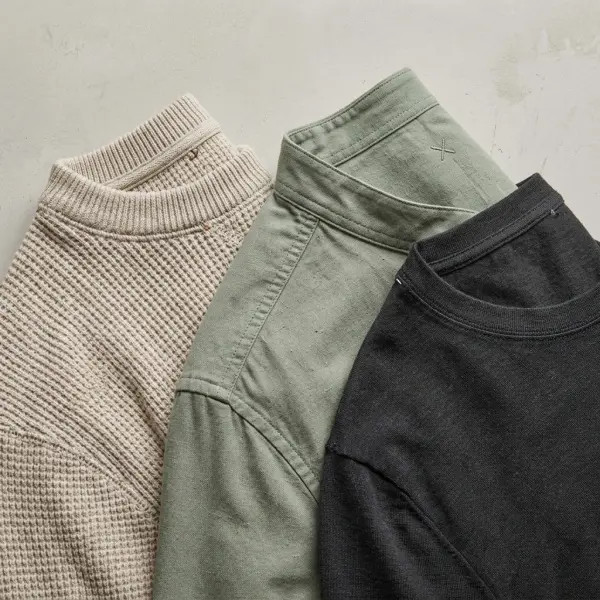
Consider two fashion businesses selling basic crew-neck T-shirts. Both may use cotton fabrics, similar price points, and understated packaging. Yet one might develop a recognizable heavy-weight silhouette with a substantial collar and relaxed proportions, while the other focuses on softer fabric, a narrower shape, and a lighter everyday feel.
The differences may appear modest in isolation, but they can become meaningful when repeated across products and collections. Customers begin to associate particular fit characteristics, fabric sensations, or styling proportions with a brand.
This distinction matters especially in private label fashion because externally manufactured garments can begin with similar production platforms. A business that relies only on changing the neck label may struggle to establish product-level differentiation when other retailers can purchase comparable merchandise.
A useful product identity gives customers a reason to remember the garment itself, not just the advertising surrounding it.
Why Factory Ownership Is Not Required for a Recognizable Fashion Brand
Manufacturing and product direction are different capabilities. A factory specializes in turning specifications, materials, patterns, and production instructions into finished garments. A fashion brand specializes in understanding customers, defining the product proposition, developing collections, and connecting merchandise with a target market.
These capabilities can exist within the same company, but they do not have to.
External manufacturers can provide pattern development, sampling, material sourcing, cutting, sewing, printing, embroidery, finishing, and packaging services. The brand may provide the original design and detailed technical instructions, or it may collaborate with the manufacturer to refine existing product platforms.
What matters is the division of responsibility. The brand needs sufficient influence over the features that define its products, and the manufacturing partner must have the capability to reproduce those features consistently.
The broader operating structure is explained in Private Label Fashion Explained for Retailers and Entrepreneurs. When considering product identity specifically, the central question is how much control the brand needs over design decisions, production standards, and the finished customer experience.
Owning a factory does not automatically create a distinctive brand. Likewise, outsourcing production does not prevent a business from developing recognizable merchandise. Product identity depends on the quality and consistency of decisions made across the development and manufacturing process.
Start With a Clear Product Point of View
A recognizable private label collection begins with a defined product direction rather than an unrestricted selection of garments.
The brand should understand who will wear the products, under what circumstances, and what customers should associate with the merchandise. Those associations could involve precise tailoring, relaxed comfort, durability, versatility, modest coverage, technical performance, contemporary styling, or a particular balance between design and price.
The goal is not to choose every desirable characteristic. It is to prioritize the characteristics that genuinely support the intended customer and market position.
A brand targeting urban professionals may prioritize refined proportions, versatile colors, comfortable movement, and garments that transition between office and casual environments. A label specializing in everyday activewear may place greater emphasis on stretch, recovery, moisture management, garment stability, and movement-friendly construction.
These priorities lead to different product-development decisions, even when both brands use external manufacturers.
Translate Positioning Into Product Principles
Broad positioning statements become useful only when they influence actual garments.
A brand claiming to offer comfortable everyday clothing needs to clarify what comfort means within its product range. It could involve fabric softness, breathability, stretch, seam placement, waistband construction, garment weight, or ease allowances.
Similarly, a brand pursuing minimalist design must determine which features will remain consistent. Minimalism may influence color selection, proportion, trim visibility, pocket placement, surface decoration, and the relationship between different products in a collection.
The practical objective is to establish a small set of product principles that can guide sourcing, design development, sample approval, merchandising, and future assortment decisions.
Without these principles, individual products may look attractive while the overall collection lacks coherence.

The Main Product Elements That Build Brand Recognition
Private label brands can create differentiation through several interconnected product attributes. Not every brand needs to customize every attribute, and some categories naturally provide more design flexibility than others.
The most relevant elements depend on the customer promise, intended price point, product category, manufacturing capabilities, and order volume.
Fit and Silhouette
Fit is one of the most commercially meaningful ways to establish a recognizable product identity. Customers may remember a brand because its shirts fit their shoulders well, its trousers provide a reliable rise, or its dresses maintain comfortable proportions without sacrificing the intended silhouette.
Silhouette describes the overall outline and shape of a garment, while fit concerns how that garment relates to the wearer's body. They are connected but not interchangeable. Two trousers may share a straight-leg silhouette while fitting differently around the waist, hip, thigh, and seat.
Brands can express their product direction through pattern measurements, ease allowances, garment lengths, shaping, proportions, and grading decisions. For example, a relaxed-fit shirt should not be defined only by a larger chest measurement. Shoulder placement, sleeve shape, body length, armhole dimensions, and fabric behavior all influence the finished appearance.
Consistent fit becomes particularly valuable when customers purchase additional products from the same brand. Once buyers understand how the sizing works, uncertainty around subsequent purchases may decrease, provided the brand maintains comparable fit standards across related styles.
Fabric Selection and Handfeel
Fabric strongly influences how customers perceive a garment before and after wearing it. Weight, drape, surface texture, stretch, breathability, opacity, and tactile comfort contribute to product character.
A structured heavyweight cotton jersey creates a different impression from a lightweight, fluid knit, even when both are used for similar T-shirt designs. Likewise, a crisp poplin shirt communicates a different aesthetic from a soft brushed twill shirt, although the final appearance also depends on construction and finishing.
Private label brands can establish material preferences that reinforce their intended identity. A casualwear label may favor substantial knits, while a warm-weather clothing brand may prefer fabrics with suitable air permeability and lightweight constructions.
These decisions should be supported by appropriate material specifications and testing where necessary. Descriptions such as premium cotton, soft-touch fabric, or breathable material are not sufficient technical instructions on their own.
Color Palette and Visual Consistency
Color can connect otherwise different garments into a coherent collection. A brand that repeatedly uses muted earth tones, restrained neutrals, saturated contrasts, or carefully selected seasonal accents can develop a recognizable visual character.
However, consistency requires more than selecting similar colors from a screen. Fabric composition, surface texture, dyeing method, finishing, lighting, and production batches may all affect how a color appears.
Manufacturers may use approved physical swatches, lab dips, color standards, or other reference materials to communicate the intended shade. This becomes especially important when a brand needs multiple garments, fabrics, or accessories to coordinate within one collection.
Color identity should also support actual customer use. A consistent palette is commercially useful when it makes garments easier to combine, supports merchandising, or reinforces the intended aesthetic rather than simply limiting creative variety.
Construction and Signature Details
Garment construction can influence both appearance and wearing experience. Seam positioning, collar shape, pocket placement, stitching, closures, hems, linings, cuffs, and trim choices all contribute to the final product.
A private label brand may establish recurring details that customers recognize across different styles. These could include a particular neckline construction, distinctive pocket proportion, subtle contrast stitching, a recognizable placket, or a consistent finishing technique.
The detail does not have to be visually dramatic. For certain brands, restraint and precision can be more distinctive than prominent decoration.
Signature features should nevertheless remain compatible with manufacturing economics. A complicated construction detail that is difficult to reproduce consistently may create unnecessary defects or production costs without adding meaningful customer value.
How Do Brands Translate Creative Identity Into Factory Instructions?
A clear creative direction is not enough to guarantee consistent production. Manufacturers need technical information that explains which design characteristics are required, which variations are acceptable, and how the garment should be constructed.
In apparel development, this information is commonly organized through technical specifications or a technical package, often called a tech pack.
A tech pack can include technical drawings, measurements, size specifications, materials, trims, construction details, colorways, artwork positions, labels, packaging instructions, and revision records. Its purpose is to translate a product concept into instructions that development and production teams can understand.
For private label businesses, the document also helps preserve product identity when personnel change, collections expand, or manufacturing partners are replaced.
Define What Must Remain Consistent
Not every characteristic requires the same level of control. A brand should distinguish between defining features and details that can change without damaging product identity.
For example, a relaxed-fit T-shirt brand may consider its shoulder proportion, body length, neckline construction, and fabric handfeel essential. Minor changes to nonvisible internal production methods may be acceptable if they do not affect appearance, fit, comfort, durability, or compliance.
A useful specification system records the essential characteristics alongside realistic tolerances and approved reference samples. It also establishes how changes will be proposed, evaluated, and authorized.
This reduces the risk that a supplier independently substitutes materials, adjusts patterns, or changes construction in ways that alter the finished product.
Use Sampling as a Product Identity Test
Sampling allows a brand to evaluate whether its intended identity survives the transition from concept to physical garment.
A prototype may appear close to the original design in photographs but feel different when worn. Fabric weight may alter drape, neckline construction may affect appearance, or an adjusted pattern may change the intended silhouette.
Fit sessions, measurement reviews, fabric evaluation, wear testing, and construction inspection can reveal these differences before bulk production.
When a sample is approved, the brand should document the accepted version and clarify how it relates to the technical specifications. The approved sample provides a physical reference, but it should not replace written measurements, material specifications, tolerances, and other necessary production instructions.

Can a Brand Build Identity Using Existing Manufacturer Designs?
Yes. Private label product identity does not always require original garments developed from the first pattern.
Many businesses begin with manufacturer-developed styles and customize selected features that matter to their target audience. An existing T-shirt platform might offer suitable fabric, construction, and sizing, while the brand introduces a coordinated color palette, specific label presentation, embroidery, or other permitted modifications.
This approach can reduce product-development complexity because the manufacturer already has experience producing the underlying garment.
However, the degree of differentiation may remain limited. If several retailers buy the same base product with minor changes, customers may find similar garments elsewhere. A distinctive logo or packaging can help recognition, but those elements cannot entirely replace a meaningful product proposition.
Brands therefore need to evaluate whether the available customization is sufficient for their positioning.
A business selling accessible wardrobe essentials may not need exclusive garment engineering. Its differentiation might come from carefully curated colors, dependable sizing, consistent quality, competitive merchandising, and customer service.
A technically specialized apparel brand, by contrast, may need more control over fabric performance, pattern engineering, construction, and testing to deliver its promised functionality.
The appropriate level of customization is a strategic choice rather than a measure of how legitimate a brand is.
Build a Collection That Feels Like One Brand
Product identity becomes more visible when individual garments belong to a recognizable assortment.
A collection does not need to use the same fabric, silhouette, or decorative detail everywhere. It needs enough shared logic that customers can understand why the products belong together.
For example, a contemporary workwear label may combine tailored trousers, relaxed shirts, lightweight jackets, and simple knit tops. The garments can vary in construction while sharing consistent proportions, subdued colors, complementary fabrics, and a coherent level of formality.
This consistency can also improve merchandising. Products become easier to combine into outfits, communicate through coordinated photography, and arrange across retail displays or online categories.
Develop Core Products Before Expanding Too Widely
Core products are recurring styles that represent a brand's central offer. They may remain available across seasons with selected changes to colors, fabrics, or minor details.
For a small private label company, core products can provide a useful foundation for learning about customer preferences. Repeated sales generate information about sizing, fit satisfaction, material performance, returns, pricing, and demand by variant.
Once those products are understood, the business can introduce complementary pieces or more experimental designs without changing its entire identity.
This does not mean every brand needs a permanent basics collection. Seasonal, occasionwear, and trend-led businesses may operate differently. Even then, a consistent design vocabulary or product standard can provide continuity between collections.
Create a Product Identity Framework
A simple internal framework can help teams evaluate product decisions before committing to sampling or production.
|
Product dimension |
Brand decision |
Manufacturing implication |
|
Fit and silhouette |
Desired proportions and wearing experience |
Pattern, measurements, grading, tolerances |
|
Fabric character |
Target handfeel, weight, texture, performance |
Material specification, sourcing, testing |
|
Color direction |
Core palette and permitted seasonal variations |
Color standards, lab dips, approvals |
|
Construction details |
Signature seams, collars, pockets, trims |
Sewing instructions, machinery, workmanship |
|
Quality standard |
Expected appearance, function, and consistency |
Inspection criteria, approved samples |
|
Brand presentation |
Labels, packaging, product communication |
Label specifications, packing instructions |
The framework does not have to become a complex corporate manual. Its value comes from making decisions consistent across people and production partners.
It also helps identify contradictions. A brand promising lightweight comfort should question whether a new heavyweight fabric is appropriate, while a label positioned around refined tailoring should examine whether overly casual construction details fit its product direction.
How Supplier Relationships Affect Brand Identity
External manufacturers influence the product identity a brand can realistically maintain. Different factories have different material networks, equipment, technical capabilities, workmanship standards, minimum order quantities, and production specialties.
A supplier experienced in basic knitwear may be efficient at producing T-shirts, sweatshirts, and casual bottoms but less capable of developing structured tailoring or technically demanding outerwear. Conversely, a specialist tailored-garment manufacturer may not be the most economical partner for high-volume jersey basics.
Supplier selection should therefore reflect the intended product characteristics, not simply the lowest quotation.
A useful manufacturing partner can identify when a requested construction is impractical, when fabric behavior may affect fit, or when a finishing method introduces durability concerns. Such feedback helps the brand refine its design without losing the intended customer experience.
The relationship also requires clear boundaries. A manufacturer may recommend substitutions or production changes, but the brand should determine which decisions require formal approval.
For brands using several suppliers, shared specifications and quality standards become particularly important. Otherwise, similar garments produced by different factories may vary in fit, color, finishing, or perceived quality.
Maintaining Identity When Production Moves Between Factories
Changing manufacturers can be necessary because of capacity, pricing, delivery performance, geographic considerations, quality concerns, or business growth. Yet moving production can alter the final product even when the technical documents appear unchanged.
Different factories may interpret construction instructions differently or work with different machinery, material suppliers, pattern systems, and finishing processes. Fabric from a new mill may have a slightly different handfeel or shrinkage behavior. Pattern conversions can also introduce measurement changes.
A controlled transfer should therefore involve technical-document review, material verification, new sample approval, fit evaluation, and an appropriate production validation process.
Some businesses retain approved reference garments, physical material swatches, measurement records, test results, and documented construction details. These records can help new manufacturers understand what must be reproduced.
Absolute duplication is not always technically achievable, especially when materials, suppliers, or production processes change. The goal is to maintain the product characteristics that matter to customer expectations within agreed and realistic tolerances.
Labels, Packaging, and Presentation Complete the Product Experience
Physical brand details can reinforce product recognition, but they should support rather than substitute for the garment itself.
Neck labels, woven labels, care labels, hangtags, packaging materials, and product inserts may create a consistent visual impression. Their dimensions, materials, placement, colors, and typography should suit the garment's aesthetic and price positioning.
However, product labeling also has a compliance function. A retailer cannot assume that replacing a manufacturer's branding with its own label satisfies all applicable requirements.
For instance, the U.S. Federal Trade Commission's apparel labeling guidance explains that many textile and wool products require disclosures such as fiber content, country of origin, and the identity of the manufacturer or another responsible business. Care instructions are also required for covered apparel under applicable rules.
Within the European Union, Regulation (EU) No 1007/2011 establishes rules covering textile fibre names and composition labeling.
Requirements differ by product and destination market, so private label businesses should verify the applicable rules rather than relying on supplier defaults.
Presentation extends beyond physical packaging. Product photography, fit descriptions, sizing guides, styling examples, and online product information help customers understand how garments correspond to the intended brand identity.
A brand emphasizing relaxed silhouettes should show the garments in ways that accurately communicate those proportions. A label emphasizing fabric texture should include product imagery and descriptions that make the material character understandable without exaggerating performance claims.
The presentation must match the product customers receive. A polished campaign cannot compensate indefinitely for garments that look or feel substantially different from the advertised offer.
Why Consistency Matters More Than Constant Reinvention
Fashion brands need enough variation to remain relevant, but changing every defining product characteristic can make recognition difficult.
For private label operators, inconsistency may emerge unintentionally through supplier substitutions, rushed development, unclear specifications, or an expanding assortment that no longer follows a coherent product direction.
A customer who likes the fit of one season's trousers may expect a related style to follow comparable sizing logic. If the next order arrives with significantly different measurements under the same size designation, the brand risks weakening that expectation.
Material changes can produce similar problems. A fabric substitution may preserve nominal fiber composition while altering weight, recovery, opacity, texture, shrinkage, or drape. These differences can affect the wearing experience even when the product looks similar in photographs.
Consistency does not mean refusing improvements. Brands may revise patterns after customer feedback, strengthen weak seams, introduce better materials, or adapt sizing. The important practice is managing those changes deliberately and communicating meaningful differences when customers need to know.
Product identity becomes stronger when buyers can recognize what remains dependable and understand what has changed.
A Practical Example: Developing a Recognizable Casualwear Brand
Consider a hypothetical entrepreneur launching a small private label casualwear business. The target customers want understated garments that feel substantial, work across casual situations, and maintain a relaxed silhouette without looking excessively oversized.
Rather than starting with a large supplier catalog, the entrepreneur defines several product principles: structured fabrics, consistent shoulder proportions, muted colors, minimal visible branding, and dependable finishing.
The first assortment includes a T-shirt, sweatshirt, and casual trouser. The manufacturer already offers suitable base constructions for two products, but the brand requests changes to selected measurements, colors, neck labels, and finishing details. The trousers require additional pattern development to achieve the intended proportion.
During sampling, the brand discovers that the original T-shirt fabric feels too light and does not hold the desired shape. A different material is selected after evaluating available options, costs, and the effect on garment behavior. The sweatshirt is adjusted so its body length and sleeve proportions remain visually compatible with the T-shirt.
The brand then records the approved measurements, materials, trims, and construction standards for future orders.
At launch, photography emphasizes the actual shape and fabric character of the garments. Product descriptions explain fit and measurements without claiming unsupported technical advantages.
Customer reviews and return information provide feedback for subsequent production. If the T-shirt performs well but the trousers generate repeated fit complaints, the brand can investigate and correct the relevant pattern rather than redesigning its entire collection.
This example illustrates how product identity can emerge from a series of coordinated decisions. The entrepreneur does not own the factory, and the garments do not require extraordinary technical innovation. Differentiation comes from a clear product point of view, controlled development, and the ability to repeat the intended experience.
Balancing Differentiation With Manufacturing Cost
Every customization decision has operational consequences. Developing original patterns, changing material specifications, commissioning custom trims, or adding construction details may create additional sampling requirements, supplier minimums, development costs, or production steps.
That does not mean brands should avoid customization. It means product changes should be evaluated according to their contribution to customer value.
A distinctive fit may justify pattern development because customers experience it every time they wear the garment. A custom metal trim may be less valuable if it adds cost without improving appearance, functionality, or recognition in a meaningful way.
The most useful distinction is between customer-visible or customer-experienced differentiation and changes that merely increase production complexity.
For an early-stage brand, selective customization may provide a better balance than fully original development across every item. A mature brand with proven demand, stronger technical resources, and stable production volumes may justify more extensive development.
Neither approach guarantees better margins. The commercial outcome depends on total development cost, production efficiency, achievable pricing, sell-through, returns, reorders, and the customer's willingness to choose the differentiated product.
Ownership and Exclusivity Need Separate Agreements
A brand can own its trademark without necessarily owning the underlying garment pattern, print artwork, fabric design, or manufacturer-developed product platform.
This distinction can become significant when a private label business invests in distinctive design elements or plans to change suppliers.
The World Intellectual Property Organization's trademark guidance explains that trademarks distinguish the goods or services of one business from those of competitors and that protection depends on the relevant legal system and territory.
Product appearance may involve different intellectual-property rights. WIPO's industrial design guidance explains that design protection concerns ornamental or aesthetic aspects of products, with protection mechanisms varying across jurisdictions.
Private label contracts should therefore clarify relevant ownership and use rights. Depending on the arrangement, this may include original artwork, patterns, technical files, exclusive designs, custom trims, development work, and the manufacturer's ability to supply comparable products to other buyers.
A business should not assume that paying for sampling automatically transfers every associated intellectual-property right or guarantees exclusivity.
Commercial agreements and applicable law determine the actual position. Where designs or brand assets are strategically important, qualified intellectual-property advice may be necessary.
Responsible Sourcing Is Part of Brand Credibility
Brands may position themselves around durability, responsible production, material transparency, or other social and environmental characteristics. These claims require evidence that is separate from the appearance of the finished garment.
Outsourcing manufacturing does not by itself establish that a product is responsibly made, nor does it automatically prevent a company from managing supply-chain risks.
The OECD Due Diligence Guidance for Responsible Supply Chains in the Garment and Footwear Sector provides a framework for businesses to identify, prevent, address, and account for relevant adverse impacts in garment and footwear supply chains.
For private label brands, this reinforces the importance of understanding supplier practices, subcontracting arrangements, material sourcing, and the evidence supporting product claims.
A factory certificate, material label, or supplier statement should not be presented as proof of broader environmental or social performance unless its scope and validity support that claim.
Responsible sourcing may form part of product identity, but the credibility of that identity depends on traceable information, appropriate due diligence, and accurate communication rather than marketing language alone.
How Fashion Businesses Can Apply Product Identity Strategically
Private label product identity becomes easier to manage when it is treated as a repeatable business process rather than a collection of subjective design preferences.
An early-stage company may use a relatively simple system, while a larger retailer may require more formal product governance across designers, merchandisers, sourcing teams, technical developers, and manufacturing partners.
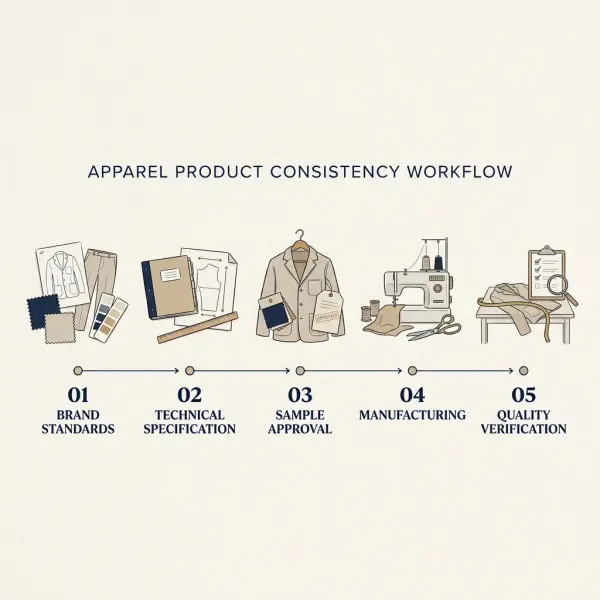
The essential process includes a few connected activities:
- Define the product promise. Identify the customer needs and design characteristics that should distinguish the brand.
- Prioritize recognizable attributes. Choose which elements of fit, silhouette, materials, colors, construction, and presentation matter most.
- Translate decisions into specifications. Record measurements, materials, tolerances, trims, artwork, and construction requirements.
- Validate through physical samples. Evaluate appearance, fit, quality, and wearing experience before approving production.
- Control supplier changes. Require documented approval for substitutions that may affect product identity or performance.
- Measure customer response. Use return reasons, reviews, complaints, sales patterns, and product evaluations to refine subsequent collections.
- Maintain consistency across assortments. Apply shared product standards while permitting deliberate design evolution.
The process should remain proportionate to the size and complexity of the business. A small brand producing a few core styles does not need the same documentation infrastructure as a retailer managing hundreds of products across several factories.
It does, however, need enough structure to prevent essential product characteristics from depending entirely on informal conversations or individual memory.
Common Mistakes That Weaken Private Label Product Identity
Relying on Logos Instead of Product Differentiation
A brand may invest heavily in labels, packaging, and visual identity while selling garments that are nearly indistinguishable from readily available alternatives. This can create an attractive presentation without a clear product reason for customers to return. A stronger approach connects branding with identifiable product characteristics, whether those involve fit, fabric quality, functionality, styling consistency, or carefully curated merchandise.
Copying Competitors Without Defining a Product Direction
Reference garments are useful during development, but copying visible design elements from unrelated competitors can produce an assortment with no consistent point of view. It may also raise intellectual-property concerns depending on the elements involved and the applicable law. Brands should use market research to understand customer expectations and category standards, then develop their own product specifications and differentiation strategy.
Allowing Manufacturers to Make Uncontrolled Substitutions
A supplier may propose an alternative fabric, trim, construction method, or material source to manage production cost or availability. Some substitutions may be entirely acceptable, but others can change the garment's appearance, fit, handfeel, or performance. Brands need a clear approval process identifying which changes require sampling, testing, or written authorization before bulk production proceeds.
Expanding the Collection Without Consistent Design Rules
A growing assortment can lose coherence when new products are chosen independently of the existing range. This frequently occurs when appealing supplier catalog items are added without considering their relationship to the brand's core silhouettes, colors, quality standards, and customer use cases. Collection expansion should be guided by a recognizable product framework and supported by evidence of customer demand.
Treating the Approved Sample as a Permanent Guarantee
Approving a strong sample is an important milestone, but fabric batches, production operators, materials, machinery, and suppliers can change over time. Without updated specifications and quality checks, the finished product may gradually drift away from its intended standard. Brands should maintain reference samples, document approved changes, and use appropriate inspection methods during production and reorders.
Making Product Claims That the Supply Chain Cannot Support
A brand may describe its clothing as exceptionally durable, sustainable, ethically produced, or technically superior without enough supporting evidence. Such claims can create regulatory, reputational, and customer-trust risks. Product communication should reflect verified material properties, appropriate testing, traceable sourcing information, and the actual scope of relevant certifications or supplier assurances.
What Private Label Brands Should Verify Before Committing to Production
Product identity relies on several assumptions that should be checked before significant production commitments are made.
A brand should confirm whether its manufacturer can reproduce the desired fit, materials, construction, color standards, trims, and finishing at the intended order volume. It should also clarify whether the proposed details are exclusive, whether custom specifications can be transferred to another supplier, and which design files or development assets the buyer is entitled to use.
The relationship between brand ownership and product rights deserves particular attention. A registered or used trademark does not automatically establish ownership of every pattern, fabric print, or product design associated with the branded garment.
Compliance requirements should also be reviewed for each intended market. Labels, care instructions, fibre descriptions, country-of-origin statements, safety requirements, and product claims may be subject to different rules depending on jurisdiction and product category.
Finally, businesses should validate that the differentiation customers are expected to appreciate is economically achievable. A feature that is visually appealing in a sample may become impractical when manufacturing costs, minimum orders, production lead times, inspection requirements, and retail price constraints are considered together.
The objective is not to eliminate every uncertainty. It is to make product-development decisions based on evidence and clearly defined responsibilities rather than assumptions about what a private label supplier will automatically provide.
Product Identity and the Wider Fashion Business Model
Product identity matters differently depending on how the business operates.
A retailer selling private label merchandise alongside established external brands may focus on filling assortment gaps, coordinating products with its existing customer base, and establishing recognizable store-owned collections.
An independent fashion entrepreneur may place greater emphasis on developing a distinctive product signature that can support customer recognition beyond the initial sales channel.
A business operating primarily as a reseller faces a different set of decisions because it typically has less influence over the original development of the products it sells. That distinction is examined in Private Label vs Reseller Fashion Business: Key Differences.
For private label brands, the defining opportunity remains the ability to shape products while buying manufacturing capability from external suppliers.
Whether that opportunity becomes commercially valuable depends on how well the business connects customer needs with product decisions, technical execution, consistent quality, and market positioning.

FAQ: Building Private Label Product Identity
Can a private label clothing brand be unique without owning a factory?
Yes. A private label clothing brand can establish recognizable product characteristics through design direction, fit standards, material selection, construction details, color consistency, and merchandising without owning manufacturing facilities. External factories can produce garments according to the brand's approved specifications. However, uniqueness depends on the actual level of product differentiation and any relevant exclusivity arrangements. A standard manufacturer-developed garment with a different label may offer limited differentiation, while a carefully specified product or coherent assortment can become more distinctive through controlled development and consistent execution.
Do private label brands need original clothing designs?
Not necessarily. Some private label brands develop original garments, while others work with established manufacturer product platforms and customize selected features. The appropriate approach depends on customer expectations, positioning, development capabilities, minimum order quantities, and available capital. A brand offering dependable wardrobe basics may create value through consistent fit, material selection, sizing, and merchandising without fully original patterns. A label emphasizing unusual silhouettes or specialized performance may require more extensive design development. Originality should be evaluated according to its contribution to customer value rather than treated as an automatic requirement.
What is the most important element of private label product identity?
There is no single element that matters equally across every fashion category. For fit-sensitive everyday apparel, recognizable sizing and silhouette may be particularly valuable. For occasionwear, distinctive construction, materials, and visual design may carry greater weight. Technical apparel may depend on verified functional performance, while an accessories brand may emphasize form, hardware, material finish, and durability. The most important element is the product characteristic that meaningfully supports the brand's customer promise and can be reproduced consistently. Visual branding helps recognition, but the finished product must substantiate the intended identity.





Comments 0
Leave a CommentSend Comment
Anda harus Login terlebih dahulu untuk dapat memberikan komentar.