
Festival Fashion Explained as a Lifestyle and Self-Expression Trend
Quick Answer
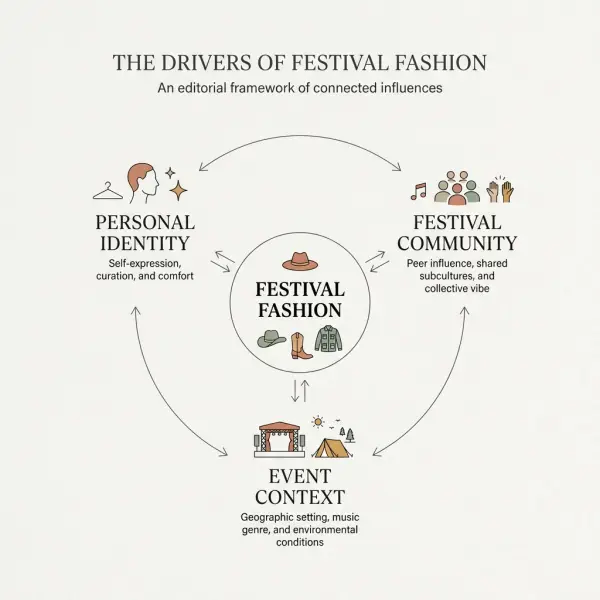
Festival fashion is a form of event-based dressing in which clothing, footwear, accessories, beauty, and styling become part of how people express identity, participate in a music or cultural community, and shape the experience of attending an event. It is not one fixed aesthetic. The visual codes of an electronic festival, rock gathering, city concert, country music event, or multi-day outdoor festival can differ substantially.
What makes festival fashion commercially and culturally interesting is the temporary freedom it can give people to dress outside their everyday routines. Research on music festivals has found that clothing, costumes, flags, and other possessions can contribute to both individual and collective identity, while studies of festival-related social media show that visual self-presentation can become part of how attendees document the experience. Research on identity expression at Tomorrowland
For fashion businesses, the opportunity is therefore not simply to sell “festival clothes.” It is to understand the temporary social context in which consumers may want more expressive, distinctive, comfortable, photographable, or experience-appropriate clothing than they normally wear.
What Is Festival Fashion?
Festival fashion is event-oriented dress shaped by the interaction between personal style, music culture, social belonging, physical environment, and the temporary freedom associated with attending a festival or concert.
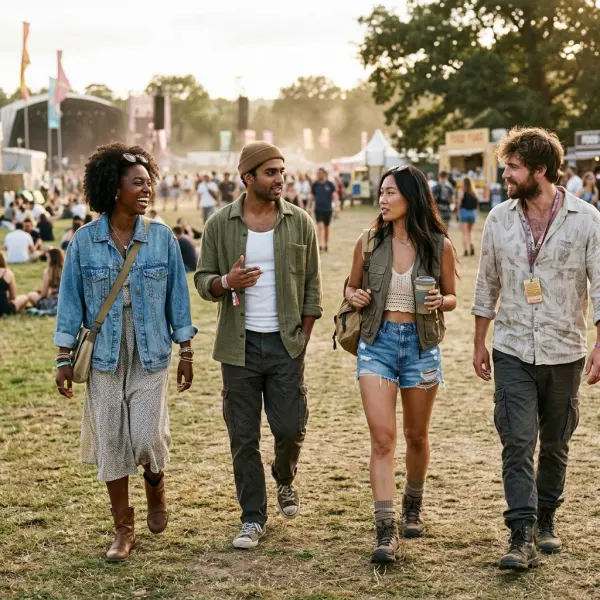
That definition matters because festival fashion is often reduced to a narrow visual stereotype: crochet, denim shorts, boots, sequins, fringe, sunglasses, or exaggerated accessories. Those items may appear in particular festival environments, but none of them defines the category by itself. Festival fashion is better understood as a behavioral context for dressing.
Research in the social psychology of dress has long examined the relationship between clothing, the body, perception, and the self. Clothing can help communicate a desired identity to other people while also influencing how individuals perceive their own appearance. Review of research on dress, body, and self
Festivals intensify this dynamic because they temporarily change the social environment. Someone who normally dresses conservatively for an office, school, or everyday urban routine may experiment with bolder accessories, unusual layering, vintage pieces, handmade details, body decoration, or a more theatrical silhouette for an event. That does not necessarily mean the person has adopted a completely new identity. The festival simply provides a different setting in which another part of that identity can become more visible.
A useful distinction is therefore:
|
Concept |
Practical meaning |
|
Everyday fashion |
Dressing primarily for routine social, professional, climatic, and functional contexts |
|
Occasion dressing |
Dressing for a defined social occasion such as a wedding, party, or formal event |
|
Festival fashion |
Dressing for participation in a temporary cultural and experiential environment where identity, community, practicality, and visual expression often overlap |
|
Performance costume |
Clothing primarily designed around the performer, stage concept, character, or production rather than normal attendee use |
The boundaries are not rigid. A festival outfit can include ordinary wardrobe pieces, while a performer may influence how attendees interpret fashion. The important point is that festival fashion describes the context and purpose of dressing more accurately than any single look.
Why Does Festival Fashion Feel Different From Everyday Dressing?
Festival environments can loosen some of the visual conventions that govern normal daily life. Clothing that might feel conspicuous on a weekday commute can feel entirely appropriate among thousands of people who have also chosen to dress for an experience rather than for routine.
This helps explain why researchers examining festivals have described forms of temporary identity construction. A study of heavy rock festivals, for example, found that dress could help participants shift away from everyday identity and enter the social environment of the festival. Interestingly, the same process involved both differentiation from mainstream culture and conformity with recognizable codes inside the festival community. Study of dress and identity transformation in heavy rock festivals
That tension is central to festival fashion.
People often want to look individual, yet individuality is expressed within an environment that has its own visual language. A metal audience dominated by black band merchandise, an electronic dance crowd using vivid accessories, and a country music festival filled with Western references may each provide room for personal interpretation while still communicating group affiliation.
In other words, festival fashion can perform two apparently contradictory jobs:
- It helps a person visually distinguish themselves.
- It helps the same person signal that they belong in the environment around them.
The balance between those two impulses changes from person to person and event to event.
The Idea of a Temporary “Festival Self”
A festival can create a legitimate space for experimentation because it has a clear beginning and ending. That makes fashion experimentation lower-risk than adopting a dramatic new look permanently.
A person might wear an embellished jacket, metallic makeup, dramatic boots, customized band merchandise, handmade jewelry, or unconventional layering for two days without wanting those choices to become their everyday uniform. Clothing becomes part of entering the event psychologically as well as physically.
Research into attendee identity has described this contextual transformation as part of how festival experiences can influence individual and collective identity. Research on festival attendee identity formation
For product teams, this distinction is important. Consumers buying expressive festival products may not be shopping for a permanent wardrobe category. They may be buying permission to experiment.
Festival Fashion Is Also a Form of Social Belonging
Fashion rarely communicates only individuality. It can also signal affiliation.
At music events, band merchandise is perhaps the clearest example. A tour T-shirt does not merely cover the body; it can identify musical preference, previous attendance, fandom, nostalgia, or membership in a broader cultural community. Vintage merchandise may communicate a different relationship to the artist than freshly purchased event merchandise, even when both show the same name.
The same mechanism can operate through less explicit styling signals. Certain footwear, jewelry, makeup, fabrics, silhouettes, or styling combinations may become recognizable inside particular communities without functioning as official uniforms.
Research conducted around Tomorrowland offers a particularly useful example. Researchers examining costumes, accessories, and flags identified multiple ways material possessions were connected to both private and collective forms of identity. The findings reinforce the idea that festival objects can help participants communicate who they are while simultaneously locating themselves inside the event community.
For fashion businesses, however, belonging should not be confused with simply reproducing a recognizable costume. Strong product strategy usually allows customers enough space to personalize the look rather than dictating an entire festival identity.
That difference separates an adaptable fashion product from a disposable theme outfit.
There Is No Single Festival Aesthetic
One of the easiest mistakes when discussing festival fashion is treating the term as synonymous with a particular version of Coachella.
Coachella has unquestionably developed considerable visual influence in global fashion media, particularly through celebrity attendance, street style photography, influencer content, and brand activations. Yet it represents one highly visible festival environment rather than a universal template.
Even within Coachella, the aesthetic changes. Vogue's 2026 coverage, for example, described renewed interest in bohemian references while also highlighting vintage, thrifted, DIY, functional, and more individual approaches to festival dressing. Vogue's analysis of Coachella festival style in 2026
Other events operate under completely different visual conditions.
|
Festival or event context |
Typical fashion function |
What businesses should understand |
|
Large destination festival |
Identity, social visibility, comfort, photography, experimentation |
Consumers may plan multiple outfits and accessories around a multi-day experience |
|
Rock or metal event |
Music affiliation, subcultural identity, practical movement |
Authenticity and community codes may matter more than trend novelty |
|
Electronic music event |
Movement, sensory expression, nightlife influence |
Mobility, temperature, visibility, and accessory practicality can affect product usefulness |
|
Pop concert |
Artist fandom, aesthetic participation, social sharing |
Tour imagery and artist-associated visual language can strongly shape styling |
|
City-based music festival |
Personal style mixed with urban practicality |
Products may need stronger crossover into normal wardrobes |
|
Camping festival |
Expression combined with weather and multi-day functionality |
Layering, footwear, bags, durability, and changing temperatures matter |
These are contextual patterns rather than rules. Audiences are heterogeneous, and the same attendee may participate differently across events.
The specific mechanisms through which genres, performers, and music culture influence color palettes, silhouettes, styling codes, and product references deserve separate treatment. They are explored more deeply inhow music events influence color, silhouette, and styling choices.
How Does Self-Expression Work in Festival Fashion?
Self-expression in festival fashion does not require extreme clothing. It comes from the degree to which people can alter, combine, customize, or contextualize garments to create an appearance they recognize as their own.
For one attendee, expression may mean an elaborate handmade garment. For another, it could simply mean pairing familiar jeans with an artist T-shirt, unusual jewelry, and footwear they would not normally wear. Someone else may deliberately avoid obvious festival references and use minimalist fashion as a form of differentiation.
That variety matters commercially because brands sometimes confuse self-expression with maximalism.
Bigger graphics, brighter colors, more embellishment, or more revealing silhouettes do not automatically make a product more expressive. Expression depends on the relationship between the product and the wearer.
This is one reason adaptable pieces can work particularly well in event contexts. A mesh layer, graphic shirt, lightweight jacket, scarf, belt, statement jewelry piece, customizable bag, or distinctive outer layer can alter the overall appearance without requiring someone to buy an entirely new outfit.
For product developers, the useful question is not simply, “Does this look like festival fashion?”
A better question is: “What does this product allow the wearer to do with their own identity?”
Social Media Extends Festival Fashion Beyond the Event
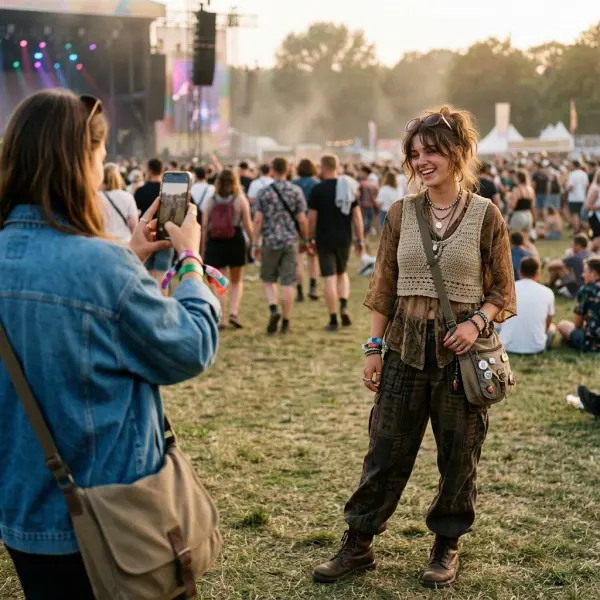
Festival fashion is experienced physically, but it is also photographed, posted, circulated, saved, and reinterpreted digitally.
This changes the role of the outfit. A garment has to function in the event, but it may also become part of the attendee's visual record of having been there.
A study of 200 location-tagged Instagram posts from Coachella found that visual self-presentation was highly prominent; the analysis observed substantial emphasis on full-body photographs, fashion, carefully constructed candid imagery, and establishing a sense of presence at the event. Study of visual self-presentation at Coachella on Instagram
This does not mean every festival attendee is dressing primarily for social media. It does show why visual documentation cannot be separated completely from contemporary event fashion.
A festival outfit may now exist across several moments: planning before the event, wearing it onsite, photographing it, posting it, and potentially rewearing or reselling it later.
That extended lifecycle gives fashion businesses more touchpoints but also raises the bar. Products created only to produce one striking photograph may struggle to deliver value once the event ends.
From Event Outfit to Lifestyle Signal
Festival fashion becomes particularly interesting when elements of event dressing migrate into normal wardrobes.
A consumer may first experiment with Western boots at a country music festival, crochet layering at an outdoor summer event, oversized sports jerseys at a concert, or technical bags at a large venue. If the item works outside the festival as well, the experience may expand rather than isolate the person's wardrobe.
This is where festival fashion intersects with lifestyle.
The event becomes a testing environment in which consumers can try a stronger version of an aesthetic before deciding whether it belongs in their longer-term style. Fashion trends can consequently move between performers, attendees, social media, retail, street style, and subsequent events rather than following a simple one-directional path.
Brands should be cautious about claiming direct causation. Seeing a garment repeatedly at festivals does not prove that festivals created the broader trend. Runway collections, celebrity styling, music videos, subcultures, vintage revivals, social platforms, seasonal merchandising, and street style can all interact.
Festival culture is often better understood as an amplifier and visibility environment rather than a single origin point.
Why This Matters for Fashion Businesses
Festival fashion matters commercially because events create concentrated periods of wardrobe planning.
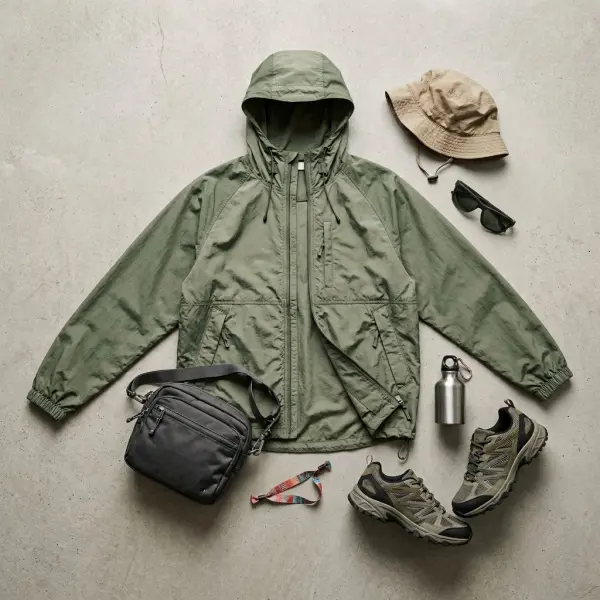
An attendee preparing for several days of performances may think differently from someone buying a normal weekend outfit. Footwear needs to survive long periods of standing or walking. Bags may need to comply with venue rules. Clothing may need to work across hot afternoons and cooler evenings. The consumer may want several visually distinct outfits without packing an excessive amount.
The opportunity therefore reaches beyond novelty apparel.
Relevant categories can include apparel, footwear, outerwear, bags, jewelry, eyewear, headwear, beauty accessories, customization services, merchandise, resale, rental, and styling content. Which categories matter most depends heavily on the event.
Venue rules should also influence product recommendations. Coachella's current official guidance, for example, specifies limits on bag size and lists allowed and prohibited items, illustrating why products promoted for an event should be checked against real venue requirements rather than assumed to be universally suitable. Coachella official festival FAQ and permitted items
The practical implication is simple: festival product strategy should begin with the experience, not with an aesthetic mood board.
How Fashion Brands Can Apply Festival Insights Strategically
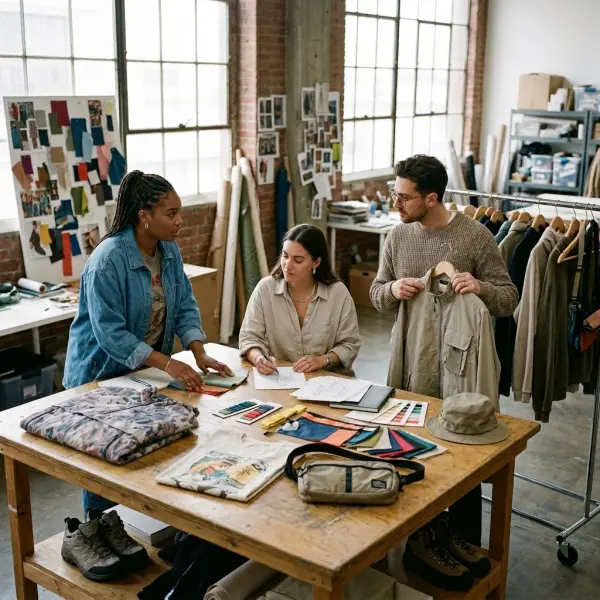
The strongest commercial application is usually to treat festival dressing as a use case rather than inventing an entirely separate customer.
A brand can start by examining products already relevant to movement, travel, heat, layering, social occasions, music fandom, or personal styling. Festival positioning may emerge from those existing strengths.
For product development, brands can ask whether the item provides a meaningful combination of expression and function. Lightweight layering, usable pockets, adjustable fits, secure closures, comfortable footwear, breathable materials, or packable construction can be more valuable than decoration alone.
Merchandising can then connect pieces into event-ready combinations without implying that customers need a completely new wardrobe. This makes cross-selling possible while preserving rewear value.
A practical framework is:
- Start with the event reality. Consider location, climate, duration, mobility, venue policy, and audience behavior.
- Identify the expression opportunity. Decide whether the product supports customization, styling variation, fandom, cultural affiliation, or visual distinction.
- Protect everyday usability. Ask whether a meaningful portion of the assortment can work after the event.
- Build combinations rather than costumes. Styling systems usually give customers more control than prescribing one complete themed look.
- Plan content around use. Show how the garment moves, layers, packs, withstands the setting, and integrates with existing wardrobe pieces.
- Evaluate cultural references carefully. Decorative elements connected to specific communities, identities, or ceremonial traditions should not be treated as generic festival motifs without understanding their meaning.
This approach can work for large brands, independent labels, resale businesses, and merchandise operators because it focuses on the customer's event experience rather than one aesthetic formula.
Brand Activation Works Best When the Brand Belongs in the Experience
Festivals also attract fashion and lifestyle brands because they combine culture, audiences, creators, performers, social content, and physical interaction in one environment.
But visibility alone does not guarantee relevance.
Vogue's reporting on Coachella 2026 described a strong return of brand activity and highlighted how engagement and culturally relevant experiences could matter more than simply placing a brand in front of attendees. Vogue coverage of brand activity at Coachella 2026
For fashion businesses, this suggests a useful distinction between festival sponsorship and festival participation.
Sponsorship buys visibility. Participation attempts to improve or become meaningfully integrated into the experience.
A footwear company might provide practical comfort or recovery services. A customization-focused label could offer garment personalization. A resale platform might curate event-ready vintage selections. An apparel brand might create useful layering, changing, or styling experiences.
The strongest idea depends on the brand. Forced cultural relevance is easy for audiences to recognize.
Common Mistakes in Festival Fashion Strategy
Mistake 1: Treating “Festival” as One Look
The most common error is starting with stereotypical festival imagery and applying it to every audience. A desert destination festival, urban electronic event, stadium concert, rock festival, and country music gathering do not necessarily share the same visual codes or practical requirements. A better strategy begins with the specific event community and then determines which elements overlap with the brand.
Mistake 2: Designing for the Photograph but Not the Experience
A dramatic product can perform well in campaign imagery yet become frustrating after hours of walking, standing, heat, dust, rain, or crowded movement. Poorly secured accessories, impractical footwear, restrictive garments, or heavy decorative construction can undermine the experience. Visual impact and physical usability should therefore be considered together rather than sequentially.
Mistake 3: Confusing Self-Expression With More Decoration
Customers do not necessarily need a product to become louder in order to make it more personal. Excessive graphics, sequins, hardware, fringe, cutouts, or color can reduce versatility rather than increase expression. In many cases, adaptable styling, modular accessories, customizable details, or a distinctive single piece gives the wearer more authorship.
Mistake 4: Borrowing Cultural Symbols as Generic Costume
Festival environments encourage experimentation, but that does not make every cultural reference interchangeable. Traditional clothing, religious imagery, ceremonial objects, Indigenous designs, and identity-specific symbols can carry meanings that extend far beyond aesthetics. Brands should understand provenance and cultural context before incorporating such references, particularly when they are being commercialized.
Mistake 5: Building Products With No Life After the Event
A highly specific capsule may create short-term attention but leave customers with garments that are difficult to rewear. That does not automatically make the product commercially wrong, especially in merchandise or costume-oriented categories, but the trade-off should be intentional. Designing at least part of the range for post-event use can increase practical value and widen the selling window.
What Brands Should Verify Before Acting
Festival fashion is visually attractive as a marketing concept, but operational details determine whether an idea actually works.
Before launching an event-focused collection, campaign, or merchandising category, brands should verify several things.
First, confirm the actual environment. Weather, site layout, event duration, transport, camping, indoor versus outdoor spaces, and evening temperature shifts can materially change what consumers need.
Second, review venue policies. Bag dimensions, prohibited accessories, security requirements, and other rules vary by event and can change. Products should not be marketed as event-ready if customers may be unable to bring them inside.
Third, understand the community. Audience demographics alone are insufficient. The relationship between attendees, performers, music genres, fandom, and local culture also shapes how fashion is interpreted.
Finally, assess the life of the product after the festival. A useful question is whether the garment remains appealing when the stage, lighting, artist association, and festival setting disappear.
That test often separates durable lifestyle relevance from short-lived event novelty.
What Festival Fashion Does Not Mean
Festival fashion does not mean that people abandon their real identities, that every attendee wants maximalist clothing, or that one globally recognizable aesthetic controls event dressing.
It also does not mean that every visual trend seen at a music festival originated there.
Festivals sit inside a wider fashion ecosystem that includes performers, designers, brands, fan communities, streetwear, subcultures, vintage markets, online creators, music videos, retail merchandising, and everyday clothing. Their particular power comes from concentrating many of those influences in one visible social environment.
This is also why statement dressing often appears stronger in event culture. The surrounding environment changes the threshold for what feels appropriate, noticeable, or socially legible. That mechanism is explored separately in why statement dressing becomes stronger in event-based fashion culture.
For businesses, the distinction matters. Festival fashion should be analyzed as part of fashion behavior, not isolated as a seasonal costume category.
Frequently Asked Questions
Is festival fashion a specific style?
No. Festival fashion is better understood as a context for dressing than as one fixed aesthetic. Different music communities, climates, locations, performers, and event formats create different fashion behaviors. Bohemian dressing may be visible at some events, while other festivals lean toward streetwear, band merchandise, Western references, electronic nightlife styling, sportswear, vintage clothing, or relatively ordinary casual dress. Brands should therefore research the specific audience before using “festival” as a product category.
Why do people dress differently for music festivals?
Festivals can temporarily relax the social conventions that shape everyday dress. Attendees may feel more comfortable experimenting with clothing, accessories, makeup, or styling because expressive appearance is expected or accepted within the environment. Dress can also communicate music affiliation, personal taste, group belonging, or participation in the event itself. Research in festival environments supports the broader idea that clothing and material possessions can contribute to both individual and collective identity.
Is festival fashion mainly driven by influencers?
Influencers can amplify particular looks, but festival fashion is created through a much wider network of influences. Performers, fan communities, historical subcultures, designers, vintage revivals, retailers, music genres, local culture, and other attendees all contribute. Social media then accelerates the circulation of those references. Treating influencers as the sole source can cause brands to miss deeper cultural signals that existed before a look became highly visible online.
Does a fashion brand need a dedicated festival collection?
Not necessarily. For many businesses, editing existing products into an event-focused assortment may be more practical than creating an entirely new collection. Lightweight layers, comfortable footwear, secure bags, expressive tops, jewelry, eyewear, or versatile outerwear may already meet festival needs. A dedicated capsule makes more sense when the brand has clear audience demand, distinctive product logic, and enough sales opportunity to justify separate development and inventory.
What makes a good festival fashion product?
A strong festival-oriented product usually combines visual relevance with realistic use. Depending on the event, that can mean comfort, mobility, secure storage, layering, weather adaptability, distinctive styling, or ease of packing. Products should also be evaluated against venue rules and likely wear duration. The best design is not universally the most dramatic one; it is the one that supports the customer's desired appearance without becoming a liability during the experience.
Can festival fashion become everyday fashion?
Yes, although not every festival product makes the transition. Accessories, boots, graphic merchandise, crochet layers, technical bags, denim, vintage clothing, or distinctive outerwear can move into regular wardrobes when they remain useful outside the event. Festival environments may function as spaces where consumers experiment with stronger styling before deciding whether those elements fit their broader personal style. The degree of crossover depends on the product, wearer, local fashion culture, and wider trend environment.
Is festival fashion necessarily unsustainable because people buy special outfits?
No single conclusion applies to all festival dressing. Some consumers may buy highly specific products for one event, while others rewear existing clothes, purchase vintage, borrow pieces, customize garments, rent items, or choose products that return to their normal wardrobes afterward. Sustainability depends on factors including production, materials, garment quality, frequency of use, care, logistics, and end-of-use pathways. Brands should avoid presenting one styling behavior as automatically sustainable without evidence.
Conclusion
Festival fashion is best understood not as a uniform aesthetic but as fashion operating inside an unusually expressive social environment.
Music events give people a temporary context in which personal identity, group belonging, fandom, experimentation, practicality, and visual presentation can overlap. Research across different festival settings supports the idea that dress and material possessions can participate in identity formation, while contemporary festival culture shows how those expressions now continue through photography, social media, retail, and brand experiences.
For fashion businesses, this changes the strategic question. The objective is not to predict the next compulsory “festival look.” It is to understand what consumers are trying to express, experience, and physically do while they are there.
Brands that start from that reality can make better decisions about product design, merchandising, collaborations, content, and event activation. They can also distinguish between an aesthetic that looks convincing in campaign imagery and a product that genuinely belongs in someone's experience.
Festival fashion becomes most commercially interesting when the event does not create an artificial customer. Instead, it reveals a more experimental version of a customer who already exists.





Comments 0
Leave a CommentSend Comment
Anda harus Login terlebih dahulu untuk dapat memberikan komentar.