

Common Assortment Planning Mistakes That Create Dead Stock
A fashion retailer can finish a selling season with two problems that seem contradictory: popular products are sold out, while large quantities of other garments remain untouched in the stockroom. The collection may have attracted customers, but inventory was not distributed according to what those customers ultimately purchased.
This situation often begins months before the first product reaches the sales floor. Buyers approve too many similar styles, allocate equal quantities to colors with different demand levels, or commit to supplier minimum orders without considering how much stock can realistically sell during the available season.
Common assortment planning mistakes that create dead stock include overbuying, excessive SKU variety, inaccurate demand forecasts, unsuitable color and size allocations, poor channel-specific planning, and delayed responses to slow-moving inventory. These decisions can leave fashion businesses holding merchandise that occupies storage space, ties up working capital, and may require significant discounts to sell.
Dead stock is not always the result of an unattractive product. Sometimes the garment is commercially relevant, but the retailer purchased too much, offered the wrong variations, or missed the period when customers were most willing to buy it.
Understanding these distinctions is essential. The most effective inventory decisions begin by identifying why products are not selling, rather than treating every unsold garment as evidence of weak customer demand.
Quick Answer: What Assortment Planning Mistakes Cause Dead Stock?
Fashion dead stock commonly develops when retailers purchase more merchandise than customers are likely to buy within the intended selling period or allocate inventory to the wrong products, colors, sizes, and locations.
The problem often originates from inaccurate demand assumptions, excessive product variety, supplier purchasing constraints, or weak coordination between merchandising and inventory management.
For example, a clothing brand may introduce ten similar blouse designs because each looks promising during product development. If customer demand is concentrated in only three styles, the remaining designs may accumulate unsold inventory even when the overall blouse category performs reasonably well.
Another retailer might purchase equal quantities of every clothing size despite evidence that demand differs significantly across sizes. Some variants sell out quickly, while others remain available long after the season ends.
Dead stock affects more than storage capacity. Unsold products consume capital, create markdown pressure, and limit the resources available for future collections.
Preventing these problems requires more than reducing purchase quantities. Retailers need to evaluate product demand at the appropriate level, maintain visibility into inventory performance, and make purchasing commitments that reflect supplier capabilities and selling timelines.
The goal is to identify inventory risk before slow-moving merchandise becomes difficult to sell.
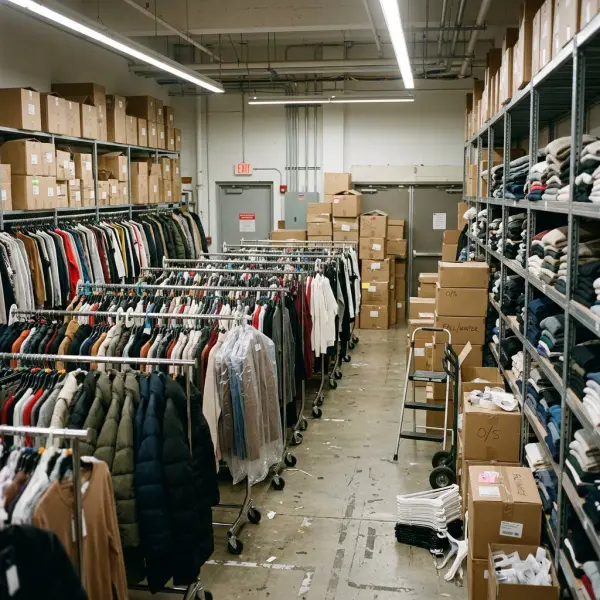
What Is Dead Stock in Fashion Retail?
Dead stock is merchandise that remains unsold beyond its expected selling period and has little or insufficient demand under its current selling conditions. In fashion retail, this may include outdated seasonal garments, discontinued styles, poorly performing product variants, or inventory that no longer matches customer preferences.
The term is often used broadly, but several inventory conditions should be distinguished.
A product that sells slowly may still have customers and generate profitable sales over time. Excess inventory means the retailer holds more units than the expected demand justifies. Obsolete inventory has lost practical or commercial relevance to the point that selling it through normal channels may no longer be feasible.
Dead stock can emerge from any of these conditions, but they are not identical.
Shopify's guide to dead stock and inventory management discusses how overbuying, demand forecasting errors, and seasonal changes can leave retailers holding merchandise that is difficult to sell.
Dead Stock vs Slow-Moving Stock vs Excess Stock
These classifications help retail teams decide whether a product needs better merchandising, a purchasing adjustment, or a more substantial inventory recovery strategy.
|
Inventory condition |
Practical meaning |
Typical business implication |
|
Slow-moving stock |
Products are selling more slowly than expected |
Investigate demand, visibility, price, and stock allocation |
|
Excess stock |
Inventory exceeds expected requirements |
Reduce purchasing exposure or redistribute available units |
|
Dead stock |
Inventory has little realistic demand under current selling conditions |
Consider markdowns, alternative channels, or other recovery options |
|
Obsolete stock |
Merchandise is no longer commercially or practically suitable for its original purpose |
May require liquidation, repurposing, or write-down assessment |
These categories may overlap. A winter jacket can be slow-moving during its intended season, become excess inventory as demand weakens, and eventually be treated as dead stock when the retailer has no realistic selling opportunity at the current price.
There is no universal number of days after which every fashion product becomes dead stock. The appropriate classification depends on product type, selling season, expected sales velocity, and remaining commercial value.
In sneaker and streetwear resale, deadstock can also mean new, unworn merchandise, sometimes considered collectible. That usage differs from the inventory-management meaning discussed here.
Why Poor Assortment Planning Creates Unsold Inventory
Assortment planning establishes which products a retailer will carry and how inventory should be distributed across styles, colors, sizes, categories, and selling locations.
Each decision creates a financial commitment.
A fashion business may have a sufficient overall purchasing budget but allocate it inefficiently. Too much capital goes into products with uncertain demand, while proven garments receive insufficient stock.
This creates a mismatch between customer interest and available inventory.
The relationship is particularly challenging in fashion because products have different commercial lifecycles. Basic apparel may remain relevant across multiple seasons, while occasionwear, fashion-led silhouettes, and certain seasonal colors may have shorter selling windows.
Even when a product remains wearable for years, its commercial value to a particular retailer can decline if customer preferences, product positioning, or selling conditions change.

Why Inventory Problems Are Often Hidden at Category Level
Aggregated category performance can conceal significant product-level differences.
Imagine a retailer reporting strong sales for women's shirts. The category appears successful, but most sales may come from a small number of styles and sizes.
Other products within the category may have low sell-through and substantial remaining inventory.
If buyers evaluate only total shirt revenue, they may repeat the same purchasing pattern and order additional quantities of unsuccessful variants.
This is why assortment analysis needs to move beyond broad category totals.
The key issue is not simply whether shirts are selling. It is which shirts, colors, sizes, and locations generate demand—and whether the purchasing plan reflects those patterns.
Mistake 1: Offering Too Many Similar Styles
Adding more designs can make a fashion collection appear extensive, but an overly fragmented product range may distribute purchasing budgets across too many competing styles.
This often happens when merchandising teams evaluate each design independently. Several shirts, dresses, or trousers may look attractive during selection meetings, even though they address essentially the same customer need.
Once launched, customers may concentrate their purchases on a few preferred options.
The remaining styles continue occupying inventory space despite contributing little additional demand.
How Excessive Style Variety Creates Inventory Risk
Consider a fictional boutique planning 600 units of casual shirts.
The buying team chooses twelve designs and purchases 50 units of each. During the season, customers strongly prefer four designs, while the other eight receive limited interest.
The retailer might have generated stronger inventory productivity by concentrating a larger share of its budget on the most relevant styles, assuming those preferences could have been identified before purchasing.
However, this does not mean fewer styles are always better. A specialist fashion retailer may require substantial variety to satisfy different fits, occasions, or aesthetic preferences.
The mistake is introducing additional products without a clear understanding of how each one contributes to customer choice.
A Better Approach: Evaluate Product Differentiation
Before approving similar designs, merchandising teams should identify the customer purpose of each style.
Two blouses may differ in decorative details but still compete for the same purchasing occasion. Another blouse with a substantially different fit or functional purpose may address a genuinely separate demand segment.
Retailers can assess whether each proposed style contributes something meaningful to the collection rather than simply increasing the product count.
A product that does not expand customer relevance or justify its inventory commitment may not deserve a separate place in the assortment.
Mistake 2: Buying Too Many Colors Without Demand Evidence
Color variation can strengthen an apparel collection, but adding colorways multiplies the number of product variants a retailer must manage.
A garment offered in two colors and five sizes creates ten style-color-size combinations. Expanding the same style to six colors increases that figure to thirty combinations.
Each additional color may require separate fabric purchasing, production quantities, product photography, inventory tracking, and eventual clearance decisions.
The risk becomes more significant when suppliers impose minimum quantities per colorway.
Why Equal Color Allocation Can Be Misleading
Suppose a retailer produces 300 shirts in five colors, purchasing 60 units of each.
After launch, black and navy account for most customer demand, while three seasonal colors sell slowly.
The brand may have adequate overall demand for the shirt but an inappropriate allocation across colorways.
The resulting inventory problem cannot be solved simply by concluding that the shirt design failed. The relevant issue is whether the selected colors and purchased quantities matched customer preferences.
A more disciplined approach evaluates color-level sales, stock availability, customer feedback, and supplier requirements before finalizing production.
For detailed guidance on this planning process, see How Brands Decide Product Mix, Color Options, and Size Depth.
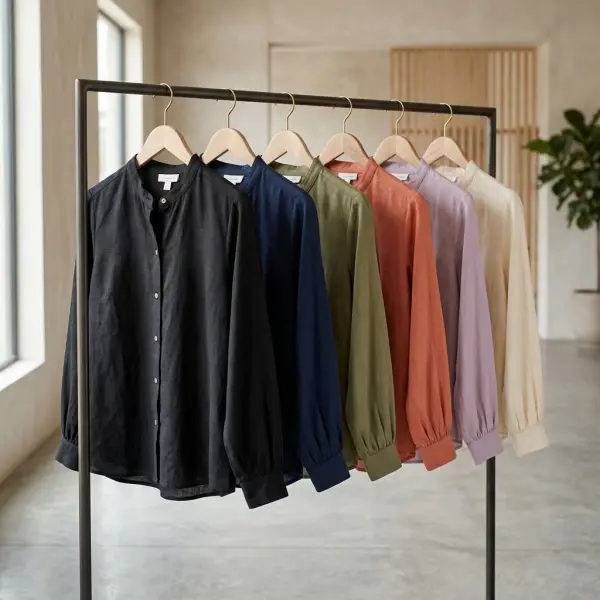
Mistake 3: Using the Wrong Size Curve
A retailer may select the right garment and colors but still create dead stock through unsuitable size allocation.
The problem arises when the quantity purchased in each size differs substantially from actual customer demand.
For example, purchasing equal quantities of XS, S, M, L, and XL may appear balanced on a spreadsheet. Yet the retailer's customer base may not purchase those sizes equally.
Some sizes sell out while others accumulate.
Why Historical Size Sales Can Produce Incorrect Forecasts
Size sales data are useful only when interpreted alongside availability.
If size M repeatedly sells out early, its recorded sales may underestimate actual demand. Meanwhile, sizes that remain available throughout the season may appear to represent a larger share of sales simply because customers could still purchase them.
This creates a risk when retailers build future size curves using past sales percentages without checking stockout periods.
A better approach considers size-level sales, inventory availability, garment fit, and relevant customer feedback.
Size planning should also reflect the specific garment. An oversized jersey top and a fitted woven blouse may have different purchasing patterns despite sharing the same size labels.
The Difference Between Size Coverage and Inventory Depth
Offering many sizes does not necessarily create dead stock. The more important question is whether each size receives a commercially appropriate quantity and whether the garment fits the customers it is intended to serve.
Reducing size coverage purely because certain sizes sold slowly can be misleading when low sales resulted from poor fit, weak product presentation, or a limited customer sample.
Retailers should distinguish between providing access to a size and determining how many units to purchase.
Those are related but separate merchandising decisions.
Mistake 4: Applying the Same Assortment to Every Store or Channel
Fashion brands operating several stores or sales channels may use a single inventory plan for operational convenience.
A uniform assortment can simplify purchasing and distribution, but it may overlook important differences in customer demand.
A physical boutique, regional department store, marketplace storefront, and direct-to-consumer website do not necessarily attract the same shoppers or produce identical sales patterns.
When Standardization Becomes a Problem
Consider a clothing retailer operating several locations.
One store serves customers looking primarily for professional apparel, while another has stronger demand for casual lifestyle products. If both receive identical quantities of every garment, the business may experience shortages in one category at one location and excess stock elsewhere.
The challenge is not automatically solved by developing a completely unique assortment for every store. Highly customized plans can increase purchasing and distribution complexity.
Instead, retailers can group stores with meaningful demand similarities and allocate products accordingly.
Oracle's retail location clustering documentation describes grouping locations according to attributes such as performance and space, while recognizing the additional management workload that more assortment groups can create.
Online Assortments Need Their Own Evaluation
Ecommerce retailers may display greater product variety than physical stores, but the ability to list a product does not guarantee sufficient demand.
Digital product visibility, customer acquisition channels, delivery regions, and product presentation can influence sales.
A slow-selling item may have limited customer interest, but it may also suffer from weak images, poor search visibility, inaccurate size information, or an unsuitable price.
Before removing the product or purchasing more inventory, the retailer should determine whether the problem originates from the assortment itself or from the online selling experience.

Mistake 5: Forecasting Demand From Distorted Sales Data
Historical sales are an important input for apparel buying, but they do not always represent demand under normal selling conditions.
Promotions, stockouts, unusual events, product placement, and changes in pricing can affect recorded sales.
A style that sold rapidly during a major clearance campaign may not achieve the same volume at its original retail price. Similarly, low sales during a temporary stockout do not demonstrate weak customer interest.
Why Promotion-Driven Sales Can Mislead Buyers
Suppose a fashion retailer sells 200 dresses during a large promotional campaign.
The next buying team may assume the same dresses have strong recurring demand and increase its purchasing quantities.
However, if much of the volume came from substantial discounts, the result may reflect price-sensitive demand rather than willingness to purchase at the intended selling price.
The future assortment forecast should account for the selling conditions under which the historical transactions occurred.
Retailers can compare regular-price sales, promotional sales, net selling prices, margin contribution, and inventory availability to develop a more useful assessment.
Distinguish Demand Forecasting From Purchasing Targets
A business may want a category to generate a particular sales value, but that target does not establish how many units customers will purchase.
Sales objectives are commercial ambitions. Demand forecasts are estimates based on available evidence and assumptions.
When buyers purchase inventory solely to support ambitious revenue targets, without assessing realistic demand, the business may accumulate stock that does not sell within the intended period.
Merchandise planning should reconcile financial goals with demand evidence, inventory constraints, and supplier capabilities rather than allowing the desired sales outcome to determine purchasing quantities automatically.
Mistake 6: Accepting Supplier Minimum Orders Without Evaluating Sell-Through
Supplier minimum order quantities, commonly called MOQs, can significantly influence fashion inventory commitments.
A manufacturer may require minimum quantities per style, fabric, color, or production order. Those requirements can reflect production setup, fabric procurement, dyeing processes, or other operational factors.
For a small apparel brand, the minimum commercially available production quantity may exceed the amount the retailer expects to sell.
When a Lower Unit Cost Creates a Larger Inventory Problem
Suppose a supplier offers the following hypothetical purchasing arrangements for one garment:
|
Production option |
Units ordered |
Unit cost |
Total purchase cost |
|
Smaller order |
150 |
$22 |
$3,300 |
|
Larger order |
300 |
$19 |
$5,700 |
The larger order reduces the unit cost by $3, but it requires an additional $2,400 of inventory investment.
If the retailer can confidently sell only around 150 units during the relevant selling period, purchasing 300 units may create substantial excess inventory exposure.
The lower production cost per garment does not guarantee a better commercial outcome.
The brand needs to evaluate whether the additional units can generate sufficient sales, whether they can be carried into future seasons, and how much markdown or storage risk they introduce.
This decision should incorporate the principles of fashion unit economics and contribution margin, rather than treating unit manufacturing cost as the only purchasing consideration.
Better Ways to Handle Production Constraints
Retailers can explore supplier arrangements that better match expected demand.
Possible approaches include negotiating smaller production runs, reducing colorway counts, consolidating suitable material orders, or selecting suppliers whose production capabilities align with the brand's order volume.
These options have trade-offs. Smaller runs may increase unit costs, while alternative suppliers may differ in lead time, quality consistency, and production capacity.
The goal is not to minimize every purchase quantity. It is to avoid making inventory commitments that depend on unrealistic selling assumptions.
Mistake 7: Ignoring the Actual Selling Window
Some fashion products have a limited period during which customers are most likely to purchase them.
Seasonal outerwear, holiday collections, event-based clothing, and trend-oriented designs can experience significant changes in demand as the relevant period passes.
A product may arrive in excellent condition yet perform poorly because the retailer has too little time to sell it.
When Delivery Timing Changes Product Economics
Imagine a retailer planning to sell lightweight jackets during an early autumn campaign.
If production delays push delivery into the final weeks of the expected selling period, the jackets may have less full-price selling opportunity than originally planned.
The business still owns the inventory, but the assumptions supporting the original order have changed.
This can create pressure to discount products earlier than expected or carry them into another season.
Carrying stock forward may be reasonable for enduring products, but it is less dependable for strongly trend-specific merchandise or products tied to particular events.
Plan Backward From the Selling Deadline
Retailers should connect assortment approval dates with material sourcing, sampling, production, shipping, receiving, product photography, and launch preparation.
The intended start of the selling period should guide the production calendar.
If a supplier cannot reliably meet the required delivery window, the brand may need to reduce its order, simplify the assortment, move the launch, or reconsider the product.
A commercially appealing design cannot compensate indefinitely for a missed selling opportunity.
Mistake 8: Reordering Too Quickly After Early Sales Success
Strong initial sales can encourage retailers to place additional purchase orders.
Replenishment is often appropriate for products with sustained demand, but early selling performance does not always justify substantial repeat orders.
Initial sales may be influenced by launch promotions, loyal customers, influencer exposure, or limited availability.
These conditions may not continue throughout the selling period.
Why Early Sell-Through Needs Context
A product that sells 70% of its initial inventory within a short period may appear highly successful.
However, the buying team should examine the original order size, selling price, promotional activity, remaining demand, and supplier lead time.
A small initial order can produce a high sell-through percentage without demonstrating that demand is sufficient for a much larger replenishment.
The retailer must also consider whether the new stock will arrive while customers are still interested.
A repeat order placed during a brief trend spike could arrive after demand has weakened.
Replenishment decisions should account for expected demand over the remaining selling horizon, not simply extrapolate the earliest sales velocity.
Mistake 9: Monitoring Inventory Too Late
Dead stock often develops gradually.
A product may begin with slightly weaker sales than planned, then continue accumulating unsold inventory as new merchandise arrives. If the retailer does not identify the pattern early, the range of practical responses becomes narrower.
A buyer who detects weak sell-through during the early selling period may still be able to improve product presentation, redistribute merchandise, revise promotional activity, or cancel planned replenishment.
Waiting until the end of the season may leave markdowns or alternative sales channels as the remaining options.
Why SKU-Level Visibility Matters
A category-level report may indicate that dresses are performing well, while individual sizes and colors tell a different story.
Inventory reporting should allow retailers to identify slow-moving variants rather than relying exclusively on total category sales.
Shopify's product inventory analytics documentation describes metrics including product sell-through, days of inventory remaining, and inventory value analysis.
These measures help retailers identify potential problems, but none should be treated as definitive evidence on its own.
A garment with low sales may be unsuitable for the market, or it may have received little exposure, arrived late, or lacked adequate size availability.
The purpose of inventory monitoring is to identify where further investigation is necessary.

How Dead Stock Affects Fashion Business Profitability
Unsold inventory affects profitability through several connected mechanisms.
The most visible consequence is the possibility of selling garments below their intended retail price. Less visible consequences include storage costs, capital tied up in inventory, additional handling, and the loss of opportunities to purchase more productive merchandise.
Shopify's inventory carrying cost guidance identifies storage, insurance, labor, depreciation, and the opportunity cost of tied-up capital among the factors associated with holding inventory.
The financial effect depends on the value and condition of the merchandise, its potential future demand, and the costs required to sell or retain it.
A Practical Example of Excess Stock and Markdown Exposure
Consider a fictional fashion brand purchasing 200 jackets.
Each jacket costs $40 to acquire and has an intended retail price of $80.
The brand initially invests $8,000 in inventory.
|
Measure |
Hypothetical result |
|
Initial units purchased |
200 |
|
Unit cost |
$40 |
|
Regular selling price |
$80 |
|
Initial inventory cost |
$8,000 |
|
Units sold at full price |
80 |
|
Additional units sold at $60 |
50 |
|
Remaining unsold units |
70 |
|
Remaining inventory cost |
$2,800 |
The first 80 jackets generate $6,400 in sales revenue. The additional 50 jackets sold at $60 generate $3,000.
Total sales revenue from the 130 sold jackets is $9,400.
Their combined cost of goods sold is $5,200, leaving $4,200 in gross profit before other business expenses.
The remaining 70 jackets still represent $2,800 of inventory at purchase cost, assuming no write-down has been recognized.
This example shows why unsold inventory should not be confused automatically with a realized financial loss.
The remaining jackets may still be sold in another period or through another channel. However, their ultimate economic value depends on future selling prices, handling costs, product condition, and realistic demand.
The retailer must assess whether carrying the remaining inventory is commercially justified.
The Opportunity Cost of Inventory Capital
Inventory capital cannot be committed simultaneously to multiple purchasing opportunities.
A brand holding substantial quantities of slow-moving jackets may have fewer resources available to purchase successful core products or develop its next collection.
This opportunity cost can affect future sales even before the retailer recognizes an accounting loss on the unsold garments.
Excess inventory may therefore limit commercial flexibility as well as immediate cash availability.
Which Metrics Help Identify Dead Stock Risk Early?
Fashion retailers can monitor several indicators to identify assortments that may become commercially problematic.
No single metric captures the entire situation. The strongest diagnosis combines sales performance, inventory age, margin contribution, availability, and the remaining selling period.
|
Metric |
What it reveals |
Important limitation |
|
Sell-through rate |
Proportion of available merchandise sold during a defined period |
Can be distorted by small orders or inconsistent inventory definitions |
|
Inventory aging |
How long merchandise has remained in stock |
Older inventory is not automatically obsolete |
|
Stock cover or days of inventory remaining |
Estimated duration current inventory can support sales |
Depends on the stability of the assumed sales rate |
|
Markdown exposure |
Extent to which discounts are needed to move stock |
Discounts may also be planned promotional activity |
|
Stockout frequency |
Where demand may exceed available inventory |
Does not directly quantify all lost sales |
|
Gross margin |
Financial contribution after merchandise cost |
Does not include all operating and inventory carrying costs |
|
Return rate |
Volume of returned merchandise |
Requires investigation of fit, quality, expectations, and other causes |
How to Calculate Sell-Through Rate
Sell-through measures how much of the relevant available inventory has been sold during a defined period.
For a simple seasonal purchase with no additional receipts, returns, or inventory adjustments:
Sell-through rate = Units sold ÷ Units initially available × 100
Suppose a retailer purchases 250 blouses and sells 100 during the period.
Sell-through rate = 100 ÷ 250 × 100 = 40%.
The remaining 150 units represent 60% of the initial quantity.
This does not automatically mean those units are dead stock. The interpretation depends on how much of the selling period remains and whether demand is expected to continue.
Retail systems may use different definitions of available inventory, particularly when stock is received throughout the reporting period or returns and transfers occur. Businesses should use a consistent calculation when comparing results.
Why Inventory Aging Needs a Product-Specific Context
Inventory aging reports identify how long products have been held.
A 90-day inventory age may be concerning for a short-lived seasonal fashion item but entirely acceptable for a replenishable core product under a different operating model.
Retailers should avoid applying one arbitrary aging threshold to every product category.
Instead, they can establish review points based on the product's expected selling lifecycle, forecast demand, and supplier replenishment model.
A useful inventory-aging process is designed to trigger investigation, not automatically declare every older product unsellable.
How Brands Can Prevent Dead Stock Before Placing Purchase Orders
The most effective opportunity to control assortment-related dead stock risk is often before manufacturing or purchasing commitments become difficult to reverse.
At that stage, brands can still change product selection, reduce variation, revise quantities, or negotiate production arrangements.
A practical preventive process should connect product decisions with commercial and operational evidence.
Validate the Role of Every Product
Each style should have a clear reason to exist within the collection.
It may support a dependable core category, serve a specific customer need, provide seasonal relevance, or test a new design direction.
A product without clear differentiation or expected demand deserves closer scrutiny before receiving inventory investment.
This is especially important when the collection contains many visually similar garments.
Establish Inventory Commitments According to Demand Confidence
Products with established repeat demand may justify larger purchasing quantities than completely new styles.
However, even proven products should be reviewed for changes in customer preferences, pricing, or fit.
New products can be introduced through smaller tests when production arrangements permit.
The decision should balance the additional unit cost of smaller orders against the financial exposure associated with purchasing more stock than expected demand supports.
Verify Supplier and Production Constraints
Merchandising teams should confirm minimum order quantities, production lead times, available materials, colorway requirements, and delivery schedules before finalizing the assortment.
If manufacturing constraints make the planned purchase quantities impractical, the collection may need adjustment.
Better coordination with fashion vendor management and sourcing partners can help identify these problems earlier in the purchasing process.
Define In-Season Review and Exit Decisions
Assortment planning should include an approach for evaluating products after launch.
Retailers need to know which performance differences require investigation and what actions remain feasible before the selling window closes.
A structured process may include:
- Reviewing SKU-level sales and remaining inventory against the original plan.
- Investigating significant stockouts and slow-moving variants.
- Checking gross margin, markdown activity, and returns.
- Reassessing demand before placing replenishment orders.
- Identifying products that may need redistribution, improved presentation, or controlled clearance.
These steps should be connected to a regular merchandising review rather than treated as emergency responses after excessive stock has accumulated.
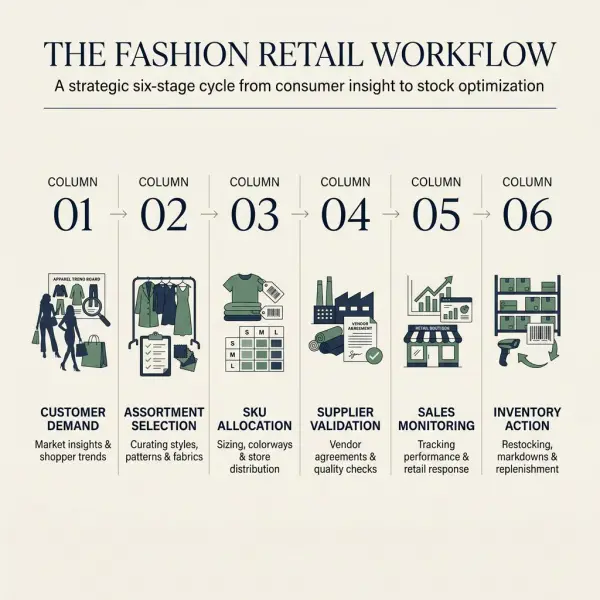
What Should Retailers Do When Dead Stock Already Exists?
When inventory is no longer performing as planned, retailers need to determine whether customer demand can be recovered and what options remain financially reasonable.
The response should depend on the product's condition, original cost, remaining selling opportunity, and expected recovery value.
Improve Product Visibility When Demand May Still Exist
Some products sell slowly because customers have difficulty discovering or evaluating them.
For ecommerce, the retailer can review product photography, descriptions, size guidance, search placement, and category organization.
Physical stores may reconsider product placement, styling combinations, or how merchandise is presented.
These adjustments are most appropriate when there is evidence that the product remains relevant but has not received sufficient customer exposure.
They are less likely to solve problems involving fundamentally unsuitable products or prices.
Redistribute Inventory Where Demand Differs
A retailer operating multiple stores may have excess units at one location and stronger demand elsewhere.
Transfers can improve inventory availability when the expected sales benefit exceeds transportation, handling, and administrative costs.
However, redistribution should not simply move unsold products between warehouses without evidence of different customer demand.
The receiving location must offer a credible opportunity to sell the merchandise.
Use Markdowns With a Clear Financial Objective
Markdowns can help recover capital and reduce long-term storage exposure, but they reduce the revenue received per unit.
A retailer should evaluate the expected additional sales, remaining gross margin, and timing of price reductions rather than relying on repeated blanket discounts.
An early targeted markdown may sometimes preserve more commercial value than waiting until the product has little remaining demand.
This depends on customer price sensitivity, seasonality, competition, and the product's original margin structure.
Consider Alternative Sales and Recovery Channels
When normal retail demand is insufficient, brands may investigate outlet channels, resale, inventory liquidation, bundles, or other commercially appropriate arrangements.
Usable garments may also be directed toward donation programs when suitable recipients and distribution arrangements are available.





Comments 0
Leave a CommentSend Comment
Anda harus Login terlebih dahulu untuk dapat memberikan komentar.