

Demographic vs Behavioral Segmentation: Key Differences for Fashion Marketing
Two customers of the same age, living in the same city, and earning similar incomes can have completely different relationships with fashion. One may regularly purchase wardrobe essentials at full price, while the other shops occasionally, compares multiple retailers, and waits for specific products to go on sale.
From a demographic perspective, these shoppers may look almost identical. Their purchasing behavior, however, tells a different story.
This distinction matters for apparel brands because marketing decisions depend on more than identifying who a customer is. Brands also need to understand how shoppers discover products, evaluate clothing, respond to offers, make purchasing decisions, and interact with the business over time.
Demographic and behavioral segmentation provide two different ways to organize this information. Both can support fashion marketing, but they answer different questions, depend on different types of data, and have different limitations.
Understanding where each approach works—and where it becomes misleading—helps fashion businesses develop more relevant marketing strategies without relying on simplistic customer stereotypes.
Quick Answer: What Is the Difference Between Demographic and Behavioral Segmentation?
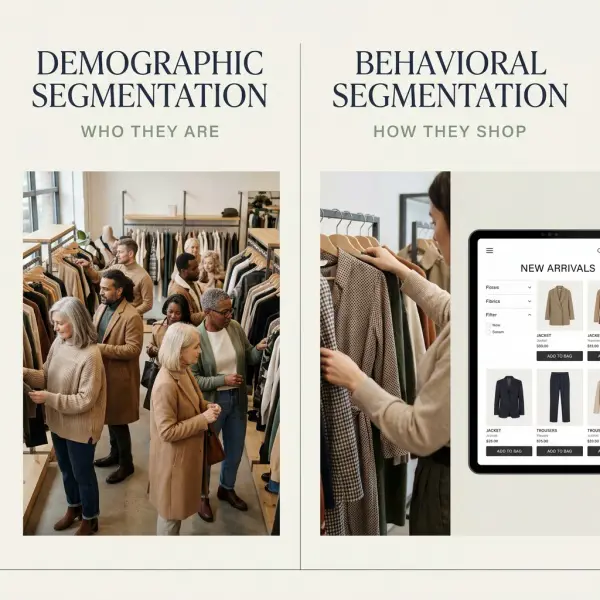
Demographic segmentation divides fashion consumers into groups based on characteristics such as age, income, occupation, or household circumstances. Behavioral segmentation groups customers according to their purchasing activities, product interactions, shopping occasions, or responses to marketing.
The primary difference is that demographic segmentation describes who customers are, while behavioral segmentation examines how they shop and what they do.
For apparel brands, demographic information can help identify broad target markets, assess customer coverage, and inform product positioning. Behavioral information can reveal which clothing categories customers purchase, how frequently they return, whether they respond to promotions, and what happens during their shopping journeys.
Neither method fully explains purchasing motivation on its own. Demographic characteristics do not reliably predict individual fashion preferences, while transaction histories may show what customers bought without revealing why.
The strongest approach often combines relevant demographic context with observed purchasing patterns, customer feedback, and qualitative research.
However, combining more data does not automatically improve segmentation. Brands must ensure that the resulting customer groups are meaningful, sufficiently supported by evidence, operationally useful, and developed in accordance with applicable privacy requirements.
Understanding the Two Segmentation Approaches in Fashion
Demographic and behavioral segmentation are established methods of consumer market segmentation. The OpenStax Principles of Marketing explanation of consumer segmentation distinguishes demographic characteristics from behavioral patterns, including how customers use products, the benefits they seek, and the occasions that influence purchasing.
For apparel businesses, the difference becomes particularly clear when examining the same product through two customer perspectives.
Imagine a brand selling contemporary casual jackets. Demographic segmentation could help identify broad audiences by occupation, age range, or spending capacity. Behavioral segmentation could reveal customers who regularly purchase outerwear, shoppers who browse jackets but rarely buy, and previous customers who only return during promotional campaigns.
Both perspectives contribute useful information, but they support different decisions.
Demographic Segmentation: Describing the Customer
Demographic segmentation is a market classification approach that organizes consumers according to characteristics such as age, income, occupation, education, household composition, and other relevant population attributes.
In fashion marketing, these characteristics can help brands understand the broad composition of their intended market.
A company producing professional uniforms might focus on occupational groups because particular jobs create recognizable clothing requirements. An apparel brand considering several price tiers may examine spending capacity and other relevant market information to evaluate affordability.
However, the information should not be interpreted too literally. Income does not automatically determine willingness to pay for a garment, and a customer's age does not establish their preferred fashion aesthetic.
Demographics provide context. They are not a complete explanation of shopping behavior.
Behavioral Segmentation: Understanding Shopping Activity
Behavioral segmentation is a marketing approach that groups consumers according to their interactions with products, brands, purchasing occasions, and shopping processes.
In apparel retail, observable behaviors may include purchase frequency, preferred product categories, order values, discount responsiveness, repeat purchasing, and product returns.
For example, a customer who repeatedly purchases the same style of basic T-shirt may value dependable fit and product continuity. Another who frequently browses new arrivals but purchases infrequently may be exploring trends without a regular buying commitment.
These are useful hypotheses, not definitive explanations. Purchase records can establish the transactions, but additional evidence is needed to identify the reasons behind them.
Behavioral segmentation becomes particularly useful when a fashion business wants to improve customer retention, ecommerce merchandising, promotional relevance, or category-specific communication.
Demographic vs Behavioral Segmentation: Side-by-Side Comparison
The following comparison summarizes the practical differences between both methods when applied to apparel marketing.
|
Comparison factor |
Demographic segmentation |
Behavioral segmentation |
|
Main question |
Who is the customer? |
How does the customer shop or interact with products? |
|
Data basis |
Customer and population characteristics |
Observed purchasing and engagement patterns |
|
Typical variables |
Age, occupation, income, household circumstances |
Purchase frequency, category interest, recency, promotion response |
|
Main application |
Audience definition, market coverage, broad positioning |
Retention, campaign relevance, merchandising, customer journeys |
|
Data sources |
Surveys, declared customer information, population research |
POS, ecommerce transactions, CRM, analytics, returns |
|
Historical data requirement |
Can often begin with external market research |
Usually benefits from sufficient observed activity |
|
Change over time |
Some attributes change gradually; others change with life circumstances |
Patterns may change rapidly with needs, occasions, and seasonality |
|
Main limitation |
Similar demographics do not guarantee similar needs |
Similar behavior does not guarantee identical motivations |
|
New market suitability |
Useful when customer purchase histories are unavailable |
Limited until relevant behavior can be observed or researched |
|
Measurement |
Reach, audience composition, segment-level outcomes |
Repeat purchases, conversion, order behavior, customer retention |
Neither method is inherently more accurate in every situation. Each is accurate only to the extent that the selected variables are measured reliably and interpreted appropriately.
A brand choosing between them should begin by clarifying the commercial problem. Broad market entry decisions may need demographic context, while customer retention initiatives often depend more directly on behavioral evidence.

Where Demographic Segmentation Works Best in Fashion Marketing
Demographic segmentation is useful when a brand needs to understand the composition and potential requirements of a wider market, especially before it has sufficient transaction history.
It can provide an initial structure for assessing customers, evaluating product-market opportunities, and planning communication strategies. Its effectiveness depends on whether the demographic characteristic is genuinely connected to the product or business decision.
Planning Clothing Categories for Recognizable Customer Needs
Some apparel categories are closely associated with specific functional or life-stage requirements.
Children's clothing, for example, must accommodate relevant body measurements, growth patterns, comfort, safety considerations, and intended activities. Work uniforms may need to address the practical demands of particular occupations.
These characteristics can help define meaningful markets.
Nevertheless, a demographic label alone should not determine the full product specification. Clothing requirements still depend on fit, activity, local conditions, user preferences, and applicable product standards.
For children's apparel, the person wearing the garment and the person making the purchase may also be different. This distinction matters when evaluating both product needs and marketing communication.
Evaluating Price Positioning Across Market Groups
Demographic research can help apparel brands assess whether a proposed price range is appropriate for an intended market.
For instance, a new casualwear label may examine relevant household spending information, competitive retail prices, and income distribution when developing its initial product positioning.
However, income should not be confused with an individual's fashion budget or willingness to pay.
Two customers with similar earnings may allocate very different amounts to clothing. One may prioritize durable garments and purchase infrequently, while another prefers a greater variety of lower-priced items.
Actual purchase behavior, customer interviews, and product testing can help refine the assumptions established through demographic research.
Supporting Market Entry and Audience Planning
A fashion brand expanding into a new region may initially lack direct customer purchase data.
Demographic and population research can provide a starting point for identifying the potential size and composition of its intended audience. This can help estimate market reach and guide early research priorities.
However, population characteristics must be supplemented by information about local climate, competition, purchasing power, cultural context, distribution infrastructure, and shopping behavior.
A city with a large population matching the brand's broad demographic profile does not automatically represent an attractive retail market.
The brand must still determine whether those consumers have relevant clothing needs and whether the business can serve them profitably.
Where Behavioral Segmentation Works Best in Fashion Marketing
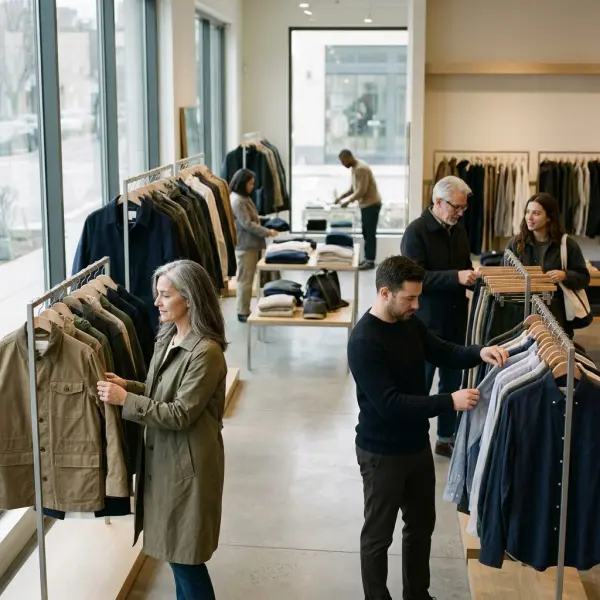
Behavioral segmentation becomes especially valuable when an apparel brand has enough relevant customer activity to identify recurring patterns.
Instead of describing the general characteristics of potential shoppers, it helps the brand examine actual interactions with products and retail channels.
This can be particularly useful for established ecommerce businesses, omnichannel retailers, and apparel brands with repeat customers. It supports more specific decisions about customer retention, category merchandising, and marketing relevance.
Purchase Frequency and Customer Retention
Purchase frequency shows how often customers complete transactions within a defined period.
A fashion retailer might distinguish first-time buyers, occasional purchasers, and customers who regularly return. These groups can have different information needs and relationships with the brand.
First-time buyers may need reassurance about product quality, sizing, delivery, and returns. Repeat customers may be more familiar with the brand and more interested in relevant new arrivals or replenishment of products they already trust.
A common analytical method is RFM analysis, which evaluates recency, frequency, and monetary value.
According to Shopify's RFM Analysis: Definition and Segmentation Guide (2026), the framework groups customers according to how recently they purchased, how often they purchased, and how much they spent. These measures can help retailers develop more relevant customer engagement strategies.
RFM is useful, but its interpretation needs care in apparel retail. Customers purchasing occasionwear may naturally return less frequently than those buying everyday clothing. Low frequency should not automatically be interpreted as weak customer loyalty.
Product Category Preferences
Behavioral segmentation can identify customers who repeatedly engage with particular garment categories.
A retailer may observe that some customers primarily purchase denim, while others regularly buy knitwear, activewear, or professional clothing.
These patterns can support category-specific communication, product recommendations, and merchandising decisions.
For example, a shopper who repeatedly purchases tailored trousers may be interested in compatible shirts or blazers. However, the retailer should not assume that every purchase signals a permanent style preference.
A customer's interests may change according to work requirements, seasonal conditions, events, or changing wardrobe needs.
The objective is to recognize useful purchasing patterns while maintaining flexibility in how customers discover products.
Discount Responsiveness and Promotion Behavior
Some fashion customers frequently purchase during promotional periods, while others regularly buy at full price.
Understanding this distinction can help brands evaluate how promotions influence different groups.
However, purchasing during a discount is not the same as being unwilling to pay full price.
Customers may purchase promotional products because those garments became available in their size, because the timing matched a particular need, or because the product represented attractive value.
To evaluate genuine promotion responsiveness, retailers should examine purchasing history, comparable customer groups, and the incremental effect of promotional activity.
Repeatedly discounting products for customers who would have purchased anyway can reduce margins without generating meaningful additional demand.
Product Browsing and Purchase Hesitation
Fashion ecommerce offers opportunities to study interactions before purchase.
Depending on the analytics implementation and available consent, brands may track product views, cart additions, checkout activity, purchases, and refunds.
Google Analytics 4 supports recommended ecommerce events including view_item, add_to_cart, begin_checkout, purchase, and refund, as documented in its official ecommerce event reference. These events require appropriate configuration and reliable event collection.
Such information can help identify stages where customers hesitate or abandon a shopping journey.
For example, repeated visits to a product page without purchase may indicate interest combined with uncertainty. But the reason cannot be determined from page views alone.
The product may be unavailable in the desired size, priced beyond the customer's current budget, or missing useful garment information.
Behavioral data indicates where further investigation may be necessary. It does not always provide the explanation.

When Should Fashion Brands Choose Demographic or Behavioral Segmentation?
The appropriate method depends on the business question, available evidence, and intended decision.
A brand entering a market for the first time may need demographic research to understand the potential audience. A retailer attempting to improve repeat purchases may gain more immediate value from behavioral segmentation.
The distinction becomes clearer when applied to specific marketing objectives.
|
Fashion marketing objective |
Recommended starting point |
Reason |
|
Enter a new apparel market |
Demographic and geographic research |
Helps establish broad market context without relying on existing transactions |
|
Improve repeat purchasing |
Behavioral |
Reveals purchasing intervals, customer activity, and relevant retention patterns |
|
Evaluate a new price tier |
Combined |
Market affordability provides context; purchase behavior tests real demand |
|
Promote related product categories |
Behavioral |
Uses observed category interests and purchasing relationships |
|
Plan a new occupational clothing line |
Demographic and needs-based research |
Specific work requirements may help identify a relevant audience |
|
Reduce abandoned shopping journeys |
Behavioral and qualitative research |
Identifies friction points and investigates the reasons behind them |
|
Develop a new customer acquisition strategy |
Combined |
Broad audience context helps define reach; available behavior and research refine relevance |
These recommendations are starting points, not fixed rules.
A startup may have limited internal customer records but still be able to study behavior through interviews, observational research, and appropriately designed product tests. Conversely, a large retailer may hold extensive customer activity data that is incomplete, inconsistent, or poorly matched across channels.
The quality and relevance of evidence matter more than the sophistication of the segmentation method.
Combining Demographic and Behavioral Segmentation for More Useful Insights
In practice, the two approaches often work best together.
Demographic information can establish the context of a potential market, while behavioral evidence helps explain how customers within that market interact with fashion products.
This combination is sometimes described as multivariable or hybrid segmentation. Rather than using a single characteristic, it considers multiple dimensions where they contribute to a meaningful distinction.
Why Similar Demographics Can Hide Different Purchasing Patterns
Imagine two customers within the same age range and spending-capacity category.
Both purchase contemporary womenswear, but their activity differs substantially.
The first customer buys familiar wardrobe essentials throughout the year, rarely uses promotional codes, and frequently returns to previously purchased styles.
The second purchases a few times annually, browses several categories before checkout, and concentrates purchases around particular occasions.
A marketing strategy based only on their shared demographic characteristics might treat them as interchangeable.
Behavioral segmentation reveals opportunities to differentiate the experience.
The first customer may benefit from information about restocked essentials and continuity in fit. The second may respond better to occasion-based product discovery and complete-outfit styling.
However, those marketing responses should be tested rather than assumed effective.
Creating a Practical Hybrid Segmentation Matrix
A hybrid framework does not have to be complicated.
Suppose a fashion retailer decides that spending capacity and purchasing frequency are both relevant to a particular commercial objective.
The brand might construct the following illustrative matrix.
Illustrative demographic × behavioral matrix
Conceptual example only. Segment boundaries, spending-capacity measures, and purchasing intervals must be defined and validated using relevant data.
This matrix can reveal customer groups with different combinations of commercial circumstances and purchasing activity.
Yet it does not explain everything. A customer with high spending capacity and low purchase frequency may intentionally buy fewer high-quality garments. Another may simply have limited interest in the retailer's current assortment.
Brands should therefore avoid turning a two-variable matrix into an overly confident explanation of customer motivations.
Connecting Hybrid Segments With Research-Based Buyer Personas
Once a brand identifies meaningful customer groups, qualitative research can help explain the purchasing motivations behind them.
For example, a hybrid segment may reveal customers who regularly purchase professional clothing. Interviews might identify recurring concerns about fit consistency, fabric maintenance, or compatibility with existing wardrobes.
Those findings can inform a more detailed customer representation without assuming that every shopper behaves identically.
This is where the distinction between segmentation and persona development becomes useful. Segmentation defines relevant groups, while personas help explain recognizable customer needs and decision-making contexts.
For a deeper practical methodology, see how to build buyer personas based on fashion shopping behavior.
A Practical Fashion Retail Example: Two Customers, Different Marketing Needs
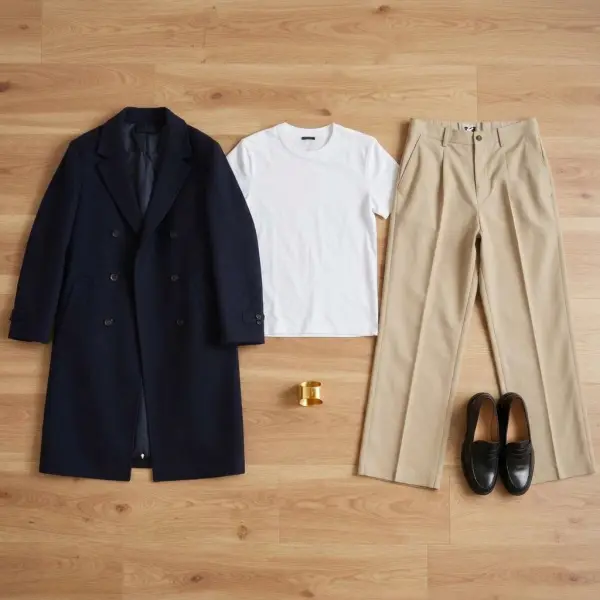
Consider a hypothetical apparel brand selling casualwear, tailored clothing, and seasonal outerwear through its website.
The brand initially targets adult customers with similar demographic characteristics. Yet its transaction records indicate different purchasing patterns.
Customer Group A
Observed pattern: frequent purchases of wardrobe essentials

Customer Group B
Observed pattern: occasional purchases of statement outfits
Although both groups may fall within the same demographic range, their shopping patterns suggest different potential marketing approaches.
Customer Group A: Repeat Essential Purchasers
The first group regularly purchases basic tops, everyday trousers, and familiar knitwear styles.
A relevant marketing approach might include restock notifications, coordinated essentials, or recommendations for products compatible with previous purchases.
The brand may also prioritize consistent sizing and continuity across its core product lines.
These decisions are linked directly to observed purchasing patterns. Nevertheless, the retailer should test whether customers genuinely value restock messaging and whether recommended products generate incremental purchases.
Customer Group B: Occasion-Oriented Purchasers
The second group buys less frequently and tends to purchase dresses, structured jackets, or coordinated outfits around specific events.
The brand might test occasion-based merchandising, styling inspiration, and clearer delivery information.
Promotional frequency may be less important than helping the customer find a suitable product at the right time.
However, the brand should not automatically classify these shoppers as less loyal or less valuable.
An occasion-focused customer may have a longer natural purchase cycle, while still generating attractive margins and positive recommendations.
What the Comparison Reveals
The demographic profile establishes broad market similarities, but behavioral evidence reveals differences in purchasing activity.
The operational lesson is not that every customer group requires its own products or campaigns. It is that the same assortment may need to be presented through different shopping contexts.
A single tailored jacket could appear in a professional wardrobe edit, a seasonal collection, or an occasion-based styling guide.
This allows brands to address different purchasing situations without unnecessarily increasing product development or inventory complexity.
How to Apply Both Segmentation Methods in Fashion Marketing
A practical implementation process should begin with the decisions the business intends to improve.
For a smaller clothing brand, this might involve understanding which shoppers return, which product categories generate repeat demand, and whether different customer groups require different marketing information.
Larger businesses may also need to coordinate customer information across physical stores, ecommerce platforms, loyalty programs, and wholesale-related channels.
The implementation process should remain proportionate to the organization's resources.
1. Establish the Relevant Customer and Market Data
Start with the information already available and determine whether it can reliably support the intended analysis.
Demographic data may come from voluntary customer research, relevant market statistics, or appropriately collected account information.
Behavioral data may come from transactions, ecommerce analytics, customer service records, or point-of-sale systems.
A brand should not assume it needs every possible demographic attribute. Only collect and analyze information with a clear purpose and appropriate legal basis.
Data consistency also matters. If purchase records use different product categories or customer identifiers across retail channels, comparisons may be misleading.
2. Define Segmentation Rules That Can Be Repeated
Segment definitions should be clear enough that different analysts can apply the same rules and obtain consistent results.
For example, a brand might define repeat purchasers based on completed orders within a specified observation period. The appropriate threshold should reflect its category and actual purchasing cycle.
A retailer selling basic clothing may observe shorter purchase intervals than a business focused on wedding apparel.
Definitions should also address refunds, canceled orders, duplicate records, incomplete data, and seasonal effects.
The objective is to establish meaningful comparisons, not arbitrary labels.
3. Match Each Segment to a Commercial Decision
A segmentation model becomes useful when it influences product or marketing actions.
A group showing repeated interest in particular garment categories might receive more relevant product recommendations. A broad market group with specialized occupational clothing needs may inform the development of a new product collection.
However, a segment should not automatically determine which products customers are allowed to see.
A shopper with a history of purchasing casualwear may still be interested in formal clothing. Segmentation should improve relevance without narrowing customer choice unnecessarily.
4. Test Outcomes and Refine the Model
After implementing segmentation-informed changes, brands should measure whether those actions produced meaningful results.
Useful indicators may include purchase conversion, repeat purchasing, contribution margin, customer acquisition cost, and returns.
Where feasible, controlled tests can compare a segment-specific intervention with an appropriate alternative.
For example, a retailer might compare whether a category-relevant email campaign produces more incremental contribution margin than its standard campaign, rather than comparing click-through rates alone.
Results should account for customer eligibility, seasonality, product availability, and other commercial conditions.

Measuring Which Segmentation Approach Delivers Better Results
It is tempting to compare demographic and behavioral segmentation by asking which produces a higher conversion rate.
That comparison may be misleading.
A behavioral campaign targeting previous purchasers naturally differs from a demographic acquisition campaign reaching people who have never interacted with the brand. Differences in conversion may reflect existing familiarity, purchase intent, or campaign objectives rather than the inherent quality of the segmentation method.
Measurement should therefore focus on the business decision being tested.
|
Measurement area |
Relevant indicators |
What the brand should verify |
|
Audience targeting |
Qualified reach, acquisition cost, new-customer conversion |
Are comparable audiences and acquisition conditions being evaluated? |
|
Customer engagement |
Relevant product interaction, campaign response |
Does engagement translate into meaningful commercial activity? |
|
Retention |
Repeat purchase rate, purchase intervals, retention by cohort |
Are differences caused by the campaign or by existing customer behavior? |
|
Merchandising |
Category conversion, sell-through, stock availability |
Is inventory availability influencing observed demand? |
|
Profitability |
Contribution margin, incremental revenue, promotion cost |
Are campaigns generating profitable incremental purchases? |
A further consideration is customer selection bias.
If a retailer targets highly active customers using behavioral segmentation, those customers may have been likely to purchase regardless of the intervention. A strong campaign result does not necessarily establish that the targeting strategy created the additional sales.
Controlled comparisons, when practical, help separate the effects of marketing activity from the characteristics of customers selected for the campaign.
For apparel brands, the relevant question is not simply which segmentation system generates more activity. It is which approach helps improve the intended business outcome at an acceptable cost.
Common Mistakes in Demographic and Behavioral Fashion Segmentation
Assuming Demographics Determine Fashion Taste
A common error is assigning fixed style preferences to age groups, income categories, or occupations.
A brand may assume that younger consumers prefer trend-led clothing or that higher-income shoppers prioritize luxury products. Such assumptions can overlook substantial differences within those groups.
Age and income may provide useful context, but the relationship between these characteristics and actual purchasing preferences needs evidence.
Fashion businesses should use customer research and observed market responses to test demographic assumptions rather than treating them as universal rules.
Treating Every Digital Interaction as Purchase Intent
High website engagement does not always represent strong buying intention.
A customer may visit an apparel product page to compare styles, research sizing, browse for inspiration, or assess alternatives without intending to purchase immediately.
Similarly, an abandoned cart does not establish that the customer rejected the product because of price.
Brands should interpret digital behavior in context and combine analytics with customer feedback where necessary.
This is particularly relevant to garment sizing. The Baymard Institute's research on apparel sizing information documents how insufficient sizing information can contribute to purchase hesitation in apparel ecommerce.
Baymard
Identifying behavioral friction is useful, but understanding its cause is essential before deciding on a response.
Confusing Customer Spending With Customer Profitability
A retailer may identify its highest-spending customers and treat them as the most valuable group.
However, sales revenue alone does not account for relevant costs, including discounts, fulfillment, returns, customer service, and acquisition expenditure.
High-spending customers may contribute attractive profits, but this must be verified rather than assumed.
When using monetary-value segmentation, fashion businesses should consider contribution margin and the costs associated with serving different customer groups.
The objective is commercially sustainable customer relationships, not simply larger transaction totals.
Creating Segments Too Small to Support Reliable Decisions
Combining demographic and behavioral variables can create numerous narrowly defined customer groups.
A brand might segment by age, income, region, purchase frequency, product category, and discount responsiveness. The resulting combinations could be too small to analyze reliably or serve efficiently.
This introduces statistical instability and operational complexity.
The OpenStax framework for effective market segmentation emphasizes accessibility, differentiability, actionability, measurability, and substantiality when evaluating segments.
OpenStax
Fashion businesses should prioritize customer groups that are sufficiently distinct and commercially meaningful, rather than assuming that more detailed classification always produces better decisions.
Failing to Account for Seasonal and Occasion-Based Demand
Fashion purchasing patterns can be strongly influenced by seasonal collections, weather, events, and changing wardrobe requirements.
A customer who purchases outerwear once a year may not be disengaged. A shopper who buys formalwear only for particular events may still have a positive relationship with the brand.
If the segmentation model ignores the natural purchase cycle, it may categorize customers incorrectly.
Brands should establish observation periods and purchasing thresholds that reflect product categories and relevant market conditions.
Important Caveats: Data Quality, Privacy, and Customer Profiling
Combining demographic and behavioral information can make customer groups more detailed, but it can also increase the risks associated with profiling.
Brands need to distinguish between information that customers have provided, behavior that has actually been observed, and characteristics inferred through analysis.
For example, a purchase of children's clothing should not automatically establish that the shopper is a parent. A transaction involving premium apparel should not be treated as proof of a customer's income level.
Such inferences can be wrong, and inaccurate profiles may lead to inappropriate or exclusionary marketing decisions.
The UK's Information Commissioner's Office states in its guidance on collecting information and profiling customers for direct marketing that customer profiling must be fair, lawful, and transparent. The guidance also highlights accuracy, data minimization, customer rights, and the risks of reinforcing stereotypes or discrimination.
For international fashion brands, specific obligations depend on the jurisdictions involved and the intended processing activities.
A responsible approach includes documenting the purpose of segmentation, collecting only necessary information, applying appropriate data protection measures, and respecting relevant customer marketing preferences.
Brands should not assume that behavioral tracking is permissible simply because the technology exists.





Comments 0
Leave a CommentSend Comment
Anda harus Login terlebih dahulu untuk dapat memberikan komentar.