
Best AI Tools for Fashion Designers in 2026 (Complete Guide)
Introduction: Why AI Tools Are Changing Fashion Design
Fashion design is no longer driven by creativity alone. In 2026, it is increasingly powered by technology—especially artificial intelligence.
Today, AI tools for fashion designers are transforming how ideas are created, developed, and brought to life. What once took days or even weeks—sketching concepts, testing variations, refining details—can now be done in minutes with the help of intelligent systems.
In simple terms, AI tools for fashion designers are software platforms that use machine learning and generative models to assist in design, visualization, trend analysis, and product development.
From generating design ideas to simulating garments in 3D, these tools are not replacing designers—but enhancing their capabilities.
In this guide, we will explore the best AI tools for fashion designers in 2026, how they work, and how you can use them to improve your creative workflow.
1. What Are AI Tools for Fashion Designers?
Before diving into specific tools, it’s important to understand what makes a tool “AI-powered.”
Unlike traditional design software such as Adobe Illustrator or Photoshop, AI tools go beyond manual creation.
They are designed to:
- Learn from large datasets
- Generate design variations automatically
- Provide predictive insights
- Improve outputs based on input patterns
AI tools for fashion designers refer to digital platforms that assist in creative and technical processes using artificial intelligence, including design generation, fabric simulation, and trend forecasting.
These tools are generally divided into:
- Generative design tools
- 3D simulation tools
- Trend forecasting tools
- AI styling and personalization tools
Each category plays a different but connected role in modern fashion workflows.
2. Generative AI Tools for Fashion Design
Generative AI is one of the biggest breakthroughs in fashion design.
Instead of starting from scratch, designers can now input prompts such as:
- “minimalist linen dress”
- “modest elegant outfit”
- “streetwear oversized silhouette”
…and instantly receive multiple design variations.
Top Generative AI Tools
Midjourney
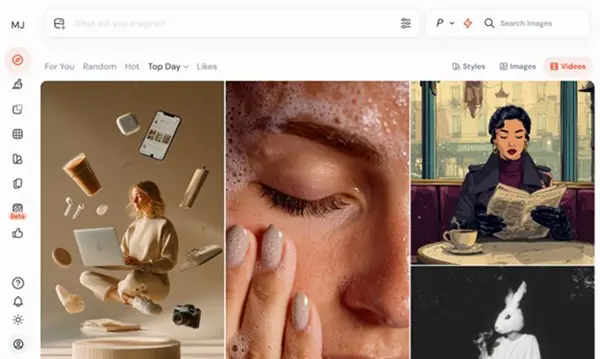
Widely used by fashion designers for concept ideation. It produces high-end, editorial-quality visuals that are useful for moodboards, lookbooks, and early-stage exploration.
Strength:
- Exceptional visual quality
- Strong fashion aesthetic output
DALL·E
A flexible AI tool that translates text prompts into realistic fashion visuals. Useful for exploring design directions quickly.
Strength:
- Easy to use
- Strong conceptual generation
Magic Hour AI
An easy-to-use AI platform for creating and editing visual content, including realistic face swap effects. Useful for experimenting with creative concepts and producing engaging content quickly.
Strength:
- Easy to use
- Supports a range of AI-powered visual tools
- Realistic face swap results
Runway ML
A more advanced creative platform that supports image generation, video editing, and visual experimentation.
Strength:
- Multi-modal (image + video)
- Useful for fashion content creation
Stable Diffusion
An open-source alternative that allows more control and customization, especially for advanced users.
Strength:
- Highly customizable
- Can be fine-tuned for specific fashion styles
Why Generative AI Matters
Using generative AI tools, designers can:
- Explore hundreds of ideas in minutes
- Reduce creative block
- Test different styles before committing
This transforms design from a linear process into an exploratory one.
3. 3D Fashion Design and Simulation Tools
Designing clothing is not only about appearance—it’s about how garments behave in real life.
This is where 3D tools powered by AI become essential.
Top 3D Design Tools
CLO 3D
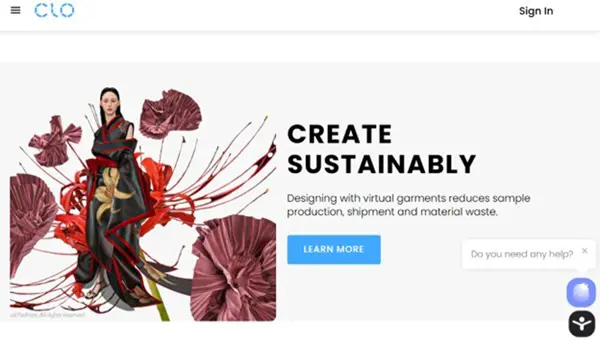
One of the most widely used tools in the industry. It allows designers to create realistic digital garments and simulate fabric movement.
Used by:
- Fashion brands
- Product developers
Key features:
- Real-time simulation
- Fabric physics accuracy
Browzwear
A professional platform used by large fashion companies for digital product development.
Key features:
- Accurate fit simulation
- Integration with production workflows
Marvelous Designer
Popular among designers and digital artists for creating detailed garment structures.
Strength:
- Highly realistic draping
- Ideal for concept and visualization
Style3D
A newer platform gaining traction for real-time collaboration and digital fashion workflows.
Why 3D Tools Matter
- Reduce physical sampling
- Improve design accuracy
- Speed up development cycles
AI in fashion design becomes significantly more powerful when combined with 3D simulation.
4. AI Tools for Trend Forecasting
Trend forecasting used to rely on intuition. Today, it is data-driven.
Leading Trend Forecasting Tools
Heuritech
Analyzes millions of images from social media using AI to detect emerging trends.
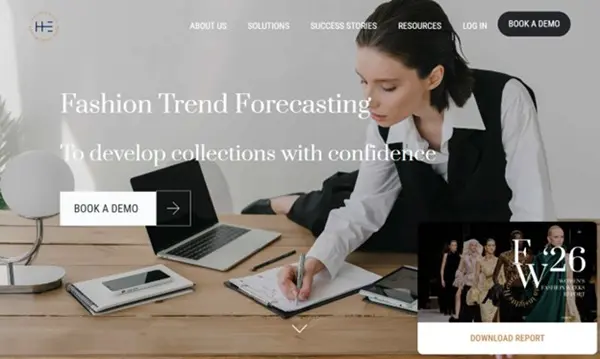
Key strength:
- Real-time trend detection
WGSN
A leading platform combining expert analysis with data-driven insights.
Trendalytics
Uses search data and consumer behavior analytics to predict trends.
Why These Tools Matter
They help designers:
- Reduce guesswork
- Align with market demand
- Identify trends earlier
Instead of designing based on assumptions, designers can now rely on data.
5. AI Tools for Styling and Personalization
Fashion is becoming increasingly personalized. AI plays a critical role in connecting design with consumer preferences.
Key Tools in This Category
Lily AI
Lily AI focuses on translating product data into attributes that match how consumers search and shop.
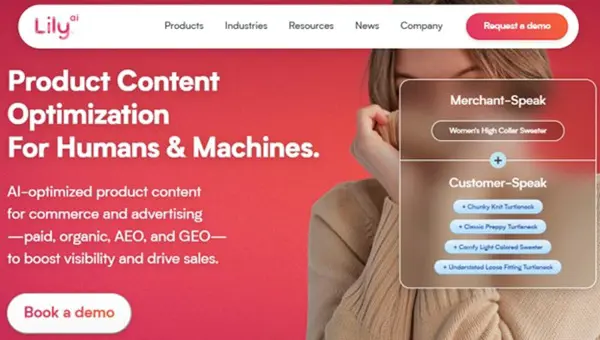
It helps brands:
- Improve product discoverability
- Align product language with user intent
Syte
Syte specializes in visual search and product discovery.
Users can:
- Upload images
- Find similar styles
- Discover products visually
True Fit
True Fit focuses on sizing and fit intelligence, helping customers find the right size based on data.
Why This Category Matters
These tools bridge the gap between design and the customer. A product is not just designed—it must be found, understood, and fit the user correctly.
6. AI Tools for Fabric and Material Innovation
Material innovation is often overlooked—but it’s critical.
Examples of AI Tools for Fabric and Material Innovation
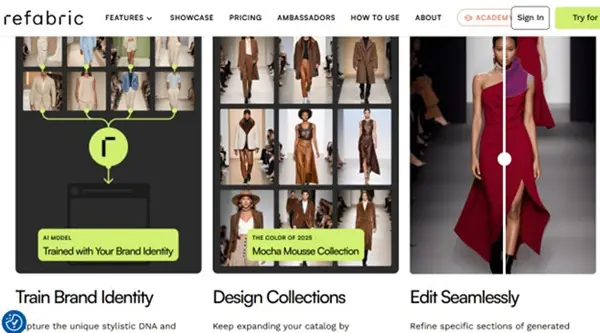
Refabric
Uses AI to generate textile patterns and fabric concepts.
Unspun
Focuses on reducing waste through digital production and custom-fit garments.
Sewts
Uses AI for automating sewing processes in manufacturing.
Why It Matters
AI in materials helps:
- Reduce waste
- Improve performance
- Accelerate innovation
7. How to Choose the Best AI Tools for Fashion Designers
With so many tools available, choosing the right one depends on your goals.
Ask yourself:
- Are you designing concepts?
- Developing products?
- Running a fashion business?
Simple Strategy
- Start with generative AI (Midjourney)
- Add 3D tools (CLO 3D)
- Expand to forecasting tools
The best tool is the one that fits your workflow—not the most advanced one.
8. Benefits of Using AI Tools in Fashion Design
Using AI tools for fashion designers offers:
- Faster design cycles
- More creative exploration
- Reduced production costs
- Better decision-making
AI shifts designers from manual execution to strategic thinking.
9. Challenges and Limitations
Despite the benefits:
- Some tools have steep learning curves
- Over-reliance can reduce originality
- Advanced tools can be expensive
- AI output depends on input quality
10. The Future of AI Tools in Fashion Design
Looking ahead, AI tools will become fully integrated into the fashion ecosystem.
We will see:
- End-to-end AI design workflows
- Real-time trend adaptation
- Seamless integration with e-commerce
Soon, using AI tools will not be optional—it will be standard.
Conclusion: AI as a Creative Partner
AI is not replacing designers—it is empowering them.
The most successful designers today are those who combine creativity with technology. By using the best AI tools for fashion designers, you are not only improving your workflow—you are preparing for the future of fashion.
Frequently Ask Questions
What are the best AI tools for fashion designers?
Some of the best AI tools include Midjourney, CLO 3D, Heuritech, and Vue.ai.
Which AI tool is best for beginners?
Tools like Midjourney are easy to start with.
Are AI tools expensive?
Some tools are free, while others require subscriptions depending on features.




Comments 0
Leave a CommentSend Comment
Anda harus Login terlebih dahulu untuk dapat memberikan komentar.