
3D Fashion Design for Modern Apparel Production
3D fashion design is a digital apparel development process that allows fashion brands, designers, and manufacturers to create virtual garments before physical samples are produced. Using specialized software such as CLO 3D, Browzwear, and Style3D, teams can simulate garment fit, drape, fabric behavior, colorways, trims, and construction details in a realistic digital environment.
In the apparel industry, 3D design is increasingly used during product development, sampling, merchandising, and communication between brands and suppliers. Instead of relying entirely on multiple rounds of physical prototypes, teams can review digital samples earlier in the development cycle and identify fit or styling issues before production.
However, 3D fashion design does not completely eliminate physical sampling in most commercial apparel operations. Real-world fit testing, material validation, wash performance, and manufacturing constraints still require physical verification depending on product category and quality standards.
For many apparel businesses, the value of 3D fashion design lies in faster development timelines, improved collaboration, clearer visual communication, and potentially lower sampling costs when implemented correctly.
What Is 3D Fashion Design?
3D fashion design refers to the process of developing garments digitally using virtual garment simulation software. Instead of sketching designs solely in 2D and producing multiple physical prototypes immediately, designers can build garments in a digital environment that simulates fabric behavior, garment construction, fit, and movement.
The workflow typically combines several elements:
- 2D pattern development
- Digital fabric simulation
- Virtual garment assembly
- Avatar-based fit visualization
- Colorway testing
- Technical review
- Digital rendering for presentation or merchandising
Unlike traditional fashion illustration, modern 3D fashion systems are connected closely to technical apparel development. The software does not simply create artistic visualizations. It attempts to replicate how garments behave when sewn and worn.
This distinction matters. In commercial apparel production, design decisions affect manufacturing efficiency, fabric consumption, grading consistency, and production costs. A realistic virtual garment can help teams identify issues earlier before physical sampling begins.
Many global brands now incorporate 3D workflows into at least part of their development pipeline, especially for sportswear, casualwear, denim, outerwear, footwear, and fast-cycle fashion collections. Adoption remains uneven across the industry, though. Smaller brands may use 3D mainly for visualization, while larger organizations integrate it into product lifecycle management systems and supplier collaboration workflows.
CLO Virtual Fashion and Browzwear provide examples of how commercial 3D apparel systems are positioned for professional product development rather than purely artistic rendering.
How 3D Fashion Design Works in Apparel Development
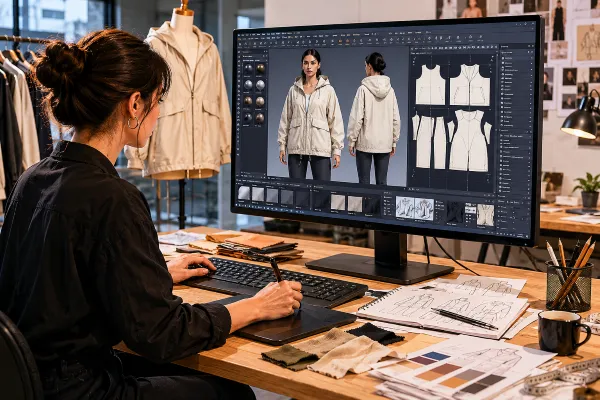
Although workflows vary between companies, most 3D fashion development follows a similar operational structure.
Digital Pattern Creation
The process often begins with digital patterns. Pattern makers either draft patterns directly inside 3D software or import files from CAD systems commonly used in apparel production.
At this stage, technical accuracy matters more than visual styling. Incorrect seam placement, unrealistic ease allowances, or inaccurate grading can distort later simulations.
For manufacturers already using digital pattern systems, integrating 3D tools can be relatively straightforward. Smaller brands transitioning from manual workflows may face a steeper learning curve.
Fabric Simulation and Material Mapping
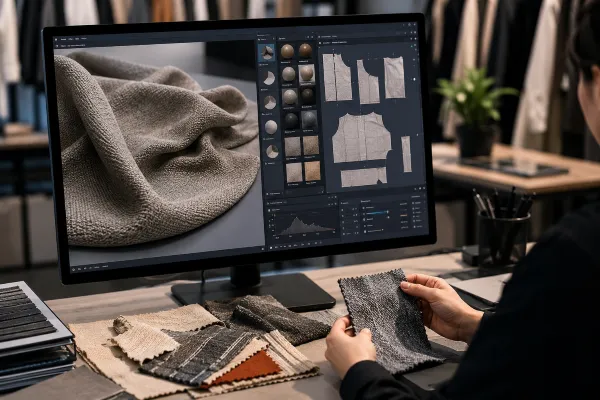
Once patterns are assembled digitally, fabric properties are assigned to the garment.
This includes variables such as:
- weight
- stretch
- stiffness
- drape behavior
- thickness
- texture
- surface appearance
Accurate fabric simulation depends heavily on reliable material data. Some companies use standardized fabric libraries, while others test fabrics physically using specialized measurement devices.
This is one of the biggest limitations in 3D apparel development. Digital simulation can approximate fabric behavior, but highly complex materials — especially heavily washed denim, technical laminates, embellished textiles, or unstable knits — may not always behave identically in virtual environments.
Virtual Garment Assembly
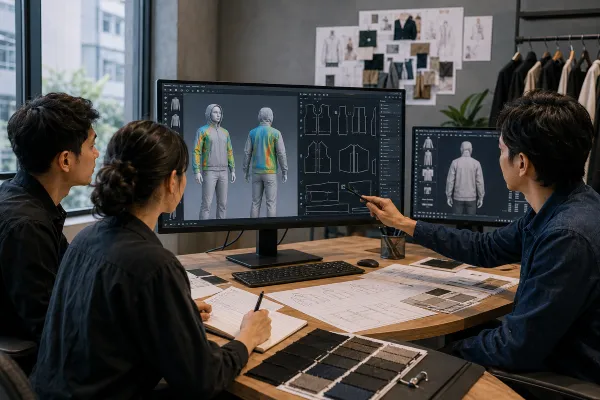
The garment is then stitched digitally inside the software environment. The system simulates gravity, body movement, tension, and garment fit around a virtual avatar.
Designers and technical teams can review:
- silhouette
- balance
- seam placement
- fit tension
- layering behavior
- pocket positioning
- trim placement
- proportion consistency
For fashion businesses operating globally, this stage can improve communication between design offices, technical teams, and overseas factories.
Instead of relying solely on flat sketches and written comments, suppliers can review a shared visual reference with much more detail.
Rendering and Presentation
Once the garment is approved internally, teams may generate high-quality renders for:
- internal line reviews
- sales presentations
- merchandising approvals
- ecommerce planning
- wholesale previews
- marketing preparation
Some brands also experiment with digital-only garments for social media campaigns, gaming environments, or virtual commerce. However, those use cases remain separate from core apparel manufacturing operations in most companies.
Why the Apparel Industry Is Investing in 3D Fashion Design
The push toward 3D apparel development is not driven by aesthetics alone. Most investment decisions are operational.
Fashion companies face increasing pressure to shorten development timelines while maintaining product accuracy and reducing unnecessary costs.
Several industry realities contribute to this shift:
- globalized sourcing complexity
- rising sample shipping costs
- compressed seasonal calendars
- faster trend cycles
- sustainability scrutiny
- ecommerce-driven product visualization needs
- pressure to improve forecasting accuracy
Traditional apparel development often involves multiple rounds of physical samples moving between countries. This process can create delays, communication gaps, and material waste.
3D workflows attempt to reduce some of that friction earlier in development.
According to McKinsey & Company’s State of Fashion reporting, digitalization and supply chain efficiency continue to shape strategic priorities across fashion businesses globally.
Still, implementation outcomes vary widely. Some brands achieve meaningful reductions in sample iterations, while others struggle because workflows, supplier capabilities, and organizational structures are not fully aligned.
Key Applications of 3D Design in Fashion Businesses
Product Development
This remains the primary commercial application.
Teams can review garments before cutting fabric, helping reduce some avoidable revisions during development.
This is especially useful for:
- sportswear collections
- performance apparel
- basics programs
- fast-turn seasonal collections
- ecommerce-driven brands
- modular product lines
Supplier Collaboration
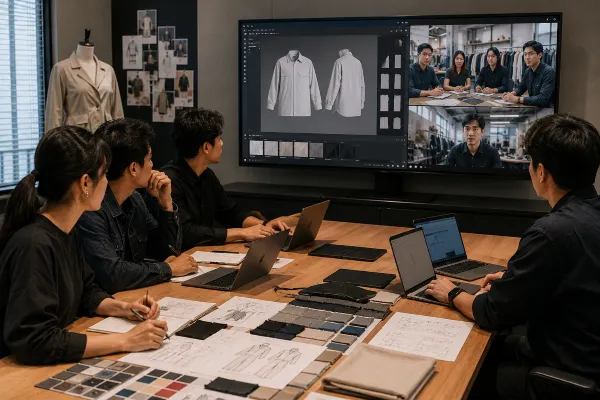
Digital samples can simplify communication between buyers and factories.
Instead of waiting for international shipments, technical teams can review updates remotely and annotate changes directly on digital garments.
This does not eliminate supplier expertise. In practice, successful implementation usually depends on close collaboration between digital teams and experienced manufacturing partners.
Merchandising and Pre-Sales
Some brands use 3D renders before physical inventory is finalized.
Potential applications include:
- wholesale previews
- assortment planning
- ecommerce mockups
- early marketing preparation
- colorway selection
- internal buying reviews
However, many businesses still rely on physical garments for final commercial presentations, especially in premium fashion segments where fabric hand feel and finishing quality strongly influence purchasing decisions.
Training and Internal Alignment
3D visualization can also improve communication internally.
Designers, merchandisers, technical developers, sourcing managers, and marketing teams may interpret flat sketches differently. A shared digital garment often reduces ambiguity during decision-making.
3D Fashion Design Software Commonly Used in the Industry
Several software platforms dominate professional apparel 3D workflows.
Commonly used systems include:
|
Software |
Primary Strength |
Common Industry Use |
|
CLO 3D |
Realistic garment simulation |
Fashion design, visualization, sampling |
|
Browzwear |
Enterprise product development workflows |
Large apparel brands and suppliers |
|
Style3D |
Integrated visualization and ecommerce workflows |
Digital fashion and merchandising |
|
Optitex |
Pattern engineering and technical integration |
Technical apparel development |
|
Lectra |
CAD and enterprise fashion systems |
Manufacturing and industrial apparel operations |
Different businesses prioritize different capabilities.
A startup fashion label may focus on visualization quality and ease of use. Large manufacturers often prioritize integration with pattern systems, PLM infrastructure, grading workflows, and production processes.
The software alone rarely determines success. Internal workflow adaptation matters far more than simply purchasing licenses.
3D vs traditional fashion sampling explores this operational difference in more detail, particularly regarding sample approval workflows and supplier coordination.
The Business Benefits of 3D Fashion Design
Faster Development Cycles
One of the clearest advantages is development speed.
Teams can often review digital revisions more quickly than shipping physical prototypes internationally.
This may help brands:
- shorten approval cycles
- accelerate collection planning
- reduce waiting time between revisions
- improve communication across global teams
However, actual efficiency gains depend heavily on workflow maturity and staff training.
Improved Design Communication
Visual clarity is one of the most practical benefits.
Many production errors originate from misinterpretation between sketches, tech packs, and supplier execution. A realistic digital garment can reduce some ambiguity.
This is particularly useful for:
- complex garment construction
- technical sportswear
- layered garments
- engineered fit products
- multi-fabric styles
Potential Cost Reduction
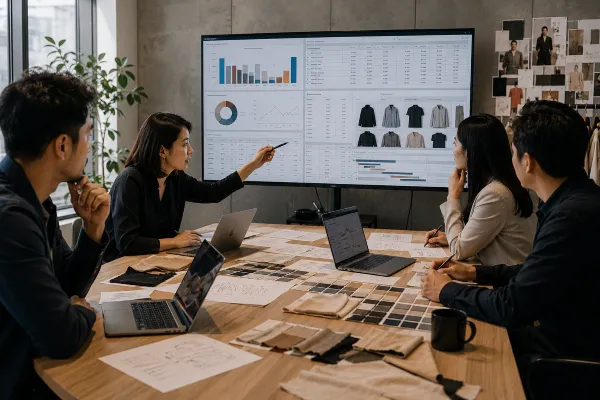
3D workflows may reduce some sampling expenses over time.
Possible savings can come from:
- fewer physical sample rounds
- reduced courier costs
- lower material consumption during development
- earlier detection of design issues
Still, implementation itself requires investment:
- software licensing
- hardware upgrades
- staff training
- digital workflow restructuring
- supplier onboarding
Companies that underestimate change management often struggle to realize expected ROI.
What 3D Fashion Design Does Not Automatically Solve
One common misconception is that 3D apparel development completely replaces physical product validation.
In reality, many factors still require physical testing.
Examples include:
- wash durability
- fabric shrinkage
- seam performance
- colorfastness
- wearer comfort
- real-body fit diversity
- manufacturing consistency
- trim durability
- production scalability
This is especially true for categories such as denim, lingerie, tailoring, technical outerwear, and heavily washed garments.
Another misconception is that 3D design automatically makes fashion sustainable. Digital sampling can help reduce unnecessary prototypes, but sustainability outcomes depend on broader operational decisions.
Factors such as overproduction, material sourcing, logistics, inventory management, and product lifecycle still matter significantly.
how 3d design helps reduce fashion waste and costs examines those sustainability and cost implications more critically.
Practical Challenges Brands Face During Implementation
Skill Gaps
3D fashion development requires hybrid capabilities.
Teams often need expertise in:
- garment construction
- digital patternmaking
- fabric behavior
- rendering workflows
- technical apparel development
- software operation
Strong fashion designers do not automatically become strong digital garment developers overnight.
Supplier Readiness
Adoption becomes difficult when brand and supplier capabilities are mismatched.
Some factories maintain advanced digital workflows. Others still rely heavily on manual development processes.
Operational alignment matters more than software marketing claims.
Data Accuracy Issues
Poor digital inputs create unreliable outputs.
If fabric parameters, pattern grading, or avatar sizing are inaccurate, virtual garments may not reflect real-world production outcomes.
This is why experienced technical teams remain essential even in highly digitized workflows.
How Fashion Brands Can Apply 3D Design Strategically
Not every company needs a fully digitized product pipeline immediately.
For many apparel businesses, a phased implementation approach is more realistic.
A practical adoption roadmap may include:
- Starting with digital visualization for selected categories
- Training technical design and pattern teams gradually
- Standardizing fabric libraries
- Testing supplier collaboration workflows
- Integrating digital approvals into sampling processes
- Expanding to merchandising and ecommerce assets later
Brands should also evaluate where 3D workflows create the most operational value.
For example:
- Fast-fashion businesses may prioritize speed.
- Premium brands may prioritize visualization quality.
- Sportswear brands may prioritize fit simulation.
- Ecommerce-focused brands may prioritize digital merchandising assets.
The technology works best when aligned with business objectives rather than implemented purely for trend positioning.
Common Mistakes Companies Make With 3D Fashion Design
Treating 3D Only as a Marketing Tool
Some companies invest heavily in rendering visuals while neglecting technical workflow integration.
This often limits long-term operational value.
Ignoring Technical Apparel Expertise
3D software does not replace garment engineering knowledge.
Without strong patternmaking and construction understanding, digital garments may look visually impressive but remain difficult to manufacture accurately.
Expecting Immediate ROI
Implementation usually requires organizational adjustment.
Training, process redesign, supplier onboarding, and workflow standardization take time.
Companies expecting instant savings often become disappointed early.
Overestimating Sustainability Impact
Reducing sample waste can help, but digital development alone does not solve broader fashion sustainability problems such as overproduction or excess inventory.
Careful sustainability communication is important to avoid overstated claims.
Important Technical Caveats Fashion Businesses Should Understand
Several limitations remain important when evaluating 3D fashion systems.
First, digital fabric simulation is improving but not perfect. Complex textile behavior can still differ significantly from physical garments.
Second, avatar accuracy remains a challenge. Real human body variation is difficult to standardize fully across global customer bases.
Third, supplier integration varies widely by region, company size, and manufacturing sophistication.
Finally, organizational adoption is often harder than software adoption. Digital transformation affects communication habits, approval structures, technical processes, and supplier relationships.
These realities do not reduce the value of 3D fashion development. They simply highlight that implementation should be approached strategically rather than treated as a universal shortcut.
FAQ
Is 3D fashion design replacing traditional fashion designers?
No. In most apparel businesses, 3D tools support designers rather than replace them. Creative direction, trend interpretation, garment storytelling, fit understanding, material selection, and commercial decision-making still rely heavily on human expertise. What changes is the development workflow. Designers increasingly collaborate with digital technicians, pattern developers, and technical teams using shared virtual environments.
Can 3D fashion design completely eliminate physical samples?
Usually not. While some companies significantly reduce sample iterations, physical validation often remains necessary for fit testing, fabric behavior, wash development, comfort evaluation, and production approval. Categories involving complex construction or specialized finishing typically still require physical verification before bulk production.
Which fashion sectors use 3D design most actively?
Sportswear, activewear, footwear, denim, casualwear, and ecommerce-focused fashion brands are among the most active adopters. These categories often benefit from faster development cycles, global sourcing coordination, and detailed fit visualization. Luxury fashion and tailoring segments also use 3D tools, though implementation approaches may differ.
Is 3D fashion design only suitable for large brands?
No, but adoption strategies differ by company size. Smaller brands may use 3D primarily for visualization and communication, while larger companies often integrate it into broader PLM and sourcing systems. Cost, training capacity, and supplier readiness usually influence how deeply smaller businesses implement digital workflows.
Does 3D fashion design automatically improve sustainability?
Not automatically. Digital workflows can reduce some sample waste and unnecessary shipping during development, but sustainability outcomes depend on broader operational practices. Material sourcing, production planning, inventory management, durability, and overproduction remain critical sustainability factors in fashion.
What skills are important for working in 3D fashion development?
Successful 3D apparel professionals often combine technical garment knowledge with digital workflow skills. Important competencies include patternmaking, garment construction, fabric understanding, fit analysis, CAD operation, rendering workflows, and communication between design and production teams.
How accurate are virtual garment simulations?
Accuracy varies depending on software quality, fabric data, avatar calibration, and technical workflow discipline. Modern systems can produce highly realistic visualizations, but simulations are still approximations. Certain materials and garment constructions remain more difficult to reproduce digitally with complete precision.
Conclusion
3D fashion design is becoming an increasingly important part of modern apparel development, not because it replaces every traditional process, but because it improves visibility and communication earlier in the product lifecycle.
For fashion brands and manufacturers, the real value often lies in operational efficiency rather than visual novelty. Faster approvals, clearer supplier collaboration, reduced development friction, and improved digital workflows can create meaningful business advantages when implemented carefully.
At the same time, the technology should be approached realistically. Physical product validation, manufacturing expertise, and material knowledge remain essential in commercial apparel production. Successful adoption depends less on software hype and more on workflow integration, technical discipline, and organizational readiness.
As digital product development continues evolving, fashion companies that combine technical garment expertise with thoughtful digital implementation are likely to build more adaptable and responsive development systems over time.




Comments 0
Leave a CommentSend Comment
Anda harus Login terlebih dahulu untuk dapat memberikan komentar.