

Why Ribbed and Raised Textures Add Character to Apparel Design
Quick Answer
Ribbed and raised fabric textures add character to apparel design by creating visible surface depth, tactile variation, and subtle differences in how garments reflect light. Unlike flat fabrics that rely mainly on color, print, or silhouette for visual interest, textured textiles introduce three-dimensional details that become part of the garment's appearance and material identity.
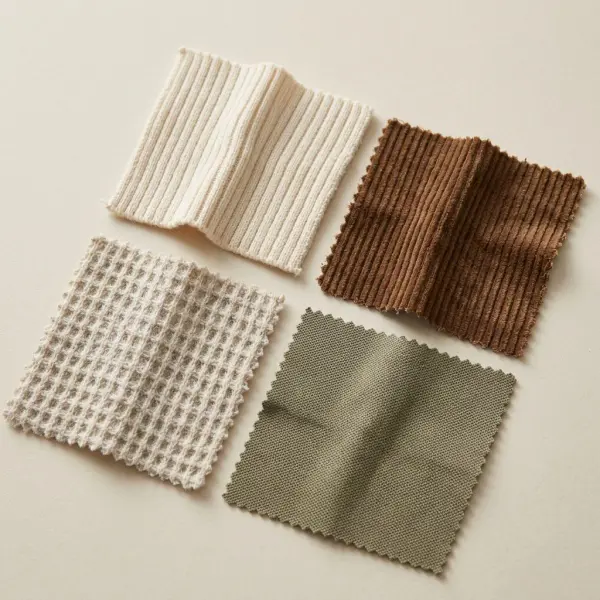
These effects can be created through knitting, weaving, pile formation, fabric manipulation, quilting, or finishing techniques. Rib knits produce recognizable vertical columns, corduroy develops raised pile ridges, and fabrics such as piqué, waffle, and seersucker create different forms of structured or uneven surfaces.
For fashion designers, texture can help define a garment's visual character without complicated prints or decorative additions. A simple shirt, fitted top, cardigan, or jacket may look substantially different when produced in a ribbed or raised-surface textile rather than a smooth fabric.
However, texture is not purely decorative. Surface construction can influence stretch, drape, thickness, sewing behavior, comfort, and long-term appearance. Fashion brands must therefore balance visual design objectives with material specifications, production capabilities, and customer expectations.
Why Does Fabric Texture Matter in Apparel Design?
Fabric texture matters because it affects how a garment looks, feels, and communicates its design character. While color and silhouette establish much of a garment's visual identity, surface structure adds another layer of information that can influence whether a product appears soft, substantial, refined, relaxed, or visually distinctive.
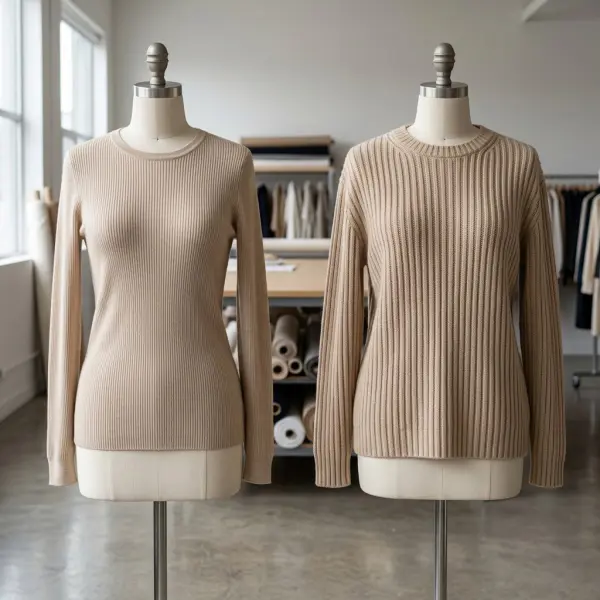
Consider two otherwise similar long-sleeved tops, one made from smooth jersey and the other from a pronounced rib knit. Both may have the same neckline, sleeve length, and overall silhouette, yet the ribbed version introduces repeating vertical lines and surface shadows. The result can appear more structured or visually detailed, although the actual fit and elasticity still depend on the fabric construction.
This distinction is particularly useful in products built around relatively simple garment shapes. Designers can introduce material variation without making the pattern more complicated or relying on additional decoration. For a brand producing everyday basics, texture can become an important part of product differentiation when it is applied consistently and meaningfully.
Texture Adds Visual Depth to a Fabric Surface
A smooth textile presents a comparatively continuous surface, while raised textures produce small changes in height across the material. These variations interact with lighting, creating highlights on projecting areas and shadows within recessed sections.
The visual effect is especially apparent in fabrics with repeated geometric relief, such as pronounced ribs, waffle structures, or corduroy wales. A solid-colored garment may therefore display visible pattern-like variation even without contrasting yarn colors or printed motifs.
However, visual depth does not always require coarse or highly prominent texture. Fine ribs, delicate piqué surfaces, and subtle puckering can create restrained material variation. The appropriate level of relief depends on whether the texture should dominate the garment's appearance or remain a supporting detail.
Tactile Character Complements Visual Design
Texture also contributes to the tactile experience of wearing and handling clothing. A fabric's handfeel, often called its fabric hand, describes the sensory impression created by qualities such as softness, smoothness, stiffness, thickness, and surface friction.
Raised surfaces can feel very different depending on their construction. Cut-pile textiles may have a soft, velvety surface, knitted ribs can feel flexible and elastic, while certain structured woven textures may feel firmer or more pronounced against the skin.
These differences matter in apparel because fabric contact influences comfort and customer expectations. Research published in PLOS ONE on physical and digital fabric texture also emphasizes that visual representations alone cannot fully communicate tactile properties. The research examined physical and image-based surface roughness, highlighting the need to distinguish how fabric looks from how it actually feels.
For brands, the practical implication is straightforward: texture should be evaluated through physical samples and representative garments, not only through digital mood boards or fabric photographs.
How Do Ribbed and Raised Textures Change a Garment's Appearance?
The visual influence of textile texture depends on several interacting elements: the scale of the surface relief, its direction, its relationship with the garment silhouette, and its response to color and light.
Texture Scale Changes Visual Emphasis
Fine and coarse textures produce different visual effects even when applied to the same garment design. Closely spaced narrow ribs generally create a more subtle surface rhythm, while broad ribs or pronounced raised patterns become more visible from a distance.
A fine-ribbed fitted top may maintain a relatively understated appearance, with the texture becoming clear only at closer viewing distance. A wide-ribbed cardigan can display a more pronounced surface pattern that contributes strongly to its visual identity.
Designers can use this relationship to determine how much attention the textile should attract. When the silhouette already contains complex seams, gathers, or decorative details, a finer texture may prevent the garment from appearing overly busy. Simpler silhouettes may accommodate more prominent surface structures.
Directional Lines Influence Visual Rhythm
Many ribbed textiles contain clearly directional structures. Vertical ribs create continuous lines along the garment, while horizontal or diagonal arrangements can introduce a different visual rhythm when material construction or pattern-piece orientation allows them.
These lines can affect the perceived proportions of a garment, although the result is not universal. Rib width, body fit, garment shape, contrast, lighting, and how the fabric stretches all influence the final appearance. Claims that vertical ribs always make a wearer look taller or slimmer are therefore too simplistic.
Design teams should evaluate directional textures on actual garment prototypes. A pronounced rib may appear orderly when laid flat but become visually distorted across curved or highly stretched body areas. This is particularly relevant for fitted knitwear, where the apparent spacing of ribs can change when worn.
Surface Relief Changes How Color Is Perceived
A textured fabric can appear different under changing lighting conditions because its raised and recessed areas reflect light in different directions. This effect is not necessarily a change in the material's actual color. It is a visual consequence of surface geometry, fiber characteristics, and illumination.
Deeply textured surfaces may show stronger variations between highlights and shadows, while fine textures may produce a more restrained effect. Pile fabrics can also exhibit directional shading related to how their surface fibers lie.
For fashion brands developing coordinated products, this creates a practical color-management challenge. Two fabrics dyed to similar specifications may look different when one has a smooth surface and the other has pronounced texture. Color matching should therefore consider the finished material's appearance under representative lighting rather than relying exclusively on dye formulas or digital color values.
How Are Different Ribbed and Raised Fabric Textures Created?
Ribbed and raised textures can be produced through several textile construction and finishing methods. Although these fabrics may share a three-dimensional appearance, their underlying structures are not necessarily related.
Understanding how a texture is created helps designers select materials with suitable visual and functional characteristics. This is particularly relevant when developing garment collections that include multiple fabrics with coordinated surface effects.

Rib Knitting Creates Repeated Vertical Columns
Rib-knit fabrics are created by alternating knit and purl stitch columns, producing a surface with raised and recessed vertical lines. Common constructions include 1×1 and 2×2 rib knitting, although variations can produce wider or more complex patterns.
The CottonWorks explanation of single and double knit constructions describes how alternating face and back wales create rib structures capable of stretching as the knitted loops move relative to one another.
This structural extensibility helps explain why rib knits are useful for fitted tops, cuffs, neckbands, and body-conscious garments. The exact stretch and recovery depend on yarn composition, stitch configuration, finishing, and any added elastic fibers.
Cut-Pile Construction Creates Raised Corded Surfaces
Some ribbed-looking textiles achieve their surface character through pile formation rather than knitted loops. Corduroy is a familiar example, with raised longitudinal ridges produced by cutting additional yarn floats in a woven ground structure.
The resulting wales create a soft, directional surface that differs fundamentally from rib knitting. Corduroy does not automatically offer the same extensibility as a rib knit, even when the two materials have a similar visual rhythm.
A detailed explanation of this construction is available in Corduroy Fabric Explained: Texture, Structure, and Fashion Uses. For design decisions, the essential distinction is that corduroy's character comes from a cut-pile surface, while conventional rib knits develop their texture through the arrangement of knitted stitches.
Structured Weaves and Knits Create Geometric Relief
Other fabrics develop raised patterns through variations in yarn interlacing or stitch formation. Waffle fabrics, for example, use constructions that create a repeating cellular or grid-like surface. Piqué fabrics may display small raised patterns, cords, or textured geometric effects depending on whether the material is woven or knitted.
These textures can introduce more complex surface patterns than simple parallel ribs. A waffle structure creates repeated recessed and raised areas across the fabric, while piqué may have a finer and more restrained appearance.
The same commercial description can refer to different constructions, however. A buyer should not assume that every fabric sold as waffle, honeycomb, or piqué has identical stretch, thickness, or performance.
Fabric Manipulation and Finishing Produce Additional Surface Effects
Raised textures can also be created through puckering, pleating, smocking, embossing, or layered construction. These techniques alter the appearance of the textile without necessarily producing a conventional rib-knit or cut-pile structure.
Seersucker illustrates how controlled differences in yarn tension during weaving can create alternating smooth and puckered sections. The construction is described in the CBSE Textile Science educational reference, which explains the use of differing warp-yarn tensions to produce characteristic surface relief.
Quilting introduces another category of dimensional texture through stitching and layered materials. Embossing, meanwhile, uses pressure and often heat to create relief effects, although the permanence of those effects depends on the textile and process.
Comparing the Main Texture-Creation Methods
|
Texture type |
How the texture is created |
Visual character |
Design consideration |
|
Rib knit |
Alternating knitted stitch columns |
Regular parallel ribs |
Stretch, recovery, and fit |
|
Corduroy |
Woven cut-pile construction |
Soft, raised longitudinal wales |
Nap direction and pile wear |
|
Waffle fabric |
Specialized knit or weave construction |
Repeated cellular or grid-like relief |
Thickness, stretch, and surface stability |
|
Piqué |
Textured woven or knitted structure |
Fine geometric or raised patterns |
Construction-dependent drape and flexibility |
|
Seersucker |
Puckered woven construction, traditionally using controlled yarn-tension differences |
Alternating smooth and crinkled areas |
Dimensional behavior and puckering consistency |
|
Embossed fabric |
Surface deformation through controlled finishing |
Impressed or raised motifs |
Retention after laundering and wear |
The table highlights why visual similarity should not be used as a substitute for material specifications. A designer may achieve a similar ribbed appearance with different production technologies, but each option introduces different behavior during garment manufacturing and consumer use.
How Raised Textures Support Different Apparel Design Decisions
The role of texture changes with the garment category. In some products, the surface structure contributes directly to fit and movement. In others, its primary contribution is visual, helping a garment communicate a particular material character.
Fitted Tops and Everyday Basics
Rib-knit fabrics are commonly used in fitted tops, tank tops, long-sleeve shirts, and everyday separates. The repeating stitch structure creates visual detail while potentially allowing the fabric to follow body movement.
This makes rib knits useful in relatively uncomplicated designs where the garment's appearance depends on fabric behavior rather than extensive construction details. A plain fitted top may gain visual definition through narrow ribbing, while a wider-rib construction can make the surface more prominent.
However, designing with rib knits requires attention to extension and recovery. A sample that looks balanced on a mannequin may change noticeably when stretched during wear. Product development should therefore evaluate the intended fit on appropriate body forms and sizes.
Sweaters, Cardigans, and Layering Pieces
Knitted garments provide opportunities to combine different stitch textures within one product. A cardigan may use a relatively smooth body construction with ribbed cuffs and hem, while a pullover may incorporate textured stitch panels across larger areas.
This creates visual contrast through the textile itself. Designers can distinguish garment zones without adding separate printed patterns or additional fabric colors.
The challenge is maintaining consistent proportions when different knitted structures have different shrinkage, stretch, or relaxation characteristics. A heavily textured panel may draw in more than an adjacent section, affecting dimensions and garment balance. Sampling and dimensional evaluation are therefore necessary before finalizing the pattern.
Casual Separates and Structured Garments
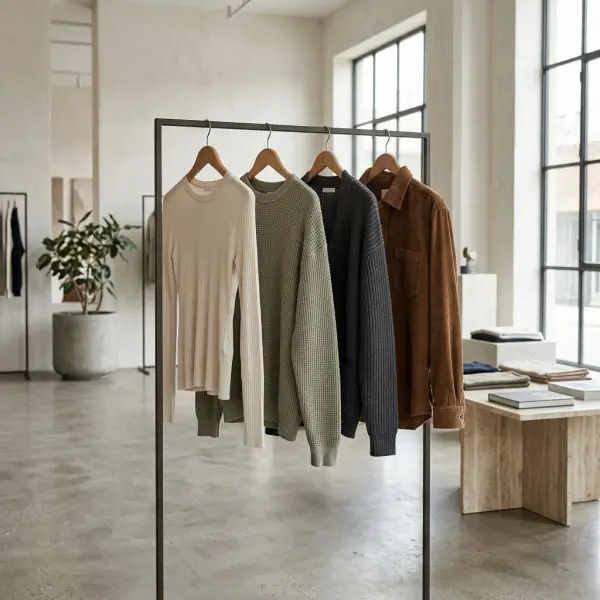
Raised-surface woven fabrics can introduce character to trousers, skirts, overshirts, and jackets. Corduroy and certain structured piqué fabrics are examples of materials that can provide visible surface definition while supporting a range of garment silhouettes.
The effect is especially useful when the design relies on relatively simple cutting lines. Texture can provide variation that might otherwise require printed graphics, decorative panels, or more elaborate styling details.
However, pronounced relief may also increase the complexity of seams, pockets, and other construction elements. Designers need to consider whether the material's thickness and directional structure support the intended garment.
Functional and Performance-Oriented Apparel
Texture can also serve a functional purpose in garments developed for movement, comfort, or specific wearing conditions. Rib-knit structures may help a garment expand and recover, while some three-dimensional textile constructions can alter contact with the skin or create spaces within the material.
These effects should not be generalized into universal performance claims. A visibly textured surface does not automatically improve breathability, moisture management, thermal regulation, or stretch.
For performance-oriented products, brands should distinguish between the visual appearance of a textile and its measured properties. Material selection should be supported by relevant testing and garment evaluation, especially when the product is marketed using functional claims.
Texture as a Design Language: Balancing Simplicity and Detail
One of the practical advantages of surface texture is that it can create visible interest without requiring a complicated garment design. A brand may use repeated rib structures, subtle waffle patterns, or distinctive surface relief as a recognizable material direction across several products.
This can be useful for collections where consistency is more important than visual complexity. A group of garments sharing related surface characteristics can appear coordinated even when the individual pieces use different silhouettes.
Yet texture should be applied selectively. Combining multiple pronounced textures with bold prints, elaborate seam arrangements, and contrasting embellishments can produce competing visual elements. Whether this is desirable depends on the design concept, but it requires intentional composition rather than simply adding more detail.
When Subtle Texture Works Better
Fine textures can support designs intended to remain visually understated. Small ribs, compact piqué surfaces, or restrained knitted structures add material definition while allowing silhouette, fit, and proportion to carry much of the design.
This approach may suit everyday basics, minimalist collections, and garments where the brand wants customers to notice quality of fit and material rather than a dominant decorative feature.
Subtle texture can also be easier to combine with other materials within a garment, although differences in stretch, shrinkage, and surface appearance still require technical evaluation.
When Pronounced Texture Becomes the Main Feature
Larger ribs, bold waffle surfaces, dimensional knitting, and highly structured relief can become the primary visual element of a garment. In these cases, the texture itself may justify a simpler silhouette and fewer supporting details.
A wide-ribbed cardigan, for example, may not require a printed motif because the raised stitch pattern already creates a strong visual rhythm. Similarly, a jacket developed from a prominently textured fabric may derive much of its identity from the material rather than complex decorative construction.
The relationship between these textures and broader casual or vintage-inspired wardrobes is explored in How Corduroy Supports Casual, Vintage, and Cold-Weather Styling. The design principle remains the same: texture works most effectively when its visual role is deliberate.
How Does Texture Influence Perceived Product Value?
Textured fabrics can help distinguish apparel products that otherwise use familiar silhouettes and conventional color palettes. In retail environments, visible surface detail may make a garment more recognizable and give customers another attribute to consider when comparing products.
A textured garment may also appear more substantial or complex than a smooth alternative. However, this is a matter of perception, not proof of superior quality. A pronounced surface does not guarantee better fibers, more durable construction, or higher manufacturing standards.
For brands, the commercial opportunity lies in presenting a meaningful material difference that customers can understand. Texture may support product differentiation when it is paired with appropriate comfort, fit, finishing quality, and clear product information.
Visual Differentiation Without Extensive Decoration
Fashion businesses often develop multiple products around a small number of core silhouettes. Introducing material variation can create different offerings without necessarily redesigning every garment from the beginning.
A basic long-sleeved top might be produced in smooth jersey and in rib knit, provided the pattern and fit are adjusted appropriately for each construction. The difference gives customers distinct material options within a familiar product category.
This does not mean the two versions can automatically share identical patterns or production settings. Changes in stretch, recovery, fabric thickness, and shrinkage may require separate technical development.
Texture Can Support a Consistent Material Identity
A recognizable textile direction can become part of a fashion brand's design language. For example, a label might regularly use compact rib structures in everyday tops or develop coordinated collections featuring subtle geometric surface textures.
Consistency makes the material choice easier to understand across different product categories. It may also support more focused sourcing if the business can work with a smaller number of approved suppliers and repeatable material specifications.
However, this approach should not become restrictive. Repeating one texture regardless of garment function can undermine comfort or construction quality. Material identity is valuable only when it remains compatible with product requirements.
What Should Designers Consider Before Choosing a Raised-Texture Fabric?
A raised or ribbed surface should be assessed as both a design element and a physical material. The surface may create the desired appearance, but garment suitability depends on construction, mechanical properties, finishing, and manufacturing performance.
The first decision is whether the texture contributes mainly to the visual design, the functional behavior, or both. A decorative embossed fabric and an elastic rib knit may look similarly structured in photographs, yet they require different approaches to pattern development and quality evaluation.
For sourcing and product development teams, the following considerations help translate the aesthetic concept into a reliable fabric specification:
- Texture scale and repeat: Assess rib width, surface relief, spacing, and whether the texture looks consistent across the intended garment panels.
- Stretch and recovery: Determine how the material extends and whether it returns adequately after wear, especially in body-fitting designs.
- Weight, thickness, and drape: Check how the material hangs, folds, and behaves at seams rather than judging it solely from a flat swatch.
- Dimensional stability: Evaluate changes after washing, steaming, or other approved care processes.
- Surface durability: Consider flattening, pilling, snagging, abrasion, or loss of relief where relevant to the construction.
- Color and finishing consistency: Review how texture and shade appear under representative lighting and across production batches.
These factors should be prioritized according to garment function. A fitted rib-knit dress requires a different testing emphasis from a structured textured jacket, even if both rely on raised surfaces for their visual character.
From Material Selection to Garment Production
Surface textures introduce production considerations that may not be immediately visible in a design sketch. The more prominent or directional the texture, the more important it becomes to understand how the fabric behaves during cutting, sewing, pressing, and finishing.
Pattern Placement and Surface Alignment
Repeated ribs and geometric textures can make alignment differences noticeable at seams. Designers should establish whether the surface pattern needs to continue visually across major garment sections or whether intentional changes in direction are part of the design.
For example, a large rib pattern meeting at a center-front seam may look uneven if the texture is positioned differently on each panel. Achieving a balanced appearance may require additional attention during marker planning and cutting.
Not all raised patterns require exact matching. The appropriate standard depends on the design and the visibility of the pattern, but the decision should be made before production rather than left to individual operators.
Sewing Methods Must Match Fabric Behavior
Textured knits and textured woven materials can require different sewing approaches. Rib knits may stretch during feeding and sewing, while heavier raised woven fabrics may create bulk at seam intersections.
Factories should evaluate suitable stitches, needles, feeding methods, seam allowances, and finishing techniques through representative trials. These decisions depend on the actual material rather than the commercial texture description.
For garments containing multiple fabrics, compatibility also matters. Joining a highly extensible rib knit to a stable woven panel may require careful pattern engineering and seam construction to avoid distortion during wear or laundering.
Quality Control Should Include the Surface Itself
Conventional garment inspection focuses on dimensions, seam quality, visible defects, and finishing. Textured garments may need additional appearance criteria because their raised surfaces are central to the design.
An approved inspection standard could cover rib alignment, pile consistency, irregular surface flattening, texture distortion, or unexpected changes after washing. The relevant defects will differ between knitted, woven, pile, and embossed textiles.

Development Costs Depend on the Texture Method
Raised textures can affect material and manufacturing costs, but the direction and magnitude of those effects depend on the construction and production scale.
A standard rib knit sourced from an established supplier may be commercially straightforward. A custom textured knit with specialized stitch programming, on the other hand, may require additional development, sampling, or minimum-order commitments.
Likewise, a fabric with directional pile may restrict cutting layouts, while a highly structured material may slow certain sewing operations. Fashion businesses should calculate cost using actual fabric consumption, approved processes, labor requirements, and quality expectations rather than assuming that textured materials are necessarily more expensive.
Why Texture Presentation Matters in Fashion E-Commerce
Textured fabrics create a particular challenge in digital retail because customers cannot physically touch a garment before purchasing it. Photographs may clearly show raised ribs or geometric patterns, but they cannot fully communicate softness, stiffness, elasticity, or how the textile feels against the skin.
A 2026 study in PLOS ONE examining fabric surface roughness and digital representation identified differences between physical surface measurements and measurements derived from fabric images. Its findings reinforce the limitations of using visual representation as a substitute for physical material assessment. The research focused on selected woven specimens, so its numerical results should not be generalized to every raised or ribbed apparel fabric.
For online fashion businesses, this creates an opportunity to communicate texture more carefully. Detailed photography, practical descriptions, and transparent material specifications can help customers understand a product, although they cannot eliminate all uncertainty associated with buying clothing remotely.
Use Images That Explain Material Structure
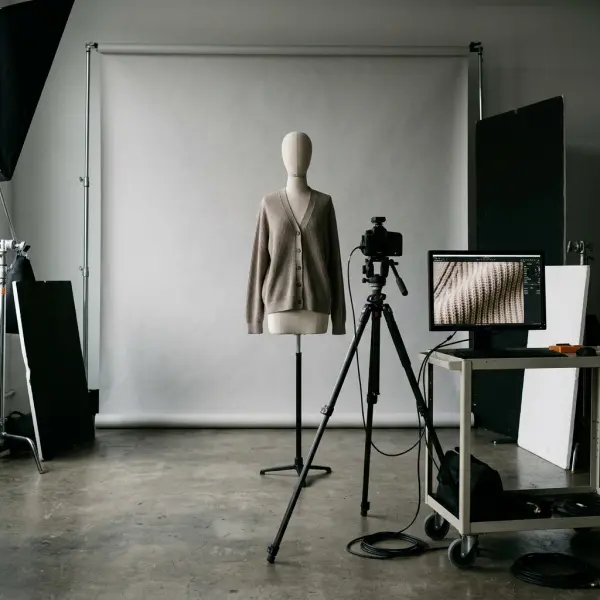
A garment photograph should show both the overall design and the textile surface. Close-up images can communicate rib scale, pile direction, or geometric relief, while full-garment photographs show how the fabric behaves on the body.
Useful visual coverage typically includes a front or three-quarter garment view, a close-up of the surface, and an image showing natural folds or fabric movement. A short product video may provide additional context when movement materially changes the texture's appearance.
Lighting should reveal the surface without exaggerating it. Strong directional shadows can make subtle ribs look unusually deep, while excessive image smoothing may remove the textile detail that customers need to evaluate.
Describe Texture Without Overpromising Performance
Product descriptions should distinguish appearance from verified material properties. Terms such as fine-ribbed, raised waffle texture, or soft cut-pile surface can describe a garment meaningfully when they match the product.
Descriptions such as ultra-breathable, premium quality, or highly durable require greater care because they may imply performance characteristics that the visible texture alone cannot establish.
Fiber-content claims also need to be accurate and consistent with applicable regulations. For example, the US Federal Trade Commission's textile labeling guidance explains fiber disclosure requirements for relevant products, including how pile and backing compositions may be represented. Other markets may have different labeling and compliance obligations.
In practical terms, an effective product description connects the material's visible character to verified construction and care information without treating texture as proof of performance.
Common Mistakes When Using Ribbed and Raised Textures
Selecting Texture Without Considering Garment Function
A visually attractive fabric may not be suitable for the intended product. Heavy raised structures can create unwanted bulk in fitted garments, while a highly extensible rib knit may not provide the stability required for a structured silhouette.
This mistake often occurs when design teams select fabric from photographs or mood boards before evaluating its mechanical properties. The result can be poor fit, unexpected drape, or repeated sampling adjustments. A better approach is to establish functional requirements alongside the visual concept and evaluate both using representative prototypes.
Treating All Ribbed Fabrics as Technically Equivalent
Fabrics described as ribbed may use knitted loops, woven floats, cut pile, or other construction methods. Assuming they behave identically can create inaccurate sourcing specifications and production instructions.
For example, substituting a rib-knit fabric with a visually similar woven textile may significantly change stretch and recovery. Designers should identify the actual textile construction and relevant performance properties before approving alternatives, particularly when changing suppliers or production locations.
Ignoring How Texture Changes Under Stretch
Raised patterns may look consistent on a flat fabric sample but behave differently on a finished garment. In rib knits, extension can change the visible spacing of the ribs, while some other textured structures may flatten or distort under tension.
A garment developed around the unstretched appearance of the material may therefore look different when worn. This is particularly relevant for fitted tops, dresses, and bodywear. Evaluating garments on suitable fit models and checking appearance across the intended size range helps identify these differences before bulk production.
Using Excessive Texture Without a Clear Design Purpose
Combining multiple strong textures within one garment can produce an unclear visual hierarchy. Bold ribs, raised geometric motifs, gathered panels, and decorative stitching may compete for attention rather than supporting a coherent design.
This does not make highly textured garments inherently unsuccessful. The issue arises when surface effects are added without considering their relationship to silhouette, color, and proportion. Designers should establish which feature is intended to dominate and use supporting details accordingly.
Presenting Texture Inaccurately in Product Photography
Digital images can underrepresent or exaggerate a fabric's surface. Excessive retouching, poorly chosen lighting, and photographs that show only the overall garment may leave customers uncertain about the actual material.
The commercial consequence is a possible mismatch between customer expectations and the delivered product. Brands can reduce this risk by including realistic close-ups, showing the garment in natural lighting, and providing accurate descriptions of construction, stretch, and care. Physical swatches remain valuable for professional wholesale buyers when tactile evaluation is important.
Important Technical and Commercial Caveats
Raised fabric textures should not be interpreted as direct evidence of superior quality, comfort, performance, or sustainability. Texture is one characteristic of a material, and its practical value depends on the underlying textile construction and intended garment.
A fabric with pronounced relief is not necessarily warmer or more breathable than a smooth alternative. Similarly, a fine-rib surface does not guarantee greater elasticity, and a thick-looking texture does not establish resistance to abrasion or repeated laundering.
Texture retention also varies. Some three-dimensional effects are created through the textile's fundamental structure, while others rely on finishing processes whose appearance may change under heat, moisture, pressure, or mechanical wear. These differences need to be evaluated through appropriate testing.
Environmental claims require particular caution. A textured garment cannot be described as more sustainable simply because its design avoids printed decoration or appears durable. Overall impacts depend on fibers, manufacturing processes, dyeing and finishing, material consumption, use, and end-of-life considerations.
For business decision-makers, the most reliable principle is to separate what a texture looks like, what its construction makes possible, and what performance has actually been verified.
A Practical Framework for Developing Textured Apparel
Fashion businesses can use a structured development process to turn an attractive textile concept into a commercially viable product.
The process should begin with the garment rather than the fabric trend. A designer needs to understand the intended fit, customer use case, price positioning, and desired visual character before selecting the surface treatment.
1. Define the design role
Decide whether texture is the main visual feature, a functional requirement, or a supporting material detail. Establish the desired relief scale and its relationship to silhouette.
2. Select and compare materials
Review physical swatches for construction, handfeel, weight, stretch, color, texture consistency, and supplier availability. Compare alternatives that meet the same garment requirements.
3. Prototype the actual garment
Assess surface appearance, fit, fabric movement, seam behavior, and any mismatch between the flat material and its appearance when worn.
4. Validate quality and production
Confirm relevant performance tests, dimensional stability, cutting requirements, manufacturing settings, and acceptable surface variation before bulk approval.
5. Communicate the product accurately
Use realistic photography, relevant material details, verified performance information, and suitable care instructions to help customers understand the garment.
This framework does not require sophisticated technology or an unusually large development team. It requires clear decisions, reliable fabric information, and coordination between design, sourcing, manufacturing, and merchandising.
For small apparel brands, disciplined material selection can be particularly valuable because an unsuitable fabric choice may affect an entire limited production run. Larger businesses benefit from applying consistent material specifications across product teams and suppliers.
Frequently Asked Questions About Ribbed and Raised Fabric Textures
Why Do Ribbed Fabrics Look Different From Smooth Fabrics?
Ribbed fabrics contain repeated raised and recessed structures that create visible lines, surface shadows, and changes in texture. Smooth fabrics generally have less pronounced relief, so their appearance depends more heavily on fiber characteristics, weave or knit structure, color, and finish.
The effect becomes noticeable when the same garment silhouette is produced in different materials. A ribbed version may display stronger surface definition even without a printed pattern. However, appearance depends on rib spacing, fabric weight, lighting, and garment fit. Fine ribs may appear relatively subtle, while wider ribs can become an important part of the garment's visual identity.
Are Ribbed and Textured Fabrics Always More Comfortable?
No. Comfort depends on the material's fiber composition, construction, softness, stretch, surface friction, garment fit, and wearing conditions. A flexible rib knit may feel comfortable in a fitted top, while a coarse raised surface could be less suitable for direct skin contact.
Different textures also behave differently under movement and pressure. A material that feels soft in a small swatch may become uncomfortable if its garment fit is too tight or seams create irritation. Designers should evaluate comfort using appropriate physical samples and actual garments rather than assuming that visible surface texture automatically improves the wearing experience.
Can Raised Texture Replace Prints or Decorative Embellishments?
Raised texture can provide enough visual detail for a garment to work without additional printed or decorative elements, particularly when the silhouette is relatively simple. Fine ribs may add understated surface definition, while pronounced textured knits or pile fabrics can become the main visual feature.
However, texture does not necessarily replace print or embellishment in every design. Prints can communicate graphic imagery and color relationships that material relief alone cannot reproduce. The decision depends on the collection concept, desired visual hierarchy, garment use, and production budget. Some designs benefit from combining texture with decoration, provided the elements work together.
Do Raised Textures Make Apparel More Expensive to Manufacture?
Not necessarily. Manufacturing cost depends on the fabric construction, supplier availability, order quantity, cutting efficiency, sewing complexity, finishing requirements, and quality standards. A common rib-knit fabric may be readily available, while a specialized textured material may require custom development.
Costs can also arise during garment manufacturing rather than fabric purchasing. Pronounced or directional textures may need additional alignment during cutting, while thick fabrics can require adjustments to seams and finishing. Businesses should compare total production costs and approved material performance. Assuming that all textured fabrics command higher manufacturing costs can lead to inaccurate pricing decisions.
Which Raised Textures Work Best for Everyday Clothing?
The most suitable texture depends on the clothing category and intended use. Rib knits can be useful in fitted tops and comfortable everyday separates, while fine piqué or subtle woven textures may suit garments requiring a more restrained surface. Corduroy can be appropriate for casual trousers, overshirts, and jackets when the selected construction meets the garment's requirements.
Everyday clothing must balance appearance with movement, care, durability, and comfort. Texture should therefore be evaluated alongside fabric weight, stretch recovery, dimensional stability, and ease of laundering. There is no single raised-surface fabric that is universally appropriate for all daily-wear applications.
How Can Brands Show Fabric Texture Accurately in Online Stores?
Brands can communicate texture more effectively by combining full-garment photography with clear close-ups, natural fabric folds, suitable lighting, and accurate material descriptions. The goal is to help customers understand the surface pattern and how it behaves on the finished garment.
However, images cannot fully communicate tactile qualities such as softness, flexibility, or skin comfort. Product pages should therefore include verified fabric composition, relevant stretch information, and care instructions. Where appropriate, short videos can show fabric movement, while wholesale or business-to-business buyers may benefit from physical swatches. Clear visual and technical information reduces ambiguity without promising that digital presentation can replace touching the material.
Conclusion: Texture Gives Apparel Design Another Dimension
Ribbed and raised textile surfaces demonstrate how fabric structure can influence apparel design without relying entirely on prints, color contrasts, or complicated garment construction. Through repeated lines, geometric relief, pile surfaces, and manipulated fabric structures, texture introduces visible depth and distinctive tactile characteristics.
For designers, the value lies in choosing the right level of surface detail for the intended garment. Subtle textures can support understated products, while pronounced relief can become a defining visual feature. Neither is inherently more successful; their effectiveness depends on silhouette, material behavior, and the needs of the wearer.
For fashion businesses, texture must also remain commercially and technically manageable. Fabric specifications, garment development, quality control, and customer communication determine whether a visually appealing material becomes a reliable product.
The strongest approach treats surface texture as part of the garment's overall design system rather than as an isolated decorative choice. When material character and garment function are developed together, textured textiles can provide meaningful product variation while preserving the qualities customers expect from well-designed clothing.





Comments 0
Leave a CommentSend Comment
Anda harus Login terlebih dahulu untuk dapat memberikan komentar.