
How Corduroy Supports Casual, Vintage, and Cold-Weather Styling
Quick Answer
Corduroy supports casual, vintage, and cold-weather styling through its distinctive raised texture, adaptable garment constructions, and longstanding associations with relaxed and heritage-inspired clothing. Its parallel ribs, known as wales, create visual depth that distinguishes corduroy from smoother fabrics, while different weights and finishes make it suitable for trousers, overshirts, jackets, skirts, and other everyday garments.
In casual fashion, corduroy introduces texture into familiar silhouettes without requiring elaborate prints or decorative details. For vintage-inspired dressing, it connects naturally with design references from the 1960s and 1970s, including flared trousers, structured jackets, and coordinated separates. In cooler weather, suitably weighted corduroy can contribute to layered outfits alongside knitwear, coats, and other insulating garments.
However, corduroy is not exclusively a winter fabric, nor does its ribbed surface automatically guarantee warmth. Comfort and seasonal suitability depend on fabric weight, fiber composition, construction, garment fit, and layering.
For fashion brands, corduroy offers opportunities to connect recognizable material character with different styling directions. Successful collections depend on selecting appropriate fabric specifications, updating silhouettes thoughtfully, and presenting the material in ways that match customer preferences and climate conditions.
Why Does Corduroy Work Across Different Fashion Styles?
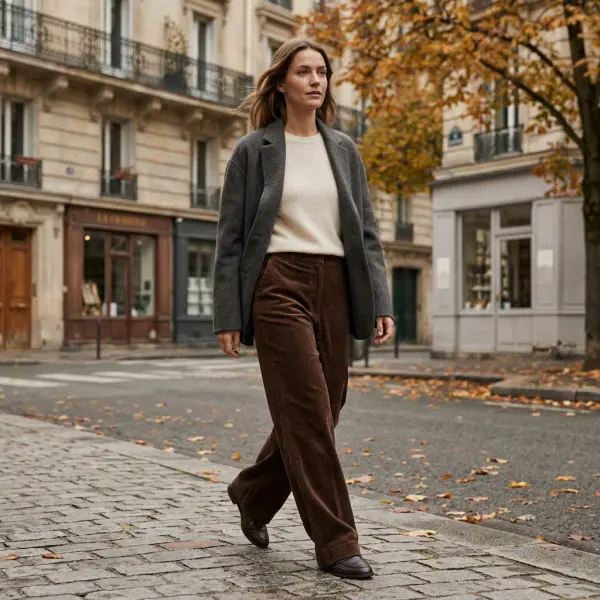
Corduroy's styling flexibility comes from the relationship between its recognizable surface and the many garment shapes it can support. Unlike a bold graphic print that may immediately establish a particular aesthetic, corduroy adds texture while leaving substantial room for variation in silhouette, color, fit, and surrounding garments.
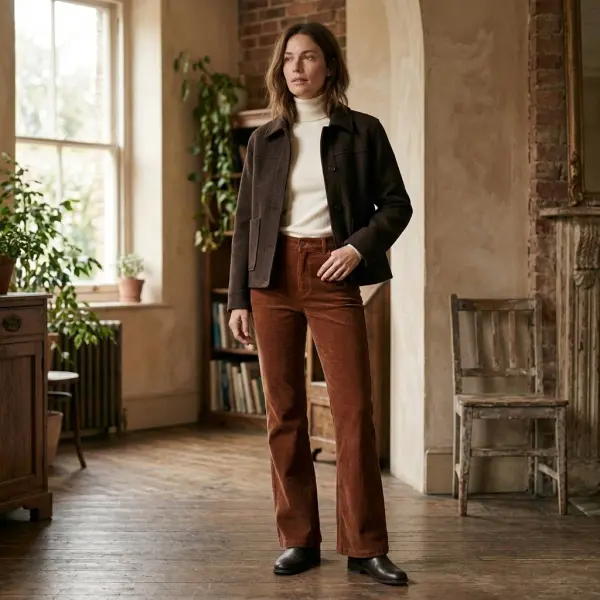
A pair of brown corduroy trousers can appear relaxed when worn with a plain T-shirt and sneakers, nostalgic when combined with a fitted turtleneck and vintage-inspired jacket, or more refined alongside a crisp shirt and tailored outerwear. The fabric remains recognizable, but the overall impression changes through styling.
This flexibility is useful for fashion businesses developing products that need to work across several customer wardrobes. A relatively simple corduroy trouser may be marketed through multiple outfit combinations without requiring an entirely different design for each aesthetic direction. Whether customers find those combinations appealing depends on their preferences, local climate, and intended use.
Texture Creates Character Without Dominating the Outfit
Corduroy's raised ribs interact with light to produce subtle surface shadows, giving even solid-colored garments visible definition. This effect can make an uncomplicated silhouette appear more detailed without introducing additional colors or decorative construction.
The texture also creates opportunities for contrast. A soft corduroy jacket worn over a smooth cotton shirt produces a different visual relationship from the same jacket combined with chunky knitwear. In one outfit, the contrast between smooth and raised surfaces is pronounced; in another, the different textures contribute to a layered appearance.
For a broader explanation of this design principle, seeWhy Ribbed and Raised Textures Add Character to Apparel Design. Corduroy provides a practical example of how surface structure can influence a garment's visual identity.
Wale Width Influences Styling Character
The width of corduroy's raised ribs affects its appearance and how prominently the material contributes to an outfit. Fine-wale corduroy generally presents a subtler texture, while wide-wale constructions display broader, more visible cords.
A fine-wale shirt may integrate easily into a restrained everyday outfit, whereas a wide-wale jacket can become the main visual feature. Neither choice is inherently more fashionable or higher quality. The appropriate effect depends on the garment's proportions and the desired styling direction.
Wale width should also be considered alongside fabric weight and drape. A fine-wale material is not necessarily lightweight, and a wide-wale construction is not automatically thick or insulating. These characteristics require separate material evaluation.
Corduroy's Connection to Vintage and Heritage Fashion
Corduroy's association with vintage fashion is supported by its documented presence in several periods of twentieth-century apparel design. However, the material should not be reduced to one decade or a single cultural identity.
Corduroy garments have appeared in different fashion contexts, including tailored clothing, casual separates, and designs that challenged conventional distinctions between formal and informal dress. Its presence in historical collections helps explain why contemporary designers can use the fabric to evoke nostalgia without reproducing archival garments exactly.
Corduroy in 1960s and 1970s Fashion
The Victoria and Albert Museum's documentation of the 1960s peacock revolution includes a double-breasted corduroy suit designed by Mr Fish around 1968. The museum places it within a period when menswear became more experimental, incorporating new silhouettes, materials, and less conventional approaches to tailoring.
Corduroy also appeared in women's fashion during this period. In an interview published by the Victoria and Albert Museum about Foale and Tuffin, the designers recall combining a corduroy jacket with trousers as part of their experimentation with women's trouser suits during the 1960s.
These examples demonstrate that corduroy's historical role was broader than relaxed weekend clothing. The material could be incorporated into fashionable suits and coordinated ensembles at a time when garment silhouettes and dress conventions were changing.
The London Museum's collection also documents cotton corduroy trousers dating from 1974–1979, providing another material example of the fabric's place in the decade's fashion.
Why Corduroy Still Evokes Vintage Style
Vintage associations are often communicated through combinations of fabric, silhouette, and color rather than through the textile alone. Wide-leg or flared trousers, earthy colors, prominent collars, and substantial corduroy jackets can collectively suggest earlier fashion periods.
However, contemporary vintage-inspired dressing does not require exact historical reproduction. A garment can borrow selected references, such as a wider trouser leg or a short boxy jacket, while retaining modern proportions and styling.
This distinction matters for brands that want to use nostalgia without producing costumes. The objective is often to capture a recognizable mood while maintaining practical fit, comfort, and compatibility with contemporary wardrobes.
Contemporary Designers Reinterpret Rather Than Replicate
Recent fashion coverage provides examples of corduroy being styled through modern silhouettes rather than strict period references. In October 2026, British Vogue highlighted roomier corduroy trousers, including barrel and wide-leg shapes, as alternatives to more literal 1970s-inspired styling.
Earlier in 2026, Vogue also examined corduroy trousers beyond conventional autumn styling, discussing contemporary styling approaches involving pale colors, relaxed silhouettes, and combinations suitable for spring wardrobes.
These editorial observations demonstrate how the fabric can be used across different fashion narratives. They do not establish that corduroy is universally popular in every market or that all brands should adopt the trend.
For apparel businesses, the useful lesson is that a familiar heritage textile can gain a different visual identity through deliberate changes in fit, color, and styling. The fabric's historical associations provide a reference point, but the finished product needs to serve a contemporary customer.
How to Style Corduroy for Modern Casual Outfits
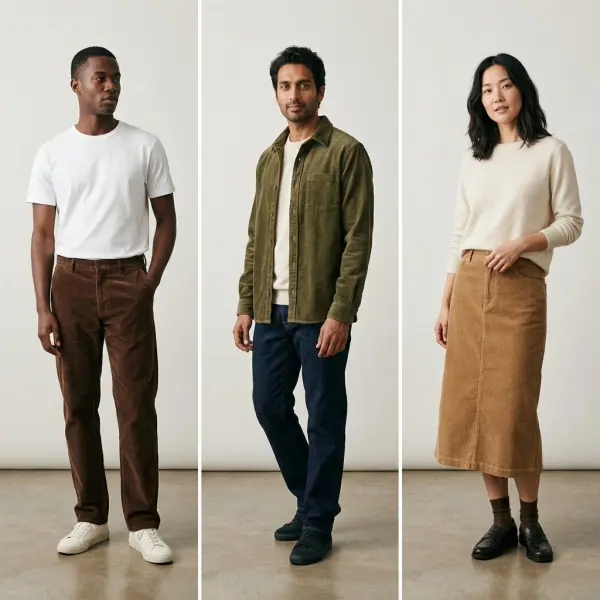
Casual styling is one of corduroy's most accessible applications because the fabric works with familiar wardrobe pieces. Trousers, jackets, overshirts, and skirts can introduce texture into outfits otherwise built from basic shirts, knitwear, denim, or simple outerwear.
The key is allowing the material to contribute visual interest without forcing the entire outfit into a heritage aesthetic. Contemporary styling often uses recognizable everyday silhouettes, with corduroy functioning as an alternative to smoother cotton twills, denim, or other conventional fabrics.
Corduroy Trousers With Everyday Basics
Corduroy trousers can be styled with plain T-shirts, cotton shirts, lightweight sweaters, and relaxed jackets. These combinations allow the raised texture to remain visible while keeping the overall outfit uncomplicated.
Straight-leg and relaxed-fit corduroy trousers can be particularly adaptable because they work with different footwear and upper-body proportions. A pair of dark brown corduroy trousers, for example, can be worn with a white shirt and loafers for a polished casual outfit or with a simple sweatshirt and sneakers for a more relaxed appearance.
The proportions should reflect the intended wearer and garment fit. Wide-leg trousers may work with either fitted or oversized tops, but the relationship between garment lengths, volume, and fabric thickness needs to be considered. A relaxed silhouette should feel deliberate rather than simply oversized in every dimension.
Corduroy Overshirts and Casual Jackets
A corduroy overshirt can function as a visible outer layer in mild weather or as an intermediate layer under a heavier coat. Its usefulness depends partly on fabric weight, garment ease, and the space available for clothing underneath.
Styling an overshirt with denim trousers and a plain jersey top creates a contrast between the corduroy's raised pile and the smoother surfaces of the surrounding garments. The result can feel casual without depending on a specific historical reference.
A corduroy jacket can take the outfit in another direction. A cropped, structured jacket may complement relaxed trousers, while a longer, softly constructed version can support a layered silhouette. For brands, these variations offer ways to develop different product identities from the same broad material category.
Corduroy Skirts, Dresses, and Casual Separates
Corduroy can also be used in skirts, pinafore dresses, shirt dresses, and other casual separates. These applications allow the fabric to contribute recognizable texture while the garment's shape establishes the styling direction.
A straight corduroy midi skirt combined with a fine-knit top may create a relatively understated outfit, whereas a short corduroy skirt worn with substantial knitwear and boots may reference more traditional autumn styling. The same material family can therefore support different visual outcomes.
Fabric selection becomes important when the design includes gathers, pleats, or fluid movement. A dense corduroy may hold a structured skirt silhouette effectively but create excessive bulk in a dress requiring soft drape. Designers should select the material based on the intended garment behavior.
How Can Corduroy Create Vintage Style Without Looking Like a Costume?
Vintage-inspired corduroy styling works best when historical references are balanced with contemporary fit, proportion, and garment combinations. The goal is not necessarily to recreate a complete outfit from a particular decade, but to use selected elements that communicate a recognizable aesthetic.
A strongly retro outfit may combine flared corduroy trousers, a wide-collar shirt, a period-inspired jacket, and distinctive footwear. That approach can be appropriate for a collection intentionally based on archival fashion. For more versatile everyday products, however, reducing the number of historical references often makes the styling easier to integrate into a modern wardrobe.
Use One Recognizable Heritage Element
A flared trouser silhouette, prominent corduroy texture, or cropped tailored jacket can establish a vintage-inspired direction without requiring every component to follow the same period reference.
For example, wide-leg corduroy trousers paired with a contemporary fitted top and simple shoes can suggest 1970s styling while remaining familiar to modern shoppers. Similarly, a textured jacket can introduce heritage character when worn over otherwise minimal clothing.
This approach also allows a brand to communicate a vintage influence without narrowing the product's appeal to customers specifically seeking retro fashion.
Balance Nostalgic Materials With Modern Proportions
Silhouette has a major influence on whether a vintage-inspired garment feels contemporary. Adjustments to trouser rise, leg width, jacket length, shoulder shape, or garment ease can change the overall impression even when the material remains consistent.
A corduroy suit, for example, can reference traditional tailoring while using relaxed trousers and a softly structured jacket. This differs from reproducing a period-specific suit with identical proportions and styling accessories.
Design teams should consider how these silhouettes interact with current wardrobe habits in their target markets. A historical reference may be recognizable, but its practical appeal depends on how customers expect clothing to fit and function.
Let Color Support the Reference Without Defining It
Brown, tan, olive, mustard, rust, and burgundy can reinforce corduroy's familiar heritage associations. These colors work with the fabric's textured surface and can create a warm, cohesive palette.
Yet vintage styling does not require a restricted range of earthy colors. Black, cream, navy, pale blue, and more saturated shades can produce different interpretations of the same garment design.
Brands should select colors according to the intended collection identity rather than assuming that corduroy must always look traditional. A coordinated vintage-inspired range may use familiar warm neutrals, while a more contemporary capsule can introduce cleaner or unexpected colors.
Why Is Corduroy Associated With Cold-Weather Dressing?
Corduroy is associated with cold-weather clothing partly because many familiar corduroy garments use relatively substantial fabrics with soft pile surfaces. These materials can contribute to thermal comfort when combined with suitable garment construction and layering.
However, corduroy is not inherently an insulating fabric category. A lightweight cotton needlecord shirt and a heavy lined corduroy jacket may share the same basic textile identity while providing very different levels of warmth.
The distinction matters for both consumers and fashion brands. Marketing a garment as cold-weather clothing should be based on the actual product specification and intended wearing conditions, not simply on the presence of raised wales.
Fabric Weight and Construction Influence Seasonal Suitability
A heavier corduroy can be useful in trousers, overshirts, or jackets intended for cooler conditions, particularly when the fabric has enough body to support the desired silhouette. The raised pile may contribute to the material's soft surface feel, while the overall fabric structure influences how it interacts with air movement and body heat.
Nevertheless, fabric weight alone does not determine thermal insulation. Thickness, air permeability, lining, garment fit, and the number of clothing layers also matter. A dense corduroy jacket with an appropriate lining may provide a different wearing experience from an unlined jacket made from a similar-looking material.
For product developers, selecting corduroy for autumn or winter should therefore involve evaluating the complete garment. The textile may provide suitable structure and texture, but its seasonal performance needs to be considered alongside the other garment components.
Layering Makes Corduroy More Adaptable
Layering allows corduroy garments to perform different styling roles in cooler weather. A shirt can serve as a base or intermediate layer, an overshirt can add visual depth over knitwear, and a corduroy jacket can become part of a larger outfit that includes additional outerwear.
The best combination depends on local weather and the properties of the garments involved. In relatively mild autumn conditions, a corduroy overshirt over a cotton top may be sufficient for some wearers. In colder environments, a corduroy trouser or jacket may need to be paired with insulating garments and protective outer layers.
The distinction becomes particularly important in wet or windy conditions. Ordinary cotton corduroy should not be assumed to provide waterproofing or reliable wind protection. Where weather resistance is required, the complete garment and any protective treatments or layers must be evaluated separately.

Cold-Weather Outfit Combinations That Make Practical Sense
Corduroy can be included in several layering combinations depending on the garment's role. The following examples illustrate styling possibilities rather than universal temperature recommendations.
|
Styling direction |
Corduroy piece |
Supporting garments |
Intended appearance |
|
Everyday autumn casual |
Straight-leg trousers |
Fine-knit sweater, lightweight jacket, sneakers |
Relaxed and practical |
|
Heritage-inspired layering |
Corduroy overshirt |
Cotton base layer, knitwear, denim trousers |
Textured and informal |
|
Polished cool-weather dressing |
Fine-wale trousers |
Turtleneck, tailored coat, leather boots |
Understated and structured |
|
Casual winter outfit |
Substantial corduroy trousers |
Insulating sweater, weather-appropriate outerwear |
Comfortable layered silhouette |
|
Coordinated textured outfit |
Corduroy jacket and trousers |
Plain shirt or lightweight knit |
Material-focused and cohesive |
These formulas demonstrate that corduroy does not need to perform every function in a cold-weather outfit. A pair of textured trousers may provide visual warmth while other garments supply the insulation or weather protection needed for the actual conditions.
For brands selling internationally, styling photography should reflect the intended climate and product positioning. A winter campaign showing an unlined corduroy overshirt as the only protective layer may communicate unrealistic expectations if the garment is not designed for severe cold.
Choosing Colors, Textures, and Proportions for Corduroy Outfits
Successful corduroy styling depends on how the material interacts with other clothing elements. Because its raised surface already creates visual detail, decisions about color, fabric contrast, and proportion can have a noticeable effect on the finished outfit.
Earth Tones Create Familiar Heritage Associations
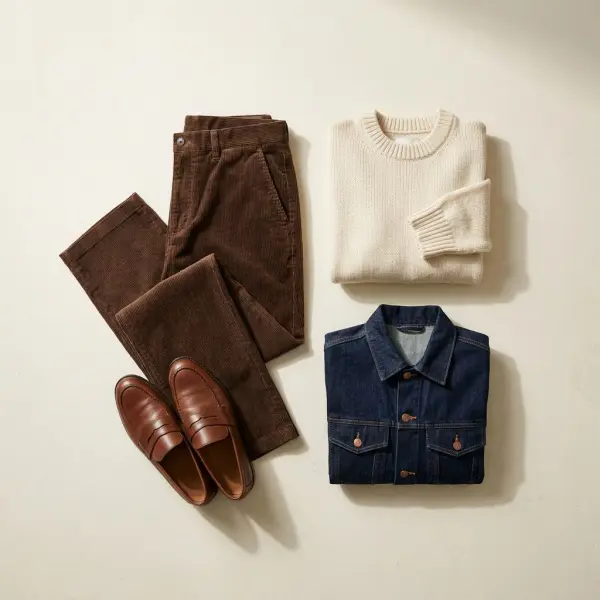
Brown, camel, olive, rust, and burgundy are commonly associated with corduroy styling. These colors can support casual, vintage-inspired, and autumn-oriented outfits, particularly when combined with neutral knitwear, denim, or leather accessories.
A chocolate-brown corduroy trouser, for example, can be paired with cream, navy, or charcoal garments to create an outfit where the material's texture remains prominent. Olive corduroy can work with off-white, tan, or darker neutral layers, while burgundy may provide a more noticeable color accent.
These are styling relationships rather than fixed rules. The appropriate palette depends on the collection's visual identity, the wearer's preferences, and how the actual dyed fabric appears under different lighting conditions.
Lighter and Brighter Colors Create Contemporary Alternatives
Corduroy does not need to remain within a traditional autumn palette. Cream, pale blue, soft pink, and saturated colors can change the fabric's visual character, particularly when combined with modern silhouettes.
Contemporary editorial examples support this broader approach. Vogue's March 2026 corduroy styling coverage discussed light-colored and more colorful corduroy trousers, demonstrating styling possibilities beyond conventional dark autumn shades.
For fashion brands, alternative colors may help position corduroy within spring, transitional, or contemporary casual collections. However, lighter colors can make visible staining or localized surface changes more apparent, while darker shades may require particular attention to rubbing colorfastness. These are testing and care considerations rather than reasons to reject specific colors.
Mix Textures Without Losing Visual Balance
Corduroy can be combined with smoother materials to create contrast or with other textured fabrics to develop a layered appearance. Both approaches can work, but they produce different visual effects.
A corduroy jacket worn with smooth denim and a plain cotton shirt allows the raised pile to remain the dominant texture. Combining corduroy trousers with chunky knitwear introduces more surface variation, making proportion and color coordination especially important.
For most everyday outfits, the relationship between texture and silhouette deserves more attention than the number of textured pieces. A wide-wale corduroy trouser and substantial cable-knit sweater may work well together when their colors and proportions are coordinated. The same combination could feel visually heavy if every garment is oversized and similarly bulky.
Can Corduroy Work Outside Autumn and Winter?
Corduroy can be used outside autumn and winter when fabric weight, garment design, and wearing conditions are appropriate. Its association with cooler weather does not prevent lightweight constructions from being incorporated into milder-season clothing.
Fine-wale corduroy shirts, lightweight skirts, and relaxed trousers may be suitable for transitional conditions. Fabric density, breathability, fit, and finishing remain important because a lightweight appearance does not guarantee thermal comfort.
In hot or humid climates, substantial corduroy garments may be less comfortable than lighter alternatives, particularly where airflow and moisture management are priorities. Designers serving such markets should evaluate the fabric under realistic conditions rather than adapting a cold-weather collection without modification.
Regional Climate Matters More Than the Fashion Calendar
Global fashion brands operate across markets with different temperatures, seasonal patterns, and customer requirements. Autumn styling in a temperate region may involve knitwear and outerwear, while a tropical market may use similar colors and textures without requiring additional insulation.
A lightweight corduroy overshirt, for example, could be marketed as a casual layering piece for air-conditioned environments or mild evenings. That positioning differs from presenting a heavy corduroy jacket as essential cold-weather clothing.
The implication for fashion businesses is that seasonal merchandising should reflect climate and wearing occasions rather than assuming a universal autumn-winter wardrobe.
How Fashion Brands Can Apply Corduroy Across Product Collections
Corduroy's commercial value comes from its ability to support distinct product identities through combinations of fabric specification, silhouette, color, and styling. However, brands should avoid treating its versatility as evidence that one material can serve every garment category.
A casualwear business might build a small collection around relaxed trousers, an overshirt, and a jacket. A vintage-inspired label could use flared trousers, coordinated separates, and archival proportions. A cold-weather collection might incorporate heavier corduroy trousers and outer layers alongside knitwear and protective garments.
Each direction requires different product decisions. The material's visual consistency can support collection cohesion, but its technical specifications must still match the intended application.
Build a Focused Assortment Before Expanding
For smaller apparel brands, a limited corduroy assortment may be easier to develop and evaluate than a broad collection involving many fabrics and silhouettes. Beginning with a small number of clearly positioned products can help teams understand material performance, production requirements, and customer response.
One possible collection structure could include:
- Core casual product: Straight-leg or relaxed corduroy trousers in a versatile neutral color.
- Layering product: A corduroy overshirt with an appropriate weight for the target climate.
- Style-led product: A vintage-inspired jacket, skirt, or alternative trouser silhouette.
- Seasonal variation: A heavier or lighter fabric quality introduced only where customer demand and garment requirements justify it.
These categories create room for styling variety without requiring every product to communicate a separate brand identity.
Brands should nevertheless avoid assuming that related products can share identical corduroy specifications. A fabric that works well for trousers may not provide the required flexibility for a shirt or the structure needed for a jacket.
Align Fabric Selection With Customer Expectations
Material selection should begin with the intended garment and customer use case. Wale count, weight, fiber composition, stretch, and finishing all affect product suitability.
The relationship between these specifications is explained in Corduroy Fabric Explained: Texture, Structure, and Fashion Uses. For styling-oriented collections, the technical lesson is that visual similarity does not guarantee equivalent comfort, durability, or manufacturing performance.
Customer expectations also influence product development. A relaxed trouser intended for everyday use may need suitable abrasion resistance and sufficient movement, while a style-led jacket may place greater emphasis on shape retention and surface appearance.
Use Styling Content to Explain Versatility
Merchandising can demonstrate how one corduroy garment fits several wardrobe contexts. Showing trousers with a T-shirt, knitwear, and a tailored jacket may help customers understand potential uses more clearly than displaying the garment in isolation.
However, each styling example should accurately represent the product's actual fit, fabric behavior, and intended conditions. A lightweight garment should not be presented as suitable for severe cold simply because the campaign features winter accessories.
For online retailers, full-garment photography should be supplemented with fabric close-ups, accurate material information, and care instructions. These details help distinguish the visual character of corduroy from its practical performance.
Evaluate Commercial Performance Before Scaling
A material-focused collection still requires disciplined inventory planning. Fashion brands should consider whether demand is concentrated in particular colors, silhouettes, regions, or selling periods.
Rather than assuming that renewed editorial attention guarantees sales, businesses can evaluate initial sell-through, customer feedback, returns, and size performance. These observations can inform subsequent decisions about restocking or expanding the assortment.
The British Vogue discussion of corduroy styling in October 2026 illustrates the material's continued visibility within contemporary fashion coverage, but editorial prominence does not establish sales performance for an individual brand.
A measured approach allows businesses to explore corduroy's styling potential without committing excessive inventory to an unverified product direction.
Common Corduroy Styling and Product Development Mistakes
Making Every Vintage Reference Too Literal
Combining flared corduroy trousers, oversized collars, period-specific accessories, and heavily retro outerwear can produce an outfit that feels more like historical reproduction than contemporary clothing. This may be appropriate for a specialized vintage collection, but it can limit versatility when the product is intended for broader everyday use.
The problem is not the historical reference itself but the absence of a clear styling objective. Brands should decide whether they are developing authentic reproduction, vintage-inspired casualwear, or contemporary clothing with subtle heritage elements, then select silhouettes and styling accordingly.
Assuming Corduroy Automatically Provides Warmth
Corduroy's soft raised surface and association with heavier garments can encourage misleading seasonal descriptions. Lightweight corduroy may provide relatively little insulation, while a substantial corduroy jacket may still require additional protective layers in cold or windy conditions.
For fashion retailers, the risk is a mismatch between product claims and customer experience. Technical product descriptions should distinguish fabric weight, garment construction, and intended seasonal use. Where thermal performance is marketed as a specific benefit, that claim should be supported by appropriate evidence.
Ignoring Fabric Bulk and Silhouette Proportions
A heavily textured garment may create more volume than expected when combined with other substantial materials. This becomes noticeable in oversized jackets, wide-leg trousers, and multi-layered outfits where fabric thickness influences the overall silhouette.
Designers sometimes overlook this because individual garments look balanced in flat product photographs. Testing complete outfits on actual models helps identify proportion issues, while garment specifications should account for the room needed for layering. The objective is not to eliminate volume but to control it deliberately.
Using One Corduroy Quality Across Every Product
A brand may be tempted to simplify sourcing by using the same corduroy fabric for trousers, skirts, jackets, and overshirts. Although this can reduce material variation, it may compromise garment suitability when the fabric does not provide the necessary drape, stretch, weight, or structure.
The more reliable approach is to group products by functional requirements and determine where materials can genuinely be shared. Standardizing compatible fabrics can support purchasing efficiency, but inappropriate standardization may increase sampling revisions, production problems, or customer dissatisfaction.
Treating Seasonal Editorial Coverage as Proof of Demand
Fashion editorial coverage can identify visible styling directions, but it cannot establish how customers in a specific market will respond. A silhouette appearing in runway collections or street-style photography may not translate into sufficient demand at a particular retail price.
For apparel businesses, this distinction is important when planning seasonal inventory. Brands should use editorial examples as creative references, then validate their products using customer information, small initial assortments where feasible, and actual commercial performance.
Important Technical and Styling Caveats
Corduroy's styling flexibility does not eliminate the limitations of its construction. As a cut-pile textile, its surface can change under abrasion, pressure, or repeated handling. These effects may become noticeable in frequently worn trousers, jackets, and other garments exposed to regular friction.
Pile direction is another practical consideration. The raised surface can reflect light differently depending on orientation, making adjacent garment panels appear inconsistent if fabric pieces are cut without controlling nap direction. The University of Fashion guidance on pattern layouts for napped fabrics identifies corduroy as a material that requires particular attention during pattern placement and cutting.
Seasonal claims also require care. Neither corduroy's appearance nor its historical association with autumn clothing provides a standardized measure of thermal insulation. Brands should evaluate each fabric and garment according to its intended use.
Finally, describing corduroy as a timeless, sustainable, or universally durable material can oversimplify important differences between products. Longevity depends on construction, use, maintenance, and garment quality. Environmental impacts require consideration of fiber production, dyeing, finishing, garment manufacturing, and end-of-life handling rather than assumptions based on a heritage aesthetic.
These limitations do not reduce corduroy's usefulness. They clarify the conditions under which its visual and practical qualities can be applied effectively.
Frequently Asked Questions About Corduroy Styling
Is Corduroy Only Suitable for Autumn and Winter?
No. Corduroy can be worn outside autumn and winter when its fabric weight, garment construction, and intended use are appropriate. Lightweight fine-wale corduroy may suit shirts, skirts, and relaxed trousers intended for milder conditions, while heavier constructions are more commonly associated with cooler-weather clothing.
The raised surface does not independently determine thermal comfort. Air permeability, fiber composition, fabric density, garment fit, and layering all influence suitability. In hot or humid climates, brands should assess whether the chosen material provides acceptable comfort rather than relying on traditional seasonal associations. Corduroy can therefore support broader seasonal assortments, but not every corduroy fabric is suitable for year-round use.
How Can Corduroy Be Styled Without Looking Old-Fashioned?
Corduroy can appear contemporary when paired with familiar modern silhouettes, restrained accessories, and balanced garment proportions. Straight-leg or relaxed trousers worn with simple knitwear, crisp shirts, or modern jackets provide alternatives to more literal vintage-inspired combinations.
The key is selecting which element should communicate the heritage reference. If the corduroy texture is already prominent, other garments can remain relatively simple. Brands can also use contemporary colors, cleaner tailoring, and updated fits to change the overall impression. Vintage associations are not inherently undesirable, but they should reflect the intended customer and product identity rather than being imposed automatically by the material.
What Shoes Work Well With Corduroy Trousers?
Corduroy trousers can be styled with sneakers, loafers, ankle boots, and other footwear depending on the trouser silhouette, outfit direction, and wearing occasion. Relaxed trousers may suit casual sneakers, while straight-leg or tailored corduroy styles can work with loafers or simpler leather shoes.
In cooler weather, ankle boots may complement corduroy's textured appearance, particularly when paired with knitwear or structured outerwear. However, there is no universally correct footwear category. Hem length, leg width, shoe volume, and color coordination influence the overall balance. Retailers developing styling content should demonstrate combinations that suit the actual trouser fit rather than presenting footwear recommendations independently of garment proportions.
Can Corduroy Be Used for Smart-Casual or Business-Casual Outfits?
Corduroy can be appropriate for some smart-casual and business-casual settings, particularly when the garment uses restrained colors, suitable tailoring, and a relatively refined finish. Fine-wale trousers combined with a shirt, knitwear, or tailored jacket may create a more polished appearance than heavily distressed or oversized casual garments.
However, dress expectations vary significantly among workplaces, industries, and regions. Corduroy should not automatically be treated as acceptable formal business attire. Brands targeting professional wardrobes should pay particular attention to fit consistency, garment construction, and how prominently the fabric texture appears. Styling photography and product descriptions should reflect realistic workplace contexts.
Can Corduroy Be Worn With Other Textured Fabrics?
Yes. Corduroy can be combined with knitted, woven, and other textured fabrics to create contrast or a coordinated layered appearance. The effect depends on surface scale, color, thickness, and garment proportions rather than simply the number of textures used.
For example, corduroy trousers may work with a fine-knit sweater when the objective is a relatively restrained outfit. Combining wide-wale corduroy with chunky cable-knit fabric creates a more pronounced material contrast. Neither approach is universally better. The main consideration is whether the surfaces support a coherent visual hierarchy and whether the combined garments provide appropriate comfort and freedom of movement.
Is Wearing a Full Corduroy Outfit a Good Styling Choice?
A coordinated corduroy jacket and trouser set can create a strong material-focused outfit, particularly when the pieces share a compatible color, pile direction, and silhouette. The combination may reference historical tailoring while still appearing contemporary through updated proportions.
However, wearing multiple corduroy pieces can increase visual weight, especially when the fabric has broad, prominent wales. A smooth shirt, fine-knit top, or other restrained supporting garment can provide contrast. Brands developing matching sets should also ensure that the fabric shades and surface appearances are consistent across pieces. Separate production batches may require careful color matching, particularly when garments are sold as coordinated products.
What Should Fashion Brands Consider Before Launching a Corduroy Collection?
Fashion brands should begin by identifying the target customer, intended garment categories, seasonal positioning, and desired styling direction. Material selection should then address wale count, fabric weight, composition, drape, stretch, nap direction, quality requirements, and compatibility with the intended manufacturing processes.
Commercial planning is equally important. A brand may benefit from starting with a limited assortment of versatile products and evaluating performance before expanding into additional colors or silhouettes. Product photography should demonstrate realistic outfit combinations, while descriptions need to distinguish appearance from verified functional properties. This approach allows corduroy's recognizable character to support product differentiation without relying on unsupported trend or performance claims.
Conclusion: Corduroy Connects Heritage Character With Modern Wardrobes
Corduroy's continued relevance in casual, vintage-inspired, and cold-weather styling comes from the flexibility of its recognizable textured surface. The same material family can support relaxed trousers, structured jackets, coordinated separates, and seasonal layering pieces when the fabric specification and garment design are appropriately matched.
Its heritage associations provide useful creative references, but contemporary styling does not require historical reproduction. Changes in silhouette, color, proportion, and fabric combinations allow designers to reinterpret familiar corduroy garments for different customers and occasions.
For fashion businesses, the opportunity extends beyond aesthetics. A successful corduroy collection requires coordination between material selection, garment development, styling presentation, and commercial planning. The fabric's ability to contribute visual character is valuable, but its performance must still be appropriate for the intended product.
Corduroy is most useful when designers treat its texture and history as creative resources rather than fixed styling rules. That approach allows the material to remain recognizable while supporting different wardrobe needs, climates, and fashion identities.





Comments 0
Leave a CommentSend Comment
Anda harus Login terlebih dahulu untuk dapat memberikan komentar.