

Spandex Fabric Explained: Properties, Uses, and Limitations
Quick Answer
Spandex fabric refers to textile materials that contain spandex fiber, a synthetic elastic fiber valued for stretch and recovery. Technically, spandex is not a fabric category on its own; it is usually blended with cotton, polyester, nylon, rayon, wool, or other fibers to help garments stretch, fit closer to the body, and return more effectively after movement.
For fashion businesses, the value of spandex is not simply “stretch.” Its real commercial role is fit control. A small percentage of spandex can change how jeans recover at the knee, how leggings hold shape, how swimwear hugs the body, or how a fitted dress allows movement. But spandex also has limits. Performance depends on yarn structure, fabric construction, finishing, garment pattern, sewing quality, care instructions, and end-use conditions.
The main sourcing risk is assuming that all stretch fabrics behave the same. They do not. A cotton-spandex jersey, nylon-spandex activewear knit, and polyester-spandex swim fabric may all stretch, but they will differ in recovery, breathability, durability, handfeel, opacity, and care performance.
What Is Spandex Fabric?
Spandex is a manufactured elastic fiber made from a long-chain synthetic polymer composed largely of segmented polyurethane. Under U.S. textile rules, spandex is defined as a manufactured fiber whose fiber-forming substance is a long-chain synthetic polymer composed of at least 85 percent segmented polyurethane 16 CFR § 303.7(k) spandex definition.
In apparel language, people often say “spandex fabric,” but this usually means a fabric that contains spandex. The base fabric may be cotton jersey, polyester interlock, nylon tricot, stretch denim, ponte knit, rib knit, swimwear fabric, or another textile construction. Spandex provides elasticity; the surrounding fibers and construction determine most of the handfeel, surface appearance, moisture behavior, opacity, and durability.
Spandex and elastane are commonly used to describe the same fiber category in different markets. The U.S. Federal Trade Commission notes that ISO terminology uses “elastane” for spandex and permits either name in relevant labeling contexts FTC textile labeling guidance on spandex and elastane. Lycra, by contrast, is a trademarked fiber brand, not the generic name for all spandex or elastane. That distinction matters in product copy, hang tags, supplier documents, and e-commerce listings.
A useful working definition for fashion teams is this: spandex fabric is a textile made with spandex or elastane fiber to provide stretch and recovery for better fit, movement, and shape retention, although the final performance depends on the full fiber blend, yarn construction, fabric structure, finishing, and garment design.
This article focuses on spandex as a material foundation. The broader design role of stretch fabrics is covered more deeply in why stretch fabrics matter in modern apparel design, while blend strategy is better explored through how elastane blends improve comfort, fit, and movement.
Why Spandex Matters in the Apparel Material Ecosystem
Spandex matters because modern apparel increasingly depends on garments that move with the body without losing shape too quickly. The fiber helps brands create closer-fitting silhouettes, smoother recovery, and better mobility across categories such as activewear, denim, swimwear, shapewear, intimate apparel, casualwear, uniforms, and performance basics.
The commercial value is easy to underestimate. A pair of jeans that bags at the knee after two hours may create fit complaints even if the denim looks good on the hanger. A sports bra with poor recovery may feel supportive during the first fitting but fail after repeated wear. A fitted dress may look polished in studio photography yet feel restrictive in daily movement if the fabric and pattern do not work together.
Spandex does not solve these problems alone. It gives the material system elasticity, but the designer, pattern maker, merchandiser, sourcing team, and factory still have to manage stretch percentage, recovery, fabric weight, opacity, seam engineering, shrinkage, and care performance. In practical product development, spandex is best treated as a fit and movement tool rather than a comfort guarantee.
For a fashion brand, spandex affects several decisions at once:
|
Material Decision |
Business Implication |
|
Fiber blend |
Influences handfeel, recovery, pricing, care, and marketing language |
|
Stretch direction |
Affects movement, fit tolerance, and pattern development |
|
Fabric weight |
Impacts opacity, support, drape, and perceived quality |
|
Recovery performance |
Determines whether the garment keeps its shape after wear |
|
Sewing method |
Influences seam stretch, seam cracking, and comfort |
|
Care instructions |
Affects customer satisfaction and garment lifespan |
The main takeaway is simple: spandex is valuable when it is engineered into the garment system correctly. Used casually, it can create false expectations around comfort, durability, or fit consistency.
Core Properties of Spandex Fabric
Elasticity and Recovery
The most important property of spandex is elasticity. In apparel, this means the fabric can stretch during movement and then recover toward its original shape. Recovery is often more important than stretch itself. A fabric that stretches easily but does not recover well may feel comfortable at first but can become loose, distorted, or baggy with wear.
This distinction matters in product categories where fit retention is part of perceived quality. Leggings, cycling shorts, compression-inspired tops, skinny jeans, bodysuits, swimwear, and shapewear all depend on recovery. If recovery is weak, the garment may lose its intended silhouette, especially in stress zones such as knees, elbows, waistbands, seat areas, bust panels, and hip curves.
Low Modulus and Body-Conforming Fit
Spandex is often valued because it can stretch with relatively low resistance compared with many non-elastic fibers. In wearer terms, the garment can follow movement without feeling rigid. But “low resistance” is not always the goal. Swimwear, shapewear, dancewear, and compression-inspired activewear may require controlled stretch and stronger recovery to create support.
This is where product positioning matters. A lounge rib top may need soft, easy stretch. A running tight may need firmer hold. A stretch blazer may need only enough give at the shoulder and elbow to reduce restriction. The same fiber category can support very different product intents.
Blend Compatibility
Spandex is commonly blended or combined with other fibers because it provides elasticity while the companion fiber provides most of the fabric character. Cotton can offer a familiar natural handfeel. Polyester can support durability, easy care, and performance finishes. Nylon is widely used in activewear, swimwear, and hosiery because of its smooth hand and strength. Rayon or viscose blends may give a softer drape, though recovery and distortion risks must be tested carefully.
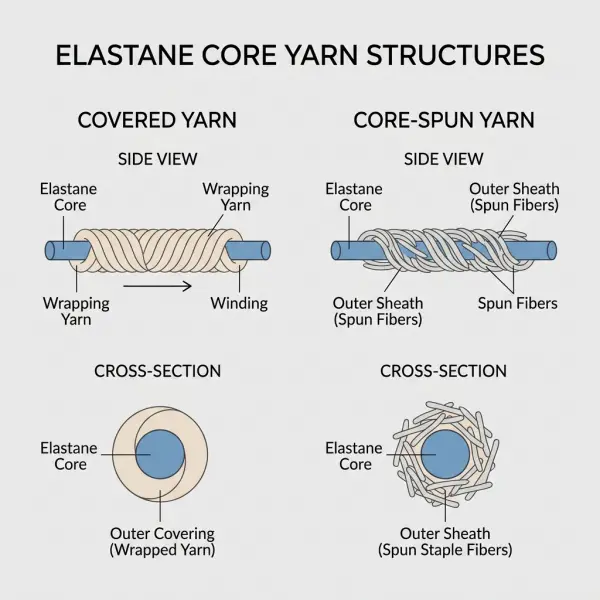
BISFA terminology explains several elastane-containing yarn structures, including covered yarns and core-spun yarns, where an elastane core is combined with relatively inelastic textile components BISFA terminology for elastane-containing yarns. That technical detail is not just for mills. It affects how the fabric sews, stretches, recovers, dyes, and performs in real garments.
Shape Retention
Shape retention is one of the main reasons brands use spandex in everyday apparel. A fabric with good recovery can help garments maintain a cleaner fit after sitting, bending, reaching, walking, or stretching. This is especially relevant in denim, workwear-inspired casualwear, travel apparel, and fitted basics.
But recovery is not permanent. Repeated stress, poor care, excessive heat, harsh chemicals, weak yarn quality, incorrect finishing, or unsuitable garment construction can reduce elastic performance over time. The brand’s job is not only to choose a stretch fabric, but to choose one that performs through the expected lifecycle of the product.
Lightweight Stretch Without Heavy Mechanical Engineering
Spandex can deliver stretch without relying only on mechanical fabric construction. Some fabrics stretch because of knit structure, yarn crimp, weave design, or mechanical finishing. Spandex adds fiber-level elasticity, which can be more effective for close-fitting garments that need repeatable recovery.
That said, mechanical stretch and spandex stretch are not identical. A woven fabric with mechanical stretch may feel more stable and easier to recycle in some cases, but it may not offer the same recovery as a comparable elastane blend. A spandex blend may improve fit but can complicate dyeing, finishing, care, and recycling. The right choice depends on the garment category and business priorities.
Common Uses of Spandex in Apparel
Spandex appears in many apparel categories because stretch is now part of how customers evaluate comfort and fit. The key is not simply where spandex is used, but why it is used in each category.
In activewear, spandex helps garments support movement during bending, stretching, running, training, cycling, yoga, or gym activity. The fabric usually needs stretch, recovery, opacity, moisture management, seam comfort, and abrasion resistance. A leggings fabric that becomes sheer when stretched, for example, may fail commercially even if it feels soft in hand.
In denim, spandex is used to improve comfort and recovery in fitted jeans. A rigid denim may create a traditional structure, but stretch denim can reduce restriction around the hips, thighs, knees, and waist. The risk is over-softening the product. If the fabric lacks enough recovery or stability, the jean may lose its shape and look tired quickly.
In swimwear, spandex helps the garment fit close to the body and recover after movement in water. Swim fabrics must also deal with chlorine, saltwater, sunscreen, body oils, UV exposure, heat, and repeated washing. The LYCRA Company markets specialized swimwear fibers for resistance to damage from chlorine, UV rays, heat, sunscreen, and body lotions, which indicates how demanding this category can be compared with ordinary stretch apparel LYCRA swimwear fiber performance context.
In intimate apparel and shapewear, spandex supports body-conforming fit, retention, and controlled compression. The challenge is balancing hold with comfort. Too little control may make the product feel ineffective; too much resistance may make it uncomfortable or difficult to wear.
In everyday fashion basics, spandex often appears in T-shirts, rib tops, dresses, skirts, trousers, and casual pants. Here, the goal is usually comfort and shape retention rather than athletic performance. Small differences in fabric weight, rib structure, recovery, and garment pattern can decide whether the item feels premium or flimsy.
How Spandex Is Usually Built Into Fabric
Spandex can be incorporated into fabrics in several ways, and this technical choice influences performance. A designer may only see the final fabric swatch, but the yarn structure behind it can affect stretch direction, recovery, opacity, seam behavior, and durability.
In knitted fabrics, spandex may be plated or knitted alongside other yarns to create stretch and recovery. Many leggings, sports bras, fitted tops, underwear, and swimwear fabrics are knitted structures. Knit construction already has some natural stretch, and spandex adds recovery and control.
In woven fabrics, spandex is often used in the weft direction, warp direction, or both, depending on the desired stretch. Stretch denim commonly uses elastane-containing yarns to give comfort stretch. Bi-stretch woven fabrics may use stretch in both directions, but they require careful pattern and sewing decisions to avoid distortion.
In yarn construction, elastane may be covered, core-spun, air-covered, or otherwise combined with companion fibers. BISFA describes covered and core-spun elastane yarn structures as ways of combining an elastane core with less elastic textile components BISFA elastane yarn construction terms. For sourcing teams, this is one reason two fabrics with similar fiber content labels may perform differently.
A label that says “95% cotton, 5% spandex” does not tell the whole story. It does not reveal yarn quality, knit density, fabric weight, finishing, recovery after laundering, shrinkage behavior, spirality risk, opacity under stretch, or seam compatibility. Product teams should treat fiber content as the starting point, not the full material specification.
Spandex vs Elastane vs Lycra: What Is the Difference?
Spandex and elastane usually refer to the same generic elastic fiber category. “Spandex” is common in the United States, while “elastane” is widely used in many international markets and ISO terminology. Lycra is a branded trademark associated with a specific fiber producer, not a generic fiber name.
This distinction matters because incorrect naming can create legal, sourcing, and customer communication issues. The FTC states that trademarks used on labels must appear with the generic fiber name and must not mislead consumers about fiber content FTC guidance on fiber trademarks and generic names.
|
Term |
What It Means |
Business Note |
|
Spandex |
Generic U.S. fiber name for segmented polyurethane elastic fiber |
Common in U.S. product listings and labels |
|
Elastane |
Internationally used generic name for the same fiber category |
Common in Europe and global sourcing documents |
|
Lycra |
Trademarked fiber brand |
Should not be used as a generic substitute unless the product actually uses that branded fiber |
For global fashion brands, the safest approach is to align product copy with confirmed supplier documentation. If the fabric uses branded fiber, the brand can mention it accurately with the generic name. If it does not, “spandex” or “elastane” is usually the clearer and safer term.
Benefits of Spandex Fabric for Fashion Brands
Spandex can support better product performance when it solves a specific fit or movement problem. Its benefits are most meaningful when they are tied to a garment’s intended use rather than added automatically.
The first benefit is improved mobility. Apparel has to accommodate sitting, walking, bending, reaching, stretching, and body variation. A woven trouser with slight stretch may feel more wearable in office settings. A fitted knit dress may move better without requiring a looser silhouette. A travel pant may feel more practical during long periods of sitting.
The second benefit is fit tolerance. Stretch can help one garment size accommodate more body movement and slight body variation, although it should not be used to hide poor pattern development. A badly graded garment will not become well-fitted simply because it contains spandex.
The third benefit is cleaner recovery. Good spandex integration can help garments look fresher after wear. This is especially important in customer reviews. Shoppers often describe quality through visible outcomes: knees bagging, waistbands rolling, leggings becoming sheer, swimwear sagging, or sleeves losing shape.
The fourth benefit is design flexibility. Spandex allows designers to work with closer silhouettes, body-skimming shapes, compact knits, stretch tailoring, performance basics, and hybrid casual-performance categories. It can help brands offer comfort without abandoning structure.
Still, there is a commercial warning here. Spandex should be added for a reason. More stretch is not automatically better. Too much stretch can reduce stability, affect opacity, complicate sewing, change drape, or make a garment feel less premium in categories where structure matters.
Key Limitations of Spandex Fabric
Heat and Care Sensitivity
Spandex can lose performance when exposed to unsuitable heat or harsh care conditions. Heat during laundering, tumble drying, pressing, finishing, or storage can affect elasticity depending on the fiber type, blend, and process. For brands, this means care labeling and customer education are part of the product experience, not an afterthought.
A stretch garment may pass initial fitting but fail after repeated laundering if the care instructions are unrealistic for the target customer. If a customer is likely to machine wash activewear weekly, the fabric should be tested under realistic wash conditions before bulk production.
Chlorine, UV, and Chemical Exposure
Swimwear and performance apparel face tougher exposure than casual knits. Chlorine, UV, sunscreen, body oils, heat, and repeated wet-dry cycles can stress elastic fibers. The existence of specialized swimwear fibers marketed for resistance to these conditions shows that ordinary stretch performance may not be enough for pool-heavy products.
This does not mean every swim brand must use the same branded solution. It does mean the sourcing brief should specify the intended environment. A fashion swimsuit for occasional resort use and a training swimsuit for regular pool sessions may require different fabric performance priorities.
Bagging and Loss of Recovery
Bagging happens when a fabric stretches during wear but does not recover adequately. In jeans, this may show at the knee or seat. In leggings, it may show around the waistband, hip, or thigh. In tops, it may appear at elbows or cuffs.
The cause is not always “bad spandex.” Bagging may come from poor fiber quality, low recovery, unsuitable yarn structure, fabric too light for the garment, weak pattern engineering, excessive negative ease, poor sewing, harsh finishing, or incorrect care. The business impact is visible: returns, bad reviews, reduced repeat purchase, and lower trust in sizing.
Opacity and Grin-Through
Stretch can reveal weaknesses in opacity. A fabric may look solid on the cutting table but become sheer when stretched on the body. This is common in leggings, swimwear, fitted dresses, and lighter-colored stretch fabrics. In woven stretch fabrics, yarn movement can also expose underlying structure or create a visual effect sometimes described as grin-through.
Opacity should be tested under realistic stretch, lighting, and body movement conditions. Studio lighting can be unforgiving. So can customer-generated photos.
Sewing and Production Challenges
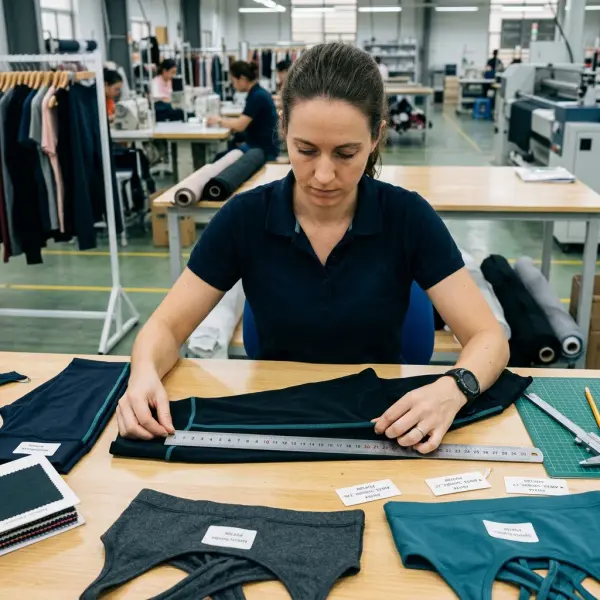
Spandex-containing fabrics can be more demanding to sew than stable non-stretch fabrics. Seam cracking, skipped stitches, puckering, wavy seams, broken elastic filaments, rolling edges, and inconsistent measurements can appear if the factory uses the wrong needle, thread, stitch type, tension, cutting method, or handling process.
Factories familiar with stretch fabrics will usually manage these issues more effectively. For small brands, the risk often appears when a factory used to woven casualwear is asked to produce fitted stretch garments without enough sampling and testing.
Recycling and Circularity Challenges
Spandex can complicate textile recycling because it is usually blended with other fibers. Textile Exchange notes that virgin synthetics are often combined with other materials, making them difficult to recycle, and that elastane is hard to separate out, creating challenges for both mechanical and chemical recyclers Textile Exchange on other synthetics and recycling challenges.
This is one of the most important sustainability caveats for stretch apparel. A garment with a small percentage of elastane may perform well for wearability, but that blend can make end-of-life recycling more difficult. Brands should avoid presenting ordinary elastane blends as circular unless they have verified recycling pathways, credible material claims, and supplier documentation.
Sustainability Claims to Treat Carefully
Spandex sits in a difficult sustainability position. It can help garments fit better and potentially stay useful longer, but it is also a fossil-based synthetic fiber category and is commonly blended in ways that complicate recycling. Those two realities can exist at the same time.
For brands, the most responsible approach is not to oversell spandex as sustainable. Instead, the sustainability conversation should focus on product longevity, reduced premature disposal, accurate care guidance, responsible sourcing, verified recycled-content claims where available, and design choices that do not make recycling claims unrealistic.
A careful claim might say: “This stretch fabric is designed for comfort and shape retention.” A riskier claim would say: “This stretch fabric is eco-friendly.” The second statement requires proof and can easily become misleading if the product is made from conventional virgin synthetics and lacks a practical end-of-life pathway.
Fashion teams should verify:
- whether any recycled content claim applies to the full fabric or only one component;
- whether the elastane component is conventional, recycled, bio-based, branded, or otherwise specified;
- whether certifications apply to the fiber, yarn, fabric, or finished garment;
- whether the garment has a realistic recycling route in the target market;
- whether durability testing supports claims about longer wear life.
This is where commercial honesty protects brand trust. Customers may appreciate comfort and performance, but vague sustainability language around stretch fabrics is increasingly easy to challenge.
What Brands Should Verify Before Sourcing Spandex Fabric
A good sourcing brief for spandex fabric should go beyond fiber content. The most useful questions are performance-based: how will the fabric behave during cutting, sewing, fitting, wearing, washing, and selling?
|
What to Verify |
Why It Matters |
|
Stretch percentage and direction |
Determines pattern adjustment, movement, and fit tolerance |
|
Recovery after stretch |
Helps predict bagging, distortion, and shape retention |
|
Fabric weight and opacity |
Critical for leggings, swimwear, fitted dresses, and light colors |
|
Shrinkage after washing |
Affects sizing, returns, and customer satisfaction |
|
Pilling and abrasion resistance |
Important for activewear, inner-thigh areas, and daily basics |
|
Colorfastness and crocking |
Reduces risk of staining, fading, and customer complaints |
|
Seam stretch performance |
Prevents seam cracking and discomfort |
|
Heat and care tolerance |
Supports accurate care labels and product durability |
|
Supplier fiber documentation |
Helps avoid inaccurate claims about elastane, spandex, or branded fibers |
|
End-use suitability |
Ensures the fabric matches activewear, denim, swimwear, casualwear, or tailoring needs |
The best sampling process tests the fabric in garment form, not only as a swatch. A fabric may perform well in a lab dip or handfeel review but behave differently once cut into a tight garment with seams, elastic trims, waistbands, linings, prints, or heat-transfer labels.
For brands producing fitted stretch apparel, fit models and wear trials are especially important. One fitting session can show static appearance. A short wear trial can reveal rolling waistbands, seam irritation, transparency, knee bagging, or recovery problems that are invisible on a hanger.
Practical Application for Fashion Businesses
Spandex decisions should begin with the product’s job. Is the garment meant to support athletic movement, give comfort stretch to denim, shape the body, fit close without restriction, or add small flexibility to a tailored item? Each purpose needs a different material brief.
For sourcing teams, the practical move is to ask suppliers for more than composition. Request fabric weight, stretch and recovery data, shrinkage results, colorfastness, pilling performance, recommended sewing specifications, care guidance, and end-use suitability. If the supplier cannot provide these details, the brand should test independently before approving bulk production.
For product developers, spandex affects pattern engineering. Stretch fabrics often require negative ease, but the amount depends on fabric recovery, garment category, body area, and desired fit. A leggings pattern and a stretch blazer pattern should not be approached with the same stretch logic.
For manufacturers, spandex-containing fabrics require process control. Cutting should avoid distortion. Sewing should use suitable stitch types and tension. Heat processes should respect fabric limits. Quality control should include measurement checks after handling, not only before sewing.
For retail and marketing teams, the language should stay specific. “Stretch denim with shape recovery” is more useful than vague comfort claims. “Designed for light support and everyday movement” is clearer than implying compression if the garment has not been engineered or tested for that purpose.

Common Mistakes When Working With Spandex Fabric
Mistake 1: Treating Spandex as a Comfort Guarantee
Spandex can improve movement, but it does not automatically make a garment comfortable. Comfort also depends on fabric weight, breathability, moisture behavior, seam placement, pattern balance, waistband design, surface texture, and climate.
This mistake often happens when brands choose fabric by touch alone. A swatch may feel soft and stretchy, but the finished garment may feel hot, clingy, unstable, or too tight. The better approach is to define the comfort requirement: soft stretch, firm hold, breathable movement, recovery after sitting, or support during activity.
Mistake 2: Ignoring Recovery Testing
Stretch without recovery is a product risk. Many customer complaints are not about whether the garment stretches, but whether it returns to shape. This is especially true for denim, leggings, shapewear, fitted tops, and ribbed basics.
Brands should test recovery after repeated stretching and washing. A fabric that performs well once may not perform well after 20 wears. For repeat-purchase categories, recovery is part of brand equity.
Mistake 3: Using Too Much Stretch in the Wrong Product
Highly elastic fabric may sound attractive, but some garments need stability. A tailored trouser, structured skirt, or premium fitted dress may lose its intended silhouette if the fabric stretches too much or lacks body.
The better approach is to match stretch level to design intent. Sometimes a slight comfort stretch is enough. Sometimes a firmer support fabric is required. Sometimes mechanical stretch without spandex may be more appropriate.
Mistake 4: Forgetting Production Compatibility
A fabric that looks good in sampling can still create factory problems. Stretch fabrics can shift during cutting, curl at edges, pucker at seams, or become wavy if handled incorrectly. These issues add cost and delay.
Brands should confirm that the factory has experience with the fabric category. Activewear factories, denim factories, swimwear factories, and woven tailoring factories often have different equipment, handling habits, and quality expectations.
Mistake 5: Misusing Lycra in Product Copy
Lycra is not a generic synonym for all stretch fiber. If a garment does not use that branded fiber, using the name can be misleading. FTC guidance also makes clear that fiber trademarks should be used with the relevant generic fiber name and should not deceive consumers.
For global product pages, “spandex” or “elastane” is usually safer unless the supplier has confirmed branded fiber usage.
FAQ: Spandex Fabric in Apparel
Is spandex the same as elastane?
Yes, spandex and elastane generally refer to the same elastic fiber category. “Spandex” is commonly used in the United States, while “elastane” is widely used in many international markets and ISO-related terminology. For fashion businesses, the more important distinction is between generic fiber names and trademarks. Lycra, for example, is a branded fiber name, not a generic substitute for every spandex or elastane fabric.
Is spandex breathable?
Spandex itself is not usually the main reason a fabric feels breathable. Breathability depends more on the companion fibers, fabric construction, weight, knit or weave density, finishing, and garment fit. A cotton-spandex jersey may feel different from a nylon-spandex activewear knit or a polyester-spandex swim fabric. Tight, dense, high-stretch fabrics may feel warmer because they sit close to the body and reduce airflow.
How much spandex should a garment contain?
There is no universal ideal percentage. Low percentages may provide comfort stretch in denim, shirts, or casual trousers, while higher percentages may be needed for activewear, swimwear, shapewear, or compression-inspired garments. The right amount depends on stretch direction, recovery, fabric weight, garment pattern, and end use. Brands should avoid choosing by fiber content alone and instead test the final fabric and sample garment.
Why do spandex garments lose shape over time?
Spandex garments may lose shape because of weak recovery, repeated wear stress, excessive heat, harsh washing, chlorine exposure, UV exposure, poor yarn quality, unsuitable fabric construction, or incorrect garment engineering. Bagging at knees, elbows, waistbands, or seat areas is often a recovery issue, not simply a stretch issue. Testing after laundering and wear trials can help brands identify problems before bulk production.
Is spandex sustainable?
Spandex should not be described as sustainable without strong qualification. It can improve fit and shape retention, which may support longer garment use in some products, but it is commonly fossil-based and often blended with other fibers in ways that make recycling harder. Textile Exchange notes that elastane is difficult to separate from blended materials, creating challenges for recyclers.
Can spandex be used in woven fabrics?
Yes, spandex can be used in woven fabrics, often through elastane-containing yarns in the warp, weft, or both. Stretch denim, bi-stretch trousers, fitted suiting, and comfort-stretch casualwear may use woven stretch constructions. Woven stretch fabrics need careful pattern development because they behave differently from stable wovens and from knitted stretch fabrics.
What should small fashion brands ask suppliers before buying spandex fabric?
Small brands should ask for composition, fabric weight, stretch percentage, recovery performance, shrinkage, colorfastness, pilling results, recommended sewing methods, care instructions, and whether the fabric is suitable for the intended product category. If the fabric will be used for leggings, swimwear, shapewear, or fitted garments, brands should also test opacity, seam stretch, and recovery after washing before approving bulk production.
Conclusion
Spandex fabric is best understood as a performance ingredient inside a larger textile and garment system. Its value is not only that it stretches, but that it can help apparel fit better, move better, and recover better when the right fiber blend, yarn construction, fabric structure, pattern, sewing method, and care guidance work together.
For fashion businesses, the strongest use of spandex is strategic. Use it when the product genuinely needs stretch, recovery, support, comfort movement, or fit tolerance. Test it under realistic wear and wash conditions. Communicate it accurately. Be careful with sustainability claims. And do not assume that two fabrics with the same spandex percentage will behave the same way.
The brands that manage spandex well are usually not the ones chasing the stretchiest fabric. They are the ones that understand the relationship between material performance, garment design, production control, and customer expectation.




Comments 0
Leave a CommentSend Comment
Anda harus Login terlebih dahulu untuk dapat memberikan komentar.