
Resortwear Fashion Explained: From Holiday Style to Lifestyle Trend
Quick Answer
Resortwear is a fashion category designed around warm-weather travel, leisure, and relaxed social occasions. It typically includes lightweight dresses, coordinated separates, shirts, swimwear, cover-ccessories that can move easily between beaches, hotels, restaurants, sightseeing, and informal evening settings.
Historically, resortwear served affluent customers travelling to coastal destinations during colder months. The category later expanded through cruise collections and seasonal retail drops. Today, it is no longer limited to people staying at resorts. Its relaxed silhouettes, breathable fabrics, bold prints, adaptable layers, and day-to-evening styling increasingly appear in urban wardrobes, summer collections, occasionwear, and lifestyle-led brands.
For fashion businesses, resortwear can extend seasonal selling opportunities and connect apparel with travel, hospitality, wellness, and destination culture. The opportunity is commercially attractive, but execution requires more than adding tropical prints to loose garments. Successful resortwear must balance climate suitability, fit, packability, fabric performance, cultural context, price positioning, and realistic customer occasions.
What Is Resortwear Fashion?
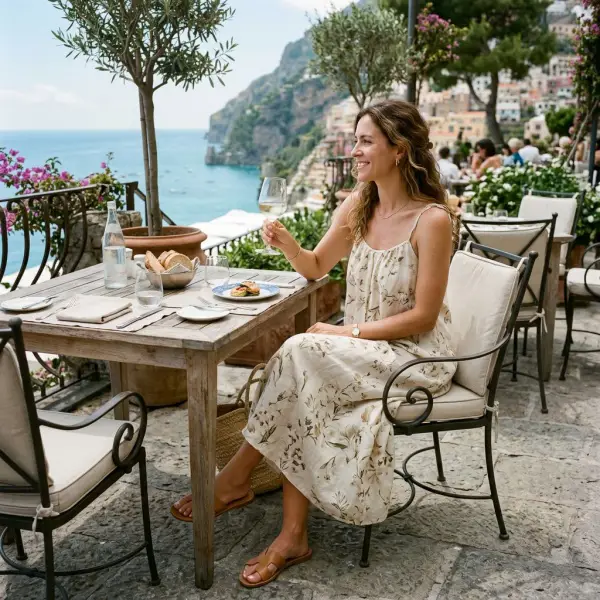
Resortwear is a category of apparel and accessories created for leisure-oriented travel and warm-climate lifestyles, with the practical purpose of helping wearers move comfortably between relaxation, social activities, and destination-specific occasions.
The term may describe an individual product category, such as kaftans or swim cover-ups, but it can also refer to an entire seasonal collection. Depending on the brand, a resortwear range may include swimwear, dresses, tailoring, knitwear, footwear, bags, hats, and jewellery.
The category is defined less by one garment type than by the context in which the clothes are expected to perform. A resortwear customer may wear the same outfit while walking through a hotel, visiting a coastal town, having lunch outdoors, attending a sunset event, or travelling home.
That movement between settings is central to the product proposition.
Resortwear often combines several characteristics:
- Relaxed or adjustable silhouettes
- Fabrics suitable for warm or humid conditions
- Garments that can be layered over swimwear
- Pieces that pack and coordinate easily
- Styling that feels distinctive without becoming impractical
- Sufficient coverage and polish for hospitality or social environments
- Colours and prints associated with leisure, nature, or destination culture
These characteristics are common rather than mandatory. A monochrome linen suit can belong to resortwear just as clearly as a printed maxi dress. Likewise, a collection designed for an alpine spa, desert retreat, or wellness resort may use a different material and colour vocabulary from one intended for a tropical beach.
How Did Resortwear Develop?
The roots of modern resortwear are closely connected to the expansion of leisure travel, coastal tourism, ocean voyages, and seasonal migration among wealthy consumers during the late nineteenth and early twentieth centuries.
People travelling from colder cities to warmer coastal destinations needed clothing that did not fit neatly into the conventional winter and summer wardrobes sold at home. Fashion houses responded with garments suited to beaches, promenades, yachts, hotels, and informal outdoor activities.
Gabrielle Chanel’s early work provides one documented example of this shift. The Victoria and Albert Museum describes how Chanel designed for clients in the French seaside resorts of Deauville and Biarritz, using streamlined jersey garments influenced by sailor clothing. These ensembles offered greater movement and comfort than many restrictive womenswear styles of the period. Readers can explore the V&A account of Chanel’s coastal designs. ificance of this history is not that one designer single-handedly invented resortwear. Rather, coastal environments created space for different expectations around dress. Clothes could become less rigid, more mobile, and more closely connected to recreation.
By the twentieth century, fashion businesses were using labels such as resort, cruise, and holiday collections for merchandise delivered outside the main spring/summer and autumn/winter seasons. Vogue notes that early resort offerings served customers preparing for post-Christmas travel and ocean voyages, while later resort collections helped fill retail space between established seasonal deliveries. Its overview of the history and evolution of resort collections also shows how modern resort presentations have become major brand and media events.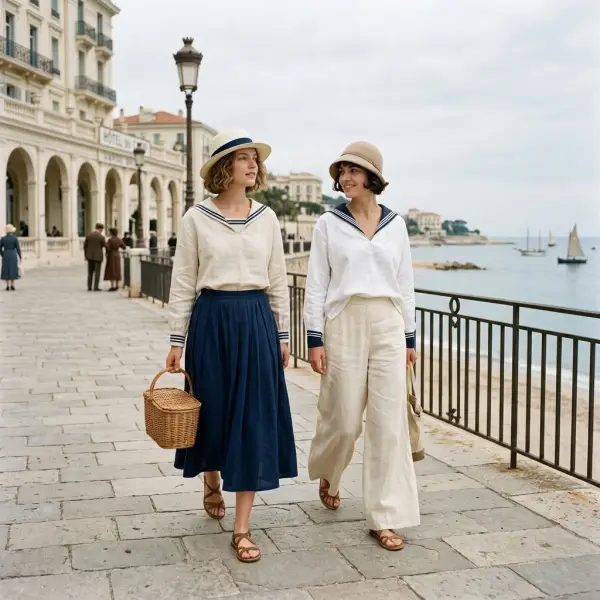
Resortwear, Cruise Collections, and Beachwear Are Related but Not Identical
The terms are frequently used together, but they describe different parts of the fashion market.
|
Term |
Primary meaning |
Typical product scope |
Main commercial context |
|
Resortwear |
Clothing and accessories associated with leisure travel, warm climates, and relaxed destination dressing |
Dresses, separates, swimwear, cover-ups, tailoring, footwear, bags, and accessories |
Holiday wardrobes, destination retail, summer lifestyle collections, and year-round warm-weather markets |
|
Cruise or resort collection |
A fashion delivery or presentation positioned between traditional main seasons |
Can include almost any product category, including coats, tailoring, eveningwear, knitwear, and accessories |
Bridge-season inventory, luxury storytelling, global runway events, and extended retail selling periods |
|
Beachwear |
Clothing specifically connected to beaches, pools, and swimming environments |
Swimwear, board shorts, rash guards, cover-ups, sarongs, beach dresses, and sandals |
Swim, sun, pool, and coastal recreation |
|
Summerwear |
Broad clothing category for warmer seasonal weather |
T-shirts, shorts, dresses, shirts, sandals, lightweight jackets, and workwear |
Everyday seasonal retail in temperate or warm markets |
A cruise collection does not have to look tropical. Luxury houses may use the resort calendar to present tailoring, knitwear, statement accessories, or concept-driven pieces that have little direct connection to beaches.
Beachwear, meanwhile, is generally narrower. A swimsuit may form part of a resortwear assortment, but resortwear must usually address a wider range of social situations beyond swimming.
For smaller brands, the distinction is useful because it prevents unclear positioning. A label selling technical swimwear has different product requirements from a lifestyle brand selling dresses, shirts, and coordinated separates for hotels and holiday dining.
What Makes a Garment Feel Like Resortwear?
Resortwear is often recognised through a combination of silhouette, material, colour, and styling. No single feature determines whether a garment belongs in the category.
Relaxed but Intentional Silhouettes
Resortwear frequently uses looser silhouettes because they can support airflow, movement, layering, and comfort during travel. Common examples include kaftans, tunics, wrap dresses, camp-collar shirts, drawstring trousers, fluid skirts, and wide-leg pants.
Loose construction does not remove the need for fit engineering. Neckline depth, armhole coverage, garment length, waist placement, transparency, and movement must still be controlled.
An oversized shirt that looks effortless in a studio photograph may become inconvenient when sleeves fall into food, shoulder seams collapse, or the fabric becomes transparent in strong sunlight. Good resortwear creates ease without appearing unfinished.
Materials Selected for Climate and Occasion
Common resortwear materials include linen, cotton, silk, viscose or rayon, lyocell, lightweight knits, and synthetic fabrics used for swimwear or quick-drying garments. Blends may be introduced to improve stretch, crease recovery, durability, or care performance.
Each option involves trade-offs.
Linen can provide texture and airflow but wrinkles visibly. Cotton may feel familiar and comfortable, although heavier constructions can retain moisture and dry slowly. Regenerated cellulosic fabrics can create fluid drape, but their stability and care requirements depend on fibre type, yarn construction, finishing, and garment design. Synthetic fabrics can provide stretch, colour retention, and quicker drying, but those benefits should not automatically be presented as evidence of superior comfort or sustainability.
Material selection should therefore begin with the garment’s intended use rather than a fixed idea of what resortwear is supposed to contain.
Colour and Print as Emotional Signals
Resortwear often uses colour to communicate escape, optimism, relaxation, or connection to place. Marine blues, sun-faded neutrals, botanical greens, bright citrus tones, and saturated prints are common, but they are not universal.
Minimal resortwear can be built around white, black, sand, navy, or terracotta. In luxury markets, fabric quality, silhouette, and finishing may communicate leisure more effectively than obvious destination prints.
Brands planning colour stories should distinguish between a lasting visual identity and a short seasonal theme. A deeper explanation of how trend direction moves into consumer wardrobes is covered in fashion color trends and everyday styling.
Versatility Across a Holiday Day
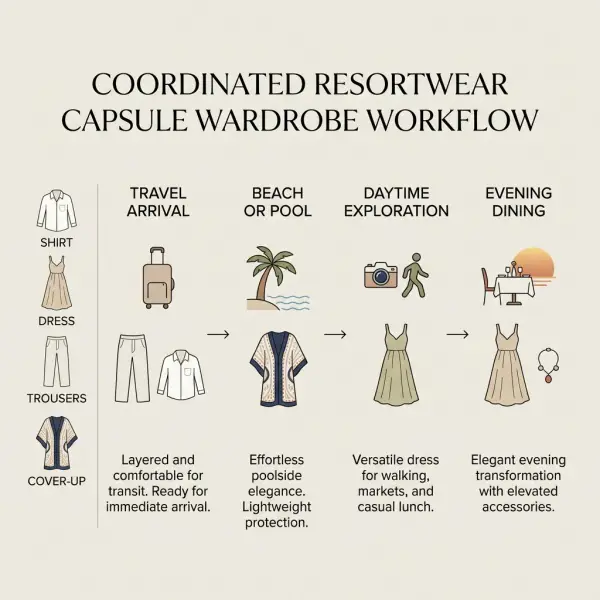
Many resortwear products are designed around transitions:
- Swimsuit to beach club
- Hotel room to breakfast
- Sightseeing to casual dinner
- Poolside relaxation to sunset event
- Travel day to destination arrival
This does not mean one garment must perform every function. It means the collection should work as a coordinated wardrobe.
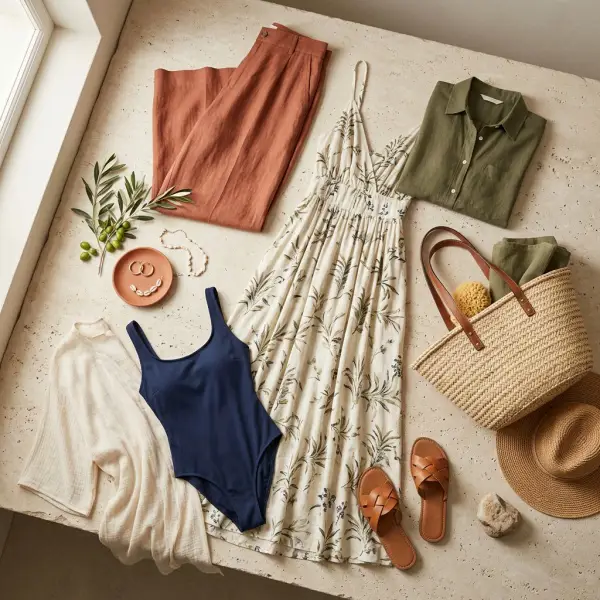
A cover-up may become a dress when belted. A relaxed shirt may layer over swimwear and later pair with tailored trousers. A lightweight jacket can provide sun coverage during the day and warmth in an air-conditioned restaurant.
The strongest resortwear assortments usually solve several of these transitions without requiring customers to pack a separate outfit for every activity.
How Did Resortwear Become a Lifestyle Trend?
Resortwear moved beyond holiday-only dressing because many of its product qualities also work in everyday life. Relaxed shapes, breathable materials, coordinated separates, easy layering, and expressive prints can suit urban summers, informal workplaces, weekend events, restaurants, and home-based lifestyles.
The category also fits a broader retail shift toward occasion-led merchandising. Customers do not always search only by garment type. They may look for a “holiday wardrobe,” “summer wedding outfit,” “airport look,” “beach-to-dinner dress,” or “weekend escape capsule.”
Resortwear gives brands a way to organise products around those situations.
Travel remains an important commercial context. UN Tourism reported an estimated 1.52 billion international tourist arrivals in 2025, approximately 4% more than in 2024. This does not mean every traveller buys a new holiday wardrobe, but it confirms that international travel remains a significant global activity around which fashion, hospitality, retail, and content businesses can build propositions. The figures are available through the UN Tourism World Tourism Barometer. culture has strengthened the connection between clothing and destinations. Travel photographs, hotel content, wedding imagery, creator partnerships, and social media itineraries encourage consumers to think about how clothing will appear within a location.
That visual influence should not be confused with universal consumer behaviour. Many travellers prioritise comfort, budget, modesty, luggage limits, or rewearability over highly photographed statement looks. The strongest commercial proposition often combines visual distinction with practical use.
A deeper examination of how holiday styling shapes normal wardrobes belongs in why vacation dressing influences everyday fashion choices.
Why Resortwear Matters to Fashion Businesses
Resortwear can create value across product development, retail, branding, and partnerships. Its usefulness depends on the brand’s market, climate exposure, distribution model, and customer lifestyle.
It Can Extend the Selling Calendar
A resort capsule can fill the space between main seasonal launches. In year-round warm markets, it may remain relevant for much longer than a conventional summer collection.
For a direct-to-consumer brand, this could mean releasing a compact holiday edit before peak travel periods rather than developing a large standalone season. A multi-brand retailer might use resortwear to refresh visual merchandising after year-end gifting and before spring deliveries.
The benefit is not simply “more products.” It is the ability to create another commercially understandable reason for customers to visit.
It Supports Lifestyle Positioning
Resortwear naturally connects fashion with hotels, wellness, food, events, travel, and leisure. This gives brands rich editorial territory.
A collection can be photographed in a recognisable environment, styled around a weekend itinerary, or sold through a hospitality partnership. The clothes become part of a lifestyle narrative rather than isolated stock-keeping units.
The risk is that storytelling can outrun product quality. A beautiful campaign cannot compensate for poor opacity, uncomfortable seams, unstable dyes, or garments that crease badly before the customer reaches the destination.
It Opens Destination-Based Retail Opportunities
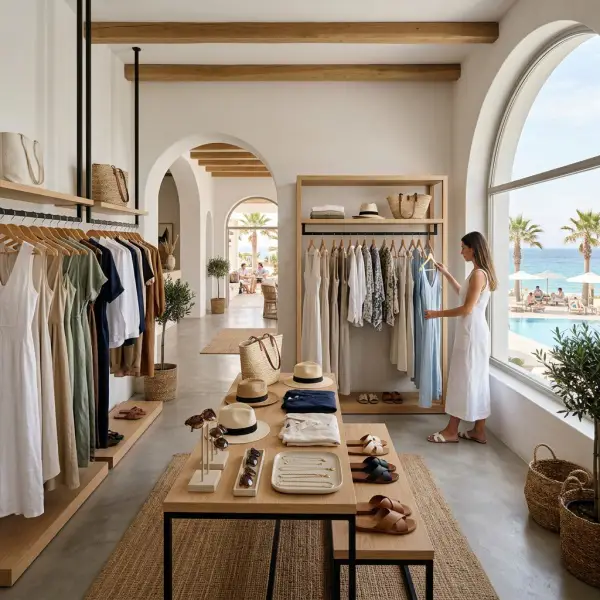
Resort hotels, airport retail, coastal boutiques, cruise retail, pop-up stores, and tourism districts can provide relevant distribution channels. Product selection in these environments may differ from normal urban retail.
Customers may want:
- Immediate-use products
- Easy sizing and adjustable fits
- Giftable accessories
- Packable items
- Garments suited to local weather
- Pieces that feel connected to the destination
- Straightforward care instructions
Destination retail also creates operational constraints. Replenishment may be difficult, customer traffic can fluctuate sharply, and selling periods may depend on tourism patterns, weather, regional holidays, or transport access.
Key Resortwear Product Categories
A resortwear collection may be narrow or extensive. The assortment should reflect the customer journey rather than attempting to include every possible holiday product.
|
Product category |
Customer need |
Important development consideration |
|
Swimwear |
Swimming, sunbathing, pool, or beach use |
Stretch recovery, lining, opacity, colourfastness, support, hardware, and exposure to chlorine, salt, heat, or sunscreen |
|
Cover-ups and kaftans |
Movement between swim and hospitality spaces |
Coverage, transparency, length, closure security, and ease of dressing |
|
Dresses |
Daytime leisure, sightseeing, dining, and events |
Breathability, fit flexibility, bra compatibility, movement, and packability |
|
Shirts and blouses |
Layering, sun coverage, and coordinated styling |
Sleeve function, fabric weight, button security, and wrinkle behaviour |
|
Trousers and skirts |
Mix-and-match travel dressing |
Waist comfort, pocket function, sitting comfort, and hem practicality |
|
Lightweight tailoring |
Restaurants, events, travel, and polished leisure |
Structure without excessive weight, lining strategy, crease recovery, and climate suitability |
|
Accessories |
Styling, protection, gifting, and destination identity |
Durability, packability, size, sun exposure, and compatibility with the apparel range |
|
Footwear |
Walking, beach use, dining, and travel |
Grip, comfort, moisture exposure, surface suitability, and transportability |
The table also shows why “resortwear” cannot be treated as a purely visual direction. Swimwear development requires different technical knowledge from linen tailoring or woven accessories.
A brand can build a credible resort offer without producing all of these categories internally. Partnerships, selective sourcing, or tightly edited capsules may be more realistic than rapid category expansion.
How Resortwear Affects Product and Business Decisions
Sourcing
Suppliers must understand the garment’s intended environment. A fabric approved under normal indoor lighting may reveal unexpected transparency outdoors. Metal components may react poorly to saltwater. Strong prints can behave differently after repeated exposure to sun, perspiration, chlorine, or washing.
Brands should communicate intended use during development rather than giving suppliers only an illustration and fabric reference.
Minimum order quantities also matter. Highly specific prints, custom embroidery, and unusual trims may create an attractive sample but become commercially difficult when minimums exceed realistic sales volume.
Manufacturing
Flowing silhouettes can look simple while requiring careful cutting, seam handling, and pressing. Bias-cut garments may distort. Lightweight fabrics can shift during sewing. Open structures may snag. Large prints require placement decisions and can increase cutting waste when motifs must be matched.
Quality control should reflect these risks. Measurements taken only on a flat garment may not reveal twisting, neckline movement, or coverage problems that appear when the garment is worn.
Pricing
Resortwear pricing should account for more than fabric consumption. Custom print development, small production runs, special trims, hand finishing, lined construction, freight timing, campaign production, and destination retail commissions can materially affect margin.
Before setting a retail price, brands should model the full cost structure. The underlying principles are explored in garment costing for fashion brands.
Inventory Planning
Demand can be highly seasonal in some markets and relatively stable in others. A resort dress may sell year-round in Singapore, Bali, Dubai, or coastal Australia, while the same item may have a shorter window in Northern Europe.
Global brands should avoid applying one climate calendar to every region. Delivery timing, size curves, colour choices, and product weights may need regional adjustment.
Brand Communication
Customers need to understand where and how a garment can be worn. Product descriptions should explain practical attributes such as lining, sheerness, closures, adjustability, care, fit, and layering—not only use phrases such as “perfect for paradise.”
Specific communication reduces returns and improves customer confidence.
How Can Fashion Businesses Apply Resortwear Strategically?
A resortwear strategy should begin with a defined customer situation, not a mood board.
1. Define the Actual Travel or Leisure Occasion
Identify the environments the collection is designed to serve:
- Tropical beach holiday
- Mediterranean summer travel
- Cruise or yachting
- Wellness retreat
- Urban weekend escape
- Destination wedding
- Luxury hotel stay
- Family holiday
- Modest warm-weather travel
- Domestic short-break tourism
These occasions create different requirements. A family traveller carrying children’s belongings may value pockets and easy care. A destination wedding guest may prioritise occasion-level polish. A wellness customer may want soft layers and understated colours.
2. Build a Coordinated Capsule Before a Large Collection
A focused capsule might contain one dress, one shirt, one trouser, one skirt or short, one cover-up, and one accessory story. The pieces should combine into several outfits.
This approach allows a brand to test customer response without committing to a broad seasonal range. It also simplifies photography, merchandising, and styling communication.
3. Validate Materials in Realistic Conditions
Prototype testing should reflect likely use. Depending on the product, brands may need to assess:
- Opacity under sunlight
- Comfort in heat and humidity
- Colourfastness
- Shrinkage and dimensional stability
- Seam slippage
- Stretch recovery
- Drying time
- Wrinkling during packing
- Contact with chlorine, saltwater, sunscreen, or perspiration
- Care practicality for travellers
A garment does not need to excel in every area. The important point is that its limitations should be understood before bulk production and communicated honestly.
4. Plan the Collection Around Outfits, Not Isolated Items
Resort customers often buy with a trip or occasion in mind. Showing how pieces coordinate can increase the practical value of the assortment.
Merchandising might organise looks around a travel day, pool morning, town visit, casual dinner, and evening event. This gives customers a clearer reason to buy separates together without relying entirely on discounts.
5. Match Distribution to the Customer Journey
A resortwear collection may perform through:
- Direct-to-consumer e-commerce
- Social commerce
- Hotel or resort boutiques
- Department stores
- Coastal multi-brand retailers
- Airport or travel retail
- Seasonal pop-ups
- Wedding and occasion platforms
- Rental services
- Hospitality collaborations
Each channel requires different margins, delivery schedules, packaging, and replenishment capabilities. A hotel partnership may offer strong brand alignment but lower volume. A marketplace may provide reach but reduce control over presentation.
6. Treat Cultural Context as Product Input
Destination-inspired design requires judgement. Brands should avoid using sacred motifs, traditional dress elements, indigenous patterns, or community identities as decorative shorthand without understanding their meaning and origin.
Collaboration, licensing, attribution, or local production partnerships may be appropriate, depending on the context. Generic claims such as “inspired by the tropics” do not remove responsibility for understanding where visual references come from.
A detailed breakdown of range architecture, sampling, production, and launch decisions is reserved for how fashion brands design collections for travel and leisure.

Common Resortwear Mistakes
Treating Resortwear as Tropical Print Plus Loose Fit
This mistake happens because visual references are easier to copy than customer needs. The result is often a collection that looks seasonal but provides no clear functional or brand advantage.
A stronger approach starts with climate, occasion, coverage, fit, and wardrobe coordination. Print should reinforce the concept rather than substitute for it.
Designing Only for Campaign Photography
Very long hems, open necklines, oversized sleeves, complicated ties, or highly transparent materials may look dramatic in controlled images. In real use, they can interfere with walking, dining, wind, luggage, and movement.
Wear trials should include sitting, walking, bending, layering, and exposure to natural light.
Assuming Loose Garments Require Minimal Fit Development
Relaxed garments still need proportion and grading. A one-size garment may not provide comparable coverage, length, and drape across different bodies.
Brands should verify who the size system actually serves. “One size fits all” is rarely an accurate description.
Using Sustainability Language Without Product Evidence
Linen, natural fibres, small batches, artisanal techniques, or local inspiration do not automatically make a collection sustainable. Environmental and social performance depends on fibre sourcing, processing, durability, production conditions, logistics, use, care, and end-of-life options.
Brands should make narrow, supportable claims instead of describing an entire collection as environmentally responsible without evidence.
Ignoring Regional Seasonality
A launch timed around a European summer may miss travel periods in other markets. Lunar New Year travel, school holidays, religious calendars, monsoon seasons, wedding periods, and year-end vacations can all influence demand.
Regional merchandising should use local customer and climate data rather than treating resortwear as one global season.
Overbuilding the First Collection
New categories create new suppliers, fit risks, testing needs, inventory commitments, and campaign costs. Launching swimwear, shoes, bags, dresses, and tailoring simultaneously can exceed a small brand’s operational capacity.
A tightly coordinated capsule usually provides clearer learning.
What Should Brands Verify Before Acting?
Before investing in resortwear, decision-makers should verify six areas.
|
Area to verify |
Key question |
|
Customer |
Is the target customer buying for an actual trip, a local warm climate, an event, or an aspirational lifestyle? |
|
Product |
Which situations must the garments realistically handle? |
|
Material |
Has the fabric been tested for opacity, stability, comfort, care, and likely exposure conditions? |
|
Commercial model |
Can the expected selling price cover small runs, development costs, channel margins, and markdown risk? |
|
Calendar |
Does the launch match the customer’s travel and climate cycle? |
|
Brand relevance |
Does resortwear extend the brand’s identity, or is it being added only because the category appears fashionable? |
The final question matters most. Resortwear is not automatically suitable for every label. A brand built around technical winter outerwear, formal office tailoring, or highly localised uniforms may need a carefully justified extension rather than a sudden beach capsule.
What Resortwear Does Not Mean
Resortwear does not necessarily mean:
- Beachwear only
- Bright tropical prints
- Luxury products
- Womenswear only
- Loose garments with limited sizing
- Clothing intended exclusively for overseas travel
- A guaranteed year-round seller
- Inherently sustainable clothing
- A mandatory cruise runway presentation
- One universal aesthetic across all destinations
The category is broad because leisure itself is broad. A practical men’s linen shirt, a modest swim cover-up, a tailored co-ord, a handwoven vacation dress, and a technical sun-protection top may all sit within resort-oriented retail while serving very different consumers.
Frequently Asked Questions
Is resortwear the same as summer clothing?
No. Summer clothing is a broad seasonal category covering almost anything worn in warm weather, including workwear, basics, sportswear, and casual clothing. Resortwear is more specifically connected to leisure, travel, destinations, and transitions between relaxed and social occasions.
The categories often overlap. A linen dress can be sold as ordinary summerwear or positioned as resortwear depending on its styling, assortment, retail context, and intended use. Businesses should avoid relying on the label alone. Product descriptions need to explain the garment’s fit, fabric, coverage, care, and practical function.
Can resortwear be worn as everyday fashion?
Yes. Many resortwear pieces work well in everyday wardrobes because they use relaxed silhouettes, lightweight materials, coordinated separates, and adaptable layering. Shirts, wrap dresses, wide-leg trousers, and fluid skirts can move easily into weekend, city, restaurant, or informal workplace settings.
Not every product transfers equally well. Highly transparent cover-ups, dramatic beach kaftans, and swim-specific garments may have limited everyday use. Brands seeking broader wearability should prioritise pieces that can be styled with conventional shoes, outerwear, and accessories rather than depending entirely on a holiday setting.
Is resortwear only suitable for tropical destinations?
No. Resortwear can be designed for Mediterranean summers, desert retreats, wellness resorts, cruises, lakeside holidays, spa destinations, and even cool coastal environments. The category should respond to the climate and activities of the destination.
A tropical assortment may prioritise airflow and humidity management. A cooler coastal collection may need knit layers, lightweight jackets, or wind protection. Using the same fabric weight and silhouette for every destination can reduce comfort and relevance. Climate assumptions should therefore be tested against actual customer itineraries.
Which fabrics are best for resortwear?
There is no universally best resortwear fabric. The right choice depends on garment type, climate, price, care expectations, and required performance.
Linen and lightweight cotton can suit relaxed woven garments. Viscose, rayon, lyocell, and silk may provide fluid drape. Polyester, nylon, and elastane blends are commonly used where stretch, quick drying, or swim performance is required. Blended fabrics may improve stability or crease recovery.
Brands should evaluate the complete fabric construction and finish rather than making decisions from fibre name alone. Weight, opacity, shrinkage, colourfastness, seam performance, handfeel, and care behaviour can differ significantly between fabrics using the same fibre.
Does a small fashion brand need a separate resort collection?
Not necessarily. A small brand may achieve better results with a limited holiday edit drawn from its existing product language. A few coordinated styles, new colours, or travel-oriented accessories can test demand without creating a separate seasonal operation.
A standalone collection becomes more reasonable when the brand has a clear customer, relevant sales channels, supplier capacity, and evidence of repeat demand. The decision should be based on margin and operational readiness, not only campaign potential. Small runs can reduce inventory exposure but may also increase unit cost.
How early should a resortwear collection be launched?
The launch date should be planned backward from the target customer’s booking, shopping, and travel cycle. Customers may begin buying weeks or months before departure, particularly for destination weddings, cruises, year-end holidays, or major school breaks.
Wholesale brands need additional time for buyer appointments, production, and retail delivery. Direct-to-consumer brands can operate closer to demand but still need time for sampling, testing, photography, manufacturing, and fulfilment.
Global businesses should avoid using one launch date for every market. Holiday calendars and warm seasons differ substantially between regions.
Can resortwear be marketed as sustainable?
Only when the specific claim is supported. Resortwear is not sustainable merely because it uses natural-looking fabrics, handcrafted details, or travel-inspired storytelling.
Brands should identify what can genuinely be demonstrated: certified fibre content, traceable sourcing, lower-impact processing, verified labour practices, repairability, durability testing, reduced packaging, or limited production aligned with demand. Even these claims require context.
It is safer to communicate specific product attributes than to label an entire collection “eco-friendly.” Travel-related marketing should also avoid implying that purchasing clothing offsets or neutralises the wider environmental impacts of tourism.
Conclusion
Resortwear began as a response to the practical and social needs of leisure travel, but its relevance now extends far beyond the resort itself. The category has become a flexible meeting point between holiday dressing, summer apparel, lifestyle branding, hospitality retail, and everyday relaxed fashion.
Its commercial strength comes from context. Resortwear helps brands present clothing as part of an experience: travelling, resting, exploring, dining, celebrating, or spending time outdoors. Yet that same strength can encourage superficial execution when destination imagery receives more attention than fit, fabric, cost, and use.
For fashion businesses, the most credible approach is to define the customer occasion first, develop a coordinated and technically appropriate wardrobe, and expand only after testing demand. The objective is not to reproduce a generic image of vacation style. It is to design clothing that earns a place in the customer’s luggage—and remains useful after the trip ends.




Comments 0
Leave a CommentSend Comment
Anda harus Login terlebih dahulu untuk dapat memberikan komentar.