
How Fashion Aesthetics Shape Modern Personal Style
Quick Answer
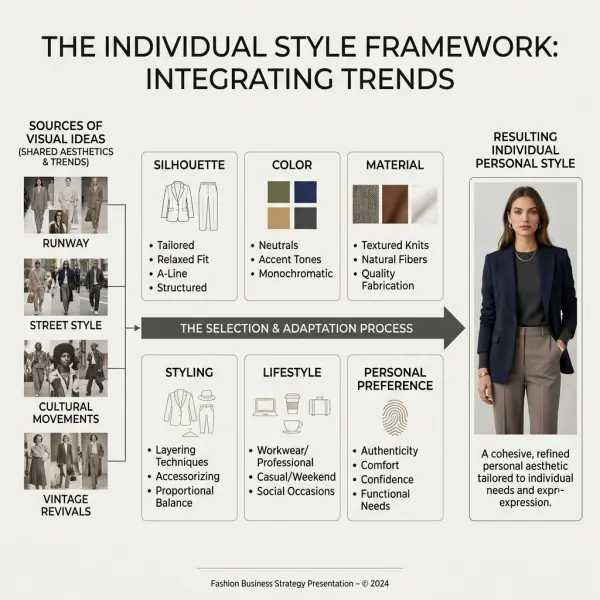
Fashion aesthetics shape modern personal style by giving people a recognizable visual framework for choosing, combining, and interpreting clothes. An aesthetic may bring together recurring elements such as silhouette, color palette, fabric texture, footwear, accessories, styling references, and an overall mood. Personal style develops when an individual selectively adopts, mixes, modifies, or rejects those elements according to their body, lifestyle, culture, budget, climate, and preferences.
The distinction matters. A fashion aesthetic is a shared visual language; personal style is the individual way someone uses that language. A person can be influenced by minimalism, workwear, romantic dressing, sportswear, or several internet aesthetics without needing to build an entire wardrobe around one label.
For fashion businesses, aesthetics can help explain why groups of products feel connected and how customers search for inspiration. They can inform merchandising, styling, content, product development, and audience research. But an aesthetic label should not automatically be treated as a durable customer segment or product forecast. Some visual preferences persist for years; others are temporary internet labels attached to familiar fashion ideas.
What Is a Fashion Aesthetic?
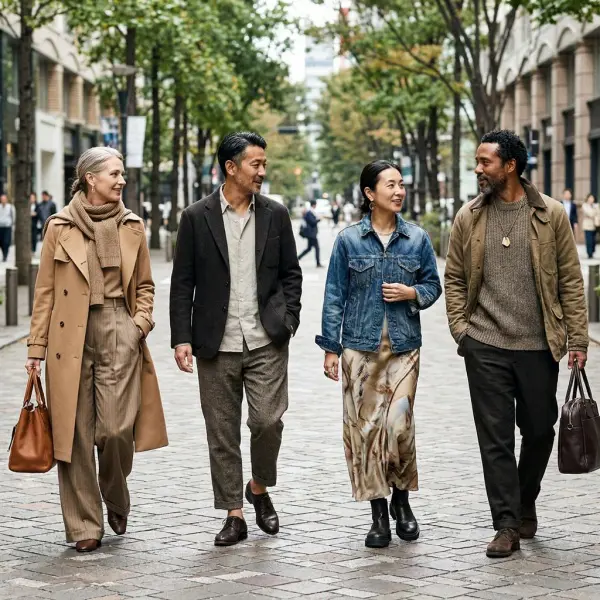
A fashion aesthetic is a recognizable visual framework that groups recurring clothing and styling cues into a coherent look or mood. Those cues can include silhouette, proportion, color, materials, patterns, garment categories, footwear, accessories, grooming, references to particular periods or activities, and the way individual pieces are combined.
The term is useful because people rarely perceive garments as isolated technical objects. A pleated skirt, hiking shell, ballet flat, oversized blazer, washed denim jacket, or linen dress carries visual associations partly because of what surrounds it. Change the shoes, styling, proportions, color palette, and context, and the same garment may communicate something very different.
Fashion aesthetics are not an official taxonomy. There is no universal industry authority deciding exactly where one aesthetic begins and another ends. Some, such as minimalism, punk, preppy dressing, or romantic fashion, have broader cultural and historical lineages. Others are internet-era labels that package existing references into easily recognizable concepts.
That distinction becomes especially important when discussing micro-aesthetics. Labels such as cottagecore, gorpcore, balletcore, coquette, blokette, or various forms of “girl” and “core” aesthetics may identify useful visual patterns, but their boundaries are often fluid. Vogue Business has described many so-called microtrends more accurately as internet aesthetics: recognizable, pre-packaged styles that people can participate in relatively quickly. Vogue Business analysis of internet aesthetics and microtrends
Fashion aesthetic, fashion trend, and personal style are not the same thing
These concepts overlap, but treating them as interchangeable creates confusion.
|
Concept |
What it means |
Typical role |
|
Fashion aesthetic |
A recognizable set of visual codes and references |
Helps organize how a look is interpreted |
|
Fashion trend |
A style, product, color, silhouette, behavior, or idea gaining adoption over a period |
Describes movement in fashion adoption |
|
Micro-aesthetic |
A narrower, frequently internet-mediated aesthetic label |
Makes a specific visual world easy to identify, search, and reproduce |
|
Personal style |
The individual pattern of choosing, combining, adapting, and repeating clothing |
Reflects personal preference and lived context |
A consumer can therefore like the visual vocabulary of one aesthetic without following every associated trend. Likewise, someone may buy a trending shoe because it works with an established wardrobe rather than because they identify with the aesthetic currently associated with it.
That is one reason personal style tends to be more complicated than trend labels suggest.
Why Do Fashion Aesthetics Matter to Personal Style?
Aesthetics matter because they give people a practical way to organize an enormous number of fashion choices.
A shopper entering a large marketplace may face thousands of dresses, jackets, trousers, shoes, and accessories. Thinking only in terms of individual products creates a difficult selection problem. Aesthetic frameworks narrow that problem. Instead of asking, “Which of these 500 skirts do I like?”, a shopper may already know that she prefers streamlined silhouettes, muted colors, natural textures, sporty layering, romantic details, or another combination of visual cues.
This does not mean aesthetics determine taste. They provide reference points.
Research on clothing and consumer identity has long examined the relationship between dress, aesthetics, self-presentation, and identity formation. For example, research published in the Journal of Consumer Psychology identified connections between perceptions of fashion aesthetics, the body, and self-identity. research on fashion aesthetics and identity formation
The practical implication is more nuanced than saying “clothes show who you are.” Clothing can communicate, but its meaning depends on context. A suit may signal professional formality in one setting, fashionable oversized tailoring in another, or simply compliance with a workplace dress code. Consumers also dress differently for work, leisure, travel, social events, climate, religious expectations, family environments, and different stages of life.
Personal style is therefore negotiated rather than fixed.
How Do Aesthetics Actually Shape a Wardrobe?
An aesthetic becomes meaningful to personal style when it changes repeated choices rather than merely inspiring one purchase.
Those choices tend to appear in several areas.
Silhouette and proportion create the visual foundation
Silhouette often has more influence on the overall impression of an outfit than any individual decorative detail.
Someone attracted to relaxed contemporary dressing may repeatedly choose wide-leg trousers, oversized shirts, boxy jackets, long coats, and relatively simple layering. Another customer might prefer fitted waists, fuller skirts, cropped cardigans, and softer proportions.
Both customers could buy garments in the same color. Their wardrobes would still feel substantially different because their preferred shapes create different visual systems.
This matters commercially. “Beige” is not an aesthetic. Neither is “floral.” Product teams need to understand how attributes work together.
Color creates consistency, but not necessarily uniformity
Many recognizable aesthetics use recurring color families, although consumers rarely follow those palettes rigidly.
A restrained wardrobe might use black, cream, grey, navy, brown, and occasional accent colors. A romantic wardrobe could lean toward pastels, floral combinations, cream, burgundy, or softer tonal relationships. Outdoor-inspired styling may incorporate earth tones but can just as easily use technically bright shell colors.
The important point is repetition.
When a consumer repeatedly purchases colors that coordinate with existing pieces, the wardrobe becomes easier to combine. That practical compatibility can strengthen the appearance of a consistent personal style even when the wearer has never consciously chosen an aesthetic label.
Materials and texture change the character of similar garments
Two garments with nearly identical patterns can belong to very different visual worlds because of fabric.
Consider a simple button-front shirt. Crisp cotton poplin may appear clean and structured. Washed linen introduces a softer, more relaxed surface. Brushed flannel shifts the garment toward casual or outdoor associations. Satin creates shine and fluidity that can move the same basic form toward evening or dressier styling.
For fashion businesses, this is an important reminder that aesthetic development cannot be done only through moodboards. The visual direction eventually has to be translated into fabric weight, handfeel, drape, surface, construction, finishing, trim, and garment specifications.
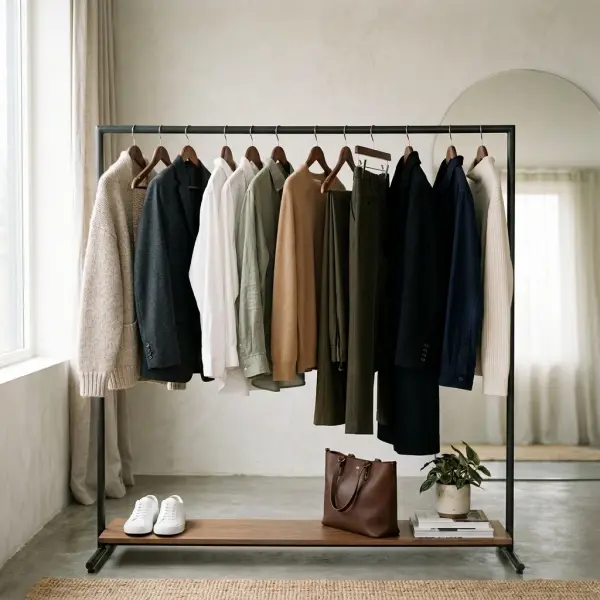
Styling turns products into an aesthetic language
A product does not have only one aesthetic identity.
A white shirt might be worn with tailored trousers and loafers, a pleated mini and ballet flats, technical trousers and trail shoes, or faded denim and western boots. The item stays substantially the same while the styling changes how it is read.
This creates an important opportunity for retailers. A product catalogue organized only by product category—shirts, trousers, skirts, jackets—describes what the merchandise is. Editorial styling can additionally communicate how the merchandise can belong in a customer's life.
That second layer is where aesthetics become commercially useful.
Personal Style Is Usually a Mix, Not a Single Aesthetic
Social media can make personal style look more categorical than it really is.
A person may be described as minimalist, preppy, romantic, sporty, gorpcore, vintage-inspired, or something else entirely. Real wardrobes are frequently less tidy. A customer can prefer minimal tailoring during the week, technical outerwear when travelling, sneakers on most days, and romantic dresses for social occasions.
These choices are not necessarily inconsistent. Personal style can contain several visual influences while maintaining recognizable preferences in fit, color, comfort, material, or proportion.
A useful way to think about this is to separate three layers:
- Anchor preferences: relatively stable choices such as favored silhouettes, comfort requirements, color families, or preferred levels of formality.
- Aesthetic influences: visual ideas that add variety, such as romantic, utilitarian, athletic, heritage, minimalist, or vintage references.
- Temporary experiments: seasonal or trend-led details that the wearer may enjoy without rebuilding the wardrobe around them.
This is not a scientific formula for measuring style. It is a practical framework for understanding why someone can participate in a trend without abandoning an established identity.
For example, a customer whose wardrobe is mainly relaxed minimal separates might adopt ballet flats because the proportions work with her trousers. She does not need to add bows, wrap cardigans, leg warmers, and other ballet-associated elements. The trend has been filtered through her personal style rather than replacing it.
That process—selection rather than total adoption—is one of the most important distinctions for fashion brands to understand.
Aesthetics Can Make Style Experimentation Easier
A named aesthetic can function as a temporary creative brief.
Instead of inventing an unfamiliar look from scratch, a consumer receives a set of references: garment shapes, styling ideas, colors, footwear, accessories, images, personalities, films, subcultures, historical periods, or activities. She can then decide which parts feel useful.
This lowers the cognitive effort required to experiment.
The mechanism is especially visible online because aesthetic labels help group visually related content. British Vogue has noted that these names often describe a cohesive visual world extending beyond one fashionable item, even when the underlying look repackages older fashion ideas. British Vogue overview of internet fashion aesthetics
There is nothing inherently negative about this form of experimentation. Trying unfamiliar silhouettes or styling combinations can help consumers discover preferences they later retain.
The problem begins when participation is interpreted primarily as purchasing a checklist of new products.
An aesthetic can be explored using garments someone already owns, second-hand pieces, styling changes, altered proportions, or one carefully selected addition. Retail marketing that implies an entirely new wardrobe is required may create short-term demand, but it can also reduce the distinction between personal style development and rapid trend consumption.
Why Social Platforms Amplify Aesthetic Thinking
Social platforms did not invent fashion subcultures, visual tribes, trend naming, or style imitation. Fashion has long moved through communities, magazines, music, film, street culture, designers, retail, celebrities, and peer groups.
What digital platforms change is the efficiency with which visual references can be grouped, circulated, searched, copied, modified, and renamed.
An aesthetic label works particularly well in that environment because it compresses many visual cues into a short searchable phrase. A user who recognizes a label can quickly find outfits, product recommendations, moodboards, shopping content, styling demonstrations, and creators using related references.
Digital discovery now matters substantially to fashion retail. McKinsey's discussion of the fashion market has described a large share of fashion purchases as digitally influenced, while also emphasizing increasingly personalized discovery and recommendation environments. McKinsey discussion of digitally influenced fashion discovery
That does not mean social media determines everyone's personal style. Offline environments, friends, family, stores, work, climate, local culture, price, product availability, and practical requirements continue to matter.
It does mean that aesthetics provide particularly efficient vocabulary for digital fashion discovery.
The mechanisms through which platforms encourage fashion trends to acquire names, communities, and accelerated adoption deserve separate treatment; see why social media changes how fashion trends are named and adopted.

What Fashion Aesthetics Mean for Brands and Retailers
For businesses, the most useful role of an aesthetic is not predicting the next viral word. It is helping translate customer taste into recognizable product and merchandising patterns.
A fashion brand might discover that customers consistently respond to relaxed tailoring, washed natural surfaces, muted colors, low-profile footwear, and understated accessories. Whether social media gives that combination a new name next month is less important than recognizing that these underlying attributes appear to matter to the audience.
This distinction separates aesthetic intelligence from trend chasing.
Product development: translate the mood into attributes
Product teams cannot manufacture an adjective.
A brief such as “romantic,” “outdoor-inspired,” or “minimal” is useful early in creative development, but suppliers eventually need objective decisions.
For example:
Aesthetic direction: soft romantic dressing
Product translation: lighter drape, shaped waist, controlled gathers, delicate-scale prints, covered buttons, fine-gauge knit layering, softer color relationships.
Or:
Aesthetic direction: urban utility
Product translation: straighter or relaxed proportions, functional pocket placement, heavier woven fabrics, restrained hardware, modular layering, weather-compatible outerwear.
Once translated this way, sourcing, costing, pattern development, sampling, and quality control become manageable.
Merchandising: sell combinations, not just categories
Aesthetic understanding can make merchandising more intuitive.
A retailer could still retain traditional category navigation while creating editorial collections around identifiable looks. One blazer might simultaneously appear in “Tailoring,” “Workwear,” and a visual story built around relaxed office dressing.
This approach is generally safer than permanently assigning every SKU to a single aesthetic. Fashion products are often stylistically flexible, and aesthetic terminology can change faster than inventory.
Content marketing: show interpretation instead of declaring identity
Content usually works better when it demonstrates how a product can participate in an aesthetic instead of telling customers what kind of person they must be.
Compare:
“Everything you need to become a balletcore girl.”
with:
“Three ways to style ballet flats with pieces already in your wardrobe.”
The second approach leaves more room for individual identity and gives the product a longer editorial life if the trend label fades.
Buying and inventory: distinguish durable codes from temporary signals
A fashion buyer should be careful about converting online visibility directly into inventory depth.
A viral aesthetic may contain several kinds of demand:
- products customers already wanted before the label appeared;
- classic products receiving renewed attention;
- distinctive trend-signalling pieces;
- styling behaviors that do not require new purchases;
- online conversation that generates engagement without equivalent purchasing intent.
Those categories have very different commercial implications.
This is why the rapid spread of specific aesthetics such as cottagecore, gorpcore, and balletcore should be examined separately from the broader role of aesthetics in personal style. Their diffusion patterns are explored in Cottagecore, Gorpcore, and Balletcore: why micro-aesthetics spread fast.
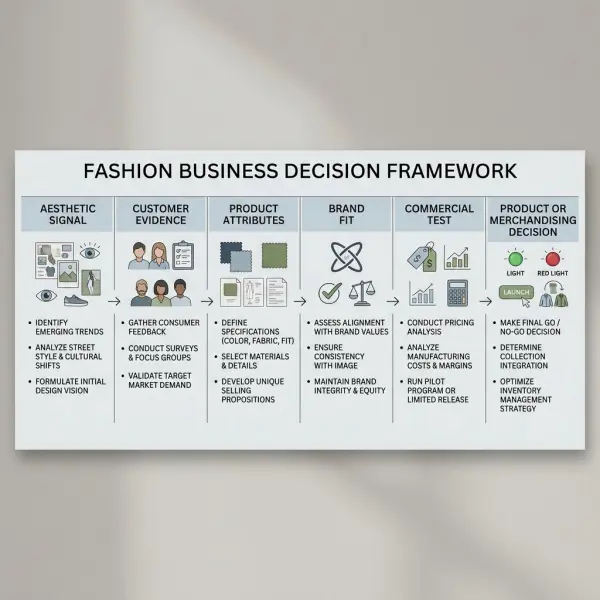
How Can Fashion Businesses Apply Aesthetic Insights Strategically?
The strongest approach begins with customer evidence and moves backward into visual interpretation—not the other way around.
1. Identify recurring customer preferences
Start with signals the business already has:
- frequently purchased silhouettes;
- colors with consistent sell-through;
- product combinations appearing in the same orders;
- customer search terms;
- saved or shared social content;
- repeat-purchase patterns;
- user-generated styling;
- product reviews discussing fit, appearance, or styling;
- store associate observations;
- products commonly returned because appearance differs from expectation.
No single metric proves an aesthetic preference. Together, however, these signals can reveal patterns worth investigating.
2. Separate the label from the product attributes
Suppose a trend team identifies growing interest in an outdoor aesthetic.
The next question should not immediately be, “How many gorpcore products should we make?”
Ask instead:
What exactly appears to be attracting our audience?
It could be technical-looking outerwear, functional pockets, lightweight layering, earthy colors, trail footwear, adjustable details, or merely the styling contrast between outdoor garments and urban clothing.
Those require different product responses.

3. Distinguish stable style codes from high-volatility details
A broad preference for relaxed silhouettes may continue after a particular aesthetic label disappears.
The same may not be true for an unusually distinctive accessory that became a temporary visual signifier of that aesthetic.
For assortment planning, this difference matters.
Stable elements may justify deeper integration into core collections. High-volatility signals are better suited to cautious buys, styling, accessories, limited capsules, or marketing tests—especially when production lead times are longer than the likely cultural moment.
4. Test aesthetic stories without rebuilding the collection
Many brands can test an aesthetic through merchandising before making major product commitments.
Existing products can be regrouped into a landing page, styled differently, paired with new imagery, placed in a capsule edit, or promoted through creators whose audiences already engage with the visual direction.
If the response is weak, the business has learned something without committing an entire season to the idea.
5. Connect creative metrics with commercial metrics
Views are useful for understanding attention. They do not automatically demonstrate purchase demand.
A more robust evaluation can combine:
- content engagement;
- product-page visits;
- add-to-cart behavior;
- conversion;
- average order value;
- sell-through;
- returns;
- repeat purchases;
- full-price versus discounted sales.
This helps distinguish an aesthetic that is interesting to watch from one that actually changes product demand.
A Practical Aesthetic Decision Framework
Before committing meaningful product, inventory, or campaign resources to an aesthetic, brands can evaluate five questions.
|
Question |
What the business should determine |
|
Does it fit our existing customer? |
Whether similar products, silhouettes, or styling already perform |
|
Is demand attached to the aesthetic or to specific products? |
Which attributes actually generate interest |
|
How dependent is it on a temporary label? |
Whether the underlying visual codes can survive the name |
|
Can our lead time match the opportunity? |
Whether development and production will arrive before interest changes |
|
Can we interpret it in our own brand language? |
Whether participation strengthens rather than dilutes brand identity |
A high score on social visibility cannot compensate for poor brand fit, long lead times, or weak product economics.
This is especially relevant to smaller apparel brands. Their advantage can be speed and proximity to community, but they typically have less inventory capacity to absorb a badly timed trend bet.
Common Mistakes Brands Make With Fashion Aesthetics
Treating an aesthetic as a customer segment
Someone searching for “balletcore outfit” is not necessarily a permanent balletcore consumer.
The search may reflect curiosity, an event, one purchase, or temporary experimentation. Building a customer persona entirely around a trend label can therefore produce overly narrow assumptions about what that consumer will buy next.
Better approach: combine aesthetic behavior with actual purchase history, price sensitivity, fit preference, location, product category, and repeat behavior.
Copying every visible aesthetic cue
When brands try to signal participation too aggressively, collections can begin to resemble costumes or moodboards translated literally into merchandise.
The result is often less versatile product and a shorter commercial life.
Better approach: identify one or two elements compatible with the brand's existing design language rather than reproducing every recognizable cue.
Confusing online attention with inventory demand
A fashion idea can be highly shareable because it is visually interesting, humorous, aspirational, nostalgic, or unusual.
None of those conditions guarantees customers want to own the associated products.
Better approach: verify attention with product-level behavior before increasing buys.
Responding too slowly to a fast label
Traditional apparel calendars can create a structural mismatch with internet aesthetics.
If identifying the trend, briefing design, sourcing fabric, sampling, approving, manufacturing, shipping, and launching takes several months, the terminology surrounding the aesthetic may have shifted by the time stock arrives.
Vogue Business has highlighted this timing problem, noting that conventional brand approval processes can make participation difficult when internet trends move quickly.
Better approach: use fast-moving aesthetics first in styling, content, merchandising, accessories, or products already compatible with the look.
Allowing trend language to replace brand identity
An established fashion brand should not need a different personality every time a new aesthetic becomes visible.
A brand with strong design codes can engage selectively, filtering relevant ideas through its own silhouette, materials, color, styling, and customer expectations.
That usually produces a more credible result than simply attaching a fashionable label to an unrelated collection.
What Brands Should Verify Before Acting
Aesthetic intelligence is useful only when it is connected to evidence.
Before making a substantial decision, verify:
Customer relevance. Is the aesthetic appearing among your customers, or only among audiences outside your realistic market?
Product relevance. Which specific silhouettes, materials, colors, accessories, or styling behaviors are driving interest?
Commercial evidence. Are customers purchasing, saving, searching, or merely viewing?
Timing. Can product development, buying, and distribution respond within a commercially useful window?
Brand compatibility. Can the visual direction be interpreted without undermining established brand codes?
Context. Does the aesthetic borrow from a culture, profession, community, historical reference, or protected media property that requires greater care in communication or commercialization?
The last point deserves attention. Visual inspiration is normal in fashion, but an internet label does not give a brand unrestricted rights to copyrighted artwork, protected characters, trademarks, or another company's distinctive brand assets. Legal review may be appropriate when a campaign moves beyond generic styling references into protected intellectual property.
What Fashion Aesthetics Do Not Tell Us
An aesthetic cannot reliably tell a business everything about the person wearing it.
It does not automatically establish income, personality, values, politics, profession, lifestyle, or purchasing power. Nor does wearing one associated item prove membership in a community.
Research on dress and identity supports the idea that clothing can contribute to self-expression and social communication, but the relationship is contextual rather than mechanically deterministic. Clothing selected deliberately can communicate social information, yet interpretation still depends on both wearer and observer. research on clothing and social identity
For businesses, this means aesthetics are strongest as behavioral and visual clues, not psychological diagnoses.
That limitation actually makes aesthetic analysis more useful. Instead of pretending a trend label explains the customer, teams can focus on questions they can answer: what people wear, what they combine, what they search for, what they buy, and which visual preferences persist.
Frequently Asked Questions
What is the simplest definition of a fashion aesthetic?
A fashion aesthetic is a recognizable visual language built from recurring elements such as silhouette, color, fabric, styling, accessories, and cultural references. It helps people describe why a group of outfits feels visually related. An aesthetic is broader than one garment and should not be confused with personal style. Personal style emerges when an individual chooses which aesthetic influences to adopt, combine, repeat, or ignore according to personal needs and preferences.
Is personal style the same as having an aesthetic?
No. An aesthetic is a shared visual framework, while personal style is individual.
Someone can draw from several aesthetics while maintaining a consistent personal style through recurring preferences in fit, proportion, color, footwear, comfort, or accessories. In practice, this mixed approach is often more useful than trying to dress according to a single aesthetic from head to toe.
Can someone follow several fashion aesthetics at once?
Yes. Fashion aesthetics are not exclusive memberships.
A wardrobe might combine minimalist tailoring, athletic footwear, vintage accessories, and outdoor outerwear while still feeling coherent. Compatibility usually comes from repeated personal preferences rather than strict adherence to a label. Lifestyle also matters: what someone wears at work may naturally differ from travel, weekends, or formal occasions.
Are micro-aesthetics the same as fashion trends?
Not exactly.
A micro-aesthetic describes a relatively narrow visual world, often associated with a recognizable name and bundle of references. A fashion trend can instead involve a single silhouette, item, color, material, styling behavior, or broader movement.
The two can overlap. A particular shoe may become popular partly because an aesthetic gives it renewed cultural relevance, but the product trend may eventually outlast the aesthetic label.
Should fashion brands create products for every popular aesthetic?
Usually not.
A brand should first determine whether the aesthetic overlaps with its existing customer, product capabilities, brand identity, price architecture, and production timeline. When relevance is uncertain, styling existing products or testing a small merchandising story is generally less risky than developing an entire collection around a short-lived label.
Can aesthetics improve fashion e-commerce merchandising?
Yes, when used as an additional discovery layer rather than a rigid product classification system.
Traditional categories tell shoppers what an item is. Aesthetic edits can show how several categories work together visually. A retailer might therefore keep navigation such as dresses, knitwear, footwear, and jackets while also creating editorial pages around recognizable looks. Products should usually remain capable of appearing in several relevant contexts because their styling potential is rarely limited to one aesthetic.
How can brands tell whether an aesthetic has real commercial potential?
Look beyond reach.
Useful evidence includes search activity, customer saves, product-page traffic, conversion, repeat purchases, full-price sell-through, user-generated styling, store feedback, and whether multiple products connected to the same visual direction perform consistently.
Even then, businesses should distinguish demand for durable product attributes from demand for temporary trend-signalling details. That distinction affects how deeply the aesthetic should influence future assortment planning.
Conclusion
Fashion aesthetics matter because they give people a language for recognizing and experimenting with visual style. They help connect individual garments into larger ideas about proportion, color, material, mood, and styling.
But the aesthetic is only the starting point.
Personal style develops through selection. People keep some influences, combine others, change them for different situations, and ignore the parts that do not fit their bodies, lifestyles, budgets, climates, or preferences. A wardrobe that looks distinctive often owes more to this repetition and editing than to perfect loyalty to one aesthetic label.
For fashion businesses, the same principle applies. Aesthetics can be valuable signals for merchandising, content creation, product development, customer research, and trend interpretation. Their commercial value increases when teams translate visual language into specific product attributes and test those attributes against actual customer behavior.
The least durable strategy is chasing every new name.
A stronger approach is to understand what sits underneath the name: the silhouettes people keep choosing, the textures they respond to, the combinations they repeat, the products they actually buy, and the parts of a visual idea that still make sense after the internet has moved on.




Comments 0
Leave a CommentSend Comment
Anda harus Login terlebih dahulu untuk dapat memberikan komentar.