
Pattern Making Explained for Fashion and Garment Production
Quick Answer
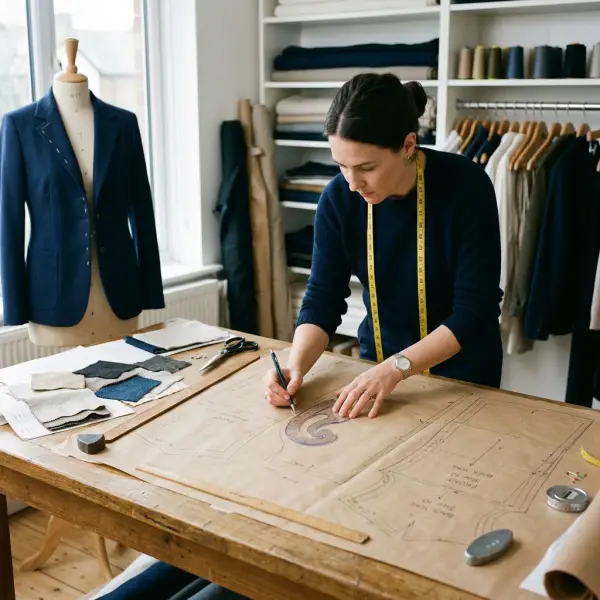
Pattern making is the technical process of creating flat garment pattern pieces that guide how fabric is cut, shaped, and sewn into clothing. In fashion and garment production, it connects the designer’s idea with real-world construction, fit, sizing, fabric behavior, and manufacturing consistency.
A pattern is not simply a drawing. It contains production information such as pattern piece names, grainlines, notches, seam allowances, darts, balance points, fold lines, and cutting instructions. These details help sample makers, cutters, sewing operators, and quality teams produce garments more accurately.
For a fashion brand, good pattern making can reduce sampling errors, improve fit consistency, support clearer supplier communication, and make production easier to repeat. For a garment factory, it affects sewing efficiency, size control, fabric usage, and production quality.
The key point is simple: the sketch shows what the garment should look like, but the pattern determines whether it can be made well.
What Is Pattern Making in Fashion?
Pattern making is the process of converting a garment design into a set of flat templates that can be used to cut fabric and assemble a finished garment. These templates define the shape, proportion, construction lines, and technical details needed to produce clothing accurately.
In fashion, the pattern acts as the bridge between creative design and physical product. A designer may begin with a sketch, mood board, reference garment, digital concept, or buyer brief. The pattern maker then translates that idea into practical garment components: front bodice, back bodice, sleeve, collar, waistband, pocket, lining, facing, or other style-specific pieces.
This process is technically demanding because clothing is three-dimensional, while fabric is usually handled as a flat material before sewing. Pattern making helps solve that problem by controlling where fabric is shaped, where volume is removed or added, and how the garment sits on the body.
For beginners, the simplest way to understand pattern making is this: a garment pattern is the map that tells fabric how to become clothing.
Why Pattern Making Matters in Garment Production
Pattern making matters because it affects fit, construction, production speed, fabric consumption, and quality consistency. Even when fabric quality and sewing workmanship are good, a weak pattern can still create a garment that twists, pulls, gaps, or fails to match the approved sample.
In fashion businesses, pattern accuracy becomes especially important when a design moves beyond one sample. A one-off prototype can sometimes be adjusted by a skilled tailor during sewing. Bulk production cannot rely on improvisation. Once a style is approved, the pattern must give the production team a repeatable technical standard.
A small pattern error may look minor on paper, but it can become expensive in production. A sleeve cap that does not match the armhole may slow down sewing. A neckline without proper balance may gape. A waistband with unclear notches may create assembly errors. A side seam cut off grain may cause the garment to twist after washing or wearing.
For factories, pattern making is not only a design-development activity. It is part of production control.
Pattern Making as the Link Between Design and Manufacturing
Fashion design often begins with visual intent: silhouette, proportion, mood, fabric, and styling. Manufacturing requires something different: measurable instructions. Pattern making translates the visual language of design into technical language that production teams can follow.
This translation is where many product development problems begin. A designer may want a relaxed oversized shirt, but the pattern must define how much ease is added at the chest, shoulder, sleeve, and hem. A buyer may request a clean tailored trouser, but the pattern must control rise, crotch curve, waistband position, pocket placement, and leg balance. A brand may want “better fit,” but the pattern must identify which body area is actually causing the issue.
Pattern making helps clarify these decisions before production risk increases.
A strong pattern development process usually supports:
- clearer sampling communication,
- better fit review,
- more accurate costing,
- more efficient marker planning,
- easier size grading,
- fewer construction disputes,
- better consistency between sample and bulk production.
This is why pattern making should not be treated as a back-office technical task. In well-managed apparel businesses, it is part of product strategy.
The Basic Components of a Garment Pattern
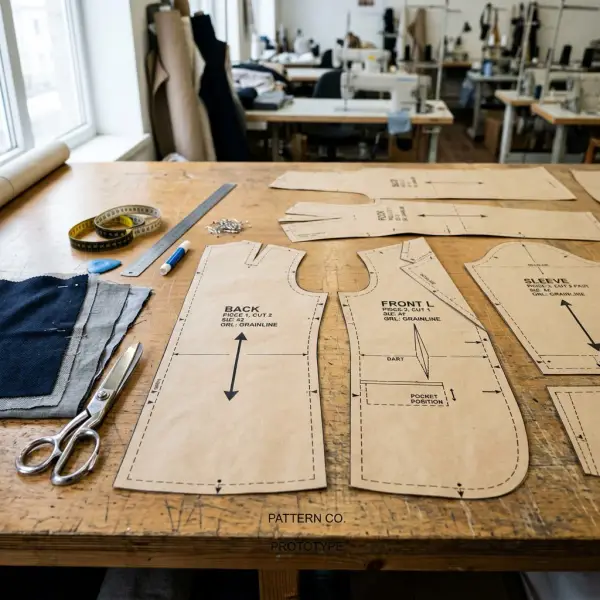
A garment pattern contains more than outlines. It includes technical markings that help different production roles understand how the garment should be cut and sewn. These markings reduce ambiguity, especially when production is handled by multiple people or external suppliers.
Pattern Pieces
Pattern pieces are the individual templates used to cut each part of the garment. A simple T-shirt may include front, back, sleeve, and neckband pieces. A structured jacket may include many more: front body, side panel, back, sleeve parts, collar, lapel, facing, lining, pocket pieces, interfacing pieces, and internal support components.
Each pattern piece should be clearly labeled. In production, a missing label can create unnecessary confusion, especially when left and right pieces look similar or when shell fabric, lining, and interfacing pieces are cut separately.
Grainline
The grainline indicates how a pattern piece should be placed on fabric. For woven fabrics, grain direction affects drape, stability, stretch behavior, and garment balance. Cutting a garment piece off grain can cause twisting, uneven hang, or distortion after wear.
Pattern grainline notation is a recognized technical marking in apparel pattern work, and it is especially important for pieces such as sleeves, trouser legs, front panels, collars, and bias-cut sections. Industry patternmaking discussions frequently emphasize that grainline placement is not decorative; it is part of how the garment behaves in use. pattern grainline notation

Seam Allowance
Seam allowance is the extra fabric added beyond the stitching line so pieces can be joined together. The width depends on fabric type, seam type, sewing operation, finishing method, and factory standard. A lightweight blouse, knit activewear top, denim jacket, and tailored coat may not use the same allowance logic.
In industrial production, seam allowance is not a casual preference. It affects sewing tolerance, trimming, pressing, seam strength, operator handling, and final measurement. Fashion-Incubator’s technical discussion on seam allowances notes that allowance width can depend on the seam type and machinery used, including overlock and safety-stitch operations. rules on seam allowances
Notches
Notches are small pattern marks used to match pieces during sewing. They help align seams, sleeves, collars, waistbands, panels, pleats, darts, and other construction details. In factory sewing, notches help operators join pieces correctly without repeatedly measuring each seam.
A useful notch gives the sewing team information at the right moment. Too few notches can create assembly confusion. Too many unnecessary notches can create clutter and even misinterpretation. Industrial patternmaking guidance often stresses that notch placement should be intentional and exact, especially in sleeves and armholes. industrial pattern notches
Darts, Pleats, Gathers, and Shaping Lines
Darts remove or control excess fabric so the garment can follow the body’s curves. Pleats and gathers add controlled volume. Panel seams and princess lines can shape the garment while also becoming part of the style design.
These details matter because the human body is not flat. A fitted bodice, curved skirt, tailored trouser, and structured blazer all need some method of shaping. Pattern making decides where that shaping happens and whether it supports both fit and design intent.
Balance Marks and Reference Lines
Balance refers to how the garment sits on the body. A balanced garment does not pull excessively forward, backward, upward, or sideways. Center front, center back, bust line, waistline, hipline, shoulder line, and knee line can all help the pattern maker check whether the garment is behaving correctly.
This is especially important for garments where posture and movement affect fit: jackets, trousers, dresses, uniforms, tailored shirts, and fitted workwear.
Common Pattern Making Methods
Pattern making can be done in several ways. The right method depends on the garment type, brand workflow, available tools, pattern maker skill, and production context.
Drafting From Measurements
Drafting uses body measurements, size specifications, formulas, and construction lines to create a pattern. This method is often used to develop basic blocks, custom garments, uniforms, and standard size patterns.
Drafting is useful because it builds the pattern from measurable information. However, measurement-based drafting still needs fitting and correction. Bodies vary in posture, proportion, shoulder slope, bust shape, hip position, and movement needs. A mathematically correct draft is not automatically a production-ready pattern.
Draping on a Dress Form
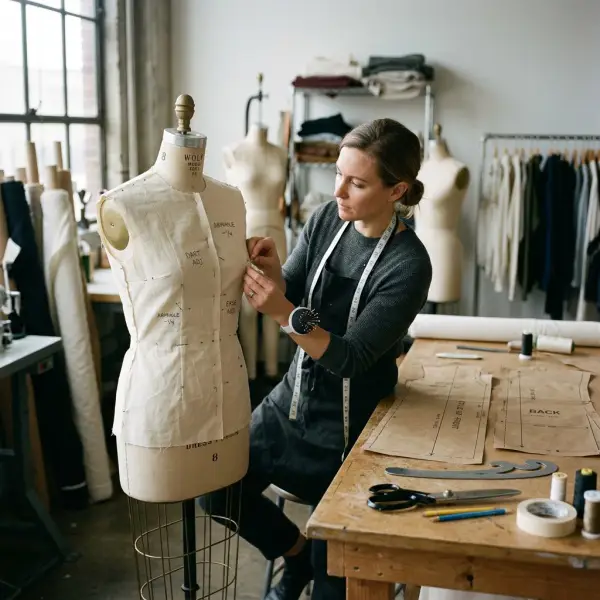
Draping creates a pattern by shaping fabric directly on a dress form or body. The fabric is pinned, marked, adjusted, and then transferred into a flat pattern.
This method is useful for garments with complex volume, asymmetry, soft folds, sculptural shapes, or couture-inspired construction. Draping can reveal how fabric behaves in gravity more immediately than flat drafting. It is often used for eveningwear, dresses, experimental silhouettes, and design details that are hard to calculate only on paper.
The limitation is that draping depends heavily on the accuracy of the dress form and the skill of the person draping. If the form does not represent the target customer or fit model, the resulting pattern may still need significant correction.
Flat Pattern Manipulation
Flat pattern manipulation starts from an existing block or approved pattern. The pattern maker changes the shape to create a new style: moving darts, changing necklines, adding panels, adjusting sleeve volume, adding flare, converting darts into seams, or changing garment length.
This is one of the most practical methods for commercial fashion brands because it allows faster style development. Once a brand has a reliable block, it can create multiple styles while maintaining a consistent fit language.
For example, a women’s woven top block may become a sleeveless blouse, peplum top, shirt dress, relaxed tunic, or panelled top. The design changes, but the fit foundation remains controlled. A deeper explanation of this foundation belongs in basic pattern blocks every beginner should understand.
Digital Pattern Making
Digital pattern making uses computer-aided design tools to draft, edit, store, grade, and prepare patterns for production. In professional workflows, digital tools can improve file management, revision tracking, supplier communication, and marker efficiency.
Digital tools are also becoming more connected with 3D garment simulation and virtual fitting workflows. Research on computational pattern making, for example, explores how 3D garment models can be translated into 2D sewing patterns while accounting for tailoring constraints such as seams, darts, grain alignment, and woven fabric behavior. computational pattern making from 3D garment models
Still, software does not replace pattern making knowledge. A digital pattern can be wrong as easily as a paper pattern if the maker does not understand fit, seam logic, grainline, ease, construction sequence, and factory handling.
Pattern Making vs Sewing: What Is the Difference?
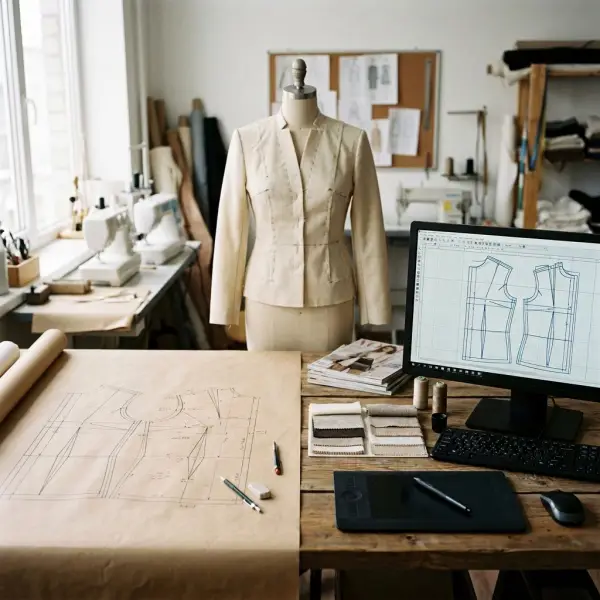
Pattern making creates the technical plan for a garment, while sewing assembles the cut fabric pieces into the finished product. The two skills are closely related, but they solve different problems.
Sewing focuses on stitch quality, seam construction, pressing, finishing, machine handling, and assembly sequence. Pattern making focuses on shape, proportion, fit, seam placement, fabric behavior, cutting accuracy, and production repeatability.
A skilled sewing operator can produce a clean seam, but that does not automatically fix a poorly balanced pattern. A skilled pattern maker can create a strong pattern, but poor sewing execution can still damage the final result. In garment production, both functions need to work together.
|
Area |
Pattern Making |
Sewing |
|
Main function |
Creates the garment template and technical shape |
Joins fabric pieces into the finished garment |
|
Core concern |
Fit, balance, proportion, cutting logic, construction lines |
Stitching, seam quality, assembly, pressing, finishing |
|
Main output |
Pattern pieces and technical markings |
Sewn sample or finished garment |
|
Common risk |
Poor fit, mismatched seams, unclear construction, inaccurate grading |
Uneven stitching, puckering, poor pressing, weak finishing |
|
Business impact |
Affects repeatability, sizing, fabric usage, and sample approval |
Affects workmanship, durability, and perceived product quality |
For fashion businesses, the practical lesson is that fit problems should not automatically be blamed on the sewing team. Some issues originate in the pattern, some in cutting, some in sewing, and some in fabric behavior. Good product development separates these causes before making corrections.
Pattern Making vs Grading: Why They Are Not the Same
Pattern making creates the original pattern for a garment style. Grading increases or decreases that pattern into multiple sizes while preserving the intended fit, proportion, and construction logic.
This distinction matters because a good sample size does not guarantee a good size range. A pattern may fit well in medium but become problematic in extra small or extra large if grading rules are not appropriate for the target body range.
For example, increasing a trouser pattern is not only about making every edge larger. Rise, crotch extension, waist shape, thigh width, knee placement, and leg balance must scale in a controlled way. The same applies to jackets, bras, uniforms, children’s wear, plus-size apparel, and fitted dresses.
Pattern making defines the style. Grading defines how that style travels across sizes.
This is one reason commercial brands should test more than one size when possible, especially for categories where fit drives customer satisfaction and return rates. A style that works only on the fit sample may not perform well in real retail conditions.
How Pattern Making Affects Garment Fit
Pattern making affects garment fit by controlling the relationship between body measurements, ease, garment shape, fabric behavior, and movement. Fit is not only about whether a garment can close around the body. It is about how the garment sits, moves, balances, and supports the design intention.
A fitted blouse needs controlled shaping around the bust, waist, shoulder, armhole, and neckline. A relaxed shirt needs enough ease without looking accidentally oversized. A tailored trouser needs balance through the waist, hip, crotch, thigh, knee, and hem. A stretch garment needs negative or reduced ease depending on fabric stretch and recovery.
Fit problems often show up as visual symptoms:
- diagonal drag lines,
- twisting side seams,
- tight armholes,
- gaping necklines,
- uneven hems,
- poor sleeve mobility,
- excess fabric at the back waist,
- pulling across the hip or bust,
- crotch wrinkles in trousers.
These symptoms are useful because they point to pattern decisions. The solution may involve adjusting length, width, curve shape, dart intake, ease distribution, grain placement, or seam position. The deeper discussion of fit accuracy is better suited to how accurate patterns improve garment fit and production quality, but the foundation begins here: fit starts before sewing.
How Pattern Making Affects Production Quality
Production quality depends on repeatability. Pattern making supports repeatability by giving the factory clear, consistent, and measurable instructions.
When a pattern is properly prepared, cutting teams know how pieces should be placed. Sewing teams know where seams should match. Quality teams know what measurements and balance points should be checked. Merchandising and product development teams can compare the production sample against a defined standard instead of relying only on visual judgment.
In a factory setting, unclear pattern information can create several operational issues:
- operators interpret the same seam differently,
- left and right pieces become confused,
- matching points are missing,
- seam allowances vary between pieces,
- sleeve and armhole do not align smoothly,
- fabric consumption is higher than expected,
- sample approval takes too many rounds,
- bulk garments differ from the approved sample.
The business impact can be significant. Pattern problems may delay delivery, increase rework, waste fabric, reduce buyer confidence, or create customer complaints after launch.
A strong production pattern reduces unnecessary decision-making on the sewing floor. That does not mean it solves every issue, but it gives the production team a clearer technical foundation.
The Role of Pattern Making in Costing and Fabric Usage
Pattern making influences garment cost because it affects fabric consumption, construction complexity, sewing time, and sample development efficiency. A pattern with many panels, curved seams, bias-cut sections, large collars, multiple facings, or complex lining pieces may require more material and labor than a simpler style.
Fabric usage is especially important because fabric is often one of the largest cost components in apparel production. Pattern shape affects marker efficiency, which refers to how pattern pieces are arranged on fabric before cutting. Large irregular pieces, directional prints, nap fabrics, stripes, plaids, or one-way designs may reduce marker efficiency.
A design decision that looks small on a sketch can change cost in production. For example, adding a wide flounce to a dress may increase fabric consumption. Cutting a garment on the bias may improve drape but use more fabric and require more careful handling. Adding shaped panels may improve fit but add sewing operations.
Pattern making does not replace costing, but it gives costing teams more accurate technical information.
What Makes a Pattern Production-Ready?
A production-ready pattern is clear, accurate, tested, and complete enough for cutting and sewing teams to use without constant interpretation. It should reflect the approved sample and support the intended production method.
A production-ready pattern usually includes:
- all required pattern pieces,
- correct piece names,
- size information,
- grainline direction,
- cut quantity,
- seam allowance,
- notches and matching points,
- dart or pleat markings,
- fold lines where needed,
- drill holes where appropriate,
- center front and center back references,
- lining, facing, or interfacing notes where relevant,
- revision identification or version control.
The most important idea is not that every pattern must look complicated. A simple garment can have a simple pattern. The issue is whether the pattern gives enough accurate information for the production context.
A custom tailor working alone may not need the same level of pattern labeling as a factory producing thousands of garments across several sizes. But once a garment moves into team-based production, clarity becomes a quality-control requirement.
Practical Pattern Making Workflow for Fashion Businesses
A practical pattern making workflow should reduce uncertainty from design development to production. The goal is not to create paperwork for its own sake. The goal is to help the business make better product decisions earlier.
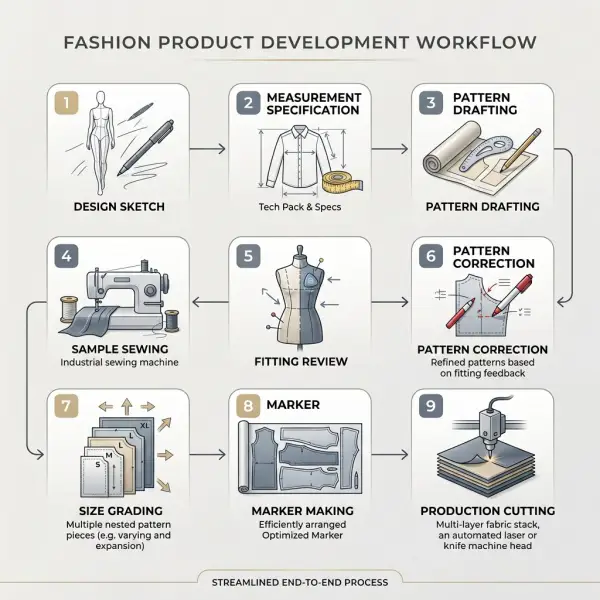
A typical workflow may begin with a design brief or technical sketch. The pattern maker then creates the first pattern using measurements, a block, draping, or digital tools. A sample is sewn, fitted, reviewed, and corrected. Once the sample is approved, the pattern is finalized, graded, and prepared for marker making and production cutting.
For a small brand, the workflow does not need to be overly complex. But it should be disciplined. Each correction should be recorded. Each sample should be compared against the previous version. Each pattern revision should be saved clearly.
A simple but effective workflow can look like this:
- Define the target customer and garment category.
- Confirm measurement standards or size specifications.
- Choose the appropriate block or draft method.
- Develop the first pattern.
- Sew a sample in suitable test fabric.
- Conduct fitting and technical review.
- Correct the pattern.
- Sew another sample if needed.
- Approve the final pattern.
- Grade, mark, and prepare for production.
This workflow helps prevent a common problem in fashion startups: approving a garment visually without confirming whether the pattern is stable enough for repeat production.
How Fashion Brands Can Apply Pattern Making Strategically
Pattern making becomes strategically useful when brands treat it as part of product development, not merely a technical service purchased at the last minute. For small and medium fashion businesses, the biggest value is consistency.
If a brand sells wardrobe basics, fit consistency can become a repeat-purchase advantage. If a customer likes how one shirt fits, they are more likely to trust the next style when the brand maintains a similar block logic. If a brand sells uniforms, consistency affects professional appearance and wearer comfort. If a brand sells fitted dresses, pattern accuracy can reduce alteration complaints and returns.
Brands can apply pattern making more strategically in several ways:
- Build reliable blocks for core product categories.
- Keep approved patterns organized by style, season, and version.
- Record fit comments and pattern corrections.
- Test samples in fabric close to the intended production material.
- Communicate seam allowance, notches, and construction details clearly to suppliers.
- Review graded sizes, not only the sample size.
- Protect approved patterns as business assets.
This last point is often overlooked. A brand’s best-fitting shirt block, trouser block, or dress block can become part of its product identity. Losing pattern files, changing suppliers without technical control, or failing to document revisions can weaken that identity over time.

Common Pattern Making Mistakes and Their Business Impact
Pattern making mistakes are not always dramatic. Many are small technical gaps that become visible only after sampling, fitting, washing, grading, or bulk production.
Treating the Pattern as Only a Shape
A beginner may think a pattern is correct if the outline looks similar to the design. In production, the outline is only part of the information. Grainline, seam allowance, balance, notches, and construction sequence matter just as much.
The consequence is usually confusion during cutting or sewing. A better approach is to treat the pattern as a technical document, not only a template.
Ignoring Fabric Behavior
The same pattern will not behave the same way in every fabric. A crisp cotton poplin, fluid rayon, stretch jersey, denim twill, wool suiting, and lightweight chiffon all respond differently to seam shape, ease, grain, drape, and pressing.
This is why sampling fabric matters. A pattern developed in stiff muslin may need adjustment when used in a soft, slippery, stretchy, or heavy production fabric.
Adding Ease Without a Clear Fit Intention
Ease is the extra space between the body and garment. It can support comfort, movement, silhouette, layering, or style. But adding ease randomly can create poor fit.
Too little ease can restrict movement. Too much ease in the wrong location can make the garment look unbalanced rather than intentionally relaxed. Ease must be distributed according to garment type, fabric, and customer expectation.
Forgetting to Walk the Pattern
Walking the pattern means checking whether related seamlines match before sewing. For example, side seams, shoulder seams, sleeve seams, collar edges, waistbands, and panel seams should be compared along the stitching line.
Skipping this step often creates sewing problems that could have been caught on the table. Pattern walking is especially useful before sending a pattern to sample sewing or external production.
Failing to Control Revisions
A pattern may go through several corrections before approval. If revisions are not labeled and documented, teams may accidentally cut from an outdated version.
This creates one of the most frustrating production problems: the team thinks it is producing the approved garment, but the wrong pattern version is being used. Version control is not glamorous, but it is essential.
Important Technical Caveats
Pattern making is powerful, but it is not a magic solution for every garment problem. Fit and production quality depend on the interaction between pattern, fabric, cutting, sewing, pressing, washing, finishing, size grading, and quality control.
A perfect paper pattern can still fail if the fabric shrinks more than expected. A good digital pattern can still produce poor garments if seam allowances are not suitable for the factory’s sewing method. A well-fitted sample can still create customer complaints if the size range does not reflect the target market.
Before treating a pattern as final, fashion businesses should verify several practical points:
- Has the sample been sewn in a fabric similar to production fabric?
- Has the garment been fitted on the correct body type or fit model?
- Have seamlines and notches been checked?
- Has shrinkage or fabric relaxation been considered?
- Has the pattern been tested after washing or finishing if relevant?
- Have graded sizes been reviewed?
- Are pattern files clearly named and version-controlled?
- Does the factory understand the construction method?
These checks are especially important for garments with stretch, lining, tailoring, pleating, bias cutting, print matching, wash processes, or body-sensitive fit categories such as trousers and fitted tops.
Manual and Digital Pattern Making: Which Should a Brand Use?
Manual pattern making is useful for learning fundamentals, developing hands-on technical understanding, and working flexibly in small studios. Digital pattern making is useful for speed, organization, grading, file sharing, revision control, and integration with modern production workflows.
One is not automatically better than the other. The better choice depends on the brand’s scale, budget, team skill, supplier workflow, and product complexity.
For a small fashion label, manual patterns may be enough at the beginning, especially if the brand works closely with one sample maker. As the business grows, digital files can make it easier to manage repeated styles, graded sizes, supplier communication, and long-term pattern libraries.
For factories and larger brands, digital pattern systems are often more efficient because they support standardized workflow. But the tool itself is not the strategy. A digital system only improves results when the underlying pattern knowledge and process discipline are strong.
What Beginners Should Learn First
Beginners should learn pattern making from the fundamentals: body measurements, basic blocks, pattern symbols, grainline, seam allowance, darts, ease, balance, and sample fitting. Advanced digital tools become more useful after these concepts are understood.
A practical beginner path is to start with simple garments. A basic skirt teaches waist, hip, dart, hem, and side seam logic. A simple bodice teaches bust, waist, shoulder, armhole, and neckline relationships. A basic sleeve teaches cap height, bicep width, grainline, and armhole matching.
The goal is not to memorize formulas. The goal is to understand cause and effect. When a line changes on the pattern, something changes on the garment.
A beginner who learns this relationship carefully will make stronger decisions later, whether working manually, digitally, independently, or inside a production team.
FAQ
What is the main purpose of pattern making?
The main purpose of pattern making is to turn a garment design into accurate templates that guide fabric cutting and sewing. In fashion production, the pattern helps control fit, shape, construction, size consistency, and repeatability. Without a clear pattern, production teams may interpret the same design differently, which can lead to fit problems, sewing confusion, wasted fabric, or inconsistent output.
Is pattern making only needed for mass production?
No. Pattern making is useful for custom clothing, small-batch fashion, sampling, uniforms, tailoring, and mass production. The level of detail may differ, but the purpose remains similar: to create a reliable guide for turning fabric into a garment. In mass production, pattern accuracy becomes more critical because one mistake can be repeated across many pieces.
What is the difference between a pattern and a block?
A pattern is a template for a specific garment style, while a block is a basic foundation used to develop multiple styles. A block usually has minimal design details and represents a controlled fit foundation. A pattern may include style-specific features such as collars, pockets, panels, pleats, sleeve variations, or special seam lines.
Can a good sewer make garments without pattern making skills?
A skilled sewer can assemble garments well, but pattern making knowledge helps solve fit and shape problems before sewing begins. Sewing skill controls construction quality, while pattern making controls the garment’s structure and fit logic. For simple garments, sewing experience may be enough, but for consistent product development, pattern knowledge becomes very valuable.
Why do patterns need notches?
Patterns need notches because notches help sewing teams match garment pieces correctly. They are especially useful for sleeves, collars, waistbands, panels, darts, pleats, and shaped seams. Good notch placement can reduce sewing mistakes and make production more efficient. However, notches should be used intentionally; too many unclear notches can create confusion.
Does digital pattern making guarantee better patterns?
No. Digital pattern making can improve speed, storage, grading, revision control, and communication, but it does not guarantee better fit or construction. The quality of a digital pattern still depends on the pattern maker’s understanding of body shape, fabric behavior, ease, seam logic, grainline, and production methods.
How does pattern making affect garment cost?
Pattern making affects cost through fabric consumption, seam complexity, cutting efficiency, sewing time, sampling rounds, and production error rates. A pattern with many irregular pieces, directional fabric requirements, or complex construction may increase cost. A well-developed pattern can help reduce avoidable sampling mistakes and make costing more predictable.
What should a fashion brand check before approving a pattern?
A fashion brand should check fit, balance, seam matching, notches, grainline, seam allowance, fabric behavior, measurement specifications, and construction clarity before approving a pattern. For production styles, the brand should also confirm that the pattern matches the approved sample and that any graded sizes have been reviewed.
Conclusion
Pattern making is one of the most important technical foundations in fashion and garment production. It turns a design idea into a practical production guide, but its value goes far beyond drawing garment shapes.
A strong pattern helps control fit, fabric behavior, sewing clarity, size consistency, costing, and production repeatability. For designers, it makes creative ideas more realistic. For manufacturers, it reduces ambiguity on the cutting table and sewing floor. For fashion brands, it supports product quality and customer trust.
Beginners often see pattern making as a difficult technical skill. It is technical, but the logic is clear: every line on a pattern affects the garment. Understanding that relationship is the first step toward better clothing development.
For any brand that wants to produce garments consistently, pattern making should be treated as a strategic product-development asset, not just a hidden step between sketch and sewing.




Comments 0
Leave a CommentSend Comment
Anda harus Login terlebih dahulu untuk dapat memberikan komentar.