

How Accurate Patterns Improve Garment Fit and Production Quality
Quick Answer
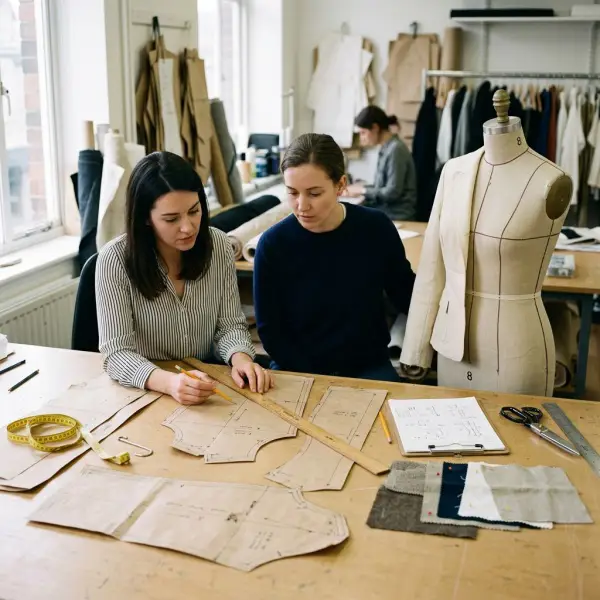
Accurate patterns improve garment fit and production quality by giving the entire product development and manufacturing team a reliable technical standard. A good pattern controls garment shape, balance, ease, seam placement, grain direction, and construction details, so the final garment can fit the intended body and be produced consistently.
Fit problems often begin before sewing. A sleeve that pulls, a trouser that wrinkles at the crotch, a neckline that gaps, or a hem that hangs unevenly may come from pattern issues such as poor balance, wrong ease distribution, inaccurate seam matching, or incorrect grainline placement.
In production, accurate patterns help reduce sampling rounds, sewing confusion, fabric waste, rework, measurement inconsistency, and bulk quality variation. They also make communication clearer between designers, pattern makers, sample makers, cutters, factories, and quality-control teams.
For fashion brands, pattern accuracy is not just a technical detail. It affects customer satisfaction, return risk, production efficiency, margin control, and long-term fit consistency.
Why Pattern Accuracy Matters More Than Many Brands Realize
Pattern accuracy matters because the pattern becomes the technical source of truth for the garment. Once a style moves from design into sampling and production, the pattern influences almost every downstream decision: cutting, sewing, fitting, grading, costing, quality control, and bulk approval.
A fashion sketch may communicate style direction, but the pattern defines how that style is built. If the sketch says “relaxed shirt,” the pattern must decide how much ease is added at the chest, shoulder, sleeve, back, and hem. If the sketch says “clean tailored trouser,” the pattern must solve rise, crotch curve, hip shaping, thigh width, knee placement, and leg balance.
This is where accuracy becomes commercial. A pattern error rarely stays isolated. It can create extra sample rounds, delay approval, increase fabric use, slow sewing operations, or produce fit complaints after launch.
For a small fashion brand, this can mean lost time and cash flow pressure. For a garment factory, it can mean rework, production inefficiency, and quality disputes. For a customer, it simply means the garment does not feel right.
What Does Pattern Accuracy Mean?
Pattern accuracy means that a garment pattern correctly reflects the approved design, intended fit, body measurements, fabric behavior, seam structure, construction method, and production requirements. It is not only about drawing clean lines.
An accurate pattern should work as a complete technical guide. It should include correct pattern shapes, grainlines, seam allowances, notches, balance points, dart or pleat markings, cut quantities, and clear piece identification. In production contexts, a pattern commonly includes seam allowance and technical information such as grainline, style name, size, and cutting details. pattern information in garment production
Accuracy also depends on context. A pattern can be technically neat but still unsuitable if it was developed for the wrong fabric, wrong target customer, wrong size standard, or wrong sewing method. A woven shirt pattern should not be judged the same way as a stretch knit top. A tailored jacket pattern needs different construction logic from a relaxed tunic.
In practical garment development, pattern accuracy means the pattern can be cut, sewn, fitted, graded, and repeated with minimal interpretation.
How Accurate Patterns Improve Garment Fit
Accurate patterns improve garment fit by controlling how fabric relates to the body. Fit is not only about size. It is about balance, movement, proportion, comfort, and whether the garment supports the intended silhouette.
A garment can match the body measurement chart and still fit poorly. This happens because fit depends on more than circumference. Shoulder slope, posture, bust position, back length, hip shape, crotch curve, arm movement, fabric stretch, and garment ease all affect the final result.
Accurate Patterns Control Garment Balance
Balance is one of the most important but often misunderstood aspects of fit. A balanced garment hangs correctly on the body without pulling forward, backward, upward, or sideways.
For example, a blouse with poor front-back balance may ride up at the front or collapse at the back neck. A skirt with poor side-seam balance may twist while walking. A trouser with an incorrect rise relationship may create drag lines even when the waist and hip measurements appear correct.
Pattern balance is especially important for garments such as dresses, jackets, trousers, uniforms, and fitted tops. These garments interact closely with posture and movement, so small pattern inaccuracies can become visible during wear.
Accurate Patterns Place Ease Where the Body Needs It
Ease is the extra space added beyond body measurements. It allows movement, comfort, layering, and design shape. But ease must be placed intentionally.
Too little ease can restrict the wearer. Too much ease in the wrong area can make the garment look sloppy or poorly fitted. A relaxed garment still needs controlled ease. Oversized does not mean unplanned.
For example, a casual shirt may need more ease across the back and chest, but the shoulder line, sleeve pitch, and armhole depth still need to feel intentional. A fitted dress may need less overall ease, but it must still allow breathing, sitting, and movement.
Accurate patterns distribute ease according to garment type, fabric behavior, and customer expectation.

Accurate Patterns Help Avoid Common Fit Symptoms
Many fit problems are visible as symptoms on the garment. The pattern maker’s job is to read those symptoms and understand their cause.
Common pattern-related fit symptoms include:
- diagonal drag lines across the bust, hip, sleeve, or crotch,
- gaping necklines,
- tight armholes,
- sleeves that restrict forward movement,
- uneven hems,
- twisting side seams,
- excess fabric at the back waist,
- pulling across the thigh or seat,
- shoulder seams falling too far forward or backward.
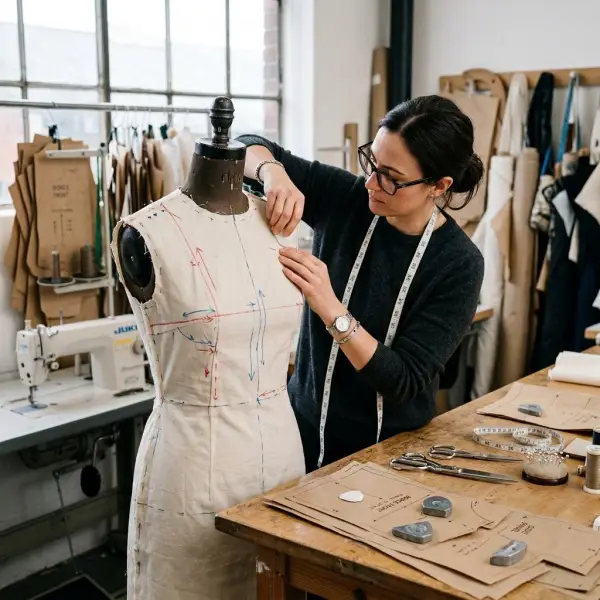
These symptoms should not be corrected randomly. A tight sleeve may need more bicep width, a different sleeve cap, a better armhole relationship, or a change in fabric choice. A gaping neckline may involve neckline shape, shoulder angle, bust shaping, or fabric stretch. Pattern correction requires diagnosis, not guesswork.
How Pattern Accuracy Supports Production Quality
Pattern accuracy supports production quality by reducing ambiguity. In garment manufacturing, every unclear technical detail creates room for interpretation. Different operators may sew the same garment differently if the pattern does not guide them clearly.
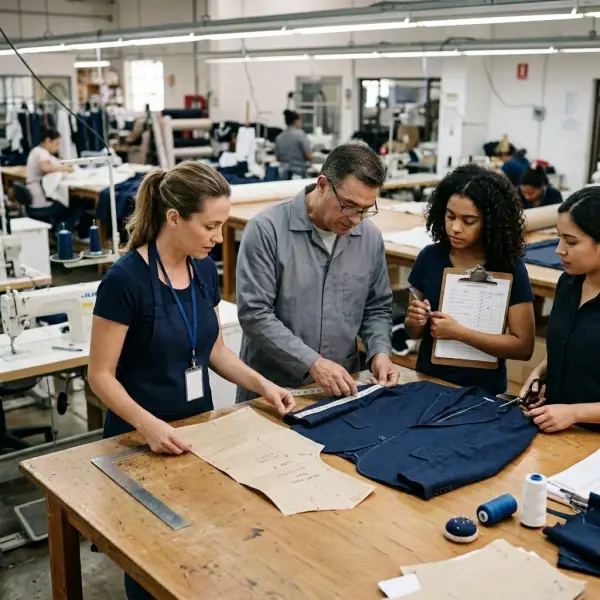
A production pattern should help cutters align pieces correctly, sewing operators match seams accurately, and quality-control teams compare finished garments against the approved standard. When the pattern is accurate, production teams spend less time correcting avoidable issues.
This is especially important when a garment is produced in volume. A tailor making one garment can adjust during sewing. A factory producing hundreds or thousands of pieces needs repeatable instructions.
Accurate Patterns Make Cutting More Reliable
Cutting quality begins with the pattern. If pattern pieces are inaccurate, fabric cutting will reproduce that inaccuracy across every garment.
Correct grainline placement is especially important. A grainline tells the cutter how a pattern piece should be positioned on fabric. Fashion-Incubator describes the grainline as a marking that indicates how the pattern piece should be laid on the goods, and notes that it is rarely optional. pattern grainline notation
Poor grainline control can cause twisting, uneven drape, or unstable garment behavior. This risk becomes higher with trousers, sleeves, bias sections, plaids, stripes, twills, and fabrics with directional nap or sheen.
Accurate Patterns Help Sewing Operators Work Faster and More Consistently
Sewing efficiency depends on clear matching points. Notches, seam lengths, drill marks, dart points, fold lines, and piece labels help operators understand how pieces should come together.
A pattern with missing or inaccurate notches can slow down production. Operators may need to stop, check, measure, or ask for clarification. In larger production runs, those small interruptions add up.
The same applies to seam allowances. Seam allowance must match the intended seam type, machinery, finishing method, and factory standard. Fashion-Incubator’s technical discussion on seam allowances notes that allowances are affected by seam type and machinery, including operations such as overlock and safety-stitch construction. rules on seam allowances
Accurate Patterns Reduce Quality Variation Between Pieces
Inconsistent quality often comes from small variations repeated across production. One garment may look fine, but the next may have a slightly different sleeve shape, waist measurement, hem balance, or seam alignment.
An accurate production pattern helps reduce this variation by creating a stable reference. It does not replace skilled cutting, sewing, pressing, and inspection, but it reduces the number of avoidable variables.
For factories, this can improve first-time-right production. For brands, it helps protect the approved fit and appearance from sample stage to bulk delivery.
Pattern Accuracy Across the Product Development Process
Pattern accuracy affects the entire product development process, from the first sample to final production. The earlier an error is found, the cheaper it usually is to correct.
In apparel development, the pattern often moves through several stages: initial pattern, prototype sample, fit sample, corrected sample, size-set sample, pre-production sample, and production pattern. The exact terminology may vary by brand or factory, but the logic is similar. Each stage should reduce uncertainty.
A practical pattern accuracy workflow may look like this:
- Confirm the design brief and target fit.
- Select the correct block or draft method.
- Develop the first pattern.
- Check seam matching, grainlines, balance, and markings.
- Sew the first sample.
- Fit the garment on the intended body or fit model.
- Record fit comments clearly.
- Correct the pattern.
- Test again if the correction is significant.
- Approve the pattern for grading and production.
The most important step is not merely sewing a sample. It is making sure sample feedback is translated into accurate pattern corrections. If the correction is made only during sewing, but not transferred back to the pattern, the same problem may return in production.
The Relationship Between Accurate Patterns, Blocks, and Grading
Accurate patterns depend heavily on reliable pattern blocks. A block is the foundation pattern used to develop multiple styles. If the block is inaccurate, every style developed from it may inherit the same fit issue.
For example, if a brand’s bodice block has poor shoulder balance, several blouse and dress styles may show similar shoulder problems. If a trouser block has an incorrect crotch curve, multiple pants styles may create discomfort or drag lines. This is why beginner and brand-level pattern work should not separate style development from block accuracy.
A deeper explanation of these foundations belongs in basic pattern blocks every beginner should understand, but the business implication is simple: a brand’s block library should be tested, documented, and updated over time.
Grading adds another layer. Pattern making creates the sample-size pattern. Grading expands or reduces it into other sizes. If the base pattern is weak, grading will multiply the problem. If the grading rules are unsuitable for the target customer, a good sample size may still fail in smaller or larger sizes.
Official body-measurement standards such as ASTM apparel sizing tables exist for different body categories, including adult male and children’s size ranges, but brands still need to decide how those standards relate to their own target customers and fit strategy. ASTM body measurement standards for apparel
How Accurate Patterns Affect Cost, Waste, and Delivery
Accurate patterns can improve cost control because they reduce avoidable rework, excess sampling, cutting errors, and fabric consumption surprises. They also make costing more realistic by clarifying construction complexity.
A poorly developed pattern may require several sample rounds before approval. Each sample round consumes fabric, trims, labor, courier time, fitting time, and management attention. If the same issue reaches production, the cost becomes much higher.
Pattern accuracy also affects fabric usage. Large irregular pieces, incorrect grainlines, poor marker efficiency, unnecessary seam complexity, or poorly planned style lines can increase fabric consumption. In categories where fabric is expensive, even a small increase per garment can affect margin.
The cost impact can appear in several areas:
- extra sampling rounds,
- additional fabric consumption,
- cutting-room mistakes,
- sewing rework,
- production delays,
- quality inspection failures,
- rejected bulk pieces,
- returns or alterations after selling.
Not every pattern correction saves money immediately. Some corrections add cost because they improve fit or quality. For example, adding a seam, shaping detail, lining, or internal support may increase labor. The commercial question is whether the improvement supports the product’s price, customer expectation, and brand positioning.
Pattern Accuracy and Customer Satisfaction
Customers rarely say, “This pattern has poor balance.” They say the sleeve feels tight, the trousers pull, the dress rides up, the shirt twists, or the size feels inconsistent.
Pattern accuracy affects customer satisfaction because it shapes the wearing experience. Fit influences comfort, confidence, movement, and whether the customer trusts the brand enough to buy again.
For online fashion brands, fit consistency is especially important. Customers cannot try the garment before purchase, so they rely on size charts, product photos, reviews, and previous brand experience. If one style fits well but the next style feels unexpectedly different, the customer may lose confidence.
Accurate patterns help brands build a more predictable fit language. This does not mean every garment should fit the same way. A relaxed shirt and fitted top will naturally differ. But the fit should feel intentional, clearly communicated, and consistent within the brand’s sizing logic.

Pattern Accuracy in Different Garment Categories
Pattern accuracy matters in every garment category, but the risk areas differ. A loose garment may tolerate more variation in some areas, while a fitted or structured garment requires tighter control.
Tops and Blouses
For tops and blouses, pattern accuracy often affects shoulder placement, bust shaping, neckline stability, armhole comfort, sleeve movement, and hem balance. A small neckline or shoulder issue can make the garment look less polished even when sewing quality is good.
For woven tops, ease and armhole depth are especially important. For knit tops, stretch and recovery must be considered before reducing ease.
Trousers and Pants
Trousers are one of the most fit-sensitive garment categories. Waist, hip, rise, crotch curve, thigh width, knee position, seat shape, and leg balance all interact.
A trouser can match waist and hip measurements but still feel uncomfortable when sitting. This usually means the pattern must be evaluated through movement, not only standing fit.
Dresses
Dresses combine upper-body and lower-body fit. Pattern accuracy affects bust placement, waist position, hip allowance, skirt balance, hemline, and overall proportion.
For fitted dresses, small errors can become very visible. For relaxed dresses, balance and fabric drape often matter more than body-hugging precision.
Jackets and Structured Garments
Jackets require careful control because they often include lining, interfacing, shoulder shaping, collar structure, sleeve pitch, lapels, and internal construction. A jacket pattern must consider both visible fit and hidden structure.
A jacket may look acceptable on a hanger but perform poorly on the body if the shoulder, sleeve, and front balance are not accurate.
Stretch and Activewear
Stretch garments require pattern accuracy based on fabric stretch, recovery, compression, and intended movement. Negative ease may be used in some stretch garments, but it must match the fabric’s performance.
A stretch pattern that works in one knit fabric may fail in another if stretch percentage, recovery, weight, or construction differs.
What Fashion Businesses Should Verify Before Approving a Pattern
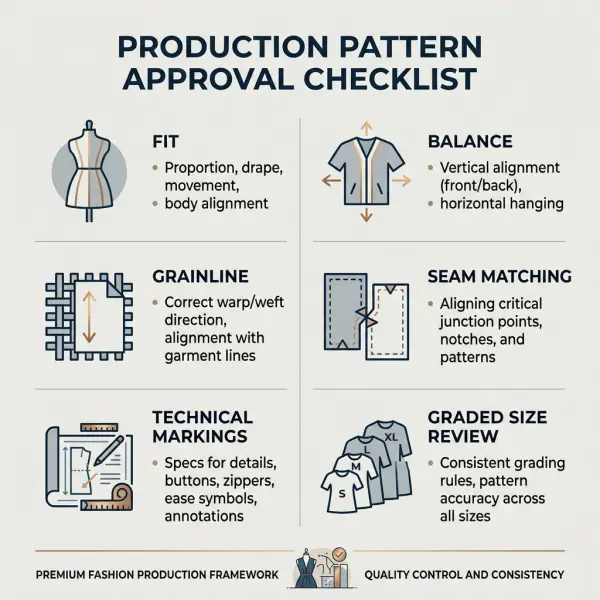
Before approving a production pattern, fashion businesses should verify fit, technical markings, fabric behavior, construction logic, and production readiness. Approval should not rely only on whether the sample looks good in one photo or one fitting session.
A useful approval review should include:
- Does the garment match the intended design and fit?
- Has it been fitted on the correct body or fit model?
- Does the pattern reflect all sample corrections?
- Are seamlines walked and checked?
- Are grainlines clear and appropriate?
- Are seam allowances suitable for the sewing method?
- Are notches accurate and useful?
- Are darts, pleats, folds, and drill marks clearly placed?
- Has fabric shrinkage or relaxation been considered?
- Has the garment been tested after washing or finishing if relevant?
- Are graded sizes reviewed, not only the sample size?
- Is the final pattern version clearly labeled?
These checks may feel detailed, but they prevent expensive ambiguity. The goal is not to slow development. The goal is to stop preventable problems before they enter production.
Common Mistakes That Reduce Pattern Accuracy
Pattern accuracy problems often come from rushed development, weak documentation, or unclear responsibility. The mistakes may look small, but their production impact can be significant.
Approving the Sample but Not Updating the Pattern
This is one of the most common operational mistakes. A sample may be adjusted during sewing or fitting, but the correction is not transferred back to the pattern.
The result is predictable: the production team cuts from the old pattern and the original problem returns. Every approved sample correction should be reflected in the final pattern before production.
Using the Wrong Fabric During Sampling
A pattern tested in a fabric that behaves differently from production fabric may give misleading fit results. A stiff sample fabric may hide drape problems. A stretchy sample fabric may hide tightness. A lightweight fabric may not reveal issues that appear in heavier cloth.
Sampling fabric does not always need to be the exact final material, especially early in development, but it should be close enough to test relevant behavior.
Ignoring Movement
A garment that looks good when standing still may fail when the wearer sits, reaches, walks, bends, or raises the arm. Movement testing is especially important for trousers, uniforms, jackets, fitted dresses, workwear, activewear, and children’s clothing.
Fit should be evaluated as a wearing experience, not only a static appearance.
Treating Grading as a Mechanical Enlargement
Grading is not simply making the pattern bigger or smaller in every direction. Size changes must reflect body proportion, garment category, fit intention, and target market.
A weak grading approach can make the base size look good while other sizes feel inconsistent. This becomes a serious issue for brands expanding into broader size ranges.
Losing Version Control
Pattern revisions must be named and stored clearly. If a factory, sample room, or brand team uses the wrong file, production may proceed from an outdated pattern.
Version control is not exciting, but it is one of the easiest ways to prevent avoidable production mistakes.
Digital Tools Can Help, But They Do Not Replace Pattern Judgment
Digital pattern tools can support accuracy through cleaner edits, file storage, grading, marker planning, and revision tracking. Some systems also connect with 3D garment visualization, virtual sampling, and fit simulation.
Research in computational pattern making continues to explore how 3D garment models can be converted into 2D sewing patterns while accounting for tailoring constraints such as seams, darts, grain alignment, and woven fabric behavior. computational pattern making from 3D garment models
This direction is useful, especially for digital product development and virtual prototyping. But it does not remove the need for garment knowledge. Digital tools still depend on accurate measurements, suitable blocks, realistic material data, correct construction logic, and human review.
For many brands, the first improvement is not advanced technology. It is building a disciplined pattern approval system: clear blocks, fit notes, version control, sample review, and supplier communication. Digital tools can strengthen that system when the foundation is already sound.
How Brands Can Build a Pattern Accuracy System
A pattern accuracy system does not need to be complicated. It needs to be consistent. The goal is to make sure every style moves through development with clear decisions, proper checks, and documented corrections.
For a small or growing fashion brand, the system can begin with a few practical habits.
Start by creating approved blocks for core categories. A brand that sells shirts, trousers, dresses, or uniforms repeatedly should not rebuild the fit from zero every season. A reliable block gives the team a better starting point and supports fit consistency.
Then, document every pattern correction. Fit comments should be specific, not vague. “Sleeve uncomfortable” is less useful than “increase bicep width, check sleeve cap height, and improve forward arm movement.” The clearer the comment, the easier it is to correct the pattern.
A practical pattern accuracy system may include:
- approved block library,
- measurement specification sheets,
- fit model or target body reference,
- sample review notes,
- pattern correction records,
- pattern version naming,
- graded-size review,
- supplier technical handover,
- pre-production sample approval,
- quality-control measurement points.
This system helps pattern making become repeatable. It also protects the brand from depending too heavily on memory, individual improvisation, or undocumented supplier decisions.
FAQ
How do accurate patterns improve garment fit?
Accurate patterns improve garment fit by controlling shape, balance, ease, grainline, seam placement, and body relationship before the garment is sewn. A good pattern helps fabric sit correctly on the body and allows the garment to support the intended silhouette. Fit still depends on fabric, cutting, sewing, pressing, and finishing, but the pattern is the technical foundation that guides those steps.
Can sewing quality fix a bad pattern?
Sewing quality can improve workmanship, but it cannot fully fix a bad pattern. A skilled sewer may adjust one garment during construction, but that does not solve the pattern problem for repeated production. If the armhole is wrong, the trouser rise is unbalanced, or the neckline shape causes gaping, the pattern usually needs correction. Good sewing and good pattern making must work together.
What pattern mistakes cause poor garment fit?
Common pattern mistakes include incorrect ease, poor front-back balance, wrong grainline, mismatched seam lengths, inaccurate dart placement, unsuitable armhole shape, poor crotch curve, unclear notches, and failure to consider fabric behavior. The visible result may appear as drag lines, twisting seams, tight sleeves, gaping necklines, uneven hems, or uncomfortable movement.
Why does grainline matter in pattern accuracy?
Grainline matters because it controls how a pattern piece is positioned on fabric. If a piece is cut off grain, the garment may twist, hang unevenly, stretch unpredictably, or lose its intended shape. Grainline is especially important for trousers, sleeves, collars, bias sections, striped fabrics, plaid fabrics, twills, and fabrics with directional surface effects.
How does pattern accuracy affect garment production quality?
Pattern accuracy affects production quality by making cutting, sewing, assembly, and inspection more consistent. Accurate patterns include correct shapes, seam allowances, notches, markings, and size information. This reduces operator confusion, seam mismatching, rework, measurement variation, and differences between approved samples and bulk production.
Should brands check every size after grading?
Brands should check more than the sample size whenever fit risk is high. This is especially important for fitted garments, trousers, jackets, stretchwear, uniforms, plus-size ranges, and products with strict measurement expectations. Checking every size may not always be practical for small brands, but reviewing key sizes can reveal grading issues before bulk production.
Do digital pattern tools make patterns more accurate?
Digital pattern tools can improve accuracy when used by skilled pattern makers. They help with editing, storing, grading, measuring, and sharing patterns, but they do not automatically guarantee good fit. The pattern still depends on correct body data, fabric understanding, construction logic, and fitting review. Software improves the workflow; it does not replace technical judgment.
What should a brand do before approving a production pattern?
Before approving a production pattern, a brand should confirm fit, balance, seam matching, grainline, seam allowance, notches, cut quantity, fabric behavior, shrinkage risk, construction method, and graded-size accuracy. The final pattern should match the approved sample and be clearly version-controlled before it is sent for cutting or bulk production.
Conclusion
Accurate patterns are one of the strongest foundations for better garment fit and production quality. They connect design intent with technical execution, helping fabric become a garment that can be fitted, sewn, graded, and produced consistently.
For fashion brands, pattern accuracy affects much more than the sample room. It influences customer satisfaction, return risk, production efficiency, cost control, supplier communication, and long-term fit identity. For manufacturers, it reduces ambiguity and supports repeatable quality on the cutting table and sewing floor.
A strong pattern will not solve every production challenge. Fabric behavior, cutting accuracy, sewing skill, pressing, finishing, and quality control all still matter. But without an accurate pattern, the rest of the process starts from a weaker foundation.
The most practical strategy is to treat pattern accuracy as a system: reliable blocks, careful fitting, clear corrections, disciplined version control, proper grading review, and production-ready technical markings. That system is what turns a good design into a garment that can be made well again and again.





Comments 0
Leave a CommentSend Comment
Anda harus Login terlebih dahulu untuk dapat memberikan komentar.