

Full Lining vs Partial Lining: How Designers Choose the Right Construction
Two jackets can look almost identical from the outside yet offer noticeably different wearing experiences. One may have a fully lined interior, with smooth fabric covering the back, front, and sleeves. The other may leave much of the back exposed, retaining lining only where it provides a specific functional benefit.
Neither construction is automatically superior. The difference lies in how the designer balances interior finishing, comfort, movement, fabric performance, and manufacturing requirements.
Full lining has traditionally been associated with tailored suits, coats, and garments requiring extensive interior coverage. Partial lining offers another approach, allowing designers to retain selected lining functions while reducing coverage, weight, or unnecessary layering.
For fashion brands and apparel manufacturers, choosing between these constructions is not simply a question of premium versus economical production. A fully lined jacket can be appropriate for formal tailoring, while a carefully finished partially lined blazer may provide a more comfortable solution for warmer conditions.
The most effective decision begins with the garment itself: its fabric, intended environment, silhouette, customer expectations, and production capabilities.
Quick Answer: What Is the Difference Between Full Lining and Partial Lining?
Full lining covers most or all of a garment's interior with a separate fabric layer, while partial lining covers only selected areas where additional comfort, concealment, or finishing is required. The main differences involve fabric coverage, interior construction, weight, ventilation potential, and manufacturing requirements.
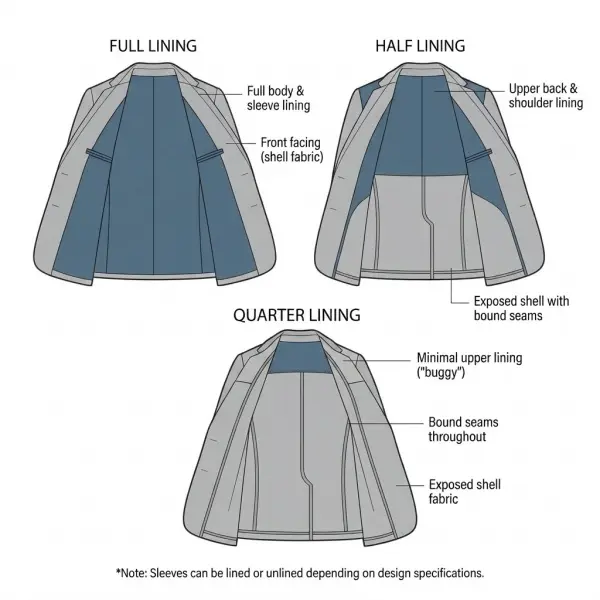
In a fully lined tailored jacket, lining typically covers the front, back, and sleeves, creating a relatively continuous finished interior. A partially lined jacket may retain lining around the shoulders, upper back, front panels, or sleeves while leaving other sections of the outer shell exposed.
Full lining can provide smoother layering and more extensive concealment of internal construction. Partial lining can reduce material coverage and allow more direct airflow through suitable outer fabrics, although actual thermal comfort depends on the complete garment design.
For designers, the choice should reflect the garment's intended function rather than an assumption that more lining always means better quality. A partially lined garment still requires carefully engineered patterns, secure attachment points, and appropriate finishing for exposed seams.
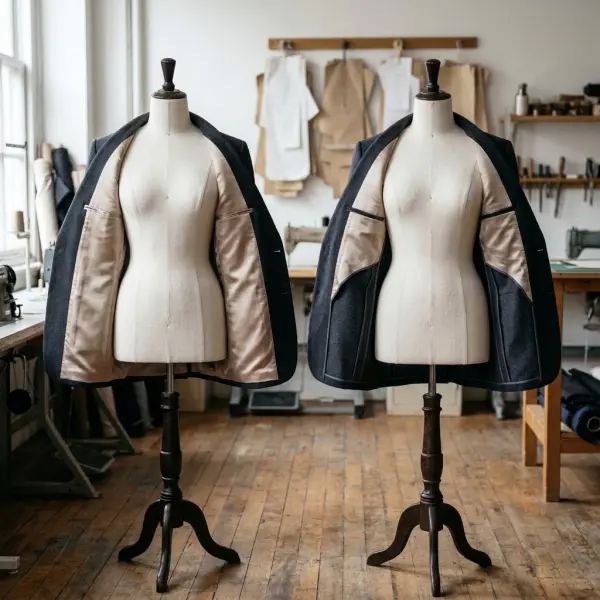
Understanding Full Lining and Partial Lining Construction
The terms full lining and partial lining describe how much of a garment's interior is covered by lining fabric. They do not directly indicate the quality of the outer material, the amount of structural reinforcement, or the sophistication of the tailoring.
This distinction matters because designers often make lining decisions alongside choices involving interfacing, canvas, shoulder construction, and seam finishing. Although these components interact, they perform different functions.
The foundational article garment lining and its functions in clothing construction explains how lining contributes to comfort, reduced friction, and interior finishing. The discussion here focuses on where lining is placed and why designers choose different coverage arrangements.
What Is Full Lining?
Full lining is a garment construction method in which a separate lining fabric covers substantially all of the designated interior surfaces of the outer garment.
In tailored jackets, this generally includes the back, front body sections, and sleeves. The lining is attached through a combination of construction seams, facings, and finishing techniques appropriate to the design.
A fully lined jacket provides a relatively uniform inner surface. This can help it slide over shirts and knitwear, cover internal reinforcements, and protect the wearer from direct contact with textured outer fabrics.
Full lining is particularly useful when the shell material has a rough interior, when extensive construction details require concealment, or when the garment is designed for cooler conditions.
However, covering more of the interior does not guarantee greater warmth or better fit. Those outcomes depend on the properties of the complete material system, garment ease, and intended wearing environment.
What Is Partial Lining?
Partial lining is a construction approach in which lining fabric is applied only to selected garment areas, leaving other sections of the outer shell visible from the inside.
In a tailored jacket, lining may be retained across the shoulders, upper back, chest, or sleeves. The specific arrangement varies among manufacturers and design traditions.
Partial lining is often used to reduce unnecessary fabric coverage while maintaining smoothness where it is most beneficial. For example, retaining sleeve lining can help the jacket slide over a shirt, while leaving part of the back unlined may reduce weight and support ventilation through an air-permeable outer fabric.
The exposed sections require deliberate finishing. Seam allowances, pocket components, and internal reinforcements may need binding, specialized stitching, or other treatments to create a secure and presentable interior.
Partial lining is therefore a designed construction system, not merely a fully lined garment with some fabric removed.
Half-Lined, Quarter-Lined, and Butterfly-Lined Jackets
Within tailored clothing, partial lining includes several arrangements commonly described as half-lined, quarter-lined, buggy-lined, or butterfly-lined.
These terms are useful, but they are not universally standardized. One manufacturer's half-lined jacket may have more interior coverage than another manufacturer's interpretation.
Typical arrangements include:
- Half lining: Lining covers selected body sections, often including the front and upper back, while leaving much of the lower back exposed.
- Quarter lining: A more limited arrangement that may concentrate lining around the shoulders, upper back, and other functional areas.
- Butterfly lining: A shaped partial lining arrangement commonly associated with tailored jackets, where upper-back or shoulder lining panels leave much of the back uncovered.
- Buggy lining: A partial lining construction, often using a back yoke-like lining section or floating panel, depending on the maker's terminology.
These categories can overlap, so coverage must be verified through construction drawings or finished samples rather than the name alone.
For example, Suitsupply's jacket construction guide distinguishes fully lined, half-lined, and butterfly-lined jackets, describing the latter as requiring careful finishing because more of the interior stitching remains visible.
Full Lining vs Partial Lining: Key Construction Differences
The most useful comparison looks beyond how much fabric is present. Designers need to consider how coverage affects interior finishing, movement, material selection, and production workflow.
|
Construction factor |
Full lining |
Partial lining |
|
Interior coverage |
Most or all designated interior surfaces |
Selected functional areas |
|
Exposed shell fabric |
Usually minimal across lined sections |
More visible inside the garment |
|
Ease of dressing |
Smooth interior over a larger area |
Depends on lining placement, especially sleeves |
|
Thermal considerations |
May provide greater insulation, depending on materials |
Can reduce layering and support ventilation in suitable designs |
|
Garment weight |
Generally requires more lining material |
Usually requires less lining material |
|
Interior seam finishing |
Many shell seam allowances are concealed |
Exposed seams need appropriate finishing |
|
Pattern development |
Extensive lining pattern and attachment details |
Selective lining patterns and exposed-area finishing plans |
|
Fabric consumption |
Usually higher lining consumption |
Usually lower lining consumption |
|
Manufacturing cost |
More lining fabric and potentially more attachment work |
Less lining material but potentially more exposed-seam finishing |
|
Visual character |
Consistent interior surface |
More visible craftsmanship and outer shell texture |
|
Common applications |
Tailored suits, formal jackets, coats, fully lined dresses |
Lightweight tailoring, summer blazers, selected skirts and dresses |
The comparison reveals an important production trade-off. Partial lining can reduce material consumption, but the saving may be offset by more demanding finishing operations. A factory producing finely bound seams on an exposed jacket interior may spend considerable time achieving a result that would otherwise be covered by full lining.
Neither method should be evaluated by fabric quantity alone.
How Designers Decide Between Full and Partial Lining
The decision begins with the garment's intended performance, not its price category. Designers must consider which interior surfaces need coverage and what happens when those surfaces remain exposed.
Several factors tend to influence the choice most strongly.
Climate, Season, and Thermal Comfort
Clothing intended for cooler environments may benefit from additional interior coverage, particularly when the lining contributes to a layered construction that helps reduce heat loss.
A winter tailored coat, for example, may use full lining to create a smooth interior over insulation or structural components. In this context, the lining serves primarily as an interior finishing and comfort layer; most of the garment's insulation may come from the shell, insulating layers, and trapped air.
For warmer conditions, partial lining can reduce the amount of fabric covering the body. A lightweight blazer with an exposed back may feel less enclosed than the same garment with a full additional lining layer.
However, partial lining does not automatically make clothing breathable. Air permeability depends on the shell and lining fabrics, openings, fit, and the arrangement of air spaces between layers.
Research published in Journal of Composites Science examined heat transfer in layered suit-related textile systems and showed that fabric air permeability, air-layer structure, and airflow conditions interact in determining thermal behavior. These findings support evaluating the complete fabric assembly rather than inferring comfort from lining coverage alone.
Outer Fabric Weight, Texture, and Transparency
The outer shell strongly influences whether additional lining is necessary.
A textured wool jacket may benefit from full lining because the smooth inner layer prevents much of the rough shell from contacting shirts or skin. A lightweight linen blazer may work well with partial lining if the exposed interior fabric feels comfortable and the seams are appropriately finished.
Fabric transparency also matters. A dress made from a lightweight or partially sheer textile may require enough lining to provide consistent opacity across the intended coverage area.
The choice should preserve the characteristics that make the shell desirable. When working with crepe fabrics and their fluid drape, for instance, designers should avoid adding unnecessary lining weight or stiffness that interferes with movement.
A beautiful outer fabric can lose much of its appeal if the lining alters how it hangs.
Garment Silhouette and Movement Requirements
The lining must accommodate the same body movements as the garment itself. A fitted jacket requires adequate ease through the shoulders and back, while a skirt lining needs sufficient freedom for walking and sitting.
With full lining, the inner layer follows much of the garment's structure. Designers must account for movement and differences between lining and shell patterns.
Partial lining reduces coverage in some areas, but it also introduces transitions between lined and unlined sections. These transition points must be placed and secured so they do not catch, pull, or create visible distortion.
For example, a butterfly-lined jacket may feel comfortable across the lower back, but the upper-back lining still requires sufficient ease when the wearer reaches forward.
The objective is consistent mobility across the entire garment, not merely eliminating fabric from selected areas.
Interior Appearance and Brand Positioning
A fully lined garment offers a relatively consistent interior appearance. The lining can conceal seam allowances, support materials, and other construction details, creating a clean visual presentation when the garment is opened.
Partial lining communicates quality differently. Because more of the shell fabric and internal construction remain visible, attention shifts toward the finishing of seams, facings, and pocket components.
For a premium casual tailoring collection, neatly bound seams and carefully finished interior edges may reinforce the product's craftsmanship. In a formal suit collection, a smooth, fully lined interior may better match customer expectations.
Neither approach is inherently more luxurious. Quality depends on whether the construction is appropriate, consistent, and executed carefully.
Manufacturing Capability and Production Cost
Partial lining may seem like the obvious lower-cost option because it uses less lining fabric. In practice, the cost relationship is more complicated.
A fully lined jacket requires additional lining panels, assembly operations, and attachment procedures. However, much of the shell's internal seam construction is concealed, potentially reducing the need for decorative or labor-intensive exposed-seam finishes.
A partially lined jacket may require fewer lining components but more careful finishing of visible seams. Binding curved seams, maintaining clean interior transitions, and achieving consistent results across production quantities can add labor.
Before choosing a method, brands should ask their manufacturing partner to cost both constructions against the same approved garment specification. This gives a more reliable answer than assuming a particular percentage of savings.
How Lining Coverage Changes Patternmaking and Sewing
The decision between full and partial lining must be reflected in the pattern and manufacturing specifications from the beginning.
A common mistake is to treat lining coverage as a simple material substitution. In reality, changing the extent of coverage can affect pattern pieces, seam finishes, attachment methods, and inspection requirements.
Full Lining Requires Coordinated Inner and Outer Patterns
In fully lined garments, the lining is commonly developed as a separate assembly that fits within the outer shell.
The lining pattern must account for facings, armholes, garment length, sleeve construction, and appropriate movement ease. Depending on the design, additional fabric may be incorporated through center-back ease pleats, hem allowances, or other construction adjustments.
For tailored jackets, lining dimensions should not be determined by simply shrinking the outer shell pattern. The inner layer needs sufficient ease to accommodate body movement while remaining controlled within the garment.
The University of Idaho's technical guidance on lining selection and cutting distinguishes lining from underlining and emphasizes matching lining pattern adjustments to the garment, including allowances that accommodate movement. Although the publication is historical, these construction principles remain relevant to conventional tailored garments.
Partial Lining Requires More Attention to Exposed Seams
With partial lining, selected interior sections are no longer concealed beneath a separate fabric layer.
This changes the finishing requirements. Depending on the garment, exposed seam allowances may need binding, flat-felled construction, overlocking, or another appropriate technique.
For example, a partially lined wool blazer may use narrow bias-bound seam allowances along the exposed back panels. This creates a neat interior without requiring lining across the entire area.
However, the chosen finish must suit the fabric. A thick binding on a delicate, lightweight shell may introduce unwanted bulk, while insufficient edge protection on a loosely woven fabric may leave it vulnerable to fraying.
The correct finishing method should be defined during technical development rather than left entirely to individual sewing operators.
Attachment Points Need Careful Engineering
In a full lining construction, attachment points often follow established garment edges, including facings, neckline areas, sleeve openings, and hems.
Partial lining introduces additional edges where lining terminates inside the garment. These edges must be secured without restricting movement or distorting the outer fabric.
A floating upper-back lining panel, for instance, should hang comfortably during wear. Its construction needs to account for shoulder movement while preventing the lining from twisting or becoming excessively loose.
These details may be small, but they influence how the finished garment behaves after repeated dressing, movement, and cleaning.
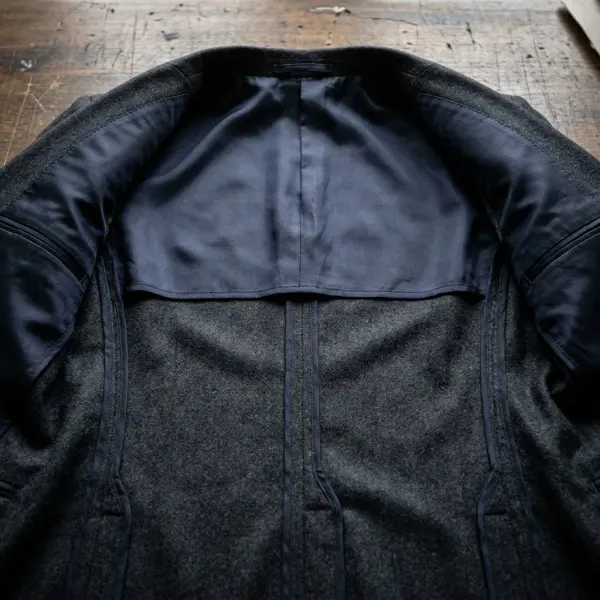
Choosing Lining Coverage for Different Garment Categories
Full and partial lining are relevant beyond suit jackets. The same decision appears in coats, dresses, skirts, and trousers, although the appropriate construction varies considerably.
A useful distinction is whether the garment primarily needs an interior sliding surface, additional opacity, concealed construction, or localized comfort. These needs are not distributed equally across every product category.
Tailored Blazers and Suit Jackets
Tailored jackets are among the clearest examples of the difference between full and partial lining.
A formal business suit may use full lining to create a smooth interior and conceal extensive construction details. A lightweight sport coat, particularly one made from an air-permeable wool, linen, or cotton fabric, may use partial lining to reduce body coverage.
Many partially lined jackets retain smooth sleeve linings because sleeves regularly move over shirts and other clothing. The back may remain more exposed to reduce layering.
This does not mean lining coverage determines the amount of tailoring structure. A partially lined jacket may still contain canvas, interfacing, and shoulder reinforcement.
Full lining versus full canvas are different construction decisions. Full canvas refers to the internal structural components supporting a tailored jacket, whereas full lining describes the coverage of its interior finishing fabric.
Coats and Outerwear
Coats intended for cold-weather use frequently require extensive interior coverage to conceal insulation and facilitate layering.
A fully lined wool coat may combine a smooth lining with an outer shell and additional internal support or insulating materials. The lining does not necessarily provide most of the warmth, but it contributes to a finished and wearable construction.
Lightweight overshirts, casual jackets, and transitional outerwear may use partial lining or remain unlined, depending on their fabric and purpose.
For outerwear, the appropriate choice also depends on functional requirements such as wind resistance, water protection, and insulation. A lining arrangement that works well in a tailored blazer should not automatically be applied to technical outerwear.
Dresses and Occasionwear
In dresses, lining coverage often relates more directly to opacity, skin comfort, and interior construction than to warmth.
A dress may be fully lined from the neckline to the hem to create consistent coverage beneath lightweight fabric. Alternatively, a designer may line only the bodice or skirt while leaving other sections unlined.
For example, a dress with a fitted bodice and lightweight gathered skirt might use a bodice lining to conceal structural details while retaining a different construction in the skirt. Another style may require a separate skirt lining for opacity.
The correct arrangement depends on the fabric and silhouette. Sheer outer layers may intentionally extend beyond the lining to create a design effect, but the coverage must remain appropriate for the intended customer and wearing conditions.
Skirts and Tailored Trousers
Skirt lining is commonly used to improve opacity, reduce friction, and help the outer fabric move more freely over the body.
A fully lined skirt may provide coverage throughout much of the garment's length. A partially lined design may cover selected sections, depending on the skirt silhouette and fabric.
Tailored trousers also use localized lining arrangements. For example, traditional front-leg lining may extend to approximately the knee, reducing friction in an area that experiences frequent movement and contact.
The extent of coverage must allow sitting, walking, and bending. In trousers, unnecessary lining bulk or inadequate movement ease may create discomfort around the hips, crotch, and knees.
A Practical Decision Framework for Fashion Designers
Because lining requirements vary by garment, the decision becomes easier when designers evaluate coverage against specific product priorities.
The following framework can guide initial construction planning.
|
Product priority |
Direction to evaluate |
Reason |
|
Concealing extensive internal tailoring |
Full lining |
Covers construction components across more interior areas |
|
Reducing layering in warm-weather tailoring |
Partial lining |
Leaves selected shell sections exposed |
|
Improving ease of dressing over shirts |
Full or targeted sleeve lining |
Provides smoothness in high-friction areas |
|
Achieving consistent opacity in a dress |
Appropriate full or localized lining |
Provides coverage where needed |
|
Maintaining a lightweight casual silhouette |
Partial or unlined construction |
Avoids unnecessary inner fabric |
|
Producing a polished exposed interior |
Partial lining with appropriate seam finishing |
Makes interior construction part of the product quality |
|
Covering insulation in outerwear |
Full lining may be appropriate |
Creates a finished inner layer over functional components |
|
Reducing total manufacturing cost |
Compare complete construction costs |
Fabric savings may be offset by finishing labor |
This framework is a starting point rather than an automatic selection rule. A garment may require a combination of priorities, such as reduced weight and sufficient opacity, that cannot be resolved through lining coverage alone.
For difficult cases, developing two comparable prototypes often provides a clearer basis for the decision than relying on material samples or specifications in isolation.
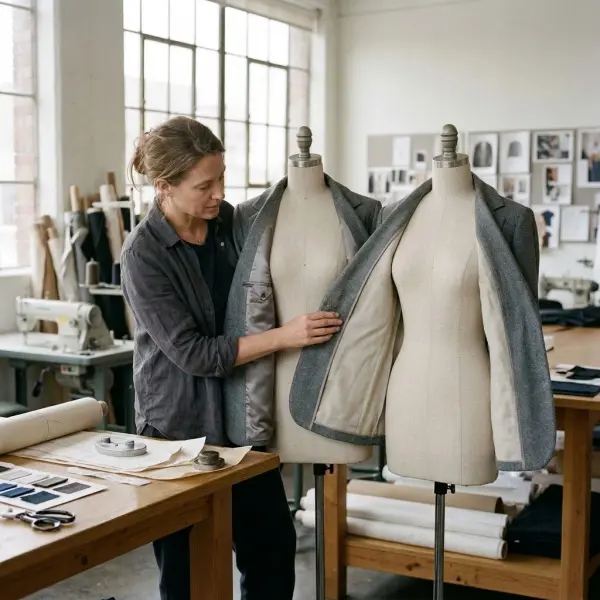
How Lining Decisions Affect Production Cost and Scalability
Lining construction affects the bill of materials, sewing operations, production planning, and quality-control workload. These factors become more significant when a design moves from sampling into repeated production.
The initial fabric saving from partial lining may look attractive. Yet total manufacturing cost depends on how the garment is assembled and finished, not only on the amount of lining fabric purchased.
Material Consumption and Cutting Efficiency
Full lining generally requires more lining fabric because it covers a greater area of the garment.
In partial lining, fabric consumption may decrease, but the pattern layout can become more complex when individual lining sections have unusual shapes or require particular grain orientations.
For instance, a small curved upper-back lining panel may generate offcuts that are difficult to use elsewhere. A factory should therefore evaluate actual marker efficiency and cutting yield rather than assuming that a smaller lining area produces proportionally lower material costs.
This is particularly relevant when a brand is developing multiple sizes. Fabric utilization may vary according to pattern dimensions, fabric width, and the size ratio in the production order.
Sewing Labor and Operational Consistency
Full lining introduces work associated with assembling and attaching the inner garment. Depending on the factory's production methods, these operations may follow a standardized sequence.
Partial lining reduces some of those operations but can introduce additional finishing requirements. Bias binding, exposed seam control, and precise transitions between lined and unlined areas may require different skills or equipment.
The labor comparison should account for actual standard minute values where available, rather than using a universal assumption that partial lining is quicker.
For large production runs, consistency becomes especially important. A beautifully finished sample is not sufficient if the factory cannot reproduce the exposed interior construction within the target cost and delivery schedule.
Evaluating the Complete Manufacturing Cost
A practical comparison should combine the cost of all affected components and operations.
For example, a brand could develop the same blazer in two constructions:
|
Cost component |
Fully lined blazer |
Partially lined blazer |
|
Lining material |
Greater coverage |
Reduced coverage |
|
Lining cutting |
More extensive lining pieces |
Fewer or smaller pieces |
|
Lining assembly |
Complete lining assembly |
Selected lining sections |
|
Exposed seam finishing |
Less extensive where seams are covered |
Potentially more extensive |
|
Attachment operations |
More comprehensive lining attachment |
Localized attachment and transitions |
|
Quality inspection |
Full lining alignment and finishing |
Exposed seams and partial lining transitions |
This comparison shows where costs arise, but it cannot establish which method is cheaper without actual factory data.
The commercially appropriate choice depends on material prices, production volume, sewing efficiency, finishing standards, and the customer value associated with each construction.
Applying Lining Decisions in Fashion Product Development
For fashion brands, lining coverage should be defined as part of the technical specification rather than decided informally during production.
The development process benefits from a clear sequence that connects product intent with measurable construction requirements.
A practical implementation can follow five steps:
- Establish the garment's wearing context. Define the climate, intended activity, layering requirements, silhouette, and expected comfort characteristics.
- Identify areas requiring lining. Map where smoothness, opacity, concealed construction, or skin protection is functionally necessary.
- Develop alternative constructions when appropriate. Compare full and partial lining through representative samples rather than fabric swatches alone.
- Evaluate complete manufacturing implications. Review cutting yield, sewing operations, exposed-seam finishes, and quality-control requirements.
- Approve a reproducible specification. Document lining coverage, pattern references, materials, attachment points, finishing details, and test results in the tech pack.
These steps help design and sourcing teams communicate more effectively with production partners. They also reduce the risk of factories interpreting ambiguous terms such as half-lined differently.
Example: Choosing Lining for a Summer Blazer Collection
Consider a fashion brand planning a lightweight blazer collection for customers in warm and moderately humid climates.
The designer selects a lightweight woven shell and wants a polished appearance without unnecessary fabric coverage. Full lining would create a consistently smooth interior, but it would also introduce an additional layer across the back.
A partially lined construction may be a better candidate for sampling. The design could retain lining in the sleeves and selected upper-body areas while leaving much of the back exposed.
The product-development team should then compare the prototypes under realistic conditions, checking ease of dressing, movement, interior appearance, and thermal comfort.
If the partially lined sample meets the required quality standard at an acceptable manufacturing cost, it may be suitable for the collection. If its exposed seams or lining transitions create additional problems, the construction should be revised before bulk production.
The decision should emerge from testing, not from a blanket rule that summer garments must be partially lined.
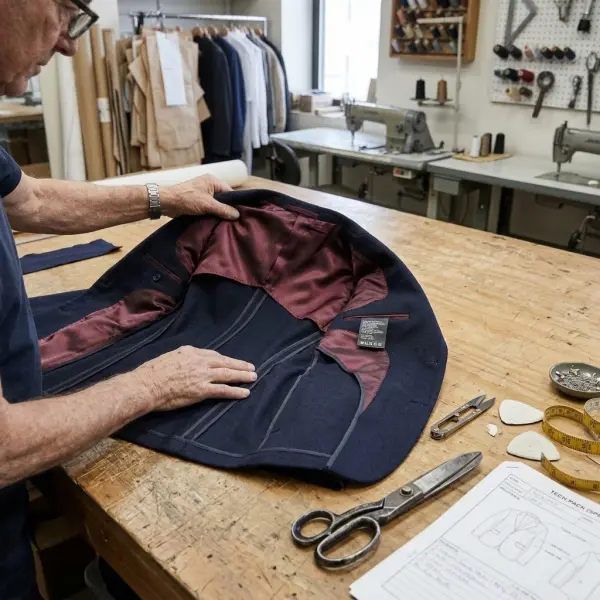
Common Mistakes When Choosing Full or Partial Lining
Selecting the right coverage is only part of the process. Construction decisions may fail when designers overlook the relationship between lining, the outer fabric, and manufacturing capabilities.
Assuming Full Lining Always Means Higher Quality
A fully lined garment can provide a refined interior, but it is not automatically better constructed than a partially lined alternative.
This misconception can lead brands to add lining to garments that would benefit from a lighter design. Additional coverage may change drape, increase material consumption, or reduce comfort under certain conditions.
The better approach is to evaluate construction quality against the product's intended function. A lightweight blazer with carefully finished exposed seams may meet a higher functional standard than an unnecessarily heavy fully lined version.
Removing Lining Without Redesigning the Interior
Changing a fully lined jacket into a partially lined style requires more than eliminating some lining panels.
When internal areas become exposed, seam allowances, pocket bags, reinforcement components, and stitching may become visible or require protection. If the pattern and sewing specifications are not adjusted, the finished garment can look incomplete or become vulnerable to wear.
Partial lining should be developed as its own construction method, with attention to exposed surfaces and attachment transitions.
Overlooking Sleeve Comfort
Design teams may concentrate on the back lining because it affects coverage and ventilation, while underestimating the role of sleeve lining.
In tailored jackets, smooth sleeve linings can help the garment slide over shirts and knitwear. Removing them may increase friction depending on the texture of the sleeve shell and the clothing worn underneath.
This does not make sleeve lining mandatory for every garment. It means that sleeve construction should be evaluated separately from body lining, especially when designing fitted or layered clothing.
Making Cost Decisions Before Sampling
Reducing lining coverage may appear to offer straightforward savings. Yet intricate exposed seam finishing can increase labor and create additional inspection requirements.
A factory unfamiliar with a particular partial lining arrangement may also require development time to achieve consistent results.
Brands should compare representative samples and realistic production estimates before making a final cost decision. Material savings are only useful when the construction remains commercially viable and repeatable.
Important Technical and Sustainability Caveats
Lining coverage affects material consumption, but reducing the amount of lining does not automatically make a garment more sustainable.
A partially lined garment may use less lining fabric, yet its environmental performance also depends on shell materials, finishing processes, durability, care, production waste, and expected service life.
For example, a durable fully lined jacket that remains comfortable and repairable over many years should not be assumed environmentally inferior to a lighter garment with a shorter useful life. Such comparisons require evidence about the complete product.
Partial lining may offer practical advantages when it eliminates unnecessary material without compromising performance. It can also make some interior construction details more accessible for inspection or repair, although this depends on the actual design.
Three technical qualifications deserve particular attention.
First, lining coverage is not equivalent to insulation. The thermal performance of a garment depends on fabric properties, air layers, fit, and exposure conditions. The thermal-insulation research discussed earlier was published in the journal Textiles in 2026; it examined controlled layered-fabric systems rather than directly comparing consumer jackets with different lining coverage.
Second, partial lining is not the same as an unstructured garment. A jacket may have little lining but still contain considerable internal support. Conversely, a fully lined jacket may have a relatively soft, unstructured silhouette.
Third, construction terms need explicit definitions. Labels such as half-lined, quarter-lined, and butterfly-lined can describe overlapping arrangements. Brands should use drawings, photographs, and approved samples to establish exactly which areas are lined.
For further technical troubleshooting, common lining problems affecting fit, movement, and durability explores how construction weaknesses become apparent during wear and maintenance.
Frequently Asked Questions About Full and Partial Lining
1. Is Full Lining Better Than Partial Lining?
Full lining is not universally better than partial lining. Each construction serves different design and performance requirements.
Full lining provides more extensive interior coverage, which can be useful for concealing tailored construction, creating smooth layering, and finishing garments intended for cooler conditions.
Partial lining can reduce unnecessary fabric coverage and provide a lighter construction, particularly when the outer shell is comfortable and the exposed seams are well finished.
The appropriate option depends on the garment category, fabric properties, climate, and intended customer. Fashion brands should compare the complete garment's comfort, appearance, durability, and production cost rather than treating lining coverage as a direct indicator of quality.
2. Is a Half-Lined Jacket Cooler Than a Fully Lined Jacket?
A half-lined jacket can feel cooler than an otherwise comparable fully lined jacket because it places less lining fabric between the wearer and the outer shell.
However, the difference depends on the material combination and garment construction. A lightweight, air-permeable outer shell with partial lining may support airflow better than the same shell with a relatively low-permeability full lining.
The effect may be smaller when the outer fabric itself has limited air permeability or when other garment components restrict ventilation.
For warm-weather tailoring, brands should evaluate fabric permeability, lining coverage, garment ease, and real wearing conditions together rather than assuming that reduced lining automatically guarantees superior comfort.
3. Why Are Some Jackets Partially Lined but Have Fully Lined Sleeves?
Sleeves are often lined even when much of the jacket body remains unlined because the arms move frequently and the fabric must slide over shirts or other garments.
A smooth sleeve lining can reduce friction during dressing and arm movement. At the same time, leaving the lower back or selected body panels unlined may reduce weight and unnecessary fabric coverage.
This combination allows designers to place lining where it provides the clearest functional benefit.
However, the arrangement is not mandatory. Some casual or deliberately unstructured jackets have unlined sleeves, provided the shell fabric and construction create an acceptable wearing experience.
4. Is Partial Lining Cheaper to Manufacture?
Partial lining may reduce lining material consumption, but it is not automatically cheaper to manufacture.
A fully lined garment requires additional fabric and assembly operations. In contrast, partial lining may require more elaborate seam finishing and careful construction of exposed areas.
The final cost depends on material prices, sewing methods, labor rates, pattern complexity, and factory capabilities.
For example, a partially lined blazer with extensive bound seams may require more finishing labor than a comparable fully lined design. Fashion businesses should compare complete bills of materials and production operation costs rather than calculating savings from lining fabric alone.
5. Can Dresses and Skirts Use Partial Lining?
Yes. Partial lining can be used in dresses and skirts when selected sections require additional coverage, comfort, or interior finishing.
A dress may have a lined bodice and an unlined skirt, or it may use a shorter skirt lining beneath a longer outer layer. A skirt may also be lined only in selected areas depending on its shape and fabric.
The main considerations are opacity, movement, drape, and the relationship between the lining and outer garment.
Designers should check the garment while standing, walking, and sitting. A partial lining that looks appropriate on a dress form may shift during movement or provide insufficient coverage under particular lighting conditions.
6. Does Partial Lining Mean a Jacket Is Unstructured?
No. Partial lining and unstructured tailoring describe different aspects of garment construction.
Partial lining refers to how much of the jacket's interior is covered by lining fabric. Unstructured tailoring generally refers to reduced or softer internal support, such as minimal shoulder padding or less extensive chest reinforcement.
A partially lined jacket can still contain canvas, interfacing, and other shaping components. Similarly, a fully lined jacket can be designed with a





Comments 0
Leave a CommentSend Comment
Anda harus Login terlebih dahulu untuk dapat memberikan komentar.