

Global Modest Fashion Market Growth: How Local Brands Achieve Product-Market Fit for Export
Introduction
Over the last decade, modest fashion has quietly evolved from a niche segment into a globally recognized market force. What used to be associated primarily with religious dressing codes has now expanded into a broader lifestyle category—defined by aesthetics, values, and identity. Today, modest fashion is not just about coverage; it’s about design intelligence, cultural storytelling, and commercial scalability.
For local fashion brands, especially those operating in emerging markets like Indonesia, this shift opens a compelling opportunity: exporting not just products, but a point of view. However, entering the global market is not simply a matter of producing more or pricing competitively. The real challenge lies in achieving product-market fit across different cultural, behavioral, and purchasing contexts.
Many brands assume that what sells locally will translate globally with minimal adjustment. In reality, global success in modest fashion depends on a deeper alignment—between product design, brand positioning, and the expectations of international consumers. Without this alignment, even well-made products struggle to gain traction.
This article explores how local modest fashion brands can strategically prepare for export by building strong product-market fit. We’ll break down not just what to do, but how to think—so that every decision, from fabric selection to storytelling, is grounded in real market relevance.
Understanding the Global Modest Fashion Market Beyond the Trend
The global modest fashion market is often described as “growing rapidly,” but that phrase alone is not actionable. To build a real strategy, brands must understand why it is growing and how that growth is distributed across different regions and consumer segments.
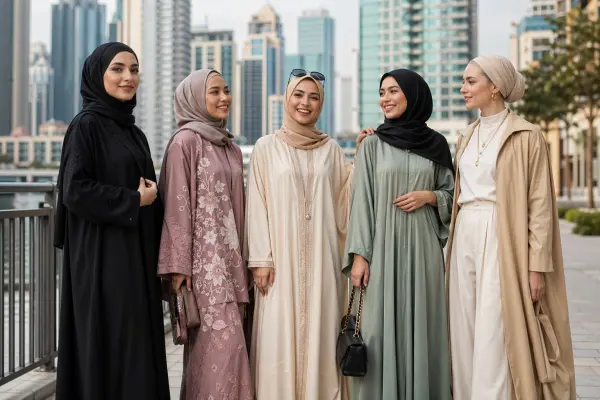
At its core, modest fashion growth is driven by three overlapping forces: demographic expansion (especially among Muslim populations), increased visibility through digital platforms, and the mainstream adoption of modest aesthetics by non-religious consumers. This means the market is no longer homogeneous—it consists of diverse segments with different motivations, price sensitivities, and style preferences.
From a business perspective, this diversity creates both opportunity and complexity. A brand targeting consumers in the Middle East will face different expectations compared to those entering the UK or US market. For example, Gulf markets often prioritize premium materials and luxury positioning, while Western markets may value versatility, sustainability, and everyday wearability.
Consider a local Indonesian brand specializing in flowy abayas with intricate embroidery. While this may perform well in domestic or regional markets, exporting to Europe might require rethinking silhouette proportions, color palettes, and even fabric weight to suit seasonal changes and urban lifestyles. Without this adaptation, the product risks being perceived as “occasion wear” rather than an everyday wardrobe piece.
The key insight here is that global demand does not equal uniform demand. Brands must move beyond trend awareness into market segmentation. Understanding who the customer is in each target market—and what role modest fashion plays in their lifestyle—is the foundation for any meaningful product-market fit.
Redefining Product-Market Fit for Cross-Border Fashion Brands
Product-market fit is often simplified as “people want what you sell.” In the context of global modest fashion, this definition is insufficient. True product-market fit requires alignment across three layers: functional value (fit, comfort, usability), emotional value (identity, confidence, belonging), and contextual value (cultural and environmental relevance).

For export-oriented brands, this means that a product must work not only in terms of design but also in how it integrates into the daily lives of a different audience. A garment that feels intuitive in Jakarta may feel unfamiliar in London if it doesn’t align with local dressing habits or climate conditions.
From a product development standpoint, this requires a shift from intuition-based design to insight-driven iteration. Brands need to test assumptions: Are sleeve lengths practical for layering? Is the fabric breathable enough for warmer climates or adaptable for colder ones? Does the color palette resonate with local fashion cycles?
A practical scenario: a brand planning to enter the UK market might start with a capsule collection rather than a full product line. By launching a limited set of SKUs—such as neutral-toned dresses, layering tops, and outerwear—they can observe which products gain traction. Data from early sales, returns, and customer feedback then becomes the basis for refinement.
Another critical dimension is pricing. Product-market fit is not achieved if the product is well-designed but misaligned with purchasing power or perceived value. A mid-range Indonesian brand may need to reposition itself either upward (through branding and storytelling) or downward (through cost efficiency) depending on the target market.
The takeaway is clear: product-market fit in global fashion is iterative, not static. Brands must treat export as a process of continuous alignment—where product, price, and positioning evolve based on real market signals.

Translating Local Identity into Globally Relevant Design
One of the strongest assets local brands have is their unique identity. However, identity alone does not guarantee global relevance. The challenge lies in translating local design elements into forms that are both distinctive and accessible to international consumers.
Local identity often manifests through patterns, cuts, materials, or cultural references. While these elements can differentiate a brand, they can also become barriers if not adapted thoughtfully. The goal is not to dilute identity, but to contextualize it within global fashion language.
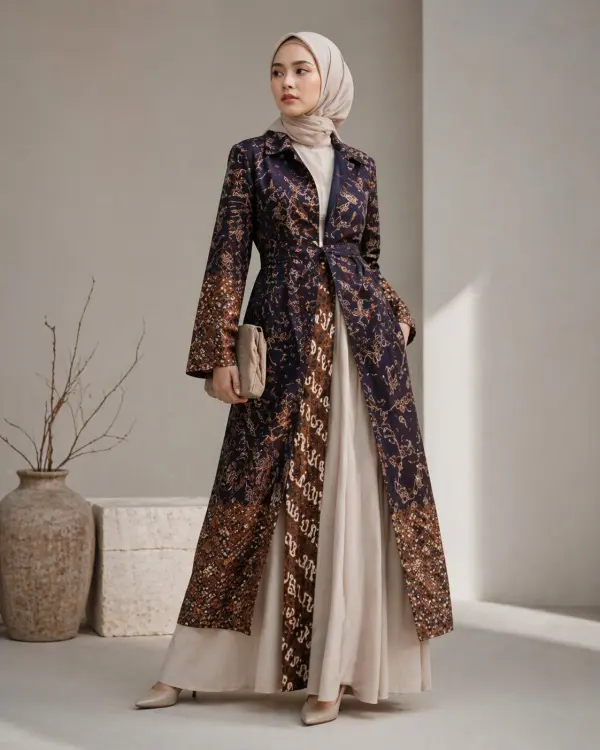
For example, a brand that uses traditional Indonesian textiles like tenun or batik can reposition these materials within contemporary silhouettes—such as tailored outerwear, structured dresses, or modular layering pieces. This allows the product to feel modern and wearable while retaining its cultural depth.
From a branding perspective, storytelling plays a critical role. International consumers may not be familiar with the cultural significance behind certain design elements. Brands need to bridge this gap through clear, compelling narratives—explaining not just what the product is, but why it exists.
A practical case: instead of marketing a piece as “traditional batik dress,” a brand could position it as “a modern wardrobe essential crafted from heritage textiles, designed for versatile urban wear.” This reframing shifts the perception from cultural artifact to functional fashion item.
However, translation must also consider usability. A beautifully designed garment that is difficult to style or maintain will struggle in competitive markets. This is where design decisions—such as simplifying silhouettes or choosing easy-care fabrics—become critical.
The insight here is that global relevance is achieved through interpretation, not imitation. Brands that successfully export are those that can reinterpret their identity in ways that resonate across cultures without losing authenticity.
Building Export-Ready Operations and Supply Chain Alignment
Achieving product-market fit is not only about design and branding; it also depends on operational readiness. Many brands underestimate how supply chain limitations can undermine their ability to scale in international markets.
Export readiness begins with consistency. International buyers and distributors expect reliable quality, standardized sizing, and predictable lead times. A brand that cannot maintain these fundamentals will struggle to build trust, regardless of how strong its product concept is.
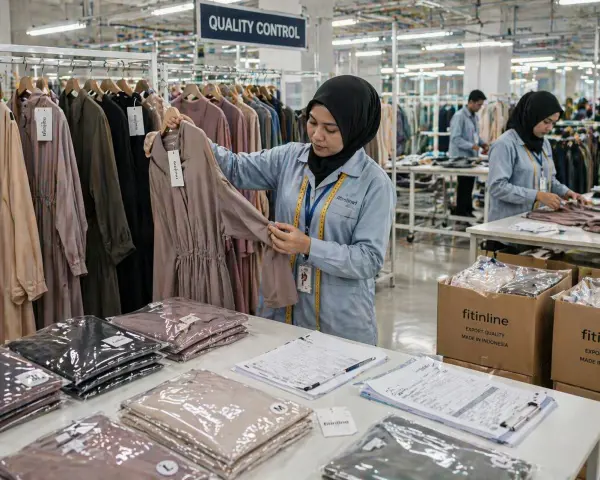
From a production standpoint, this often requires upgrading internal systems—whether through better quality control processes, clearer documentation, or more structured production planning. Small inconsistencies that may be tolerated in local markets can become major issues when dealing with global customers.
Consider a scenario where a brand receives its first bulk order from an overseas retailer. If production delays occur or product specifications vary between batches, the relationship can quickly deteriorate. In contrast, brands that demonstrate reliability often gain repeat orders and long-term partnerships.
Logistics also play a crucial role. Packaging, labeling, and compliance with import regulations must be addressed early. For example, certain markets require specific material disclosures or certifications, especially for sustainable or organic products.
On the cost side, brands need to understand how shipping, duties, and distribution margins affect final pricing. A product that is competitively priced at the factory level may become too expensive at retail if these factors are not accounted for.
The key takeaway is that product-market fit must be supported by operational-market fit. Without a solid backend, even the most well-designed products cannot sustain international growth.
Leveraging Digital Channels to Validate and Scale Globally
In today’s market, brands no longer need to rely solely on traditional export channels to test international demand. Digital platforms provide a powerful way to validate product-market fit before committing to large-scale expansion.
E-commerce, social media, and marketplaces allow brands to reach global audiences with relatively low upfront investment. More importantly, they provide real-time feedback—enabling brands to understand which products resonate, which messages convert, and which markets show the most potential.

From a strategic standpoint, digital channels should be used not just for sales, but for learning. Metrics such as conversion rates, return rates, and customer reviews can reveal gaps between product assumptions and actual user experience.
For example, a brand may discover that a particular dress performs well in Southeast Asia but receives low engagement in Europe. By analyzing customer feedback, they might identify issues related to sizing, fabric weight, or styling preferences—insights that can inform future product development.
Content also plays a critical role in shaping perception. High-quality visuals, clear product descriptions, and consistent branding help build trust with international customers who cannot physically interact with the product.
A practical approach is to treat digital expansion as a phased process: start with targeted campaigns in specific markets, validate demand, refine the offering, and then scale. This reduces risk while maximizing learning.
The insight here is that digital channels are not just distribution tools—they are validation engines. Brands that use them strategically can accelerate their journey toward global product-market fit.
Conclusion
The global growth of modest fashion presents a rare opportunity for local brands to expand beyond their domestic markets. But opportunity alone is not enough. Success depends on the ability to align product, market, and operations in a way that resonates across borders.
Product-market fit, in this context, is not a one-time achievement. It is an ongoing process of understanding, adapting, and refining. Brands must move beyond assumptions and engage deeply with the realities of their target markets—through research, experimentation, and feedback.
What distinguishes brands that succeed globally is not just their design capability, but their strategic discipline. They know when to adapt, when to stay true, and how to translate their identity into something universally relevant.
For fashion founders and garment businesses, the path to export is not about scaling faster—it’s about aligning smarter. And in a market as dynamic as modest fashion, that alignment becomes the ultimate competitive advantage.
FAQ
1. What is product-market fit in fashion export?
It refers to how well your product aligns with the needs, preferences, and context of a specific international market, including design, pricing, and usability.
2. Should I adapt my designs for different countries?
Yes. While your brand identity should remain consistent, product details such as fit, fabric, and color may need adjustment to match local preferences.
3. How can I test international demand without exporting at scale?
Use e-commerce platforms and digital marketing to run targeted campaigns and analyze customer response before committing to large production volumes.
4. What is the biggest mistake local brands make when exporting?
Assuming that local best-selling products will perform equally well globally without adaptation.
5. How important is branding in global modest fashion?
Very important. Strong branding helps communicate your value and differentiate your product in competitive international markets.





Comments 0
Leave a CommentSend Comment
Anda harus Login terlebih dahulu untuk dapat memberikan komentar.