
How Inclusive Clothing Design Supports Different Mobility and Dressing Needs
Quick Answer: How Does Inclusive Clothing Design Support Different Dressing Needs?
Inclusive clothing design supports different mobility and dressing needs by adapting garment construction, fit, fastenings, and access points to accommodate people with varying physical capabilities. Rather than assuming everyone dresses and moves in the same way, it considers how individuals reach, bend, grip, sit, stand, and interact with clothing throughout everyday activities.
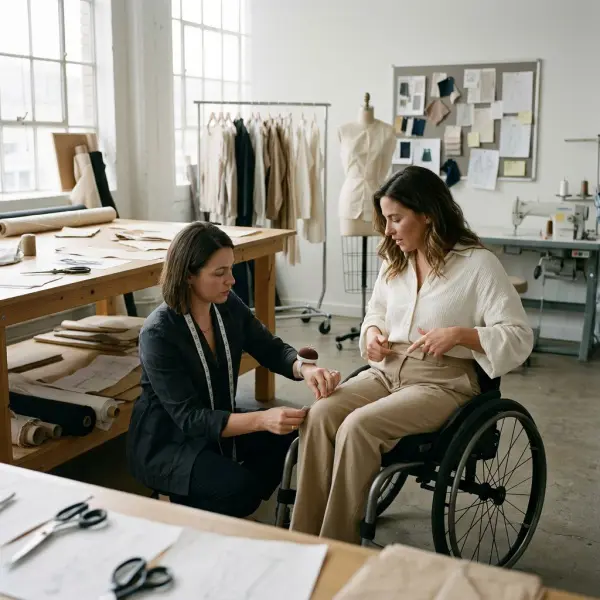
For someone with limited hand dexterity, an alternative fastening system may make a shirt easier to manage. For a wheelchair user, trousers developed around seated body proportions may provide a more appropriate fit than conventional standing-fit patterns. A person with restricted shoulder movement may benefit from wider garment openings or a different dressing sequence.
These examples illustrate why inclusive clothing design is not defined by one particular feature. Different users may require different combinations of modifications, and a design that helps one person may not suit another.
For fashion businesses, this approach connects consumer research with pattern development, material selection, garment engineering, and usability testing. The aim is to create clothing that works more effectively for its intended users while maintaining the quality, comfort, and appearance expected from contemporary apparel.
Why Different Mobility Needs Require Different Clothing Solutions
Clothing is usually developed around a defined target customer, standard body measurements, and expected patterns of movement. A conventional garment may assume that the wearer can raise both arms, bend forward, stand while adjusting a waistband, or operate small closures without difficulty.
Those assumptions do not describe everyone's experience.
People may have different levels of reach, grip strength, coordination, balance, joint mobility, or ability to maintain particular body positions. Some use wheelchairs or mobility aids. Others experience temporary movement restrictions after an injury or surgery. A person's functional capabilities may also vary throughout the day.
The World Health Organization's International Classification of Functioning, Disability and Health provides a useful conceptual foundation. Its framework considers functioning in relation to body functions, activities, participation, and environmental factors. This perspective helps explain why a clothing barrier cannot always be understood from a medical diagnosis alone.
For apparel designers, the more useful question is often not which condition a customer has, but which dressing or wearing activity the garment needs to support.
A customer who has difficulty gripping buttons may require a different solution from someone who cannot comfortably raise an arm. Even if both customers experience limited upper-body mobility, the same closure system may not be appropriate.
Clothing Accessibility Depends on How a Garment Is Used
Garment accessibility involves more than the moment clothing is put on. A shirt that is easy to fasten may still restrict shoulder movement during wear. Trousers that are simple to pull up may become uncomfortable after several hours of sitting.
Designers therefore need to understand the entire clothing-use experience.
This includes how a garment is selected, put on, adjusted, worn, accessed during daily activities, and removed. The sequence may differ for independent dressing and assisted dressing, and it can change according to the user's physical environment.
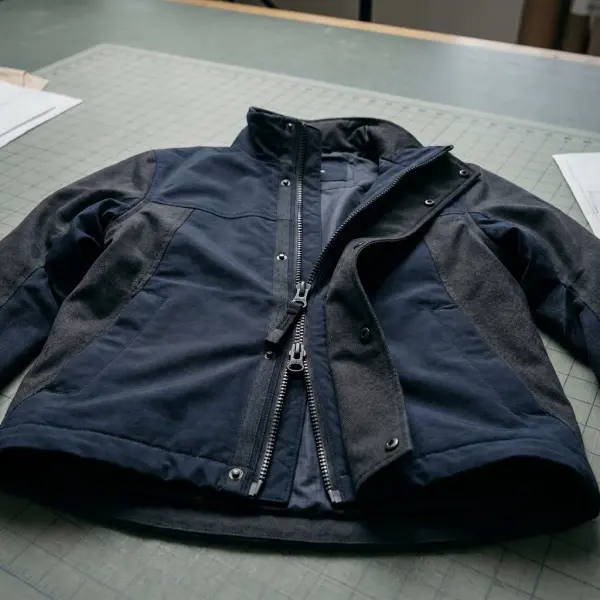
A practical example is outerwear. Someone who uses a wheelchair may need a jacket that accommodates their seated position and interaction with the chair. Another customer may prioritize a garment that can be put on without raising both arms. Both requirements relate to mobility, but they involve different design decisions.
Understanding the Main Mobility and Dressing Requirements
Inclusive apparel development becomes more manageable when consumer requirements are translated into specific clothing-use challenges.
A 2024 study published in the Journal of Fashion Marketing and Management developed an inclusive apparel design framework based on different levels of reach, dexterity, and mobility capabilities. The researchers proposed user-aware, modular, and special-purpose design strategies for different levels of clothing-use difficulty.
The inclusive apparel design framework for reach, dexterity, and mobility demonstrates why accessibility requirements are better understood along a spectrum rather than through a single category of adaptive clothing.
In practical product development, the following distinctions can help teams organize requirements.
|
Dressing or Mobility Need |
Possible Clothing Barrier |
Potential Design Response |
|
Limited hand dexterity |
Difficulty manipulating small buttons, hooks, or zippers |
Larger pull tabs, alternative closures, or repositioned fastenings |
|
Restricted arm or shoulder movement |
Difficulty pulling garments over the head or through narrow sleeves |
Alternative openings, adjusted sleeve construction, or front access |
|
Primarily seated mobility |
Conventional rise, hem, and seam placement may not suit prolonged sitting |
Seated-fit pattern development and revised garment proportions |
|
Limited bending or balance |
Difficulty stepping into or adjusting trousers |
Accessible waist openings or alternative entry construction |
|
Assisted dressing requirements |
Conventional garments may require difficult repositioning |
Carefully positioned openings and simplified dressing sequences |
|
Use of braces or other equipment |
Garments may obstruct access or create unwanted bulk |
Adjustable circumference, access openings, and compatible pattern shapes |
|
Sensory or pressure sensitivity |
Seams, labels, or trims may create discomfort |
Alternative seam placement, material selection, and individualized fit testing |
These are possible design responses, not guaranteed solutions. Each feature requires evaluation with the users for whom it is intended.
The value of this framework lies in connecting an observable difficulty with a testable garment requirement. It provides design teams with a more useful starting point than a general instruction to make a product accessible.
Designing Clothing for Limited Hand Dexterity
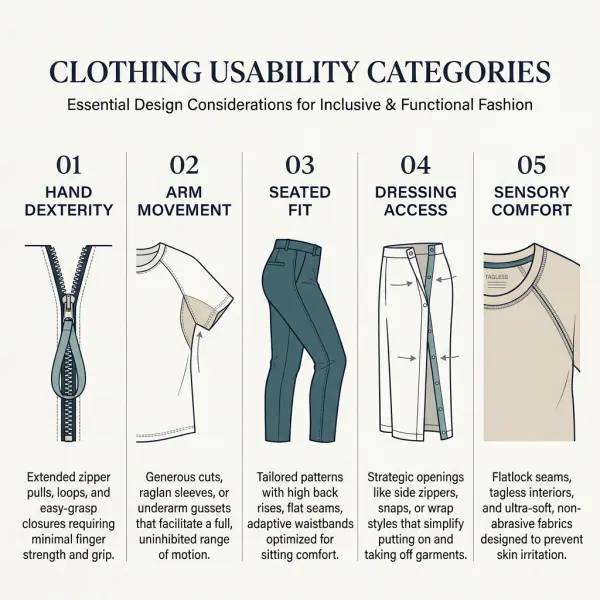
Hand dexterity influences how easily a person can operate clothing fasteners, adjust a garment, or manipulate fabric during dressing. Customers with reduced fine motor control, limited grip strength, or restricted finger movement may find some conventional garment details difficult to use.
Small shirt buttons illustrate this challenge. Buttoning a shirt requires positioning fabric, aligning the button with the buttonhole, and applying coordinated finger movements. The difficulty may come from the size of the button, the stiffness of the buttonhole, the location of the fastening, or the combined demands of the task.
Changing one component does not automatically resolve the complete problem.
Alternative Fastening Systems
Designers can investigate larger buttons, pull tabs, press studs, hook-and-loop closures, or magnetic fastening systems, depending on the garment and intended wearer.
A magnetic shirt closure, for example, may reduce some of the fine finger manipulation associated with conventional buttons. Yet it still needs to be positioned correctly, remain secure during wear, and be compatible with relevant user safety requirements.
Hook-and-loop fasteners may be easier for some people to operate, but they can create bulk, collect lint, or catch on surrounding fabrics. Larger buttons may improve handling while remaining difficult for users who have limited coordination.
The appropriate choice depends on the actual dressing task.

Closure Position Matters as Much as Closure Type
A zipper that is easy to grip can remain inaccessible if it sits outside the user's comfortable reach. Similarly, a garment may have an easy-open fastening but require awkward fabric alignment before the closure can engage.
Design teams should consider where the user's hands naturally reach, whether the fastening can be operated with one hand, and how the fabric behaves while the closure is being used.
The goal is to reduce unnecessary manipulation without compromising garment security or durability.
Designing Garments for Limited Reach and Shoulder Mobility
Upper-body dressing often involves several coordinated movements. Depending on garment construction, the wearer may need to raise their arms, reach behind the back, rotate the shoulders, or pull fabric over the head.
These actions can be difficult for people with restricted shoulder range of motion, reduced upper-body strength, or certain movement limitations.
The solution is not necessarily to make every garment wider. Excess fabric may create unwanted bulk, change the garment silhouette, or make dressing more difficult by introducing material that needs to be gathered or repositioned.
A more useful approach examines the order of movements needed to put on the garment.
Rethinking Garment Openings
Pullover tops may be inconvenient when the wearer cannot comfortably raise their arms. In some cases, a front-opening shirt, wrap construction, or strategically placed alternative opening may offer a more manageable dressing sequence.
However, openings introduce design trade-offs. The garment still needs adequate coverage, reliable closure, and appropriate fit when worn. The placement of the opening must also avoid creating additional steps that the intended wearer cannot perform comfortably.
Designers should test how the garment behaves during dressing, not merely how it looks once fastened.
Sleeve Construction and Arm Access
Sleeve design influences the movements needed to enter and adjust a garment. Armhole dimensions, sleeve pitch, fabric flexibility, and cuff construction can affect accessibility.
For example, a narrow cuff may complicate dressing for someone who has difficulty positioning their hand through the opening. An adjustable cuff may offer greater flexibility, but its fastening must still be manageable.
Raglan sleeves, modified armholes, or alternative garment openings may be worth investigating in certain applications. Their suitability depends on the overall garment pattern, available movement, and desired fit.
A successful accessible sleeve should be evaluated as part of the complete upper-body garment rather than as an isolated pattern detail.
Why Seated Clothing Requires Different Fit Considerations
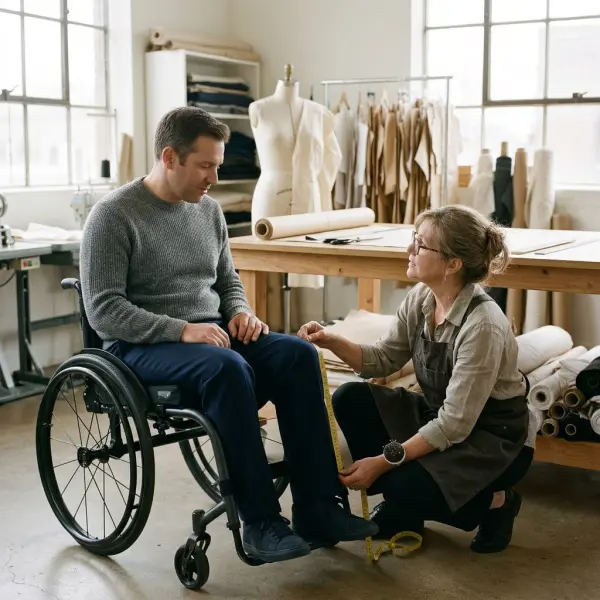
Clothing designed primarily for standing wear may fit differently when worn in a seated position. Sitting changes body posture, the relationship between garment panels, and the way fabric is distributed around the waist, hips, thighs, and knees.
This is especially relevant for people who spend substantial periods seated, including some wheelchair users.
A trouser pattern that looks balanced on a standing fit model may produce unwanted tension at the front, insufficient coverage at the back, or excessive fabric accumulation in other areas when seated. These issues depend on body proportions, posture, fabric, and garment construction rather than occurring identically for every wearer.
An ergonomic clothing study indexed by the US National Library of Medicine evaluated functional clothing developed for wheelchair users and reported improvements in selected daily dressing-related activities among its six participants. The study supports the relevance of ergonomic clothing design, although its small sample does not justify applying its numerical findings to all wheelchair users.
Seated-Fit Pattern Development
Seated-fit garments may require adjustments to front and back rise measurements, waist shaping, crotch construction, and leg proportions.
For some body positions, a higher back rise or modified front rise can improve coverage and reduce unwanted fabric distribution. These changes are not universal prescriptions. A wheelchair user's posture, trunk control, body shape, chair configuration, and preferences can alter the most appropriate construction.
Pattern development should therefore involve fitting the garment in the intended wearing position. Standing measurements may remain relevant, but they cannot always substitute for seated assessment.
Seam Placement and Potential Pressure Areas
Seams, thick pocket bags, rigid trims, and bulky closures can affect comfort when placed beneath body areas that remain in contact with a seating surface.
Garment designers should evaluate whether certain construction details produce unwanted bulk or local pressure during wear. However, clothing design alone cannot be assumed to prevent pressure injuries, which are influenced by numerous clinical and environmental factors.
A useful product development approach is to identify likely contact areas, review seam and trim placement, and collect wearer feedback under realistic conditions. Where clinical risks are involved, the design process may need input from qualified healthcare professionals.
Hem Length, Pockets, and Seated Proportions
The position of a trouser hem can change when the knee is flexed. A length that appears correct when standing may expose more of the lower leg when seated.
Similarly, rear pockets may be difficult to access or create unwanted bulk for some seated users. Front or side pockets may offer alternative access, but they should be positioned and tested according to the user's reach and equipment configuration.
These details illustrate why seated-fit apparel involves more than adjusting trouser measurements. Designers need to consider the interaction between the garment, the body, and the surrounding environment.
Supporting Independent and Assisted Dressing
Inclusive clothing design should distinguish between independent dressing and assisted dressing rather than treating them as interchangeable.
Independent dressing involves a person putting on and removing clothing using their own preferred methods, potentially with assistive tools. Assisted dressing involves another person helping with some or all of the process.
The design requirements can differ substantially.
A garment intended for independent dressing may prioritize accessible closures, easy garment orientation, and reduced manipulation. A garment intended for assisted dressing may need openings that support a comfortable sequence of movements for both the wearer and the person providing assistance.
Neither approach should be presented as inherently more desirable for every individual. User autonomy includes the ability to choose how assistance is provided.
Designing for Dressing Sequences
A dressing sequence describes the order of actions needed to put on or remove a garment. This includes locating openings, positioning the garment, inserting body parts, aligning fabric, securing closures, and adjusting the final fit.
A design team developing an assisted-dressing top might investigate whether alternative openings reduce the need for uncomfortable shoulder movements or repeated repositioning.
Yet such a design should not be considered successful without testing it in the relevant context. A side or back opening may make one movement easier while creating complications during closure or everyday wear.
Privacy and Personal Preference
Accessible clothing needs to maintain appropriate coverage and reflect the wearer's preferences during dressing and use.
For some customers, a garment with convenient access points may improve the dressing experience. Others may prefer a different construction because of appearance, coverage, or familiarity.
Brands should avoid assuming that users prioritize the shortest possible dressing time above all other considerations. A successful product may need to balance convenience with comfort, personal choice, and the way the wearer wants to present themselves.
Designing Around Orthoses, Prosthetics, and Other Equipment
Some people wear braces, orthoses, prosthetic devices, or other equipment that can influence clothing fit and access. These requirements introduce additional garment design considerations because the apparel may need to accommodate equipment dimensions, positioning, or adjustments.
A trouser leg, for example, may require an alternative opening to accommodate a particular brace. A shirt may need sufficient access for an underlying device without creating excessive bulk during normal wear.
The correct response depends on the equipment and how it is used.
Designers should avoid treating these modifications as medical solutions. A garment may provide easier clothing access, but it should not interfere with equipment function, device instructions, or medically necessary positioning.
Close collaboration with the intended wearer and, where appropriate, relevant healthcare professionals can help identify practical constraints before production.
Adjustable Construction Requires Careful Testing
Adjustable cuffs, wider openings, flexible waistbands, and alternative access points can help accommodate some equipment-related requirements.
However, adjustability introduces additional components and construction decisions. An opening that becomes too bulky when closed may create discomfort, while a fastening positioned near equipment may interfere with movement or access.
The technical package should clearly document the intended adjustment range, closure placement, and relevant fit requirements. Product testing should verify that these features remain functional during repeated use and laundering.
How Fabric Selection Affects Clothing Accessibility
Garment accessibility is often discussed through closures and pattern modifications, but textile selection also affects how clothing behaves during dressing and wear.
Fabric weight, extensibility, surface friction, drape, recovery, and handfeel can influence the effort required to manipulate a garment. These properties interact with pattern construction and cannot be evaluated independently.
A lightweight knitted fabric may offer flexibility and ease of movement, but it may also stretch excessively around certain closures. A structured woven fabric may retain a tailored silhouette while requiring more deliberate garment openings.
The best material is therefore not automatically the softest or stretchiest option.
Stretch, Recovery, and Stability
Stretch materials can help accommodate movement and changes in body position. However, the amount and direction of stretch matter, as does the fabric's ability to recover after repeated use.
A waistband that stretches easily may simplify some dressing actions but become uncomfortable or unstable if its elastic force, width, or construction is unsuitable.
Similarly, a garment that requires considerable pulling during dressing may place stress on seams or closures. Product teams should evaluate these interactions during prototype testing.
Surface Comfort and Construction Details
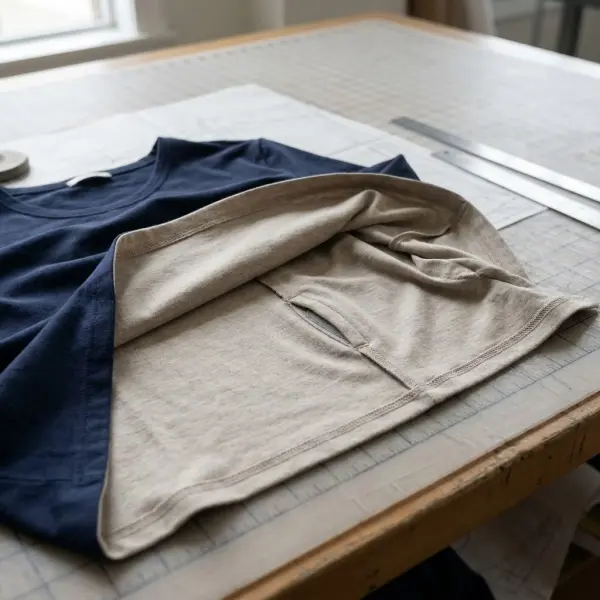
Some wearers may be sensitive to certain fabric textures, internal labels, seams, or trims. Others may experience discomfort when material accumulates beneath areas of prolonged contact.
Flat or repositioned seams, carefully chosen labels, and soft interior finishes may help address particular concerns. Yet these features need to be tested for durability and comfort rather than assumed to work equally well for every wearer.
The final fabric decision should consider the intended activity, climate, laundering requirements, fit, and the user's preferences.
How Should Inclusive Clothing Be Tested?
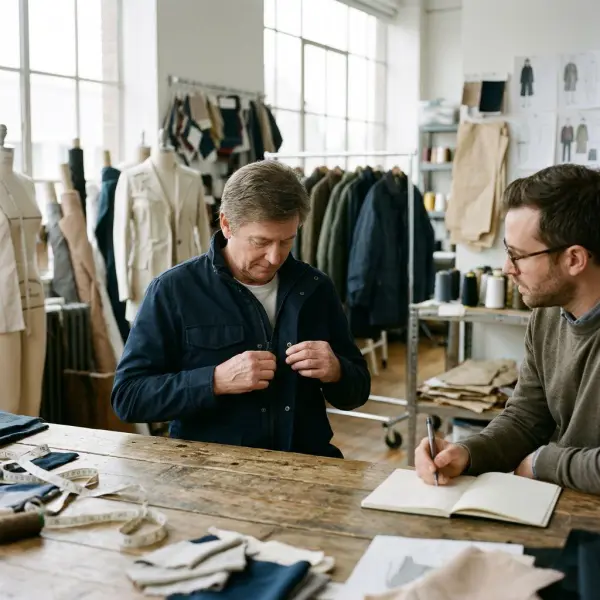
Inclusive clothing should be tested through realistic dressing and wearing activities involving people whose requirements match the intended product use. A conventional fitting session may establish general garment proportions but cannot fully demonstrate whether a product is accessible.
Testing should begin with clearly defined user tasks. The team needs to understand what the garment is supposed to improve and which outcomes can be meaningfully observed.
A shirt intended for one-handed dressing, for example, may require evaluation of opening, positioning, closure alignment, and removal. A seated-fit trouser may require assessment of comfort, coverage, garment movement, and access to pockets during actual seated use.
The design should be evaluated through both observation and user-reported experience.
Functional Testing and Wearer Feedback
Functional testing can identify where a garment becomes difficult to use, while wearer feedback provides information about comfort, preference, and perceived usability.
Useful assessment areas include:
- Dressing accessibility: Whether the intended wearer can perform the relevant dressing steps using their preferred method.
- Closure usability: Whether fastenings can be located, operated, secured, and released as intended.
- Fit in relevant positions: Whether the garment maintains appropriate coverage and comfort while seated, standing, or moving.
- Extended-wear comfort: Whether seams, trims, and fabric distribution create unwanted discomfort during realistic use.
- Durability and care: Whether adaptive details remain reliable after repeated operation and appropriate laundering.
- Appearance and acceptability: Whether the garment meets the wearer's practical and personal expectations.
Evaluation should not rely solely on how quickly someone can dress. A faster dressing process may be useful, but speed does not capture all aspects of garment success.
User confidence, choice, comfort, and the need for assistance may also be relevant outcomes, depending on the product's purpose.
Why Testing Must Include Different User Experiences
A single prototype can perform differently for users with different capabilities, even when they appear to share a similar mobility requirement.
For instance, two people may both prefer front-opening shirts but have different experiences with the same closure because of variations in reach, hand function, or dressing habits.
This is why usability findings should be documented with enough context to explain who participated, which tasks were tested, and what limitations were observed.
Research on adaptive apparel for people with disabilities has emphasized user-centered design and identified gaps in existing research across disability types, cultural factors, and consumer experiences. For apparel businesses, the lesson is to avoid generalizing from a narrow sample without considering the broader range of potential users.
Turning Inclusive Design Requirements Into Manufacturing Specifications
A design concept becomes commercially useful only when a factory can reproduce it consistently.
This is particularly important when accessibility depends on the position, dimensions, or operation of a component. A few millimeters of variation may or may not be consequential for an ordinary decorative detail, but changes to an accessible closure can affect how the intended user operates it.
Inclusive garment requirements therefore need to be reflected in the technical package, sample approval process, and quality control criteria.
Translating User Needs Into a Tech Pack
A technical package for an inclusive garment may need additional information beyond conventional measurements and construction drawings.
For example, a tech pack for seated-fit trousers could include the intended fitting position, front and back rise specifications, pocket placement, relevant seam details, and garment evaluation instructions.
A shirt with an alternative fastening may require closure dimensions, attachment specifications, opening configuration, component sourcing references, and approved functional performance criteria.
These details reduce ambiguity between designers, patternmakers, sourcing teams, and factory operators.
The same product-development discipline applies to other apparel categories. Clear specifications and validation procedures become especially valuable when garment performance relies on details that should not be modified casually during production.
Material Sourcing and Component Availability
Specialized closures, adjustable construction components, or unusual trim requirements may affect sourcing lead times, minimum order quantities, and supplier selection.
A brand should confirm that approved components are available at the intended production scale. Substituting a closure without re-evaluating usability could change the garment's accessibility.
Supplier communication should therefore identify which features are functionally critical and which alternatives are acceptable.
Quality Control Beyond Visual Inspection
A garment may look correct during final inspection while an accessible fastening requires excessive force or a specialized opening no longer operates as intended.
Quality assurance should include functional checks appropriate to the product. This may involve verifying closure placement, operation, attachment strength, seam construction, measurement consistency, and laundering performance.
For brands considering adaptive fashion and accessible clothing fundamentals, these manufacturing decisions illustrate how accessibility becomes a repeatable product quality requirement rather than a marketing description.
How Fashion Businesses Can Apply Inclusive Clothing Design Strategically
Fashion businesses can approach inclusive clothing design through product innovation, targeted assortment development, or improvements to existing garments.
The most practical strategy depends on the company's technical capabilities, customer understanding, commercial positioning, and available resources.
A specialized adaptive clothing brand may build its product development around specific accessibility requirements. An established mainstream apparel label may begin by identifying one recurring usability barrier within an existing product category.
Neither approach is universally preferable.
Begin With One Defined Use Case
An apparel company could begin with a workwear shirt designed for easier fastening, seated-fit trousers for a clearly defined consumer group, or an everyday jacket with alternative entry construction.
The first development project should have a specific user requirement and a testable objective.
Starting with one use case helps limit technical complexity. It also makes it easier to compare prototypes, evaluate manufacturing feasibility, and identify whether the proposed garment provides a meaningful improvement.
Build the Development Process Around User Participation
User interviews and prototype trials should be planned early enough to influence design decisions.
One example of collaborative development is Open Style Lab's FashionABLE project, which brought together people with spinal cord injuries, healthcare professionals, and inclusive design practitioners to develop practical adaptive clothing guidance.
The project illustrates how lived experience, professional expertise, and garment design knowledge can contribute to more relevant solutions.
For commercial brands, user participation should be structured and appropriately compensated where possible. Feedback should be documented, evaluated, and incorporated into prototype revisions rather than treated as a one-time endorsement.
Consider Modular and Specialized Product Strategies
The appropriate level of adaptation varies according to the complexity of the dressing requirement.
Some accessibility improvements can be integrated into an existing product with relatively limited construction changes. Others may require a dedicated pattern block, specialized opening system, or substantially different garment architecture.
The 2024 inclusive apparel design framework identifies user-aware, modular, and special-purpose approaches for different levels of clothing-use difficulty. For product teams, this provides a conceptual way to distinguish broad usability improvements from solutions that serve more specialized requirements.
The commercial decision should follow the user need, not a predetermined preference for either mainstream or specialized apparel.
Build Clear Product Communication
Customers should not need to guess whether a garment's features match their needs.
Product pages can explain where openings are located, how closures work, which measurements are relevant, and whether fit was developed for seated or standing wear.
Where appropriate, demonstration videos can show the garment being used in realistic conditions. Images should accurately represent the product rather than exaggerating its accessibility.
Digital retail accessibility should also be considered. The Web Content Accessibility Guidelines 2.2 provide internationally recognized recommendations for making web content more accessible, although compliance with those guidelines does not establish that a physical garment is accessible.
Common Mistakes in Inclusive Clothing Development
Designing Around a Diagnosis Instead of a Dressing Task
A medical diagnosis does not provide a complete description of how someone dresses or moves. Designing a garment based only on a diagnostic label can lead to assumptions about which features are needed. The resulting product may be unsuitable for people within the intended customer group. A more reliable process examines functional capabilities, preferred dressing methods, garment requirements, and user feedback.
Assuming Larger or Stretchier Clothing Is Automatically Accessible
Increasing garment size or choosing highly elastic fabric may help some users, but these changes can also produce poor fit, excess bulk, inadequate support, or unstable garment positioning. This mistake often results from treating accessibility as a general comfort adjustment rather than a specific product requirement. Designers should evaluate pattern geometry, openings, fabric behavior, and dressing sequences together. The appropriate solution may require construction changes rather than simply adding ease.
Testing Garments Only in Standing Positions
A conventional standing fitting may fail to reveal problems that appear during prolonged sitting or seated movement. This can affect waist coverage, trouser proportions, pocket access, and the placement of internal seams. Brands should assess garments in the positions relevant to intended use, documenting how the garment behaves during realistic activities. A seated-fit product should not be approved solely because it looks correct on a standing fit model.
Treating One Accessible Closure as a Complete Solution
A garment with an alternative fastening may still be difficult to put on, position, or remove. Focusing on one component can distract product teams from the complete dressing experience. The better approach is to observe the full sequence of use and identify where difficulties remain. Closure performance, body movement, fabric alignment, coverage, and ease of removal should be considered together.
Overlooking Manufacturing Consistency
A well-performing prototype can lose its intended usability if production introduces changes to closure placement, pattern proportions, or fabric characteristics. Suppliers may substitute components or adjust assembly methods without recognizing their functional importance. Brands should identify critical accessibility specifications, approve production samples, and include relevant functional checks in quality control. Consistent manufacturing is necessary for delivering the experience established during product development.
What Brands Should Verify Before Making Accessibility Claims
Inclusive clothing design should be supported by evidence appropriate to the product and its intended use. A garment should not be described as accessible to everyone simply because it includes an alternative fastening or an adjustable feature.
Several technical limitations deserve particular attention.
Magnetic components require specific safety assessment. Strong magnets can interfere with certain implanted medical devices. The US Food and Drug Administration's guidance on magnetic interference addresses high-strength magnets in consumer electronics; it should not be treated as a garment-specific certification or proof that a particular magnetic closure is safe. Clothing manufacturers need to evaluate the actual magnetic components, their placement, relevant device warnings, and appropriate safety requirements.
Comfort is individual and context-dependent. Soft fabric, flat seams, and adjustable construction may improve comfort for some wearers, but they cannot guarantee the absence of irritation or pressure-related problems. Products intended for users with medically significant skin or pressure risks may require additional professional input.
Functional test results have limits. Positive feedback from a small group can be useful for product development, but it does not establish universal suitability. Brands should describe their claims accurately and avoid implying clinical or therapeutic benefits that have not been demonstrated.
Accessibility is not a single product standard. Requirements vary by consumer, garment category, intended use, and sales market. Manufacturers should verify applicable consumer product, labeling, chemical, component safety, and other relevant obligations rather than assuming that the term "adaptive" provides a regulatory exemption or certification.
These limitations do not diminish the value of inclusive clothing design. They provide the boundaries needed for responsible product development and credible communication.
Frequently Asked Questions About Inclusive Clothing Design
What Is Inclusive Clothing Design?
Inclusive clothing design is an apparel development approach that considers people with different abilities, body characteristics, and clothing-use requirements. It aims to reduce avoidable barriers through appropriate garment construction, fit, materials, and functional details.
Unlike a product developed for one narrowly defined requirement, inclusive design may seek to improve usability across a broader range of consumers. However, no single garment can be assumed to accommodate everyone. The practical objective is to understand user diversity and develop clothing that supports clearly identified needs while maintaining acceptable quality, comfort, appearance, and manufacturing feasibility.
How Does Clothing Design Help People With Limited Mobility?
Clothing design can help people with limited mobility by reducing difficult dressing movements, improving access to openings, and accommodating relevant body positions. Alternative fastenings, modified garment entry points, and adjusted pattern construction are possible approaches.
The most appropriate design depends on the movements a person can perform comfortably and how they prefer to dress. A person with restricted shoulder mobility may benefit from a different shirt opening, while a wheelchair user may prioritize seated-fit proportions. Brands should identify the specific task involved rather than assuming that one adaptive feature will support every form of limited mobility.
What Clothing Features Are Helpful for Wheelchair Users?
Potentially helpful features include seated-fit patterns, carefully positioned seams, accessible pockets, suitable trouser lengths, and construction details that reduce unwanted fabric accumulation while seated. Some users may also benefit from alternative openings or adjustable waist construction.
These features are not universally necessary. Wheelchair users differ in posture, mobility, body shape, equipment, dressing methods, and personal preferences. A garment designed around an assumed standard seated body may still fit poorly. Product developers should involve intended users in fitting and wear testing and clearly explain which features have been incorporated and why.
Can Inclusive Clothing Be Designed for One-Handed Dressing?
Yes. Clothing intended for one-handed dressing can incorporate alternative closure positions, easier-to-operate fastenings, or construction that reduces the need to hold multiple fabric sections simultaneously.
However, the complete dressing sequence matters. A shirt with an accessible front closure may still require movements that are difficult to perform with one hand. Designers should test garment orientation, sleeve entry, closure alignment, adjustment, and removal. Actual usability also depends on the wearer's range of movement, dexterity, preferred technique, and the garment's material characteristics. A product should only be marketed for one-handed dressing when that claim is supported by appropriate testing.
Are Magnetic Closures Better Than Buttons for Adaptive Clothing?
Magnetic closures may be easier for some people with limited finger dexterity because they can reduce certain alignment and manipulation requirements. However, they are not universally preferable to conventional buttons or other fastening systems.
Their suitability depends on magnetic strength, positioning, garment construction, ease of operation, security during use, laundering performance, and safety considerations. Magnetic components may create concerns for people with certain implanted medical devices. Brands should evaluate the intended closure in its actual garment application and consider alternative fastening options where appropriate. A functional comparison is more useful than assuming one closure category is always more accessible.
How Can Garment Manufacturers Support Inclusive Design?
Manufacturers can support inclusive design by translating accessibility requirements into repeatable construction methods and quality controls. This includes following accurate technical specifications, maintaining approved closure positions, verifying measurements in relevant garment configurations, and identifying component substitutions that could affect usability.
Factories may also need to collaborate more closely with design teams during sampling, especially when unfamiliar construction methods are involved. Accessibility-related details should be treated as functional product specifications rather than optional finishing preferences. The manufacturing objective is to reproduce the intended user experience consistently while meeting appropriate cost, durability, safety, and production requirements.
Should Inclusive Clothing Use Different Sizing Systems?
Inclusive clothing may require additional measurements or fit classifications when conventional sizing does not adequately describe the intended garment. For example, seated-fit trousers may need measurements and fitting information that account for seated body proportions.
However, introducing an entirely separate sizing system is not automatically necessary. The decision depends on the product category, target users, pattern architecture, and how customers select garments. Brands should avoid implying that conventional size labels alone provide enough information when specialized fit considerations are relevant. Detailed measurement guidance, appropriate fitting imagery, and clear explanations of garment construction may be more useful than creating additional size categories without supporting research.
Conclusion: Inclusive Clothing Begins With Understanding How People Dress
Inclusive clothing design requires apparel businesses to examine an aspect of garment development that conventional fashion processes can overlook: how people actually interact with their clothing.
Mobility, hand dexterity, body position, dressing assistance, and personal preferences can influence the way garments need to be constructed. These requirements cannot be addressed reliably through a single fastening solution, a larger pattern, or a broad accessibility label.
The most useful approach connects lived experience with technical design decisions. User research identifies the clothing barrier, garment development explores possible solutions, and realistic testing determines whether the proposed construction works as intended. Manufacturing then needs to reproduce those details consistently.
For fashion businesses, the opportunity is to create products that serve clearly understood requirements without treating accessibility as separate from normal expectations of quality, comfort, and appearance.
This also creates a foundation for the next question in adaptive fashion: how brands can develop clothing that meets functional needs while allowing people to express their individual style.
That relationship is explored further in why functionality and style should work together in adaptive fashion.




Comments 0
Leave a CommentSend Comment
Anda harus Login terlebih dahulu untuk dapat memberikan komentar.