
Adaptive Fashion Explained: Making Clothing More Accessible
Quick Answer: What Is Adaptive Fashion?
Adaptive fashion is clothing designed or modified to make dressing, wearing, and removing garments more accessible for people with different physical, sensory, or functional needs. It combines familiar apparel categories with practical design features such as easier fastenings, alternative garment openings, adjustable fits, and construction details that accommodate different body positions or movement capabilities.
Unlike conventional clothing, which is often developed around standardized fitting and dressing assumptions, adaptive clothing considers how garments function in everyday situations. A pair of trousers, for example, may require a different waist construction for someone who spends much of the day seated. A shirt may use alternative closures to make fastening easier for someone with limited hand dexterity.
The objective is not to create one clothing solution for every disability. It is to reduce avoidable barriers while preserving comfort, personal preference, and choice.
For fashion businesses, adaptive design introduces a broader way of evaluating apparel performance. Fit and appearance remain important, but dressing accessibility, garment usability, and the needs of people traditionally underserved by mainstream clothing become part of product development.
What Is Adaptive Fashion?
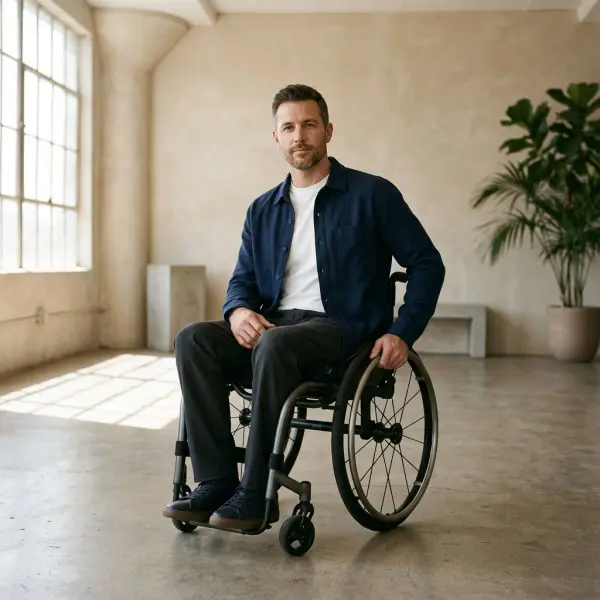
Adaptive fashion refers to apparel designed or adapted to address clothing-related barriers experienced by people with disabilities, mobility limitations, sensory sensitivities, or other dressing needs. The category can include everyday garments, workwear, formal clothing, outerwear, underwear, and footwear. What distinguishes adaptive clothing is not necessarily its visible appearance, but the way its construction supports a particular user requirement.
A conventional garment generally assumes that the wearer can perform familiar dressing actions, such as raising both arms, bending to step into trousers, manipulating small buttons, or pulling fabric over the head. Those actions are not equally comfortable or practical for everyone. Adaptive garment development questions these assumptions and adjusts the design where necessary.
A 2024 systematic literature review published in the International Journal of Consumer Studies describes adaptive apparel as modified or customized clothing that accommodates the requirements of people with disabilities or impairments. The review examined 51 academic articles and highlighted the importance of user-centered design, functional performance, and aesthetic preferences in developing clothing for this market. The research also identified continuing gaps in understanding consumer experiences and accessibility barriers.
The systematic review of adaptive apparel research provides a useful foundation for understanding why accessibility should be considered within the broader apparel design process.
Adaptive Clothing, Inclusive Clothing, and Conventional Apparel
Adaptive and inclusive fashion are related concepts, but they are not entirely interchangeable.
Adaptive clothing generally addresses specific dressing or wearing requirements. Inclusive clothing design takes a broader approach by considering a wider diversity of users during product development. Universal design aims to make products usable by as many people as reasonably possible without requiring specialized adaptation, although one universal solution cannot meet every clothing need.
|
Clothing Approach |
Primary Design Focus |
Practical Example |
|
Conventional apparel |
Fit, style, price, and performance for the intended target consumer |
Standard trousers with a conventional button and zipper |
|
Adaptive clothing |
Specific dressing, mobility, sensory, or functional requirements |
Trousers with an alternative closure and a seated-fit pattern |
|
Inclusive clothing design |
Greater usability across people with different abilities and needs |
A jacket designed with easier-to-use closures while retaining a mainstream silhouette |
|
Specialized functional or care clothing |
Requirements associated with a particular care or functional situation |
Garments designed to provide convenient access to certain medical devices |
These categories can overlap. A jacket developed for easier one-handed dressing may also appeal to customers who do not identify as disabled. Similarly, a specialized garment may incorporate inclusive design principles while remaining intended for a relatively narrow group of users.
The distinction matters commercially because it affects product positioning. Brands need to understand whether they are offering a specialized solution, improving usability across an existing collection, or developing a dedicated adaptive apparel range.
Why Clothing Accessibility Matters
Clothing is part of everyday independence, personal identity, social participation, and professional presentation. When a garment is difficult to put on, uncomfortable in a particular position, or incompatible with a person's dressing routine, its appearance and material quality may offer limited practical value.
The World Health Organization reported in August 2026 that more than 1.3 billion people, approximately 16% of the global population, live with disability. This figure illustrates the scale and diversity of disability worldwide, although it should not be interpreted as the number of people who need or intend to purchase adaptive clothing.
According to the World Health Organization's disability fact sheet, disability experiences are shaped by both individual circumstances and the environments in which people live. Clothing accessibility can be understood within this broader context: barriers do not arise only from a person's abilities, but also from products that fail to accommodate them.
Research published in Disability and Rehabilitation also identified functional, cultural, and sensory clothing barriers that could limit participation in meaningful activities. This reinforces why accessible apparel should not be evaluated solely by the ease of fastening a garment. The complete experience of selecting, dressing, wearing, and using clothing matters.
For a fashion brand, the practical implication is straightforward. A garment may meet conventional quality standards and still be inaccessible to part of its potential audience. Recognizing that distinction expands the definition of product performance.
Where Conventional Clothing Can Create Barriers
Many apparel design decisions are based on familiar movement patterns. A shirt with narrow cuffs may work well for customers who can easily manipulate buttons, while creating difficulty for someone with limited finger movement. A pair of trousers may fit correctly when standing but feel uncomfortable after prolonged sitting.
These are not necessarily manufacturing defects. They are examples of how a product can function as intended for one group while remaining unsuitable for another.
Several recurring areas deserve attention.
Fastenings and Hand Dexterity
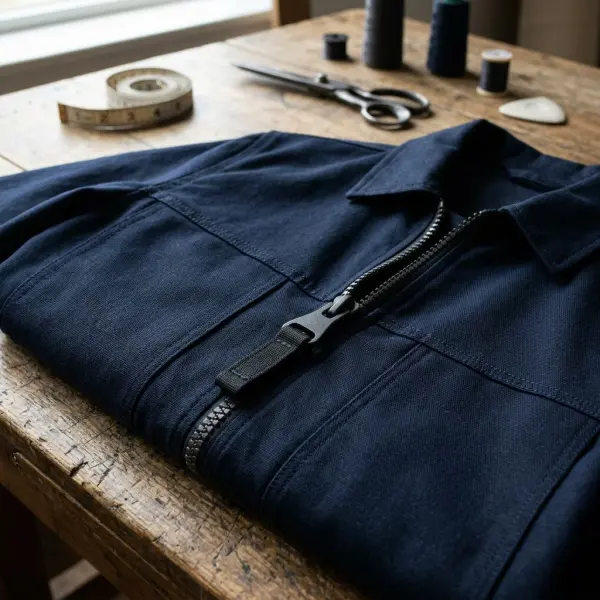
Small buttons, narrow zipper pulls, hook-and-eye closures, and tightly fitted openings can be difficult to operate for people with limited grip strength, reduced dexterity, or restricted hand movement.
Possible design responses include larger pull tabs, alternative fastening systems, or repositioned closures. Their effectiveness depends on the user's abilities, the force required to operate them, and the garment's intended use.
Body Position and Garment Fit
Standard apparel patterns are commonly developed and assessed on standing bodies. Yet the relationship between the waist, hips, thighs, and garment changes when the wearer is seated.
A garment intended for extended seated use may benefit from reconsidered rise proportions, seam placement, or fabric distribution. These modifications require fitting and wear testing rather than assuming that simply increasing garment size will solve the problem.
Dressing Access and Range of Motion
Pullover garments can be inconvenient when raising the arms is difficult. Similarly, narrow leg openings or fixed waistbands may complicate dressing when bending, balancing, or changing position is challenging.
Alternative openings and adjustable construction can provide additional dressing options. However, the design must remain practical for the actual dressing process, including situations where another person provides assistance.
Sensory Comfort and Skin Contact
Garment seams, labels, trims, and fabric surfaces can create discomfort for some wearers with sensory sensitivities or skin-related concerns. The interaction between clothing and the body may become particularly important when a garment is worn in one position for an extended period.
Soft fabrics, thoughtful seam placement, removable or printed labels, and appropriate fit may help address some concerns. No particular material or seam construction is comfortable for every individual, making wearer feedback essential.
These examples introduce the fundamental accessibility challenges. The more detailed relationship between individual mobility requirements and garment construction belongs in inclusive clothing design for different mobility and dressing needs.
What Makes a Garment Adaptive?
A garment becomes adaptive when its design incorporates features intended to address an identifiable accessibility requirement. These features may be subtle modifications to an existing pattern or more substantial changes to how the garment is constructed and worn.
The most appropriate feature depends on the user and the problem being addressed. A magnetic closure may help some people manage fastening, while others may prefer hook-and-loop systems, elastic openings, or larger conventional fasteners.
The following examples illustrate common adaptive design approaches and the questions a brand should investigate.
|
Adaptive Feature |
Intended Purpose |
What Needs Verification |
|
Alternative fastenings |
Make garments easier to open and close |
Operating force, positioning, reliability, and safety |
|
Adjustable openings |
Provide flexibility during dressing |
Ease of access, fit security, and durability |
|
Seated-fit construction |
Improve garment fit in seated positions |
Waist and rise proportions, pressure areas, and movement |
|
Modified seam or label placement |
Reduce unwanted friction or sensory discomfort |
Individual comfort, construction strength, and wash performance |
|
Alternative garment entry points |
Offer different ways to put on or remove clothing |
Dressing sequence, accessibility, and appearance when closed |
|
Accessible pockets and pull tabs |
Improve usability and reach |
Actual access from relevant body positions |
A feature should not be described as universally accessible simply because it differs from conventional construction. Accessibility is demonstrated through usability for the intended wearers, not by the presence of a particular trim or fastening method.
The distinction becomes clear during product testing. A larger zipper pull may be easier to grasp, but it may not help someone who has difficulty aligning the zipper components. Similarly, an elastic waistband may simplify dressing while failing to provide the stability, appearance, or pressure distribution required by another user.
Who Can Benefit From Adaptive Clothing?
Adaptive clothing can be relevant to people with a wide variety of needs, including people with physical disabilities, limited mobility, reduced hand dexterity, certain sensory sensitivities, or temporary restrictions following injury or surgery. Some older adults may also prefer clothing that requires less physical effort to put on and remove.
However, these groups should not be treated as uniform consumer segments. Two people with the same medical diagnosis may have different dressing routines, personal preferences, and functional requirements. One wheelchair user may prioritize seated fit, while another may place greater importance on fastening access or garment compatibility with mobility equipment.
Clothing accessibility also involves how a person prefers to dress. Some people dress independently, some use assistance, and others alternate between the two depending on circumstances. A product designed for assisted dressing should not automatically be marketed as enabling independent dressing.
For fashion businesses, this means the target market should be defined through specific clothing requirements and consumer preferences rather than broad assumptions about disability.
The Difference Between Designing for Users and Designing With Users
One of the most consequential decisions in adaptive fashion development happens before the first pattern is made: determining whose experience informs the design.
A company might identify a seemingly obvious problem, such as difficulties fastening buttons, and immediately select an alternative closure. Yet the proposed solution may introduce unexpected issues with positioning, washing, safety, or appearance. The product could address one inconvenience while creating another.
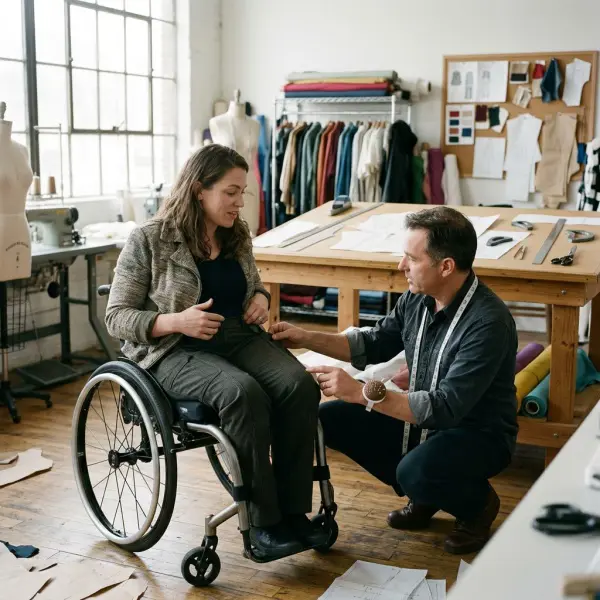
A user-centered approach begins by understanding the dressing task, the wearer's environment, and the practical difficulties involved. It then allows potential users to evaluate prototypes and influence revisions.
The nonprofit organization Open Style Lab illustrates this approach through collaborations involving designers, engineers, occupational therapists, and people with disabilities. Its work emphasizes the value of lived experience in developing accessible wearable solutions.
Its FashionABLE project, focused on adaptive clothing solutions for people with spinal cord injuries, was developed through collaboration among people with lived experience, healthcare professionals, and designers. The resulting guidance addresses practical clothing adaptations rather than assuming that a single commercial garment can meet every person's needs.
For apparel brands, this offers a useful operational lesson. Consumer participation should not be limited to reviewing a finished sample. Feedback is more valuable when it can influence the design brief, prototype construction, fitting process, and final product specifications.
Adaptive Fashion as a Product Development Opportunity
For fashion companies, adaptive apparel creates opportunities to improve how products are designed, evaluated, and communicated. Those opportunities extend beyond introducing a dedicated collection.
A brand developing adaptive trousers, for example, may need to reconsider pattern blocks, fit testing, trim specifications, and product descriptions. Some of the resulting knowledge may improve other garments within the existing assortment, particularly where easier closures or more flexible fits benefit a broader group of customers.
At the same time, adaptive fashion presents genuine commercial and operational challenges. Specialized components can affect material sourcing, minimum order quantities, and production costs. Additional fitting sessions and smaller initial production runs may increase unit costs. A product that serves a narrowly defined need may require a different inventory strategy from a conventional bestseller.
A 2024 research paper on inclusive apparel design for different reach, dexterity, and mobility capabilities proposes different design approaches according to the extent of clothing-use difficulty. This is a useful reminder that mainstream usability improvements and highly specialized garment solutions should not always be developed through the same product strategy.
For smaller labels, a focused pilot may be more realistic than launching a large collection. A well-defined garment with a clearly documented user need can provide more actionable learning than an assortment of products labeled adaptive without sufficient testing.
Understanding the Market Without Overestimating Demand
The global prevalence of disability does not directly translate into an equivalent adaptive clothing market. People with disabilities have different purchasing power, fashion preferences, physical requirements, geographic access, and attitudes toward adaptive products.
A reliable market assessment therefore needs to move beyond population-level statistics. Brands should examine the actual problem being solved, existing alternatives, the price customers consider reasonable, and whether the proposed garment fits their preferred style and routine.
This is especially relevant when developing business cases for new product categories. A large potential population may indicate an underserved area, but it does not establish demand for a particular garment, price point, or distribution channel.
How Fashion Brands Can Develop More Accessible Clothing
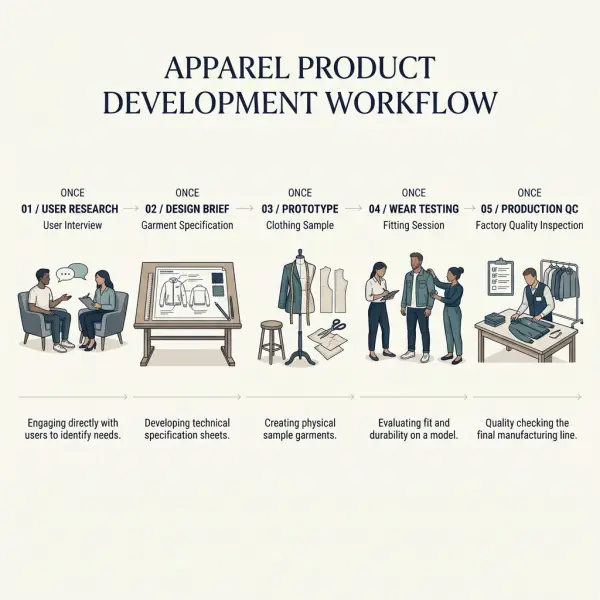
Successful adaptive fashion development depends on integrating accessibility into established apparel workflows. The process should remain recognizable to product developers and manufacturers, with additional attention given to user research, functional specifications, and relevant wear-testing conditions.
Start With a Specific Clothing Problem
Product teams should begin with an observable dressing or wearing difficulty rather than a predefined technical solution.
A useful design brief might focus on developing an everyday shirt that can be fastened with reduced hand dexterity while retaining a conventional shirt appearance. That brief is more actionable than simply requesting an inclusive shirt.
Design researchers can then document the dressing process, the movements required, and user preferences. Such findings provide a basis for deciding whether the challenge requires a new pattern, a different closure, a material change, or a combination of modifications.
Translate Accessibility Into Technical Specifications
Accessibility requirements need to become measurable or observable product criteria. A request for an easy-to-use fastening is insufficient unless the development team understands where the closure should be positioned, how it will be operated, and what performance is expected.
The technical package may require additional construction drawings, fastening specifications, measurements taken in different body positions, and instructions for handling unfamiliar trims.
Factories also need clarity about which details are essential to accessibility. A seemingly minor substitution of a pull tab, seam finish, or closure position may change how the product functions.
Test the Complete Dressing and Wearing Experience
A garment can appear successful during a static fitting and still create problems in everyday use. Testing should therefore examine the entire sequence of putting on, fastening, adjusting, wearing, and removing the garment.
Where relevant, trials may include movement, extended seated wear, laundering, and repeated operation of closures. The specific test conditions should reflect the intended user group and product claims.
Product teams should distinguish between technical performance, wearer preference, and individual comfort. Passing a closure durability test does not establish that the garment is easy to use, just as positive feedback from a few participants does not prove suitability for everyone.
Coordinate Quality Control and Supplier Capability
Adaptive features should be incorporated into ordinary quality assurance procedures, with additional checks where necessary. These may include closure positioning, component attachment, seam integrity, consistency between sizes, and wash durability.
Suppliers must also be able to reproduce approved construction details at the intended production scale. Unusual components or complicated assembly sequences can increase variation if factories lack appropriate instructions, equipment, or training.
The same principles apply to conventional garment construction. Articles addressing lining problems that affect garment fit, movement, and durability provide complementary context for understanding how construction decisions influence wearer comfort and product reliability.
Making Adaptive Clothing Accessible at Retail
Physical product accessibility does not guarantee an accessible shopping experience. Customers also need enough accurate information to determine whether a garment will suit their needs before purchasing it.
A product description that simply states "easy dressing" may be too vague to support a confident decision. Customers may need to know where the openings are located, how a fastening operates, whether trousers are patterned for seated use, and which measurements are relevant.
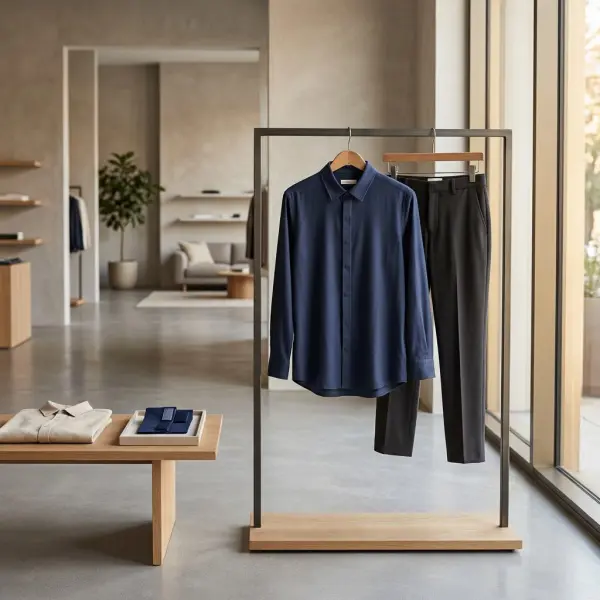
Practical retail communication should describe functional features without making unsupported claims about particular disabilities. Photographs can show garments from multiple angles and, where applicable, in both seated and standing positions. Product demonstrations can clarify how closures work more effectively than promotional claims alone.
Online accessibility matters as well. The World Wide Web Consortium's guidance on accessible images explains how meaningful text alternatives help users access information presented visually. For fashion ecommerce, this supports the use of informative product-image descriptions alongside accessible navigation and clear written specifications.
Retailers should avoid treating accessibility as a marketing label that eliminates the need for detail. The objective is to give customers enough information to assess a garment's suitability for themselves.
A Practical Starting Framework for Fashion Businesses
Brands do not need to redesign their entire assortment to begin investigating adaptive fashion. A controlled development project can help determine whether a particular accessibility improvement is useful, technically feasible, and commercially appropriate.
A practical first project could follow five stages:
- Identify one underserved clothing requirement. Define a particular dressing or wearing challenge through interviews, observation, and available research.
- Select a relevant garment category. Choose an item where the proposed improvement is meaningful and where the business already understands manufacturing requirements.
- Develop and compare prototypes. Test alternative construction approaches rather than assuming the first adaptation is sufficient.
- Evaluate performance with intended users. Gather feedback on usability, fit, comfort, appearance, and care requirements under realistic conditions.
- Launch cautiously and learn from actual use. Monitor customer feedback, returns, product faults, and opportunities for design refinement.
The most useful outcome of an initial pilot is not necessarily a large sales volume. It is reliable evidence about whether the product addresses a real need and whether the business can deliver it consistently.
For larger apparel businesses, the same approach can support decisions about product architecture, size ranges, specialized collections, and shared construction features across multiple garments.
Common Mistakes When Developing Adaptive Clothing
Treating People With Disabilities as One Consumer Segment
A single adaptive collection cannot be assumed to meet the needs of every person with a disability. This mistake often occurs when companies define customers by broad demographic categories instead of specific dressing requirements. It can lead to products that appear inclusive in marketing but fail to address the needs of their intended users. More useful segmentation considers functional requirements alongside style preferences, garment category, price expectations, and shopping behavior.
Assuming an Alternative Fastener Is Enough
Replacing buttons with magnetic closures or hook-and-loop fasteners may improve accessibility for certain users, but it does not automatically make the full garment accessible. Sleeve openings, garment weight, closure placement, reach requirements, and the way the garment is put on can remain problematic. The better approach is to assess the complete dressing sequence and test the final construction, rather than evaluating one component independently.
Testing Only on Conventional Fit Models
Standard fit models and dress forms remain useful for conventional garment measurements, but they may not represent the body positions or dressing methods relevant to an adaptive product. A garment can pass a conventional fitting review while creating discomfort when seated or difficulty during dressing. Brands should involve intended users in fit and wear trials and document the conditions under which the garment has been evaluated.
Prioritizing Function Without Understanding Style Preferences
Functional design can become overly restrictive when a company assumes that customers will accept any appearance if the garment is easier to wear. Research on adaptive apparel has identified both functional and aesthetic considerations as important to the clothing experience. Brands should therefore incorporate style preferences into early consumer research rather than treating appearance as a final decorative decision. The broader relationship is explored in why functionality and style should work together in adaptive fashion.
Making Accessibility Claims Without Clear Evidence
Descriptions such as "suitable for all disabilities" or "completely accessible" are difficult to substantiate because user requirements differ. Broad claims can also create confusion when customers interpret them as assurances about comfort, safety, or ease of dressing. Better product communication identifies the actual features, their intended purpose, and any meaningful limitations. This allows customers to make informed decisions without relying on exaggerated promises.
Important Technical and Commercial Caveats
Adaptive design requires the same discipline applied to other performance-oriented apparel categories. The intended benefit must be compatible with fabric behavior, construction methods, component safety, and maintenance requirements.
Magnetic closures illustrate why these considerations matter. Some magnetic fastenings can simplify garment operation, but magnets may present concerns for certain implanted medical devices, depending on magnetic strength, proximity, and device characteristics. The US Food and Drug Administration has documented potential interference involving strong magnets and some cardiac implanted devices. Although its guidance on magnets and implanted medical devices addresses consumer electronics rather than establishing a universal standard for clothing closures, it reinforces the need for product-specific risk assessment, supplier information, and appropriate medical-device precautions.
Other limitations are less obvious. A soft fabric may be comfortable but insufficiently stable for a particular closure. A discreet garment opening may improve appearance while making access more difficult. Additional construction features can also increase production cost, repair complexity, or laundering requirements.
Before commercial release, brands should verify intended use, component safety, relevant regulatory obligations in their sales markets, repeat-use durability, and actual wearer feedback. Product-specific accessibility claims should be supported by testing appropriate to the claim.
Frequently Asked Questions About Adaptive Fashion
Is Adaptive Fashion Only for People With Disabilities?
No. Adaptive fashion can also serve people with temporary injuries, age-related movement limitations, certain sensory preferences, or other circumstances that make conventional dressing difficult. However, the category is closely associated with clothing requirements that have historically been underserved for people with disabilities.
A brand should not assume that everyone within these groups needs adaptive clothing. Many people prefer conventional garments, while others require particular modifications that are not available in standard collections. The practical approach is to define the usability problem a garment addresses and allow customers to assess whether its features match their individual requirements.
What Is the Difference Between Adaptive Clothing and Regular Clothing?
The principal difference is that adaptive clothing incorporates construction features intended to accommodate specific dressing, wearing, or mobility requirements. Conventional clothing may have similar features, but they are not necessarily developed or tested for accessibility.
For example, a standard elastic-waist trouser may be easier to put on than a tailored pair with a button closure. However, that does not establish whether it is suitable for extended seated use or assisted dressing. Adaptive product development examines how the garment performs for its intended users rather than relying only on general convenience or traditional fit measurements.
Can Adaptive Clothing Look Like Mainstream Fashion?
Yes. Many accessibility features can be incorporated into garments with familiar silhouettes, colors, and styling. Alternative closures can sometimes be concealed, while adjustments to garment openings or pattern construction may not be immediately visible when worn.
Nevertheless, a conventional appearance is not always the most important design objective. Some users prefer visible functional features, distinctive styles, or specialized constructions that provide clearer access. Brands should avoid treating discreetness as a universal preference. Appearance decisions should be informed by the same consumer research used to evaluate functionality, ensuring that customers retain meaningful choices rather than being limited to a predetermined aesthetic.
Is Adaptive Clothing More Expensive to Manufacture?
Adaptive clothing can involve higher production costs when it requires specialized trims, additional construction operations, multiple prototypes, or smaller production quantities. However, it is not inherently more expensive in every case. A relatively simple adjustment to an existing garment may involve limited additional complexity.
Cost depends on fabric, component availability, pattern changes, order volume, factory capabilities, and quality requirements. Brands should evaluate the specific bill of materials and production process rather than assuming a standard cost premium. Price positioning should also consider affordability and customer expectations, particularly when the garment addresses an everyday clothing requirement rather than a discretionary luxury purchase.
How Should Fashion Brands Test Adaptive Garments?
Brands should test adaptive garments with people whose dressing and wearing requirements match the intended product use. Evaluation should include more than a conventional fitting session. It may involve observing how a garment is put on, adjusted, worn during daily activities, and removed.
Relevant tests can cover closure operation, garment movement, fabric comfort, fit in different positions, repeated use, and laundering. Brands should record both successful outcomes and difficulties, then revise prototypes where necessary. Small qualitative trials can identify important design problems, but they should not be presented as proof of universal usability. Claims about performance must reflect the scope of actual testing.
Should Fashion Brands Launch a Separate Adaptive Collection?
A separate collection can make sense when products serve clearly differentiated requirements and benefit from specialized product information, sizing, or construction. However, integrating accessible features into an existing assortment may be more suitable when the modifications improve usability for a broader group of consumers.
The choice should follow product research and operational feasibility, not branding preference alone. A separate range may simplify discovery for certain customers but can also limit visibility if accessible products become isolated from mainstream shopping categories. Retailers should consider navigation, merchandising, customer feedback, and product discoverability when deciding how adaptive garments are presented.
Can Small Fashion Brands Enter the Adaptive Clothing Market?
Yes, but a narrowly focused development strategy is generally more manageable than attempting to serve many accessibility requirements at once. Smaller businesses can begin with a specific garment category and a well-researched clothing problem, then work with intended users to develop and evaluate a limited range of prototypes.
The main constraints are likely to include access to suitable participants, technical development expertise, specialized components, production minimums, and the cost of iteration. A small brand should establish realistic performance expectations and avoid overcommitting to large inventory orders before validating its product concept. A carefully tested, clearly positioned product provides a stronger foundation for future expansion.
Conclusion: Accessibility Belongs in the Definition of Good Clothing Design
Adaptive fashion encourages the apparel industry to evaluate clothing from the perspective of actual use, not only appearance, seasonal relevance, or conventional fit. It highlights problems that can be overlooked when designers assume that customers share similar movement capabilities, dressing routines, and sensory preferences.
The most effective response is not to add an adaptive label to familiar products. It is to understand specific clothing barriers, involve the people affected by them, and translate their experiences into reliable garment design and manufacturing decisions.
For fashion businesses, this approach requires product research, technical discipline, thoughtful merchandising, and realistic commercial expectations. Not every modification will serve a large audience, and not every adaptive feature belongs in every collection. What matters is whether the garment provides a meaningful, tested improvement for the people it is intended to serve.
As designers and retailers build a deeper understanding of diverse clothing requirements, accessibility can become a practical consideration within everyday product development. The result is greater choice for customers and a more informed understanding of what successful apparel design should deliver.




Comments 0
Leave a CommentSend Comment
Anda harus Login terlebih dahulu untuk dapat memberikan komentar.