
Fashion Industry Market Size & Trends 2026 (Full Analysis)
The global fashion industry market size in 2026 is entering a new phase of transformation, driven by digital acceleration, sustainability demands, and shifting consumer behavior. For fashion brand owners, garment businesses, and startups, understanding these changes is critical to building competitive and scalable brands.
This article provides a comprehensive analysis of fashion industry market size, key segments, and major trends in 2026, along with strategic insights tailored for modern fashion businesses.
1. Global Fashion Industry Market Size 2026
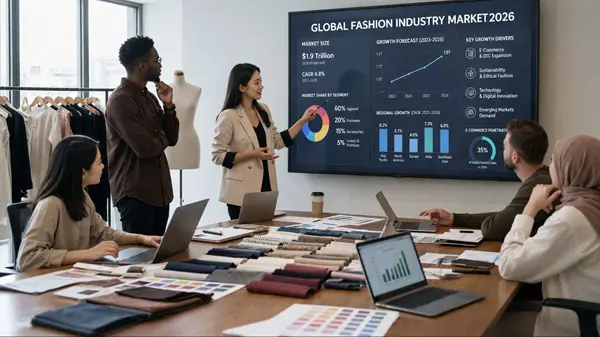
The global fashion industry is projected to reach approximately $1.8–$2.0 trillion in 2026, recovering steadily after years of post-pandemic recalibration and economic uncertainty. Growth is expected at a CAGR of 4–6%, driven by digital commerce, emerging markets, and evolving consumer demand.
The industry is broadly divided into key segments:
- Apparel (largest share, ~60%)
- Footwear (~20%)
- Accessories (~15%)
- Luxury & premium (~5–10%, but high-margin)
For startups and brand owners, the key takeaway is this: growth is uneven but opportunity-rich. Mature markets like the US and Europe are slowing, while Southeast Asia, India, and Africa are accelerating rapidly due to rising middle-class consumption.
Additionally, Direct-to-Consumer (DTC) and e-commerce penetration continue to expand, accounting for more than 30–40% of total fashion sales globally. Brands that fail to integrate digital-first strategies risk losing market relevance.
2. Apparel Segment: Core Growth Engine
The apparel segment remains the backbone of the fashion industry, accounting for over $1 trillion in global value. In 2026, growth is driven by three main forces: casualization, sustainability, and fast product cycles.

Consumers are increasingly prioritizing:
- Comfort-driven fashion (athleisure, relaxed tailoring)
- Versatile wardrobe pieces (multi-use outfits)
- Affordable yet stylish options
Fast fashion still dominates volume, but its growth is slowing due to sustainability concerns and regulatory pressure. At the same time, “slow fashion” and conscious brands are gaining traction, especially among Gen Z and Millennials.
For startups, this creates a dual opportunity:
- Compete on speed and trend responsiveness (fast fashion model)
- Or differentiate through ethical production and storytelling
However, operational complexity is increasing. Shorter production cycles require:
- Agile supply chains
- Smaller batch production
- Data-driven demand forecasting
Brands that can balance speed, cost, and sustainability will dominate this segment.
3. Footwear Segment: Innovation & Performance Focus
The global footwear market is expected to exceed $400 billion by 2026, with strong growth in sportswear and lifestyle categories. This segment is highly innovation-driven, particularly in materials and performance technology.

Key trends include:
- Rise of athleisure footwear (blending sport and lifestyle)
- Increased demand for comfort and ergonomics
- Growth of sustainable materials (recycled rubber, bio-based fabrics)
Major players continue to invest heavily in R&D, but startups can still compete by focusing on niche positioning, such as:
- Sustainable sneakers
- Minimalist footwear
- Custom-fit solutions
Another important shift is brand storytelling and community building. Footwear consumers are highly brand-loyal, but also responsive to authenticity and innovation.
From a production perspective, footwear is more complex than apparel, requiring:
- Specialized manufacturing
- Higher capital investment
- Longer development cycles
Therefore, startups entering this segment must carefully manage costs and product differentiation.
4. Accessories Segment: High Margin, Brand Identity Driver
The accessories market, valued at around $300 billion globally, includes bags, jewelry, belts, and other complementary products. While smaller in size compared to apparel, this segment offers higher margins and strong brand-building potential.
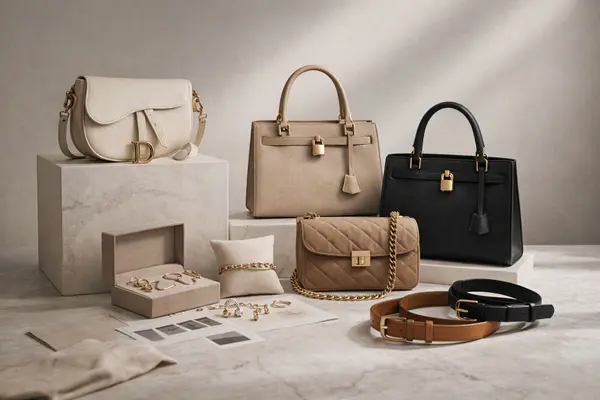
In 2026, accessories are increasingly used as:
- Entry-level luxury products
- Brand identity amplifiers
- Seasonal trend drivers
Key consumer behaviors include:
- Willingness to spend on statement pieces
- Preference for timeless, versatile designs
- Growing interest in personalized or limited-edition items
For startups, accessories provide a strategic advantage:
- Lower production complexity compared to full apparel lines
- Faster time-to-market
- Easier inventory management
Additionally, accessories perform well in digital channels, especially on social media platforms like Instagram and TikTok, where visual appeal drives engagement.
However, competition is intense, and success depends heavily on:
- Strong branding
- Unique design language
- Effective digital marketing
5. Luxury & Premium Segment: Resilience and Expansion
The luxury fashion segment is projected to reach $400–$500 billion by 2026, driven by high-net-worth individuals and aspirational consumers. Despite economic fluctuations, luxury remains one of the most resilient segments.

Growth drivers include:
- Expansion in Asia (especially China and Southeast Asia)
- Rise of “accessible luxury” brands
- Strong demand for heritage and craftsmanship
Luxury consumers are increasingly:
- Experience-driven (seeking exclusivity and storytelling)
- Digital-savvy (engaging through online platforms)
- Sustainability-aware (expecting ethical practices)
For emerging brands, entering the luxury space requires:
- Clear brand positioning
- Exceptional product quality
- Consistent storytelling
Unlike fast fashion, luxury is less about speed and more about perceived value and brand equity. Building trust and desirability takes time but offers long-term profitability.
6. Technology & Digital Transformation in Fashion
Technology is fundamentally reshaping the fashion industry in 2026. From design to distribution, digital tools are enabling faster, smarter, and more efficient operations.

Key technological trends include:
- AI-powered design and trend forecasting
- 3D garment simulation and virtual prototyping
- E-commerce personalization and recommendation engines
- Digital fashion and virtual clothing
For startups, technology is a major equalizer. Tools that were once only accessible to large brands are now widely available, allowing smaller players to:
- Reduce development costs
- Accelerate time-to-market
- Improve customer experience
Additionally, content-driven commerce is becoming critical. Platforms like TikTok and Instagram are not just marketing channels—they are sales channels.
Brands must integrate:
- Social commerce strategies
- Influencer collaborations
- Data-driven marketing
The future of fashion is not just physical—it is increasingly digital and interactive.
7. Sustainability & Ethical Fashion: From Trend to Standard
Sustainability is no longer a niche trend—it is becoming an industry standard. In 2026, consumers, regulators, and investors are all pushing for more responsible fashion practices.
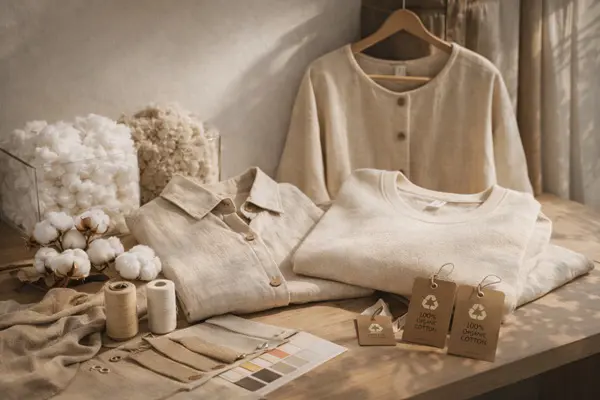
Key areas of focus include:
- Sustainable materials (organic cotton, recycled fibers)
- Ethical labor practices
- Circular fashion (resale, recycling, rental)
Governments in Europe and other regions are introducing stricter regulations, forcing brands to:
- Improve supply chain transparency
- Reduce environmental impact
- Report sustainability metrics
For startups, sustainability can be a powerful differentiator. However, it must be authentic and integrated into the business model—not just a marketing claim.
Challenges include:
- Higher production costs
- Limited supplier availability
- Consumer price sensitivity
Despite these challenges, brands that successfully implement sustainable practices will gain long-term competitive advantage.
8. Regional Market Dynamics: Where Growth Happens
Geographically, the fashion industry in 2026 is shifting toward emerging markets. While the US and Europe remain large, growth is increasingly concentrated in:
- Southeast Asia (Indonesia, Vietnam, Thailand)
- India
- Africa
These regions benefit from:
- Growing middle-class populations
- Increasing internet penetration
- Rising fashion awareness
For startups, this presents a major opportunity:
- Lower competition compared to mature markets
- Faster adoption of digital commerce
- Strong demand for affordable fashion
However, localization is critical. Brands must adapt to:
- Cultural preferences
- Pricing sensitivity
- Local distribution channels
Global strategies must be balanced with local execution.
Conclusion: Strategic Implications for Brand Owners & Startups
The fashion industry in 2026 is dynamic, competitive, and full of opportunity. However, success requires a clear understanding of market structure and emerging trends.
Key strategic takeaways:
- Focus on a clear segment (don’t try to compete everywhere)
- Leverage technology to improve efficiency and customer experience
- Build strong branding and storytelling
- Adopt sustainability as a core strategy
- Target high-growth regions with localized approaches
Ultimately, the winners in 2026 will not necessarily be the biggest brands—but the most adaptive, data-driven, and customer-centric ones.
For fashion startups and brand owners, this is the moment to position strategically, execute efficiently, and build brands that are not just relevant today—but resilient for the future.
Frequency Asked Questions
1. How big is the global fashion industry in 2026?
The global fashion industry is estimated to reach $1.8–$2.0 trillion in 2026, with steady growth driven by digital commerce and emerging markets.
2. Which segment dominates the fashion industry?
The apparel segment dominates, accounting for approximately 60% of the total market value.
3. What are the biggest fashion trends in 2026?
Key trends include:
- Sustainable fashion
- Digital transformation (AI, 3D design)
- Athleisure and comfort wear
- Social commerce and DTC brands
4. Is the fashion industry still growing?
Yes, the industry is growing at a CAGR of 4–6%, with strong expansion in emerging markets like Southeast Asia and India.
5. What is the role of technology in fashion industry growth?
Technology enables:
- Faster design and production
- Personalized customer experiences
- Data-driven decision making
- New digital business models
6. Why is sustainability important in fashion?
Sustainability is driven by:
- Consumer demand
- Government regulations
- Environmental concerns
Brands that adopt sustainable practices gain long-term competitive advantage.
7. Which markets offer the biggest opportunities for fashion startups?
High-growth opportunities exist in:
- Southeast Asia
- India
- Africa
These regions have rising consumer demand and lower competition.




Comments 0
Leave a CommentSend Comment
Anda harus Login terlebih dahulu untuk dapat memberikan komentar.