

Common Cutting Room Problems That Increase Fabric Waste
Common cutting room problems increase fabric waste when issued material fails to become acceptable, complete garment components. The loss can appear as marker gaps, excess fabric at lay ends, defective or inaccurate panels, replacement parts, unusable remnants, or garments rejected later because a cutting error reached sewing.
Some geometric loss is unavoidable: curved pattern pieces cannot fill a rectangular area perfectly, while grain, direction, matching, and design rules limit placement. The preventable loss begins when a factory confuses that planned constraint with errors in spreading, file control, lay height, shade handling, or recuts.
Quick Answer
The cutting-room problems that most often increase fabric waste are inefficient or unsuitable markers, markers planned to the wrong usable width, weak fabric inspection, uncontrolled relaxation, poor spreading tension or alignment, incorrect ply count, cutting inaccuracy, pattern-version errors, shade mixing, and untraceable recuts or remnants. These problems create more than visible offcuts. They can also produce distorted panels, missing components, overcut quantities, rejected bundles, and replacement parts that consume additional fabric.
The practical solution is to measure losses by cause rather than relying on marker efficiency alone. Separate planned marker loss from end loss, splice and defect loss, recut consumption, rejected panels, and recoverable remnants. Then connect each category to a production record: marker, roll, lay, machine, operator, style, size, shade group, and reason code. Controls should begin before the blade moves, with approved files, verified usable width, fabric preparation, lay planning, and a first-off or pilot check where risk is high. The goal is not a universal “zero-waste” claim. It is a repeatable cutting process that converts more issued fabric into accepted, traceable garment sets without compromising fit, appearance, safety, or delivery.

What Counts as Fabric Waste in a Cutting Room?
Cutting-room fabric waste is the portion of issued material that does not become accepted components for the intended order after authorized reusable balance is accounted for. A clean remnant returned to controlled inventory is not equivalent to a contaminated offcut, and a replacement panel raises consumption without appearing as floor scrap.
For useful analysis, factories can divide cutting loss into four categories:
- Planned geometric loss: the space within the marker that cannot be occupied by approved pattern pieces under the required grain, direction, pairing, and matching rules.
- Process loss: end allowances, splice allowances, edge loss, damaged sections, spreading errors, and other material consumed around execution of the lay.
- Quality and recovery loss: rejected panels, recuts, test cuts, and additional fabric used to restore a complete acceptable set.
- Residual material: short ends and remnants that may be reusable, recyclable, downcyclable, or unusable depending on size, fiber composition, contamination, identification, and available recovery routes.
The categories point to different actions. Marker loss needs layout decisions; a distorted lay needs spreading control; blade deflection needs equipment, parameter, or lay-height intervention; unidentified remnants need inventory discipline.
Research on a specific summer-dress production case found that fabric usage and marker planning affected cut-and-sew waste, but a case result should not be generalized into a universal waste percentage for all products. Fabric width, pattern geometry, size mix, matching requirements, and production method vary widely; see the Journal of Cleaner Production case study on fabric usage.
Why Marker Efficiency Alone Can Hide the Real Problem
Marker efficiency is total pattern-piece area divided by total marker area, multiplied by 100. It isolates layout density but does not show whether the factory cut the right quantities, used the planned width, avoided defects, or delivered acceptable parts.
Two lays can show the same 85% marker efficiency. One fits the verified usable width and yields complete panels; the other needs extra edge clearance, a poorly managed splice, and several recuts. The displayed figure is identical; achieved consumption is not.
This is the core diagnostic principle for the cutting room:
Marker efficiency measures layout performance. Actual fabric utilization measures the wider production outcome.
The International Labour Organization's Factory Improvement Toolset treats marker planning, marker efficiency, spreading, cut inspection, and cutting-room organization as separate controls. It also uses lay sheets to compare marker efficiency across cut orders, which reinforces the need to retain order-level evidence rather than one monthly average; see the ILO Improvement Toolset in the Asian garment sector.
A Diagnostic View of Common Cutting-Room Waste
Waste investigations move faster when teams begin with an observable symptom rather than a preferred solution. The table below separates what is seen from what may be causing it.
|
Observable problem |
Likely process causes |
Material and business effect |
First control to verify |
|
Marker does not fit the spread width |
Nominal rather than usable width; wrong marker file; width variation not grouped |
Edge loss, re-marker work, delayed cutting, possible incomplete parts |
Roll-width records and marker-width approval |
|
Large gaps or long marker length |
Weak nesting; unsuitable size ratio; direction or matching constraint; pattern geometry |
Higher planned consumption per garment |
Marker alternatives under the same approved rules |
|
Panels differ from top to bottom |
Excessive lay height; blade deflection; ply movement; poor hold-down |
Rejected panels, recuts, sewing difficulty |
Lay-height validation and layered cut inspection |
|
Panels shrink or distort after cutting |
Fabric not adequately relaxed; spreading tension; unstable material |
Measurement failure, fit risk, replacement parts |
Material trial and rested-panel check |
|
Frequent defects inside cut panels |
Inspection gaps; poor defect mapping; uncontrolled splice or avoidance method |
Panel rejection, recuts, disrupted bundles |
Roll inspection and defect-handling record |
|
Mismatched shade within garments |
Roll or ply identity lost; recut from another shade group |
Visible quality rejection and remaking |
Shade segregation, numbering, and recut source |
|
Missing or excess components |
Wrong ply count; size-ratio or marker error; bundle count failure |
Short shipments, overproduction, extra material and labor |
Lay plan-to-order reconciliation |
|
High volume of unidentified remnants |
No minimum-return rule; missing style/fabric identity; poor storage |
Duplicate purchasing and unusable aged stock |
Remnant ticket, location, dimensions, and disposition |
These causes can overlap. A high recut rate may originate in fabric defects, a dull blade, the wrong cut file, shade control, or all four. Reason codes should therefore describe the verified cause rather than simply label every event “cutting defect.”
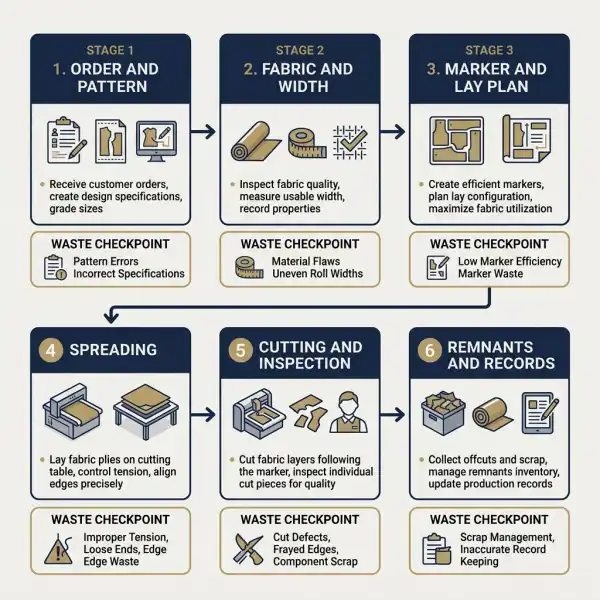

Planning Problems That Create Waste Before Fabric Is Spread
The marker uses the wrong width or material rules
A marker should use verified usable width, not only the width on a purchase order or roll label. Selvedges, variation, distortion, or buyer restrictions may reduce the available area. A marker wider than the production roll forces replanning, additional lays, or unsafe loss of clearance after resources are committed.
Nap, pile, one-way prints, face-sensitive materials, asymmetric components, and placement motifs can require specific positioning. Ignoring those rules may create an efficient-looking marker but unacceptable garments; applying unnecessary restrictions wastes fabric.
A marker-release record should connect the style revision, fabric, width group, size ratio, direction and matching rules, and intended lay. Separate markers for width groups make sense only when recovered material justifies added planning and changeover.
The size ratio or cut quantity no longer matches the order
A compact marker can still be wrong. Late quantity changes, revised ratios, cancellations, or duplicate orders create unwanted components. A shortage can trigger a small extra lay with high proportional end loss and setup time.
Before release, garment equivalents across all lays should reconcile to the authorized order and approved allowances. After cutting, actual plies and accepted sets should be reconciled again rather than assumed from the plan.
Pattern or marker revisions are not controlled
When an old pattern is cut accurately, the physical output is still wrong. Seam allowances, notches, pocket positions, graded points, or component dimensions may have changed after a fit approval. Automated cutting can repeat the error consistently; manual cutting can reproduce it just as effectively from an outdated paper marker.
Version control needs one approved source, release status, approver, and withdrawal of superseded copies. For unfamiliar styles or consequential revisions, a first-off check can confirm geometry and construction marks before full release. The broader sequence is explained in the fabric cutting process for garment production.
Fabric Preparation and Spreading Problems
Fabric defects are found only after cutting
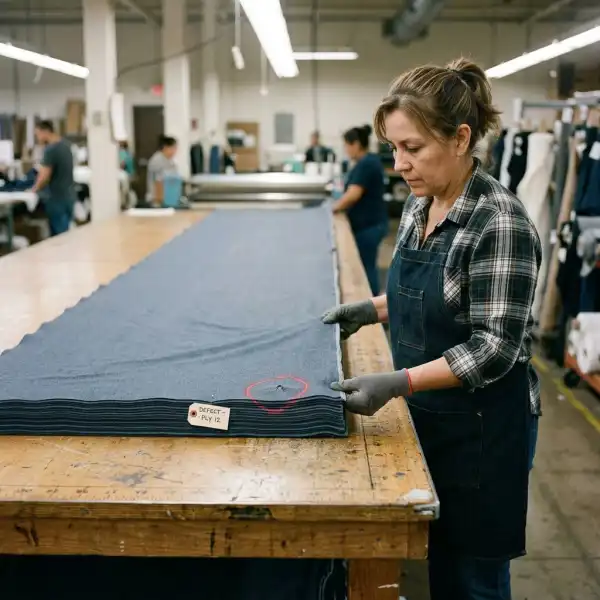
Holes, stains, slubs, barre, streaks, coating faults, and print defects do not all require the same response. Some may be acceptable under agreed criteria; others require avoidance or replacement. Waste rises when locations are not communicated to spreading or operators improvise by roll.
Record the roll, defect position and category, width, shade group, and action. The spreading response may be removal, a controlled splice, flagged plies, or another approved method depending on the product and defect. Avoiding every minor irregularity wastes material; ignoring consequential defects shifts loss downstream.
Relaxation and dimensional behavior are assumed rather than tested
Knits, elastomeric fabrics, and other constructions may retain tension from finishing, rolling, or handling. If spread under tension or cut before sufficient stabilization, panels can change after separation. The loss appears later as out-of-tolerance parts, misaligned seams, or replacements.
There is no universal relaxation time. Follow actual material behavior, supplier information, dimensional-stability results, roll condition, and trials; do not confuse production relaxation with laboratory conditioning.
The lay contains tension, folds, skew, or poor edge alignment
Spreading should create flat, aligned plies without stretch. Excess tension can cause contraction; slack creates ripples or folds; progressive edge drift may move lower plies outside the marker area.
Check these conditions during spreading, especially in tall lays. Define limits for alignment, tension, joins, face direction, defects, and ply count. Incorrect machine settings can repeat one handling error across the full lay.
End and splice allowances are uncontrolled
Some end or join allowance protects coverage and stability. Waste grows when margins follow habit, vary by operator, or accompany inconsistent marker positioning.
Record end and splice loss separately. Repeated excess points to table marking, spreader settings, marker placement, roll planning, or training. An arbitrary reduction can leave pattern edges uncovered and create recuts.
Cutting and Quality Problems That Trigger Recuts
Lay height exceeds the proven operating range
A taller lay reduces cutting cycles but increases demands on hold-down, blade stiffness, operator control, and material stability. Excessive height can cause deflection or shifting, while tight curves, small pieces, lofty fabrics, and slippery surfaces may lower the workable limit.
Validate the limit with actual material, geometry, equipment, and tolerances. Inspect top, middle, and bottom plies rather than only the accessible component.
Blades, tools, and parameters are poorly maintained
A dull or unsuitable blade can drag, fray, fuse, or distort edges. Speed, friction, and tool choice matter for heat-sensitive or delicate fabrics. Manual results depend partly on technique; automated results still depend on calibration, vacuum, consumables, sequence, and parameters.
Connect maintenance to defects. For rough edges, incomplete cuts, fused layers, or dimensional drift, record the machine, tool, lay type, and action. A schedule should complement—not replace—quality trends.
The choice between equipment routes is covered separately in manual cutting versus automated cutting. Automation may improve repeatability under controlled conditions, but it cannot correct a wrong file, unsuitable marker, unstable lay, or missing inspection.
Notches, drill marks, and small parts are cut incorrectly
Missing, misplaced, or excessive notches and internal marks can cause assembly errors or visible damage. Facings, tabs, pocket parts, and belt loops are also easy to lose or miscount.
Preserve the defect's origin in quality records. A garment rejected for a misplaced drill hole is not merely a sewing-line problem because sewing discovered it.
Cut-panel inspection happens too late or checks the wrong sample
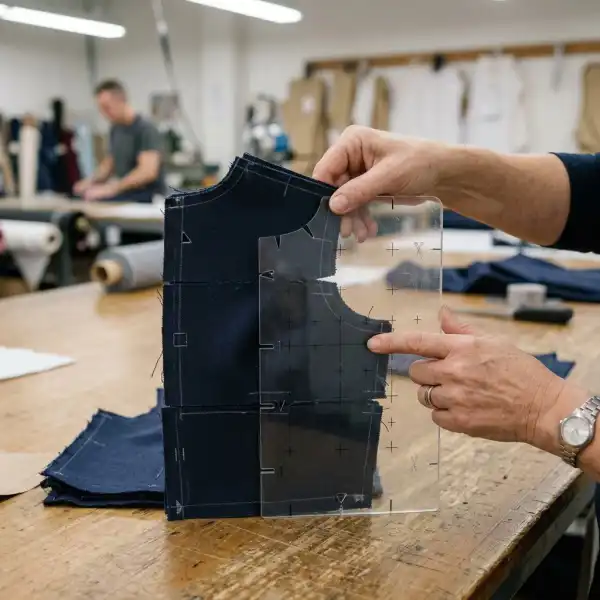
Risk-based first-off checks can stop repeated defects; post-cut inspection protects sewing. Define critical dimensions, paired components, marks, edges, matching, and layer positions to inspect.
The ILO toolset recommends inspecting cut parts and panels for both cutting and fabric defects before numbering and bundling. A factory still needs its own acceptance criteria and escalation process; general guidance does not define the tolerance for a specific garment.
Traceability Problems That Turn Small Errors Into Larger Losses
Shade lots and ply identity are lost
Fabric sharing a color name may differ across rolls or dye lots. Mixing shade groups can become obvious only after sewing, and an uncontrolled replacement panel can recreate the mismatch.
Numbering should preserve the identity the product needs: order, style, color, size, lay, shade group, and sometimes ply. Replacement panels must use compatible material and remain linked to the bundle.
Recuts have no reason code or material source
Recutting restores quantity but can hide recurring loss. Without reason and source records, the factory cannot distinguish fabric defects, inaccurate cuts, lost parts, shade issues, or damage in later processes.
Record the style, size, component, quantity, original bundle, shade requirement, verified reason, source fabric, and rejected-part disposition. These data rank causes by material impact.
Remnants are stored without enough information to reuse them
A remnant retains value only if users can identify and find it. Without fabric code, shade, dimensions or weight, date, restrictions, and location, pieces tend to become dead stock.
Set return thresholds by material and use. A narrow strip may suit binding but not a bodice; coated, blended, or contaminated pieces have different recovery options. Prevention remains preferable. WRAP's textiles resource hierarchy guidance places prevention first, with later routes depending on condition and available systems.
How Should Cutting-Room Waste Be Measured?
Measurement should make the next action obvious. One percentage cannot do that, so the dashboard needs a small set of linked indicators with clear boundaries.
|
Metric |
Practical calculation |
What it reveals |
Main caution |
|
Marker efficiency |
Pattern-piece area ÷ total marker area × 100 |
Layout density under approved constraints |
Does not include defects, ends, splices, recuts, or unusable remnants |
|
Achieved fabric consumption |
Net fabric issued to cutting ÷ accepted garment sets |
Actual material consumed per accepted set |
Define how returns, test cuts, and recuts are treated; use consistent units |
|
Recut rate |
Replacement parts or sets ÷ original accepted or cut volume × 100 |
Quality and handling recovery demand |
Use a stable denominator and separate reason codes |
|
End and splice loss |
Recorded excess area, length, or weight by lay |
Execution loss around the marker |
Compare like materials and spreading methods |
|
Defect-related loss |
Material removed or panels rejected due to recorded fabric defects |
Supplier and inspection-related loss |
Do not count acceptable defects as waste without agreed criteria |
|
Remnant recovery |
Reusable material returned and later issued, tracked in a consistent unit |
Whether residual material remains productive |
“Stored” is not the same as successfully reused |
Area can be appropriate for marker analysis, while purchasing and inventory may use length or weight. Teams should avoid converting between them with unverified assumptions. Fabric width, areal density, moisture, coating, and construction can affect conversions. The important discipline is to define the unit, boundary, and denominator before comparing periods or factories.
Monthly averages should be supported by lay-level detail. Segment results by style, fabric, width group, marker, order, machine or cutting route, and loss reason. Otherwise a difficult matched-check style may make an improving team look weak, while a simple high-volume basic hides unstable performance elsewhere.
A Practical Waste-Control System for Fashion Businesses
Improvement should start with evidence and work upstream. New equipment or a higher marker target cannot compensate for an unidentified source of loss.
1. Define material boundaries and reason codes
Define marker, end, splice, defect, recut, test-use, remnant, and disposal categories. Keep reason codes usable and actionable.
2. Establish a style-and-material baseline
Use representative orders. Reconcile issued fabric, returns, marker data, accepted sets, recuts, and residual material without treating one short study as permanent truth.
3. Rank causes by material impact and frequency
Rank causes by material impact and frequency, while flagging rare events with serious quality, safety, or delivery consequences.
4. Correct the source, then validate the result
Actions may include width grouping, marker changes, file control, validated lay height, better spreading, tool maintenance, first-off checks, or remnant identification. Validate accepted output, not only speed.
5. Build supplier and brand feedback loops
Report recurring width, defect, shrinkage, or shade issues with roll-level evidence. Brands can stabilize late changes and approve realistic matching rules. Sourcing should assess process evidence, not equipment labels; see fashion sourcing strategy for growing apparel brands.
6. Give residual material a controlled next route
After prevention, segregate residual material by composition, color, contamination, size, and viable use. Reuse or recycling must fit the material and local infrastructure; removal from the factory does not prove recycling.

Common Management Mistakes That Keep Waste High
Setting one marker-efficiency target for every product
Different pattern shapes, fabric widths, size ratios, matching rules, and directional requirements create different feasible ranges. A single target can encourage teams to ignore product constraints or manipulate comparisons. Benchmark comparable marker families and investigate the gap between planned and achieved consumption.
Rewarding low visible scrap while ignoring recuts
A clean floor can coexist with high material loss if replacement panels and rejected garments are poorly recorded. Review accepted output, recuts, returns, and downstream defect attribution alongside collected offcuts.
Blaming operators before checking inputs
Operators cannot spread to a width the roll does not provide or cut the correct revision from a stale file. Accountability should follow evidence across merchandising, pattern, planning, fabric inspection, spreading, cutting, maintenance, and quality.
Treating every remnant as either waste or inventory
Disposing of usable material loses value, but storing every small piece creates congestion and false inventory. Define minimum reusable dimensions or weight, required identification, review age, and approved disposition by material category.
Buying automation without stabilizing the process
Technology can improve nesting, repeatability, and data capture under suitable conditions. It does not resolve conflicting orders, unverified widths, unstable fabric, or missing reason codes. The investment case should be based on a controlled workflow and accepted-part economics.
Important Technical and Sustainability Caveats
Fabric waste cannot be judged by percentage alone. A lower waste rate that compromises grain direction, pattern matching, seam allowance, component accuracy, or safety is not a valid improvement. Nor should teams alter approved garment patterns solely to improve a marker without design, fit, construction, grading, and buyer review.
“Zero waste” also needs careful language. Some design and pattern-cutting methods aim to use the full fabric width, but conventional production usually faces geometric and operational constraints. A factory should state the measured boundary and destination of residual material instead of implying that no material impact exists.
Recycling is not guaranteed. Fiber blends, elastane, coatings, laminations, adhesives, contamination, color mix, piece size, logistics, and local reprocessing capability affect whether scraps can be recovered. Reuse may preserve more value for some clean remnants, but it must not create products without demand.
Finally, waste reduction must remain compatible with safe work. Pushing operators to reduce end allowance, clear offcuts faster, or extend blade use can introduce cutting and handling hazards. The UK Health and Safety Executive calls for controls around danger areas, guards, blade changing, lint and offcut housekeeping, and safe operating systems; see its fabric-cutting machinery guidance. Local law, equipment instructions, and a site-specific risk assessment remain controlling requirements.
Frequently Asked Questions
What is the biggest cause of fabric waste in a cutting room?
There is no universal biggest cause. For one factory it may be marker geometry; for another it may be width variation, matched patterns, fabric defects, spreading loss, inaccurate cutting, or recuts. Product mix also changes the result. A basic knit top and a tailored checked jacket should not share the same waste expectation. The correct answer comes from reconciling issued fabric with accepted sets and classifying loss by marker, ends, splices, defects, recuts, and remnants. Start with several representative orders and rank causes by material impact rather than choosing a solution from an industry average.
Is marker efficiency the same as fabric utilization?
No. Marker efficiency measures the share of marker area occupied by pattern pieces. Fabric utilization is broader and should account for how issued material becomes accepted components or garments. Actual results can also include edge clearance, roll ends, splice allowances, defects, width variation, test cuts, rejected panels, recuts, and returned remnants. A high marker efficiency can therefore coexist with poor achieved consumption. Both measures are useful when their boundaries are explicit: the marker figure diagnoses layout, while achieved consumption shows the order-level material outcome.
How can a factory reduce end loss without risking incomplete panels?
First measure end loss by lay and confirm the minimum allowance required for the fabric, spreader, marker placement, and cutting method. Use table reference marks or controlled positioning, maintain equipment, and compare operator or machine settings on similar work. Roll-length and lay planning may also reduce unnecessary joins or short residual sections. Do not simply cut the allowance to zero. If the lay does not cover the full marker or shifts during cutting, the resulting incomplete parts and recuts can consume more fabric than the intended saving.
Why do cut panels sometimes change size after cutting?
Panels may change because fabric tension is released, the material was not adequately relaxed for the production process, the lay was stretched, temperature or humidity affected a sensitive construction, or cutting and handling distorted the plies. Knits and fabrics containing elastomeric yarns often need particular attention, but behavior varies by construction and finish. Verify supplier information, test actual rolls, control spreading tension, and measure panels after an appropriate rest interval defined by the factory's validated method. Do not apply one relaxation time to every material.
Does automated cutting eliminate fabric waste?
No. Automated systems can improve nesting, path repeatability, and production data when files, materials, settings, and maintenance are controlled. They cannot remove geometric marker loss, make a narrow roll wider, correct an outdated pattern, eliminate fabric defects, or guarantee that remnants are reused. Poor vacuum, calibration, consumables, parameters, or offloading can also create quality loss. Evaluate automation using accepted sets, achieved consumption, recut rate, downtime, and suitable workload—not machine speed or marker efficiency alone.
Should fabric scraps be reused or recycled?
Prevention comes first. After that, the appropriate route depends on piece size, cleanliness, composition, color, coatings, attachments, traceability, demand, and available local infrastructure. Large identified remnants may return to production, samples, repairs, or suitable secondary products. Clean segregated scraps may have a recycling route, while mixed or contaminated material may not. Recording material as “sent for recycling” does not confirm what happened after collection. Fashion businesses should verify the receiver, process, accepted feedstock, rejects, and documentation before making circularity claims.
What should a fashion brand ask a supplier about cutting waste?
Ask how the supplier verifies usable width, controls pattern and marker revisions, separates shade groups, validates lay height, inspects different ply levels, authorizes recuts, and identifies remnants. Request order-level measures such as marker efficiency, achieved consumption, recut reasons, and accepted-set output for comparable products. Also ask how difficult fabrics, checks, placement prints, defects, and late quantity changes are handled. A credible answer should explain boundaries and trade-offs; a single waste percentage or claim of automated cutting is not enough to demonstrate control.
Conclusion
Fabric waste in the cutting room is rarely one pile with one cause. It begins in decisions about patterns, widths, quantities, and placement rules; grows through inspection, relaxation, spreading, and cutting; and can remain hidden inside recuts, mixed shades, missing parts, or unusable remnants.
The most reliable improvement is to make those losses visible without oversimplifying them. Marker efficiency should remain a planning measure, not a substitute for achieved consumption. Recut records should identify why and where material was replaced. Remnants should either retain enough identity to be reused or move through a verified recovery route. Quality checks should examine the layers and characteristics most likely to fail.
For fashion brands and garment manufacturers, the commercial benefit is not merely a smaller scrap pile. Better control protects fabric cost, fit, appearance, bundle completeness, delivery, and supplier accountability at the same time. The target is a cutting room that learns from every lay—preventing avoidable loss while recognizing the real material and product constraints that no headline efficiency percentage can erase.





Comments 0
Leave a CommentSend Comment
Anda harus Login terlebih dahulu untuk dapat memberikan komentar.