
Why Silk Continues to Symbolize Premium Fashion
Why Does Silk Still Symbolize Premium Fashion?
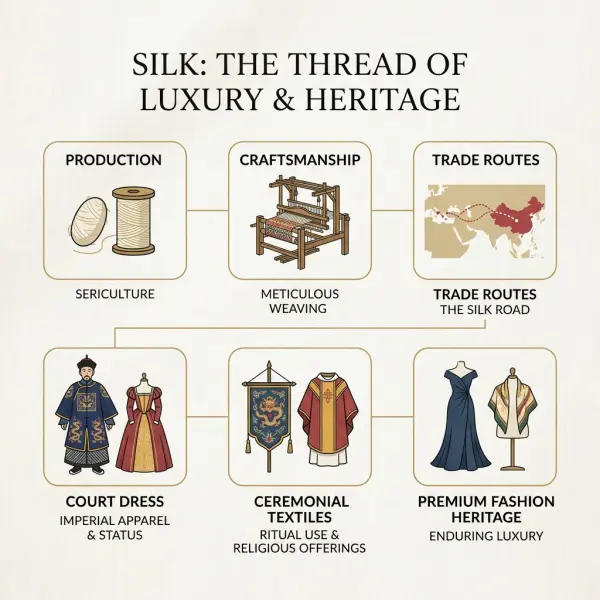
Silk continues to symbolize premium fashion because it combines rare sensory qualities with deep cultural memory. Its natural luster, smooth touch, fluid drape, and visual depth make it immediately recognizable in garments such as scarves, blouses, evening dresses, bridalwear, lingerie, and luxury linings. But silk’s premium status is not based on appearance alone. For centuries, silk has been associated with skilled production, long-distance trade, court dress, ceremonial clothing, and high-value textile craftsmanship.
For fashion businesses, silk works as both a material and a message. It signals refinement, care, softness, occasion, heritage, and elevated product value. A silk scarf or silk blouse can feel more emotionally significant than a visually similar synthetic alternative because customers often read silk as authentic, precious, and tactile.
However, silk does not automatically make a product premium. Poor construction, weak finishing, vague sourcing, misleading sustainability claims, or careless care instructions can weaken the value of the material. Silk supports premium fashion best when the fabric quality, design, manufacturing, storytelling, pricing, and customer experience all reinforce the same promise.

Silk Is More Than a Fabric Name
Silk has a rare ability to communicate value before a customer reads the product description. When a silk garment catches light, moves with the body, or feels cool and smooth against the skin, it creates an immediate sensory impression. That impression is one reason silk remains powerful in premium fashion.
But the symbolic value of silk comes from more than physical beauty. Silk is tied to labor, skill, time, and material transformation. The journey from silkworm cocoon to finished textile requires specialized knowledge across sericulture, cocoon handling, reeling, yarn preparation, weaving, dyeing, finishing, and garment construction. This production story gives silk a sense of effort and refinement that many customers intuitively associate with luxury.
That does not mean every silk product is automatically high quality. A poorly made silk dress can look less premium than a beautifully cut garment made from another fabric. The power of silk lies in alignment. The material must be supported by thoughtful design, clean construction, appropriate lining, precise finishing, responsible sourcing, and honest communication.
For a deeper technical foundation on how silk is produced and why its properties matter, see Silk Fabric Explained: Production, Properties, and Applications.
The Historical Roots of Silk’s Premium Status
Silk’s luxury meaning has been built over centuries. Long before modern branding, silk was already connected with trade, status, diplomacy, religion, court culture, and elite consumption. The British Museum describes the Silk Roads as networks through which people, objects, and ideas moved across Afro-Eurasia, especially during the first millennium AD. British Museum on the Silk Roads
The Metropolitan Museum of Art also notes that ancient trade routes between Europe and Asia moved luxury goods, with China supplying silk to West Asia and the Mediterranean world. The Met on trade routes between Europe and Asia This long history matters because luxury is never built only by material function. It is also built through scarcity, distance, skill, cultural exchange, and the social meanings attached to objects.
Silk became valuable partly because it was difficult to make, difficult to access in many regions, and visually unlike many other textiles. It traveled as a material of desire. It appeared in garments, furnishings, religious textiles, gifts, and elite wardrobes. Over time, silk became part of a global visual language of refinement.
Modern customers may not know this entire history, but they still respond to its residue. When a brand says “silk,” the word carries accumulated associations: elegance, softness, heritage, ceremony, femininity, formality, intimacy, and premium taste. That symbolic inheritance is difficult for synthetic alternatives to copy completely, even when they imitate silk’s shine.
The Sensory Qualities That Make Silk Feel Premium
Silk’s premium reputation survives because the material still performs beautifully in the senses. Luxury fashion is not only seen. It is touched, worn, moved in, photographed, folded, gifted, and remembered. Silk is unusually strong across those sensory touchpoints.
Luster That Feels Alive, Not Flat
Silk’s luster is one of its most recognizable qualities. Good silk does not simply shine; it reflects light with softness and depth. In satin, charmeuse, twill, and taffeta, this light response can make color feel richer and movement more elegant.
This is commercially important. In online fashion, where customers cannot touch the garment before buying, visual depth helps communicate value through photography and video. A silk scarf or blouse can look expensive because light interacts with the fabric in a way that feels natural rather than plastic.
Drape That Enhances the Body
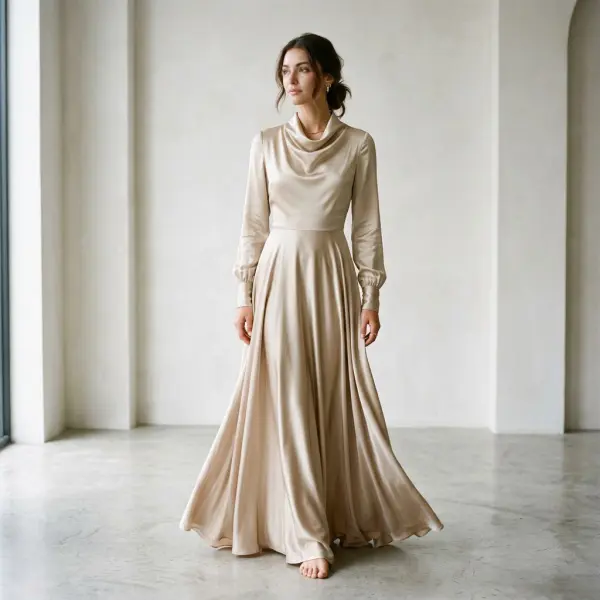
Silk can move fluidly without looking limp when the right fabric construction is selected. Lightweight silk crepe, chiffon, georgette, satin, and charmeuse can create softness around the body. Silk organza, taffeta, shantung, and dupioni can create controlled structure and volume.
This range gives designers a powerful vocabulary. A silk slip dress can feel intimate and fluid. A silk organza bridal layer can feel airy and architectural. A silk twill scarf can feel polished and practical. A silk taffeta skirt can feel formal and sculptural.
Touch That Supports Emotional Value
Touch is central to premium fashion. Customers often remember how a garment feels as much as how it looks. Silk’s smoothness and softness can create an intimate sense of comfort, especially in products worn close to the skin.
That tactile value supports categories such as lingerie, sleepwear, scarves, blouses, and linings. In these products, silk is not only decorative. It becomes part of the wearing experience.
A Material That Photographs Well
Silk’s visual behavior makes it useful for brand imagery. It works well in editorial photography, campaign videos, bridal shoots, luxury e-commerce, and social media content because it catches light, reveals movement, and creates texture without needing heavy decoration.
This makes silk valuable for brand storytelling. A simple silk blouse can look refined in a campaign because the fabric itself provides visual interest. The material does part of the creative work.
Why Silk Still Matters in a Market Full of Alternatives
Fashion brands now have many silk-like options: polyester satin, viscose satin, acetate, cupro, lyocell blends, and other smooth fabrics. Some of these materials are commercially excellent. They can reduce cost, improve scalability, support vegan positioning, or make garments easier to care for. Yet silk continues to hold a distinct place because alternatives usually imitate only part of the silk experience.
A polyester satin may imitate shine. A viscose satin may imitate drape. Cupro may imitate smoothness in linings. Lyocell blends may offer softness and comfort. But natural silk still carries a combination of material authenticity, tactile refinement, historical association, and premium recognition that alternatives often need extra explanation to match.
This does not mean silk is always the better business choice. For trend-led occasionwear, accessible pricing, high-volume production, or washable garments, a silk alternative may be more realistic. The key is not to treat alternatives as inferior by default, but to understand what role each material plays.
For a deeper comparison of performance and sourcing trade-offs, see Natural Silk vs Synthetic Silk Alternatives.
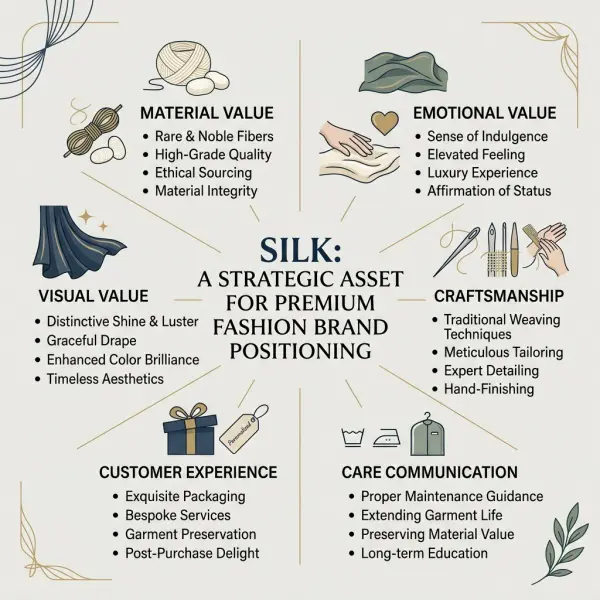
How Silk Creates Premium Value for Fashion Brands
Silk can support premium positioning in several ways. The strongest brands do not rely on silk as a decorative label. They use it as part of a coherent product and brand system.
Material Value
Silk can justify a higher price point when the fabric quality, garment construction, and product category align. A silk twill scarf, silk crepe blouse, silk satin dress, or silk-lined jacket can feel materially elevated because the customer can see and feel the difference.
Material value is especially important when a brand wants to move beyond trend-driven pricing. Silk can help communicate that a product is not just fashionable for one season, but considered, tactile, and worth preserving.
Emotional Value
Silk is often used in products connected to emotion: wedding garments, evening dresses, gifts, anniversary pieces, premium sleepwear, scarves, and heirloom-inspired accessories. These categories benefit from materials that feel meaningful.
A silk scarf, for example, is not only a square of fabric. It can become a gift, a signature styling piece, a keepsake, or a symbol of personal taste. That emotional layer supports stronger storytelling and potentially stronger margins.
Visual Value
Silk can make simple designs look sophisticated. A minimal blouse in silk crepe can feel elevated without heavy embellishment. A clean silk dress can look elegant because of drape and light response. A silk scarf can carry print beautifully while maintaining softness and movement.
This is useful for brands that want a refined, modern aesthetic. Silk allows product design to be quiet but not boring.
Brand Value
When used consistently and honestly, silk can become part of brand identity. A label known for silk scarves, silk shirts, silk bridal layers, or silk occasionwear can build recognition around material expertise. This can support repeat purchasing, gifting, and editorial credibility.
The challenge is consistency. If one collection uses high-quality silk and the next uses low-quality satin described vaguely as “silky,” customers may feel a gap between promise and product. Premium positioning requires material discipline.
The Categories Where Silk Still Performs Strongly
Silk remains especially relevant where customers expect elegance, softness, occasion, or tactile luxury. It is not equally suitable for every product category, but in the right category it can be difficult to replace.
Scarves and Accessories
Silk scarves remain one of the strongest commercial uses of silk. They are giftable, size-flexible, visually expressive, and relatively easy to merchandise compared with fitted garments. Silk twill and silk satin can support print clarity, color richness, and elegant drape.
Accessories also allow brands to introduce silk without the full complexity of silk apparel production. A scarf capsule can build premium perception while reducing fit risk.
Blouses and Shirts
Silk blouses and shirts can become wardrobe-signature products when designed carefully. Crepe de chine, silk twill, charmeuse, and sandwashed silk can each create different moods: polished, fluid, soft, or relaxed.
The main challenge is care expectation. If customers want a daily office blouse, the brand must be clear about cleaning, wrinkle behavior, perspiration sensitivity, and durability. Silk works well when customers understand that refinement comes with care.
Eveningwear and Bridalwear
Eveningwear and bridalwear benefit from silk’s emotional and visual qualities. Silk satin, organza, taffeta, chiffon, georgette, crepe, and dupioni can create romance, formality, movement, and structure.
In these categories, customers may be more willing to accept higher prices and delicate care because the purchase is tied to an occasion. Still, garment engineering is critical. Silk exposes weak seams, poor pressing, and poor fit quickly.
Lingerie and Sleepwear
Silk’s smooth feel and intimate association make it popular in lingerie and sleepwear. These products rely heavily on touch, comfort, and emotional perception. The material can create a sense of quiet luxury.
However, these categories also require careful testing. Products worn close to the skin must consider colorfastness, perspiration, washing or dry-cleaning expectations, trims, elastic compatibility, and customer care behavior.
Linings and Tailoring Details
Silk linings can feel luxurious, but they are not always the most practical option. Premium tailoring may also use cupro, acetate, viscose, or other smooth lining materials. Silk is most effective as a lining when the brand wants a clear luxury signal and the garment’s care method supports it.
A silk lining can elevate the interior experience of a jacket, but it must withstand friction, seam stress, and cleaning. In premium fashion, what happens inside the garment matters as much as the exterior.
Silk Storytelling: What Works and What Feels Empty
Silk is rich with storytelling potential, but not every story is useful. Customers are increasingly exposed to material claims, sustainability language, and luxury narratives. Generic phrases like “timeless luxury” or “crafted from the finest silk” may sound polished, but they do not provide much evidence.
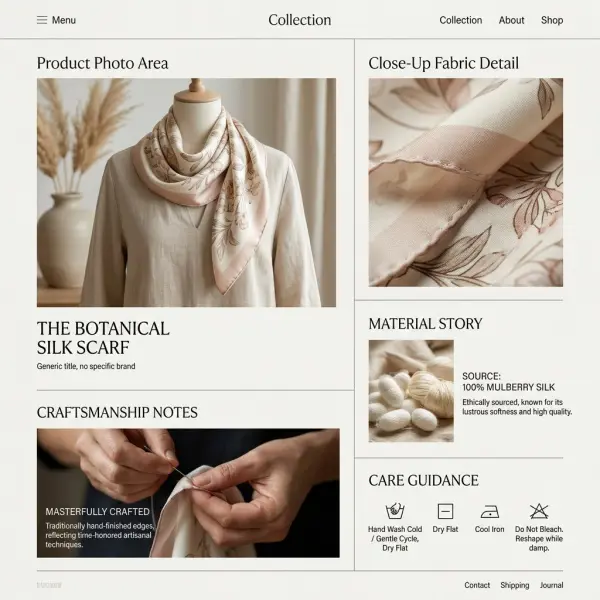
Strong silk storytelling should connect material reality to customer value. It should explain why this silk was chosen, how it affects the garment, and how the customer should experience it. For example, a brand can explain that silk twill was selected for a scarf because it supports color depth, soft structure, and long-lasting edge finishing. A bridal brand can explain that silk organza was used to create volume without heaviness. A blouse brand can explain that silk crepe provides a softer matte finish than glossy satin.
The most credible silk stories often include:
- Specific fabric type, such as silk twill, silk crepe, silk organza, silk satin, or silk chiffon.
- Product reason, such as drape, structure, print clarity, softness, or occasion value.
- Craft detail, such as hand-rolled edges, French seams, lining, careful pressing, or small-batch production.
- Care guidance, so customers understand how to preserve the product.
- Verified sourcing or testing claims, where documentation exists.
This kind of storytelling is practical, not theatrical. It gives customers something real to understand.
Sustainability Claims Around Silk Must Be Specific
Silk’s natural origin can make it attractive in sustainability storytelling, but natural does not automatically mean sustainable. Silk production involves agriculture, animal life cycles, energy, water, labor, processing, dyeing, finishing, transport, and aftercare. A finished silk garment may also include synthetic thread, trims, interlining, labels, zippers, dyes, prints, and packaging.
Brands should be especially careful with broad claims such as “eco-friendly silk,” “sustainable silk,” “green luxury,” or “conscious silk” unless those claims are clearly substantiated. The FTC’s Green Guides advise marketers to avoid broad, unqualified environmental benefit claims and to make qualifications clear, prominent, and specific. FTC Green Guides summary
A better approach is to communicate specific evidence. That may include traceability documentation, chemical safety testing, supplier certifications, responsible dyeing controls, verified organic claims where applicable, small-batch production context, repair services, or durability-focused design. Textile Exchange also emphasizes the importance of robust certification and credible claims in the context of evolving sustainability policies. Textile Exchange on sustainability policy and standards
Sustainability storytelling should not be used to decorate a weak product. It should help customers understand what the brand has actually done and what remains limited. Honest caveats can strengthen trust.
What Premium Silk Positioning Does Not Mean
Silk’s premium symbolism can be powerful, but brands can misuse it. Premium does not mean fragile without explanation. Premium does not mean expensive without justification. Premium does not mean historically inspired without cultural care. Premium does not mean natural without evidence. Premium does not mean silk content alone.
This distinction matters because customers are more informed than many brands assume. They compare product photos, fiber labels, reviews, care instructions, and price. If the story says “luxury silk” but the garment has poor finishing, unclear origin, weak seams, or a confusing care label, the brand promise collapses.
Silk also should not be used to mask poor design. A basic garment does not become commercially strong just because it is made from silk. The silhouette, fit, color, styling, construction, and product use case still need to work.
For brands, the premium equation is broader:
- The fabric must feel appropriate for the product.
- The design must let the material perform.
- The construction must protect the fabric’s value.
- The care label must match tested reality.
- The product copy must be accurate.
- The price must feel justified.
- The customer experience must support the promise.
Silk can carry a brand upward, but only if the rest of the product system moves with it.
Common Mistakes Brands Make When Using Silk as a Premium Signal
Mistake 1: Treating Silk as a Shortcut to Luxury
Some brands assume that adding silk automatically creates a luxury product. This often leads to weak product development. The fabric may be expensive, but the garment may still have poor fit, seam puckering, weak finishing, or impractical care requirements.
A better approach is to use silk only where it improves the product’s emotional, tactile, and visual value. Silk should support the design concept, not substitute for it.
Mistake 2: Using Generic “Luxury” Copy
Phrases like “crafted from luxurious silk” are common but often empty. They do not explain what kind of silk is used, why it matters, or how it improves the garment.
More effective copy is specific. A scarf brand might mention silk twill for print depth and soft structure. A bridalwear brand might explain silk organza for volume and lightness. A blouse brand might describe silk crepe for a refined matte drape.
Mistake 3: Ignoring Care Friction
Premium customers may accept delicate care, but they still need clarity. A silk product that stains easily, wrinkles heavily, or cannot be washed should not be sold with a casual everyday promise unless testing supports it.
Brands should provide accurate care labels and plain-language care guidance. This protects the garment and reduces disappointment.
Mistake 4: Confusing “Silky” With Silk
Silk-like materials can be useful, but they should not be presented as silk if they are not silk. A polyester satin blouse, viscose satin dress, or cupro lining may be excellent in its own category, but product descriptions must remain transparent.
This is especially important for brands building trust. Customers can forgive a silk alternative when it is clearly positioned. They are less forgiving when they feel misled.
Mistake 5: Overclaiming Sustainability
Silk’s natural origin can be part of a sustainability conversation, but it should not be the whole argument. Brands need evidence for environmental claims, especially when using words such as sustainable, eco-friendly, biodegradable, ethical, natural, or responsible.
The safer strategy is to communicate verified, limited claims and explain the scope clearly.
Practical Strategy: How Brands Can Use Silk Without Overstretching the Promise
Silk works best when it is used selectively and strategically. A brand does not need an entire silk collection to benefit from silk’s premium symbolism. In many cases, one well-executed silk product can do more for brand perception than several poorly developed items.
A practical silk positioning strategy may include:
- Hero product strategy: Build one signature silk item, such as a scarf, blouse, robe, or occasion dress.
- Capsule strategy: Use silk in limited seasonal drops where storytelling and scarcity support the price.
- Detail strategy: Use silk in linings, trims, scarf ties, or special accents to elevate selected products.
- Gift strategy: Develop silk accessories with strong packaging, care cards, and print storytelling.
- Occasion strategy: Use silk for bridal, eveningwear, or ceremonial pieces where emotional value is high.
- Heritage strategy: Connect silk to craft, regional textile knowledge, or archival design inspiration where authentic.
The key is restraint. Silk should feel intentional, not random. A brand known for practical everyday fashion may use silk sparingly in premium capsules. A luxury label may build a stronger silk universe, but still needs consistent quality and sourcing discipline.

What Brands Should Verify Before Positioning Silk as Premium
Before building a premium silk story, fashion businesses should verify that the product can support the promise. This is both a technical and brand trust issue.
Brands should check:
- Fiber content: Confirm whether the product is 100% silk, silk blend, or silk-like alternative.
- Fabric type: Identify whether it is silk satin, twill, crepe, chiffon, organza, taffeta, noil, dupioni, or another construction.
- Quality performance: Test shrinkage, seam slippage, abrasion, colorfastness, perspiration, and pressing response where relevant.
- Product suitability: Confirm that the silk construction matches the garment’s use case.
- Care label: Validate care instructions through garment testing.
- Sourcing claim: Keep origin, traceability, artisan, ethical, or sustainability statements evidence-based.
- Visual consistency: Check shade variation, fabric marks, slubs, shine direction, and production defects.
- Customer education: Explain how to wear, store, clean, and preserve the product.
Premium positioning is strongest when the customer experience confirms the story. The product page, packaging, care card, garment finish, delivery experience, and aftercare guidance should all feel aligned.
FAQ: Silk and Premium Fashion
Why is silk considered luxurious?
Silk is considered luxurious because it combines difficult production, natural luster, soft touch, fluid drape, and long cultural association with high-value textiles. Historically, silk moved through major trade networks and appeared in elite, ceremonial, and decorative contexts. In modern fashion, customers still associate silk with refinement, intimacy, elegance, and premium quality. However, silk alone does not guarantee luxury. A silk garment must also have strong design, proper construction, good finishing, suitable care guidance, and honest sourcing communication.
Does using silk automatically make a fashion brand premium?
No. Silk can support premium positioning, but it does not automatically create it. Premium fashion depends on the full product experience: design, fit, fabric quality, sewing, finishing, packaging, care guidance, customer service, and brand credibility. A poorly made silk garment can feel less premium than a well-designed garment made from another fabric. Brands should treat silk as one part of a larger value system, not as a shortcut to luxury.
Which silk products are best for premium positioning?
Silk scarves, silk blouses, bridalwear, eveningwear, lingerie, sleepwear, robes, and premium linings are especially strong categories. These products benefit from silk’s softness, drape, visual depth, and emotional value. Scarves are often commercially attractive because they are giftable, size-flexible, and visually expressive. Bridalwear and eveningwear benefit from silk’s connection to occasion and ceremony. The best product depends on the brand’s customer, price point, care expectations, and production capability.
Is silk better than silk-like alternatives for luxury fashion?
Silk is often stronger for luxury positioning because it offers material authenticity, tactile refinement, and historical value. However, silk-like alternatives can be better for certain products, especially when the brand needs lower cost, easier care, vegan positioning, larger-scale production, or specific performance features. The choice should be based on product promise. A natural silk scarf may be ideal for premium gifting, while cupro may be better for a tailoring lining and viscose satin may be more realistic for accessible occasionwear.
How can brands describe silk without sounding generic?
Brands should describe the specific silk type and explain why it was chosen. Instead of saying “luxurious silk,” a product page can say “silk twill selected for rich print color and soft structure” or “silk organza used to create light volume in the skirt.” This gives customers a concrete reason to value the material. Good silk storytelling connects fabric construction, product function, craftsmanship, and care. Specificity makes the story more credible.
Can silk be part of a sustainable fashion strategy?
Silk can be part of a responsible material strategy, but brands should avoid assuming that natural fiber equals sustainable product. The sustainability profile depends on farming, processing, labor, animal welfare considerations, dyeing, finishing, transport, care, durability, and end-of-life. Brands should use specific claims supported by documentation, such as traceability, testing, certified inputs, responsible dyeing, repairability, or product longevity. Broad claims like “eco-friendly silk” should be avoided unless clearly substantiated.
How should premium silk garments be communicated to customers?
Premium silk garments should be communicated with a balance of aspiration and clarity. Brands can highlight beauty, drape, softness, craft, and occasion value, but they should also explain care requirements and material limitations. Customers should understand whether the garment is washable, dry-clean only, sensitive to water marks, or best stored away from prolonged sunlight. Clear aftercare guidance supports trust and helps protect the product’s long-term value.
Conclusion: Silk Still Matters Because It Carries Both Substance and Story
Silk continues to symbolize premium fashion because it offers something rare: a material experience that feels both physical and cultural. It looks refined, feels intimate, moves beautifully, and carries centuries of association with craft, trade, ceremony, and status. That combination gives silk a lasting place in fashion even as new materials and silk-like alternatives enter the market.
For fashion businesses, the opportunity is not simply to use silk, but to use it well. Silk should be chosen for a reason: to create better drape, richer color, softer touch, emotional value, gifting appeal, occasionwear impact, or credible premium positioning. It should be supported by strong sourcing, careful manufacturing, accurate labeling, tested care guidance, and specific storytelling.
The brands that benefit most from silk are not the ones that use it casually. They are the ones that respect its material reality. When silk is treated with precision, restraint, and honesty, it remains one of fashion’s most powerful signals of premium value.




Comments 0
Leave a CommentSend Comment
Anda harus Login terlebih dahulu untuk dapat memberikan komentar.