
Why Linen Is Becoming Popular in Premium Fashion
Linen is becoming popular in premium fashion because it fits several shifts happening at the same time: consumers are valuing comfort, natural texture, understated luxury, warm-weather versatility, and garments that feel less trend-dependent. Linen gives fashion brands a way to create products that look relaxed but still refined, especially in categories such as resortwear, summer tailoring, dresses, shirts, trousers, co-ord sets, and lifestyle collections.
Its appeal is not only about sustainability, although natural fiber positioning can support the story when claims are properly verified. Linen also communicates tactile quality. The fabric wrinkles, softens, moves, and ages in a way that feels more human than overly polished synthetic surfaces. In premium fashion, that imperfection can become part of the product’s charm.
For brands, linen works best when it is treated as a design and positioning tool, not just a summer fabric. The most successful linen products usually combine good fabric selection, thoughtful silhouette, strong finishing, honest care communication, and visual merchandising that makes texture feel intentional. Linen is popular because it supports a modern version of luxury: quieter, more wearable, more material-led, and less dependent on obvious logos.
Linen’s New Role in Premium Fashion
Linen has always existed in fashion, but its recent premium appeal comes from a different cultural context. For years, linen was often treated as a holiday fabric, a rustic textile, or a practical solution for heat. Today, it is increasingly used as a signifier of ease, material authenticity, and understated refinement.
Premium fashion has been moving away from loud status signals in some segments. Not entirely, of course. Logos and statement pieces still sell. But a large part of the market now values clothes that look expensive because of fabric, cut, proportion, and restraint rather than obvious branding. Linen fits this shift well because its value is felt through texture and wear experience.
This does not mean linen is automatically luxury. A poorly finished linen garment can look cheap, shrink badly, or wrinkle in a way that feels messy rather than elegant. Premium linen depends on fiber quality, yarn consistency, fabric finishing, silhouette, construction, color, and styling. In other words, linen’s rise is not simply about the fiber itself. It is about how premium brands are learning to frame its natural behavior as part of a more relaxed luxury language.
For a broader technical foundation on the material itself, see linen fabric properties, benefits, and uses. This article focuses on why linen is gaining premium fashion relevance from a branding, merchandising, and product strategy perspective.
The Shift Toward Understated Luxury
One reason linen is gaining attention is the continuing influence of understated luxury. Consumers who are tired of overdesigned products often respond to clothes that look refined without trying too hard. Linen supports that mood because it has a visible surface, natural drape, and relaxed elegance that does not need heavy decoration.
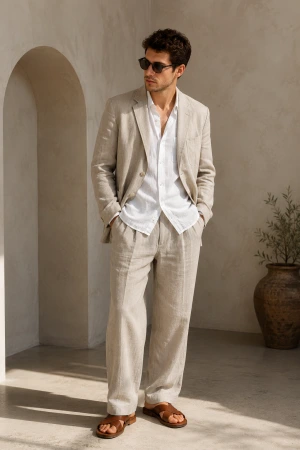
This is especially relevant in categories such as shirts, tailored shorts, summer suits, wrap dresses, resort trousers, and long-line vests. These garments can look premium even when the design is simple because the fabric provides visual depth. Linen allows a brand to reduce noise without making the product feel flat.
The premium effect comes from several connected signals:
- Texture that makes simple silhouettes feel intentional.
- Natural creasing that creates a lived-in, effortless look.
- Breathability that supports warm-weather comfort.
- Association with travel, resort dressing, and relaxed sophistication.
- Compatibility with neutral, earthy, and soft seasonal palettes.
- A tactile quality that photographs well in editorial and e-commerce settings.
This is why linen is often seen in summer capsules, quiet luxury styling, slow lifestyle brands, and premium resort collections. It helps brands sell a feeling: ease without carelessness, refinement without stiffness.
Why Linen Feels Aligned With Modern Consumer Taste
Modern premium consumers are not only buying garments for formal occasions. Many are looking for clothes that move across travel, work, leisure, dining, and lifestyle contexts. Linen fits this shift because it can feel polished without being rigid. A linen shirt can work at a resort, in a city, at a casual meeting, or as part of an elevated weekend look.
This versatility is valuable for premium fashion brands. A garment that works across multiple contexts feels easier to justify at a higher price point. When customers are more selective with spending, they often look for pieces that feel useful, beautiful, and emotionally durable. Linen can support that value equation if the design is strong.
The fabric also matches a broader taste for tactility. After years of digital shopping, fast trend cycles, and smooth synthetic surfaces, many consumers respond to materials that feel grounded. Linen’s slubs, wrinkles, and softness over time create a sense of material presence. It looks and feels like something with character.
This does not make linen universally appealing. Some customers still dislike wrinkles or expect a smoother, easier-care product. Premium brands need to know whether their audience sees linen’s texture as elegance or inconvenience. The same fabric behavior can be interpreted very differently depending on customer education, styling, photography, and price expectation.
Linen as a Warm-Weather Luxury Fabric
Hot-weather dressing is one of linen’s strongest commercial advantages. In warm climates and summer seasons, consumers want clothing that feels breathable but still looks elevated. Linen meets that need better than many formal fabrics because it can create shape, texture, and visual sophistication while remaining comfortable.
This is particularly important for premium brands selling resortwear, vacation capsules, destination wardrobes, coastal collections, or summer city dressing. A well-cut linen shirt, wide-leg trouser, or relaxed blazer can make hot-weather clothing feel intentional rather than purely functional.
Compared with cotton, linen often carries a more premium warm-weather perception because it feels crisper, more textured, and more associated with elevated summer styling. But the comparison should be handled carefully. Cotton remains highly important for softness, everyday basics, and scalable apparel. For a more detailed performance comparison, see linen vs cotton for hot climates.
In premium fashion, linen’s advantage is not just that it can feel cool. It is that it can make comfort look expensive.
The Quiet Power of Texture
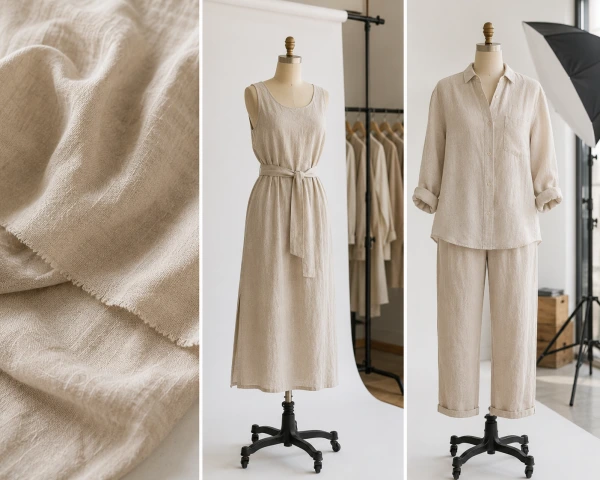
Texture is one of linen’s most important premium qualities. A flat synthetic fabric may need print, shine, or complex design to create interest. Linen can add depth through the surface itself. The irregularity of the yarn, subtle slubs, and natural creasing give even simple garments a visual story.
This is useful for brands building collections around minimalism. Minimal fashion can become boring if the fabric has no life. Linen gives minimal silhouettes enough richness to feel designed. A plain linen dress, for example, can look elevated because the fabric surface catches light in a soft, organic way. A linen blazer can feel more relaxed than wool suiting but more refined than casual cotton.
Texture also helps e-commerce. Close-up images of linen can communicate quality when customers cannot touch the fabric. But this only works when the fabric is genuinely good. Cheap-looking linen, uneven dyeing, poor pressing, or weak construction can undermine the premium message immediately.
For premium brands, texture should be curated. Product photography should show the weave. Styling should allow natural creasing without making the garment look neglected. Descriptions should explain the fabric’s character clearly so customers understand what they are buying.
Linen and the Rise of Elevated Casualwear
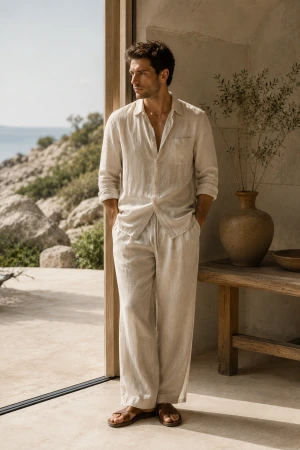
Premium fashion is increasingly shaped by elevated casualwear: clothing that is comfortable enough for daily life but refined enough to feel aspirational. Linen fits naturally into this space. It can make casual silhouettes feel sophisticated without making them formal.
Examples include linen camp-collar shirts, drawstring trousers, oversized button-ups, relaxed blazers, sleeveless vests, shirt dresses, long skirts, and matching sets. These pieces are easy to style but still carry a premium material message. They also photograph well for lifestyle content, which is important for modern fashion marketing.
The best linen casualwear does not feel sloppy. It relies on proportion, finishing, color, and styling discipline. A relaxed linen trouser needs the right waistband, length, and drape. An oversized linen shirt needs enough structure to avoid looking shapeless. A linen co-ord set needs balance between ease and polish.
This is where premium product development becomes visible. Linen may look simple, but simple garments leave fewer places to hide weak decisions.
Sustainability Appeal, With Important Limits
Linen also benefits from the growing interest in natural fibers and more responsible material choices. Flax can be associated with lower-input cultivation in some regions, and linen garments can be durable when well made. These qualities can support premium positioning because many higher-end customers are looking for products that feel considered, not disposable.
However, brands should be careful. Linen is not automatically sustainable. The environmental profile of any linen product depends on farming practices, retting methods, water and chemical use, dyeing, finishing, transportation, garment durability, consumer care, and end-of-life conditions. A linen garment made poorly and discarded quickly does not become responsible simply because it uses a natural fiber.
Textile Exchange’s Materials Market Report 2025 is useful for brands because it frames fiber choices within broader material production, impact, and preferred materials discussions. For linen specifically, brands should verify sourcing details rather than relying on broad natural-fiber claims.
Premium customers may appreciate responsible materials, but they also tend to expect quality. Sustainability language cannot compensate for poor fit, weak seams, bad shrinkage control, or unclear care instructions. The most credible linen positioning combines responsible sourcing claims with real product excellence.
Why Premium Brands Use Linen Blends
Pure linen is attractive, but it is not always the best choice for every premium garment. Linen blends allow brands to adjust softness, drape, wrinkle behavior, price, and wearability. A linen-viscose blend may create a more fluid dress. A linen-cotton blend may feel more familiar to everyday customers. A linen-wool blend can work in transitional tailoring. A linen-silk blend may add softness and subtle sheen.
Blends are not a compromise by default. They can be a design decision. The problem appears when a brand markets a product as if it were pure linen while using a low linen percentage. Premium customers expect transparency. Composition should be clearly stated, and product copy should not exaggerate the benefits of linen when the fabric behaves more like the dominant blended fiber.
For brands, linen blends are especially useful when the product needs:
- Softer drape for dresses or blouses.
- Better wrinkle recovery for city dressing.
- Lower cost while retaining some linen texture.
- More familiar hand feel for customers new to linen.
- Improved structure for tailoring.
- Better scalability across sizes and repeated production.
The strategic value of blending is control. Premium fashion is not only about using natural materials. It is about choosing the right material behavior for the garment’s promise.
Linen’s Premium Value Depends on Construction
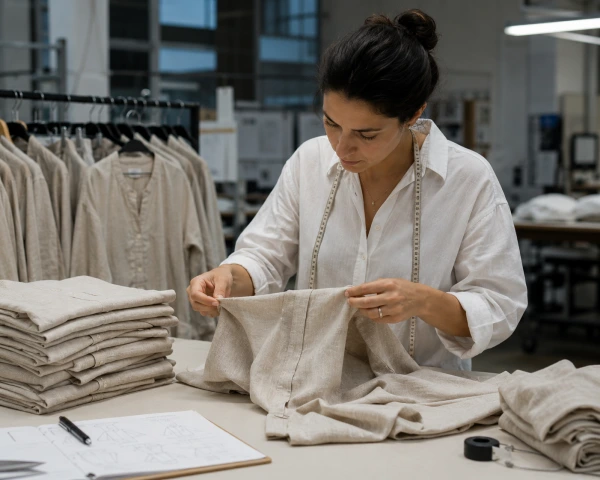
Linen can look expensive or careless depending on construction. This is one of the biggest reasons premium brands need strong product development discipline. Because linen creases and reveals texture, poor cutting or sewing becomes noticeable. Twisted seams, uneven hems, weak collars, unstable waistbands, and poor pressing can make a linen garment look unfinished.
Premium linen products usually need thoughtful technical choices. Shirts may require suitable collar interlining so they feel relaxed but not limp. Trousers may need stable waistbands and careful seam finishing. Dresses may require opacity planning, lining decisions, or strategic layering. Jackets may require structure without trapping heat.
Quality control should pay attention to:
- Shrinkage after washing.
- Seam stability and twisting.
- Fabric skewing.
- Color consistency.
- Opacity and lining compatibility.
- Post-wash hand feel.
- Pressing and packing behavior.
- Customer care clarity.
These details are not glamorous, but they determine whether linen can support a premium price. The customer may not know the technical reason a garment feels good, but they will recognize when it feels considered.
How Linen Supports Brand Storytelling
Linen gives brands a strong storytelling platform because it connects material, lifestyle, climate, craft, and visual identity. A brand can build an entire seasonal story around linen without relying on loud graphics or excessive design detail. This is especially powerful for premium brands that want to communicate calm confidence.
The story can be built around several angles: warm-weather dressing, natural texture, travel wardrobes, slow living, coastal elegance, everyday luxury, or refined simplicity. The best storytelling is specific. Instead of saying “made from sustainable linen,” a stronger brand might say the garment uses a particular linen quality, explain its washed finish, show the texture clearly, and describe how it is designed for breathable summer layering.
Good linen storytelling should include:
- Clear material composition.
- Honest explanation of texture and wrinkles.
- Styling examples for real customer contexts.
- Care guidance that feels practical.
- Close-up imagery that shows fabric quality.
- Sourcing information when verifiable.
- A product narrative that connects comfort and refinement.
This is where linen becomes more than a fabric. It becomes part of the brand’s world. For premium labels, that world-building can be commercially valuable because it gives customers a reason to return for coordinated pieces across seasons.
Visual Merchandising: Making Linen Look Premium
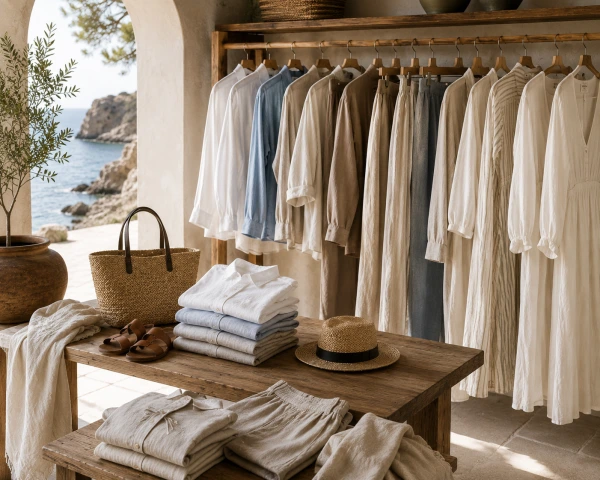
Linen needs careful visual merchandising. If presented poorly, it may look wrinkled, plain, or unfinished. If presented well, it can look effortless, tactile, and expensive. The difference often comes down to styling, lighting, fit, and context.
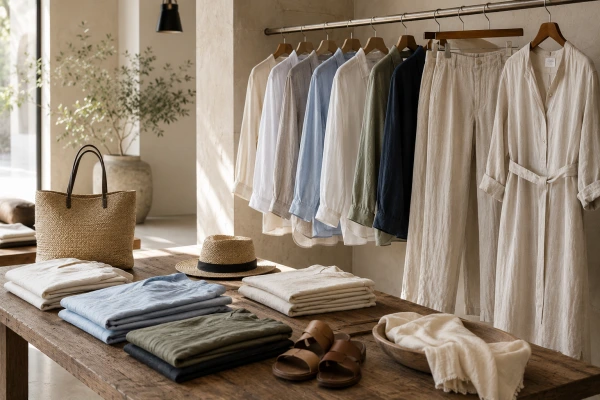
In retail photography, linen should be shown in a way that makes texture desirable. Over-pressing can remove character, while excessive wrinkling can make the garment look neglected. The best visual balance shows natural creasing but maintains clear shape. Close-up shots should highlight weave and surface quality. Full-body images should show drape, proportion, and movement.
Color also matters. Linen often works beautifully in neutrals, off-white, sand, oatmeal, soft black, olive, powder blue, muted stripes, and sun-faded tones. But premium linen does not have to be limited to beige. Rich navy, chocolate, burgundy, butter yellow, and deep green can make linen feel more modern when the dyeing and styling are strong.
For e-commerce teams, linen product pages should include:
- A clean full-body front view.
- A side or movement view showing drape.
- A close-up texture image.
- Fit notes and fabric weight cues.
- Care instructions.
- A realistic styling image that shows how wrinkles appear naturally.
The goal is to reduce surprise. Premium customers may accept linen’s natural behavior, but they do not want to feel misled.
Commercial Opportunities for Fashion Businesses
Linen offers several commercial opportunities for brands that know how to use it strategically. It can anchor seasonal capsules, increase perceived value, support premium pricing, create strong editorial imagery, and connect apparel with lifestyle categories. It also works across price tiers, from accessible linen blends to high-end refined linen tailoring.
For fashion startups, linen can help create a distinctive brand mood quickly. A small collection of linen shirts, trousers, dresses, and co-ord sets can look cohesive if the color palette and styling are disciplined. For established brands, linen can refresh summer assortments and create a bridge between casualwear and premium lifestyle positioning.
The strongest commercial uses include:
- Summer capsules built around breathable wardrobe staples.
- Resortwear collections for travel and vacation retail.
- Premium basics with elevated texture.
- Soft tailoring for warm-weather office and event dressing.
- Lifestyle extensions such as linen home textiles.
- Limited-edition color drops or seasonal co-ord sets.
- Natural-fiber collections with verified sourcing claims.
The risk is sameness. Many brands use linen in similar beige shirts and loose trousers. To stand out, brands need sharper design direction: better proportion, unusual but wearable color, stronger fit, refined finishing, or a clearer lifestyle narrative.
Common Mistakes Brands Make With Premium Linen
The first mistake is assuming linen automatically looks premium. It does not. Low-quality linen, poor stitching, weak fit, or careless photography can make the product look ordinary. Premium value comes from execution, not just composition.
The second mistake is hiding the wrinkles. Linen’s creasing should be managed, not denied. If a brand edits out every wrinkle in campaign imagery, customers may feel disappointed when the garment behaves naturally in real life. A better approach is to show linen looking polished but believable.
The third mistake is overusing sustainability claims. Linen can support responsible material positioning, but claims need evidence. Words like “eco-friendly,” “sustainable,” “natural,” or “biodegradable” should be used only when the full product and supply chain support them. Blends, dyes, trims, finishes, and care conditions all affect the truth of the claim.
The fourth mistake is designing linen products as if they were cotton or polyester. Linen has lower elasticity and a different drape. It needs silhouettes that respect its structure. A garment that works in cotton poplin may not work the same way in linen. Sampling should test the exact fabric, not just the sketch.
What Brands Should Verify Before Positioning Linen as Premium
Before building a premium linen story, brands should verify whether the product truly supports the price and message. A premium claim raises customer expectations. The garment must deliver.
Brands should check:
- Fabric composition and linen percentage.
- Fiber origin and supplier documentation.
- Fabric weight and opacity.
- Shrinkage after washing.
- Hand feel before and after laundering.
- Seam stability and garment distortion.
- Color consistency across production.
- Wrinkle behavior in real wear.
- Fit across sizes.
- Care instructions and customer education.
- Whether sustainability claims are specific and supported.
These checks help protect both product quality and brand credibility. Premium fashion is not just about looking good in campaign imagery. It is about maintaining trust after the customer wears, washes, packs, steams, and restyles the garment.
FAQ
Why is linen considered premium in fashion?
Linen is considered premium when it is made from good-quality flax fiber, woven or finished well, and used in thoughtful garment design. Its natural texture, breathability, crisp hand, and relaxed elegance make simple pieces feel elevated. However, not all linen is premium. Poor fabric quality, weak stitching, bad shrinkage control, or careless design can make linen look cheap. Premium value depends on execution.
Is linen part of the quiet luxury trend?
Linen fits many quiet luxury aesthetics because it communicates quality through texture, restraint, and material character rather than obvious logos. It works well in neutral palettes, soft tailoring, resortwear, and elevated casualwear. Still, linen is not automatically quiet luxury. The garment needs refined proportion, good finishing, and strong styling to support that positioning.
Why do premium brands use linen for summer collections?
Premium brands use linen for summer collections because it feels breathable, visually textured, and appropriate for warm-weather lifestyles. It helps create garments that look relaxed but still polished, such as summer shirts, dresses, trousers, blazers, and co-ord sets. Linen also supports resort and travel narratives, which are commercially important for seasonal premium fashion.
Does linen justify a higher price?
Linen can justify a higher price when the fabric quality, construction, finishing, sourcing, and design are strong. Customers may pay more for linen because it offers breathability, texture, natural fiber appeal, and a premium summer aesthetic. But price must match product reality. A basic linen garment with poor finishing may not justify premium pricing simply because it contains linen.
Is linen sustainable enough for premium fashion brands?
Linen can support a more responsible material strategy, but only when sourcing and processing are verified. Brands should check fiber origin, retting, dyeing, finishing, durability, care, and blend composition before making sustainability claims. Premium brands should avoid vague green language and instead communicate specific, documented details.
Why do linen garments wrinkle so much?
Linen wrinkles because flax fibers have low elasticity compared with many other fibers. This means the fabric does not bounce back as easily after folding, sitting, or movement. In premium fashion, this natural creasing can be part of the relaxed aesthetic. Brands can manage it through fabric finishing, blends, silhouette, photography, and customer education.
Are linen blends still premium?
Linen blends can absolutely be premium when they are developed with intention. A linen-viscose blend may create better drape for dresses, while a linen-cotton blend may improve softness and everyday wearability. The key is transparency. Brands should clearly state composition and avoid implying that a low-linen blend performs like pure linen.
What linen products are best for premium fashion brands?
Strong premium linen categories include shirts, relaxed tailoring, wide-leg trousers, shirt dresses, sleeveless vests, co-ord sets, resortwear, summer jackets, skirts, and lifestyle products such as bedding or table linen. Linen works best when the design allows texture, airflow, and natural creasing to feel intentional rather than problematic.
Conclusion
Linen is becoming popular in premium fashion because it answers a very specific modern desire: clothing that feels comfortable, tactile, refined, and less dependent on loud visual status. It supports the shift toward understated luxury, elevated casualwear, warm-weather versatility, and material-led storytelling.
But linen’s premium appeal is not automatic. The same wrinkles that feel elegant in a resort campaign can look careless in poor product photography. The same natural texture that communicates authenticity can look cheap if the fabric quality is weak. Linen rewards brands that understand material behavior, construction, and customer perception.
For fashion businesses, linen should be treated as a strategic fabric. It can elevate simple silhouettes, support seasonal capsules, strengthen brand storytelling, and create products with lasting emotional appeal. The opportunity is real, but it belongs to brands that combine linen’s natural character with disciplined product development, honest communication, and a clear visual identity.




Comments 0
Leave a CommentSend Comment
Anda harus Login terlebih dahulu untuk dapat memberikan komentar.