


Why Fashion Communities Create Stronger Brands
Quick Answer
Fashion communities create stronger brands because they turn customers from passive buyers into active participants in the brand’s identity, culture, and long-term relevance. In fashion, where purchasing decisions are deeply connected to self-expression, lifestyle, aspiration, belonging, and personal values, a community can help a brand become more than a product supplier.
A strong fashion community can improve customer loyalty, generate organic advocacy, provide real customer insight, support better product storytelling, and reduce dependence on short-term discount-driven marketing. It does not replace product quality, design discipline, retail execution, or pricing strategy. Instead, it strengthens those elements by creating a deeper relationship between the brand and the people who wear, recommend, style, review, and interpret its products.
The most effective fashion communities are not simply follower counts or broadcast channels. They are built around shared taste, values, rituals, problems, aspirations, or lifestyles. For fashion businesses, this makes community building a strategic brand asset rather than a social media tactic.
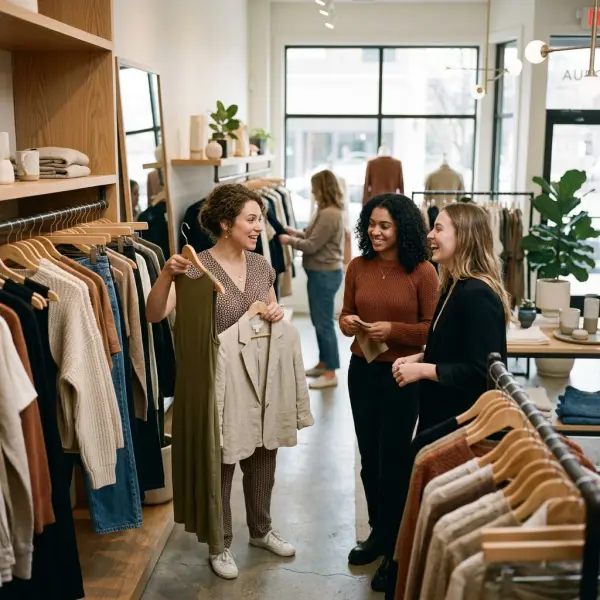
What a Fashion Community Really Means
A fashion community is a group of people connected not only by purchases, but by shared meaning around a brand, style identity, lifestyle, aesthetic preference, or cultural point of view. This distinction matters. A customer buys. A follower watches. A community member participates.
In academic brand literature, a brand community is often described as a specialized, non-geographically bound community built around structured social relationships among admirers of a brand. For fashion businesses, that definition becomes especially useful because fashion naturally operates through symbols. Clothes are functional products, but they are also visible signals of identity, belonging, taste, status, creativity, values, and mood. This makes fashion unusually suited to community formation.
A fashion community may gather around many different anchors. It could be modest fashion, denim culture, tailoring, streetwear, sustainable wardrobe building, luxury craftsmanship, outdoor apparel, local designer movements, plus-size styling, vintage collecting, sneaker culture, or workwear. The brand becomes stronger when it gives people a reason to gather around something bigger than the product page.
A helpful foundation for understanding this concept is the classic Journal of Consumer Research article on brand community, which frames brand community as social rather than purely transactional. In a fashion context, that social dimension is where much of the brand value begins.
Why Fashion Brands Need More Than Visibility
Fashion brands often spend heavily to gain visibility. They invest in social ads, influencer content, product drops, marketplace exposure, PR, short-form video, retail displays, and seasonal campaigns. Visibility is necessary, but visibility alone is fragile. A customer may see a campaign, admire the image, and still forget the brand the next day.
Community creates a different kind of attention. It makes the brand part of an ongoing conversation. When customers discuss how they style a piece, why they trust the fit, how they discovered the brand, or what the brand represents to them, the brand gains continuity beyond each campaign cycle.
This is particularly important in a crowded fashion market where many products look visually similar online. Two brands may sell similar linen dresses, oversized shirts, tailored trousers, handbags, activewear sets, or minimalist jewelry. The stronger brand is often not the one with the loudest campaign, but the one with clearer meaning and a more engaged customer base.
Fashion is also affected by emotional risk. Customers ask themselves whether an item will fit, flatter, last, match their lifestyle, signal the right identity, or justify the price. A community can reduce some of that uncertainty by allowing real people to share styling references, sizing experiences, care tips, reviews, and use cases. That form of social proof is difficult to replicate through brand-controlled messaging alone.
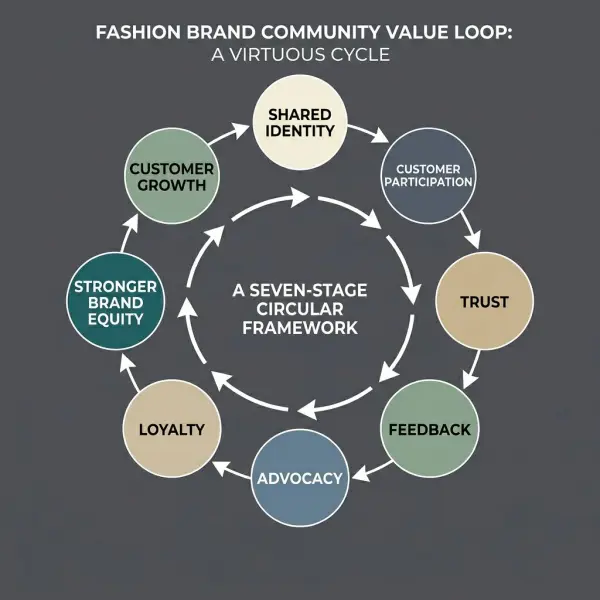
Community Turns Brand Identity Into Shared Identity
A brand identity is what the business defines. A shared identity is what customers recognize, adopt, and express. The gap between the two is where many fashion brands struggle.
A brand may say it stands for modern elegance, conscious design, inclusive fit, creative self-expression, professional confidence, or everyday luxury. Those statements become stronger when customers can see themselves in the brand and see others like them participating in the same meaning system. Community helps translate brand positioning into lived experience.
For example, a modest fashion brand may define itself around elegance and comfort. But its community may bring that identity to life through styling ideas for work, travel, family events, university life, or Eid celebrations. A denim brand may position itself around durability and craft, but its community may give that positioning emotional depth through stories of repair, wear patterns, fit journeys, and personal attachment to favorite jeans.
This is why fashion communities can make brands feel more human. They allow identity to move in both directions: from brand to customer and from customer back to brand.
Brand Meaning Becomes More Credible When Customers Participate
Customers are often more skeptical of brand claims than they are of peer experiences. A brand saying “our clothes are versatile” is useful, but customers showing five realistic ways to wear the same piece can be more persuasive. A brand saying “our sizing is inclusive” matters, but customers across different body types sharing fit experiences can make the claim easier to evaluate.
This does not mean brands should outsource truth to customers or use community content to cover weak product execution. If the garment quality, sizing consistency, shipping experience, or customer service is poor, a community may amplify dissatisfaction just as quickly as enthusiasm. Community strengthens a brand when the underlying product and service experience can withstand conversation.
Strong Communities Support Long-Term Loyalty
Customer loyalty in fashion is not simple. People change size, income, lifestyle, location, taste, work routines, and cultural references. They may love a brand one year and shift to another the next. This makes loyalty difficult to secure through points, discounts, or repeated retargeting alone.
A community can support loyalty by giving customers more reasons to remain connected between purchases. A customer may not buy every month, but they may still participate by reading styling advice, attending events, commenting on new drops, joining discussions, sharing outfit photos, or learning how to care for garments they already own.
This is strategically important because fashion brands often experience uneven purchase cycles. Eveningwear, tailoring, outerwear, bridal, luxury accessories, leather goods, and premium basics may not be bought frequently. Community allows brands in these categories to maintain relevance even when customers are not actively shopping.
Harvard Business Review’s discussion of getting brand communities right is useful here because it emphasizes that communities should serve members, not only the business. That is a critical lesson for fashion brands. A community built only to push product will usually feel like a sales channel. A community that helps people dress, learn, express themselves, connect, and feel understood has a stronger foundation.
The Difference Between an Audience and a Community
Many fashion businesses mistake audience size for community strength. A large Instagram following, TikTok reach, email list, or marketplace customer base can be valuable, but those assets are not automatically communities.
An audience receives messages. A community creates interaction.
A customer database records transactions. A community creates relationships.
A follower may like a campaign. A community member may defend, recommend, style, critique, and help shape the brand’s direction.
This distinction has operational consequences. If a brand treats its community like an audience, it will focus mainly on content output, posting frequency, and campaign metrics. If it treats the audience like a potential community, it will also design member roles, feedback loops, rituals, offline touchpoints, editorial themes, and participation formats.
Audience, Customer Base, and Community Compared
|
Brand Asset |
What It Means |
Main Business Value |
Main Limitation |
|
Audience |
People who consume brand content |
Awareness and reach |
Often passive and platform-dependent |
|
Customer base |
People who have purchased |
Revenue and transaction history |
May not feel emotionally connected |
|
Loyalty program |
Customers rewarded for repeat behavior |
Retention and purchase incentives |
Can become discount-driven |
|
Community |
People connected by shared identity, value, or participation |
Trust, advocacy, insight, belonging, resilience |
Requires ongoing moderation and meaningful value |
The strongest fashion brands often combine all four. The mistake is assuming they are the same thing.
Community Makes Fashion Brands More Defensible
A defensible brand is not only recognized. It is difficult to replace in the customer’s mind. Community contributes to defensibility because it creates social and emotional value that competitors cannot copy quickly.
A competitor can copy a silhouette, color palette, product category, ad format, or influencer strategy. It is much harder to copy years of customer stories, fit discussions, styling rituals, local events, peer relationships, founder conversations, repair culture, or shared emotional meaning.
This is especially relevant for fashion categories where product differentiation is subtle. Minimalist fashion, basics, athleisure, modest wear, workwear, occasionwear, and accessories can become visually crowded. In these categories, the brand that owns a clearer community narrative may stand out even when the product category is competitive.
Community also creates memory. Customers are more likely to remember a brand when they associate it with people, conversations, rituals, and experiences rather than only product images. That memory can influence future search, recommendation, and purchase behavior.

Community Improves Customer Insight
One of the most practical benefits of fashion community building is better customer insight. Fashion brands often rely on sales reports, return data, surveys, trend reports, and social analytics. These are useful, but they may not fully explain why customers behave the way they do.
A community can reveal the language customers use, the objections they have, the styling problems they face, the product details they notice, and the emotional reasons behind purchase hesitation. This kind of qualitative insight can improve product development, merchandising, sizing, content, retail training, and customer service.
For example, a womenswear brand may discover that customers love a dress silhouette but struggle with bra compatibility. A workwear brand may learn that customers want trousers that look polished but feel comfortable during commuting. A premium handbag brand may find that customers care less about trend novelty and more about organization, weight, hardware durability, and repair options.
These insights are not always visible in a conversion dashboard. Community gives brands access to the “why” behind the “what.”
What Community Insight Can Help Improve
A fashion community can generate insight across several operational areas:
- product fit, sizing, and comfort issues;
- styling barriers that prevent purchase;
- preferred colors, lengths, fabrics, and silhouettes;
- unmet needs in specific customer segments;
- product education gaps;
- post-purchase care questions;
- return and exchange pain points;
- emotional drivers behind brand attachment.
The value is not in collecting random comments. The value is in building a disciplined system for listening, categorizing, validating, and acting on recurring patterns. A single loud opinion should not dictate the product roadmap. But repeated feedback from the right customer segment deserves attention.
Community Strengthens Product Storytelling
Fashion products need context. A garment on a white background may show design, but it rarely communicates lifestyle, movement, confidence, occasion, cultural relevance, or emotional appeal. Community adds context by showing products in real life.
This is why community and storytelling are closely connected. A brand can explain the inspiration behind a collection, but customers extend the story by showing how the product lives in wardrobes, routines, events, and personal style systems. This is especially valuable for brands selling versatile, premium, technical, modest, sustainable, or craftsmanship-led products.
A well-made blazer, for instance, may be positioned as a workwear essential. Community content can show how it works for office presentations, casual Fridays, business travel, creative meetings, dinners, and capsule wardrobes. A brand can then use those real styling contexts to sharpen its editorial content, product pages, email campaigns, retail scripts, and visual merchandising.
This does not mean every community contribution should become marketing material. Brands need permission, credit, rights management, and good judgment. Customer participation should feel respected, not extracted.
Community Can Reduce Dependence on Discounts
Many fashion brands rely on discounts to drive short-term conversion. Promotions can be useful, especially for inventory management, seasonal clearance, new customer acquisition, or price-sensitive segments. But if a brand trains customers to wait for discounts, it may weaken perceived value over time.
Community can help protect value perception by giving customers reasons to buy beyond price. These reasons may include trust in fit, emotional connection, styling confidence, access to brand knowledge, founder transparency, repair or care culture, limited community experiences, or alignment with a shared aesthetic.
This does not eliminate the need for commercial discipline. A community will not save a poorly priced product, weak assortment, or inconsistent quality. But when the product is credible, community can support stronger perceived value by making the brand feel more meaningful and less interchangeable.
The McKinsey State of Fashion 2026 notes that fashion executives are paying close attention to retention strategies and rebuilding customer trust. Community building fits into that broader strategic direction when it is connected to product, storytelling, and customer experience rather than treated as a decorative marketing layer.
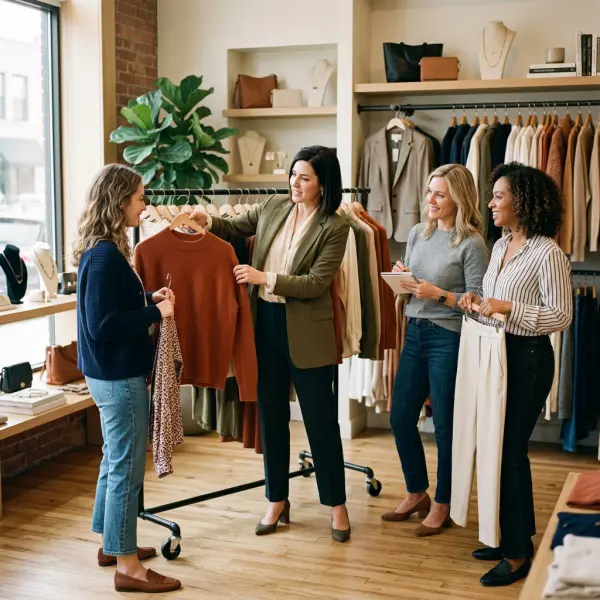
Community Creates Organic Advocacy
Organic advocacy happens when customers voluntarily recommend, defend, explain, or share a brand because they genuinely value it. This is different from paid influencer promotion. Both can be useful, but they operate differently.
Paid influence buys reach. Community advocacy builds credibility over time.
In fashion, advocacy often appears through outfit posts, styling conversations, wardrobe recommendations, reviews, resale discussions, care tips, unboxing videos, event attendance, or word-of-mouth among friends. The most valuable advocacy is not always viral. Sometimes it is a trusted recommendation in a small group, a detailed fit review, or a customer explaining why a garment is worth the price.
Brands should treat community advocacy carefully. If every enthusiastic customer is immediately turned into a promotional asset, the community may begin to feel commercialized. A better approach is to create an environment where advocacy can happen naturally, then support it with ethical, transparent systems.
For brands using customer-generated content, affiliate programs, gifting, ambassador campaigns, or paid creator relationships, disclosure rules matter. In the United States, the FTC Endorsement Guides address endorsements and testimonials in advertising. Fashion brands operating globally should also check local advertising, consumer protection, privacy, and platform-specific rules.
Community Helps Brands Navigate Cultural and Trend Shifts
Fashion trends do not move only from runway to retail. They also move through communities. Streetwear, sneaker culture, modest fashion, vintage fashion, resale, outdoor lifestyle apparel, cosplay-inspired styling, gender-fluid fashion, and niche aesthetics have all been shaped by groups of people who exchange references, reinterpret products, and create their own style language.
This makes community especially valuable for brands that want to stay culturally aware without chasing every trend. A community can help a brand understand which shifts are meaningful to its customers and which are irrelevant noise.
For example, a brand serving professional women may not need to follow every viral microtrend. But it may need to understand how customers are redefining office dressing, comfort, travel wardrobes, work-from-home transitions, and event dressing. A children’s apparel brand may need to listen to parents discussing durability, washability, school rules, comfort, and price sensitivity. A luxury accessories brand may need to understand how clients talk about timelessness, resale value, craftsmanship, and personal milestones.
Community listening does not replace creative direction. It sharpens it. The strongest brands do not simply obey customer comments; they interpret them through a clear brand lens.
Community Makes Customer Retention More Human
Retention is often discussed through metrics: repeat purchase rate, customer lifetime value, churn, email engagement, loyalty points, cohort behavior, and average order frequency. These metrics are useful, but they do not fully capture the emotional reasons customers stay.
A customer may return because the brand solves a practical problem. Another may stay because the brand represents who they are becoming. Another may remain engaged because they trust the founder, enjoy the styling advice, feel seen by the imagery, or identify with other customers. Community makes these human reasons more visible.
This is where community building connects naturally with retention strategy. Brands that want to explore retention tactics in more depth can later connect this article to why customer retention matters more than customer acquisition and how fashion brands increase repeat purchases. The present discussion focuses on why community strengthens the brand foundation behind those tactics.
Practical Ways Community Strengthens Fashion Brand Operations
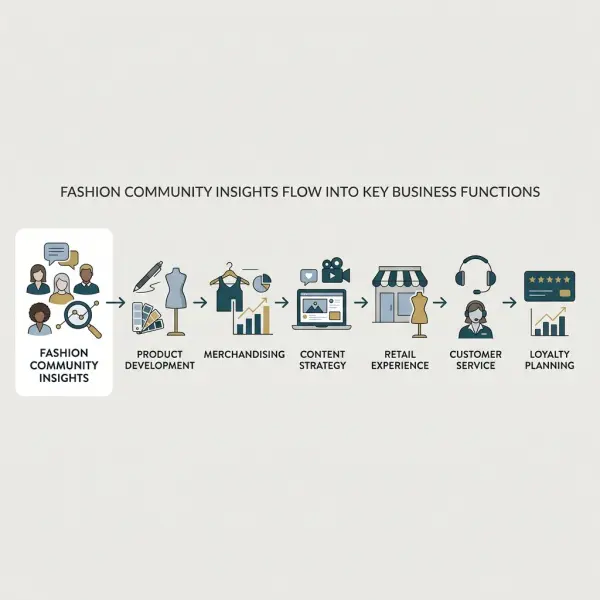
Community is often assigned to marketing, but its impact can reach far beyond content planning. When managed well, community becomes a cross-functional asset.
A fashion brand can apply community insight in product development by testing whether customers understand a new silhouette, asking how they wear existing pieces, or identifying recurring fit concerns. The merchandising team can observe which products generate conversation, not just which products sell quickly. The retail team can use community questions to improve in-store styling guidance. The customer service team can identify repeated confusion around sizing, returns, garment care, or delivery expectations.
Community can support brand operations in several practical areas:
- Product development: learning what customers need before overcommitting to production.
- Merchandising: understanding how customers group products into outfits and occasions.
- Content strategy: creating editorial topics based on real questions.
- Retail experience: designing workshops, styling sessions, and member events.
- Customer service: detecting repeated friction points earlier.
- Sustainability communication: explaining care, repair, resale, and responsible use without overstating claims.
- Loyalty strategy: rewarding participation, not only transaction frequency.
The important point is integration. A community manager should not be isolated from product, merchandising, CRM, retail, and leadership. If community insight never reaches decision-makers, the brand is only collecting noise.
What Fashion Communities Do Not Automatically Solve
Community building is powerful, but it is often misunderstood. A community cannot compensate for every business weakness. It cannot make poor-quality garments feel premium forever. It cannot erase inconsistent sizing. It cannot turn unclear positioning into a strong brand identity without deeper work. It cannot guarantee viral growth or predictable revenue.
A weak product experience may become more visible inside a community because customers talk. That can be uncomfortable, but it is also useful. Complaints about fit, shrinkage, delayed shipping, poor customer service, or unclear return policies are not community failures. They are operational signals.
Fashion brands should also avoid assuming that community members represent the entire market. Highly engaged customers may have stronger opinions than silent buyers. Early adopters may not behave like mainstream customers. A premium brand’s most vocal fans may not reflect price-sensitive shoppers. Community insight should be weighed alongside sales data, returns, customer service data, market research, and brand strategy.
Common Mistakes Fashion Brands Make With Community
Many fashion brands like the idea of community but build it in ways that weaken trust. The most common mistakes usually come from treating community as a campaign rather than a relationship.
Mistake 1: Treating Community as a Sales Funnel Only
This happens when every community interaction leads to a product push. Members may join for styling ideas, education, access, inspiration, or shared identity, but they quickly realize the brand only wants conversion.
The consequence is fatigue. Engagement may decline, comments may become shallow, and members may stop contributing. A better approach is to balance commercial content with genuine value: styling help, care education, behind-the-scenes context, member stories, product transparency, and thoughtful conversation.
Mistake 2: Confusing Influencer Marketing With Community
Influencers can help introduce a brand to new audiences, but influencer campaigns are not the same as community building. A brand may work with creators and still have no meaningful relationship with its customers.
The risk is dependency. If attention comes mainly from paid creators, the brand may struggle when campaign budgets decrease or platform algorithms shift. A stronger strategy uses creators as entry points while building owned customer relationships through email, events, groups, retail experiences, loyalty programs, or brand-hosted editorial platforms.
Mistake 3: Overcontrolling the Conversation
Some brands want only positive, polished, brand-safe content. They delete criticism, ignore product concerns, or allow no room for customer interpretation. This can make the community feel staged.
Fashion customers are often highly observant. They notice fabric behavior, fit differences, styling limitations, price changes, and quality inconsistencies. A mature brand does not need to allow abusive behavior or misinformation, but it should create space for honest feedback. Moderation should protect the community, not erase reality.
Mistake 4: Building on a Platform the Brand Does Not Own
A community that exists only on a social platform is vulnerable to algorithm changes, account issues, rising ad costs, declining organic reach, or shifting user behavior. Social platforms are useful, but they should not be the only community infrastructure.
Fashion brands should consider how to gradually build owned or semi-owned channels: email lists, membership programs, customer portals, events, private groups, mobile apps, retail clienteling systems, or editorial hubs. The right structure depends on brand size, category, customer behavior, and operational capacity.
Mistake 5: Asking for Participation Without Giving Value Back
Customers are not unpaid focus groups. If a brand constantly asks for opinions, content, feedback, and referrals without offering meaningful value, participation will decline.
Value can take many forms: early access, better styling advice, recognition, educational content, private events, repair guidance, exclusive product knowledge, member-only discussions, or simply a respectful environment where customers feel heard. The value exchange must be clear.
How Fashion Brands Can Apply This Strategically
For fashion businesses, the first question is not “Which platform should we use?” The better question is “What shared reason do people have to gather around this brand?”
A luxury tailoring brand may build community around craftsmanship, personal fit, wardrobe investment, and client education. A sustainable fashion label may build around care, repair, transparency, and slower consumption, while being careful not to overclaim environmental benefits. A streetwear brand may build around drops, cultural references, local scenes, and creative collaboration. A modest fashion brand may build around styling confidence, occasion dressing, faith-conscious design needs, and everyday elegance.
Once the community anchor is clear, brands can design participation more intentionally. Not every customer wants to post photos. Some prefer to attend events. Some like to vote on colors. Some enjoy styling challenges. Some want expert education. Some want recognition. Some simply want to belong quietly.
A practical community strategy usually needs five foundations:
- A clear shared identity or problem the community is built around.
- A reason to participate beyond discounts.
- A moderation and brand voice standard.
- A feedback loop into business decisions.
- A measurement system that tracks engagement quality, not only audience size.
This is where the next article in the cluster can go deeper into execution: how fashion brands build engaged customer communities. The current article establishes why community matters; the next should focus on how to build and manage one.
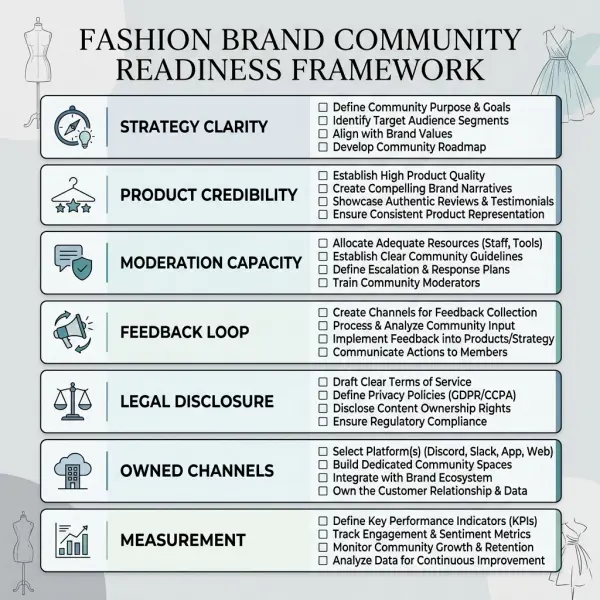
What Brands Should Verify Before Investing in Community
Before investing heavily in community building, fashion brands should verify whether they have the operational readiness to support it. A community creates expectations. If customers begin to interact more closely with the brand, they may expect faster responses, clearer answers, more transparency, and visible follow-through.
Brands should verify several practical factors:
- Is the brand positioning clear enough for people to gather around?
- Is the product experience strong enough to withstand open discussion?
- Does the team have capacity for moderation and response?
- Will customer feedback reach product, retail, and leadership teams?
- Are legal and disclosure rules understood for UGC, affiliates, ambassadors, and gifted products?
- Does the brand have a plan for owned channels beyond social media?
- Are community metrics connected to retention, insight, and brand health?
A community should not be launched just because competitors have one. It should be built because the brand has a meaningful reason to bring people together and enough discipline to support the relationship over time.
The Business Value of Strong Fashion Communities
The business value of community is best understood as cumulative rather than immediate. A single community event may not change revenue dramatically. A single customer post may not drive meaningful sales. But over time, repeated customer participation can strengthen trust, reduce uncertainty, deepen identity, increase advocacy, and provide insight that improves business decisions.
For fashion brands, this value can appear in several ways. Customers may become more confident buying new categories. Product launches may gain stronger early feedback. Styling content may become more relevant. Retail events may feel more purposeful. Loyal customers may become informal educators for newer customers. Customer service questions may reveal product page gaps. Brand storytelling may become more grounded in real use.
The commercial value is real, but it is not automatic. Community must be connected to brand strategy, product quality, content, retail, customer service, and leadership decision-making. Otherwise, it becomes another content channel with a warmer name.
FAQ
What is a fashion brand community?
A fashion brand community is a group of people connected by shared interest, identity, lifestyle, values, or aesthetic meaning around a fashion brand. It is not the same as a follower count or customer database. A true community includes interaction among members, not only communication from brand to customer. In fashion, communities often form around styling needs, cultural identity, product categories, values, craftsmanship, fit, lifestyle, or creative expression.
Why are communities important for fashion brands?
Communities are important because fashion is deeply tied to identity and social meaning. Customers often want more than product information; they want styling confidence, trust, inspiration, peer validation, and a sense of belonging. A strong community can support loyalty, advocacy, product insight, and brand differentiation. It also helps brands understand how customers actually wear and interpret products in real life.
Is a social media following the same as a community?
No. A social media following is an audience. It becomes closer to a community only when people interact, participate, share experiences, and build a relationship with the brand and with each other. A brand can have a large following but weak community if engagement is passive. Conversely, a smaller brand can have a strong community if members are active, loyal, and emotionally connected.
Can community building increase fashion sales?
Community building can support sales indirectly by improving trust, reducing purchase uncertainty, increasing repeat engagement, and encouraging word-of-mouth. However, it should not be treated as a guaranteed sales shortcut. Sales still depend on product quality, pricing, availability, fit, merchandising, customer service, and market demand. Community works best as a long-term brand strengthener, not a quick conversion trick.
What types of fashion brands benefit most from community?
Many fashion brands can benefit, but community is especially useful for brands built around strong identity, lifestyle, education, fit needs, niche aesthetics, craftsmanship, sustainability, modest fashion, streetwear, luxury, activewear, outdoor apparel, or customer transformation. The key is having a meaningful reason for people to gather. If the brand has no clear point of view, community building becomes much harder.
What are the risks of building a fashion community?
The main risks include overcommercializing the relationship, ignoring criticism, failing to moderate harmful behavior, relying too heavily on rented social platforms, mishandling customer-generated content, or making unsupported claims. Communities also require time and operational capacity. If a brand invites participation but does not listen or respond, customers may feel used rather than valued.
How should fashion brands measure community strength?
Fashion brands should look beyond follower count. Useful indicators include repeat participation, quality of discussion, customer-generated styling content, event attendance, referral behavior, repeat purchase patterns among members, customer feedback quality, sentiment, retention, and the degree to which community insight improves business decisions. Measurement should combine quantitative metrics with qualitative interpretation.
Conclusion
Fashion communities create stronger brands because they build something that product images, paid ads, and seasonal campaigns cannot fully achieve on their own: shared meaning.
In fashion, customers are not only buying fabric, shape, color, and construction. They are buying confidence, identity, belonging, aspiration, function, and cultural relevance. A community gives those meanings a place to live. It allows customers to participate in the brand rather than merely consume it.
The brands that benefit most from community are not necessarily the loudest or largest. They are the brands with a clear point of view, credible products, consistent customer experience, and enough humility to listen. Community does not remove the need for strong design, quality, pricing, merchandising, or operations. It makes those strengths more visible and more defensible.
For fashion businesses, the strategic lesson is simple but demanding: build relationships that outlast campaigns. A strong fashion community is not a marketing accessory. It is a long-term brand asset.




Comments 0
Leave a CommentSend Comment
Anda harus Login terlebih dahulu untuk dapat memberikan komentar.