

Garment Manufacturing Process: Step-by-Step Guide for Clothing Brands
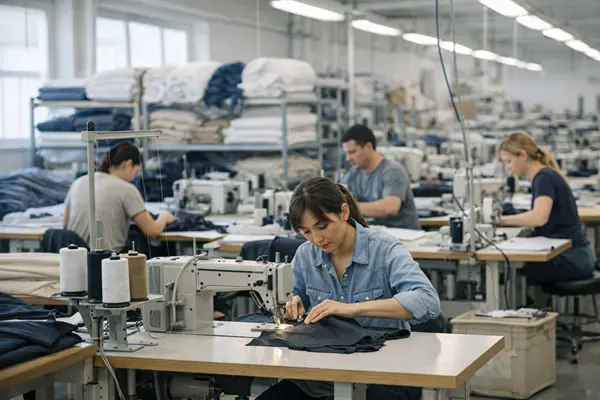
The garment manufacturing process is the structured series of steps that transform a clothing idea into a finished product ready for customers. For fashion startups and growing brands, understanding this clothing production process is essential—not just to produce garments, but to build a brand that is consistent, scalable, and trusted.
At its core, the apparel production process connects creativity with execution. It ensures that what you design can be produced efficiently, fits well, and meets customer expectations. When you understand how this process works, you gain clarity in decision-making—from design choices to production planning.
What Is the Garment Manufacturing Process?
The garment manufacturing process refers to the complete workflow of producing clothing, starting from concept development and ending with delivery to customers.
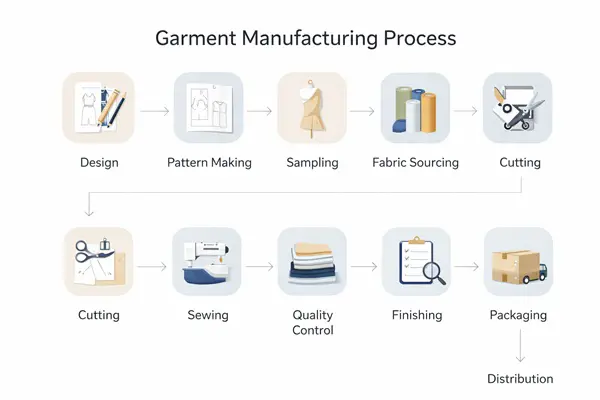
In simple terms, it includes:
- Design and concept development
- Technical preparation
- Pattern making
- Sampling
- Fabric sourcing
- Pre-production planning
- Cutting
- Sewing and assembly
- Quality control
- Finishing
- Packaging
- Distribution
Each step in the clothing production process plays a specific role, and skipping or rushing one stage often leads to problems later.
1. Where It All Begins: Turning Ideas into Direction
Every garment manufacturing process starts with an idea—but ideas need direction to become products.
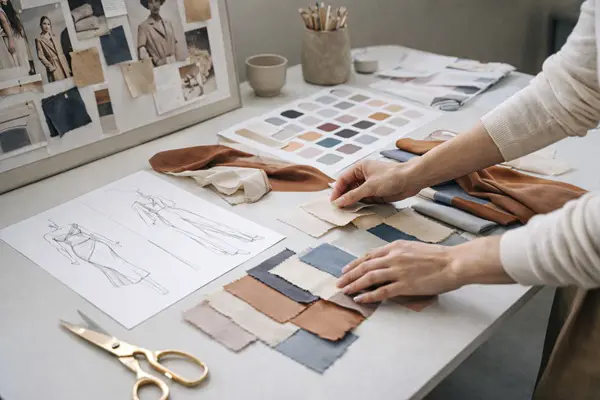
At this stage, you define:
- Who your customer is
- What they need or aspire to wear
- How your brand should be perceived
Moodboards, colors, and sketches help shape your concept. But equally important is thinking about production early.
A well-planned beginning ensures that your clothing production process runs smoothly from the start.
2. Translating Creativity into Clear Instructions
In the apparel production process, ideas must be translated into clear, technical instructions.
This step ensures that your manufacturer understands exactly what to produce.
Details such as measurements, materials, and construction methods must be clearly defined. When communication is precise, the garment manufacturing process becomes more efficient and predictable.
3. Shaping the Garment: Pattern Making
Pattern making is a key technical stage in the garment manufacturing process where your design becomes a functional structure.
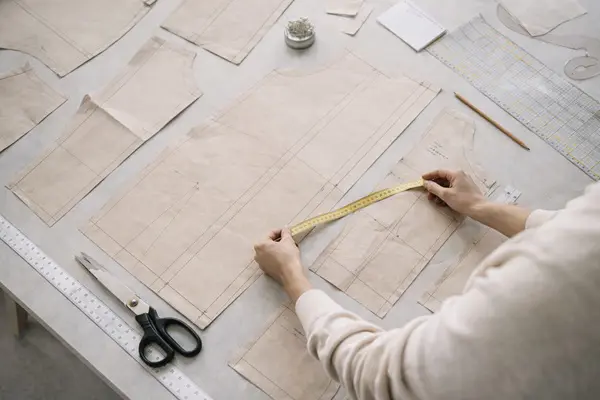
Patterns determine how the garment fits and moves. A well-developed pattern ensures:
- Comfortable fit
- Balanced proportions
- Consistent sizing
This step has a direct impact on the success of your clothing production process, especially when scaling to multiple sizes.
4. The First Reality Check: Sampling
Sampling is where your design becomes real within the apparel production process.

At this stage, you create a physical version of your garment to evaluate:
- Fit and proportions
- Fabric behavior
- Overall appearance
Sampling allows you to refine your product before moving forward in the garment manufacturing process.
Taking time here reduces costly mistakes during bulk production.
5. Choosing the Right Fabric: More Than Just Aesthetic
Fabric selection is one of the most important decisions in the clothing production process.
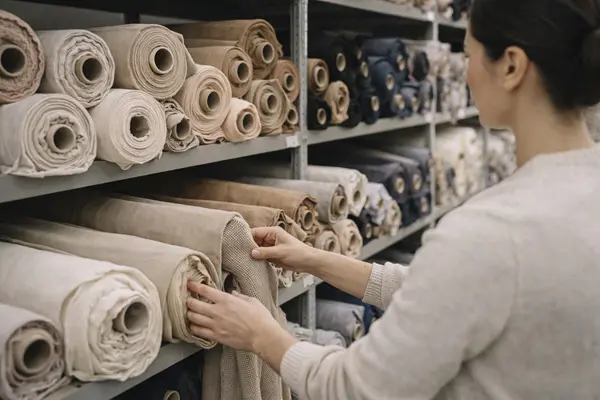
The fabric affects:
- Comfort and wearability
- Durability
- Visual appearance
In the garment manufacturing process, fabric also influences cost and production feasibility.
Choosing the right material ensures that your product aligns with both your design vision and customer expectations.
6. Preparing for Production: Aligning Expectations
Before production begins, the apparel production process requires full alignment between brand and manufacturer.
This includes:
- Approving final samples
- Confirming materials
- Setting timelines
- Agreeing on costs
Clear alignment at this stage ensures that the garment manufacturing process runs efficiently and avoids unnecessary delays.
7. Cutting the Fabric: Precision Matters
Cutting is the first physical step in the clothing production process.
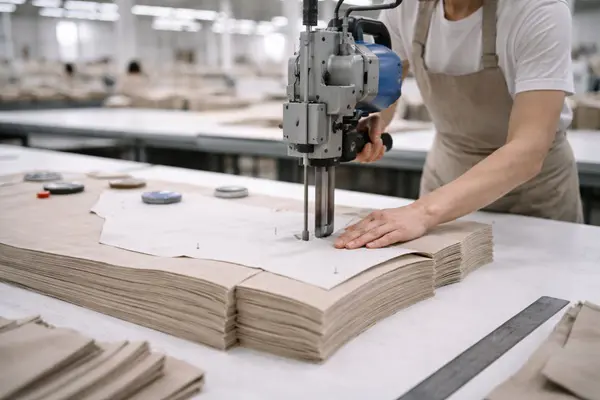
Fabric is laid out and cut according to patterns. Accuracy is essential because even small errors can affect the final garment.
Efficient cutting also reduces material waste, making the garment manufacturing process more cost-effective.
8. Bringing It Together: Sewing and Assembly
Sewing is the core stage of the apparel production process, where garments are assembled.
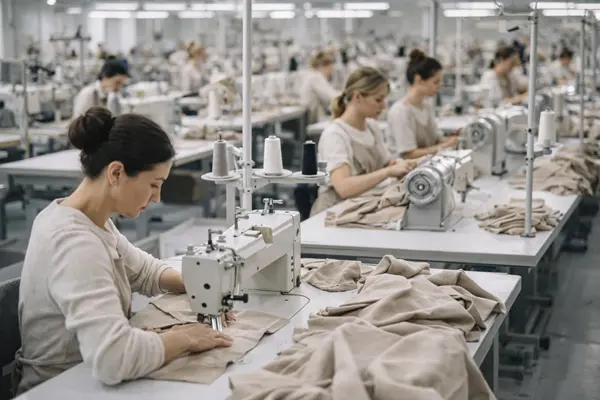
Each piece is constructed step by step:
- Panels are joined
- Sleeves are attached
- Details are added
Consistency in stitching ensures that your garment manufacturing process produces reliable, high-quality products.
9. Checking the Details: Quality Control
Quality control is essential in the clothing production process to maintain consistency.
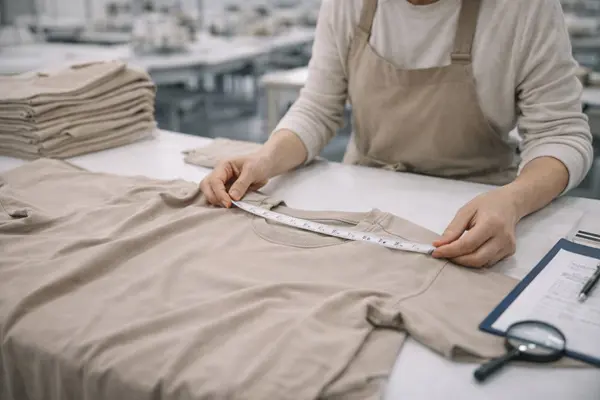
Each garment is checked for:
- Correct measurements
- Stitching quality
- Fabric defects
This step protects your brand by ensuring that the final output of the garment manufacturing process meets your standards.
10. The Final Touch: Finishing
Finishing is the stage where garments are refined in the apparel production process.
This includes:
- Trimming threads
- Pressing garments
- Final cleaning
A strong finishing process enhances the overall quality of your garment manufacturing process output.
11. Packaging: Your Brand in the Customer’s Hands
Packaging is an extension of the clothing production process that directly impacts customer experience.
It represents your brand at the moment of delivery.
In the broader garment manufacturing process, packaging transforms a product into a complete brand experience.
12. Delivering the Product: From Factory to Customer
Distribution is the final step in the apparel production process.
Your garments are delivered to:
- Warehouses
- Retailers
- Customers
A well-managed logistics system ensures that your garment manufacturing process supports timely delivery and customer satisfaction.
13. Looking Back to Move Forward
The garment manufacturing process continues even after production ends.
By reviewing:
- Production performance
- Costs and efficiency
- Customer feedback
You can improve your clothing production process over time.
Frequently Asked Questions
What is the garment manufacturing process?
The garment manufacturing process is the step-by-step system of producing clothing, from design to final delivery.
How long does clothing production take?
Depending on complexity, it can take 2–8 weeks from sampling to production.
What is the most important stage in apparel production?
Sampling and pattern making are critical because they determine fit and product quality.
A Clear Takeaway
The garment manufacturing process is not just a technical workflow—it is a system that shapes your entire brand.
For fashion startups and clothing brands, understanding each stage of the apparel production process allows you to make better decisions, reduce risks, and build products that customers trust.
You don’t need to master everything at once. But the more you understand this process, the more confidently you can grow your brand—step by step.





Comments 0
Leave a CommentSend Comment
Anda harus Login terlebih dahulu untuk dapat memberikan komentar.