
Why Bamboo-Based Fabrics Are Popular in Comfort-Focused Apparel
Quick Answer
Bamboo-based fabrics are popular in comfort-focused apparel because bamboo-derived viscose can produce a smooth surface, fluid drape, and absorbent fabric that feels pleasant in close contact with the skin. These qualities align naturally with products such as underwear, sleepwear, loungewear, relaxed T-shirts, socks, maternity clothing, and soft everyday basics.
The appeal is partly functional and partly commercial. A soft fabric creates an immediate sensory difference that customers can feel during product trials, while its flowing appearance supports relaxed silhouettes associated with rest, wellness, and everyday comfort.
Most soft bamboo clothing, however, is made from viscose or rayon produced using bamboo-derived cellulose—not mechanically spun natural bamboo fiber. Its comfort also depends on yarn quality, fabric weight, construction, finishing, stretch recovery, garment fit, and laundering performance.
Bamboo-based fabric should therefore not be treated as automatically breathable, antibacterial, hypoallergenic, quick-drying, or environmentally superior. For fashion businesses, its strongest value lies in carefully engineered tactile comfort. Credible sourcing, garment testing, accurate labeling, and restrained product claims remain essential.
What Does “Bamboo-Based Fabric” Mean?
Bamboo-based fabric is a broad commercial description for textiles whose cellulose originates from bamboo. In most comfort-focused apparel, the material is bamboo-derived viscose or rayon: bamboo is processed into dissolving pulp, the cellulose is chemically dissolved, and the solution is regenerated into manufactured fiber.
Less commonly, bamboo cellulose may be processed into modal or lyocell. Mechanically extracted natural bamboo fiber also exists, but it is not the smooth, silky material used in most mainstream bamboo underwear, sleepwear, and loungewear.
This distinction matters for product labeling. The US Federal Trade Commission states that a textile can be called bamboo only when it is made directly from actual bamboo fiber. Regenerated products must be identified using wording such as “rayon made from bamboo” or “viscose made from bamboo.” FTC guidance for bamboo textile sellers
The word bamboo describes the cellulose source. It does not, by itself, reveal the fiber-manufacturing process, fabric quality, environmental performance, or finished-garment comfort.
A detailed explanation of these material routes is available in Bamboo Fabric Explained: Properties, Benefits, and Fashion Uses.
Why Does Bamboo Viscose Suit Comfort-Focused Clothing?
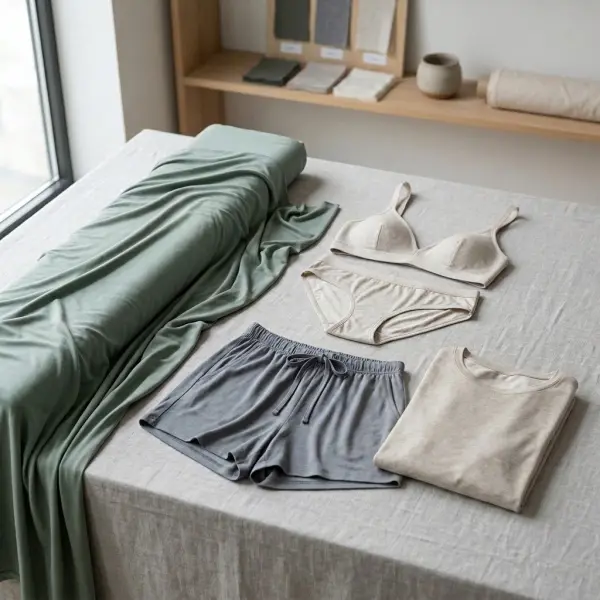
Bamboo viscose suits comfort-focused apparel because it can be developed into fine, flexible fabrics with a smooth handfeel and fluid movement. These characteristics are particularly valuable in garments worn for long periods or directly against the skin.
Comfort is not one property. It is the combined result of several sensory and physiological factors:
- how the fabric feels against the skin;
- how closely it follows the body;
- whether seams and trims create pressure;
- how heat and moisture move through the garment;
- how the product stretches and recovers;
- whether it retains softness and shape after washing;
- how the wearer emotionally perceives the garment.
Textile research treats clothing comfort as a combination of thermal, moisture, tactile, mechanical, and psychological responses. Fabric structure, physical properties, finishing, garment fit, and environmental conditions can all affect the outcome.
Bamboo viscose does not automatically optimize every part of that system. It is popular because several of its common characteristics fit the requirements of relaxed and close-to-skin products particularly well.
Softness Creates an Immediate Product Advantage
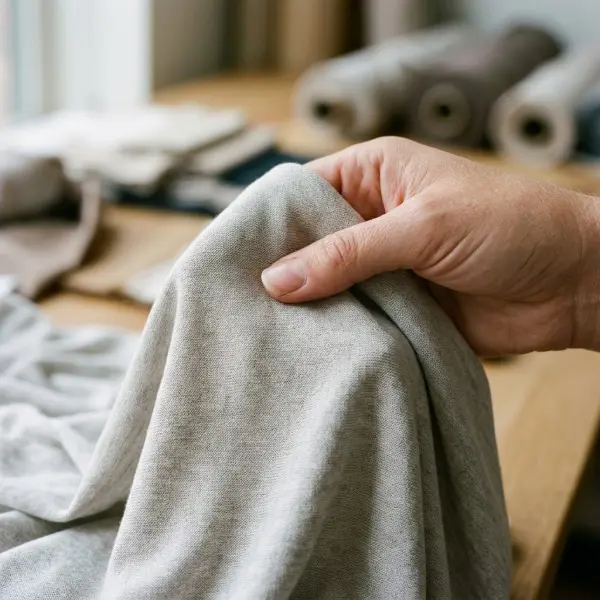
Softness is probably the most commercially visible reason for the popularity of bamboo-derived viscose. A customer can feel it within seconds.
Fine viscose yarns can create a smooth surface with less of the dry or slightly hairy character found in some basic cotton fabrics. When used in lightweight jersey, rib, or interlock constructions, bamboo viscose can feel silky, flexible, and gentle during movement.
This first-touch experience is valuable in categories where the buying decision is strongly influenced by sensory evaluation. Customers shopping for pajamas or underwear may not understand yarn count, knitting gauge, or finishing chemistry, but they can immediately distinguish between a rough fabric and a smooth one.
For physical retail, softness can encourage customers to handle the product longer. For online retail, it gives brands a clear product attribute to communicate through fabric close-ups, descriptive copy, reviews, and repeat-purchase messaging.
The advantage needs qualification. Softness depends on:
- fiber and yarn quality;
- staple length;
- yarn twist;
- fabric density;
- knit structure;
- enzyme treatment;
- mechanical finishing;
- softening agents;
- moisture content;
- repeated laundering.
A fabric may feel exceptionally soft because of a finishing treatment that gradually diminishes. The strongest comfort product is therefore not the one with the softest new swatch, but the one that retains an acceptable handfeel throughout its expected service life.
Why Softness Matters More in Close-to-Skin Categories
Small differences in surface texture become more noticeable when a garment covers sensitive or high-movement areas. Underwear, base layers, sleepwear, socks, and fitted tops remain in contact with the skin for hours and repeatedly rub against the body.
In these categories, the wearer may notice:
- yarn hairiness;
- seam ridges;
- label edges;
- waistband pressure;
- fabric cling;
- pilling;
- wetness;
- friction during movement.
A smooth main fabric can reduce one source of discomfort, but it cannot correct badly designed seams, stiff elastic, abrasive prints, poorly placed labels, or an unsuitable fit.
The commercial lesson is important: bamboo viscose works best as part of a complete comfort system, not as a substitute for garment engineering.
Fluid Drape Supports Relaxed Silhouettes
Bamboo viscose often hangs with a softer and more flowing drape than fabrics designed to hold crisp structure. This makes it well suited to apparel associated with ease, movement, and relaxation.
Typical applications include:
- loose pajama tops;
- wide-leg lounge pants;
- wrap robes;
- draped T-shirts;
- relaxed dresses;
- soft cardigans;
- maternity tops;
- body-skimming base layers;
- lightweight casual separates.
Fluid drape helps a garment move with the wearer rather than appearing rigid. It can also support visual cues that customers associate with softness: rounded folds, light movement, and fabric that falls close to the body.
The same characteristic creates technical risks. A fabric that drapes beautifully may stretch during spreading, shift during cutting, grow while sewing, or lengthen after hanging.
Pattern and production teams may need to manage:
- fabric relaxation before cutting;
- low-tension spreading;
- directional stability;
- differential feeding;
- neckline reinforcement;
- shoulder stabilization;
- seam stretching;
- garment growth;
- delayed hemming;
- final measurement after relaxation.
For brands, fluidity is not only a styling benefit. It is a production variable that must be controlled.
Moisture Absorbency Can Improve Perceived Comfort
Bamboo viscose is a regenerated cellulose fiber, and cellulosic fibers readily absorb moisture. This can reduce the immediate sensation of perspiration remaining entirely on the skin, particularly during light activity or sleep.
That property helps explain why the fabric is frequently selected for:
- underwear;
- pajamas;
- summer basics;
- socks;
- maternity wear;
- base layers;
- light studio or yoga clothing.
However, moisture absorption is not the same as complete moisture management.
An effective moisture-management fabric must wet, absorb, transport, spread, evaporate, and dry in a way appropriate to its intended use. A fabric may absorb a large amount of water but remain damp because the moisture is held within the fibers or dense construction.
Textile comfort is affected by moisture-management behavior, air permeability, water-vapor resistance, thermal resistance, yarn structure, fabric structure, and finishing. No single fiber characteristic provides a complete prediction of wearer comfort.
Why Bamboo Clothing Can Feel Cool Initially
Some bamboo-viscose fabrics create a cool sensation during first contact with the skin. This can be influenced by the fabric’s smooth surface, moisture content, density, and ability to transfer heat during initial contact.
This effect should not be confused with permanent temperature regulation.
Research comparing cotton, regenerated bamboo, and blended knitted fabrics has identified differences in thermal properties, but results depend on the yarns, weights, thicknesses, and knit structures being tested. One study found favorable thermal characteristics for the specific regenerated-bamboo rib fabrics examined, while broader textile research emphasizes that fiber, yarn, and construction all contribute to thermal performance.
A loose bamboo-viscose jersey may feel comfortable in warm conditions. A dense bamboo rib may feel warmer and remain damp longer. The label alone does not determine the experience.
Absorbency Can Become a Limitation
When heavily saturated, bamboo viscose may hold moisture, gain weight, cling to the body, or take longer to dry than a purpose-engineered performance textile.
These limitations matter in:
- intense exercise;
- hot and highly humid environments;
- multi-day travel;
- outdoor activities;
- products washed and air-dried in damp climates;
- garments that must be worn again quickly.
For moderate daily use, the absorbent character may support comfort. For high-output sportswear, brands may need engineered blends, directional fabric structures, or hydrophobic fibers that transport and release moisture more effectively.
Bamboo viscose is therefore more naturally aligned with comfort apparel than with uncompromising athletic-performance apparel.
Stretch Blends Make the Fabric More Versatile
Bamboo viscose is not inherently elastic in the same way as elastane. Knitted bamboo fabric can stretch because knitted loops deform, but it may not recover completely without additional support.
This is why bamboo-derived viscose is often blended with a small percentage of elastane for fitted comfort products.
Common examples include:
- boxer briefs;
- briefs and bralettes;
- camisoles;
- fitted pajamas;
- leggings;
- maternity basics;
- bodysuits;
- stretch T-shirts;
- soft base layers.
Elastane can improve fit, shape recovery, movement, and resistance to bagging. The success of the blend depends on elastane quality, percentage, plating or yarn structure, heat exposure during dyeing and finishing, fabric density, and garment pattern.
Too little recovery can cause loose waistbands, stretched knees, enlarged necklines, or garments that become longer during wear. Too much compression can undermine the relaxed comfort positioning.
Brands developing this category may find additional technical context in How Elastane Blends Improve Comfort, Fit, and Movement.
Why Blending Is a Business Decision, Not Only a Technical One
Blending bamboo viscose with elastane, cotton, polyester, wool, or other fibers can help balance handfeel, durability, cost, recovery, warmth, and drying.
The trade-off is added complexity.
A blend influences:
- fiber-content labeling;
- supplier availability;
- minimum order quantity;
- color matching;
- dyeing conditions;
- care requirements;
- production waste;
- recyclability;
- environmental communication;
- material testing.
A 95% bamboo-viscose and 5% elastane jersey may be effective for underwear but inappropriate for a brand promising mono-material circularity. A bamboo-polyester blend may dry faster or resist abrasion better, but its end-of-life profile and marketing language will differ.
The blend should solve a clear product problem. It should not be added simply because a mixed composition sounds more advanced.
Why Comfort Categories Are Commercially Attractive
Comfort-focused apparel often consists of familiar products purchased repeatedly: underwear, socks, pajamas, T-shirts, leggings, and lounge separates. These categories can support repeat business when brands achieve consistent fit, dependable sizing, durable fabric, and a recognizable sensory experience.
Unlike highly seasonal fashion products, comfort basics can remain relevant across multiple collections. Color, styling, and details may change, but the fundamental product architecture can be repeated.
Bamboo-derived viscose fits this business model because its softness is easy to understand and can differentiate an otherwise simple garment.
A plain pajama set may have limited visual novelty. Its perceived value can instead come from:
- the fabric’s handfeel;
- how it drapes;
- comfort during sleep;
- waistband design;
- seam placement;
- retained softness;
- fit consistency;
- packaging and product education;
- material traceability;
- customer reviews.
For a small brand, this can be commercially useful. The business does not need to compete only through prints or seasonal silhouettes. It can build recognition around a repeatable comfort experience.
Premiumizing Everyday Basics
Bamboo-based fabrics are often used to position basic products above the lowest-price segment. A softer handfeel and more fluid appearance can make a familiar T-shirt, sock, or pair of underwear feel more considered.
This premiumization works only when the rest of the product supports it.
Customers may accept a higher price when they receive:
- reliable fit;
- durable elastic;
- smooth seams;
- opacity;
- stable color;
- controlled shrinkage;
- refined finishing;
- attractive packaging;
- transparent care information;
- consistent quality across repeat purchases.
A premium fiber story cannot compensate for a waistband that rolls, a neckline that grows, or fabric that pills after a few washes.
Sensory Differentiation Works Online and Offline
Physical stores allow customers to touch the fabric directly. Online retailers must translate the sensory experience into visual and verbal information.
Useful digital merchandising can include:
- close-up fabric imagery;
- video showing movement and drape;
- garment-weight information;
- clear fit descriptions;
- fiber composition;
- customer reviews about softness and care;
- comparison with firmer or heavier products;
- realistic care instructions;
- explanations of whether the fabric is brushed, ribbed, or smooth.
Descriptions such as “buttery soft” or “cloud-like” may attract attention, but they provide little technical guidance. More useful copy explains that a lightweight bamboo-viscose jersey has a smooth surface, fluid drape, and flexible stretch while clarifying the recommended care method.
Where Bamboo-Based Fabrics Work Best
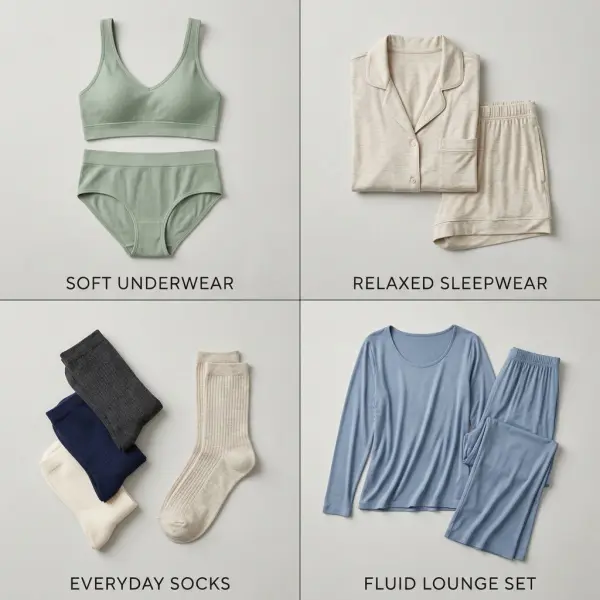
Underwear and Intimate Apparel
Underwear is one of the most natural applications for bamboo viscose because softness and close-to-skin comfort strongly influence purchasing decisions.
A successful bamboo underwear product must balance:
- smooth fabric contact;
- stretch recovery;
- moisture behavior;
- seam durability;
- gusset construction;
- waistband pressure;
- opacity;
- pilling resistance;
- repeated washing.
The fabric may be soft, but an unsuitable elastane ratio can produce bagging. A comfortable body fabric can also be undermined by stiff lace, rough stitching, unstable bindings, or a waistband that becomes tight after laundering.
For intimate apparel, the complete product should be tested through repeated wear and washing. Fiber softness alone is not an adequate quality specification.
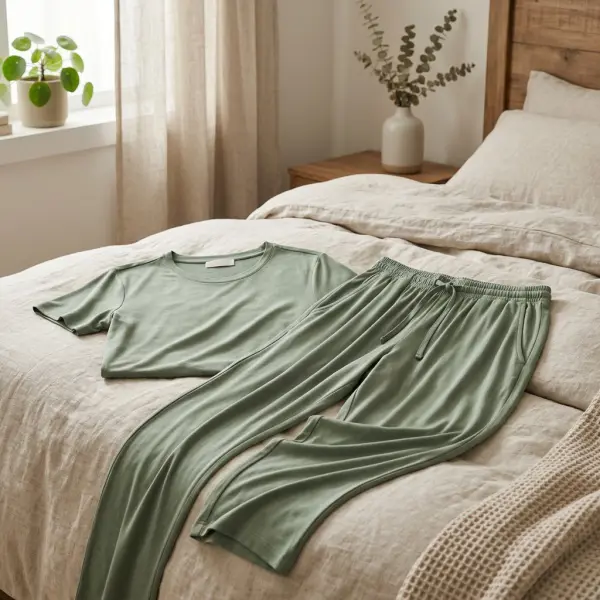
Sleepwear
Sleepwear benefits from low surface roughness, flexible movement, and fabrics that do not feel rigid when the wearer changes position.
Bamboo-viscose jersey can provide:
- a smooth first touch;
- light drape;
- ease of movement;
- an initially cool sensation;
- an elevated appearance compared with basic jersey.
The material still needs to be matched to the sleeping environment. A lightweight fabric may suit warm climates, while a heavier rib, brushed blend, or layered construction may be more appropriate for cooler seasons.
Pattern design matters as much as material. Tight armholes, twisting leg seams, bulky waistbands, or excessive garment length can disrupt sleep even when the fabric is soft.
Loungewear
Loungewear sits between sleepwear and presentable casual clothing. It must feel comfortable at home while retaining enough structure for video calls, travel, errands, or informal social settings.
Bamboo viscose can support that balance through fluid drape and a refined surface. It works especially well in:
- coordinated sets;
- relaxed wide-leg pants;
- soft cardigans;
- long-sleeve tops;
- wrap garments;
- body-skimming dresses;
- layering basics.
The challenge is maintaining shape. Very fluid fabric may appear elegant when new but develop knee bagging, seat growth, or stretched cuffs during extended wear.
The collection must be fitted and tested for how people actually sit, bend, sleep, and move at home.
Everyday T-Shirts and Base Layers
A bamboo-viscose T-shirt can feel noticeably different from a dry, heavyweight cotton tee. It tends to create a softer silhouette and may follow the contours of the body more closely.
This makes it useful for:
- relaxed inner layers;
- lightweight summer tops;
- soft undershirts;
- fitted long sleeves;
- maternity basics;
- travel layering.
It may be less suitable for a brand seeking a boxy, heavyweight, structured T-shirt unless the bamboo viscose is blended or placed in a denser construction.
A detailed comparison of these daily-wear differences is available in Bamboo Viscose vs Cotton: Which Fabric Feels Better for Daily Wear?.
Socks
Bamboo-viscose socks are often promoted for softness and moisture absorption. These qualities can support comfort, but socks also face concentrated friction, stretching, perspiration, and repeated laundering.
A commercially durable sock usually requires an engineered blend and reinforced construction. Nylon or polyester may be used for abrasion resistance, while elastane helps maintain fit.
Testing should assess:
- heel and toe abrasion;
- recovery at the cuff;
- shrinkage;
- pilling;
- moisture behavior;
- seam comfort;
- fit after laundering.
A high bamboo-viscose percentage may strengthen the product story, but it should not be prioritized at the expense of functional durability.
Maternity and Adaptive Apparel
Comfort-focused maternity and adaptive products benefit from soft fabrics, flexible movement, and reduced pressure points.
Bamboo-viscose blends can work well for:
- expandable waist garments;
- nursing tops;
- soft dresses;
- sleepwear;
- base layers;
- adaptive garments with prolonged skin contact.
Designers should avoid treating softness as the only accessibility requirement. Fastening systems, dressing ease, seam placement, garment weight, thermal needs, mobility, and caregiver interaction may be equally important.
Comfort Must Be Engineered at Garment Level
A recurring sourcing mistake is to assume that selecting bamboo viscose automatically creates a comfortable garment. Fiber content is only one layer of the product.
A garment’s comfort depends on the interaction of:
|
Product element |
Comfort implication |
|
Fiber and yarn |
Affect surface feel, absorbency, strength, and hairiness |
|
Fabric construction |
Influences airflow, thickness, stretch, recovery, and drape |
|
Fabric weight |
Affects warmth, opacity, drying, and garment heaviness |
|
Finishing |
Can alter softness, wetting, pilling, shrinkage, and skin contact |
|
Pattern and fit |
Determine pressure, ease, ventilation, and movement |
|
Seams |
Can reduce or create friction |
|
Elastics and trims |
Affect pressure, recovery, and irritation |
|
Care behavior |
Determines whether comfort survives repeated washing |
|
Climate and activity |
Change heat and moisture requirements |
|
Wearer preference |
Influences perceived softness, fit, and temperature comfort |
This is why garment-level testing is more useful than relying only on fiber specification sheets.
Research involving socks made from cotton and several regenerated cellulosic fibers found that measuring the finished sock form can provide more realistic thermal-comfort information than testing only flat fabric. The same principle applies broadly: garment construction changes performance.
Fabric Weight and Density
A lightweight bamboo-viscose single jersey may feel airy and fluid but risk transparency, seam distortion, and limited durability.
A dense interlock or rib may offer:
- more opacity;
- a substantial handfeel;
- improved body;
- better coverage;
- reduced transparency.
It may also trap more heat, hold more moisture, or take longer to dry.
The correct weight depends on the product. Underwear, pajamas, T-shirts, and lounge pants should not automatically use the same fabric specification.
Finishing Can Change the Comfort Story
Softening, enzyme treatment, brushing, compacting, calendaring, and resin finishing can alter how the fabric feels and performs.
A softener may improve first touch but could affect wetting behavior or become less effective after laundering. Brushing may create warmth and softness but increase pilling risk. Compacting may improve dimensional stability but alter weight and width.
The impact of finishing should be evaluated through the commercial color and final production route, not only on an untreated laboratory sample.
Fit Changes Thermal and Tactile Comfort
Loose garments create air spaces and allow more ventilation. Tight garments increase contact with the skin and may make dampness, seam texture, or heat more noticeable.
A fitted bamboo-viscose base layer and a loose bamboo pajama top can therefore provide very different experiences even when made from the same fabric.
Fit trials should include realistic postures:
- sitting for extended periods;
- sleeping;
- bending;
- walking;
- stretching;
- working at a desk;
- carrying a child;
- repeated dressing and undressing.
Comfort must be evaluated during use, not only while standing in front of a fit mirror.
The Main Operational Challenges for Fashion Brands
Controlling Shrinkage and Distortion
Bamboo-viscose knits may experience relaxation shrinkage, spirality, width change, length growth, or twisting after laundering.
A brand should define:
- approved wash and drying methods;
- maximum length and width change;
- permitted spirality;
- measurement points;
- number of test cycles;
- conditioning time;
- garment tolerances;
- action procedures for failed lots.
The supplier’s statement that the fabric is “pre-shrunk” should not replace numerical performance limits.
Maintaining Stretch Recovery
A fabric can stretch comfortably during fitting but fail to return to its original shape during extended wear.
This can create:
- bagging at the knees;
- loose elbows;
- enlarged necklines;
- sagging seat areas;
- rolling waistbands;
- loose sock cuffs.
Recovery should be tested before and after laundering. For products containing elastane, brands should also control heat exposure because excessive processing temperatures may degrade stretch performance.
Managing Pilling and Surface Fuzzing
Fine yarns, low twist, soft finishing, and repeated friction can contribute to fuzzing or pilling.
High-risk areas include:
- inner thighs;
- underarms;
- seat areas;
- elbows;
- sock heels;
- waistbands;
- locations where bags rub against garments.
A fabric that feels exceptionally plush during development may perform poorly after daily abrasion. The appropriate pilling and abrasion test should reflect the intended product.
Sewing Fluid Fabrics Consistently
Soft, low-rigidity fabrics may stretch or shift during cutting and sewing. Production teams may need to adjust:
- cutting tension;
- lay height;
- marker direction;
- presser-foot pressure;
- differential feed;
- needle selection;
- stitch density;
- seam stabilization;
- handling methods;
- pressing temperature.
Without those controls, garments may leave the factory with uneven hems, wavy seams, stretched necklines, mismatched panels, or inconsistent measurements.
Why Product Claims Require Restraint
The popularity of bamboo apparel has also been supported by marketing claims about natural performance and environmental responsibility. Several of these claims are more complicated than they appear.
Antibacterial and Odor-Control Claims
Regenerated bamboo viscose should not automatically be described as retaining antibacterial properties from the original bamboo plant.
The FTC has taken action against sellers that marketed rayon made from bamboo using unsupported antimicrobial, biodegradable, and environmentally friendly claims. FTC enforcement concerning deceptive bamboo claims
Odor performance depends on perspiration, bacterial growth, fabric moisture, drying behavior, laundering, garment fit, and any applied treatment.
When antibacterial or odor-control performance is central to the product, brands should obtain finished-product testing and establish whether the effect remains after repeated washing.
Hypoallergenic and Sensitive-Skin Claims
A smooth surface may feel comfortable to many wearers, but that does not mean a bamboo-viscose garment cannot cause irritation.
Skin response may involve:
- dyes;
- finishing agents;
- residual chemicals;
- elastics;
- adhesives;
- prints;
- detergents;
- seam friction;
- individual medical conditions.
Brands should avoid making medical claims without an appropriate evidentiary basis. It is safer to communicate verifiable design and testing attributes, such as flat seams, tag-free construction, accurately disclosed fiber content, or testing for harmful substances.
OEKO-TEX® STANDARD 100 is a product-safety standard for textiles tested for harmful substances. Its requirements vary according to the intended level of skin contact. It does not, by itself, prove that a garment is hypoallergenic or that its entire supply chain has a lower environmental impact. OEKO-TEX STANDARD 100 harmful-substance testing
Breathable, Cooling, and Quick-Drying Claims
These terms should be linked to defined performance.
“Breathable” may refer to air permeability or water-vapor transfer. “Cooling” may refer to initial cool touch, thermal resistance, evaporation, or physiological response. “Quick drying” requires a drying-rate assessment.
Relevant standards include ISO 11092 for measuring thermal and water-vapor resistance and ISO 17617 for moisture-drying rate. ISO itself notes that the test conditions in ISO 11092 do not define comfort for every real-world situation. ISO 11092 thermal and water-vapor resistance testing
Laboratory results should therefore be combined with garment wear trials rather than converted into universal comfort promises.
Sustainability Is Not the Same as Comfort
Bamboo viscose may feel comfortable while coming from a poorly controlled manufacturing system. Conversely, a well-managed viscose supply chain does not guarantee that the final garment will fit well or last.
Comfort and environmental performance are separate evaluation areas.
Man-made cellulosic fibers include viscose, modal, lyocell, cupro, and acetate. Textile Exchange reported that global MMCF production reached approximately 8.4 million tonnes in 2024, representing around 6% of total global fiber production. This data covers the full MMCF category, not bamboo-based fiber alone. Textile Exchange Materials Market Report 2025
I cannot confirm a reliable global market-share figure specifically for bamboo-based apparel, because major fiber reports typically aggregate bamboo-derived viscose within broader viscose or MMCF categories.
What Brands Should Evaluate
A responsible assessment should consider:
- bamboo and pulp origin;
- land-use and feedstock traceability;
- dissolving-pulp production;
- worker chemical exposure;
- carbon disulfide recovery in conventional viscose;
- sulfur-related air emissions;
- wastewater treatment;
- sludge management;
- energy sources;
- dyeing and finishing;
- garment durability;
- care requirements;
- final product composition;
- disposal and recycling limitations.
The ZDHC Man-Made Cellulosic Fibre Guidelines cover viscose, modal, lyocell, viscose filament yarn, cupro, and acetate. The framework addresses inputs, production processes, chemical recovery, air emissions, wastewater, and sludge. ZDHC guidance for man-made cellulosic fiber production
A supplier saying that bamboo grows quickly does not answer these manufacturing questions.
Sustainability Claims Should Match the Evidence
A product page can accurately state:
- the verified fiber composition;
- the generic fiber name;
- the identified cellulose source;
- the fiber manufacturer;
- chain-of-custody certification where applicable;
- harmful-substance testing;
- product-specific durability results;
- documented production improvements.
It should not automatically state that the product is chemical-free, non-toxic, biodegradable in every environment, antibacterial, or better for the planet.
The most credible brands separate what they know from what they hope to achieve.

Common Mistakes in Bamboo Comfort Collections
Building the Collection Around a Fiber Name
A brand may decide to launch a bamboo collection before defining the actual customer, product problem, climate, price, fit, or performance requirement.
This reverses the normal development logic.
The product brief should begin with a need such as:
- soft sleepwear for warm climates;
- stable underwear for frequent washing;
- relaxed travel basics;
- lightweight maternity clothing;
- socks with reduced seam irritation.
The fiber should then be selected because it helps solve that need.
Prioritizing Showroom Softness Over Wash Performance
A highly softened development sample may feel impressive but change after three or five washes.
Possible consequences include:
- reduced softness;
- surface fuzzing;
- pilling;
- shrinkage;
- twisting;
- loss of recovery;
- color change;
- seam distortion.
Brands should approve washed fabrics and garments rather than relying entirely on fresh mill swatches.




Comments 0
Leave a CommentSend Comment
Anda harus Login terlebih dahulu untuk dapat memberikan komentar.