
Why Unisex and Gender-Neutral Fashion Continues to Expand Globally
Quick Answer
Unisex and gender-neutral fashion continues to expand globally because consumers are increasingly choosing clothing based on comfort, fit, versatility, lifestyle, and styling preference rather than strict menswear or womenswear categories. This shift is visible in everyday products such as oversized shirts, relaxed trousers, hoodies, outerwear, knitwear, sneakers, tote bags, caps, and accessories that can be worn across different wardrobes.
Gender-neutral fashion is a fashion category approach that reduces rigid separation between men’s and women’s clothing in order to offer more flexible product design, styling, sizing, and retail navigation. In practical apparel business terms, it is closely connected to unisex fashion, shared wardrobe concepts, relaxed silhouettes, and fit-based shopping.
The global expansion of this category is not only about social messaging. It is also driven by streetwear influence, casual dressing, e-commerce discovery, capsule wardrobes, travel-friendly apparel, and the need for more efficient product assortments. For fashion businesses, the biggest opportunity is not simply removing gender labels. It is designing products that are easy to wear, easy to style, easy to size, and commercially relevant across broader customer groups.
What Gender-Neutral Fashion Means in Apparel Business
Gender-neutral fashion does not mean clothing has no style, personality, or design direction. It means a product is not limited by rigid assumptions that certain silhouettes, colors, or garment types can only belong to either menswear or womenswear. A gender-neutral garment can still be minimalist, sporty, tailored, expressive, elegant, casual, technical, or premium.
In a commercial fashion context, gender-neutral fashion often overlaps with unisex fashion. The difference is mostly in how the category is developed and communicated. Unisex fashion is usually associated with garments that can be worn by different customers with minimal fit adjustment, such as T-shirts, sweatshirts, hoodies, jackets, caps, sneakers, and bags. Gender-neutral fashion can be broader because it may also involve retail structure, product naming, styling, photography, size charts, and e-commerce navigation.
For fashion brands, this distinction matters because the category is not just a design trend. It affects how products are planned, developed, displayed, described, and sold. A shirt may look gender-neutral in a campaign image, but if the size chart is unclear or the fit only works for one body type, the customer experience will still be weak.
A practical definition for the fashion industry would be this: gender-neutral fashion is an apparel approach that makes selected products easier to wear across different wardrobes by focusing on fit, function, silhouette, comfort, and styling flexibility rather than strict gender-based categorization.
Why the Category Is Expanding Globally
Unisex and gender-neutral fashion is expanding because the way people dress has become more flexible. Many consumers now build wardrobes around lifestyle needs rather than formal category rules. They want pieces that can move between work, travel, casual settings, digital content, weekend dressing, and personal styling.
The growth is also supported by a wider industry shift. The fashion market has been under pressure from slower growth, value-conscious customers, and more selective purchasing behavior. McKinsey’s State of Fashion 2026 notes that the global fashion industry is expected to face continued low single-digit growth, with consumer sentiment and value-conscious behavior influencing the market. For brands, versatile products that can serve more than one styling purpose may become more attractive in this environment. McKinsey State of Fashion 2026
This does not mean every customer wants a fully gender-neutral wardrobe. Many people still prefer menswear or womenswear categories because they are familiar and practical. The more realistic shift is that consumers are becoming more open to crossing categories when a product looks good, fits well, feels comfortable, or solves a wardrobe need.
A woman may buy a boxy shirt from a menswear-inspired collection because she likes the structure. A man may choose a soft knit cardigan because it suits his personal style. A couple may share outerwear, sweatshirts, travel bags, or sneakers. A younger customer may search by aesthetic, silhouette, or influencer styling instead of starting from a department label. These are different behaviors, but they point to the same business insight: clothing categories are becoming more fluid in everyday shopping.
The Role of Streetwear and Casual Dressing
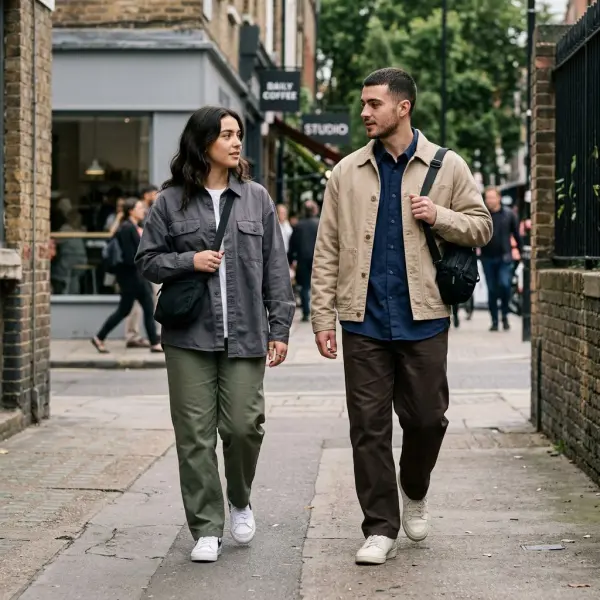
Streetwear has played a major role in making unisex and gender-neutral fashion commercially familiar. Hoodies, oversized T-shirts, cargo pants, bomber jackets, denim jackets, sneakers, and crossbody bags are already worn across many wardrobes. These items do not require consumers to understand a new fashion concept. They already feel normal.
This is one reason the category has expanded beyond niche labels. Relaxed silhouettes are easier to adopt than highly fitted garments. A hoodie can accommodate different proportions more easily than a tailored jacket. A tote bag or sneaker can cross categories with almost no adjustment. A boxy overshirt can be styled in many ways without needing to be labeled for one specific customer group.
But there is also a limitation. If brands interpret gender-neutral fashion only as oversized casualwear, the category can become repetitive. The strongest opportunities now are in better-designed everyday apparel: structured shirts, relaxed trousers, quality knitwear, modular outerwear, workwear-inspired pieces, practical accessories, and premium basics.
The next stage of this category will likely depend on whether brands can make versatile products feel refined, not generic.
Why Shared Wardrobes Are Becoming More Relevant
A shared wardrobe is a practical reason behind the rise of unisex and gender-neutral fashion. It refers to clothing or accessories that can be worn by more than one person or styled across different wardrobe categories. This can include outerwear, sweatshirts, shirts, knitwear, bags, caps, scarves, and footwear.
The idea fits modern consumer behavior because many people want fewer but more useful items. Capsule wardrobes, travel wardrobes, minimalist closets, and cost-conscious shopping all support the appeal of versatile pieces. A relaxed jacket that can be worn over a dress, trousers, denim, or casualwear has more perceived value than a garment locked into one narrow styling situation.
For brands, the shared wardrobe concept can improve product storytelling. Instead of saying “this product is for everyone,” which can sound vague, a brand can show how one garment works in several real styling contexts. For example, a cotton overshirt can be styled as a light jacket, workwear layer, weekend shirt, travel piece, or casual outer layer.
This is especially useful for digital content. One product can generate multiple styling stories, model shots, short videos, and product recommendations. In a market where content production is continuous, versatile garments give brands more editorial flexibility.
E-Commerce Has Changed How Consumers Find Fashion Products
E-commerce has made unisex and gender-neutral fashion easier to discover because digital retail does not need to follow the same physical layout as a traditional store. A product can appear in several places at once: shirts, outerwear, workwear, travel essentials, relaxed fit, oversized styling, neutral wardrobe, or seasonal capsule.
This flexibility matters. In a physical store, products are usually divided into departments. Online, customers often arrive through search, social media, product recommendations, newsletters, creator content, or AI-powered summaries. They may not begin their journey by choosing menswear or womenswear. They may search for a “boxy white shirt,” “oversized denim jacket,” “relaxed cargo pants,” or “minimalist tote bag.”
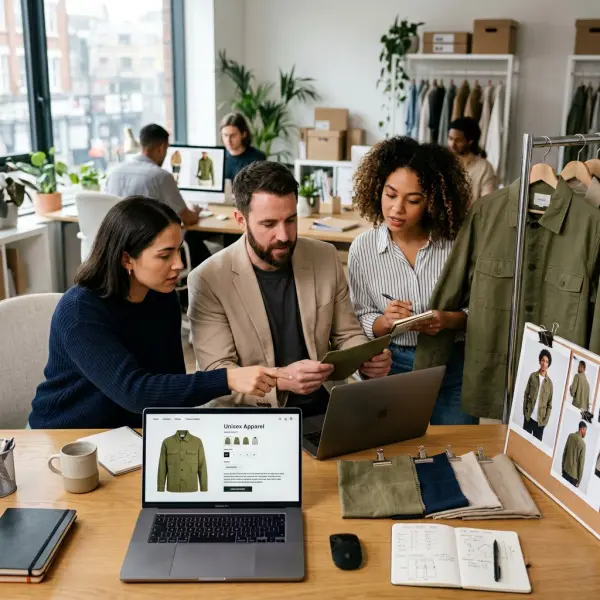
For fashion businesses, this means product data becomes more important. If a garment is suitable for flexible styling, the product page should explain that clearly. The title, description, size chart, model information, images, and filters should help customers understand fit and use.
Useful product page information may include:
- garment measurements;
- intended silhouette;
- fit notes such as relaxed, oversized, boxy, straight, cropped, or adjustable;
- fabric weight and drape;
- model height and worn size;
- styling examples across different looks;
- care information and construction details.
This is also valuable for search engine optimization and AI search visibility. Clear product information helps search engines and answer engines understand what the product actually is. That matters because vague product copy is harder to rank, summarize, or recommend.
For a deeper discussion of this digital visibility angle, see how fashion businesses can build online visibility in the age of AI search.
Fit Is the Main Technical Challenge
Fit is the most important challenge in gender-neutral fashion. A garment can be described as unisex or gender-neutral, but if the pattern does not work on enough customers, the label will not help. This is especially true for trousers, denim, tailoring, shirts, and structured outerwear.
Many apparel products are developed from traditional menswear or womenswear blocks. These blocks are built around different assumptions about shoulder width, chest shape, waist position, hip room, rise, sleeve length, and garment ease. A unisex product may need a more balanced block, a relaxed silhouette, an adjustable detail, or multiple fit options.
Vogue Business has highlighted sizing as one of the key issues in gender-neutral fashion, noting that product fit becomes more complicated when brands try to serve broader body types through one category. Vogue Business analysis on gender-neutral fashion sizing
The operational takeaway is clear: brands should not use “gender-neutral” as a shortcut for vague sizing. They need better measurement systems.
A strong fit strategy may include:
- exact garment measurements instead of only standard size names;
- clear fit descriptions such as boxy, relaxed, straight, oversized, or adjustable;
- sample testing on different body proportions;
- multiple model references where possible;
- customer review monitoring for fit-related complaints;
- return analysis to identify recurring sizing issues.
The goal is not to make one garment fit every possible customer. That is unrealistic. The better goal is to help more customers understand whether the garment is likely to work for them before they buy it.
What This Means for Product Development
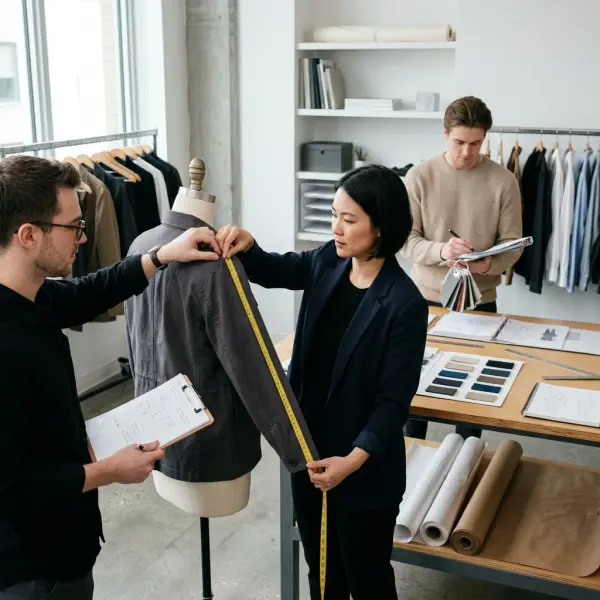
For product development teams, unisex and gender-neutral fashion requires decisions at the pattern, sample, grading, and fitting stages. It should not be added only at the marketing stage after the product has already been finalized.
A relaxed sweatshirt may need fewer technical changes than a structured blazer. A tote bag may be easy to position as unisex. A trouser is more complex because rise, seat, thigh, hip, and length affect comfort. A shirt may need careful balancing between shoulder width, chest ease, sleeve length, and body length.
This is why brands need to decide early whether the product is intended to be:
|
Product Approach |
Practical Meaning |
Best Used For |
|
True unisex fit |
One fit system designed to work across broader wardrobes |
T-shirts, hoodies, sweatshirts, outerwear, accessories |
|
Relaxed shared fit |
Looser silhouette with flexible styling potential |
Shirts, jackets, trousers, knitwear |
|
Multi-fit category |
Same design offered in different fit profiles |
Denim, tailoring, trousers, fitted tops |
|
Category-free styling |
Product may still use technical blocks but is styled and merchandised more flexibly |
Premium fashion, retail edits, capsule collections |
This table shows why the category should be handled with technical realism. Not all products need the same solution. Some can be genuinely unisex. Others need clearer fit options. Some may only need more flexible styling and merchandising.
Sourcing and Manufacturing Implications
For sourcing teams and manufacturers, gender-neutral fashion affects more than style direction. It can influence technical packs, grading rules, fabric choice, trims, measurement tolerance, labeling, packaging, and quality control.
A supplier cannot execute a strong unisex product if the brand only says “make it gender-neutral.” The technical pack should specify the intended silhouette, garment measurements, ease, fabric behavior, construction details, and fit references. This is especially important when working across different factories or sourcing regions.
Fabric selection also matters. A stiff woven fabric will behave differently from a soft jersey, stretch twill, cotton poplin, compact knit, or wool blend. A relaxed silhouette may look refined in one fabric and shapeless in another. A trouser with adjustable waistband details may improve flexibility, but it can also increase production cost and quality control requirements.
The manufacturing challenge is not impossible. It simply needs clarity. Brands should communicate whether they want a boxy fit, straight fit, oversized fit, dropped shoulder, adjustable waist, extended size range, longer body length, cropped proportion, or multi-fit option. These details prevent misunderstanding between design, production, and quality control teams.
Why Retailers Are Rethinking Categories
Retailers are rethinking categories because customers increasingly shop through style logic rather than department logic. This does not mean menswear and womenswear departments will disappear. In many markets, those categories remain useful. But retailers can add more flexible navigation systems around fit, product type, occasion, function, and styling.
A practical retail model may combine traditional and modern navigation. For example, an online store can keep men and women menus while also adding edits such as “oversized shirts,” “relaxed tailoring,” “utility outerwear,” “minimal sneakers,” “shared wardrobe staples,” or “travel-ready layers.” This lets customers choose how they want to browse.
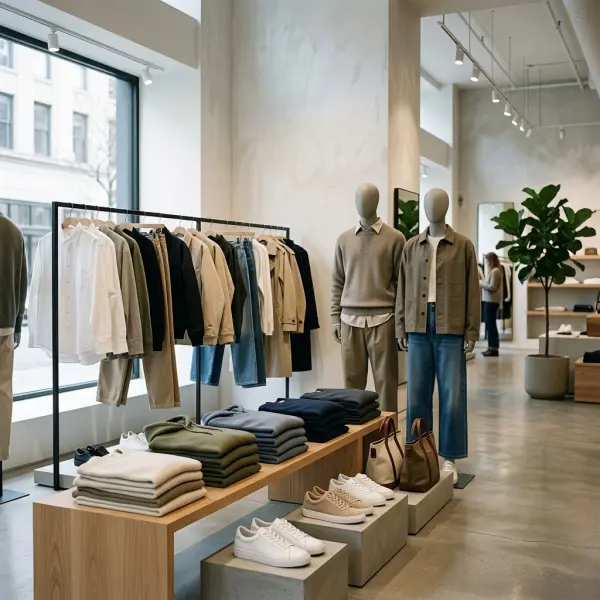
Physical stores can also apply this idea selectively. Accessories, footwear, outerwear, basics, and streetwear-inspired items can be merchandised in ways that feel less restricted. A retailer does not need to rebuild the whole floor plan immediately. It can test category-free displays, capsule corners, or styling edits first.
The key is clarity. Customers should not feel confused about sizing, fit, or product purpose. A flexible category still needs strong merchandising logic.
Branding: Keep the Message Practical and Product-Led
For Fitinline’s audience and many fashion businesses in Asia, a product-led framing is often safer and more practical than a social or political framing. The article can discuss gender-neutral fashion as a global fashion category without turning it into an ideological statement.
This means focusing on the product benefits that most consumers can understand:
- comfort;
- versatile styling;
- relaxed silhouettes;
- shared wardrobe use;
- simple layering;
- modern casualwear;
- travel-friendly pieces;
- wardrobe efficiency;
- easier mix-and-match dressing.
This approach does not avoid the topic. It makes the topic commercially useful. A brand can explain that a jacket is designed for flexible styling without making broader claims that may not match its market positioning.
Product-led language also helps reduce overclaiming. Instead of saying “clothing for everyone,” brands can say “relaxed fit with adjustable details,” “oversized silhouette for easy layering,” or “designed as a shared wardrobe staple.” These phrases are more specific and easier for customers to evaluate.
Common Mistakes Brands Make
One common mistake is assuming gender-neutral fashion only requires removing labels. If the product is still developed through a narrow fit system, customers may not experience any real difference. The result can be confusing: the brand says the product is flexible, but the garment does not fit flexibly.
Another mistake is making the category visually too plain. Neutral colors and oversized silhouettes can work, but they are not the only direction. Unisex and gender-neutral fashion can include strong color, interesting texture, premium fabric, tailoring influence, utility details, or expressive accessories. The product still needs design value.
A third mistake is ignoring customer education. If customers are used to menswear and womenswear categories, they may need better fit notes, styling images, and size guidance. Without that support, a flexible category can create hesitation rather than confidence.
The better approach is to build the category step by step: start with suitable products, test customer response, improve fit information, and expand only when the brand understands what works.
Practical Ways Fashion Brands Can Apply This Trend
Fashion brands can apply unisex and gender-neutral fashion by starting with categories where flexible styling already makes sense. This is more realistic than trying to redesign the entire brand at once.
A small brand may begin with oversized shirts, relaxed trousers, lightweight jackets, tote bags, or knitwear. A streetwear label may build around hoodies, cargo pants, utility vests, and sneakers. A premium brand may explore relaxed tailoring, refined outerwear, or minimalist accessories. A modest fashion brand may interpret the trend through coverage, layering, comfort, and loose silhouettes.
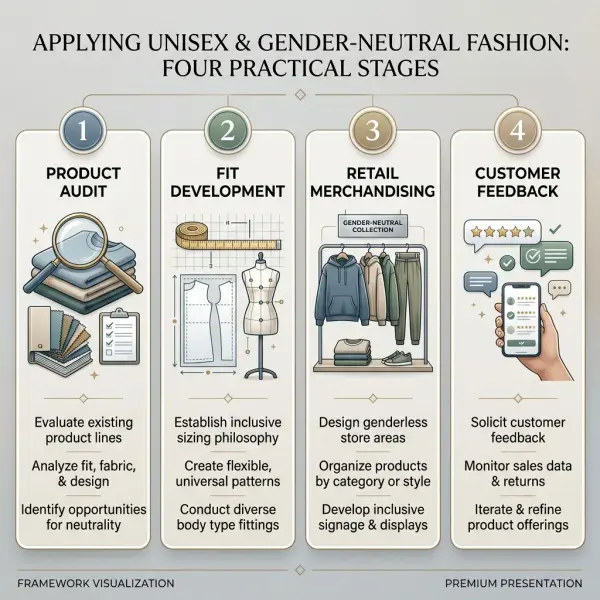
A practical roadmap may include:
- Review current products that are already bought or styled across categories.
- Identify pieces with flexible fit potential.
- Improve garment measurement information.
- Test samples on different body proportions.
- Use product photography that shows styling versatility.
- Add e-commerce filters based on fit, silhouette, and product type.
- Train customer service teams to answer fit questions clearly.
- Monitor returns, reviews, and customer feedback before expanding.
This kind of roadmap keeps the trend grounded in business reality. It also helps brands avoid launching a collection that looks relevant in marketing but performs poorly in retail.
What Fashion Businesses Should Verify Before Acting
Before investing deeply in unisex or gender-neutral fashion, brands should verify whether the category fits their customers, product capability, and retail model. Trend visibility alone is not enough.
The most useful verification questions are:
- Which current products already attract cross-category purchases?
- Which silhouettes are flexible enough for wider styling?
- Can the brand provide accurate garment measurements?
- Are suppliers able to execute the intended fit?
- Will the category improve customer experience or create confusion?
- Is the brand’s market more responsive to “unisex,” “shared wardrobe,” “relaxed fit,” or “gender-neutral” language?
- Can the business support the category beyond one seasonal campaign?
These questions help brands avoid two opposite errors: ignoring a relevant product opportunity or adopting the trend too quickly without operational readiness.
For many brands, the safest entry point is not a large “gender-neutral collection.” It is a practical capsule of versatile, well-explained products that customers can understand immediately.
FAQ: Unisex and Gender-Neutral Fashion
What is gender-neutral fashion?
Gender-neutral fashion is an apparel approach that reduces rigid separation between men’s and women’s categories. In practical business terms, it focuses on products that can be selected based on fit, comfort, silhouette, function, and styling preference. It often appears in products such as oversized shirts, relaxed trousers, hoodies, jackets, knitwear, sneakers, tote bags, and accessories. A strong gender-neutral product still needs clear sizing, good fit information, and realistic product development.
Is gender-neutral fashion the same as unisex fashion?
Gender-neutral fashion and unisex fashion are closely related, but not always identical. Unisex fashion usually refers to products designed to be worn across different customer groups, often through simple or relaxed silhouettes. Gender-neutral fashion can also involve retail navigation, styling, product naming, photography, and merchandising. For many fashion businesses, especially in commercial retail, the safest practical interpretation is to treat gender-neutral fashion as an evolution of unisex fashion and flexible wardrobe design.
Why is unisex fashion becoming more popular?
Unisex fashion is becoming more popular because many consumers want versatile clothing that can be styled in different ways. Casual dressing, streetwear, capsule wardrobes, travel-friendly apparel, and e-commerce discovery have all supported this shift. Customers may not always use the term “gender-neutral,” but they often buy products that function that way: relaxed shirts, hoodies, jackets, sneakers, bags, and accessories that are not limited to one narrow styling category.
What types of garments work best for gender-neutral fashion?
The easiest categories are usually T-shirts, hoodies, sweatshirts, outerwear, knitwear, sneakers, bags, caps, scarves, and relaxed shirts. These products can work across different wardrobes because they often have flexible fit expectations. More complex categories include trousers, denim, tailoring, fitted shirts, and structured garments. These require more careful pattern development, measurement guidance, and fit testing.
What is the biggest business risk in gender-neutral fashion?
The biggest risk is using the label without solving fit and sizing. If a product is described as gender-neutral but the measurement system is unclear, customers may become confused or disappointed. This can increase returns and weaken trust. Brands should support the category with clear product descriptions, garment measurements, fit notes, model references, and realistic styling images.
Can gender-neutral fashion work in the Indonesian market?
Yes, but the framing should be practical and fashion-oriented. For Indonesian readers, safer language may include unisex fashion, relaxed silhouettes, shared wardrobe, versatile styling, oversized shirts, modest layering, practical outerwear, and flexible casualwear. This keeps the discussion focused on product design, styling, comfort, and retail trends rather than sensitive social or political interpretations.
Should brands remove men’s and women’s categories completely?
Not necessarily. Many customers still find men’s and women’s categories useful. A more realistic approach is hybrid navigation: brands can keep traditional categories while adding product edits based on fit, silhouette, style, or function. For example, an online store may still have menswear and womenswear menus but also include sections for oversized shirts, relaxed tailoring, shared wardrobe staples, and versatile accessories.
Conclusion
Unisex and gender-neutral fashion continues to expand globally because it fits how many consumers now approach clothing: more practical, more flexible, more comfort-driven, and less limited by traditional retail categories. The growth of this category is supported by streetwear, relaxed silhouettes, e-commerce discovery, capsule wardrobes, travel-friendly dressing, and the demand for products that can work in more than one styling context.
For fashion businesses, the opportunity is real but must be handled carefully. Gender-neutral fashion should not be treated as a slogan. It requires product clarity, fit discipline, good sizing information, strong merchandising, and honest communication. A versatile jacket, relaxed shirt, or shared wardrobe capsule can perform well when customers understand how it fits and how it can be styled.
The most successful brands will be those that keep the idea practical. Instead of forcing a broad message, they will build better products: comfortable, adaptable, well-sized, visually relevant, and easy to buy. That is why the category continues to expand. It gives consumers more room to choose, and it gives fashion businesses a wider way to design, merchandise, and communicate modern apparel.




Comments 0
Leave a CommentSend Comment
Anda harus Login terlebih dahulu untuk dapat memberikan komentar.