
Smart Eyewear 2026: Business Opportunities for Fashion Brands
Introduction
Fashion is entering a new product category that sits between accessories, wearable technology, and digital identity: smart eyewear. What used to be a niche tech gadget is now evolving into a design-led, lifestyle-driven product with real commercial potential.
In 2026, smart eyewear is no longer dominated solely by tech companies. Instead, it is becoming a fashion-tech convergence category, where aesthetics, branding, and user experience matter as much as hardware.

For fashion brands, this shift presents a strategic question:
Should smart eyewear be treated as a tech collaboration, a new product line, or a long-term category expansion?
Understanding this space early can position brands ahead of a major transformation in accessories.
Quick Answer
Smart eyewear in 2026 refers to wearable glasses that integrate digital features such as audio, augmented reality (AR), health tracking, and connectivity—while maintaining a strong focus on fashion design. Unlike traditional eyewear, smart glasses are not just vision-correction tools but multifunctional lifestyle products.
For fashion brands, this category represents a new opportunity to expand beyond apparel and accessories into wearable technology with recurring consumer engagement. The key advantage lies in combining design identity with tech functionality, allowing brands to differentiate through aesthetics, user experience, and brand storytelling rather than competing purely on hardware.
However, entering this space requires strategic decisions around partnerships, supply chain complexity, product positioning, and pricing. Brands should approach smart eyewear not as a tech product alone, but as a hybrid category where fashion leads and technology enables value.
What Is Smart Eyewear and How Is It Evolving in 2026?
Smart eyewear refers to glasses embedded with digital functionalities such as Bluetooth audio, voice assistants, AR overlays, cameras, or biometric sensors. Unlike traditional eyewear, the value proposition extends beyond vision into interaction, connectivity, and experience.
In earlier generations, smart glasses were bulky, tech-centric, and often impractical for daily wear. In 2026, the evolution is clear:
- Designs are slimmer and fashion-forward
- Materials resemble premium eyewear (acetate, titanium, lightweight alloys)
- Tech components are more discreet and energy-efficient
This shift signals a transition from technology-first products to design-first wearables.
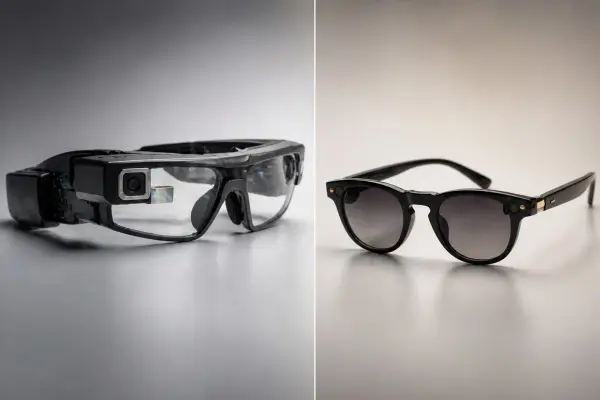
From a business perspective, this changes the competitive landscape. Smart eyewear is no longer competing only with gadgets—it is competing with sunglasses, optical frames, and lifestyle accessories.
A practical example:
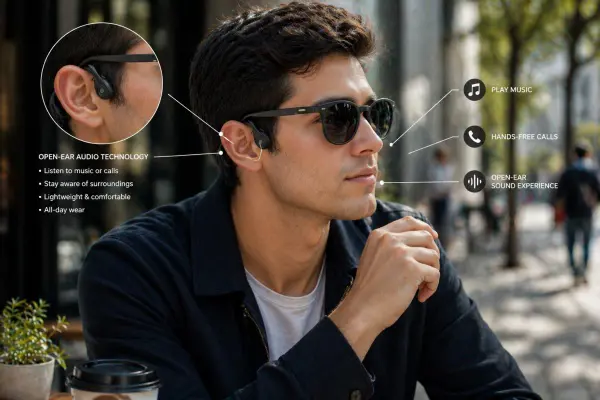
A fashion brand launches smart sunglasses with built-in audio and UV protection, targeting urban commuters. The product competes not with headphones alone, but also with premium sunglasses brands.
Takeaway:
Smart eyewear in 2026 is a lifestyle accessory category, not just a tech product.
Why Smart Eyewear Matters for Fashion Brands
The significance of smart eyewear lies in its ability to create continuous user interaction. Unlike clothing, which is passive, smart eyewear can generate ongoing engagement through features like audio, notifications, and AR.
This creates three major business advantages:
1. Extended Product Lifecycle Value
Traditional fashion items are static purchases. Smart eyewear can deliver ongoing utility, increasing perceived value.
2. New Revenue Models
Brands can explore:
- Premium pricing
- Software-enabled features
- Subscription-based services (e.g., AR content, fitness tracking)
3. Brand Differentiation
In a saturated apparel market, entering smart eyewear allows brands to reposition as innovative and future-facing.
Example scenario:
A mid-tier fashion brand collaborates with a tech supplier to launch smart frames targeting Gen Z consumers. The product integrates music streaming and social media notifications, reinforcing the brand’s digital identity.
Takeaway:
Smart eyewear enables fashion brands to shift from product-based value to experience-based value.
Key Business Models for Entering Smart Eyewear
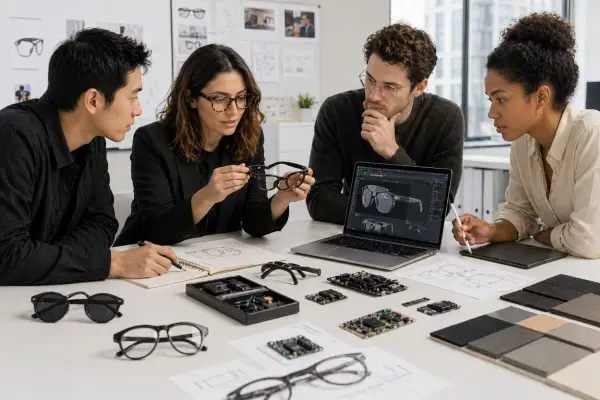
Fashion brands rarely have in-house capabilities to develop hardware. Therefore, entry into smart eyewear depends heavily on business model selection.
1. Tech Partnership Model
The brand collaborates with a technology company that provides hardware and software infrastructure.
- Pros: Faster market entry, lower R&D cost
- Cons: Limited control over innovation
2. Licensing & Co-Branding
A tech company licenses the brand’s design identity.
- Pros: Minimal operational complexity
- Cons: Lower margin and brand control
3. In-House Design + External Manufacturing
The brand controls design and branding while outsourcing production.
- Pros: Strong brand positioning
- Cons: High complexity and coordination
Example:
A premium fashion label designs frames in-house but partners with an electronics manufacturer for embedded components. This allows the brand to maintain aesthetic control while leveraging technical expertise.
Takeaway:
The right business model depends on the brand’s core strength—design, distribution, or innovation.
Operational Challenges and Risks
Despite the opportunity, smart eyewear introduces complexities that traditional fashion brands may underestimate.
1. Supply Chain Complexity
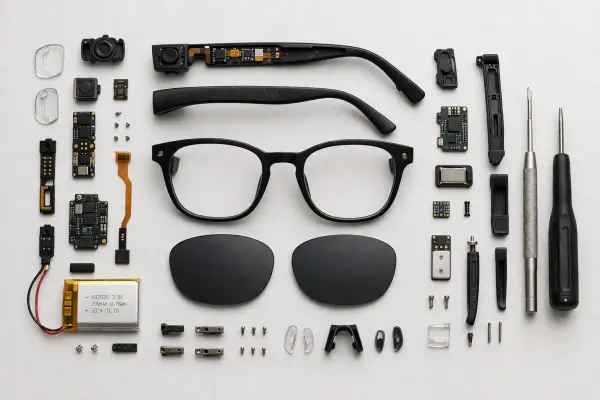
Smart eyewear combines:
- Fashion materials
- Electronic components
- Software integration
This requires coordination across multiple suppliers and stricter quality control.
2. Product Reliability
Unlike apparel, smart eyewear must meet performance expectations. Issues like battery life, connectivity, and durability directly affect brand reputation.
3. Pricing Strategy
Smart eyewear sits at a higher price point. Brands must justify pricing through both functionality and design.
4. Regulatory Considerations
Certain features (camera, AR, data tracking) may involve privacy and compliance risks in different markets.
Example:
A brand launches smart glasses with camera functionality but faces backlash in regions with strict privacy laws, forcing product redesign.
Takeaway:
Operational execution is as critical as design in smart eyewear success.
Consumer Adoption Trends and Market Timing
Consumer readiness for smart eyewear is improving, driven by:
- Increased acceptance of wearable tech
- Growth of AR ecosystems
- Demand for hands-free digital interaction

However, adoption is not uniform. It varies by:
- Age group (younger consumers adopt faster)
- Lifestyle (urban vs non-urban)
- Use case (audio vs AR vs health tracking)
A key insight for fashion brands is that not all features are equally valuable. Simpler functionalities like audio integration often gain traction faster than complex AR systems.
Example:
A brand focuses on audio-enabled smart sunglasses rather than AR-heavy products, achieving better market acceptance due to simplicity and usability.
Takeaway:
Start with practical, high-utility features before moving into advanced capabilities.
Comparison Table: Smart Eyewear vs Traditional Eyewear
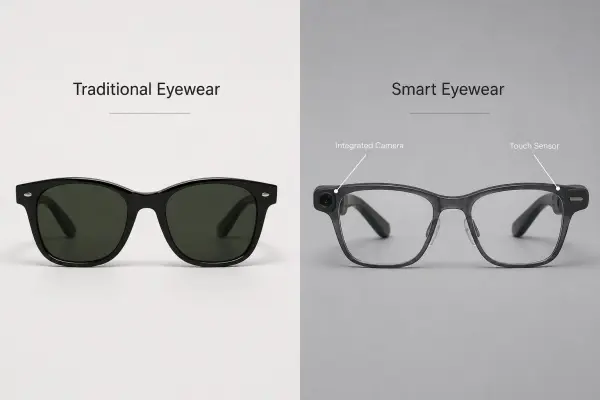
|
Aspect |
Traditional Eyewear |
Smart Eyewear |
|
Function |
Vision & style |
Multi-function (audio, AR, connectivity) |
|
Product Lifecycle |
Static |
Dynamic (updates & features) |
|
Pricing |
Moderate to premium |
Premium to high-end |
|
Supply Chain |
Fashion-focused |
Hybrid (fashion + electronics) |
|
Differentiation |
Design & brand |
Design + technology + experience |
|
Consumer Engagement |
Low |
Continuous |
Practical Application for Fashion Brands
Entering smart eyewear is not a one-step product launch—it requires a structured, staged approach that aligns with brand capability, risk tolerance, and market positioning.
Phase 1: Strategic Positioning (Not Product First)
Before developing anything, brands must define why they are entering smart eyewear.
Key positioning questions:
- Is this an innovation signal (brand perception)?
- A revenue diversification play?
- Or a long-term category expansion?
For example:
A contemporary fashion brand targeting Gen Z may position smart eyewear as a digital lifestyle accessory, while a luxury brand may position it as augmented craftsmanship with subtle tech integration.
This decision will influence:
- Feature selection
- Pricing tier
- Design language
- Distribution channels
Phase 2: Feature Prioritization (Utility Over Complexity)
A common failure point is overengineering. Successful entry products typically focus on one core function:
- Audio (music, calls) → high adoption
- Basic AR (notifications) → moderate adoption
- Health tracking → niche but growing
Example:
A DTC fashion brand launches smart sunglasses with open-ear audio for commuting and travel—solving a clear use case without overwhelming the user.
Avoid launching:
- Multi-feature devices without clear user benefit
- Tech-heavy products that compromise aesthetics
Phase 3: Partnership and Supply Chain Setup
Fashion brands should not attempt to vertically integrate hardware in early stages.
Critical partners include:
- ODM/OEM manufacturers (hardware production)
- Embedded systems providers (chipsets, firmware)
- App/software developers (if needed)
Operational reality:
Smart eyewear requires dual supply chains:
- Fashion (frames, materials, finishing)
- Electronics (chips, batteries, sensors)
A practical approach is:
- Control design and branding
- Outsource electronics and assembly
Phase 4: Go-to-Market Strategy
Smart eyewear should not be sold like regular accessories.
Effective GTM strategies include:
- Limited drops to test demand
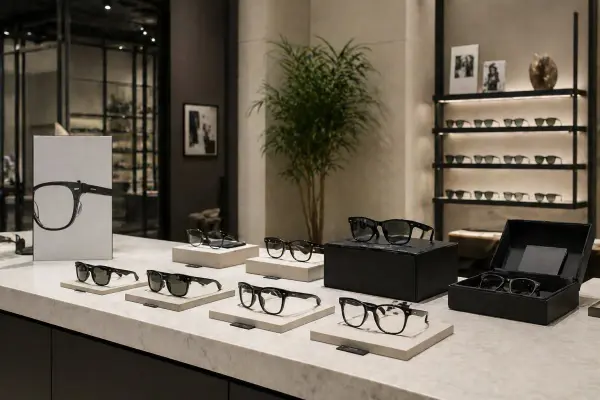
- Experience-driven retail (in-store demo, try-on)
- Influencer-led storytelling (usage scenarios, not specs)
Example:
Instead of listing features, a campaign shows how users navigate daily life—commuting, traveling, working—using the product.
Phase 5: Post-Purchase Ecosystem (Often Ignored)
This is where smart eyewear differs fundamentally from fashion products.
Brands must plan for:
- Customer support (tech issues, returns)
- Firmware/software updates
- Replacement parts and repair
Without this, customer dissatisfaction escalates quickly.
Takeaway:
Fashion brands should approach smart eyewear as a system product (product + service + experience), not a standalone SKU.
Common Mistakes to Avoid
1. Entering Without Clear Category Positioning
Many brands treat smart eyewear as “just another accessory,” leading to confused messaging and weak demand.
Fix: Define whether the product is fashion-first, tech-first, or hybrid.
2. Overloading Features Without Use-Case Clarity
Adding AR, cameras, audio, and sensors simultaneously often results in poor usability.
Reality: Consumers prioritize simple, reliable functionality over feature density.
3. Compromising Design for Technology
Bulky frames, awkward weight distribution, or visible components reduce wearability.
In fashion, if it doesn’t look good, it won’t scale.
4. Ignoring After-Sales Infrastructure
Unlike apparel, smart eyewear requires:
- Warranty systems
- Tech support
- Repair workflows
Failure here damages brand trust significantly.
5. Mispricing the Product
Two common pricing errors:
- Too high → perceived as gadget, not fashion
- Too low → unsustainable margins due to hardware cost
Brands must price based on:
- Design value
- Feature utility
- Brand positioning
6. Treating It as a One-Off Innovation
Smart eyewear is not a campaign product—it requires iteration.
Brands that fail to plan Version 2, 3, and beyond lose momentum quickly.
Takeaway:
Most failures in smart eyewear come from misalignment between fashion logic and tech execution, not from lack of demand.
FAQ
1. How is smart eyewear different from traditional fashion accessories?
Smart eyewear combines aesthetic design with functional technology, creating an interactive product rather than a passive one. Unlike traditional accessories, it delivers ongoing value through features like audio, connectivity, or AR. This changes how consumers perceive value—from purely visual appeal to daily usability—making it closer to a hybrid between fashion and consumer electronics.
2. What is the most realistic entry point for fashion brands?
The most practical entry point is audio-enabled smart eyewear, such as sunglasses with built-in speakers for music and calls. This category offers strong consumer acceptance, relatively lower technical complexity, and clear everyday use cases. It allows brands to test the market without committing to high-risk AR or camera-based products.
3. How expensive is it to develop smart eyewear?
Costs vary significantly depending on complexity. Entry-level products (audio-focused) can be developed through ODM partnerships with moderate investment, while advanced AR eyewear requires substantial R&D and long timelines. For most fashion brands, the recommended approach is partner-led development, which reduces upfront cost and accelerates time to market.
4. What are the biggest operational risks?
The main risks include:
- Product failure (battery, connectivity issues)
- Supply chain disruptions (electronics sourcing)
- Customer dissatisfaction due to poor support
Unlike apparel, product defects in smart eyewear can lead to higher return rates and reputational damage.
5. Is AR (augmented reality) already a viable feature?
AR is evolving but not yet mainstream for fashion-led products. While it offers strong long-term potential, current adoption is limited by usability, battery life, and cost. Most brands should treat AR as a future roadmap feature, not a primary launch driver.
6. Can small or mid-sized brands realistically enter this market?
Yes—if they leverage partnerships. Smaller brands can:
- Use ODM solutions
- Focus on niche positioning
- Launch limited collections
The key is not scale, but clarity of concept and execution discipline.
Conclusion
Smart eyewear is not just another innovation trend—it represents a structural shift in how fashion products create value.
For decades, fashion has operated on aesthetics, identity, and seasonal cycles. Smart eyewear introduces a new dimension: functionality that extends beyond the moment of purchase. This changes everything—from pricing logic and product development cycles to customer expectations and brand loyalty.
However, the opportunity is asymmetric.
Brands that approach this category with a traditional fashion mindset—focusing only on design and launch—will struggle. In contrast, those that understand smart eyewear as a hybrid ecosystem of design, technology, and service can unlock entirely new business models.
The strategic advantage lies not in being first, but in being deliberate, focused, and operationally prepared.
Smart eyewear will not replace traditional eyewear—but it will redefine what consumers expect from it.




Comments 0
Leave a CommentSend Comment
Anda harus Login terlebih dahulu untuk dapat memberikan komentar.