

Poplin Fabric Explained: Structure, Feel, and Common Uses
Poplin is one of the most familiar fabrics in shirting, yet the name is often used more loosely than buyers, designers, and product developers realize. A crisp white office shirt, a printed summer dress, a lightweight uniform, and a cotton-blend work shirt may all be described as poplin even though their weight, yarn quality, finishing, opacity, and performance can differ substantially.
At its core, poplin is a closely constructed plain-weave fabric, traditionally associated with fine crosswise ribbing and a smooth, relatively crisp surface. Cotton is common, but poplin is not inherently a cotton-only fabric; different fibers and blends can be used. Cambridge describes poplin as a closely woven cloth, while textile references also recognize the characteristic plain construction and subtle crosswise rib.
For fashion businesses, this distinction matters. Specifying “cotton poplin” is a useful starting point, but it does not fully define what a factory should source. Fabric weight, yarn construction, density, finishing, shrinkage, colorfastness, handfeel, opacity, and dimensional stability can all affect whether a particular poplin is suitable for a formal shirt, school uniform, blouse, dress, or lightweight outer layer.
Quick Answer: What Is Poplin Fabric?
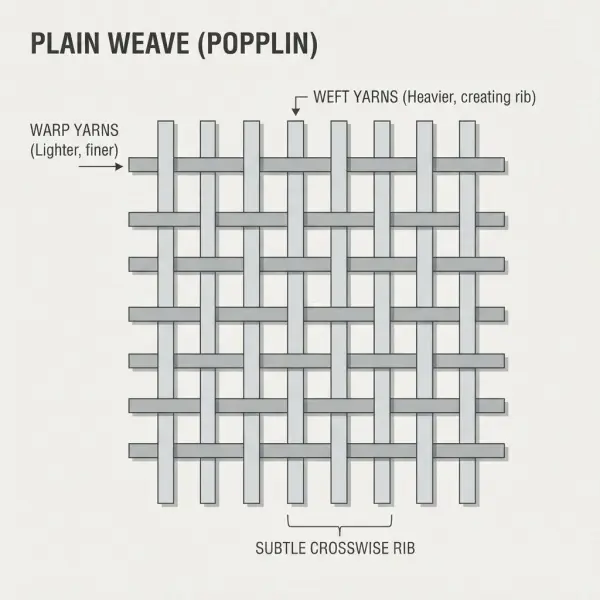
Poplin is a tightly constructed woven fabric based on a plain weave, where warp and weft yarns interlace in a simple over-one, under-one sequence. Traditional poplin constructions commonly use relatively fine warp yarns with somewhat heavier weft yarns, creating a subtle crosswise rib while retaining a smooth, clean surface.
Modern poplin is frequently made from cotton or cotton blends, although polyester and other fibers may also be used. The finished fabric can range from lightweight and soft to firmer and more substantial depending on yarn size, yarn density, fiber content, fabric weight, and finishing.
Poplin is especially useful for shirts, blouses, dresses, uniforms, children's apparel, and other garments that benefit from a neat surface and moderate structure. Its plain-weave construction generally gives it good dimensional stability compared with looser woven structures, but performance cannot be predicted from the word “poplin” alone. A brand should evaluate the actual fabric specification and test results rather than purchasing by fabric name only. CottonWorks identifies plain weave as the basic 1/1 interlacing structure, with every warp end alternating over and under successive picks.
How Is Poplin Fabric Constructed?
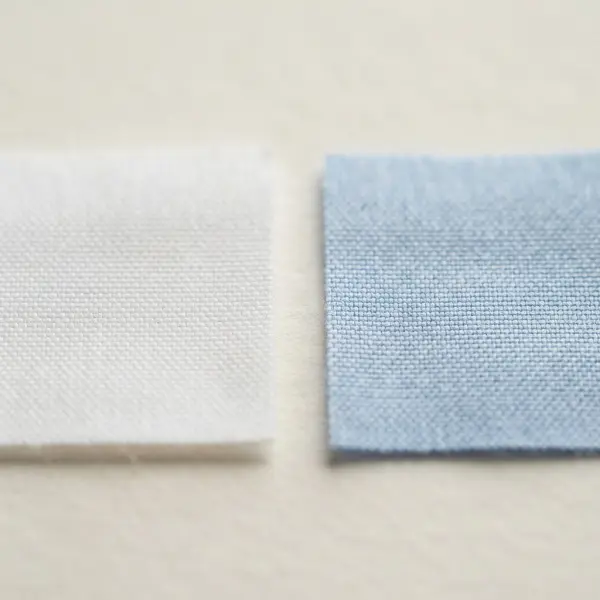
The foundation of poplin is plain weave, the simplest of the three fundamental woven structures. In a plain weave, each warp yarn alternates over and under successive weft yarns, while the neighboring warp yarn follows the opposite sequence. CottonWorks describes this as a 1/1 construction and notes that plain weave has frequent interlacing points, which contributes to fabric stability.
A traditional poplin effect is created when the relationship between warp and weft is deliberately unbalanced. The warp may use finer yarns at relatively high density while the filling, or weft, is somewhat coarser. This can produce the fine crosswise ribs historically associated with poplin. The rib may be obvious under close inspection or so subtle that the fabric simply appears smooth.
This is also why defining poplin exclusively as “smooth cotton fabric” is incomplete. Poplin describes a fabric construction, not one fiber composition, one standardized weight, or one guaranteed performance level. Historically and commercially, poplin has been produced from cotton, silk, rayon, wool, synthetics, and blends, although cotton and cotton-rich versions are especially familiar in contemporary apparel.
For readers who want to understand the weave itself in more technical detail, the CottonWorks explanation of plain weave provides a useful textile-construction reference.
Why does the plain weave matter?
Plain weave has many yarn interlacings relative to structures such as twill or satin. That generally contributes to a stable fabric surface with relatively limited yarn movement. CottonWorks notes that plain-weave fabrics tend to have less drape and good structural stability because of their high number of crossover points.
That does not mean every poplin is stiff. Fine yarns, lower fabric weight, finishing, fiber choice, and mechanical or chemical treatments can substantially alter handfeel. A lightweight washed cotton poplin may feel soft and relaxed, while a dense polyester-cotton uniform poplin may feel significantly firmer even though both belong to the same broad fabric family.
What Does Poplin Feel Like?
Poplin is generally associated with a smooth, compact, crisp handfeel, but those words should be treated as tendencies rather than fixed properties. Fine cotton shirting poplin often feels smooth against the skin and holds a clean garment shape, while heavier or blended versions can feel denser and more utilitarian.
Several variables determine the actual result:
- Fiber content affects moisture interaction, touch, care requirements, and recovery.
- Yarn fineness and quality influence smoothness, surface refinement, and perceived quality.
- Thread density changes compactness, opacity, weight, and air permeability.
- Fabric weight influences body, drape, and end-use suitability.
- Finishing can make the same basic construction feel softer, smoother, firmer, more wrinkle-resistant, or more water-resistant.
- Additional stretch fibers or engineered construction may change mobility and recovery.
This is why handfeel should ideally be approved from an actual fabric swatch or production cutting. A supplier's product title may communicate the general textile category, but it cannot replace physical assessment and measurable specifications.
Is poplin soft or stiff?
It can be either. Poplin typically has more surface structure than a fluid fabric such as lightweight rayon challis, but its exact stiffness depends heavily on construction and finishing. A fine cotton poplin designed for premium shirting may feel crisp without feeling harsh, whereas a utility-oriented poplin may intentionally have more body.
The most useful product-development question is therefore not “Is poplin soft?” but “Does this particular poplin have the hand, drape, weight, and recovery required for this garment?”
Does poplin have stretch?
Conventional poplin should not automatically be assumed to stretch significantly because its basic woven construction provides little inherent mechanical extension compared with knitted fabrics. Stretch can nevertheless be introduced through elastomeric fibers or engineered woven constructions.
For example, Cotton Incorporated has developed woven cotton constructions that create mechanical stretch through yarn and finishing control, demonstrating that “100% cotton woven” and “non-stretch” are not necessarily synonymous. Such technologies are specific constructions, however, and should not be generalized to all poplin.
Poplin's Main Characteristics in Garment Development
From a product-development perspective, poplin is useful because it can combine surface cleanliness with enough structure to support garment details. Collars, cuffs, plackets, darts, pockets, and topstitching can read clearly on a smooth fabric, which is one reason plain woven shirtings remain so practical.
The following table summarizes the characteristics that buyers and designers commonly encounter, while recognizing that individual fabrics may differ.
|
Characteristic |
Typical Poplin Behavior |
Product Development Implication |
|
Weave |
Plain weave, often with subtle crosswise rib |
Stable surface suitable for precise construction |
|
Surface |
Smooth and relatively clean |
Works well for shirts, prints, embroidery, and visible detailing |
|
Structure |
Usually crisp to moderately structured |
Supports collars, cuffs, plackets, gathers, and shaped garments |
|
Drape |
Usually lower than highly fluid woven fabrics |
Better for clean silhouettes than highly flowing styles |
|
Weight |
Can range from lightweight to more substantial |
GSM and physical sample should be specified |
|
Stretch |
Usually limited unless engineered or blended for stretch |
Garment ease and fit must account for actual extension |
|
Fiber |
Commonly cotton or cotton blends; other fibers are possible |
Care, comfort, durability, and price depend on composition |
|
Opacity |
Highly variable |
Light colors and fine constructions may need opacity checking |
|
Wrinkling |
Depends strongly on fiber and finishing |
Cotton-rich versions may require pressing or easy-care treatment |
|
Durability |
Potentially good due to stable construction |
Actual performance still depends on yarn, density, finish, and end use |
The practical lesson is simple: “poplin” narrows the construction category but does not complete the fabric specification.
Why Is Poplin So Common in Shirts?
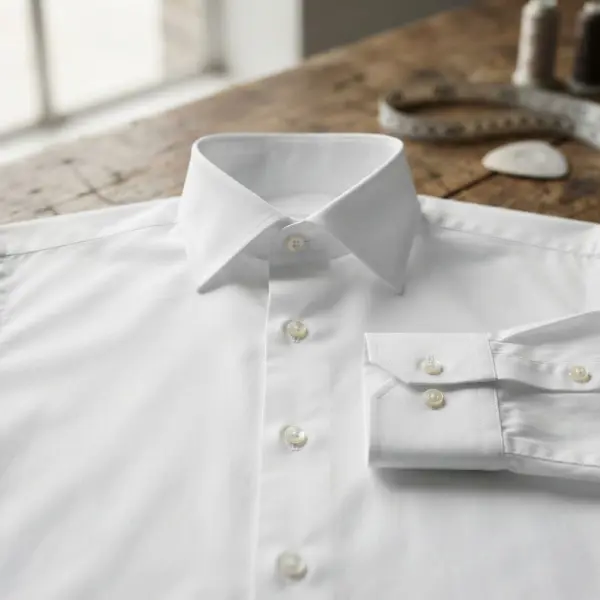
Poplin works particularly well for shirts because its compact, smooth construction supports the visual precision expected from shirting. A button-front shirt contains many details that are easier to execute and evaluate on a stable woven fabric: collars must roll cleanly, collar stands must maintain shape, plackets should remain straight, buttonholes need predictable support, and cuffs must look neat after pressing.
This does not mean poplin is automatically the best shirting fabric for every use. Some customers prefer Oxford cloth for a more textured and casual appearance, twill for a softer or more substantial hand, or specialty constructions for increased stretch, thermal comfort, wrinkle recovery, or moisture management.
Those distinctions become important when choosing fabrics by wearing context rather than by familiarity. A more detailed construction comparison belongs in Poplin vs Oxford Fabric: Key Differences for Shirts and Uniforms, while the broader role of fabric selection in apparel performance is covered in Why Shirting Fabrics Matter in Everyday and Professional Apparel.
Common Uses of Poplin Fabric
Although shirting is strongly associated with poplin, the fabric category is much broader. Its combination of surface stability and relatively clean appearance makes it useful whenever designers want woven structure without the bulk or pronounced texture of heavier fabrics.
Shirts and blouses
Formal shirts, casual button-ups, women's blouses, school shirts, and corporate uniforms are obvious applications. Fine poplin can create sharp styling, while softer finishes can make the same basic construction suitable for relaxed silhouettes.
Fabric selection still needs to reflect the garment's intended environment. A hospitality uniform worn through long shifts, for example, has different expectations for easy care, opacity, abrasion, color retention, and laundering durability than a fashion blouse worn occasionally.
Dresses and skirts
Cotton poplin is frequently suited to garments where the designer wants volume or shape rather than fluid drape. Shirt dresses, tiered dresses, gathered skirts, children's dresses, and structured summer silhouettes can take advantage of poplin's ability to hold folds and gathers.
The same structural quality can become a disadvantage for designs intended to fall closely around the body. Substituting poplin for a more fluid fabric can change the silhouette considerably even when the pattern pieces remain unchanged.
Uniforms and work-oriented apparel
Poplin constructions are also found in uniforms because they can provide a clean appearance and relatively stable woven surface. Cotton-polyester versions may be selected where buyers prioritize easier care or improved crease recovery, although performance depends on the blend percentage, yarn construction, finishing, and laundering conditions rather than the blend name alone.
Uniform sourcing deserves especially careful specification because garments may undergo frequent laundering and repeated wear. Shade consistency, dimensional change, seam durability, pilling, colorfastness, and appearance after repeated care cycles can matter more commercially than how attractive the fabric looks on the initial swatch.
Children's clothing
Poplin is widely applicable to children's shirts, dresses, shorts, lightweight trousers, and coordinated sets. Its stable structure can simplify sewing and help shaped details remain visible, while printed cotton poplin supports a large range of surface designs.
Brands should still evaluate the requirements that apply to the particular product and market. Fiber content, trims, dyes, finishes, garment design, and applicable product-safety requirements all require separate consideration; the fabric name itself does not establish compliance.
Lightweight jackets and overshirts
More substantial poplin constructions can be used for shirt jackets, overshirts, utility garments, lightweight outer layers, and similar products. Water-repellent or other functional finishes can further expand end uses, but a finish should be evaluated as a specific treatment rather than treated as an intrinsic property of poplin.
Cotton Poplin vs Polyester-Cotton Poplin
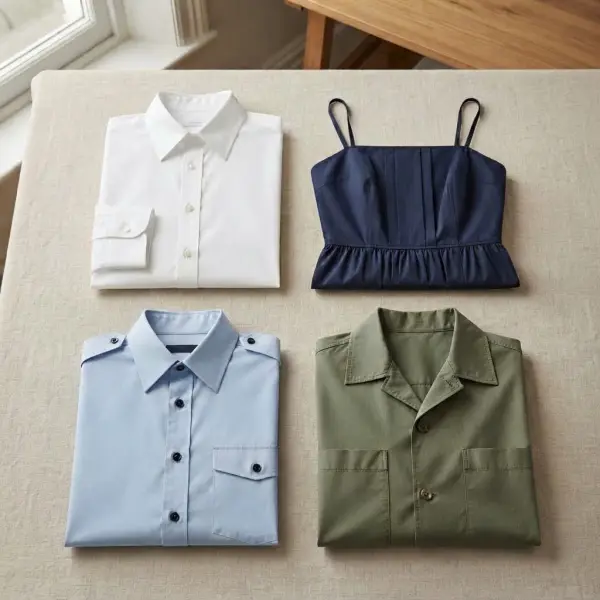
Fiber content deserves separate attention because two fabrics with nearly identical weave structures can behave differently once fiber composition changes.
Cotton poplin is generally chosen when brands prioritize the familiar hand and moisture interaction of cotton, while polyester-cotton blends can be engineered toward different combinations of care performance, wrinkle behavior, drying characteristics, durability, and cost. The actual result depends on blend ratio, yarn system, fabric construction, and finishing, so broad statements such as “poly-cotton never wrinkles” or “100% cotton is always more breathable” are too simplistic for technical sourcing decisions.
Even air permeability cannot be inferred accurately from fiber name alone. Fabric density, thickness, pore structure, yarn characteristics, and finishing all influence airflow. Cotton Incorporated's development work, for example, shows that changing woven construction can materially alter air permeability even within cotton shirting fabrics.
For buyers, therefore, fiber content should be read as one layer of the specification rather than the whole performance story.
Poplin, Oxford, Broadcloth, and Twill Are Not Interchangeable Names
Confusion frequently arises because retailers and suppliers use shirting terminology differently across regions and price segments. Poplin and broadcloth, in particular, can overlap in commercial naming, while Oxford and twill are structurally easier to distinguish.
Oxford fabric uses a basket-weave derivative rather than the simple 1/1 plain weave typical of poplin. CottonWorks describes basic Oxford as commonly using two warp ends weaving together over and under individual filling yarns—a 2 × 1 basket-weave construction.
Twill uses a different interlacing progression that produces diagonal lines on the fabric surface. Poplin therefore should not be treated simply as “thin Oxford” or “light twill.” The construction itself changes.
Broadcloth terminology requires more caution because regional naming conventions have historically overlapped with poplin. A supplier's label should therefore be confirmed against physical construction and specification rather than interpreted from terminology alone.
A deeper decision-oriented comparison between Oxford and poplin is intentionally covered separately in the Poplin vs Oxford fabric guide.
What Should Fashion Brands Specify When Buying Poplin?
Ordering “120 GSM white cotton poplin” is better than ordering “white poplin,” but it is still not a complete production specification. Fabric sourcing becomes more reliable when the buyer identifies the variables that matter to the garment's use.
A practical specification may include:
- fiber composition and tolerance;
- nominal fabric weight and acceptable tolerance;
- usable fabric width;
- yarn construction where relevant;
- weave or structural description;
- color or approved shade standard;
- surface finish and functional treatments;
- dimensional-change requirements;
- colorfastness requirements;
- tensile, tear, or seam-performance requirements where end use demands them;
- opacity or cover requirements;
- stretch and recovery if relevant;
- appearance requirements after laundering;
- defect and inspection criteria.
The exact tests should be agreed with the supplier or laboratory based on end use and market requirements. For example, AATCC TM135 addresses dimensional change after home laundering, while AATCC TM61 addresses accelerated laundering colorfastness. ASTM also maintains methods for textile breaking strength and woven seam performance.
These are examples of recognized test frameworks, not a universal test package for every poplin garment. Buyers should select methods and acceptance thresholds appropriate to the product, customer requirements, applicable regulations, and intended care conditions.
How Poplin Affects Garment Manufacturing
Poplin is generally production-friendly because a stable woven structure can be easier to spread, cut, sew, press, and inspect than highly elastic or very fluid fabrics. That advantage, however, should not be interpreted as “poplin is always easy to manufacture.”
Very lightweight poplin can still shift during handling. Dense constructions may require needle and thread adjustment. Fine surfaces can show needle damage or puckering more readily. Poorly controlled tension can distort seams, while mismatched interlining can make a collar or placket excessively stiff.
Production teams should therefore evaluate the fabric as part of the garment system. The fabric, fusible interlining, sewing thread, needle size, stitch density, seam type, pressing temperature, garment wash, and final finishing process interact with one another.
A formal shirt provides a good example. If the body fabric is lightweight but the collar interlining is too rigid, the collar can look disconnected from the rest of the garment. If the same fabric shrinks more than the interlining after washing, shape distortion can develop. Fabric approval should consequently happen together with construction trials rather than in isolation.
Common Poplin Quality Issues to Watch
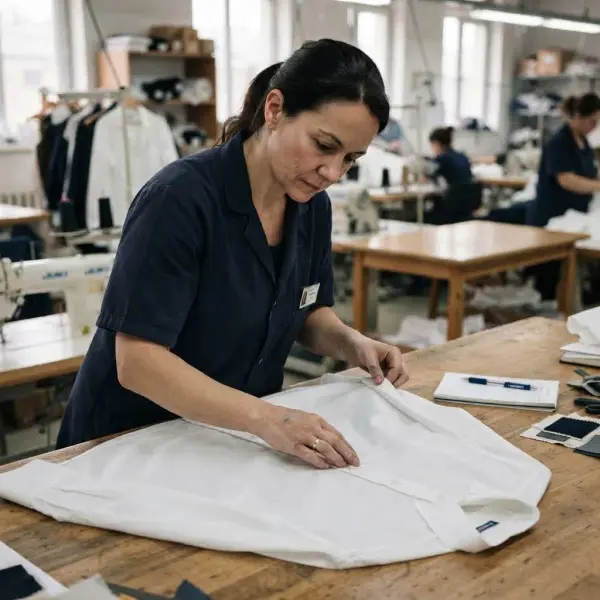
A smooth fabric surface can be commercially attractive, but it can also make inconsistencies more visible. Buyers should inspect both fabric yardage and finished garments under appropriate lighting rather than relying entirely on a small approval swatch.
Potential concerns include uneven yarns, broken or irregular picks, warp-related lines, shade variation, bowing or skew, crease marks, finishing inconsistency, excessive shrinkage, seam puckering, print misregistration, and local surface defects. CottonWorks' defect resources specifically classify defects such as coarse picks and harness-related faults within shirting and plain-weave fabric categories.
Not every visible irregularity represents the same severity. Acceptance should depend on the defect's location, frequency, end use, color, garment style, and agreed inspection standard. A minor irregularity hidden inside a casual garment may be commercially irrelevant, while the same defect across the front panel of a premium white shirt may be unacceptable.
Practical Application: How Brands Can Choose the Right Poplin
The best way to select poplin is to start with the garment requirement rather than with the fabric name. A brand developing an office shirt should define what the finished product needs to achieve: crispness, opacity, comfort, wash stability, collar performance, wrinkle expectations, price target, and expected service life.
Start with the silhouette
A structured shirt dress and a soft oversized blouse may both use poplin, but they need different fabric behavior. The designer should first decide how much body, volume, drape, and movement the silhouette requires.
A fabric that looks excellent in isolation may still be wrong for the pattern.
Establish measurable requirements
After approving the desired handfeel, translate important performance expectations into specifications. Weight, width, composition, shrinkage tolerance, colorfastness, stretch, and shade requirements are much easier to manage when they are measurable.
This reduces disagreements based on subjective descriptions such as “premium,” “soft,” “thick enough,” or “high quality.”
Test the fabric in the actual garment
Prototype the product with intended seams, interlining, trims, washing, and pressing. Construction can reveal issues that a fabric test report does not show clearly: seam puckering, transparency at layered areas, collar stiffness, needle marking, or uncomfortable restriction around the shoulders.
Evaluate care conditions realistically
A fashion blouse sold for occasional wear does not need exactly the same care-performance profile as a school or hospitality uniform washed several times each week. Set requirements according to the customer use case rather than applying the same specification to every category.
Keep approved standards for repeat orders
Once a fabric is commercialized, retain approved swatches, specification sheets, shade standards, and test results. Repeat orders can drift when mills change yarn sources, finishing conditions, production lots, or subcontracted processes.
For growing brands, disciplined fabric approval often matters more than adding ever more material options. A narrow library of well-understood fabrics can make fit, costing, quality control, and replenishment more predictable.
Common Mistakes When Working With Poplin
Mistake 1: Treating “poplin” as a complete specification
The most common sourcing error is assuming the fabric name defines everything that matters. It does not. Two cotton poplins can differ dramatically in weight, density, opacity, yarn quality, finishing, shrinkage, and handfeel. The better approach is to combine the construction name with measurable technical requirements and an approved physical standard.
Mistake 2: Choosing only by GSM
Fabric weight is useful, but two fabrics at the same GSM can still have different thickness, density, drape, cover, and tactile character. Yarn count, weave density, fiber type, finishing, and construction all contribute to perceived substance. GSM should therefore be one specification among several rather than the sole quality indicator.
Mistake 3: Assuming cotton poplin is automatically cool and breathable
Cotton can support comfortable shirting, but airflow depends strongly on construction. A dense woven structure may have lower air permeability than a more open construction regardless of fiber reputation. Fabric testing or representative wear trials are more reliable than describing all cotton poplin as equally breathable.
Mistake 4: Ignoring opacity until the garment sample stage
Fine white and pale-colored poplins can become more transparent than expected, particularly when stretched across the body or viewed under strong lighting. For shirts and uniforms, opacity should be reviewed early using the intended color, weight, garment ease, pocket placement, and undergarment conditions.
Discovering the problem after bulk fabric has arrived can force expensive design compromises.
Mistake 5: Approving handfeel without checking laundering behavior
Finishing can make new fabric feel excellent at approval, but laundering may change crispness, dimensions, surface appearance, and garment shape. Development teams should compare initial appearance with post-care performance under conditions representative of customer use. A fabric that performs well only before the first wash is rarely a good basis for repeatable product quality.
Important Technical Caveats
Several qualifications are worth keeping close to any definition of poplin.
First, poplin is not a fiber. Cotton poplin, polyester-cotton poplin, and other variants can share similar woven construction while behaving differently.
Second, poplin is not one standardized GSM. Lightweight shirting poplin and more substantial utility poplin can both legitimately carry the name.
Third, smoothness does not guarantee softness, and crispness does not necessarily mean poor comfort. Yarn quality and finishing matter substantially.
Fourth, plain weave alone does not determine breathability, durability, wrinkle resistance, or shrinkage. These outcomes depend on the complete fabric system.
Finally, commercial terminology varies. Where fabric names overlap regionally—for example, some use of “broadcloth” and “poplin”—the safest sourcing practice is to confirm the actual construction rather than relying on the label.
FAQ: Poplin Fabric
Is poplin always made from cotton?
No. Cotton is one of the most common contemporary fibers used for apparel poplin, but poplin describes a woven fabric construction rather than a mandatory fiber composition. Textile references recognize poplin made from cotton as well as other fibers and blends.
For sourcing purposes, this means “poplin” and “cotton poplin” should not be treated as interchangeable terms. Always confirm the fiber composition, because it influences care, handfeel, moisture interaction, recovery, cost, and other product characteristics.
Is poplin good for summer clothing?
It can be, particularly in lightweight constructions, but the answer depends on more than the name of the fabric. Weight, yarn density, fiber composition, garment fit, color, finishing, and fabric air permeability all affect thermal comfort.
A lightweight cotton poplin shirt with sufficient garment ease may be well suited to warm weather, while a dense or heavily finished poplin can behave differently. Buyers developing hot-climate products should evaluate the actual fabric rather than treating “poplin” as a guarantee of breathability.
Does poplin wrinkle easily?
The answer depends strongly on fiber content and finishing. Untreated cotton woven fabrics can develop visible creases during wear and laundering, whereas polyester blends or easy-care finishes may provide different wrinkle-recovery characteristics.
That trade-off is not purely aesthetic. Finishes and blends can also alter handfeel, moisture behavior, care requirements, cost, and branding claims. Brands should therefore specify the appearance they need after laundering and test the finished fabric instead of relying on assumptions about the material category.
Is poplin suitable for uniforms?
Yes, poplin can be well suited to shirts and certain lightweight uniform garments because of its stable woven construction and clean surface. The more important question is whether a particular poplin meets the uniform's performance requirements.
For frequently laundered school, hospitality, healthcare, retail, or corporate clothing, buyers may need to evaluate dimensional stability, colorfastness, seam performance, abrasion or wear expectations, opacity, easy-care performance, and consistency across repeat orders. Fabric construction is only one part of that decision.
Is poplin the same as Oxford cloth?
No. Poplin is fundamentally associated with plain weave, whereas traditional Oxford cloth uses a basket-weave derivative. CottonWorks describes common Oxford construction as two warp ends weaving together over and under individual filling yarns.
That structural difference contributes to different surface character and garment aesthetics, although weight, yarn and finishing can also alter the result. Oxford commonly appears more textured, while poplin usually presents a cleaner, flatter surface. The detailed sourcing implications are covered separately in the cluster's Poplin vs Oxford comparison.
Is higher-GSM poplin always better quality?
No. GSM measures fabric mass per unit area; it does not independently measure quality. A heavier fabric may be appropriate for a uniform or overshirt but unsuitable for a lightweight summer blouse, while a fine lightweight poplin can use high-quality yarns and precise finishing.
Quality should instead be judged against intended use. Relevant factors can include yarn uniformity, fabric construction, finishing consistency, dimensional stability, shade control, defect level, sewability, handfeel, and tested garment performance.
Can poplin be used for printing and embroidery?
Yes, its relatively smooth and stable surface can make poplin suitable for printed or embroidered apparel, but production should still be sampled first. Print definition depends on ink or dye system, pretreatment, fiber content, surface finish, color, and printing process, while embroidery performance depends on stitch density, backing, needle selection, design size, and fabric stability.
Very lightweight poplin may require suitable stabilization to avoid distortion or puckering. A successful decorative process should therefore be validated on the actual production fabric rather than assumed from the fabric category.
Conclusion
Poplin remains useful precisely because it is not restricted to one garment or one market. Its plain-weave foundation provides a clean, stable surface that can work across dress shirts, blouses, dresses, uniforms, children's apparel, and selected lightweight outerwear. Fine yarn choices and finishing can make it refined; heavier constructions and blends can push it toward more functional applications.
The important sourcing lesson is that poplin is a construction category, not a complete performance specification. Fiber composition, yarns, density, weight, finishing, stretch, opacity, dimensional stability, colorfastness, and manufacturing compatibility all influence what the final garment will actually feel and perform like.
For fashion businesses, that changes the decision from “Should we use poplin?” to a more productive question: “Which poplin construction gives this particular product the appearance, comfort, manufacturing reliability, care performance, and cost profile it requires?”
That is the distinction between choosing a familiar fabric name and developing a repeatable material standard.




Comments 0
Leave a CommentSend Comment
Anda harus Login terlebih dahulu untuk dapat memberikan komentar.