
Natural Silk vs Synthetic Silk Alternatives
What Is the Difference Between Natural Silk and Synthetic Silk Alternatives?
Natural silk is a natural protein fiber most commonly produced from silkworm cocoons, while synthetic silk alternatives are fabrics designed to imitate some qualities of silk—such as shine, softness, drape, or smooth hand feel—using other fibers. These alternatives may include synthetic fibers like polyester and nylon, or man-made cellulosic fibers such as viscose, modal, lyocell, acetate, and cupro.
The key difference is not simply “natural versus artificial.” Natural silk has a distinct fiber structure, tactile depth, cultural value, and premium positioning. Synthetic and man-made alternatives can be more affordable, easier to scale, more consistent in production, and sometimes easier to care for, depending on the fabric. However, they do not automatically match silk’s full sensory profile, and they also come with their own environmental, labeling, and performance trade-offs.
For fashion businesses, the best choice depends on product category, price point, customer expectation, care requirements, sourcing transparency, durability needs, and brand positioning. Natural silk works best when authenticity, luxury perception, tactile refinement, and emotional value matter. Silk-like alternatives can be more practical for mass-market satin dresses, linings, occasionwear at accessible prices, vegan-positioned collections, or products requiring easier inventory scalability.
Why This Comparison Matters for Fashion Brands
Silk has long carried a premium aura, but fashion brands rarely make material decisions based on romance alone. A fabric must work commercially. It must fit the garment, the margin, the production capability, the target customer, the care promise, and the brand story. That is where the comparison between natural silk and silk alternatives becomes important.
Many consumers use the word “silky” to describe a look or feel rather than a fiber. A polyester satin dress may look silky in photos. A viscose satin blouse may drape beautifully. A cupro lining may feel smooth against the skin. A lyocell blend may offer fluidity with a softer sustainability story than conventional synthetics. But none of these should be marketed as silk unless the fiber content genuinely supports that claim.
For sourcing teams, the question is not “Which material is better?” The more useful question is: better for what? A bridal scarf, a luxury blouse, an accessible party dress, a washable sleepwear set, and a tailored jacket lining each have different material requirements. Natural silk may be the best answer for one and commercially unrealistic for another.
This article builds on the foundation covered in Silk Fabric Explained: Production, Properties, and Applications. Instead of repeating the full silk production process, the focus here is on material alternatives, trade-offs, and decision-making for fashion businesses.
What Counts as a “Silk Alternative”?
A silk alternative is not one single material. It is a broad commercial category covering fabrics that imitate one or more qualities associated with silk. Some aim to imitate silk’s glossy surface. Some focus on softness. Some focus on drape. Others focus on lining performance, print clarity, or price accessibility.
The most common silk alternatives in fashion include:
- Polyester satin, often used for affordable dresses, blouses, scarves, linings, and occasionwear.
- Nylon satin or nylon blends, sometimes used where strength, smoothness, and lightweight performance matter.
- Viscose or rayon satin, used for soft drape and a silk-like feel at a lower price point.
- Modal and lyocell blends, often used for softness, fluidity, and comfort-led apparel.
- Acetate and triacetate, historically used in linings, formalwear, and smooth woven fabrics.
- Cupro, often used for premium linings and fluid garments because of its smooth hand feel.
- Silk blends, where silk is mixed with cotton, wool, viscose, elastane, or synthetics to balance cost, hand feel, strength, or care.
These materials sit in different fiber families. Polyester and nylon are synthetic fibers, usually derived from petrochemical feedstocks. Viscose, modal, lyocell, acetate, and cupro are man-made cellulosic fibers, meaning they are manufactured fibers made from cellulose sources such as wood pulp or cotton linters through industrial processing. Textile Exchange describes man-made cellulosic fibers as regenerated fibers typically made from dissolved wood pulp, with common types including viscose, lyocell, and modal. Textile Exchange on man-made cellulosic fibers
This distinction matters. Calling every non-silk fabric “synthetic silk” can be technically imprecise. Polyester satin is synthetic. Viscose satin is man-made cellulosic. Cupro is man-made cellulosic. Acetate is manufactured from cellulose acetate. They may all be silk alternatives in the market, but they are not the same material category.
Natural Silk: Strengths and Limitations
Natural silk’s greatest strength is that it offers a combination of qualities that are difficult to copy fully. A good silk fabric can have elegant luster, soft touch, fluid drape, visual depth, and a premium sensory character. These properties are especially powerful in categories where emotion and tactility influence purchase: bridalwear, eveningwear, scarves, luxury blouses, lingerie, elevated sleepwear, and special-occasion apparel.
Silk also carries cultural and symbolic value. Customers often recognize silk as a premium fiber even if they do not understand its technical structure. This recognition can support higher price positioning, stronger gifting value, and a more refined brand image. A silk scarf, for instance, can feel more meaningful than a visually similar polyester scarf because the material itself carries perceived authenticity.
But silk also has limitations. It is usually more expensive than many alternatives. It can require careful cutting, sewing, pressing, storage, and care. Some silk fabrics are sensitive to abrasion, perspiration, water marks, sunlight, and harsh detergents. Lightweight silk satin can show seam tension. Chiffon can snag. Organza can fray. Printed silk may require careful colorfastness testing.
For a brand, silk is strongest when the customer values the material enough to accept its care requirements. It becomes risky when the customer expects low-maintenance convenience, frequent washing, rugged durability, or mass-market pricing.

Polyester Satin: The Most Common Accessible Silk-Like Fabric
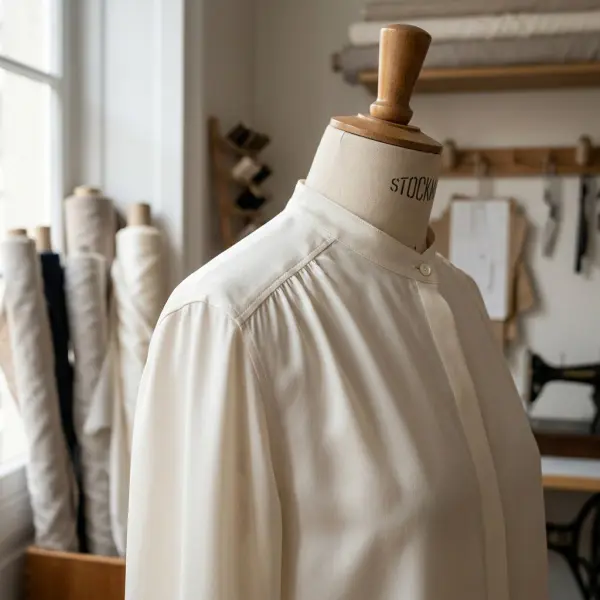
Polyester satin is one of the most widely used silk alternatives because it can create a shiny, smooth, silk-like appearance at a much lower cost. It is common in fast fashion, occasionwear, lingerie-inspired tops, scarves, linings, costumes, and decorative apparel. It is scalable, widely available, relatively consistent, and often easier to source in large quantities than natural silk.
The main advantage of polyester satin is commercial practicality. It can support lower retail prices, broader size ranges, frequent replenishment, bright colors, prints, and more predictable production. It may also offer better resistance to wrinkling than many natural silk fabrics, although this depends on construction and finishing.
The limitation is sensory depth. Polyester satin can look glossy, but it may not have the same refined luster, breathability, tactile softness, or premium perception as natural silk. It can also feel warmer or less breathable in certain garments, especially in close-fitting apparel or humid climates. From a sustainability perspective, polyester is a synthetic fiber commonly associated with fossil-based feedstocks, microfiber shedding concerns, and end-of-life challenges. Recycled polyester may reduce reliance on virgin inputs, but it does not automatically solve all environmental issues.
For brands, polyester satin is not “bad.” It is simply a different proposition. It works best when the product promise is visual shine, affordability, easy availability, or trend responsiveness—not authentic silk luxury.
Viscose, Rayon, Modal, and Lyocell: Soft Drape With Cellulosic Origins
Man-made cellulosic fibers are often used as silk alternatives because they can offer softness, drape, and a pleasant hand feel. Viscose satin, for example, may look and feel more fluid than many synthetic satins. Modal and lyocell can support soft, comfortable garments, especially in blends. These materials are often positioned between natural fibers and synthetics in consumer perception, although the technical reality is more nuanced.
Their advantage is comfort and drape. Viscose and related fibers can feel breathable and fluid, making them attractive for blouses, dresses, skirts, linings, sleepwear, and resortwear. They may support a more natural-feeling product than polyester, especially when the brand wants softness without the cost of silk.
The caveat is sourcing and processing. Textile Exchange notes that the environmental impact of man-made cellulosic fibers depends significantly on how the wood or other cellulosic source material is produced. Textile Exchange man-made cellulosics guidance Conventional viscose has also been associated with risks around deforestation, chemical use, emissions, and wastewater if sourcing and production are poorly managed. Textile Exchange on viscose risks
Lyocell is often discussed as a more responsible option compared with conventional viscose because of its production route and solvent recovery potential, but brands should still verify supplier data rather than using broad sustainability claims. Modal and viscose can vary widely depending on producer, forest sourcing, chemical management, and certification.
For fashion businesses, man-made cellulosics can be excellent silk-like alternatives when softness and drape matter, but they require serious supply-chain due diligence.
Acetate and Cupro: Smooth Alternatives Often Used for Linings
Acetate and cupro deserve special attention because they are often used where silk-like smoothness matters but natural silk may be too expensive or impractical. Both can be found in linings, dresses, blouses, and premium-feeling garments, although their availability and positioning vary by market.
Acetate has a long history in fashion linings and formalwear because it can provide smoothness, luster, and drape. It can look refined, but it may require careful handling and care depending on the fabric. Triacetate may offer better heat resistance and dimensional stability than regular acetate in some applications, but fabric-level testing remains essential.
Cupro is often valued for lining because it feels smooth and fluid against the skin. It is commonly made from cotton linters through a regenerated cellulose process. In premium tailoring, cupro can feel more elevated than many basic polyester linings because of its soft hand and drape. Still, it should not be treated as silk. It is a distinct man-made cellulosic fiber with its own processing considerations, supplier base, and sustainability questions.
A practical use case is a premium blazer. A brand may choose wool for the outer shell and cupro for the lining to create comfort and perceived quality without using silk lining. This can be commercially sensible because linings need smoothness, durability, and comfort, but also need to meet cost and care constraints.
Silk Blends: A Middle Ground Between Authenticity and Practicality
Silk blends can offer a practical compromise. By blending silk with cotton, wool, viscose, elastane, nylon, or polyester, mills can adjust hand feel, price, strength, stretch, texture, opacity, and care behavior. A silk-cotton voile may feel crisp and breathable. A silk-wool blend may work beautifully in tailoring. A silk-viscose velvet may deliver luxury appeal with different drape and cost. A silk-elastane satin may support fitted garments more comfortably than non-stretch silk satin.
The advantage of blends is flexibility. They allow brands to keep some silk content while improving usability or lowering cost. They may also help create unique textures that pure silk does not offer. But blends can create communication challenges. Customers may expect “silk” to mean 100% silk, so product descriptions must be transparent.
Fiber labeling is not optional. In the United States, the FTC Textile Fiber Rule requires covered textile products to disclose generic fiber names and percentages by weight, along with other labeling information. FTC Textile Fiber Rule Similar principles apply in many markets through local textile labeling laws. Brands should verify requirements for each selling region instead of relying on generic product copy.
A blend can be excellent, but it should never be used to imply a full silk product when the actual silk percentage is limited.
Performance Comparison: Natural Silk vs Silk Alternatives
The most useful comparison is not emotional. It is operational. Fashion brands need to understand how these materials behave across cost, drape, care, durability, scale, sustainability, and brand perception.
|
Material Category |
Main Strength |
Common Limitation |
Best-Fit Applications |
|
Natural silk |
Premium luster, tactile depth, authenticity, luxury perception |
Higher cost, delicate care, production sensitivity |
Luxury blouses, scarves, bridalwear, eveningwear, premium accessories |
|
Polyester satin |
Affordable shine, scalability, consistency, wrinkle resistance |
Less breathable, less premium tactility, fossil-based concerns |
Mass-market dresses, linings, trend products, occasionwear |
|
Viscose/rayon satin |
Soft drape, fluid hand feel, accessible luxury feel |
Wet strength and shrinkage concerns, sourcing and chemical risks |
Dresses, blouses, skirts, soft separates |
|
Lyocell/modal blends |
Softness, comfort, fluidity, stronger sustainability potential if verified |
May not replicate silk luster, availability and cost vary |
Comfort-led apparel, soft tailoring, sleepwear, blends |
|
Acetate/triacetate |
Smooth luster, lining and formalwear potential |
Care and heat sensitivity vary by type |
Linings, dresses, formalwear |
|
Cupro |
Smooth, fluid, premium lining feel |
Availability, cost, processing transparency |
Tailoring linings, elevated dresses, premium separates |
|
Silk blends |
Balanced cost, texture, comfort, or performance |
Requires clear labeling and testing |
Blouses, tailoring, occasionwear, luxury-casual pieces |
This table is a decision guide, not a universal ranking. A polyester satin party dress may be commercially smarter than a silk version for a younger trend customer. A silk twill scarf may be far stronger for premium gifting than a cheaper imitation. A cupro lining may deliver the right balance for tailoring. The material should match the promise.
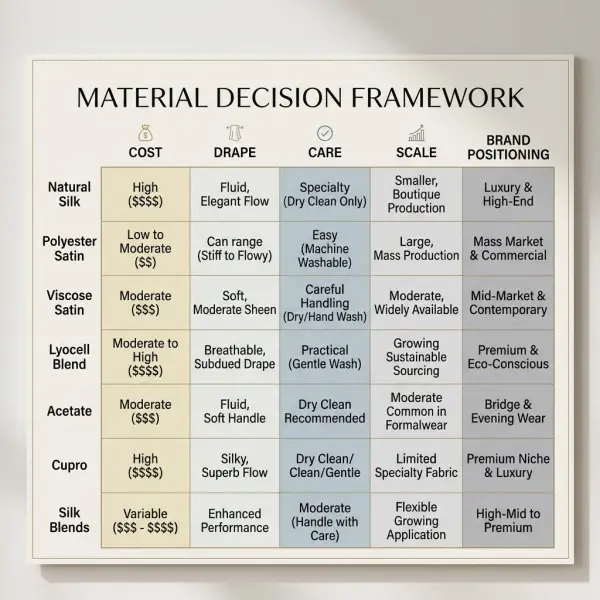
Sustainability Claims: Where Brands Need to Be Careful
Sustainability is one of the most sensitive areas in the silk-versus-alternatives discussion. Natural silk is not automatically sustainable. Polyester is not automatically irresponsible in every use case. Viscose is not automatically eco-friendly because it comes from cellulose. Lyocell is not automatically impact-free. Recycled inputs are not automatically circular.
Each fiber category has different impact areas. Natural silk may raise questions around sericulture inputs, processing, labor, energy, water, animal welfare, dyeing, and durability. Polyester raises questions around fossil feedstocks, microfiber shedding, recycling limits, and end-of-life. Man-made cellulosics raise questions around forest sourcing, chemical management, worker safety, emissions, wastewater, and traceability.
Canopy’s Hot Button Report, for example, assesses man-made cellulosic fiber producers on forest sourcing, traceability, certified fiber use, conservation, and next-generation production. Canopy Hot Button Report This kind of supplier-level assessment matters because the same generic fiber name can have different risk profiles depending on producer practices.
Brands should avoid broad phrases such as:
- “Eco-friendly silk alternative”
- “Sustainable satin”
- “Vegan silk”
- “Plant-based silk”
- “Biodegradable luxury fabric”
- “Chemical-free viscose”
- “Guilt-free polyester”
Some of these phrases may be usable only with very specific evidence and careful wording. Others may be misleading if they imply benefits that have not been verified. The FTC Green Guides advise marketers to avoid environmental claims that are broad, vague, or difficult to substantiate. FTC Green Guides
A stronger approach is to state what is actually known: recycled content percentage, verified forest sourcing, chemical testing, certification scope, supplier traceability, care performance, durability testing, or take-back program limitations. Specific claims are more credible than emotional claims.
Branding and Customer Perception
Natural silk and silk alternatives do different branding jobs. Natural silk communicates authenticity, heritage, luxury, refinement, and emotional value. Silk alternatives communicate accessibility, practicality, trend adoption, vegan positioning, lower maintenance, or broader affordability depending on how they are presented.
This difference matters in product copy. A brand should not describe polyester satin as if it were silk. Customers may accept “silky satin finish,” “smooth satin fabric,” or “fluid satin drape” if accurate, but the copy must not imply that the fabric is silk when it is not. Likewise, “vegan silk” can be risky if it creates confusion. It is often clearer to say “silk-free satin,” “plant-derived cellulosic satin,” or “smooth recycled polyester satin,” depending on the actual material.
Natural silk works especially well when customers are buying for occasion, gifting, craftsmanship, or wardrobe longevity. Silk alternatives work well when customers are buying for style, price, color, ease, trend participation, or vegan preference.
For premium brands, replacing silk with alternatives requires careful storytelling. The question becomes: are you offering a lower-cost substitute, a performance-driven choice, a vegan option, a more washable garment, or a verified lower-impact material? Each story needs different evidence.
Practical Sourcing Framework for Fashion Businesses
Choosing between natural silk and silk alternatives should begin with product role, not supplier availability. Too many brands choose fabric because it looks attractive in a swatch book, then discover problems during sampling or after customer use.
A practical sourcing framework should ask:
- What is the product category: blouse, scarf, lining, evening dress, bridal layer, sleepwear, or mass-market trend item?
- What does the customer expect: luxury authenticity, visual shine, soft comfort, easy care, vegan positioning, or lower price?
- What is the retail price target and margin structure?
- How often will the customer wear and clean the garment?
- What performance tests are needed: shrinkage, colorfastness, seam slippage, abrasion, perspiration, pilling, or dimensional stability?
- What claims will be made: natural, recycled, certified, traceable, vegan, biodegradable, low-impact, or premium?
- Can the supplier support documentation, consistency, and repeat orders?
The answer may lead to very different decisions. A premium scarf capsule may justify natural silk twill because material authenticity strengthens the product. A high-volume satin slip dress may work better in polyester or acetate because the customer wants price accessibility and easier stock management. A conscious premium blouse may use verified lyocell or silk-viscose blend if the brand can support the claim and performance.

Common Mistakes When Comparing Silk and Alternatives
Mistake 1: Treating Shine as the Same Thing as Silk Quality
A shiny fabric is not necessarily silk-like in a meaningful way. Shine can come from weave structure, filament yarn, chemical finishing, calendaring, or synthetic fiber properties. A glossy polyester satin may photograph well but feel less refined in person. A matte silk noil may have little shine but still be authentic silk.
The better approach is to assess hand feel, drape, breathability, construction, opacity, color depth, seam behavior, and customer expectation—not surface shine alone.
Mistake 2: Using “Silk” Language Too Loosely
Terms such as “silky,” “silk-like,” “vegan silk,” and “artificial silk” can create confusion if product labeling is not clear. In regulated markets, fiber content must be accurate. From a trust perspective, customers should never feel misled after checking the care label.
A safer strategy is to describe the actual material and sensory quality together. For example: “smooth viscose satin with fluid drape” is clearer than “vegan silk blouse” if the garment contains no silk.
Mistake 3: Assuming Natural Means Sustainable
Natural silk has appealing qualities, but sustainability depends on production context. The same caution applies to cotton, wool, leather, linen, and other natural materials. Natural origin is not a full life-cycle assessment.
Brands should communicate verified practices instead of relying on fiber romance. Traceability, testing, responsible dyeing, durability, repairability, and supplier transparency are stronger than vague natural claims.
Mistake 4: Assuming Alternatives Are Inferior
Some silk alternatives are excellent for specific uses. A cupro lining may outperform silk in certain tailoring contexts because it balances smoothness, comfort, and cost. A lyocell blend may be more practical for a washable soft dress. Polyester satin may be commercially appropriate for trend-led occasionwear.
The mistake is ranking materials by prestige instead of suitability. Good material strategy is contextual.
Mistake 5: Forgetting Care and Returns
A customer may love the idea of silk but dislike delicate care. If a product is likely to be washed frequently, packed for travel, worn in hot weather, or exposed to perspiration, the fabric choice must reflect that reality. Care mismatch can drive returns and poor reviews.
Brands should test the full garment and communicate care clearly before scaling.
What Brands Should Verify Before Choosing Silk or Alternatives
Before finalizing any silk or silk-like fabric, brands should verify both technical and commercial information. This is especially important when the product will carry premium pricing or sustainability claims.
Key verification points include:
- Fiber content and legal labeling requirements for target markets.
- Fabric construction, weight, opacity, and drape suitability.
- Colorfastness to washing, dry cleaning, rubbing, perspiration, and light.
- Shrinkage and dimensional stability after approved care method.
- Seam slippage, fraying, pilling, snagging, abrasion, and pressing response.
- Supplier capacity, consistency, lead time, and repeatability.
- Chemical safety testing or certification where relevant.
- Traceability documentation for sustainability or origin claims.
- Care label validation through garment testing.
- Customer communication risk, especially for “silk-like,” “vegan,” or “sustainable” wording.
OEKO-TEX STANDARD 100, for example, is a product label for textiles tested for harmful substances from yarn to finished product. OEKO-TEX STANDARD 100 It does not automatically prove every aspect of sustainability, but it can support chemical safety communication when the certification scope is valid for the product.
Verification is not bureaucracy. It is risk management. The more premium the claim, the stronger the evidence should be.
FAQ: Natural Silk vs Synthetic Silk Alternatives
Is synthetic silk the same as real silk?
No. Synthetic silk is not the same as real silk. Real silk is a natural protein fiber produced from silkworm cocoons. Materials marketed as silk-like may be polyester, nylon, viscose, acetate, cupro, lyocell, modal, or blends. Some may imitate silk’s shine or drape, but they do not have the same fiber structure or cultural value. Product labeling should clearly state the actual fiber content. For brand trust, it is better to describe alternatives as “silk-like satin,” “smooth viscose satin,” or “silk-free satin” rather than implying the product is genuine silk.
Which silk alternative feels closest to natural silk?
There is no single perfect replacement because silk’s appeal comes from a combination of luster, softness, drape, temperature feel, and cultural perception. Viscose satin, cupro, acetate, and some lyocell blends can feel smooth and fluid. Polyester satin can visually imitate shine but may feel less breathable or less refined depending on quality. Cupro is often appreciated for smooth linings, while viscose satin can offer beautiful drape for dresses and blouses. The closest option depends on whether the brand wants shine, softness, drape, lining performance, washable care, or lower cost.
Is polyester satin a good alternative to silk?
Polyester satin can be a good alternative when affordability, scale, wrinkle resistance, and visual shine are priorities. It is widely used for mass-market occasionwear, linings, scarves, and trend-led garments. However, it should not be positioned as equivalent to silk in premium tactile value. It may feel less breathable and may carry different environmental concerns, especially when made from virgin fossil-based inputs. For accessible fashion, polyester satin can be commercially sensible. For luxury products where authenticity and material depth matter, natural silk or a higher-quality cellulosic alternative may be more appropriate.
Is viscose satin more sustainable than silk?
Not automatically. Viscose satin comes from cellulose sources such as wood pulp, but its environmental profile depends on forest sourcing, chemical management, emissions, wastewater controls, producer practices, and traceability. Natural silk also has sustainability considerations, including sericulture, processing, labor, energy, dyeing, and animal welfare issues. A responsible comparison requires supplier-specific data, not assumptions. A verified viscose supplier with strong forest and chemical management may be preferable in one context, while traceable silk may be preferable in another. Brands should avoid broad claims unless they can substantiate them.
Can brands use the term “vegan silk”?
The term “vegan silk” can be commercially attractive, but it may create confusion if customers think the fabric is a form of silk. It is usually clearer to state the actual material, such as “silk-free satin made from viscose,” “recycled polyester satin,” or “cupro lining.” If a brand uses “vegan silk,” it should ensure the phrase is accurate, not misleading, and supported by clear fiber labeling. Different markets may treat textile claims differently, so brands should check local labeling and advertising requirements before using the term broadly.
Are silk blends lower quality than pure silk?
Not necessarily. Silk blends can be high quality when they are intentionally developed for performance, texture, comfort, or price balance. Silk-cotton, silk-wool, silk-viscose, and silk-elastane blends can be useful in specific garments. A blend may reduce cost, improve opacity, add stretch, increase structure, or create a unique hand feel. The issue is transparency. Customers should know the actual fiber composition, and brands should avoid implying a garment is 100% silk if it is not. Quality depends on fabric development, not purity alone.
What is the best material for a silk-like lining?
Cupro, acetate, viscose, polyester, and silk can all be used for linings depending on budget, garment category, care requirements, and desired feel. Cupro is often valued in premium tailoring because it feels smooth and fluid. Acetate and viscose can also provide a refined hand, while polyester is common for affordability and durability. Silk linings can feel luxurious but may increase cost and care complexity. The best lining material should reduce friction, feel comfortable, support garment structure, and match the outer fabric’s care method.
Conclusion: The Best Choice Depends on the Product Promise
Natural silk and silk alternatives should not be judged through a simple hierarchy. Silk is not automatically the best choice for every premium garment, and alternatives are not automatically inferior. Each material serves a different commercial and creative purpose.
Natural silk is strongest when authenticity, luster, tactile depth, and emotional value matter. It can elevate scarves, blouses, bridalwear, eveningwear, lingerie, and premium accessories when the customer understands and accepts the care requirements. Synthetic and man-made alternatives are strongest when affordability, scalability, easy sourcing, vegan positioning, washability, or trend responsiveness matter.
For fashion businesses, the real skill lies in alignment. The material must match the garment, the customer, the price point, the care promise, and the brand story. A well-chosen silk alternative can be more honest and commercially successful than a poorly executed silk garment. A well-developed natural silk product can create emotional value that alternatives struggle to replicate.
The smartest brands do not ask, “How can we replace silk?” They ask, “What material best supports the product promise we are making?” That question leads to better sourcing, clearer communication, and stronger customer trust.





Comments 0
Leave a CommentSend Comment
Anda harus Login terlebih dahulu untuk dapat memberikan komentar.